Articles7 min read

The Day We Built a Bird Feeder and the Birds Came

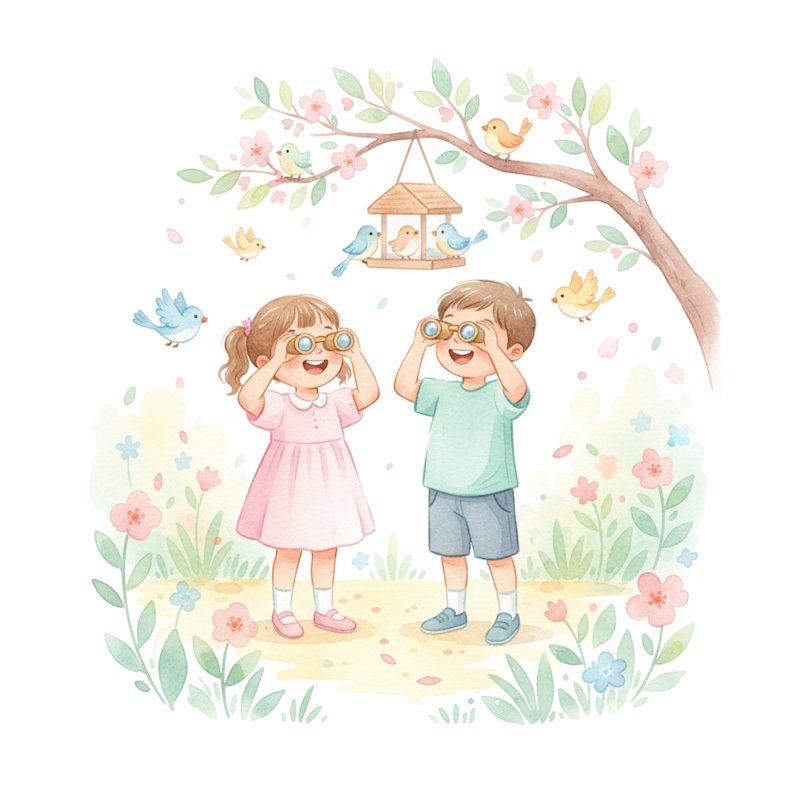
"Will they come?" five-year-old Aiden asked, pressing his nose to the window. We had just hung a pinecone bird feeder smeared with peanut butter and rolled in birdseed outside the classroom window. "Let us wait and WATCH," I said. Ten minutes: nothing. Fifteen minutes: a squirrel. Twenty minutes: "A BIRD!" Aiden yelled. A chickadee landed on the pinecone, pecked at the seeds, looked right at us through the window, and flew away. "IT LOOKED AT ME!" Aiden was hooked. For the next three weeks, we watched birds: counting them, drawing them, learning their names, imitating their calls, building more feeders, tracking which birds came at which times, and writing bird observation journals. Aiden, who previously said "I don't like science," now said: "I am a BIRD SCIENTIST." The bird feeder was a WINDOW into a world happening right outside, and every child wanted to look through it.

According to the Cornell Lab of Ornithology, birdwatching teaches observation skills, scientific recording, patience, species identification, counting and data collection, and a connection to the natural world that fosters environmental stewardship. Birds are the most visible wildlife children encounter daily, making them perfect subjects for nature study.
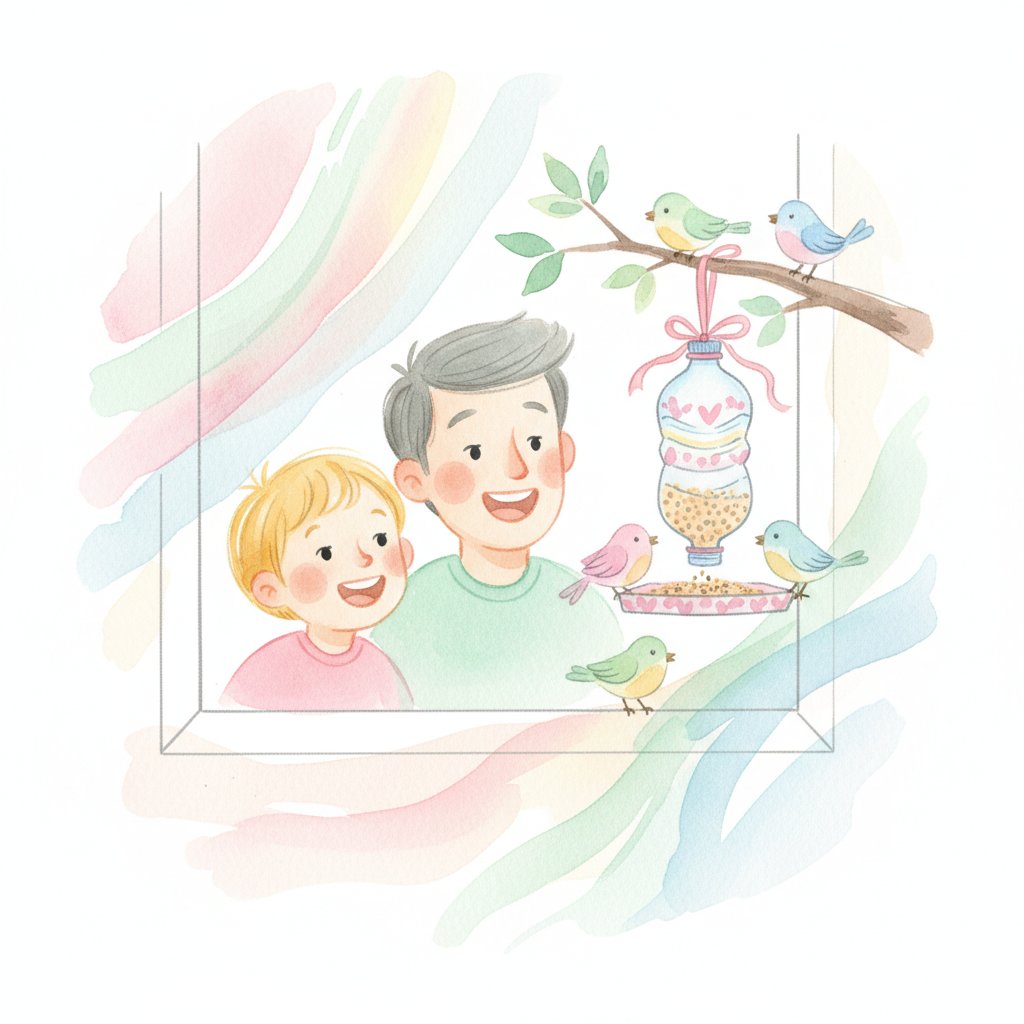
This guide covers 20+ bird and birdwatching activities for ages 3-6. Pair it with our nature guide for more outdoor learning and our science guide for more experiments.
Bird Feeder and Observation Activities (Ages 3-6)

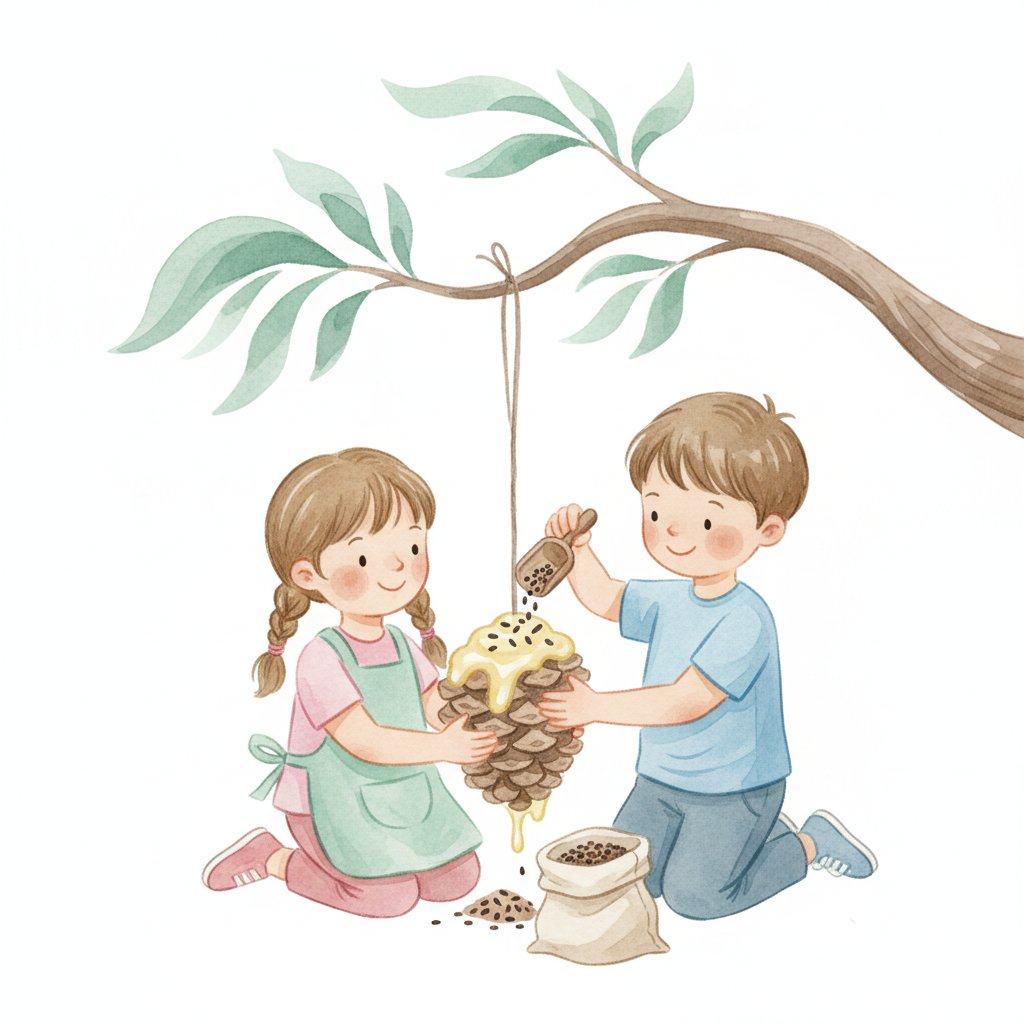
1. Pinecone bird feeder
Materials: Pinecones, peanut butter (or sunflower butter), birdseed, string.

What to do: "Spread peanut butter on the pinecone. Roll it in birdseed. Tie a string and hang it outside the window. Now WATCH. How many birds come? What do they look like?" The feeder teaches wildlife observation and counting. For more counting, see our number guide.

Why it works: Bird activities work because birds are ACCESSIBLE wildlife. You don't need a zoo pass or a forest — birds come to YOU. A feeder outside a window creates a live nature show that changes every day. The children become SCIENTISTS: they observe, they record, they compare, they hypothesize. "Why did more birds come yesterday than today? Was it the weather? Was it the seed? Was it the time of day?" These are real scientific questions generated by real observations. The bird feeder is not just a craft — it is a LONG-TERM RESEARCH STATION that generates data all year.

2. Toilet paper roll feeder
Materials: Toilet paper rolls, peanut butter, birdseed, string.

What to do: "Spread peanut butter on the cardboard roll. Roll it in birdseed. Slide it onto a branch or tie it with string. Watch who comes to eat!" The tube feeder teaches recycling and wildlife care. For more recycling, see our recycling guide.

3. Bird observation journal
Materials: Notebook, crayons.

What to do: "Draw the bird you saw. What COLOR was it? How BIG? What was it DOING? Write the date and time. You are keeping a SCIENTIFIC JOURNAL!" The journal teaches scientific recording and drawing. For more drawing, see our art guide.

4. Bird counting chart
Materials: Chart paper, markers.

What to do: "Every time you see a bird, make a TALLY MARK on the chart. At the end of the week, count the tallies. Which bird visited MOST? Which visited LEAST?" The counting chart teaches data collection and comparison. For more data, see our graphing guide.

5. Bird binoculars
Materials: Two toilet paper rolls, tape, string.

What to do: "Tape two toilet paper rolls together. Add a string to wear around your neck. Look through them at the birds. You are a BIRDWATCHER with BINOCULARS!" The binoculars teach tool-making and focused observation. For more crafts, see our craft guide.

Which safari animals can FLY?
Our Safari Animals Flashcards become a flight sort: 'Look at each card. Can this animal FLY? The OSTRICH has wings but cannot fly — it is too heavy! The FLAMINGO can fly — it has long wings and light bones. The EAGLE is a champion flyer — it soars for hours!' Sort the cards: FLIERS on the left, NON-FLIERS on the right. Then discuss: 'Why can some birds fly and others cannot? Body size, wing shape, and where they LIVE all matter.' The flashcards become a science lesson about adaptation. Some animals that look like they SHOULD fly (ostrich) cannot. Some that you might not expect (flying fish, sugar glider) can. Every card sparks a question. Twelve animals, two categories, one lesson about what it takes to take flight.

Bird Science Activities (Ages 3-6)

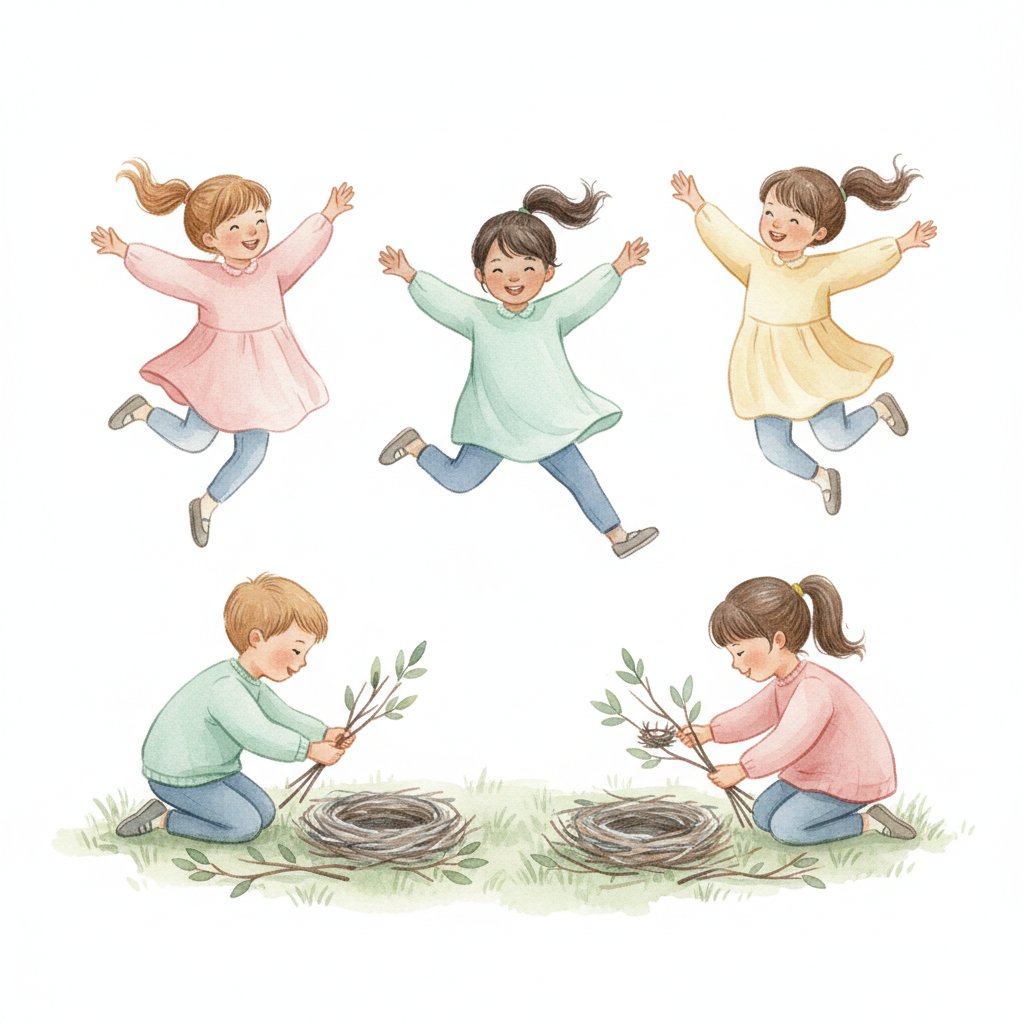
6. Nest building
Materials: Twigs, grass, leaves, mud, string.

What to do: "Birds build nests without HANDS. Try building a nest using only two fingers (like a beak). Can you weave the twigs together? Can you make it hold together? Birds do this with JUST THEIR BEAK!" The nest building teaches engineering and empathy for animal challenges. For more engineering, see our STEM guide.

7. Feather investigation
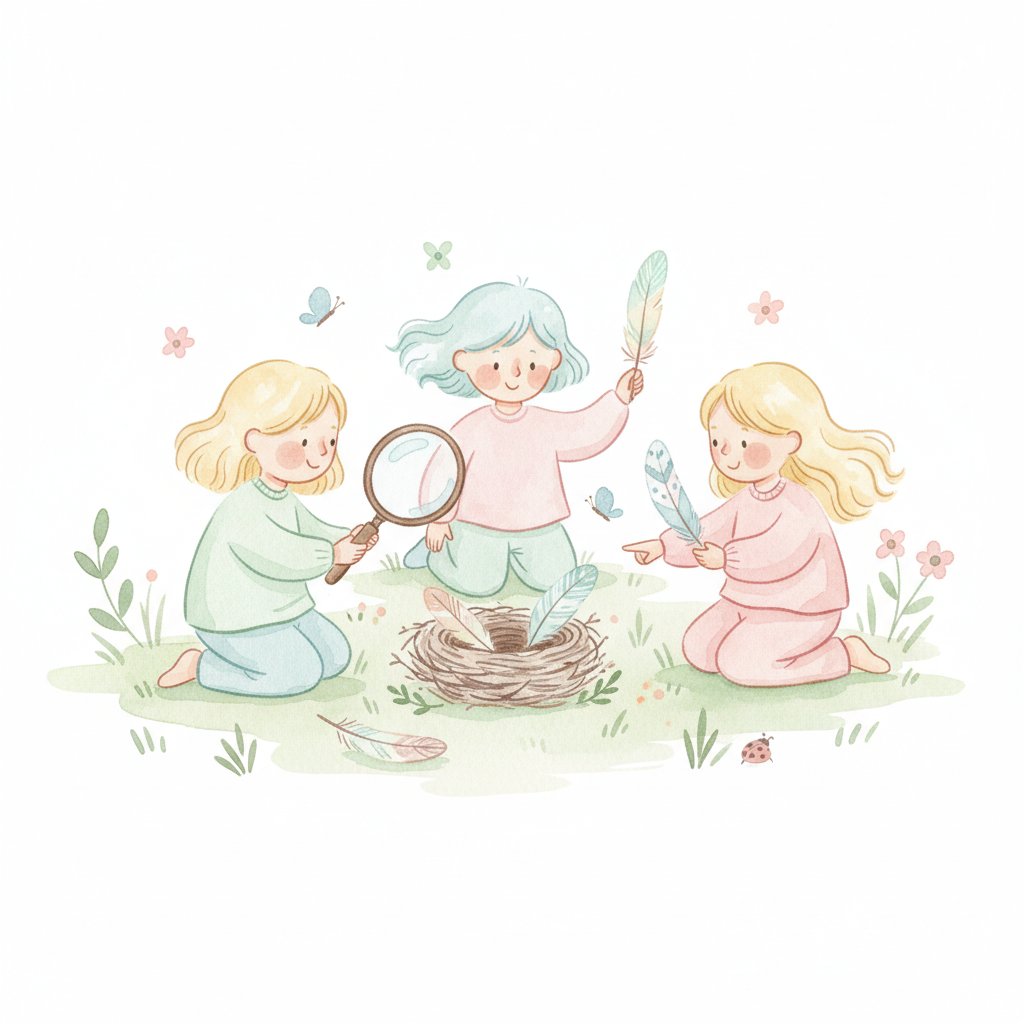
Materials: Real feathers (craft store), magnifying glass.

What to do: "Look at the feather through the magnifying glass. See the tiny BARBS that zip together like Velcro? That is how feathers stay smooth. Try separating them and smoothing them back together." The feather investigation teaches close observation and structure. For more magnification, see our science guide.

8. Egg investigation
Materials: Hard-boiled eggs.

What to do: "Look at the egg. What shape is it? OVAL. Why isn't it round? If it were round, it would roll away. The oval shape makes it roll in a CIRCLE and stay in the nest! Crack it open and look: SHELL, WHITE, YOLK." The egg investigation teaches form-follows-function. For more shapes, see our shapes guide.

9. Bird beak experiment
Materials: Tweezers, spoons, chopsticks, seeds, water, small containers.

What to do: "Different birds have different BEAKS. Try picking up seeds with tweezers (like a finch), a spoon (like a duck), and chopsticks (like a heron). Which beak works BEST for seeds? Which works best for water?" The beak experiment teaches adaptation and tool comparison. For more experiments, see our science guide.

10. Migration game
Materials: None (outdoor space).

What to do: "Birds fly THOUSANDS of miles to migrate. We are going to migrate too! Run to the tree (stop 1), hop to the bench (stop 2), fly to the fence (stop 3), and rest at the nest (stop 4). Migration is EXHAUSTING!" The migration game teaches endurance and geography concepts. For more movement, see our gross motor guide.

Do birds care about the weather?
Our Weather Flashcards become bird behavior predictors: 'Pick the SUNNY card. On sunny days, birds SING more and are ACTIVE. Pick the RAINY card. Where do birds go in the rain? They shelter under leaves and in trees! Pick the WINDY card. Small birds struggle in wind; big birds SOAR on it. Pick the SNOWY card. Snowy days are HARD for birds — food is buried. That is when our bird feeder matters MOST!' Each weather card predicts bird behavior. Children observe: did more birds come on the sunny day or the snowy day? The data answers the question. Twelve weather cards, twelve predictions, twelve opportunities to observe how weather affects the natural world.

Bird Creative Activities (Ages 3-6)

11. Bird song imitation
Materials: Audio clips of bird calls.

What to do: "Listen to the bird call. Coo-oo-coo (pigeon). Tweet-tweet-tweet (sparrow). Caw-caw (crow). Can you copy each sound? Which is HIGH? Which is LOW? Which is FAST?" The bird song imitation teaches auditory discrimination and vocal control. For more listening, see our listening guide.

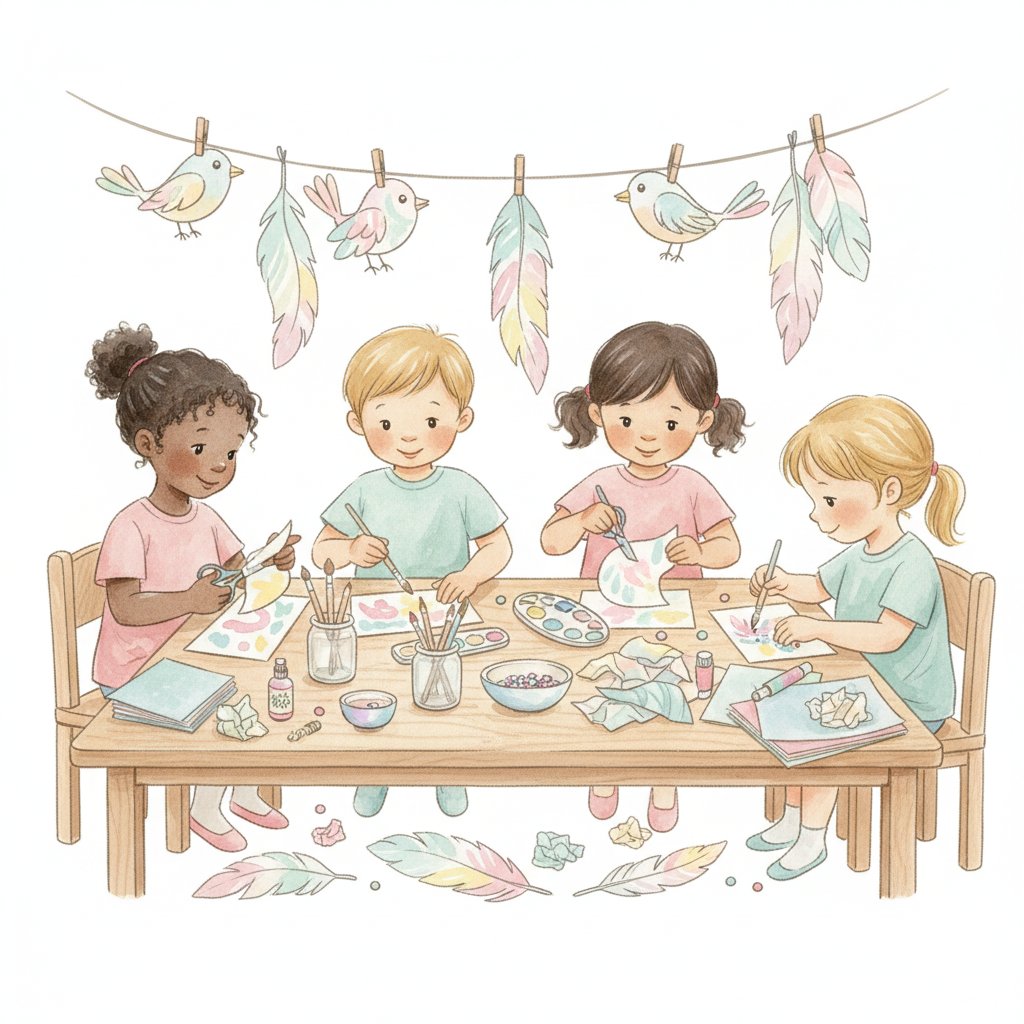
12. Bird painting
Materials: Paper, paint, feather as brush.

What to do: "Dip the feather in paint and use it as a BRUSH. How does it feel different from a regular brush? What kind of lines does it make? Paint a bird using the feather of a bird!" The feather painting teaches creative tool use. For more art, see our art guide.

13. Bird puppet
Materials: Paper bag, construction paper.

What to do: "Make a bird puppet: the flap is the BEAK. Open and close it while the bird talks. 'Hello! I am Robin Redbreast and I eat worms!'" The bird puppet teaches character creation. For more puppets, see our puppet guide.

14. Life cycle of a bird
Materials: Paper, crayons.

What to do: "Draw the four stages: EGG in the nest, CHICK hatching, BABY BIRD growing feathers, ADULT BIRD flying. Cut them out and put them in ORDER." The life cycle teaches sequencing and biology. For more life cycles, see our plant guide.

15. Bird habitat diorama
Materials: Shoebox, clay, paper, craft materials.

What to do: "Create a bird habitat in a shoebox: trees, a nest, eggs, food sources, water. Where does this bird LIVE? What does it EAT? What keeps it SAFE?" The diorama teaches habitat understanding and 3D composition. For more habitats, see our ocean guide.

More Bird Activities (Ages 3-6)

16. Bird walk
Materials: Binoculars (made or real), checklist.

What to do: "Walk outside and look for birds. Check off each one you see: pigeon, crow, sparrow, robin, seagull. How many different birds can you find in 15 minutes?" The bird walk teaches outdoor observation. For more outdoor, see our outdoor guide.

17. Egg sorting
Materials: Plastic Easter eggs in various sizes and colors.

What to do: "Sort the eggs by SIZE: small, medium, large. Sort by COLOR: blue, pink, yellow, green. Open each egg and count what is inside." The egg sorting teaches categorization and counting. For more sorting, see our sorting guide.

18. Bird body parts
Materials: Bird picture, labels.

What to do: "Label the bird: BEAK, WINGS, TAIL, FEET, EYES, FEATHERS. What does each part DO? Beak: eating. Wings: flying. Tail: steering. Feet: perching." The body parts lesson teaches anatomy vocabulary. For more body, see our body guide.

19. Owl pellet dissection
Materials: Sterilized owl pellets, tweezers, magnifying glass.

What to do: "Owls eat mice WHOLE and spit out the bones. Open this pellet and find the bones. What did this owl EAT? Sort the bones: jaw, leg, rib, skull." The pellet dissection teaches food chains and skeletal anatomy. For more science, see our science guide.

20. Bird book
Materials: Paper, stapler, crayons.

What to do: "Make a bird field guide: one bird per page. Draw the bird, write its name, and add one fact: 'Robin — has a red breast. Eats worms.' Staple it into a book you can use on bird walks!" The field guide teaches research and book-making. For more book-making, see our reading guide.

How are birds and humans the same and different?
Our Human Body Poster becomes a comparison tool: 'Look at the human body. We have TWO LEGS — birds have two legs too. We have TWO EYES — birds have two eyes too. We have ONE MOUTH — birds have a BEAK instead. We have ARMS — birds have WINGS. We have SKIN — birds have FEATHERS. We have BONES — birds have hollow bones (that is why they can fly and we cannot).' The poster anchors the comparison: here is what WE have, and here is how a bird's body is DIFFERENT for the same purpose. Arms become wings. Mouth becomes beak. Skin becomes feathers. Same functions, different adaptations. One poster, one bird picture, one lesson in how bodies evolve for different lives.
1.How do I start birdwatching with very young children?
Start SIMPLE: (1) Hang ONE feeder outside a window where children can see it from inside. (2) Put out a CHART with pictures of 5 common local birds. (3) When a bird comes, help children FIND it on the chart. (4) Make a TALLY mark. (5) Do this at the SAME TIME every day (morning circle is ideal). That's it. One feeder, five birds, one routine. As children get better at identifying birds, add more species to the chart. The key is CONSISTENCY — watching every day builds pattern recognition and anticipation. Within a week, children will be telling YOU which bird is at the feeder.
2.What if no birds come to our feeder?
Try these troubleshooting steps: (1) LOCATION — move the feeder to a quieter spot, away from playground noise. (2) HEIGHT — hang it at eye level or slightly above, not too high. (3) FOOD — black oil sunflower seeds attract the most species. (4) PATIENCE — it can take 1-2 weeks for birds to discover a new feeder. (5) WATER — add a shallow dish of water near the feeder. Birds need water as much as food. If after two weeks no birds come, the location may simply not be on a bird route. Try a different window or area.
3.Are owl pellet dissections safe for preschoolers?
Yes, with preparation: (1) Use STERILIZED commercial owl pellets (available from science supply companies). These are heat-treated to kill bacteria. (2) Work on a covered surface with individual plates. (3) Each child uses their own tweezers and magnifying glass. (4) Wash hands THOROUGHLY after the activity. (5) Supervise closely — some children will want to touch their face during the activity. The pellets are fascinating: children find real bones from real prey animals. It is one of the most memorable science experiences you can offer.
4.How do bird activities connect to other subjects?
Birds are CROSS-CURRICULAR: (1) SCIENCE — life cycles, adaptation, food chains, habitats. (2) MATH — counting species, tallying visits, measuring wingspans, comparing egg sizes. (3) LITERACY — writing observation journals, reading bird books, labeling diagrams. (4) ART — drawing birds, painting with feathers, making puppets. (5) MUSIC — bird song imitation and identification. (6) SOCIAL STUDIES — migration routes cross countries and continents. (7) PHYSICAL EDUCATION — migration games, flying movements. A single bird unit can cover every subject in your curriculum.