Articles6 min read

The Birthday Party Where Every Child Left Happy (Yes, Really)

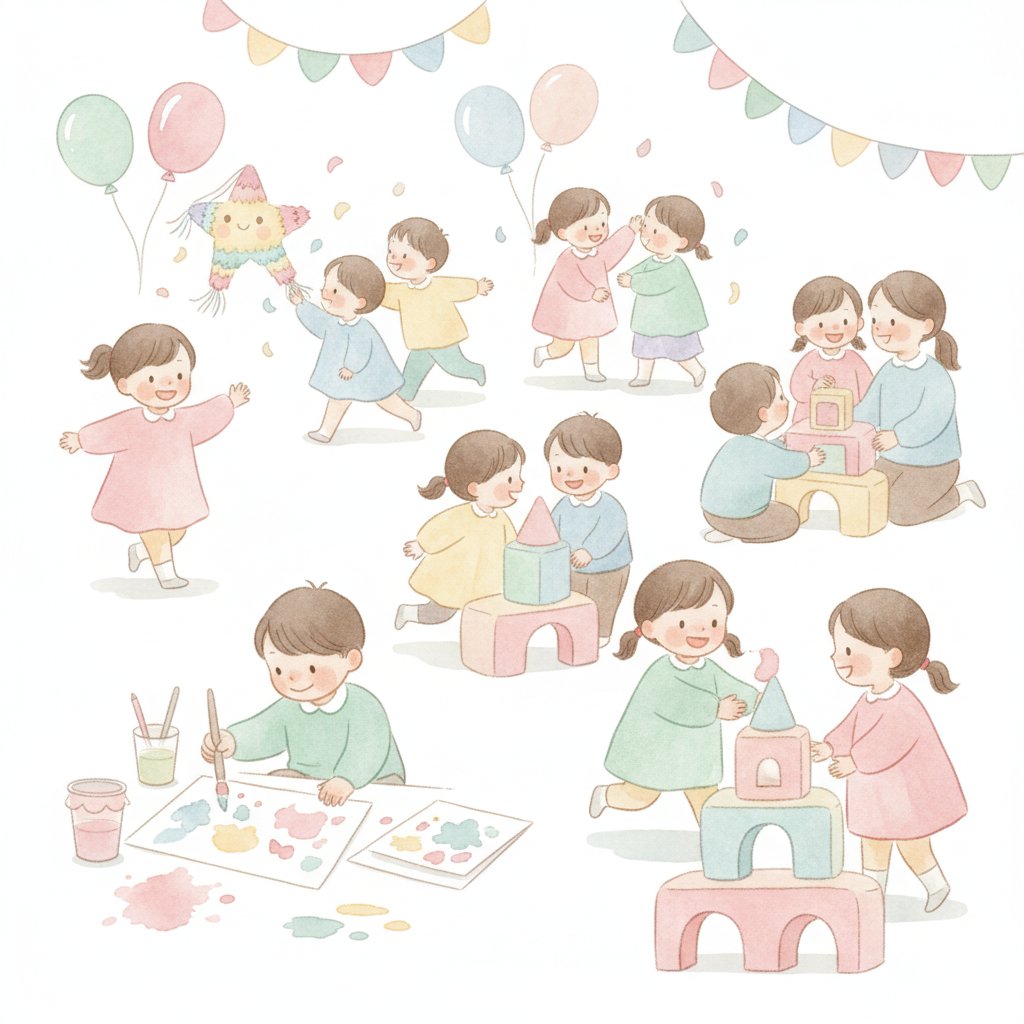
My daughter's fourth birthday was a disaster. Musical chairs ended in tears. A piñata caused a stampede. The cake took 40 minutes to serve because three children refused to wait. I spent the whole party managing meltdowns instead of celebrating.

Her fifth birthday was different. I planned it around one principle: at ages 3-6, children need cooperative activities, not competitive ones. Stations, not group-wide events they might miss. Choices, not mandatory participation. The result? Two hours of happy, engaged children and zero meltdowns. Even the adults had fun.
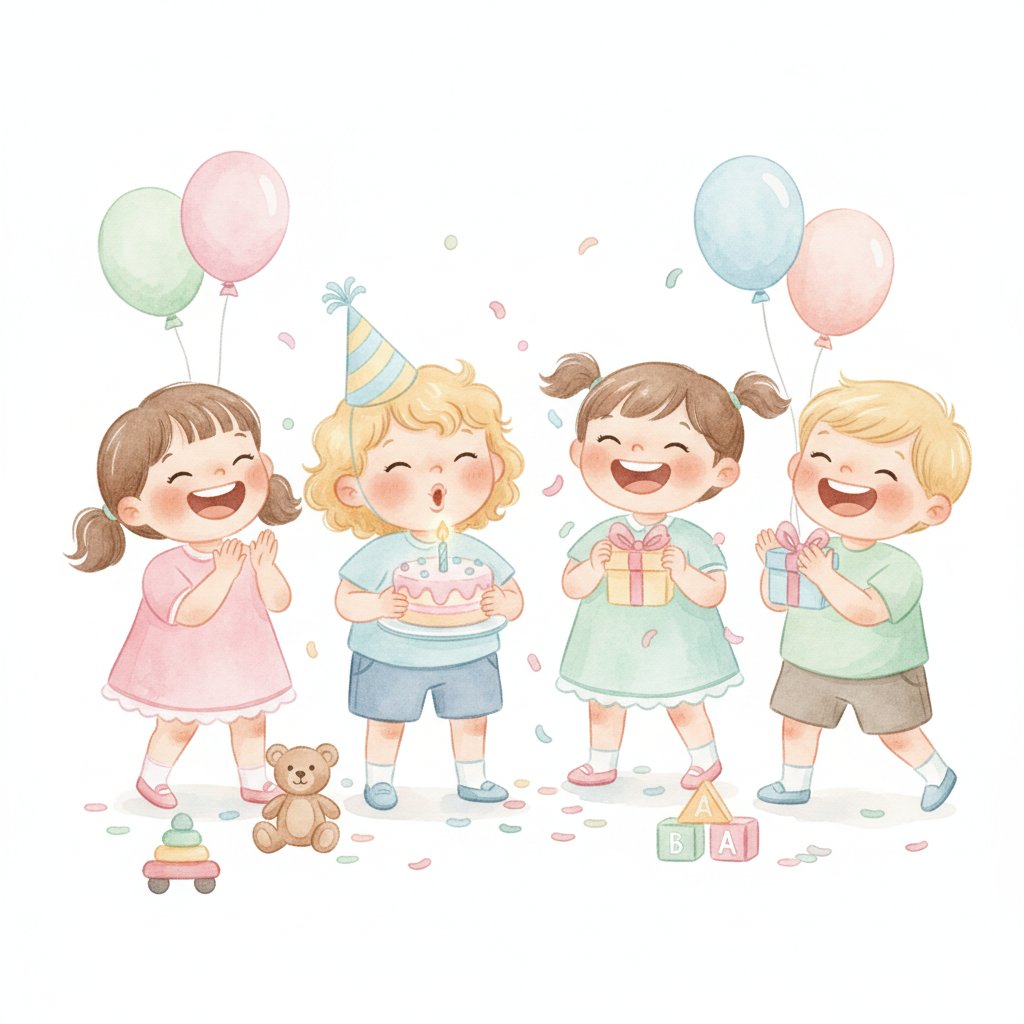
The difference wasn't the children — it was the activity design. Preschool birthday parties fail when they're designed for adults (competitive games, long performances, waiting for turns) and succeed when they're designed for preschoolers (open-ended choices, cooperative fun, sensory engagement). This guide covers 20+ birthday party activities for ages 3-6 that actually work. Pair it with our group games guide for cooperative game ideas and our art activities for craft inspiration.

Preschool Party Planning: What Actually Works

Duration: 90 minutes to 2 hours maximum. Preschoolers hit a wall around the 90-minute mark. End while everyone is still happy.

Guest count: Age + 1 is the classic rule (4-year-old=5 guests). For a larger party, plan stations so no one waits long.

Schedule structure:

  1. Arrival activity (15 min) — something children can join as they arrive (coloring, playdough, sensory bin)
  2. Active game (15-20 min) — burn energy with a cooperative game
  3. Craft or activity (15-20 min) — focused making activity
  4. Snack/cake (15 min) — food break
  5. Free play or second game (15-20 min) — open choice
  6. Goodbye activity (5-10 min) — party favor distribution, group photo
ElementDoDon't
GamesCooperative, everyone playsCompetitive with elimination
TimingShort activities (15 min each)One long activity
FoodSimple, self-serveSit-down multi-course
CakeCupcakes or pre-cut slicesOne large cake to cut and serve
PrizesEveryone gets somethingOnly "winners" get prizes
TransitionsGive 2-minute warningsAbrupt switches between activities

Key principle: Plan MORE activities than you need. If something isn't working, switch. If children are loving something, let it run longer. The plan is a menu, not a script.

Alphabet Monster Hunt: the party game children actually want to play
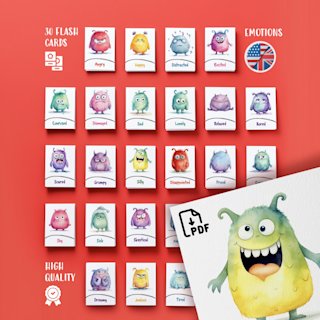
Our Alphabet Monster Flashcards become an instant party game: hide all 26 monsters around the party space. Children hunt for them together — cooperative, not competitive. 'How many monsters can we find? Let's count!' Every child finds some, every child contributes to the total, and the group celebrates together. Add a twist: 'Find the monster whose name starts with YOUR letter!' 26 cards, 26 hiding spots, 100% fun.

Cooperative Party Games (Ages 3-6)

1. Keep the balloon up (party version)
Materials: Multiple balloons in party colors.

What to do: The group keeps as many balloons in the air as possible. "No one can hit a balloon twice in a row — pass it to a friend!" Start with one balloon, add more as the group succeeds. Count how long the balloons stay up. Try to beat the record. For more cooperative games, see our group games guide.

Why it works: Every child participates at their own level. Younger children tap gently; older children dive. No one is "out." The collective goal unites the group.

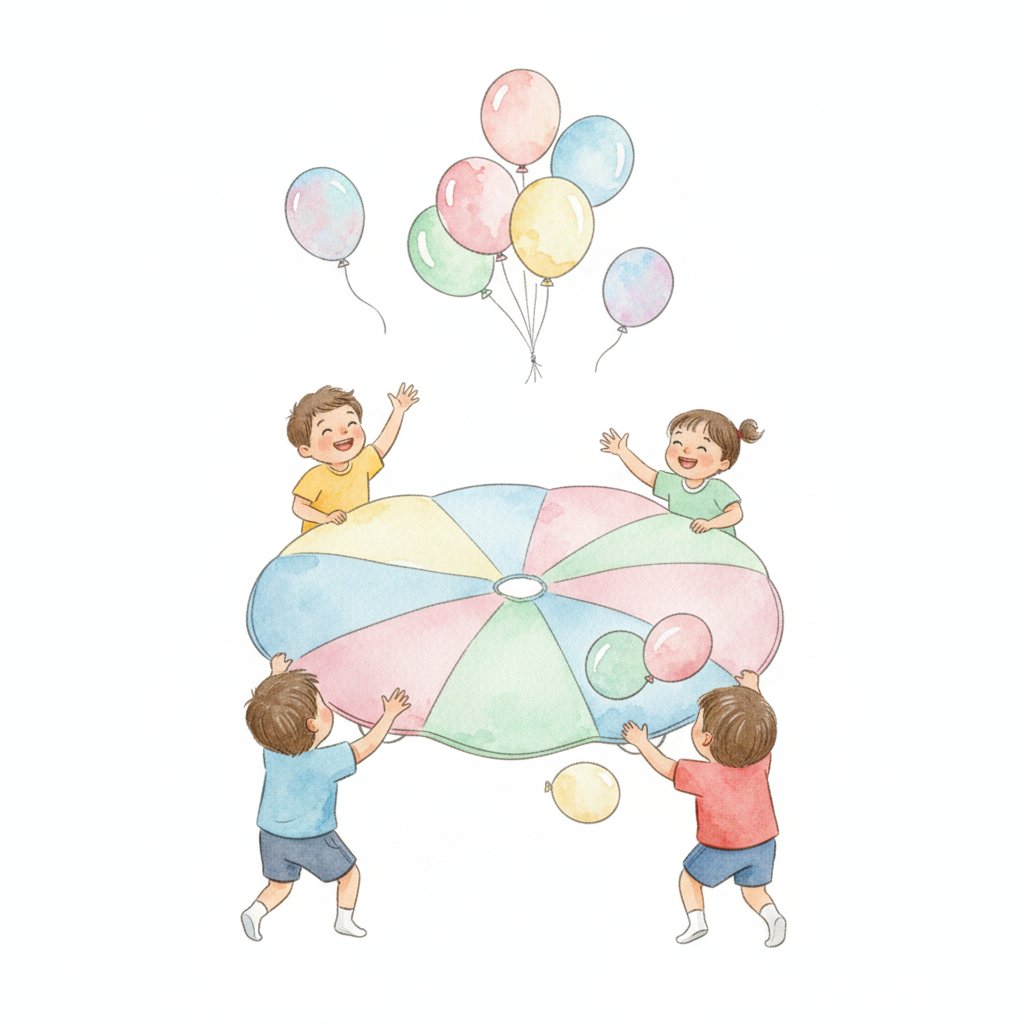
2. Parachute (or bedsheet) games
Materials: Play parachute or large lightweight bedsheet.

What to do: Everyone holds the edge and: makes waves, launches stuffed animals ("popcorn"), lifts and steps under ("tent"), makes a mushroom (lift and pull behind you and sit). Parachute play REQUIRES cooperation — one child can't do it alone.

3. Animal charades parade
What to do: Each child picks an animal card and acts it out. The group guesses together. No turns, no pressure — children act when they're ready and guess when they want. For more dramatic play, see our dramatic play guide.

4. Group dance party
Materials: Music playlist, props (scarves, ribbons, shakers).

What to do: Free dance with props. Add structured moments: "Freeze! Dance like a robot! Dance like you're underwater!" The mix of free and structured keeps it engaging. For more music, see our music activities guide.

5. Cooperative treasure hunt
Materials: Clue cards hidden around the party space.

What to do: The group solves clues together to find a treasure (the party favor bag). "The first clue says: 'Look where we keep things cold.' The refrigerator! There's the next clue!" Everyone contributes — one child reads, another runs, another spots the hiding spot.

Party Crafts and Activity Stations (Ages 3-6)

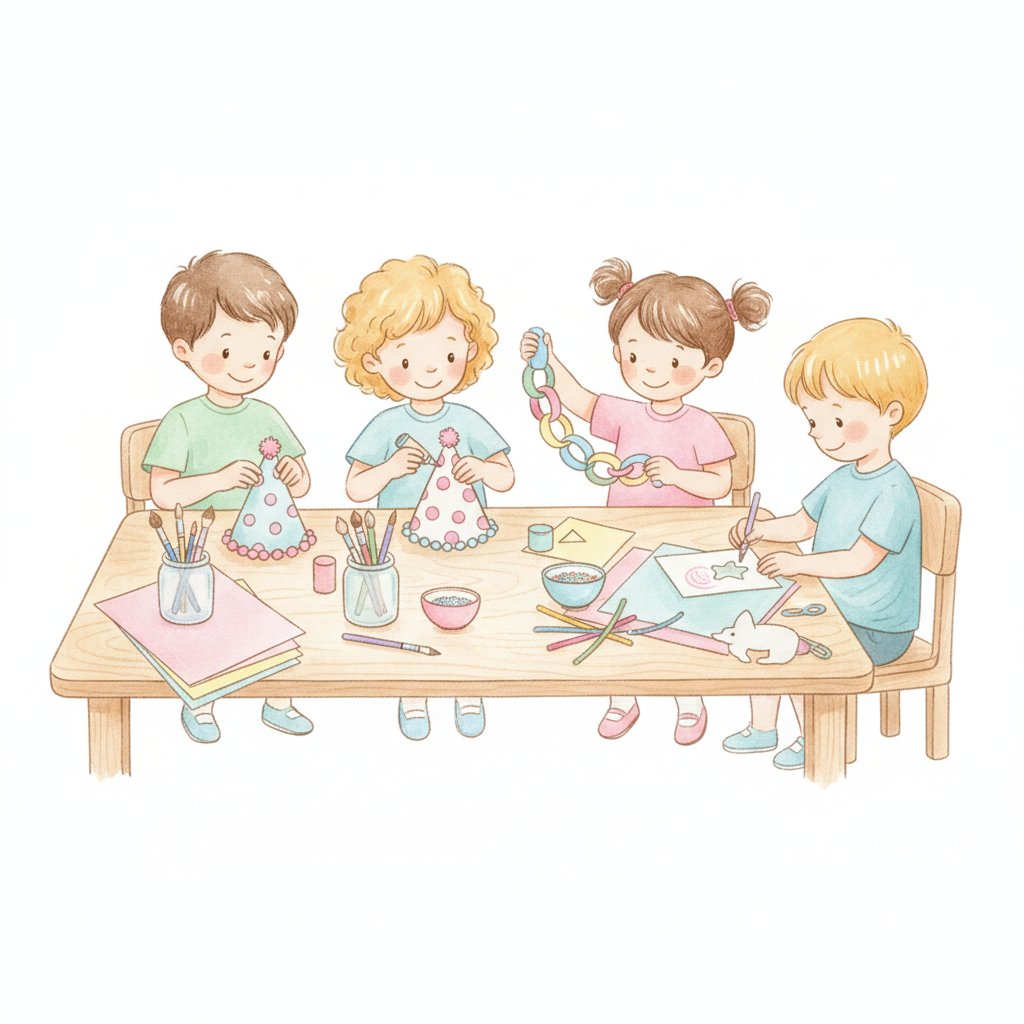
6. Decorate-your-own party hat
Materials: Plain party hats, stickers, markers, pom-poms, glue.

What to do: Children decorate their own hats as an arrival activity. The craft serves a dual purpose: it's an activity AND a party hat they wear all day. "Make your hat as silly as you want!" For more creative activities, see our art guide.

7. Playdough party favors
Materials: Homemade playdough in party colors, cookie cutters, bags.

What to do: Children make playdough creations to take home. Set up a playdough station with cutters, rollers, and tools. The creation IS the party favor — meaningful and handmade. For more playdough ideas, see our playdough guide.

8. Collaborative birthday mural
Materials: Large paper on the wall, crayons, markers, stickers.

What to do: Children create a giant birthday mural together. "Draw something that makes you happy! Add stickers!" The collaborative art becomes a decoration for the rest of the party. Take a photo of the group in front of it.

9. Crown making
Materials: Pre-cut crown shapes, decorations, stapler.

What to do: Children decorate crowns to wear. Everyone's a king or queen at the party. The fine motor activity (gluing, sticking, coloring) keeps hands busy and gives children something to wear proudly.

10. Friendship bracelet station
Materials: Pipe cleaners, beads.

What to do: Children string beads on pipe cleaners to make bracelets. Simple enough for 3-year-olds (pipe cleaners hold beads without tying). Children can make one for themselves and one for a friend — a built-in kindness activity. For more fine motor ideas, see our fine motor guide.

Shape party: a themed birthday built from geometric fun
Our Shapes Flashcards inspire a shape-themed birthday party: 'Today is a SHAPE PARTY! We're going on a shape hunt (find circles in the room), making shape crowns (decorate with geometric stickers), playing shape hopscotch (jump to each shape), and eating shape snacks (circle crackers, square sandwiches, triangle watermelon).' 11 shapes, 11 party activities — one very geometric celebration.

Sensory and Active Stations (Ages 3-6)

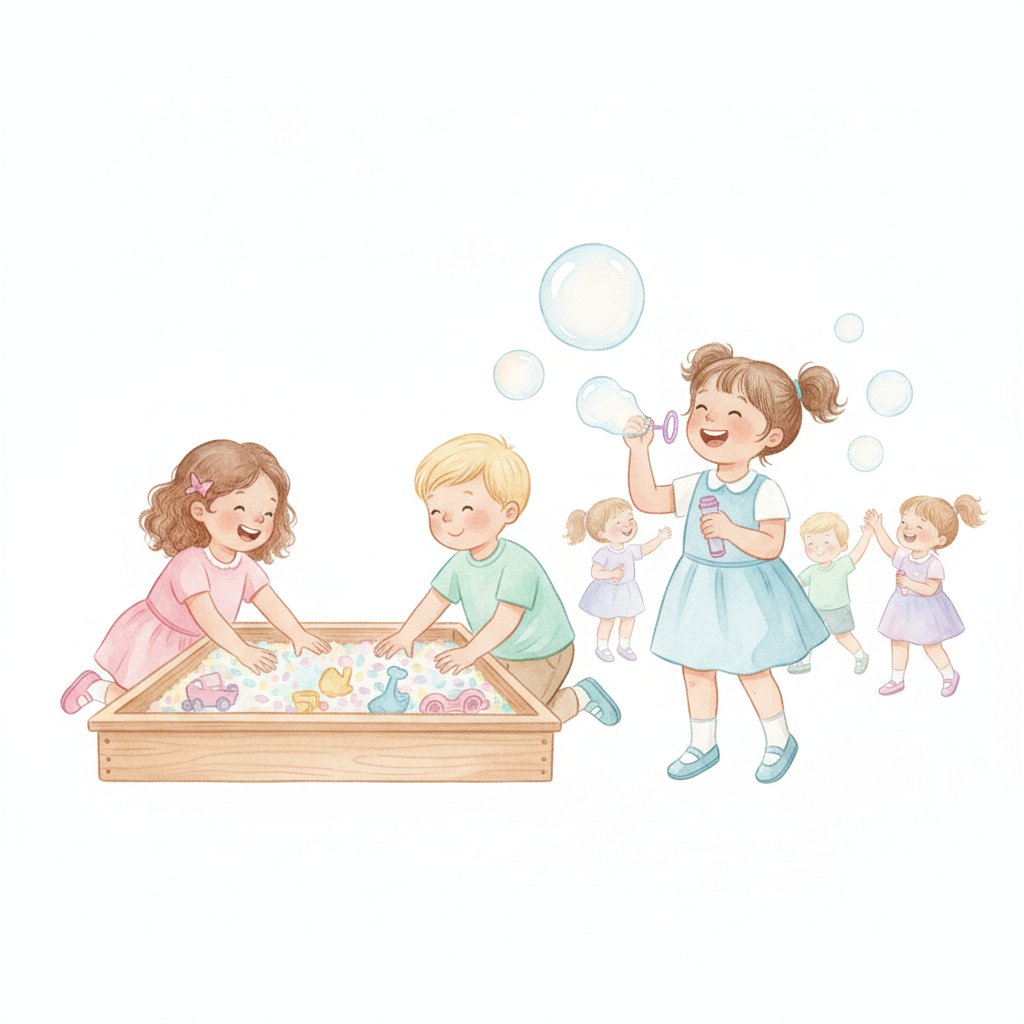
11. Sensory bin station
Materials: Large bin filled with rice, beans, or water beads. Hidden treasures (small toys, gems).

What to do: Children dig through the sensory bin to find treasures. The station provides a calm-down option for overstimulated children and a sensory-rich option for seekers. "Find 5 treasures! Keep what you find!" For more sensory ideas, see our sensory guide.

12. Obstacle course
Materials: Cones, hoops, balance beam, tunnel.

What to do: Set up a simple obstacle course. Children go through at their own pace — no timer, no competition. "Can you go around the cones, through the tunnel, across the beam, and back?" Repeat as many times as they want. For more movement, see our gross motor guide.

13. Bubble station
Materials: Bubble wands, bubble solution, bubble machine.

What to do: A bubble-blowing station where children make and pop bubbles. Simple, universally loved, and appropriate for all ages. Add giant bubble wands for extra excitement.

14. Photo booth
Materials: Props (hats, glasses, boas), backdrop.

What to do: Set up a simple photo booth with props. Children dress up and take silly photos. The photos become party favors — print and send with thank-you notes. For more dramatic play, see our pretend play guide.

15. Water play station (outdoor parties)
Materials: Water table, cups, funnels, boats, sponges.

What to do: A water play station for outdoor parties. Children pour, scoop, float boats, and squeeze sponges. The water is naturally calming and engaging. Provide towels nearby.

Visual schedules work at parties too
Our Morning Routine Visual Schedule Cards teach the same structure that makes parties successful: predictable transitions. 'First we play a game. Then we make a craft. Then we eat cake. Then we get our party bags.' Post a visual schedule at the party so children always know what's coming next. The predictability reduces anxiety and eliminates the 'when is cake?' question asked 47 times.
1.What's the ideal length for a preschool birthday party?
90 minutes to 2 hours. Plan for 90 minutes and have an extra 30 minutes of optional activities if things are going well. Preschoolers lose focus, get overstimulated, and melt down after about 2 hours. End while everyone is happy — not when children are falling apart.
2.Should I hire entertainment for a preschool party?
Not necessary for ages 3-5. Simple activities (balloons, bubbles, playdough, cooperative games) are more engaging than a performer most preschoolers will stare at blankly. Save entertainment for ages 6+ when children can sit and watch for 20+ minutes. For 3-5 year olds, DOING is always better than WATCHING.
3.How do I handle gift-opening at a preschool party?
Open gifts AFTER the party or have a "gift table" where presents go. Opening gifts at the party creates problems: jealousy, comparisons, and the birthday child saying something hurtful about a gift. If you do open gifts at the party, practice gracious receiving beforehand: "Whatever it is, you say thank you and you look happy."
4.What about children with food allergies?
Ask about allergies on the invitation. Serve at least one safe option for common allergies (gluten-free, nut-free, dairy-free). Cupcakes are easier than cake for managing allergies — each child gets their own, and you can make different cupcakes for different dietary needs. Label foods clearly so parents can check.