Articles7 min read

Ladies and Gentlemen, Children of All Ages
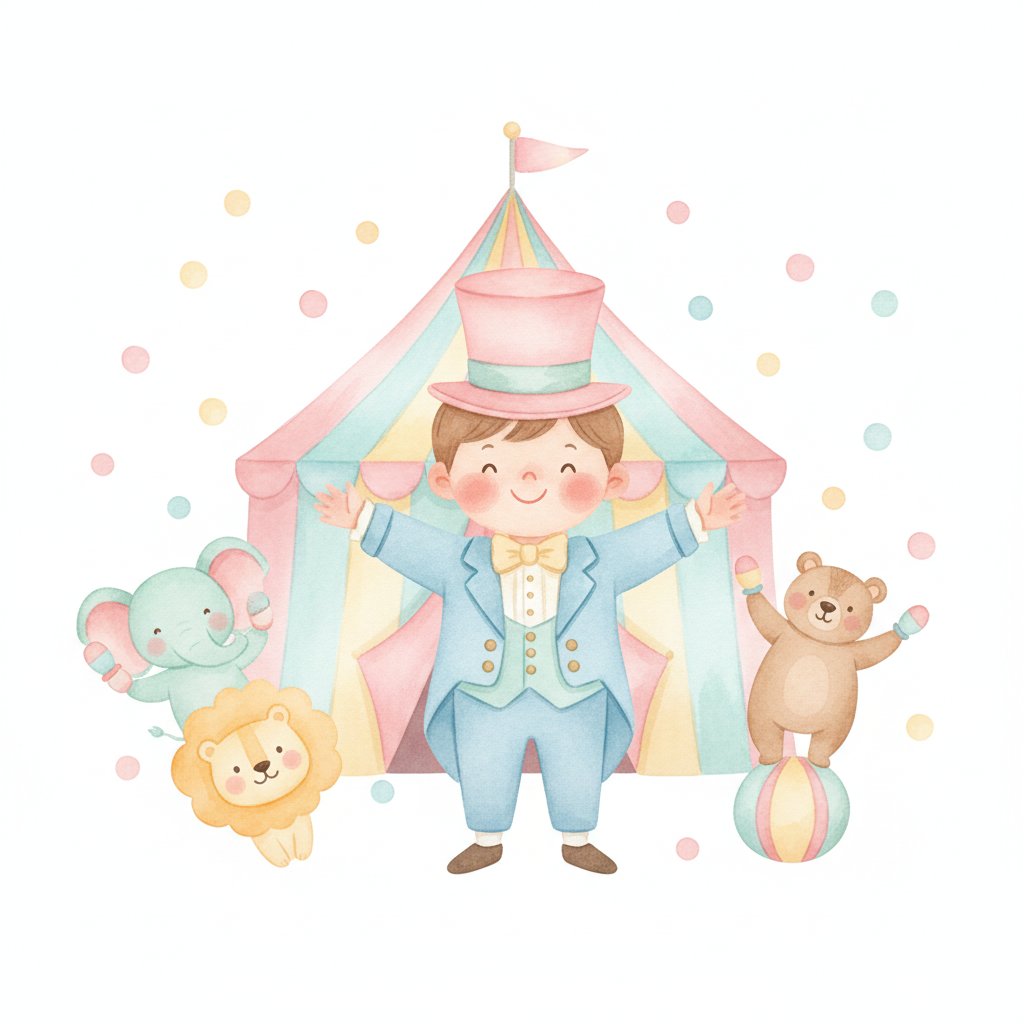
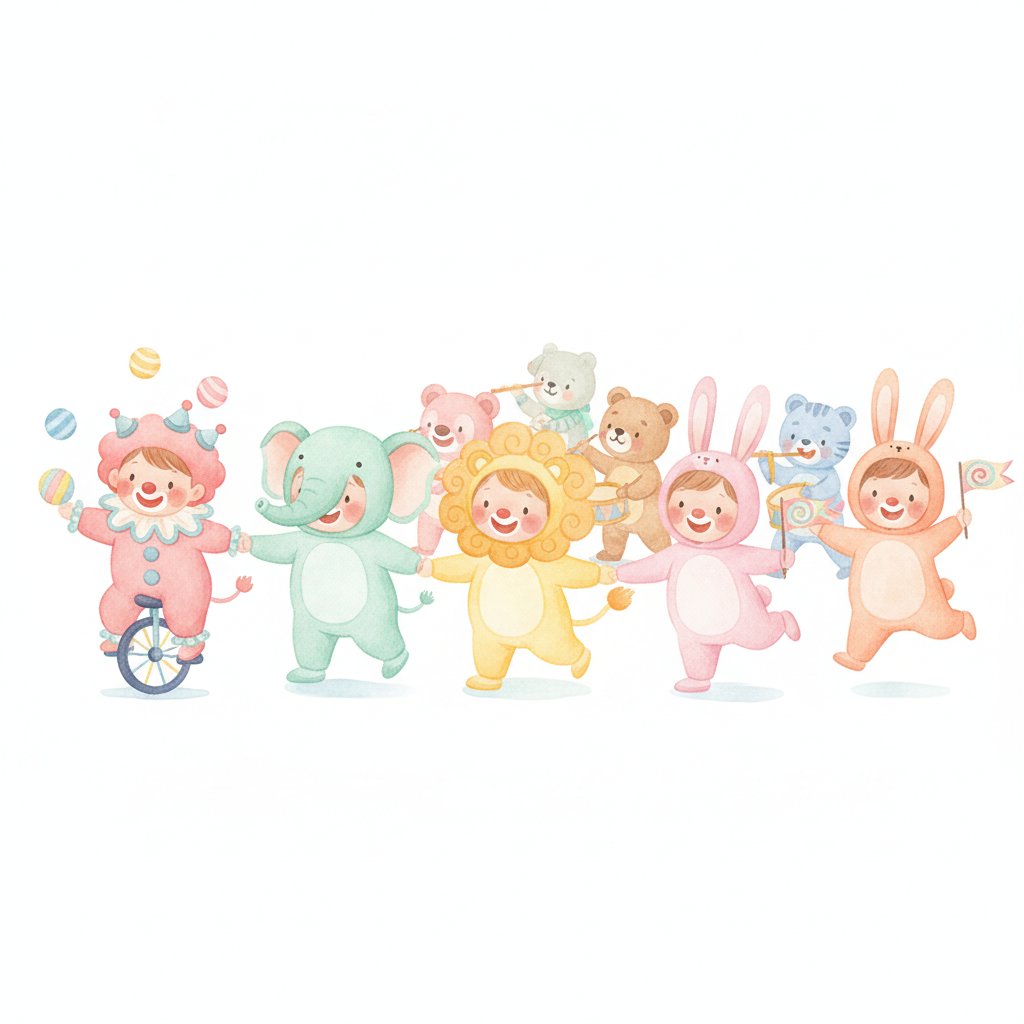
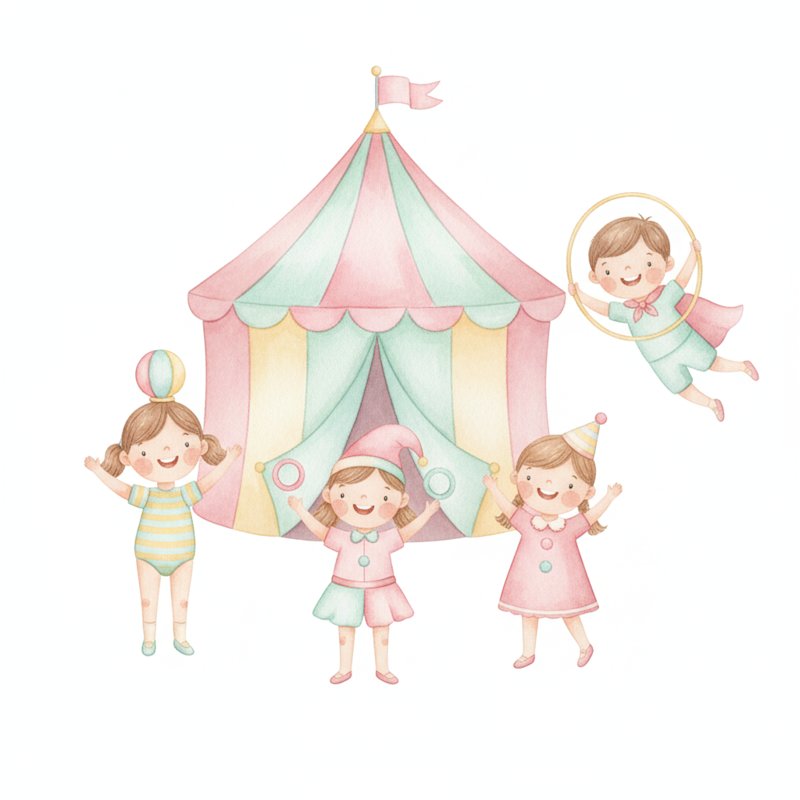
"WELCOME to the MOST AMAZING show on EARTH!" announced five-year-old Jayden, wearing a top hat made from black construction paper and holding a toilet-paper-roll megaphone. "Our FIRST act: the INCREDIBLE tightrope walker!" Four-year-old Lily stepped onto the blue tape line on the floor, arms outstretched, tongue out in concentration. She took five careful steps. The audience (the rest of the class sitting on the rug) GASPED. Then CLAPPED. Lily BOWED. "NEXT: the JUGGLER!" Marcus tossed two scarves in the air and caught them. The crowd went WILD. Then came the lion tamer (with a stuffed lion), the strong man (lifting a foam block), the clown (with a red foam nose), and the acrobat (forward roll on the mat). Every child performed. Every child clapped for every other child. It was a CIRCUS — and every child was a STAR.

According to the American Academy of Pediatrics, performance-based play develops gross motor coordination, creative expression, performance confidence, audience etiquette, and joyful physical activity. The circus theme provides a STRUCTURE for physical play that children find irresistible because it is SPECTACULAR.

This guide covers 20+ circus and carnival activities for ages 3-6. Pair it with our gross motor guide for more movement and our music guide for performance rhythm.
Circus Performance Activities (Ages 3-6)

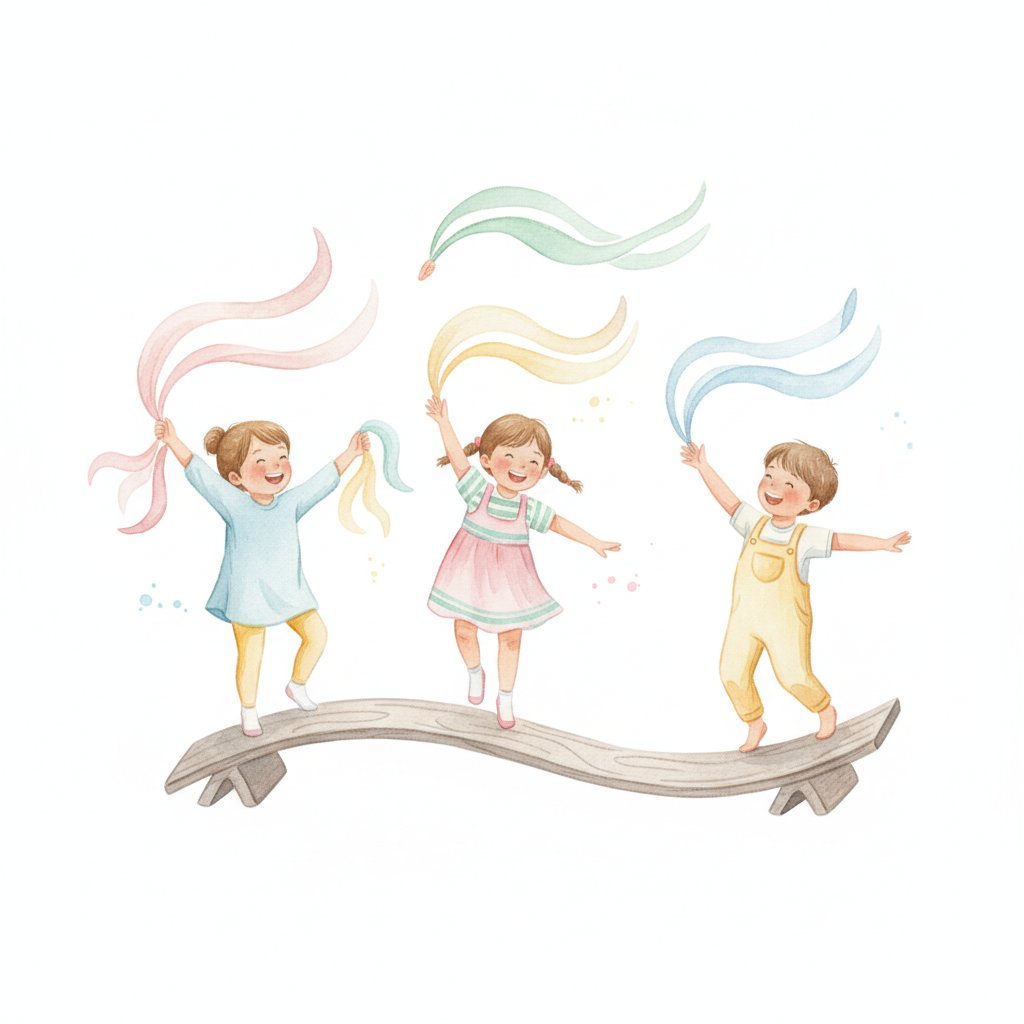
1. Tightrope walking
Materials: Painter's tape on the floor.

What to do: "Place one foot in front of the other on the tape. Arms out for balance. Don't fall off — the CROWD is watching! Can you walk it backward? On tiptoes?" The tightrope teaches balance and body control. For more balance, see our gross motor guide.

Why it works: Circus activities work because they transform ORDINARY physical skills into EXTRAORDINARY performances. Walking on a line is just walking. But when you call it a TIGHTROPE, add an audience, and play dramatic music, it becomes a DARING FEAT. Children try harder, focus longer, and practice more when the activity feels like a PERFORMANCE. The circus gives physical skills a NARRATIVE: "I am not just balancing — I am a TIGHTROPE WALKER performing for the crowd!" That narrative transforms effort into excitement.

2. Scarf juggling
Materials: Lightweight scarves or fabric squares.

What to do: "Toss one scarf in the air and catch it. Now try TWO: toss, toss, catch, catch. Can you toss them HIGH? Can you catch them without dropping?" The scarf juggling teaches hand-eye coordination at a preschool-appropriate level. For more coordination, see our fine motor guide.

3. Ring toss
Materials: Rings (paper plates with centers cut out), bottle targets.

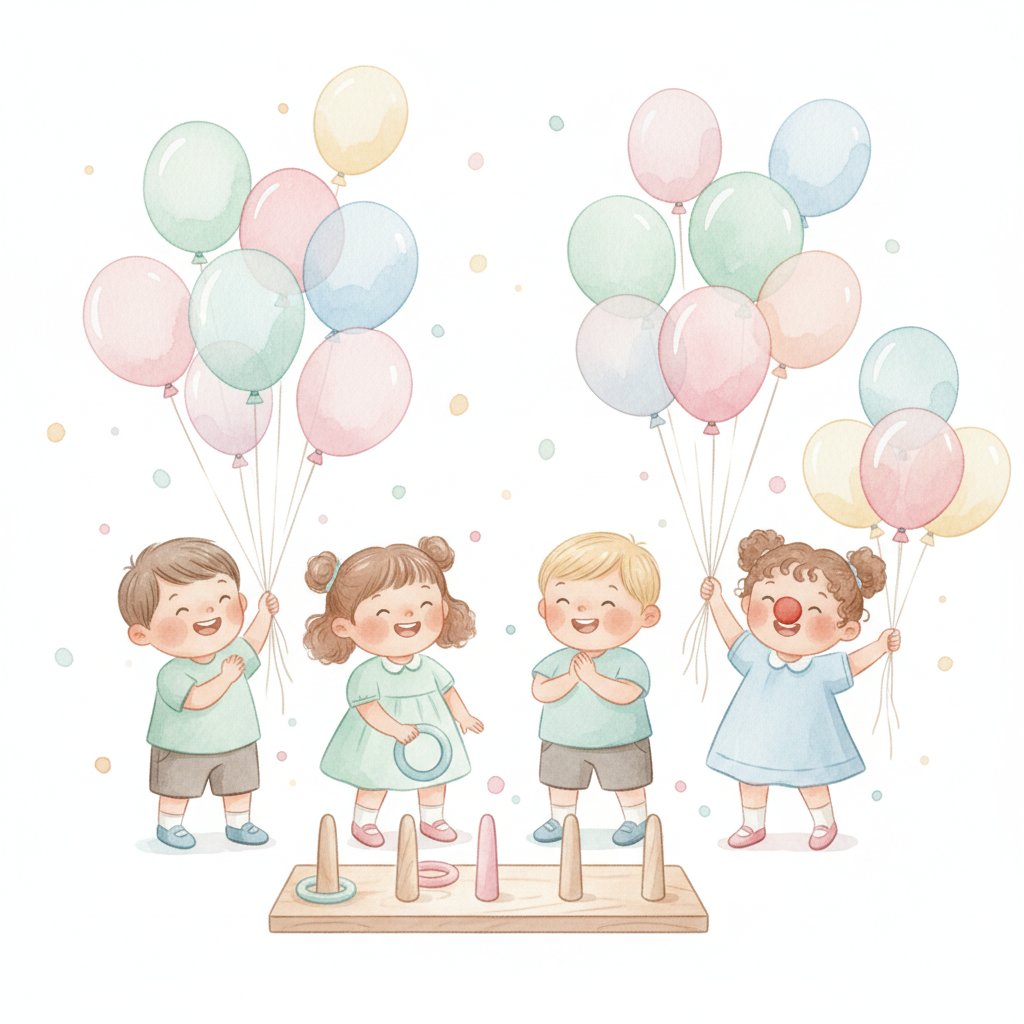
What to do: "Toss the ring over the bottle. One ring=1 point. How many points can you score in 5 throws?" The ring toss teaches throwing accuracy and counting. For more counting, see our number guide.

4. Clown act
Materials: Red foam noses, silly hats.

What to do: "Put on the nose and the hat. Now make the audience LAUGH. Tell a joke, do a silly walk, make a funny face. The clown's job is to bring JOY." The clown act teaches humor and performing for others. For more emotions, see our feelings guide.

5. Strong person act
Materials: Foam blocks or lightweight objects.

What to do: "Lift the HEAVY weight above your head! Strut around the ring showing how STRONG you are. Count: 1, 2, 3, HOLD!" The strong person act teaches dramatic expression and body awareness. For more body, see our body guide.

The circus is a RAINBOW of colors
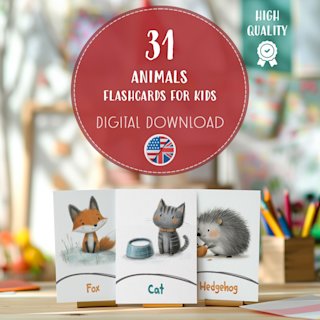
Our Colors Flashcards become circus costume assignments: 'RED — you are the RINGMASTER in red. BLUE — you are the ACROBAT in blue. YELLOW — you are the CLOWN in yellow. GREEN — you are the JUGGLER in green.' Each child picks a color card and becomes the circus performer in that color. They make a costume element matching their color: a red hat, a blue cape, a yellow bow tie. The flashcard determines the role AND the color. The result is a RAINBOW circus where every performer is a different color and the audience sees a SPECTRUM of talent. Eleven colors, eleven performers, one technicolor show.

Carnival Game Activities (Ages 3-6)

6. Beanbag toss
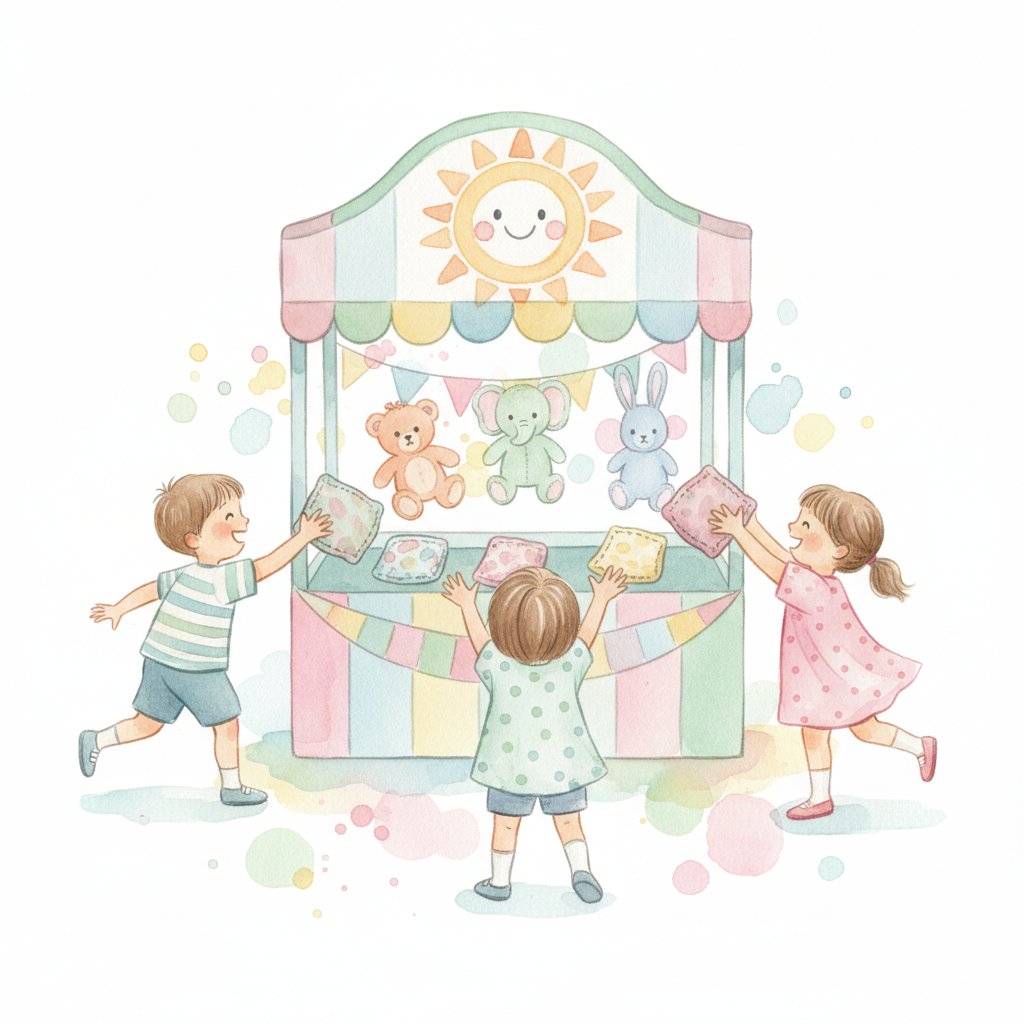
Materials: Beanbags, decorated targets.

What to do: "Throw the beanbag through the hole in the target. Each hole has a NUMBER: 1, 2, or 3. Throw through the 3-hole for the most points!" The beanbag toss teaches throwing and number recognition. For more numbers, see our number guide.

7. Duck pond
Materials: Plastic ducks in a water bin, markers on the bottom.

What to do: "Pick a duck from the pond. Look at the number on the bottom: 1, 2, or 3. That is how many PRIZES you win! Count them out." The duck pond teaches number matching and counting. For more water play, see our bath guide.

8. Balloon pop
Materials: Balloons, beanbags.

What to do: "Throw the beanbag at the balloons hanging on the wall. If you hit one, POP goes the balloon and you win a prize! How many can you pop in 3 throws?" The balloon pop teaches throwing accuracy and turn-taking. For more turn-taking, see our board games guide.

9. Face painting station
Materials: Face paint or face crayons.

What to do: "Choose your circus design: a star, a heart, a butterfly, or a clown nose. Face painting is part of the carnival FUN!" The face painting teaches self-expression and fine motor for the painter. For more art, see our art guide.

10. Fortune teller booth
Materials: Paper fortune teller (cootie catcher).

What to do: "Pick a color. Pick a number. Your fortune says: 'You will have a GREAT day!' Make paper fortune tellers and read fortunes to your friends." The fortune teller teaches fine motor folding and reading. For more folding, see our scissor guide.

The circus ring is full of shapes
Our Shapes Flashcards become circus shape hunts: 'The TIGHTROPE is a LINE. The TRAMPOLINE is a RECTANGLE. The JUGGLING BALLS are SPHERES. The RING is a CIRCLE. The TENT is a TRIANGLE. Find each shape in our classroom circus!' Children match the flashcard shapes to real objects in the circus setup. The circle card goes next to the hula hoop ring. The triangle card goes next to the tent corner. The rectangle card goes next to the balance beam. The flashcards turn the circus into a GEOMETRY lesson where every act is a shape and every shape is an act. Twelve shapes, twelve circus connections, one performance full of geometry.

More Circus Activities (Ages 3-6)

11. Lion tamer act
Materials: Stuffed lion, hula hoop.

What to do: "Hold the hoop up. The lion (stuffed animal) jumps through! Make the lion do tricks: sit, roll over, jump. The audience CLAPS!" The lion tamer teaches imaginative role-play and storytelling. For more imagination, see our pretend play guide.

12. Trapeze artist
Materials: Low bar or suspended rope.

What to do: "Hold the bar and SWING! Count how long you can hang: 1, 2, 3, 4, 5 seconds. The longest hang wins!" The trapeze teaches upper body strength and counting. For more strength, see our gross motor guide.

13. Hula hoop show
Materials: Hula hoops.

What to do: "Spin the hoop around your waist. Can you keep it going for 10 counts? Can you spin it on your ARM? Pass it to a friend without dropping it!" The hula hoop teaches core strength and rhythm. For more rhythm, see our music guide.

14. Cotton candy craft
Materials: Cotton balls, paper, glue.

What to do: "Pull apart cotton balls and glue them on a paper cone. Add pink or blue food coloring with a drop of water. Now you have COTTON CANDY!" The cotton candy craft teaches fine motor and pretend food. For more crafts, see our craft guide.

15. Ticket booth
Materials: Paper tickets, play money.

What to do: "Each show costs ONE ticket. Buy your ticket at the booth for $1. The ticket collector tears your ticket at the entrance. Enjoy the show!" The ticket booth teaches transactional play and money concepts. For more money, see our money guide.

More Carnival Activities (Ages 3-6)

16. Popcorn counting
Materials: Popcorn (real or paper crumples), bags.

What to do: "Count 10 pieces of popcorn into each bag. Each customer gets a bag of popcorn for the show! How many bags can you fill?" The popcorn counting teaches one-to-one correspondence. For more counting, see our number guide.

17. Circus poster
Materials: Large paper, markers.

What to do: "Design a poster for our circus: COMING SOON — the Greatest Show! Draw the acts: the tightrope walker, the clown, the juggler. Write the DATE and TIME." The poster teaches advertising and informational writing. For more writing, see our writing guide.

18. Circus parade
Materials: Costumes, instruments.

What to do: "March through the hallway in your circus costumes. Play instruments, wave flags, and announce: 'THE CIRCUS IS IN TOWN!' The parade goes to every classroom." The parade teaches group coordination and public performance. For more group activities, see our circle time guide.

19. Circus animal acts
Materials: Animal figurines.

What to do: "The elephants stand on the BLOCK. The monkeys do a TUMBLE. The seals balance a BALL on their nose. Make your animals perform!" The animal acts teach creative play with figures. For more animals, see our animals guide.

20. Circus grand finale
Materials: Music, confetti (paper scraps).

What to do: "Every circus ends with a GRAND FINALE. Everyone performs their best act at the same time. Music plays. Confetti falls. WE DID IT!" The grand finale teaches celebration and group achievement. For more celebrations, see our birthday guide.

A carnival game every day
Our Days of the Week Poster becomes a carnival schedule: 'MONDAY is TIGHTROPE day — practice walking the line. TUESDAY is JUGGLING day — toss and catch scarves. WEDNESDAY is RING TOSS day — aim and throw. THURSDAY is CLOWN day — make someone laugh. FRIDAY is the BIG SHOW — perform everything you learned!' Each day of the week is a different circus skill. The poster gives the schedule; the children learn the days by their ACT: Monday is balance day, Tuesday is juggling day. By Friday, every child has practiced five circus skills and is ready for the grand performance. Seven days, five skills, one spectacular week.
1.Is the circus theme appropriate for preschoolers?
Absolutely, when focused on PERFORMANCE and PLAY rather than animal acts. Our circus emphasizes: (1) HUMAN performances — tightrope walking, juggling, acrobatics. (2) SILLY fun — clowns, costumes, jokes. (3) CARNIVAL games — toss, count, aim. (4) CREATIVE expression — making posters, designing acts. We skip animal exploitation themes and focus on what children CAN DO: balance, throw, catch, perform, make people laugh, and celebrate together. The circus is about WONDER and EFFORT, not animals or danger.
2.How do I manage a circus activity with a large group?
Use a STATION rotation system: (1) Station 1: Tightrope (tape line). (2) Station 2: Juggling (scarves). (3) Station 3: Ring toss. (4) Station 4: Clown face painting. (5) Station 5: Ticket booth. Divide children into 5 groups of 3-4. Each group spends 5 minutes at a station, then rotates. One teacher supervises the performance area where groups demonstrate what they practiced. Total time: 30 minutes, every child does every activity. On Friday, bring it all together for the big show.
3.What gross motor skills does the circus develop?
The circus is a gross motor CURRICULUM: (1) BALANCE — tightrope walking, one-foot stands, beam walking. (2) COORDINATION — juggling, catching, tossing. (3) STRENGTH — hanging from bars (trapeze), lifting (strong person act). (4) FLEXIBILITY — stretching to reach, bending for acts. (5) AGILITY — quick movements, obstacle courses. (6) SPATIAL AWARENESS — performing in a defined ring without bumping others. Every circus act targets a specific motor skill, and children practice willingly because it feels like a SHOW, not a workout.
4.Can I do a circus without any special equipment?
A circus needs almost NOTHING: (1) Tightrope=tape on the floor. (2) Juggling=rolled-up socks or scarves. (3) Ring toss=paper plate rings over a bottle. (4) Clown nose=red circle sticker or drawn-on circle. (5) Strong man=any lightweight block. (6) Trapeze=a low tree branch or playground bar. (7) Hula hoop=any large circle (even drawn with chalk). The magic is in the PERFORMANCE, not the props. Children who believe they are in a circus will perform like they are in a circus, regardless of the materials.