Articles7 min read

The Day Our Classroom Became a Town

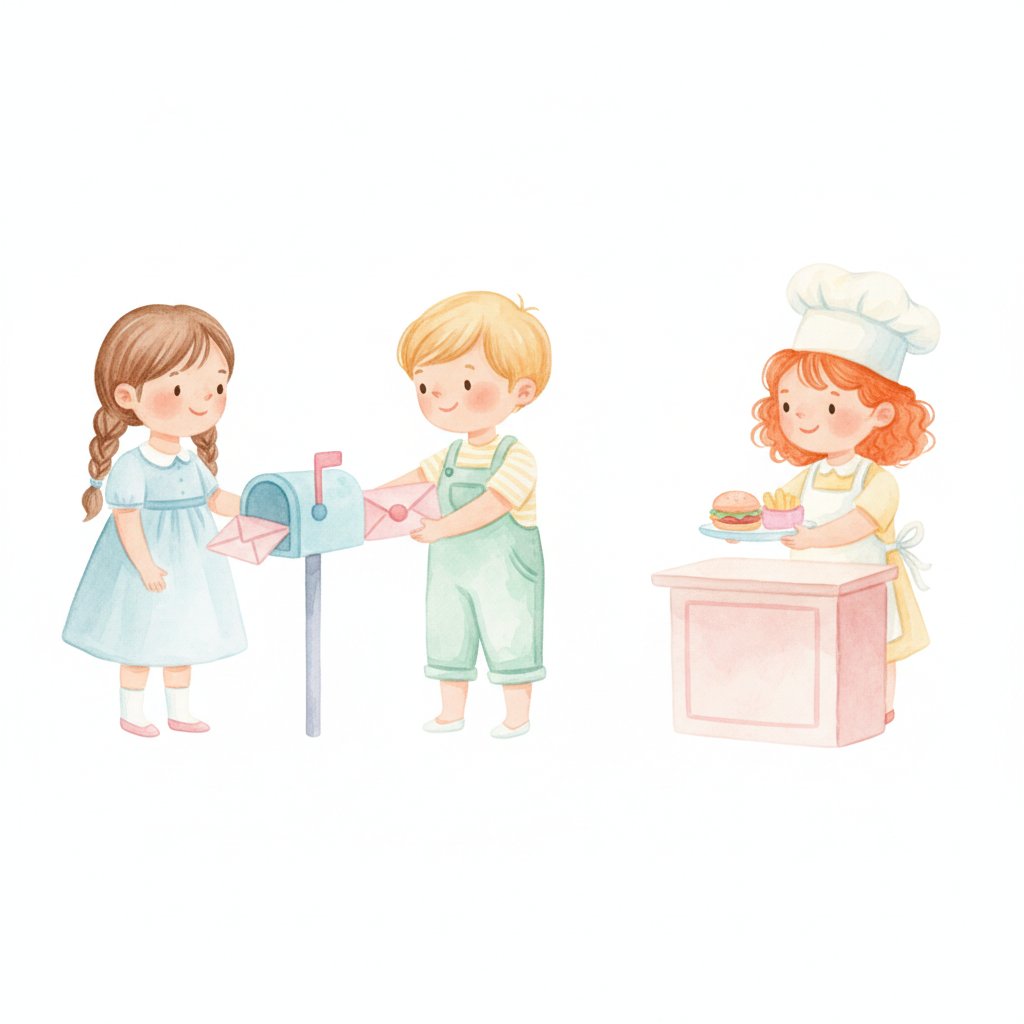
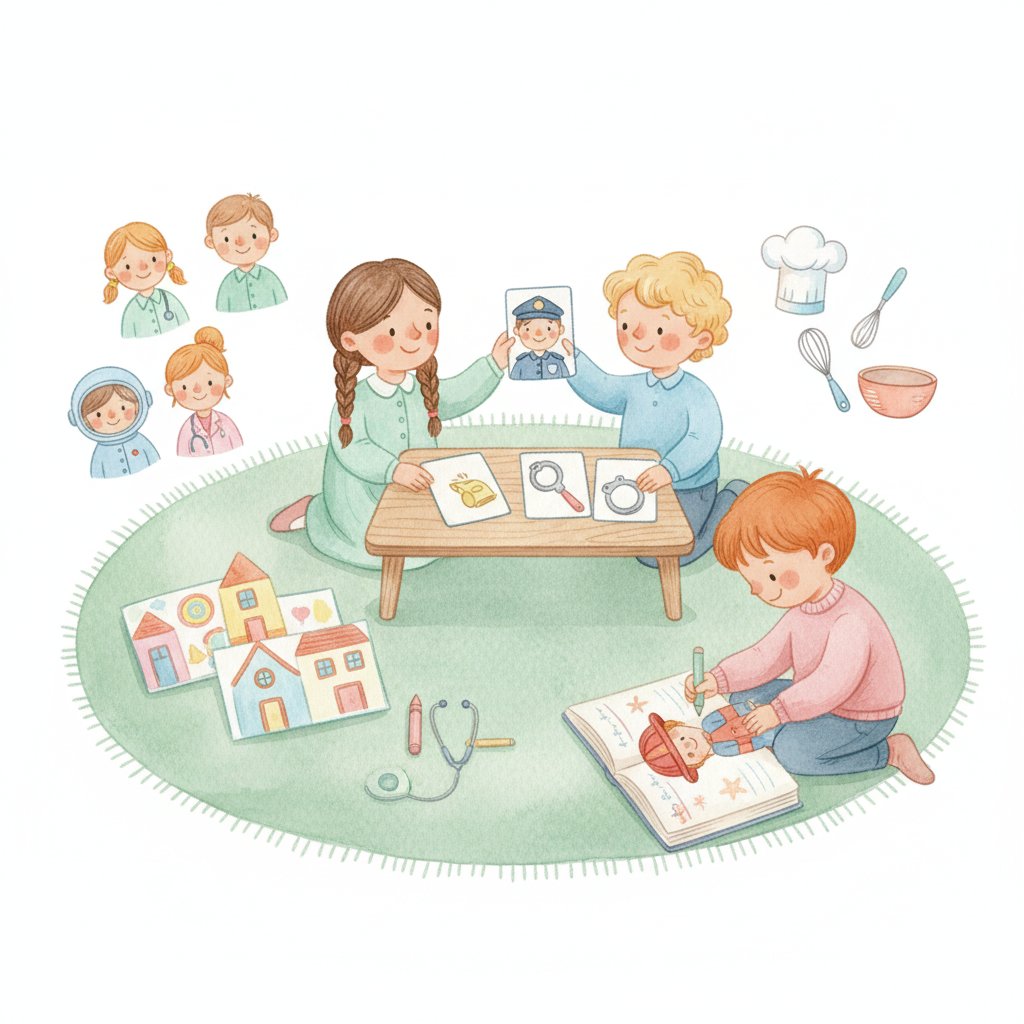
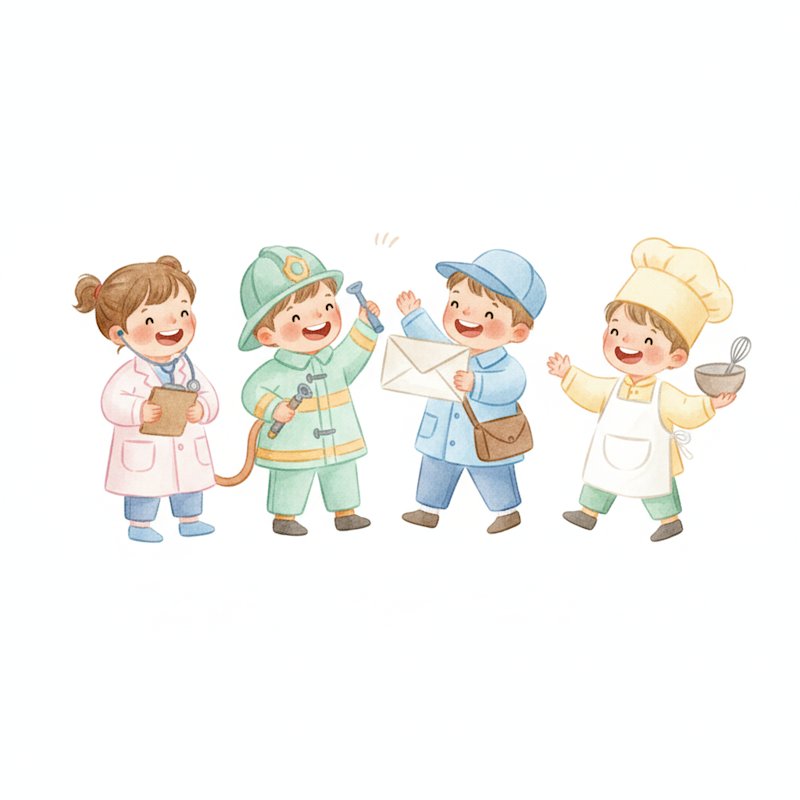
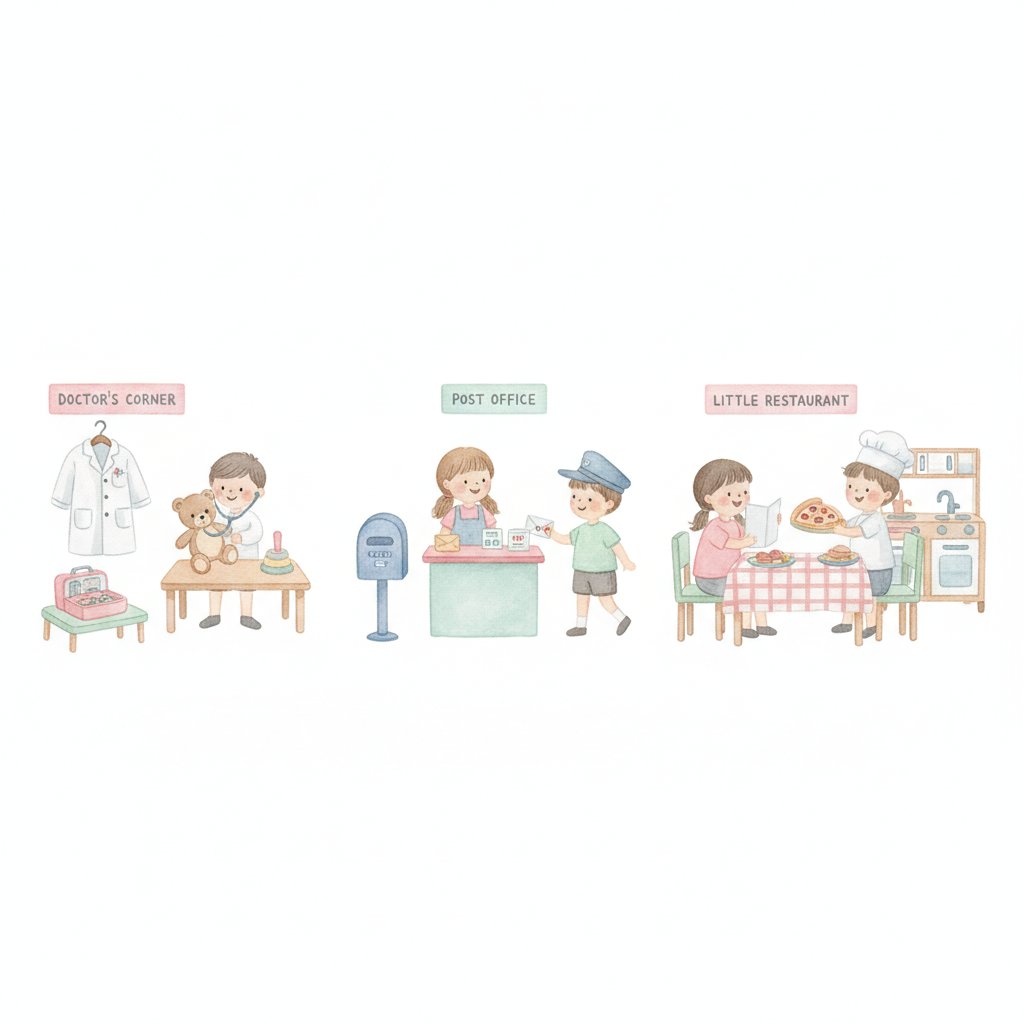
We turned our classroom into a mini town for a week: a doctor's office in the reading corner, a post office at the writing table, a restaurant in the dramatic play area, and a construction zone in the block center. Children rotated through every job. Four-year-old Marcus, who usually avoided writing, wrote 12 "prescriptions" at the doctor's office. Shy Priya became the most assertive mail carrier I'd ever seen, demanding signatures for every delivery. Children who wouldn't sit still for circle time stood in line patiently at the "restaurant" waiting to order. Every child found a role where they shone.

According to the Early Childhood Learning and Knowledge Center, community helpers activities develop social understanding, career awareness, language skills, and civic responsibility. Children learn that their community works because different people do different jobs — and that cooperation makes daily life possible. These activities also build vocabulary, social confidence, and an understanding of how to ask for help.
This guide covers 20+ community helper activities for ages 3-6. Pair it with our dramatic play guide for more role-play and our safety guide for safety helper activities.
Doctor and Nurse Activities (Ages 3-6)

1. Doctor's office dramatic play
Materials: Doctor kit, clipboard, paper, pencils, stuffed animals.

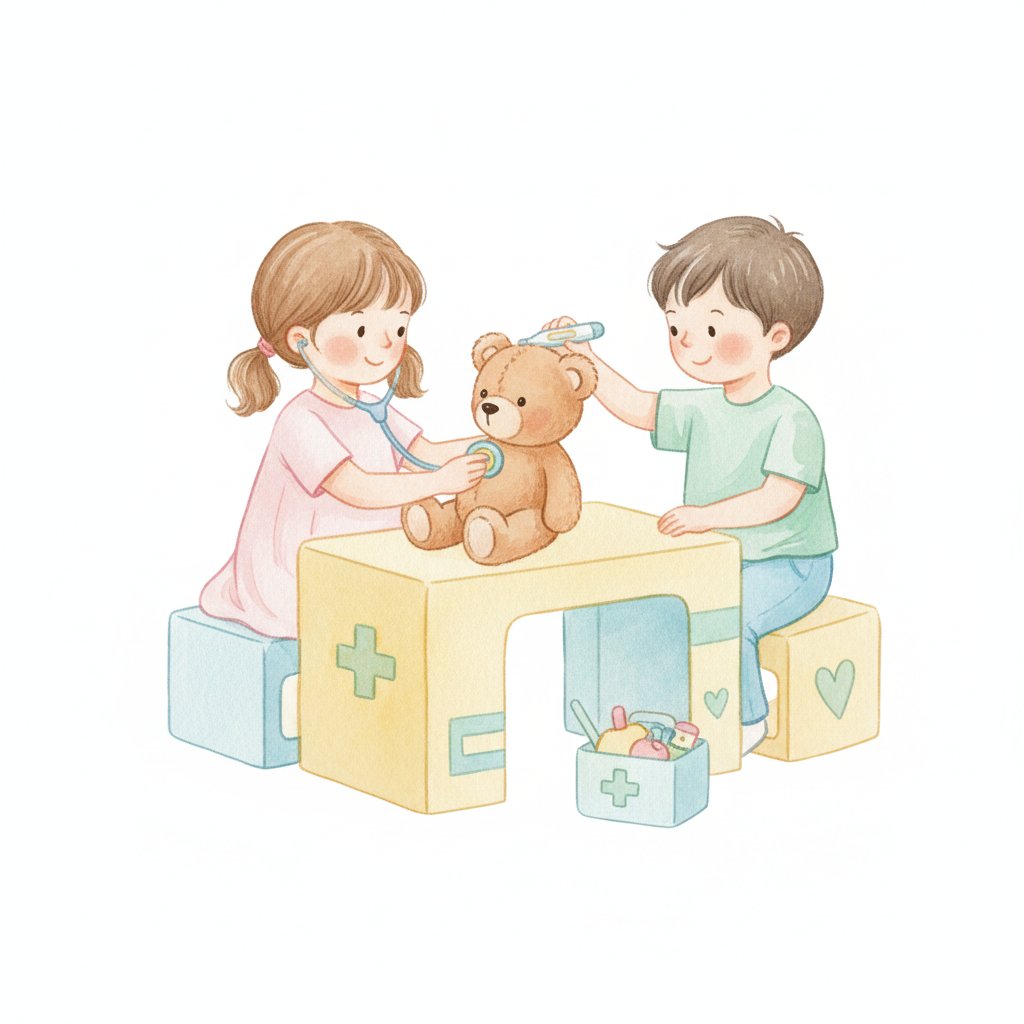
What to do: Set up a doctor's office: waiting room, check-in desk, exam table. Children take turns being doctor, nurse, patient, and receptionist. "What seems to be the problem? Let me check your heart. Open wide! You need to rest and drink water." The role-play teaches empathy, body vocabulary, and reduces fear of real doctor visits. For more dramatic play, see our dramatic play guide.

Why it works: When children play doctor, they process their own experiences of being patients. The "shot doesn't hurt in play." The "exam is fun, not scary." They gain CONTROL over a situation where they usually have none. This control reduces anxiety and builds confidence for real medical visits.

2. Body parts bingo
Materials: Body parts bingo cards.

What to do: "The doctor says: point to your ELBOW! Point to your KNEE! Point to your SHOULDER!" The bingo teaches body part vocabulary essential for medical communication. For more body awareness, see our body parts guide.

3. Health check stations
Materials: Scale, measuring tape, eye chart (simplified).

What to do: Set up check stations: height, weight, vision. Children rotate through: "Stand against the wall — how tall are you? Step on the scale — how much do you weigh? Can you read the letters on the chart?" The stations teach measurement and health awareness.

4. Prescription writing
Materials: Paper, pencils.

What to do: "Write a prescription for your patient: what do they need? Rest? Water? Medicine? A hug?" Children write or draw prescriptions. The writing practice is meaningful because it has a real purpose in the play scenario. For more writing, see our writing guide.

5. Healthy vs. unhealthy sorting
Materials: Food pictures.

What to do: "Doctors know what foods keep us healthy! Sort these: healthy foods that help us grow vs. foods that are treats." The sorting connects the doctor role to health education. For more health, see our health guide.

The poster that turns play into medical school
Our Human Body Educational Poster hangs in the doctor's office corner and becomes a reference tool: 'Your patient says their stomach hurts — where is the stomach? Let me check the poster! Here it is, right below the lungs. Let me listen with my stethoscope.' Children use the poster to diagnose their stuffed animal patients with anatomical accuracy. Bones, muscles, organs — all labeled, all visible, all learnable. One poster, a dozen pretend diagnoses, and a generation of future doctors who already know where the liver is.

Firefighter and Police Activities (Ages 3-6)

6. Fire station dramatic play
Materials: Red clothing, hats, fake hose (string), bell.

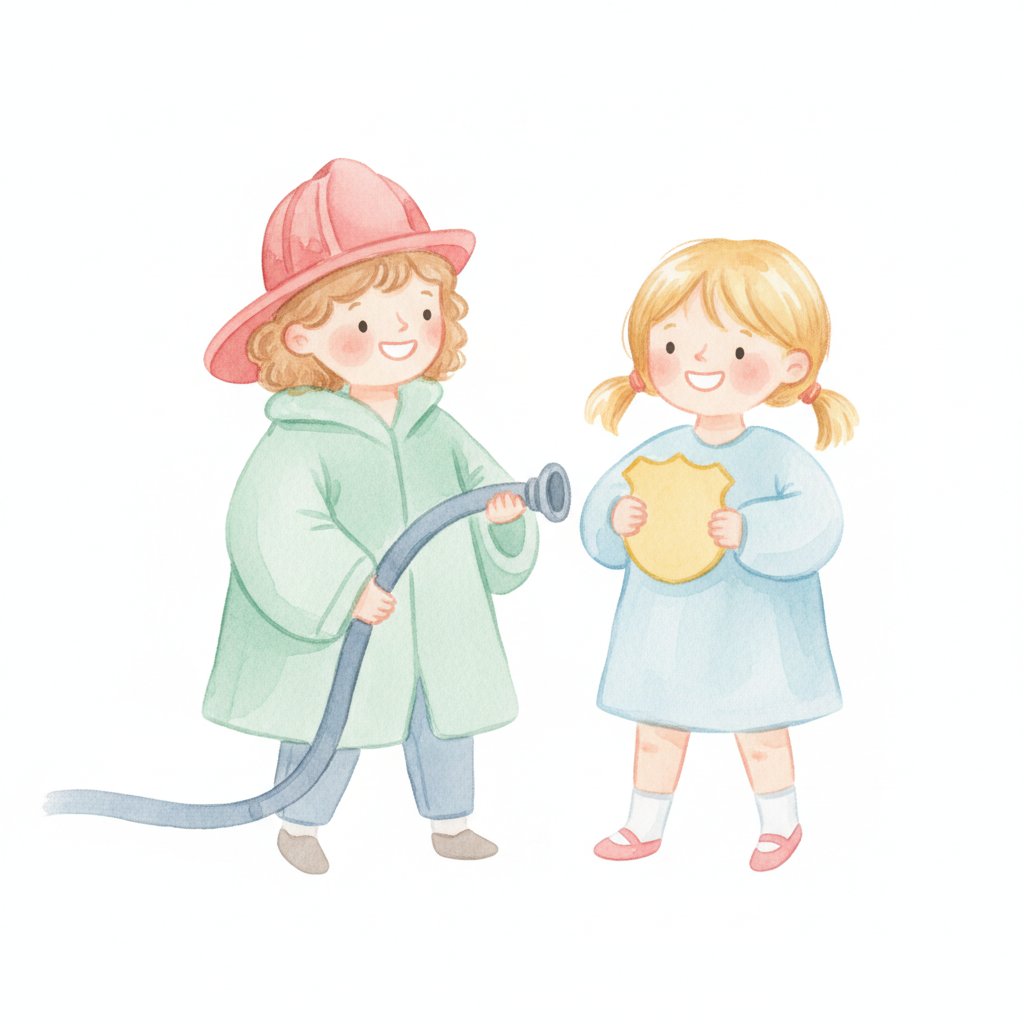
What to do: Set up a fire station: "The alarm is ringing! Firefighters, put on your gear! Let's go!" Children practice responding to the "alarm," putting on gear, and "putting out fires" (red paper taped to the wall — spray with water bottle). The role-play teaches emergency response through play. For more fire safety, see our safety guide.

7. Police officer role-play
Materials: Badge, notepad, whistle.

What to do: "Police officers keep people SAFE. They help lost children find their parents. They direct traffic. They solve problems." Role-play scenarios: helping a lost stuffed animal, directing toy cars at an intersection, writing "tickets" for broken rules. The play teaches that police are helpers, not punishers.

8. Emergency vehicle sorting
Materials: Pictures of vehicles.

What to do: Sort by helper type: "Fire truck=firefighter. Police car=police officer. Ambulance=paramedic. Mail truck=mail carrier. School bus driver." The sorting connects vehicles to jobs. For more sorting, see our sorting guide.

9. Rescue mission obstacle course
Materials: Obstacles, timer.

What to do: "A cat is stuck on the roof! Navigate the obstacle course to rescue it: crawl through the tunnel, jump over the 'fire' (red paper), climb the 'ladder' (blocks)!" The course combines gross motor skills with rescue narrative. For more movement, see our gross motor guide.

10. "Who do I call?" scenarios
What to do: Present scenarios and children choose who to call: "There's a fire! Call... FIREFIGHTERS! Someone stole your bike! Call... POLICE! Someone is very sick! Call... PARAMEDICS!" The game teaches which helper to approach in which situation.

Weather reporter: a community helper children forget about
Our Weather Flashcards turn children into meteorologists — the community helpers who tell us what to wear and whether to bring an umbrella. 'Today's forecast: PARTLY CLOUDY with a chance of RAIN. You'll need a jacket and an umbrella!' Children hold up the cards and deliver the weather report to the class. The activity teaches weather vocabulary, public speaking, and the idea that many different jobs keep a community informed and safe. 12 weather types, 12 forecasts, one confident weather reporter.

More Community Helper Activities (Ages 3-6)

11. Post office
Materials: Envelopes, stamps (stickers), mailbox.

What to do: Set up a post office. Children write letters, address envelopes, stamp them, and deliver to classmates' mailboxes. "A letter for James! From Priya!" The play teaches writing, name recognition, and the mail system. For more name writing, see our name recognition guide.

12. Restaurant
Materials: Play food, menus, aprons, notepad.

What to do: Children take turns as chef, server, and customer. "Welcome to our restaurant! Today we have soup, sandwiches, and fruit. What would you like?" The server writes the order, the chef prepares it, the customer eats it. The play teaches sequencing, writing, manners, and counting (the bill). For more cooking, see our cooking guide.

13. Construction zone
Materials: Blocks, toy tools, hard hats, blueprints (drawings).

What to do: "We're building a school! First we need a plan." Children draw blueprints, then build with blocks following their plan. "We need walls, a roof, windows, and a door." The building teaches planning, spatial reasoning, and teamwork. For more building, see our block guide.

14. Grocery store
Materials: Play food, baskets, cash register, price tags.

What to do: Set up a grocery: stock shelves with food, add price tags (numbers 1-5). Children shop, count items, and pay. "That's 3 items. Each costs 1 coin. That's 3 coins!" The store teaches counting, money concepts, and food categories. For more counting, see our number guide.

15. Teacher for a day
What to do: Let children be the teacher: "Today YOU read the story. YOU lead the song. YOU show the class how to do the craft." The role reversal gives children leadership experience and helps them appreciate how hard teachers work. For more leadership, see our self-confidence guide.

Community Learning Extensions (Ages 3-6)

16. Community helper matching
Materials: Helper and tool pictures.

What to do: Match helpers to their tools: "Doctor → stethoscope. Firefighter → hose. Chef → spatula. Mail carrier → letters. Builder → hammer." The matching teaches job-tool associations. For more matching, see our matching guide.

17. "When I grow up" journal
Materials: Paper, crayons.

What to do: "Draw a picture of what you want to be when you grow up! Tell me about it." Children draw and dictate stories about their future careers. Collect the pages into a class book. The journal encourages aspiration and self-expression. For more storytelling, see our storytelling guide.

18. Neighborhood walk observation
What to do: Walk around the school or neighborhood: "What helpers do we see? There's a crossing guard! There's a garbage truck — the sanitation workers are collecting trash! There's a bus driver!" The real-world observation connects classroom play to actual community members. For more outdoor activities, see our outdoor guide.

19. Thank-you card project
Materials: Paper, crayons, envelopes.

What to do: "Let's write thank-you cards to community helpers! To our crossing guard for keeping us safe. To our librarian for helping us find books. To our custodian for keeping our school clean." The cards teach gratitude and community appreciation. For more kindness, see our kindness guide.

20. Community helper counting book
Materials: Paper, markers.

What to do: Create a counting book: "1 firefighter, 2 police officers, 3 teachers, 4 mail carriers, 5 chefs..." Each page has the number, the helper, and an illustration. The book combines counting practice with career vocabulary. For more number activities, see our number guide.

The farmer: the helper who feeds us all
Our Farm Animals Flashcards introduce the farmer — one of the most important community helpers. 'Farmers raise animals that give us FOOD. Cows give us MILK. Chickens give us EGGS. Sheep give us WOOL for clothes. Every time you eat breakfast, a farmer helped make it happen!' The flashcards connect the animal to the product to the farmer to the child's plate. 12 farm animals, 12 foods, 12 reasons to thank a farmer. Community helper education starts with understanding where things come from.
1.How do I set up dramatic play areas for community helpers?
Keep it simple: one corner, one job, one week. Use real items when possible (envelopes, notepad, real food containers). Add print: menus, prescription pads, price tags, signs. Children need real print in their play to connect literacy to life. Rotate helpers weekly so every child experiences multiple roles. The setup doesn't need to be elaborate — it needs to be authentic.
2.Can community helper activities work without buying materials?
Absolutely. A doctor's office needs a notepad and pencil. A post office needs paper and envelopes. A restaurant needs a notepad and play food (or pictures of food). A construction zone needs blocks. Most community helper play uses materials already in the classroom. The magic is in the ROLE, not the props.
3.How do I address stereotypes about who can do certain jobs?
Deliberately show diverse examples: women firefighters, male nurses, female construction workers, male teachers. Use books and images that show all genders and races in all roles. When a child says "only boys can be firefighters," respond: "Actually, many firefighters are women! Firefighters need to be brave, strong, and caring — and anyone can have those qualities."
4.What if a child only wants to play one role?
That's fine for a day or two — deep engagement with one role is valuable. But gently encourage rotation: "You've been an amazing doctor all week! Tomorrow, I need a brave firefighter — do you think you could try that?" If a child resists, let them observe first: "You can watch the firefighters today and try tomorrow." No pressure, but no permanent avoidance either.