Articles6 min read

The Question That Started 15 Minutes of Debate

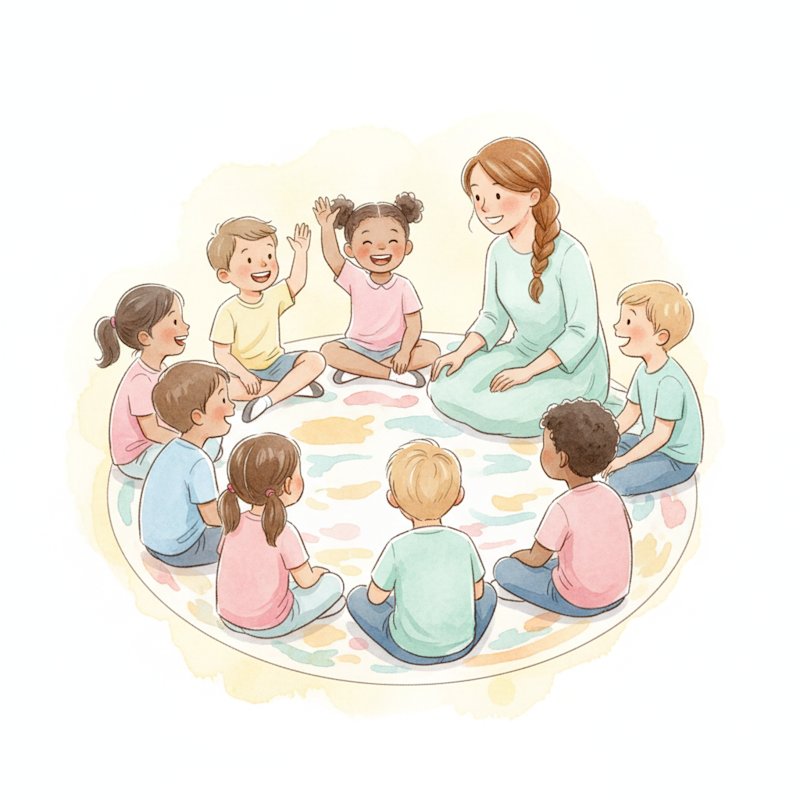
"Would you rather be able to FLY or be INVISIBLE?" I asked the circle of five-year-olds. The room EXPLODED. "Fly! Because I could go to Grandma's house in ONE SECOND!" "Invisible! Because I could sneak into the kitchen and eat cookies!" "Fly! Because I could touch the clouds!" "But if you are invisible, nobody can SEE you — that is sad." "Unless you do not WANT to be seen. Sometimes I want to hide." In 15 minutes, these children had: stated opinions, given reasons, listened to opposing views, changed their minds, expressed empathy, and debated ethics — all from one question. Conversation is not just TALKING. It is THINKING OUT LOUD, and it is one of the most important skills we can develop in the preschool years.

According to the American Speech-Language-Hearing Association, conversation activities develop expressive language, receptive language (listening comprehension), pragmatic language (social rules of conversation), turn-taking, perspective-taking, and the confidence to share ideas with a group. Children who practice structured conversation show stronger literacy, social skills, and emotional regulation.
This guide covers 20+ conversation and opinion activities for ages 3-6. Pair it with our circle time guide for group management and our listening guide for receptive language.
Show-and-Tell Variations (Ages 3-6)

1. Classic show and tell
Materials: Object from home.

What to do: "Bring one object from home. Tell us: What is it? Where did you get it? Why is it special to you?" The classic format teaches presentation and expressive language. For more presentation, see our confidence guide.

Why it works: Conversation is the PRIMARY way young children develop language. Every study on early literacy shows that children who engage in rich conversations — not just hearing adults talk, but TALKING THEMSELVES — develop larger vocabularies, stronger grammar, and better reading skills. The key is that the child must be the SPEAKER, not just the listener. Show-and-tell gives every child a guaranteed turn to speak, and the object gives them something concrete to talk about.

2. Mystery bag show and tell
Materials: Object in a bag.

What to do: "Do not show us what is in your bag. Describe it: What color is it? What shape? What does it do? We will GUESS what it is!" The mystery format teaches descriptive language and deduction. For more guessing, see our investigation guide.

3. Topic show and tell
Materials: Themed object.

What to do: "This week, bring something that makes you LAUGH. Next week, something from nature. The week after, something your family gave you." The themed format teaches categorization and gives structure to the sharing. For more themes, see our circle time guide.

4. Partner share
Materials: Pairs.

What to do: "Turn to your partner and tell them about your object. Partners, ask ONE question. Then switch!" The partner share teaches one-on-one conversation and question-asking. For more social skills, see our social skills guide.

5. Photo show and tell
Materials: Family photo.

What to do: "Bring a photo of your family or a special place. Tell us: Who is in this photo? Where was it taken? What was happening?" The photo format teaches narrative and personal storytelling. For more storytelling, see our storytelling guide.

Which animal would you be and why?
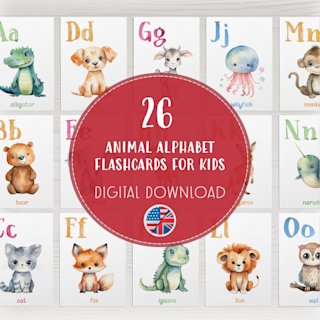
Our Farm Animals Flashcards become an opinion game: 'Look at all the farm animals. If you could be ONE of them, which would you choose and WHY? I would be the COW because I love giving milk to people. I would be the HORSE because I love running fast. I would be the CHICKEN because I like waking everyone up!' Each child picks a card, states their choice, and gives a REASON. The key skill is not the choice — it is the REASON. 'Because I like it' becomes 'because I like running fast' becomes 'because horses are free and strong and they help people.' Reasoning grows through practice. Twelve animals, twelve opinions, twelve reasons.

Opinion and Discussion Activities (Ages 3-6)

6. Would you rather
What to do: "Would you rather be tiny as a bug or giant as a building? Would you rather eat only pizza or only ice cream? Would you rather have a pet dinosaur or a pet dragon?" The game teaches preference expression and reasoning. For more big thinking, see our imagination guide.

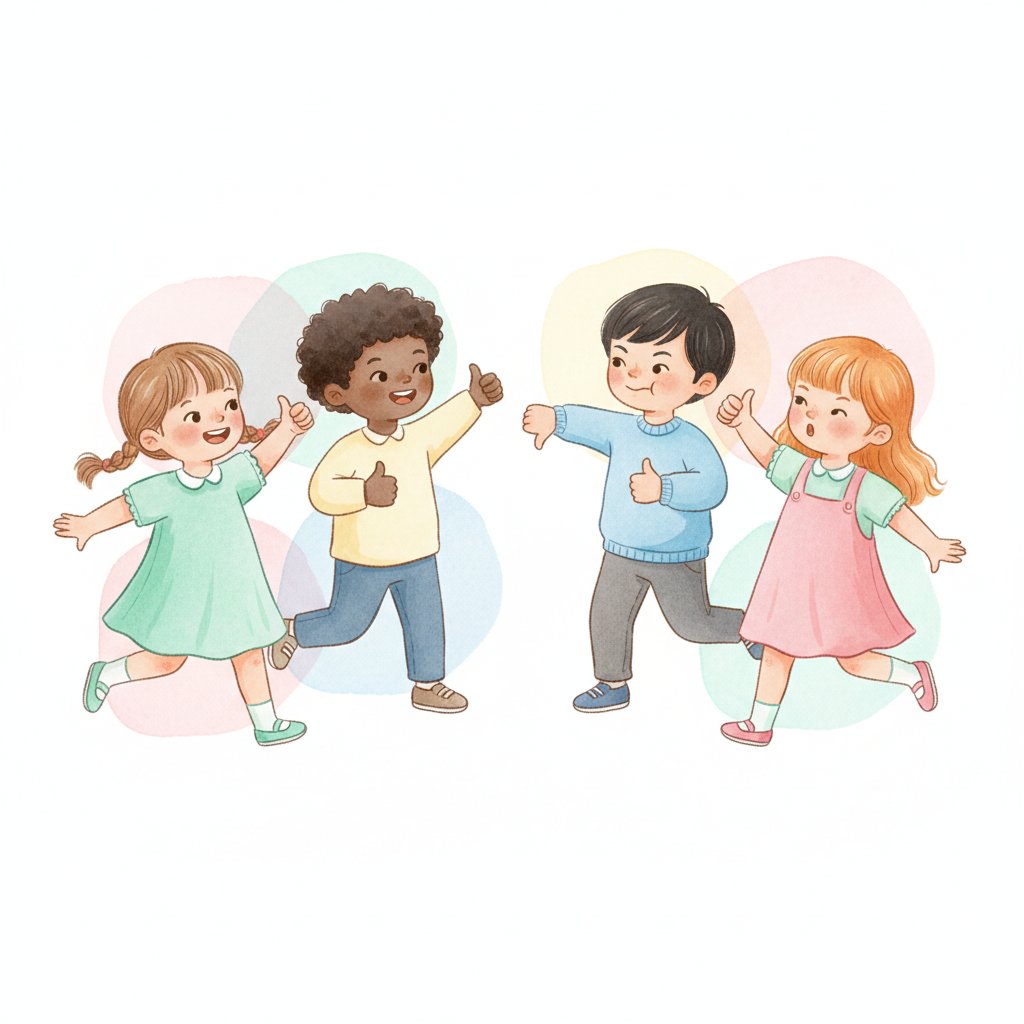
7. Thumbs up, thumbs down
Materials: Statement cards.

What to do: "Thumbs up if you agree, thumbs down if you disagree. Ready? Broccoli is delicious. (Wait for thumbs.) Dogs make the best pets. (Wait.) Summer is better than winter. (Wait.)" The voting teaches opinion expression in a safe, non-verbal way. For more voting, see our graphing guide.

8. Because chain
What to do: "I like apples. Why? Because they are sweet. Why are they sweet? Because they have sugar. Why do they have sugar? Because trees make it from sunshine. Why does sunshine make sugar? Because..." The because chain teaches reasoning depth and causal thinking. For more thinking, see our problem-solving guide.

9. Agree or disagree circle
What to do: "Stand on this side if you agree, that side if you disagree. Statement: Children should be allowed to stay up as late as they want." The physical sorting teaches respectful disagreement. For more sorting, see our sorting guide.

10. Turn-and-talk
Materials: Prompt question.

What to do: "I am going to ask a question. Turn to your partner and talk for one minute. Ready? What is the best thing about being your age?" The turn-and-talk teaches partner conversation in a structured format. For more communication, see our social skills guide.

Name your feeling and tell us why
Our Emotions Flashcards become conversation starters: 'Pick the card that shows how you felt this morning. Now tell us: What happened that made you feel that way? What did you DO about it? What would you do differently next time?' The flashcards give children the VOCABULARY to start talking: happy, sad, angry, scared, surprised, proud, embarrassed, frustrated. Without the card, a child might say 'I felt bad.' With the card, they say 'I felt FRUSTRATED because I could not tie my shoe.' The card is the bridge between a feeling and a conversation. Twelve emotions, twelve conversations, twelve children learning to express themselves.

Speaking Confidence Activities (Ages 3-6)

11. Reporter interview
Materials: Microphone prop.

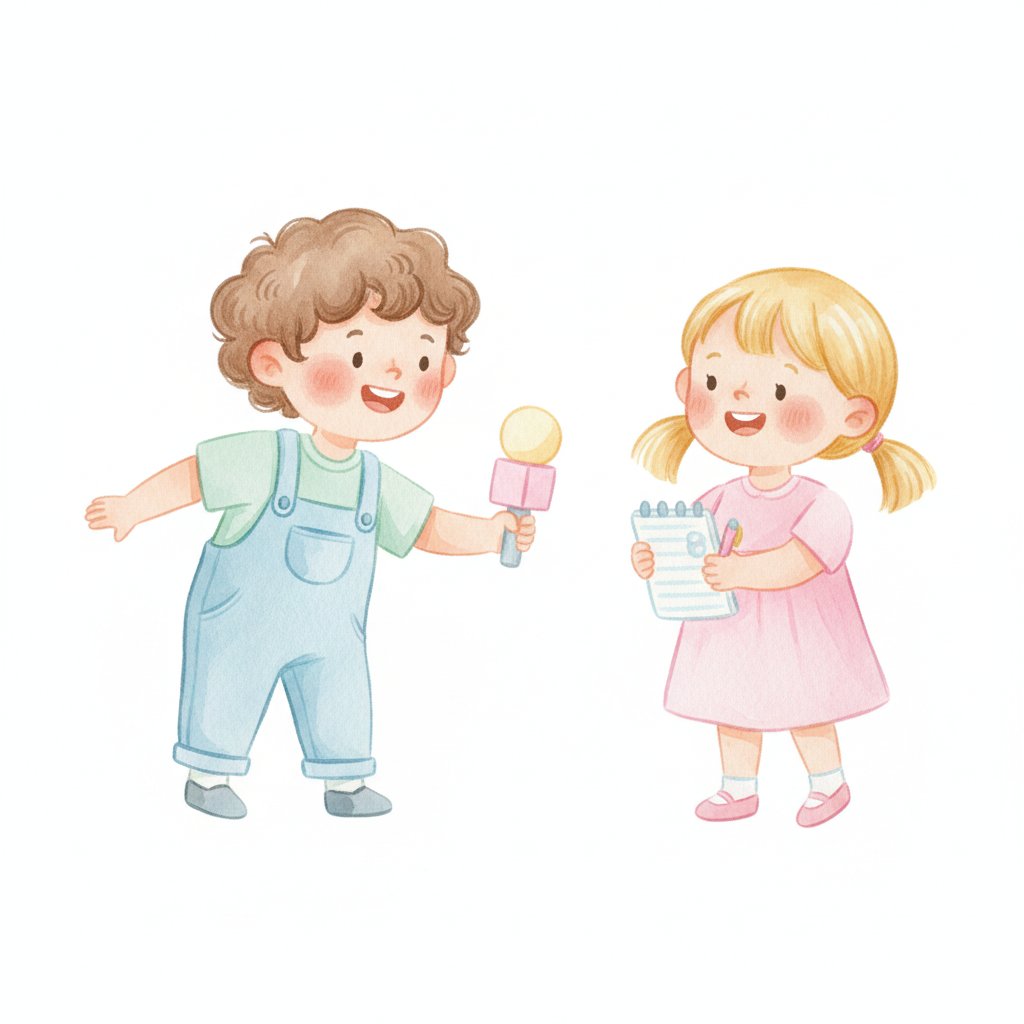
What to do: "I am a reporter and you are the expert. Tell me: What is the best thing about being 4 years old? What is the hardest thing? What do you wish adults understood?" The interview teaches answering questions thoughtfully. For more confidence, see our confidence guide.

12. Telephone game
Materials: None.

What to do: "I whisper a message to the first person. They whisper it to the next. At the end, is the message the SAME or DIFFERENT?" The telephone teaches careful listening and speaking. For more listening, see our listening guide.

13. Compliment circle
What to do: "Say one nice thing about the person next to you. 'Emma, I like how you always share.' 'Jake, you are really good at building towers.'" The compliment circle teaches positive communication and noticing others. For more kindness, see our kindness guide.

14. Story starter round
Materials: Story prompt.

What to do: "I will start a story: 'Once upon a time, a frog found a magic rock.' Who can add the NEXT sentence?" The round-robin storytelling teaches collaborative narrative building. For more stories, see our storytelling guide.

15. Two truths and a silly
What to do: "Tell us two true things about yourself and one silly made-up thing. We guess which one is the SILLY one!" The game teaches distinguishing fact from fiction and speaking about yourself. For more fun, see our humor guide.

More Conversation Activities (Ages 3-6)

16. Question of the day
Materials: Question board.

What to do: "Every morning, a new question: What is your favorite season? What makes you feel brave? If you could go anywhere, where? Write or draw your answer and share." The daily question teaches routine reflection. For more routines, see our morning routine guide.

17. Feeling check-in
What to do: "How are you feeling right now? Not how you felt yesterday — RIGHT NOW. Use a word, not just a thumbs up or down." The check-in teaches emotional awareness and real-time self-expression. For more feelings, see our feelings guide.

18. News reporter
Materials: Paper rolled into a microphone.

What to do: "Welcome to the preschool news! What happened today that is NEWsworthy? 'Today in the block area, Leo built the tallest tower EVER. Over to you, Mia, for the weather report.'" The news format teaches reporting and summarizing events. For more language, see our vocabulary guide.

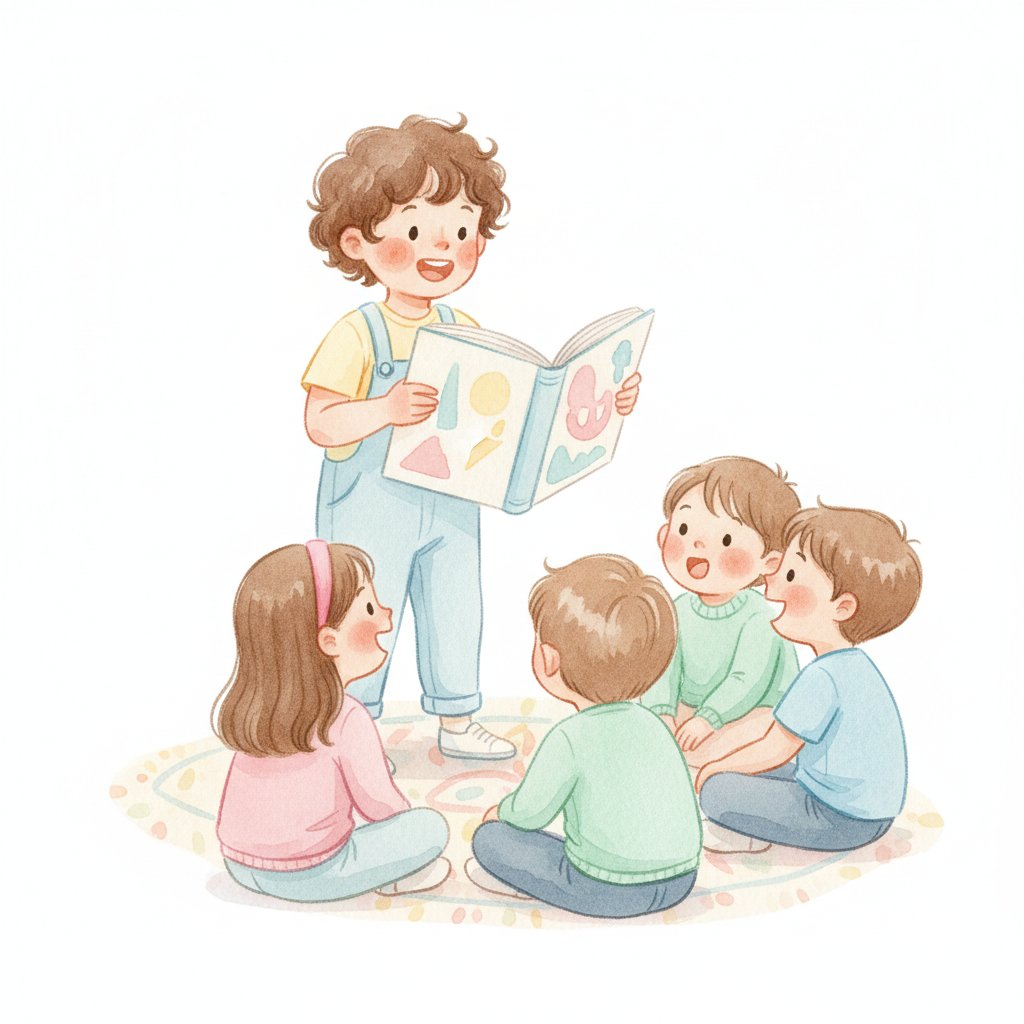
19. Book talk
Materials: Favorite book.

What to do: "Tell us about a book you love. What is it about? Who is your favorite character? Would you change the ending?" The book talk teaches literary discussion. For more books, see our reading guide.

20. Big question circle
What to do: "Here is a big question: Where do babies come from? No, seriously — what do YOU think? Where does the sun go at night? Why do we dream? What happens when we die?" The big questions teach philosophical thinking and respectful exploration of difficult topics. For more big thinking, see our imagination guide.

Every day has a story to tell
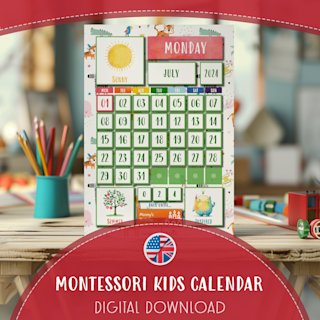
Our Days of the Week Poster becomes a daily conversation tool: 'Monday morning, everyone shares: What did you do this weekend? Tuesday: What is one thing you want to learn this week? Wednesday: What is the best thing that happened so far? Thursday: What are you grateful for? Friday: What are you proud of this week?' Each day gets a question. Each question gets a conversation. The poster structures the week; the questions structure the talk. Children learn that Monday is not just a name on a card — it is a day with a PURPOSE: sharing, planning, reflecting, thanking, celebrating. Seven days, seven questions, seven conversations a week.
1.What if a child does not want to talk in front of the group?
Never force participation. Instead, offer alternatives: (1) Whisper to a teacher who shares for them. (2) Draw their answer instead of saying it. (3) Tell a partner instead of the whole group. (4) Use thumbs up/down or pointing to participate without speaking. Confidence builds gradually. A child who watches for three weeks and then raises their hand in week four has made enormous progress. The goal is VOLUNTARY participation, not coerced performance.
2.How do I handle children who dominate conversation?
Three strategies: (1) Use a "talking object" — only the person holding it may speak. (2) Set a timer: "You have 30 seconds to share. When the timer rings, it is the next person's turn." (3) Explicitly teach: "You shared a great idea! Now let us hear from someone who has not spoken yet." Frame it positively: everyone's voice matters, including quiet voices. The child who dominates is not being rude — they are enthusiastic. Channel that enthusiasm into leadership: "You go first and then help the next person find their words."
3.How do I teach respectful disagreement?
Model it explicitly: "I disagree with that idea, and here is why..." Teach sentence starters: "I think differently because..." "I see it another way..." "What about..." "Could it also be that..." Praise respectful disagreement when you see it: "I love how you disagreed without being mean!" Children need to hear that disagreeing is OKAY — it is HOW you disagree that matters. No name-calling, no laughing at ideas, no "that is stupid." Disagree with the IDEA, respect the PERSON.
4.How does conversation connect to reading and writing?
Directly and powerfully. Children who can TELL a story can eventually WRITE one. Children who can DESCRIBE an object can eventually read a description. Children who can EXPLAIN their thinking can eventually comprehend explanations in textbooks. Oral language is the FOUNDATION of literacy. Every study confirms: children who engage in rich conversation in preschool become stronger readers and writers in elementary school. Talk is not separate from literacy — it is where literacy begins.