Articles7 min read

The Restaurant That Taught My Class to Write

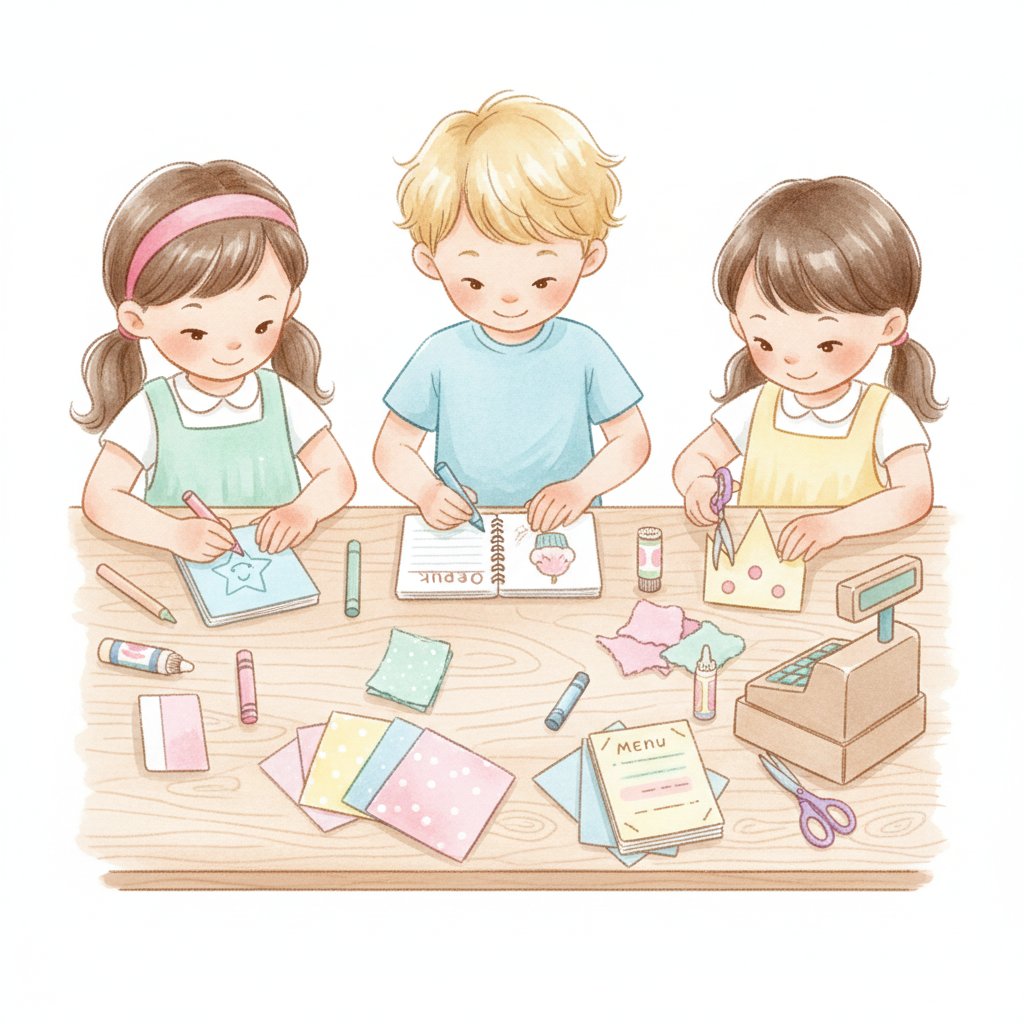
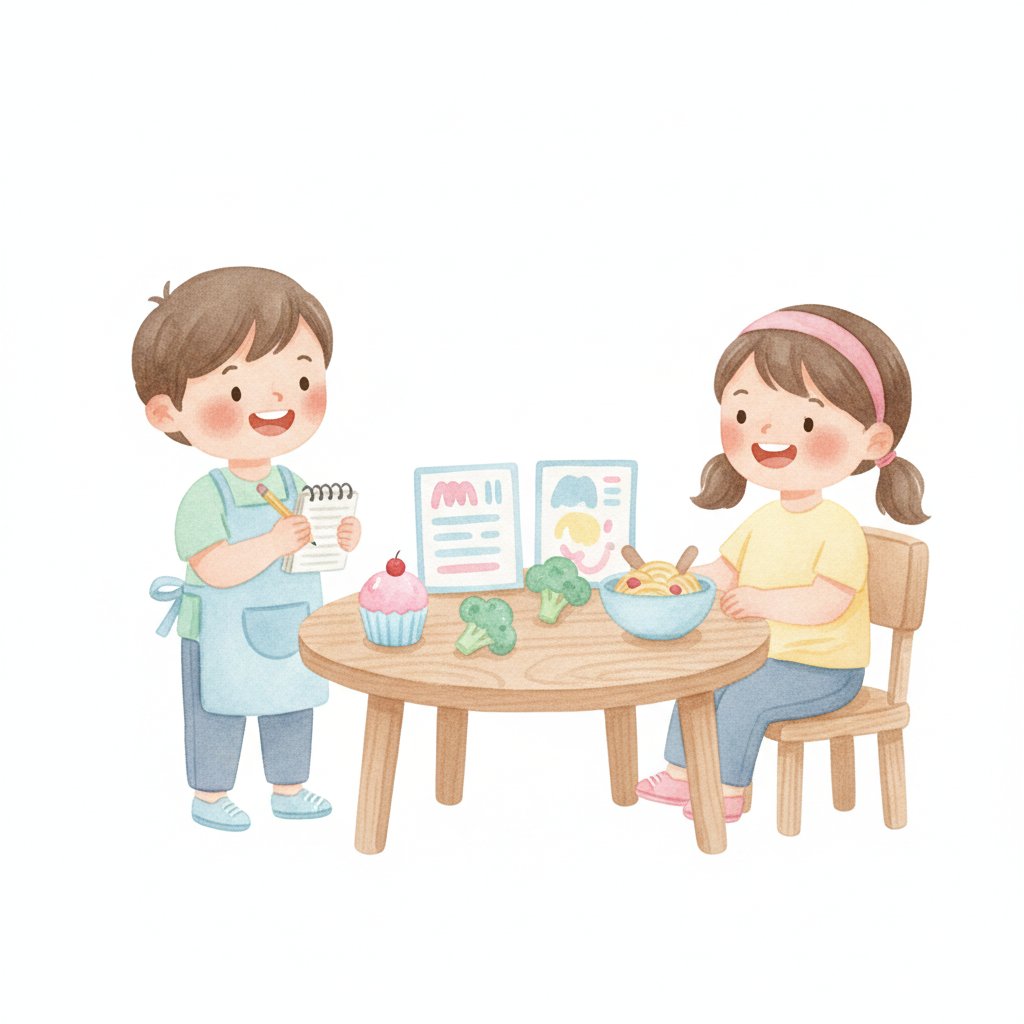
I set up a pretend restaurant in the corner of my classroom. Menus, play food, aprons, a cash register. I thought it would last a week. It lasted six. In those six weeks, I watched children who refused to hold pencils write "orders" on notepads. I heard children who barely spoke negotiate: "I'll be the chef, you be the waiter, and she can be the customer." I saw a four-year-old explain to another four-year-old why the customer couldn't order pizza at a sushi restaurant — a lesson in categories I hadn't planned.

Dramatic play is the single most underrated learning activity in early childhood. According to research from Yale's Edward Zigler Center, children who engage regularly in complex pretend play show stronger language development, better emotional regulation, and more advanced social cognition than children who don't. The key word is complex — play that involves roles, scripts, negotiations, and sustained narratives.
This guide covers 20+ dramatic play activities for ages 3-6, organized by theme: community helpers, daily life scenarios, and fantasy play. Each setup teaches specific skills through the natural motivation of pretend play. Pair it with our pretend play activities for more imaginative games and our circle time activities for social skill practice in group settings.
Why Dramatic Play Is Serious Learning

The Vygotsky connection: Psychologist Lev Vygotsky argued that pretend play is the leading activity of preschool-age children — the activity that drives their cognitive development more than any other. When a child pretends to be a doctor, they're operating above their everyday level. They use longer sentences. They negotiate roles. They follow social scripts they've observed but never practiced. This "zone of proximal development" is where the deepest learning happens.

Six skills dramatic play develops:

SkillWhat It Looks LikeReal-World Impact
LanguageUsing new vocabulary in characterVocabulary growth 2-3x faster than direct instruction
Social cooperationNegotiating roles and rulesConflict resolution practice in low-stakes setting
EmpathyPlaying from another's perspectiveUnderstanding others' feelings and motivations
Self-regulationStaying in character, following rulesExecutive function development
Problem-solvingImprovising when the script breaksFlexible thinking under uncertainty
Narrative skillsCreating stories with beginning/middle/endWriting readiness

Simple vs. complex dramatic play: Simple pretend play (feeding a doll) develops some skills. Complex dramatic play (running a pretend grocery store with multiple roles, rules, and props over several days) develops all of them. The activities in this guide are designed for complex, sustained play.

Age progression: Most 3-year-olds engage in parallel pretend play (side by side, same theme, limited interaction). Most 4-year-olds manage cooperative pretend play with roles and simple rules. Most 5-6 year olds sustain dramatic play over multiple sessions with increasingly complex narratives. All three levels benefit from the same setups — just let the complexity emerge naturally.

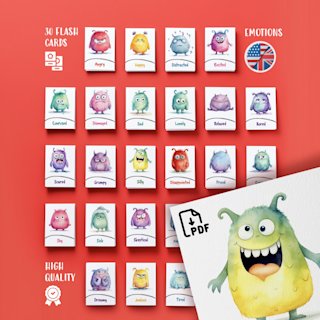
Emotion monsters make every role-play richer
Our Emotions Monster Feelings Flashcards give characters emotional depth: 'The patient feels SCARED. How does the doctor help?' Children hold up emotion cards during dramatic play, adding a layer of empathy to every scenario. Doctor visits, restaurant mishaps, and post-office dramas all get feelings.

Community Helper Dramatic Play (Ages 3-6)

1. Doctor's Office / Vet Clinic
Setup: Waiting room chairs, reception desk with notepad, doctor's kit (stethoscope, bandages, thermometer), patient forms (simple checklists), stuffed animals for vet version.

Skills: Vocabulary (stethoscope, prescription, temperature), empathy (comforting patients), writing (filling out forms), sequencing (check-in → wait → exam → diagnosis → payment).

Teacher tip: Add real bandages that children can actually apply. The fine motor practice of unwrapping and sticking bandages is valuable, and children love the authenticity.

2. Post Office
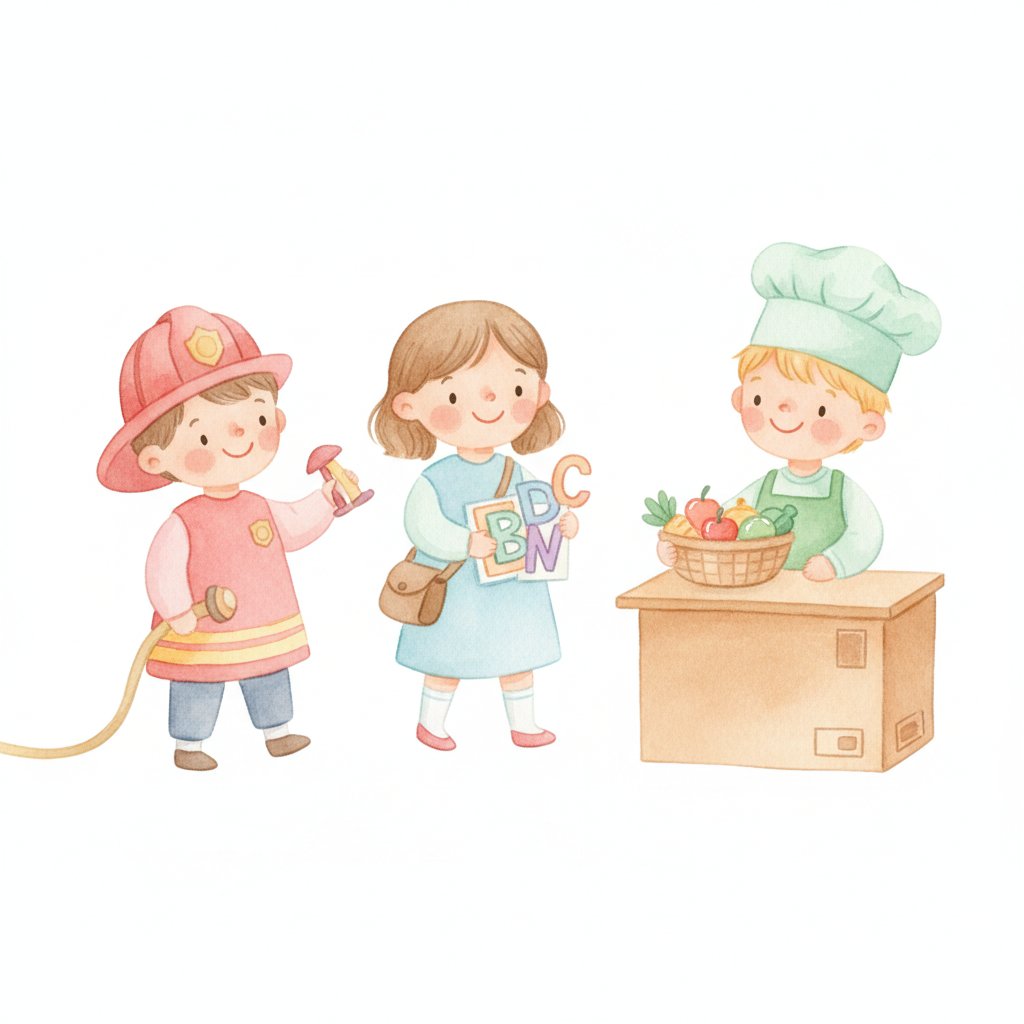
Setup: Envelopes, stamps (stickers), mailboxes (shoe boxes with slots), letters (pre-written and blank), packages (small boxes), postal worker hat or badge.

Skills: Writing (addressing envelopes, writing letters), number recognition (zip codes, stamps), community awareness (how mail works), responsibility (delivering to the right person).

3. Grocery Store
Setup: Play food or empty clean food containers, shopping baskets, price tags, play money, cash register, grocery bags, shopping lists.

Skills: Math (counting money, comparing prices), categorization (produce, dairy, grains), writing (shopping lists), social scripts (customer/cashier interaction).

4. Restaurant / Bakery
Setup: Menus (picture-based for younger children, word-based for older), play food, aprons, notepad for orders, play money, table settings.

Skills: Writing (taking orders), vocabulary (menu words), math (calculating totals), patience (waiting for food), courtesy (please/thank you).

5. Fire Station
Setup: Fire hats, hoses (jump ropes), a "fire truck" (lined-up chairs), walkie-talkies (toy phones), a map of the classroom with "fire" locations marked.

Skills: Spatial awareness (navigating the classroom map), teamwork (multiple firefighters responding), emergency vocabulary, sequencing (receive call → drive → put out fire → return).

Daily Life Dramatic Play (Ages 3-6)

6. Home / Family
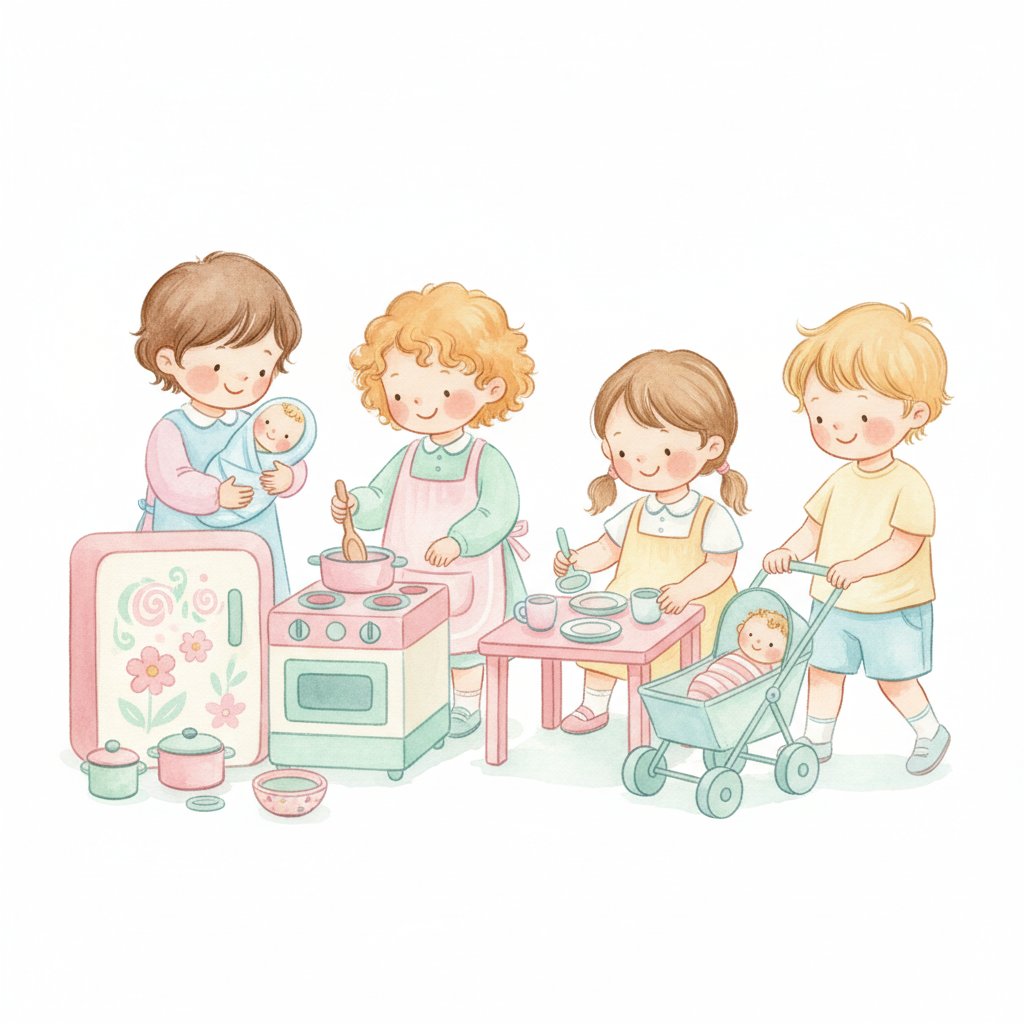
Setup: Dolls, kitchen area, dress-up clothes, baby care items (bottles, blankets, diapers), small table for "family dinner."

Skills: Nurturing behavior, family vocabulary, daily routine awareness, caregiving skills. This is especially valuable for children who are new siblings — it lets them process their changing family role.

7. School
Setup: Mini whiteboard, pointer, student desks, books, attendance sheet, bell.

Skills: Children who play "school" practice the student role from both sides. Being the "teacher" requires clear communication, organization, and patience. Being the "student" requires following rules they normally resist. Role reversal builds perspective-taking.

8. Hair Salon / Barber Shop
Setup: Combs, clips, capes (towels), pretend scissors (or just hand gestures), mirrors, appointment book, play money.

Skills: Fine motor (combing, clipping), social conversation (salon small talk!), waiting patiently for an appointment, self-care vocabulary.

9. Construction Site
Setup: Blocks, toy trucks, hard hats, blueprints (drawings), measuring tapes, tool belt with toy tools.

Skills: Spatial reasoning (building from blueprints), measurement (comparing lengths), cooperation (building together), safety awareness (hard hats, careful lifting). Connect with our STEM activities for more building-focused learning.

10. Pet Shop
Setup: Stuffed animals, pet bowls, pet food containers (empty), leashes (string), adoption forms, price tags.

Skills: Animal vocabulary, responsibility (caring for pets), categorization (sorting animals by type), empathy (understanding animal needs).

Animal flashcards: the multi-purpose dramatic play prop
Our Farm Animals Flashcards serve triple duty in dramatic play: use them as pet shop inventory cards, vet clinic patient records, or farm-to-market goods. Each card has the animal name for reading practice — children 'read' the card as part of their role. 'Next patient: the COW!'

Fantasy & Imagination Dramatic Play (Ages 3-6)

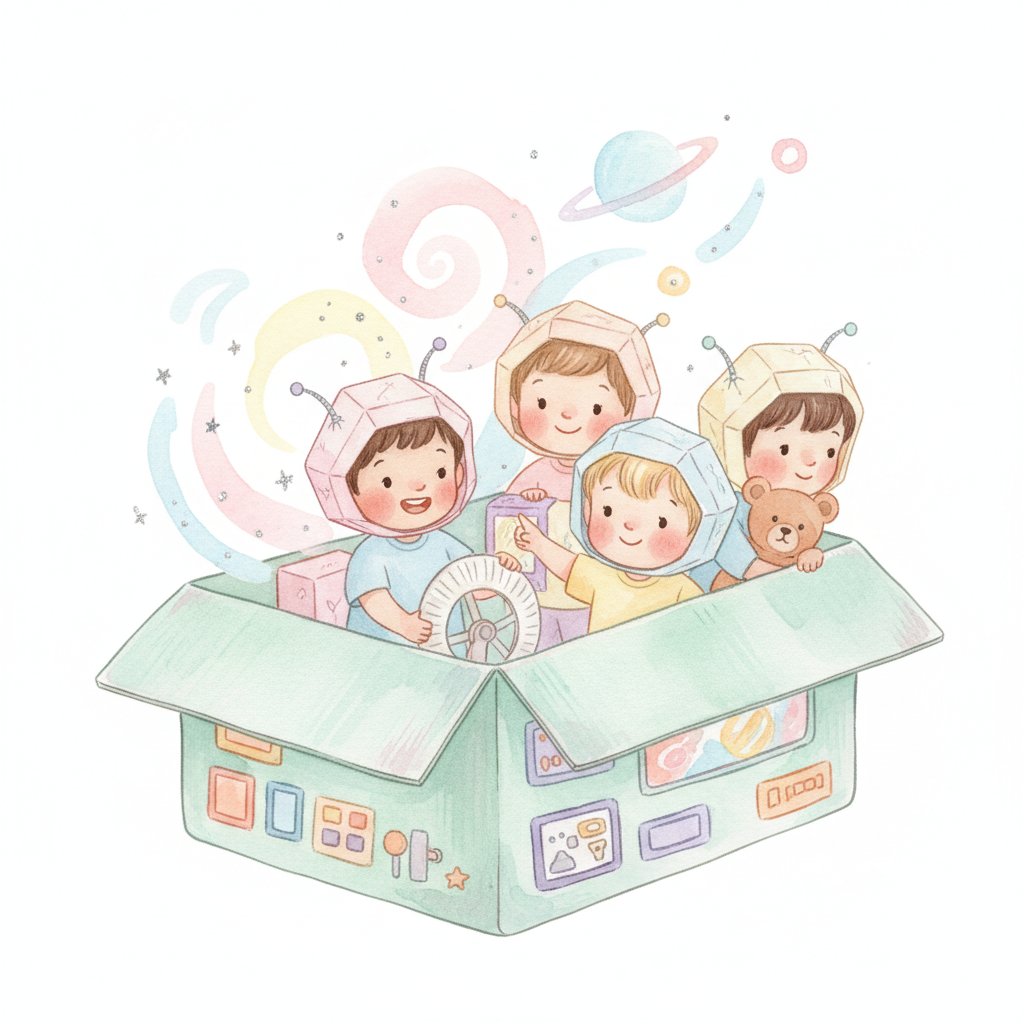
11. Space Mission
Setup: Cardboard box "spaceship," control panel (drawn on paper), space helmets (colander or box), planet posters, walkie-talkies.

Skills: Imagination, storytelling, science vocabulary (orbit, planet, gravity), teamwork (crew roles: captain, pilot, scientist).

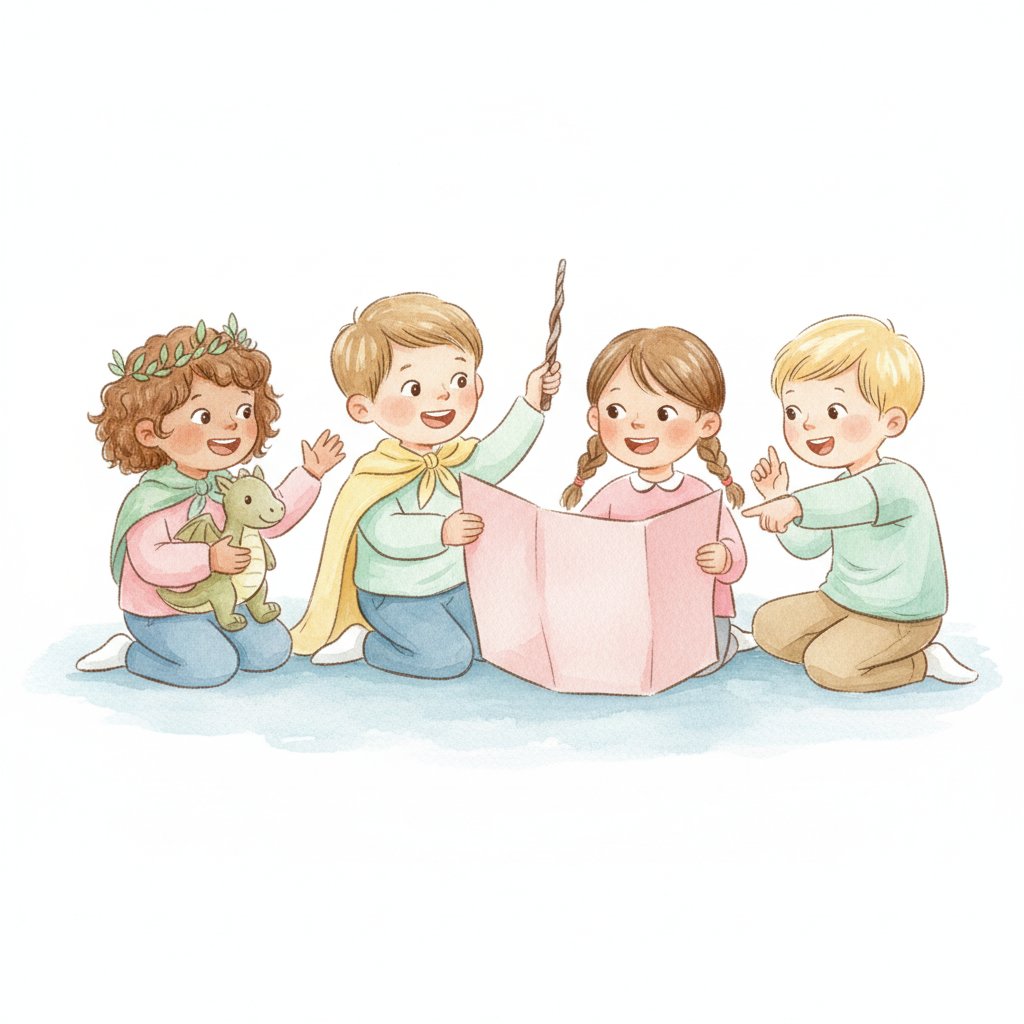
12. Fairy Tale Kingdom
Setup: Crown, cape, magic wand, castle blocks, "enchanted" items (sparkly objects), story cards with simple fairy tale elements.

Skills: Narrative structure (beginning, middle, end), character development, moral reasoning (good vs. bad choices in the story), creative language.

13. Weather Station
Setup: Weather maps, thermometer, rain gauge, fake microphone (for reporting), weather symbols cut from paper.

Skills: Weather vocabulary, observation skills, public speaking (being a reporter), science concepts. Connect with our weather activities for science-based weather learning.

14. Travel Agency / Airport
Setup: World map, passports (small booklets), tickets (card stock), suitcase (small bag), brochures (folded paper with pictures of places).

Skills: Geography (places on the map), writing (filling out tickets/passports), cultural awareness (discussing different places), sequencing (booking → packing → traveling → arriving).

15. Dinosaur Museum
Setup: Toy dinosaurs, "fossil" impressions (play dough pressed with dinosaur feet), magnifying glasses, information cards, rope for a "do not touch" barrier.

Skills: Science vocabulary (herbivore, carnivore, extinct), observation (examining fossils), classification (sorting by type), presentation skills (being a museum guide).

Extending and Enriching Dramatic Play

16. Add writing materials to every center
Every dramatic play setup should include writing tools: notepads for the restaurant, prescription pads for the doctor, log books for the fire station. Children write more willingly when writing serves a pretend purpose than when it's assigned as a worksheet. For more writing motivation, see our name writing activities.

17. Rotate themes every 2-3 weeks
Children need time to develop complex play within a theme (at least 5-7 days), but after 2-3 weeks, even the richest setup gets stale. Rotate before enthusiasm dies — ending on a high note means children will be excited when the theme returns months later.

18. Introduce problems to solve
After children are comfortable in a theme, add a challenge: "Oh no, the restaurant ran out of pizza dough!" or "The patient has a mysterious illness the doctor has never seen!" Problems force children to improvise, negotiate, and create solutions — the highest level of dramatic play.

19. Invite real-world visitors
If you're running a post office theme, invite a postal worker to visit. A doctor's office theme? Ask a nurse or doctor parent to visit briefly. Real-world connections validate the play and introduce accurate vocabulary and procedures.

20. Document and display
Take photos of children in their roles. Create a "Dramatic Play Museum" bulletin board showing photos from past themes. Children love seeing themselves as doctors, chefs, and astronauts — it reinforces the identity expansion that makes dramatic play so powerful.

Visual labels make dramatic play centers independent
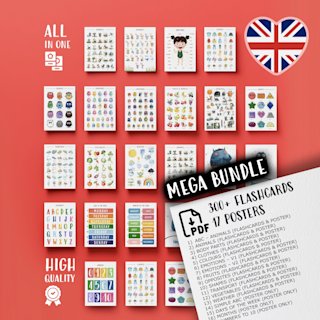
Our Educational Poster Set includes labeled visual guides children can use without adult help: labeled supply lists for each center ('We need: plates, cups, napkins'), role badges ('Chef,' 'Server,' 'Customer'), and procedure charts ('How to take an order'). Independence means deeper play.
1.How much space do I need for dramatic play?
A 4×6 foot area is sufficient for a basic dramatic play center. You don't need a dedicated room — a corner of the classroom with a small table, a shelf for props, and floor space works. If space is very limited, rotate a single theme in a portable bin that children set up and put away each day.
2.What if children fight over roles?
Role conflict is actually a learning opportunity, not a problem to eliminate. Teach children to use negotiation strategies: taking turns (you're the doctor for 5 minutes, then I am), doubling roles (two doctors), or creating new roles (a nurse, a receptionist, and a doctor). Post a simple "Turn-Taking" visual to help children manage this independently.
3.Should I correct inaccurate play?
Generally, no. If a child says "the stethoscope goes on your knee," let it go — the social and language skills are the goal, not medical accuracy. The one exception is safety misinformation ("firefighters don't need to be careful"), which should be gently corrected with accurate information.
4.Can dramatic play work with only one child?
Yes, but it develops different skills. Solo dramatic play builds imagination, self-talk (which supports language development), and independent problem-solving. To enrich solo play, provide props that encourage multiple roles: dolls, stuffed animals as "customers," or puppets as conversation partners.