Articles7 min read

The Compost Bin That Changed How Children Think About Trash

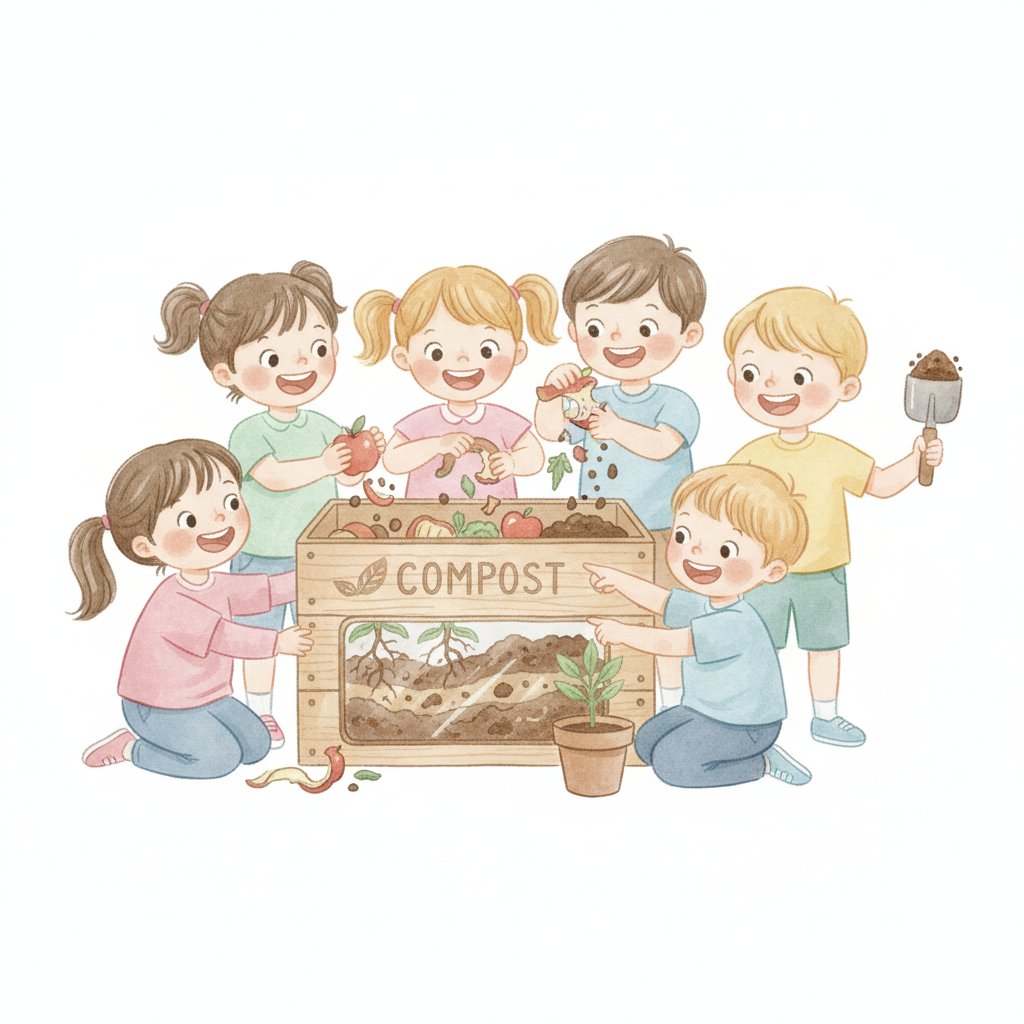
We started a classroom compost bin in April. Every day after snack, children scraped their fruit peels and vegetable scraps into the bin instead of the trash. "This apple core won't become garbage — it will become DIRT! Real dirt that plants can grow in!" Within a month, children were correcting each other: "Don't throw that banana peel in the trash — it goes in the compost!" A four-year-old named Leo asked his parents to start composting at home. His mother told me: "I've been trying to compost for years. My four-year-old convinced me in one week."

According to the North American Association for Environmental Education, early environmental education develops lifelong stewardship values, improves science understanding, and builds critical thinking through real-world observation. Children who learn to care for nature in preschool are significantly more likely to practice environmental behaviors as adults. The key is making earth care feel empowering, not frightening — children should feel like nature helpers, not nature worriers.
This guide covers 20+ Earth Day and nature activities for ages 3-6. Pair it with our science experiments guide for more science and our outdoor play guide for outdoor exploration.

Recycling and Sorting Activities (Ages 3-6)

1. Recycling sorting game
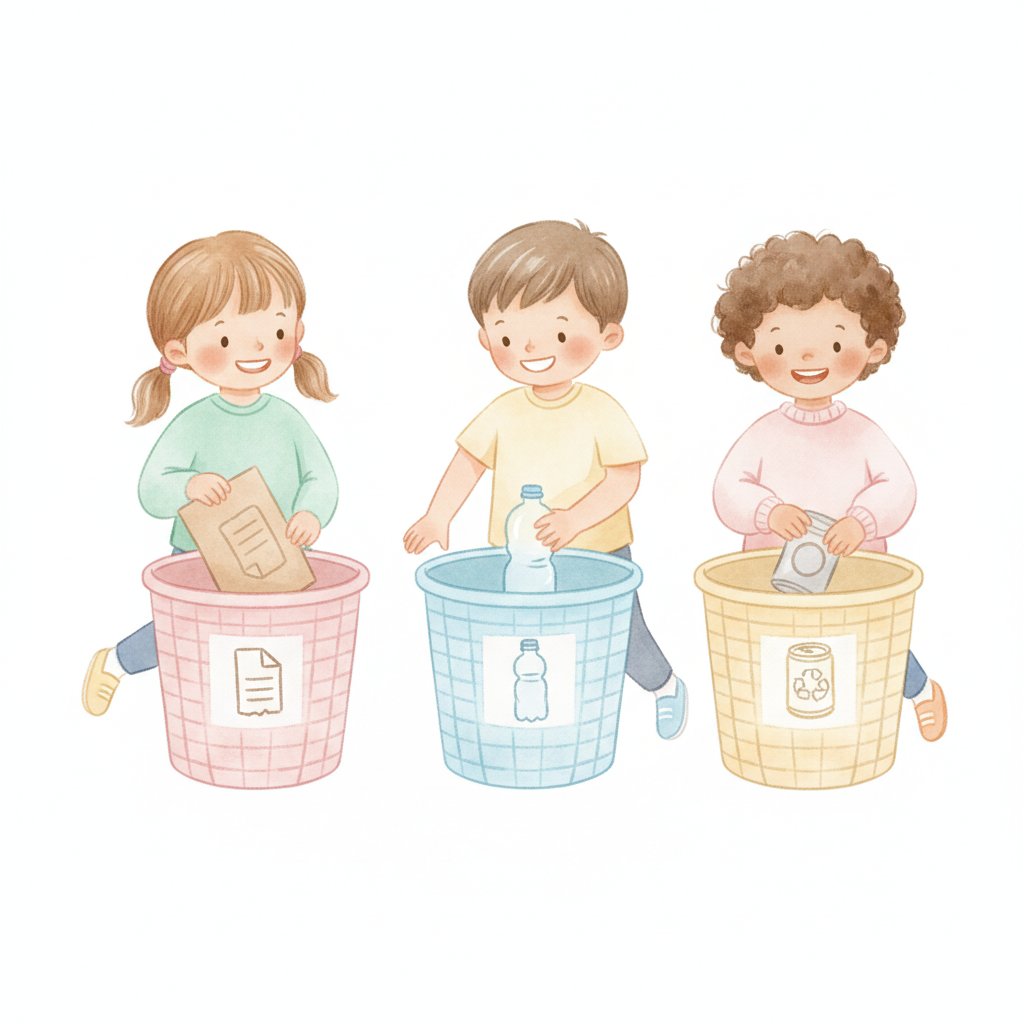
Materials: Clean recyclables, three bins labeled: Paper, Plastic, Metal.

What to do: "Sort these items into the right bin! Paper goes here. Plastic goes here. Metal cans go here." Start with obvious items, then add tricky ones: "What about this juice box? It has paper AND plastic!" The sorting teaches classification and environmental awareness. For more sorting, see our sorting guide.

Why it works: Recycling is abstract until children DO it. The sorting makes the concept physical: "This paper becomes NEW paper. This plastic bottle becomes a NEW plastic thing. We're not throwing it AWAY — we're sending it to become something else." The transformation narrative is powerful for young minds.

2. Trash vs. treasure hunt
Materials: Clean items (some recyclable, some not).

What to do: "Is this TREASURE (recyclable) or TRASH (not recyclable)?" Children sort and explain: "The yogurt cup is TREASURE because it's plastic. The used tissue is TRASH." The game teaches practical recycling knowledge through a fun narrative.

3. Recycled art sculpture
Materials: Clean recyclables, tape, glue.

What to do: "Use recycled materials to create something NEW! A robot? A building? A vehicle?" Children build sculptures from cardboard tubes, bottles, and boxes. The art shows that "waste" can become creative material. For more art, see our art guide.

4. Cardboard box transformation
Materials: Large cardboard boxes.

What to do: "This box was going to be garbage. What can WE turn it into?" Let children decide: a house, a car, a rocket, a store. They paint, cut, and decorate. The project teaches reuse — the most powerful of the three Rs. For more building, see our block guide.

5. Litter collection walk
Materials: Gloves, bags.

What to do: Walk around the schoolyard or neighborhood picking up litter: "We're nature helpers! Every piece of trash we pick up makes our home more beautiful." Count the pieces: "We collected 15 pieces of litter!" The walk teaches community responsibility. For more outdoor activities, see our outdoor guide.

Ocean animals need clean water
Our Ocean Animals Watercolor Art Activity Pack opens the door to ocean conservation: 'These animals live in the ocean. But sometimes trash gets into the ocean and hurts them. Sea turtles eat plastic bags because they look like jellyfish! Fish get stuck in plastic rings!' After painting their ocean animals, children talk about keeping the water clean. The art project becomes a conservation conversation. Paint a sea turtle, save a sea turtle — it starts with caring.

Gardening Activities (Ages 3-6)

6. Seed planting
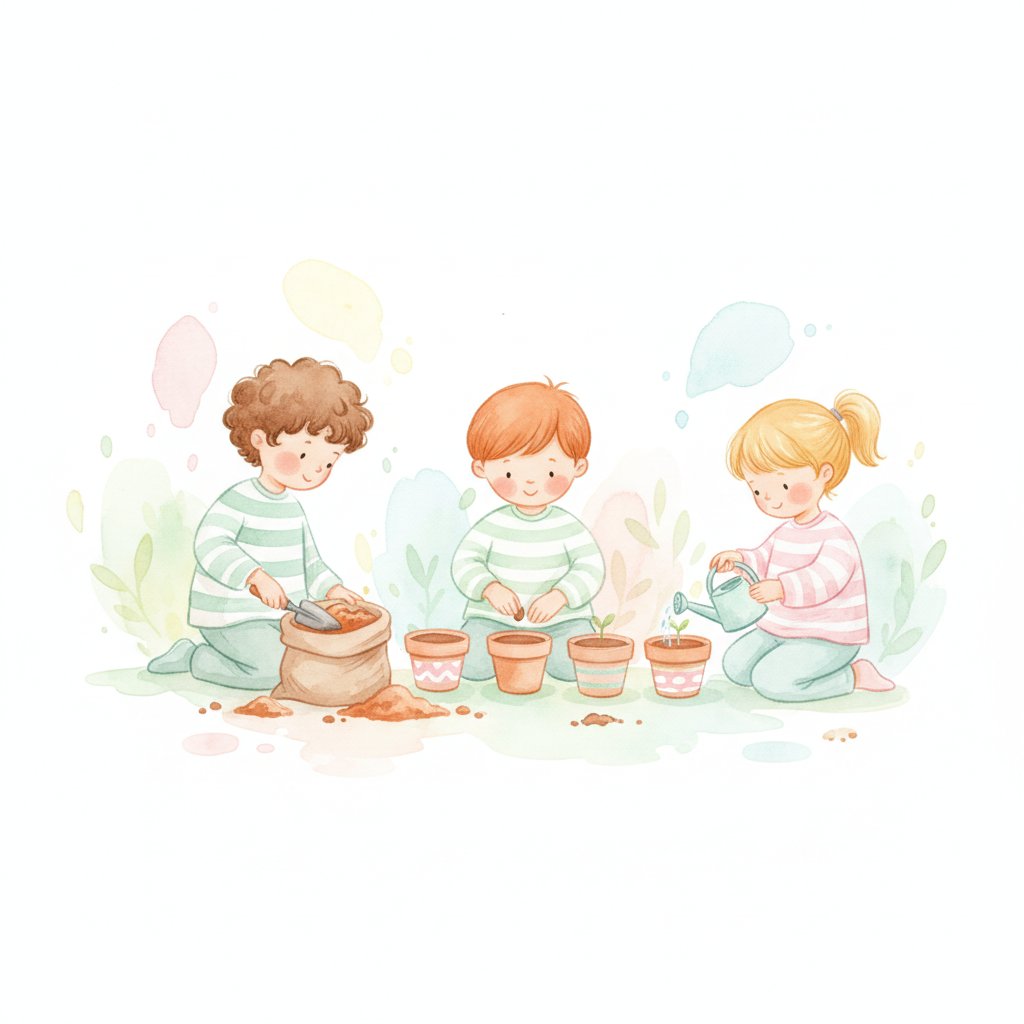
Materials: Pots, soil, seeds, water.

What to do: "Put soil in the pot. Make a small hole. Put the seed in. Cover with soil. Add water. Now we WAIT." The planting teaches patience, sequencing, and life cycles. "Seeds need sun, soil, and water to grow — just like we need food, water, and love." For more sequencing, see our following directions guide.

7. Sprout observation journal
Materials: Notebook, crayons.

What to do: Children draw their plant every 3 days: "Day 1: just dirt. Day 4: a tiny green sprout! Day 7: it has leaves! Day 10: it's so tall!" The journal teaches observation, recording, and patience. For more journaling, see our writing guide.

8. Herb garden
Materials: Herb seeds (basil, mint, parsley), pots.

What to do: Plant herbs and use them in cooking: "We grew this basil! Now let's put it on our pizza!" The garden-to-table experience teaches that food comes from plants. For more cooking, see our cooking guide.

9. Flower dissection
Materials: Large flowers (lilies or tulips work well).

What to do: "Let's take this flower apart and see what's inside! These are PETALS. This is the STEM. These little things are SEEDS." The dissection teaches plant anatomy through hands-on exploration. For more science, see our science guide.

10. Worm observation
Materials: Worms (from bait shop or garden), magnifying glasses.

What to do: "Worms are nature's helpers! They eat dead leaves and make the soil healthy for plants." Children observe worms: "How do they move? Which end is the head? Do they have eyes?" The observation teaches that even small creatures have important jobs. For more animals, see our pets and animals guide.

Wild animals need wild places
Our Safari Animals Art Activity Pack introduces African wildlife and opens the door to habitat conservation: 'Elephants need lots of space to walk and find food. Lions need grasslands to hunt. Giraffes need tall trees. When people cut down too many trees or build too many buildings, the animals lose their homes.' Children paint their favorite safari animal, then talk about what that animal needs to survive. Art plus empathy equals a child who cares about wild places and the creatures who live there.

Water and Energy Conservation Activities (Ages 3-6)

11. Water use awareness
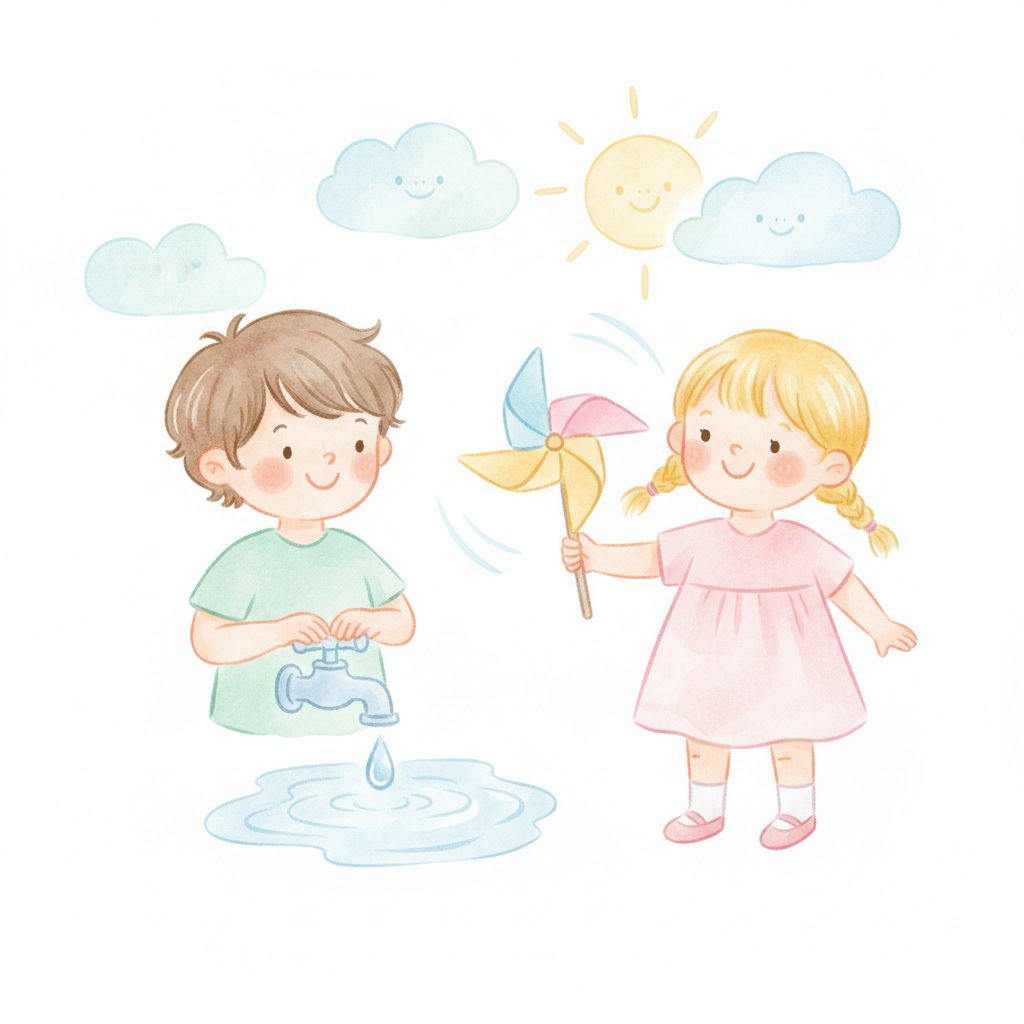
What to do: "Let's see how much water we use when we wash our hands. Turn on the water. NOW count to 5 while it runs. That's a lot of water! Now try: wet hands, turn OFF water, soap, turn ON, rinse. We used LESS water!" The activity teaches water conservation through direct comparison. For more health activities, see our health guide.

12. Leak detectives
What to do: "Let's check every faucet in the school for drips! A dripping faucet wastes water all day long." Children check faucets and report leaks. "We found 2 drips! Let's tell the custodian." The detective game teaches that even small actions matter.

13. Light switch monitors
What to do: Assign "light switch monitors" who check that lights are off when no one is in the room. "We save energy when we turn off lights we don't need!" The role gives children real responsibility for environmental care. For more classroom roles, see our classroom management guide.

14. Sun vs. shade experiment
Materials: Two ice cubes.

What to do: "Put one ice cube in the sun and one in the shade. Which melts faster? The sun is WARM and it gives us ENERGY. That's why we call it solar energy!" The simple experiment introduces solar concepts through observation. For more science, see our science guide.

15. Wind power observation
Materials: Pinwheel or ribbon on a stick.

What to do: "Hold the pinwheel outside. What makes it spin? WIND! Wind is energy from nature. Some people use big windmills to make electricity!" The observation introduces renewable energy at the most basic level. For more weather, see our weather guide.

Nature Learning Extensions (Ages 3-6)

16. Nature treasure hunt
Materials: List, bag.

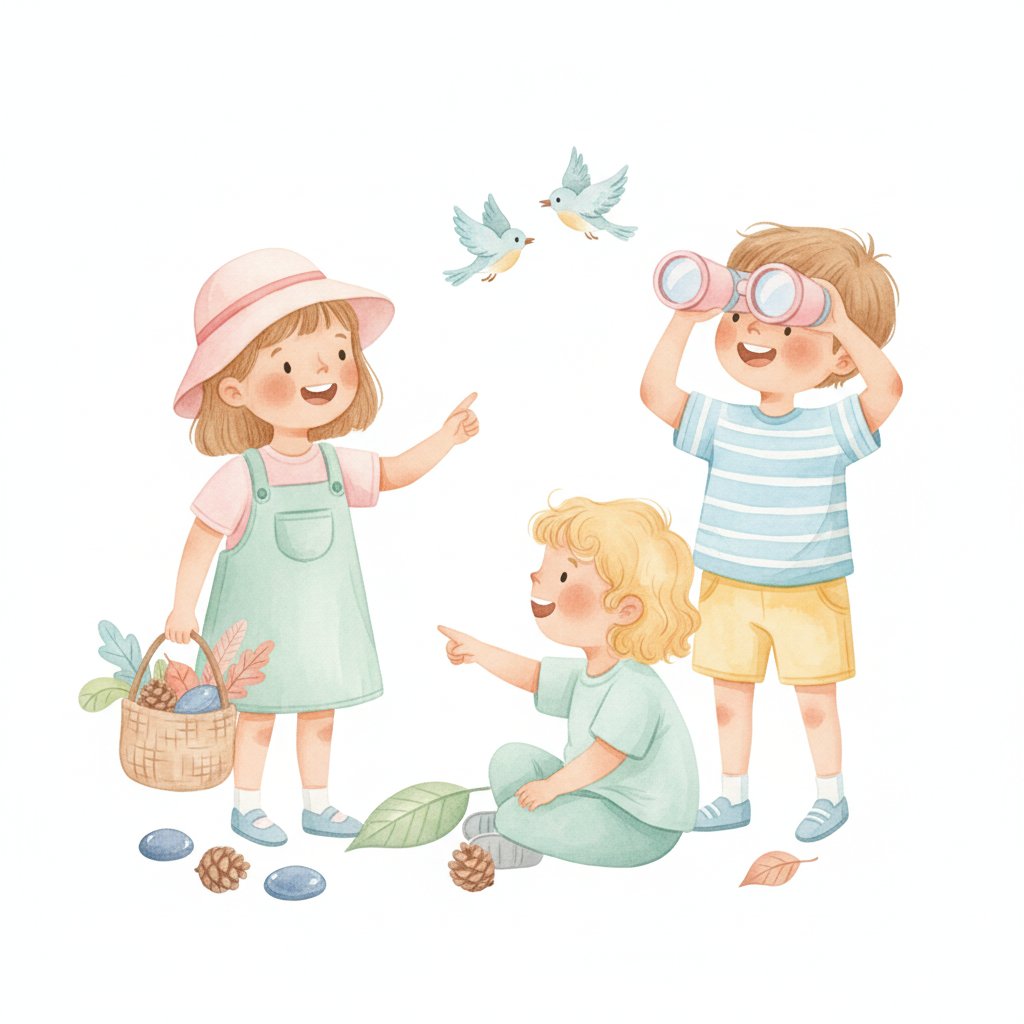
What to do: "Find: something SMOOTH, something ROUGH, something GREEN, something BROWN, something that smells GOOD, something that makes a SOUND." Children collect items and share: "I found a smooth rock! I found a rough pinecone!" The hunt teaches sensory observation and nature vocabulary. For more outdoor play, see our outdoor guide.

17. Tree bark rubbing
Materials: Paper, crayons.

What to do: Hold paper against tree bark and rub with a crayon. "Every tree has different bark! This oak is rough. This birch is smooth!" Compare rubbings from different trees. The activity teaches tree diversity and observation skills.

18. Bird watching
Materials: Binoculars (toy or real), bird pictures.

What to do: "Sit quietly and watch for birds. What colors do you see? What sounds do they make?" Identify common birds: "That's a robin — it has a RED breast! That's a sparrow — it's small and brown!" The watching teaches patience, observation, and animal identification.

19. Nature counting
What to do: Count natural objects: "How many leaves on this branch? How many petals on this flower? How many legs on this ant?" The counting teaches math through nature. For more counting, see our number guide.

20. Earth Day promise tree
Materials: Paper tree, paper leaves.

What to do: Each child writes (or dictates) an earth care promise on a leaf: "I promise to turn off the water when I brush my teeth." "I promise to recycle my juice box." Attach leaves to the tree. "Our promises make the tree grow — just like our actions help the earth grow!" For more promises and kindness, see our kindness guide.

Weather is nature talking to us
Our Weather Flashcards teach children to pay attention to the natural world: 'SUNNY days mean the earth is warm and plants are growing. RAINY days mean the earth is getting a drink. WINDY days mean the air is moving and spreading seeds. SNOWY days mean the earth is resting under a blanket.' Every weather card is a lesson in how the earth works. Children who understand weather are children who RESPECT nature — because they notice it, name it, and appreciate it. 12 weather types, 12 earth lessons.
1.How do I teach environmental care without scaring preschoolers?
Focus on what children CAN DO, not on what's going wrong. Say "we can help the earth by recycling" not "the earth is being destroyed." Frame environmental care as being a nature helper, not as saving the planet from catastrophe. Preschoolers should feel empowered, not anxious. The message is: "You are strong, you are helpful, and the earth needs helpers like you."
2.Can preschoolers really understand recycling?
Yes! They understand sorting (which they're already learning in math). "Paper goes here, plastic goes there" is the same cognitive skill as "red blocks here, blue blocks there." The environmental meaning deepens over time, but the physical habit of sorting recyclables is fully age-appropriate. Start with the action; the understanding will follow.
3.What if I don't have outdoor space for gardening?
Use windowsills! Herbs, beans in cups, and succulents all grow indoors. Sprout beans in ziplock bags taped to the window. Use clear cups so children can see the roots growing down and the sprout growing up. You don't need a garden to teach gardening — you need a seed, some soil, and a window.
4.How do I connect Earth Day activities to everyday learning?
Earth Day themes can run all year: recycling at snack time, nature walks weekly, gardening as a science unit, water conservation during handwashing. Don't limit environmental education to one day in April. The most effective approach is daily practice: "We always recycle. We always turn off lights. We always observe nature." Consistency builds habits.