Articles6 min read

The Three Bears That Taught Size Vocabulary

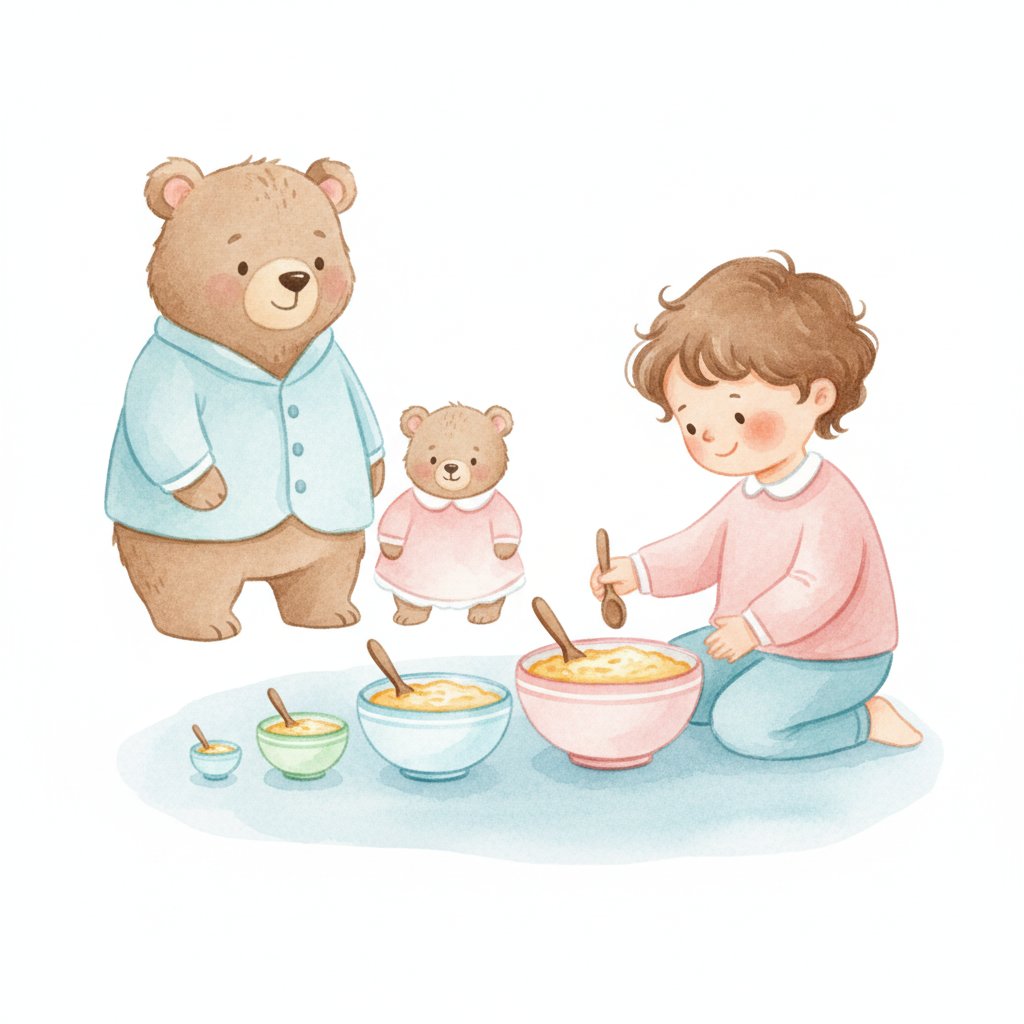
I set out three bowls — small, medium, and large. "Who eats from the biggest bowl?" "DADDY BEAR!" "Who eats from the middle bowl?" "MAMA BEAR!" "Who eats from the tiniest bowl?" "BABY BEAR!" Then came the surprise: "Is the medium bowl BIG or SMALL?" Silence. Then four-year-old Zoe said: "It's SMALL next to the big one, but BIG next to the small one!" I nearly fell off my chair. A four-year-old just articulated RELATIVE size — that "big" and "small" depend on what you're comparing to — through a fairy tale about three bears and their porridge. Fairy tales aren't just stories — they're cognitive playgrounds where children explore size, sequence, emotion, consequence, and problem-solving through narratives they already love.

Research in literacy education shows that fairy tale activities build comprehension, sequencing, vocabulary, retelling skills, and narrative understanding — all critical predictors of reading success. Children who can retell a fairy tale in sequence are practicing the exact cognitive skill used in reading comprehension.
This guide covers 20+ fairy tale activities for ages 3-6. Pair it with our storytelling guide for narrative skills and our dramatic play guide for more role-play.
Goldilocks and the Three Bears (Ages 3-6)

1. Three Bears size sorting
Materials: Three sizes of bowls, chairs (or pictures), and beds (blankets).

What to do: "Sort by size: biggest for Papa, medium for Mama, smallest for Baby. Is the medium chair BIG or SMALL? (BOTH — it depends on what you compare it to!)" The sorting teaches relational size. For more size concepts, see our opposites guide.

Why it works: Fairy tales are perfect for teaching abstract concepts because children already KNOW the story. They're not learning new information AND a new concept simultaneously — they're learning a new concept through a FAMILIAR story. This reduces cognitive load and increases retention.

2. Porridge taste test
Materials: Oatmeal at three temperatures (warm, room temp, cool — safe).

What to do: "Taste the porridge! Is it TOO HOT, TOO COLD, or JUST RIGHT?" The taste test connects the story to sensory experience. For more taste activities, see our five senses guide.

3. Three Bears sequencing
Materials: Story picture cards.

What to do: "Put the story in order: First Goldilocks finds the house. Then she tries the porridge. Then she tries the chairs. Then she tries the beds. Then the bears come home!" The sequencing teaches story structure (beginning, middle, end). For more sequencing, see our storytelling guide.

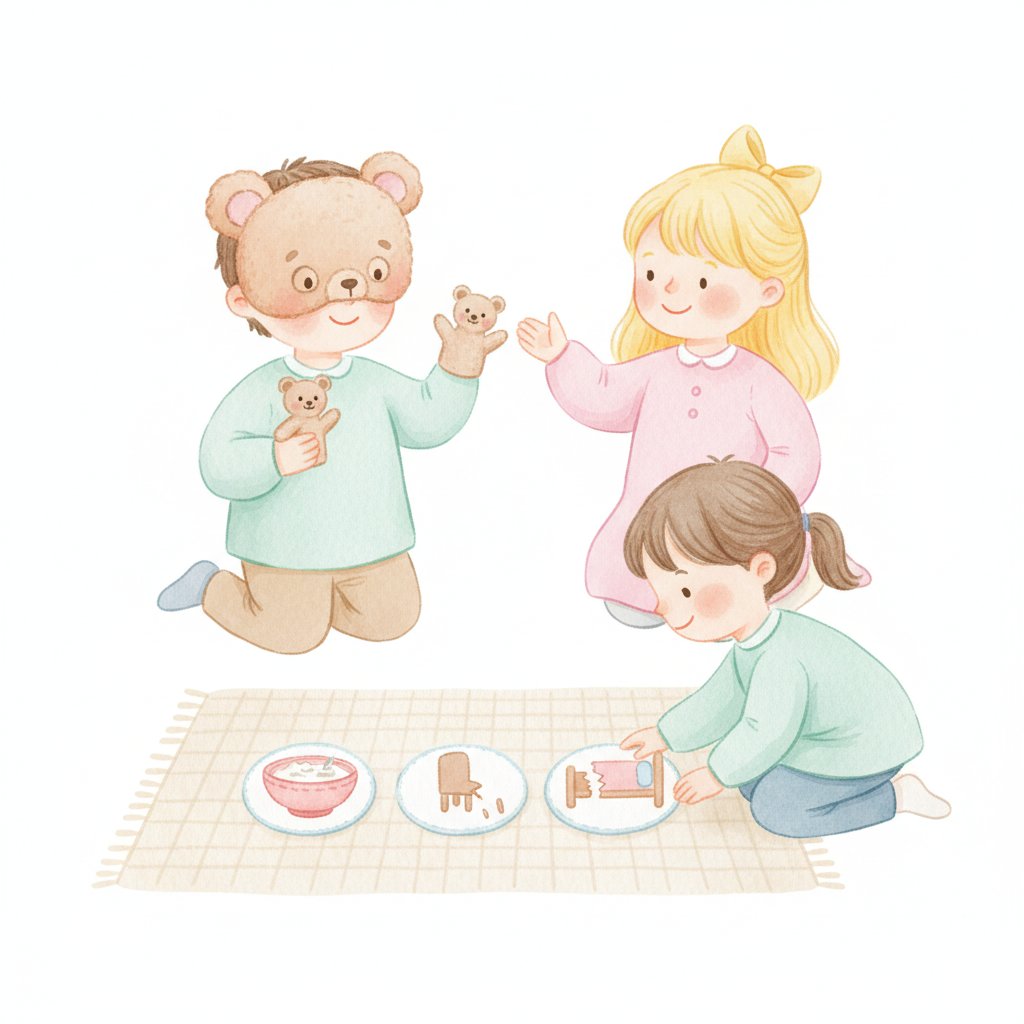
4. Three Bears retelling
Materials: Bear puppets or masks.

What to do: "Retell the story! Who can be Papa Bear? Who is Goldilocks? Act it out!" The retelling builds narrative language and comprehension. For more dramatic play, see our dramatic play guide.

5. Too hard, too soft, just right
Materials: Objects of varying firmness (cotton ball, sponge, rock, pillow).

What to do: "Touch each one. Is it TOO HARD like Papa's bed? TOO SOFT like Mama's bed? Or JUST RIGHT like Baby's bed?" The comparison teaches texture vocabulary through the story.

Fairy tales are full of shapes
Our Shapes Flashcards connect to fairy tales: 'The Three Bears' bowls are CIRCLES — round and wide. The houses in the Three Little Pigs are SQUARES, TRIANGLES, and RECTANGLES. The magic mirror is an OVAL. The castle tower is a rectangle with a triangle on top!' Children learn shapes through stories they love. After reading a fairy tale, ask: 'What shapes can you find in this story?' The flashcards turn shape recognition into a fairy tale treasure hunt. 12 shapes, 12 story connections, 12 ways to see geometry in narratives.

Jack and the Beanstalk and The Little Red Hen (Ages 3-6)

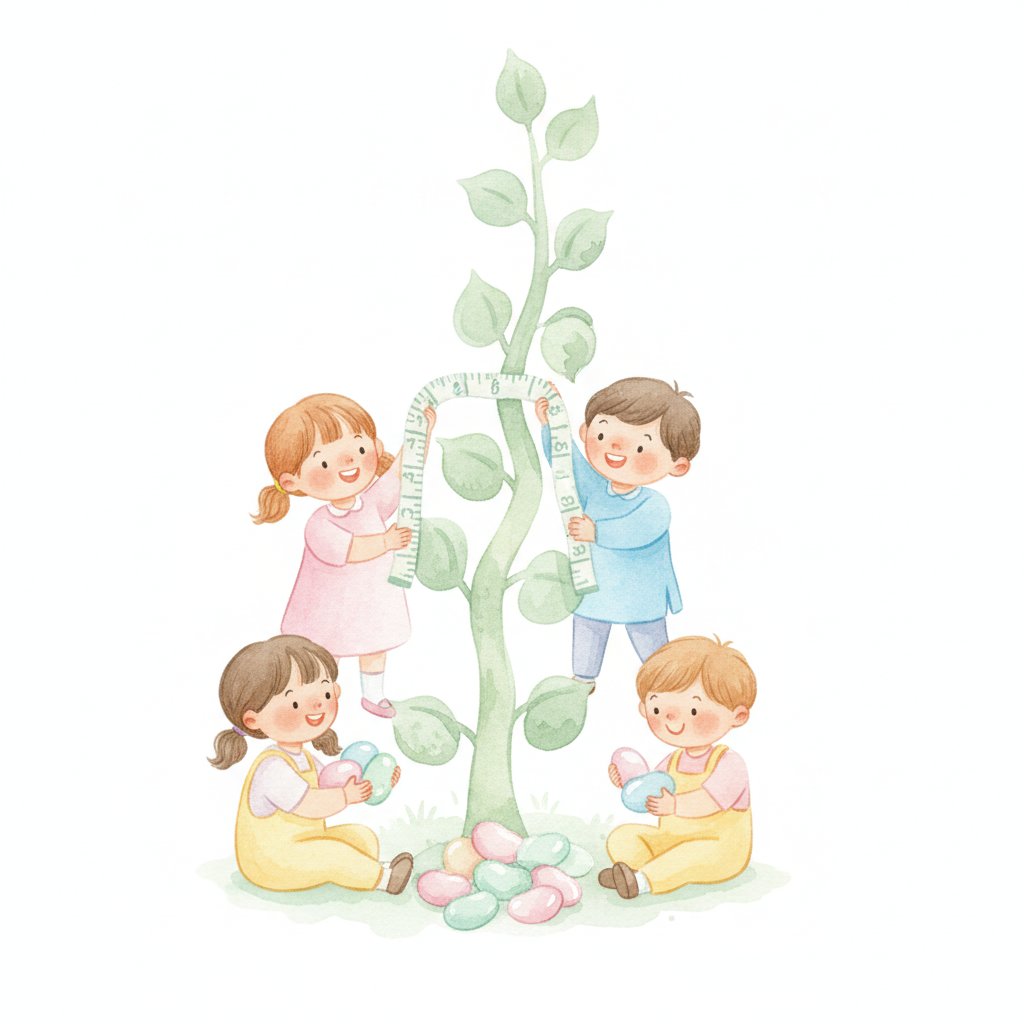
6. Beanstalk measuring
Materials: Green paper strips taped together, measuring tools.

What to do: "How tall is our beanstalk? Let's measure! It's 10 blocks tall! How tall are YOU? 6 blocks! The beanstalk is TALLER than you!" The measuring teaches height comparison. For more measuring, see our number guide.

7. Magic bean counting
Materials: Dried beans.

What to do: "Jack had 5 magic beans! Count them: 1, 2, 3, 4, 5! If he traded 2 for a cow, how many are left? 3! If he found 3 more, how many? 6!" The beans become math manipulatives. For more counting, see our math guide.

8. Bean sprouting
Materials: Dried beans, zip bags, wet paper towels.

What to do: "Put a bean in a bag with a wet paper towel. Tape it to the window. Watch it SPROUT! That is how Jack's beanstalk started — from one tiny bean!" The sprouting teaches plant growth. For more science, see our science guide.

9. Little Red Hen bread making
Materials: Bread dough or playdough.

What to do: "Who will help me make the bread? NOT I said the cat! NOT I said the dog! Then I'll make it MYSELF!" Make real bread or pretend bread. The baking teaches following a recipe (sequencing) and the story's lesson about helping. For more cooking, see our cooking guide.

10. Little Red Hen sequencing
Materials: Story cards.

What to do: "Put the story in order: First, Hen finds wheat. Then she asks for help planting. Then she asks for help harvesting. Then she asks for help milling. Then she asks for help baking. Then she eats the bread HERSELF!" The sequencing teaches cause and effect. For more sequencing, see our following directions guide.

Every fairy tale character has big feelings
Our Emotions Monster Feelings Flashcards map onto fairy tales: 'Goldilocks felt SCARED when the bears came home. The Ugly Duckling felt SAD when others were mean. Cinderella felt HAPPY at the ball. The Big Bad Wolf felt ANGRY when he couldn't blow down the brick house. The Little Red Hen felt PROUD when she ate the bread she made herself.' After reading a fairy tale, hold up the emotion cards: 'How did the character feel HERE? How about HERE?' The flashcards teach emotional literacy through stories children love. 12 monsters, 12 feelings, infinite story connections.

Three Little Pigs and More Classic Tales (Ages 3-6)

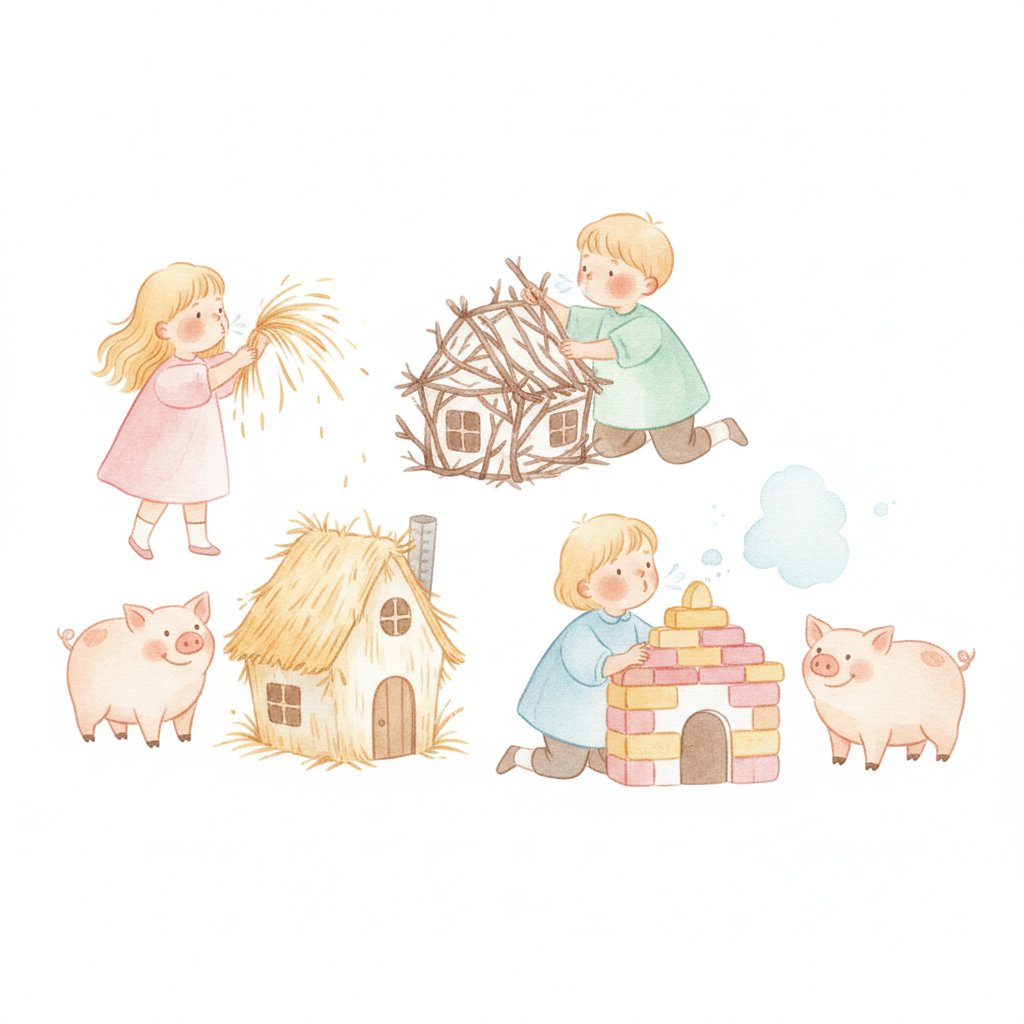
11. Three Little Pigs building
Materials: Straw (or paper strips), sticks (popsicle sticks), bricks (LEGO).

What to do: "Build three houses! One from straw, one from sticks, one from bricks. Now BLOW on them! Which one is strongest?" The building teaches material properties and engineering. For more building, see our block guide.

12. Wolf blow test
Materials: Fan or hair dryer (cool setting), children's houses.

What to do: "I'm the Big Bad Wolf! I'll huff and I'll PUFF!" Use the fan to test each house. "The straw house BLEW DOWN! The stick house WOBBLED! The brick house DIDN'T MOVE!" The test teaches the scientific method: build, test, observe, conclude.

13. Cinderella shoe sort
Materials: Various shoes.

What to do: "Find the shoe that FITS! Too big? Too small? JUST RIGHT!" Children try on different shoes. "Whose foot is the smallest? Whose is the biggest?" The sorting teaches size matching. For more sorting, see our sorting guide.

14. Gingerbread Man run
What to do: "Run, run, as fast as you can! You can't catch me, I'm the Gingerbread Man!" Children run, jump, and dodge in a chase game. The running teaches gross motor skills through story. For more movement, see our gross motor guide.

15. Hansel and Gretel trail
Materials: Pebbles or breadcrumbs (popcorn).

What to do: "Leave a trail of pebbles so you can find your way back! Follow the trail!" Create a maze in the classroom or playground. The trailing teaches spatial memory and navigation. For more navigation, see our transportation guide.

Fairy Tale Learning Extensions (Ages 3-6)

16. Fractured fairy tales
What to do: "What if Goldilocks was a BEAR and the three bears were PEOPLE? What if the wolf was NICE and just wanted a friend?" The fractured tales teach perspective-taking and creative thinking. For more imagination, see our imagination guide.

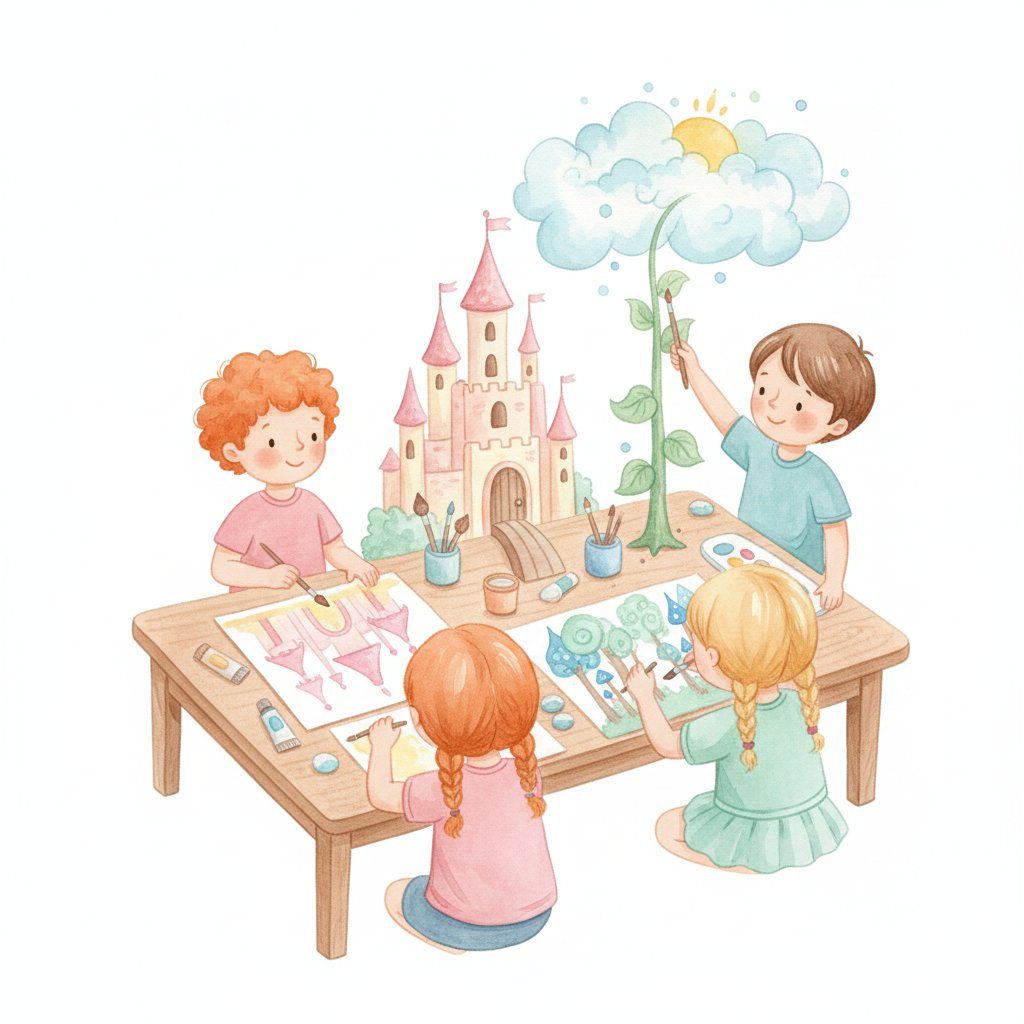
17. Fairy tale setting art
Materials: Art supplies.

What to do: "Draw the setting of your favorite fairy tale! A castle, a forest, a cottage, a beanstalk reaching into the clouds." The art teaches visual representation of story elements. For more art, see our art guide.

18. Fairy tale alphabet
What to do: "A is for APPLE (Snow White). B is for BEANSTALK (Jack). C is for CINDERELLA. D is for DRAGON. F is for FAIRY. G is for GINGERBREAD. K is for KNIGHT. P is for PRINCESS. W is for WOLF." The alphabet teaches letter sounds through fairy tale vocabulary. For more alphabet, see our alphabet guide.

19. Good vs. bad choices
What to do: "Did Goldilocks make good choices? She entered a house without permission — was that good or bad? She broke a chair — was that good or bad?" The discussion teaches moral reasoning through familiar stories. For more social skills, see our social skills guide.

20. Fairy tale journal
Materials: Notebook.

What to do: "After each fairy tale, draw your favorite part and tell me about it. 'I liked when the brick house didn't fall down because it was STRONG.'" The journal teaches comprehension and opinion expression. For more writing, see our writing guide.

Fairy tales have the best words
Our Phonics Flashcards teach the sounds that make fairy tale words: 'BEANSTALK starts with B. Buh-buh-BEANSTALK! CASTLE starts with C. Kuh-kuh-CASTLE! DRAGON starts with D. Duh-duh-DRAGON! MAGIC starts with M. Mmm-MAGIC! QUEEN starts with Q. Kuh-kuh-QUEEN! WITCH starts with W. Wuh-wuh-WITCH!' Every fairy tale character and setting starts with a letter sound. Children learn phonics by decoding the names of their favorite stories. 44 phonemes, 44 chances to sound out enchanted words.
1.Are fairy tales too scary for preschoolers?
Some fairy tales have scary elements (wolves, witches, giants), but preschoolers can handle them when the story is told age-appropriately. Focus on the PROBLEM-SOLVING: "The pigs built a strong house and the wolf couldn't blow it down!" rather than "The wolf ate the first two pigs." The scary parts teach that problems can be solved and dangers can be overcome. If a child is frightened, skip that tale for now — there are plenty of gentler options.
2.How do fairy tales help with reading?
Fairy tales build FOUR pre-reading skills simultaneously: (1) Narrative structure — beginning, middle, end, which transfers to story comprehension. (2) Sequencing — retelling events in order, which transfers to following written directions. (3) Vocabulary — words like "enormous," "furious," and "devoured" that appear in written text. (4) Motivation — children who love fairy tales WANT to read, and motivation is the strongest predictor of reading success.
3.Should I read the original or modernized versions?
For ages 3-5, use simplified versions with clear language and bright illustrations. For ages 5-6, you can introduce slightly richer language. The key is COMPREHENSION — if a child can retell the story, the version was appropriate. Avoid versions that are purely didactic ("and the moral is..."). The best versions let the story speak for itself and let children discover the meaning through discussion.
4.How many fairy tales should I introduce?
Start with 3-4 core tales that children can learn deeply: Goldilocks, Three Little Pigs, Little Red Hen, and Jack and the Beanstalk. Spend a full week on each tale — read it, act it out, do activities, retell it. Deep knowledge of a few tales builds stronger skills than shallow exposure to many. Once children master these, add Cinderella, The Gingerbread Man, and Hansel and Gretel.