Articles7 min read

"Go Get Your Shoes" and Other Sentences My Daughter Heard But Didn't Process

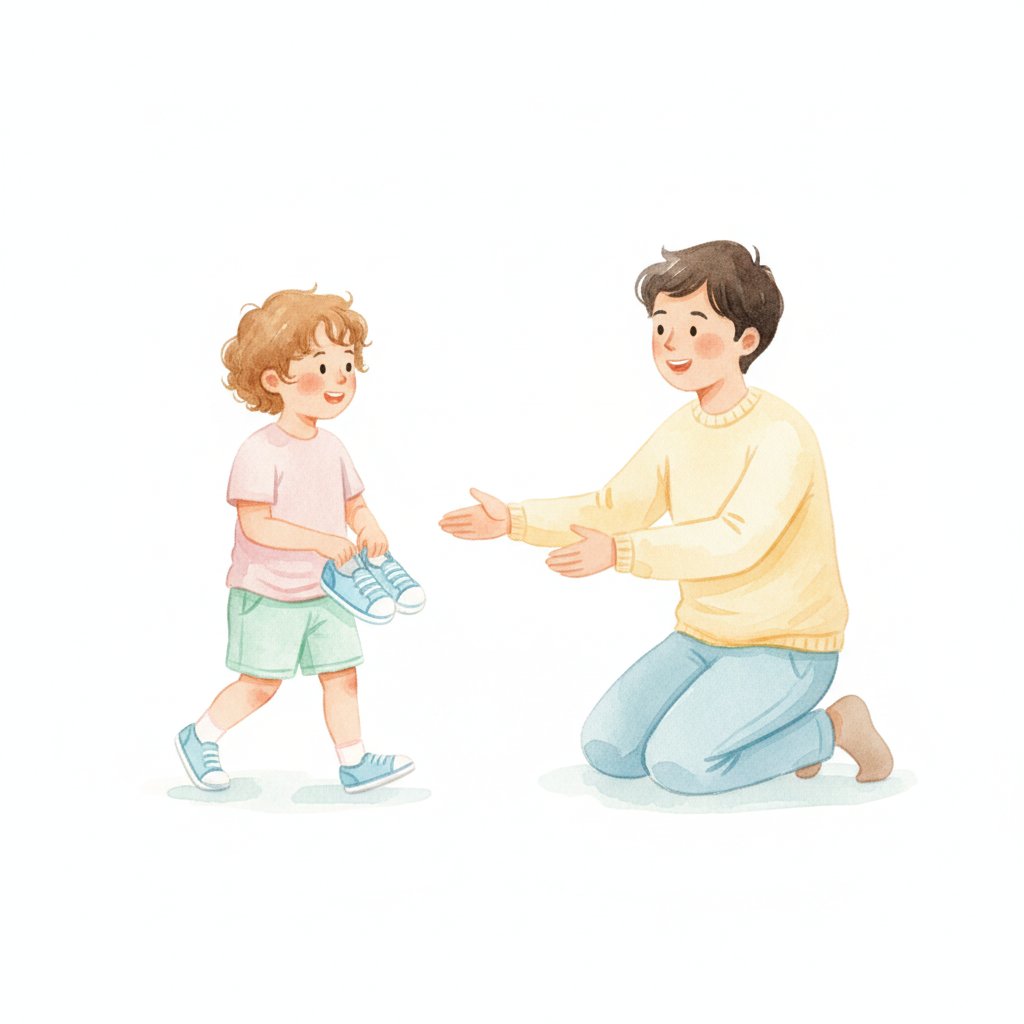
"Go get your shoes" is a simple instruction. My daughter heard it, nodded, walked to her room, and came back with a sock. One sock. She'd heard "go get something" but hadn't processed the specific noun, the location, or the expectation of returning with the correct item. It wasn't defiance — it was an underdeveloped skill.

Following directions requires a chain of cognitive skills: (1) attend to the speaker, (2) hear the words, (3) process the meaning, (4) hold the information in working memory, (5) plan the action, (6) execute the plan, (7) verify the result. Adults do this in milliseconds. For preschoolers, any step can fail — and the result looks like "not listening."
According to research from ASHA (American Speech-Language-Hearing Association), the ability to follow multi-step directions is one of the strongest predictors of classroom success. Children who can follow 2-step directions by age 4 and 3-step directions by age 5 are significantly better prepared for kindergarten.

This guide covers 20+ following directions activities for ages 3-6, organized by difficulty: 1-step → 2-step → 3-step → complex. Pair it with our listening activities for auditory processing and our circle time guide for whole-group practice.
Following Directions: Developmental Milestones

Age 2: Follows simple 1-step directions with gestures ("Give me the ball" + reaching hand). Understands about 50 words. Needs visual context (can't follow directions about objects not present).

Age 3: Follows 1-step directions without gestures. Beginning to follow 2-step related directions ("Get your coat and come to the door"). Understands positional words: in, on, under.

Age 4: Follows 2-step unrelated directions ("Put away the blocks and wash your hands"). Understands positional words: behind, next to, between. Beginning to follow directions with conditions ("If you're wearing red, line up").

Age 5: Follows 3-step directions. Understands temporal words: before, after, first, then. Can follow directions with descriptors ("Find the BIG red ball").

Age 6: Follows complex multi-step directions. Can re-tell directions to a peer. Understands directions with negation ("Don't touch the blue one — touch the green one").

Direction TypeExampleAge Expected
1-step with gesture"Give me the ball"2
1-step without gesture"Get your shoes"2.5-3
2-step related"Get your coat and come here"3
2-step unrelated"Put away blocks and wash hands"4
3-step"Get paper, choose a crayon, and sit down"5
Conditional"If you have red on, stand up"4-5
With descriptors"Find the big red circle"4-5
With negation"Don't touch the blue one"5-6
Feelings flashcards as direction-following tools
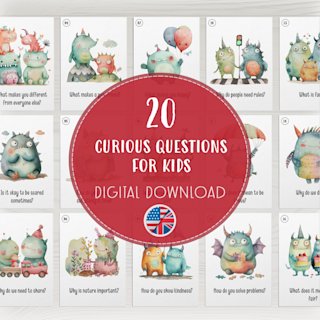
Our Emotions Monster Feelings Flashcards double as following-directions practice: 'Point to the HAPPY monster. Now point to the SAD monster. Which monster feels like YOU today? Show a friend.' Each card is a 1-step direction with an emotional vocabulary bonus. Children follow the instruction AND learn to identify feelings — two skills in one activity. 12 monsters, 12 practice directions.

One-Step and Two-Step Activities (Ages 3-4)

1. Simon Says (the classic)
What to do: "Simon Says touch your nose. Simon Says hop. Simon Says pat your head." The classic game teaches children to listen for the instruction and act only when the cue phrase is present. Start without the "trick" (always say Simon Says), then add the trick as children get better.

Why it works: Simon Says trains sustained attention and inhibition control simultaneously. Children must listen carefully AND resist the urge to act when the cue is missing. For more listening activities, see our listening guide.

2. Action lotto
Materials: Picture cards showing actions (jump, clap, sit, wave).

What to do: Children each have action cards. The teacher calls an action: "Clap your hands!" Children find the matching card and do the action. The visual support (the card) bridges the gap between hearing the word and understanding what to do.

3. Treasure hunt directions
Materials: Small objects hidden around the room.

What to do: Give 1-step directions to find hidden objects: "Look under the table. What do you see?" Progress to 2-step: "Look under the table AND bring what you find to me." For more hide-and-seek ideas, see our outdoor play guide.

4. "Do what I say, not what I do"
What to do: The teacher says one action but does a different one: "Touch your nose!" (teacher touches ears). Children must follow the SPOKEN instruction, not the modeled one. The game trains children to rely on auditory information rather than visual.

5. Cleanup directions
What to do: Turn cleanup into a direction-following activity. "Put the blocks in the blue bin. Put the books on the shelf. Push in your chair." The functional practice is more meaningful than game-based practice because the result is real.

Multi-Step Challenges (Ages 4-6)

6. Mystery bag
Materials: Bag with familiar objects, picture cards of the objects.

What to do: "Reach in the bag. Feel something. Don't take it out yet. Now find the picture card that matches what you feel. THEN take it out and check." Three steps, one activity: feel, find, check.

Why it works: Multi-step directions require working memory — holding multiple pieces of information while completing the task. Working memory is the bottleneck for many children who "don't listen." Practice expands the capacity. For more memory activities, see our matching guide.

7. Direction drawing
Materials: Paper, crayons.

What to do: Give oral directions for a drawing: "Draw a big circle in the middle. Draw two small circles inside for eyes. Draw a curved line for a smile. Draw a triangle on top." Children follow step-by-step to create a picture they didn't know they were making. For more drawing, see our art activities.

8. Obstacle course with verbal directions
Materials: Cones, hoops, balance beam.

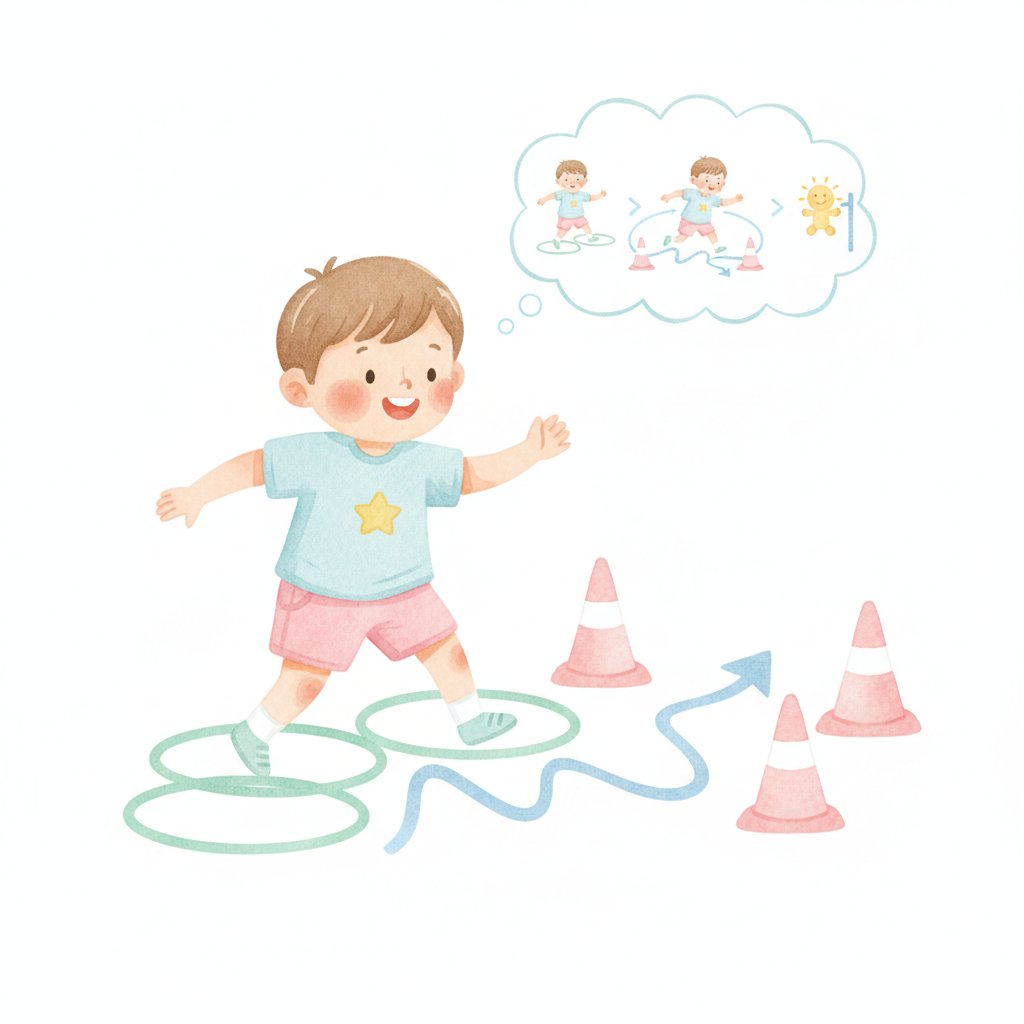
What to do: Give 3-step directions for the obstacle course: "Go around the cone, hop through the hoops, and balance on the beam." Children must remember all three steps before starting. For more movement, see our gross motor guide.

9. Recipe following
Materials: Simple snack ingredients, picture recipe cards.

What to do: Children follow picture recipe cards to make snacks: "1. Put bread on the plate. 2. Spread peanut butter. 3. Add banana slices." The picture supports help children practice multi-step execution without overloading working memory. For more kitchen activities, see our cooking guide.

10. "First, then, last"
What to do: Structure all directions using "First, then, last": "First put on your coat. Then get your backpack. Last, line up at the door." The temporal words give children a framework for holding multi-step information. Gradually fade the framework as children internalize the sequence.

Morning routines are multi-step direction practice
Our Morning Routine Visual Schedule Cards teach multi-step independence: 'First I use the bathroom. Then I get dressed. Then I eat breakfast. Then I brush my teeth. Then I get my backpack.' Five steps, one routine, practiced every single day. Children who follow visual schedules internalize the first-then-last framework and transfer it to new situations. Morning routine isn't just getting ready — it's cognitive skill-building.

Barrier Games and Complex Directions (Ages 5-6)

11. Barrier game: matching pictures
Materials: Two identical sets of picture cards, a barrier (book standing up) between two children.

What to do: One child arranges pictures and gives directions to the other child (who can't see): "Put the cat in the middle. Put the dog above the cat. Put the fish below the cat." Compare arrangements — do they match?

Why it works: Barrier games require precise language and careful listening. The direction-giver learns to be specific. The direction-follower learns to ask clarifying questions. Both children practice giving and receiving instructions. For more social communication, see our social skills guide.

12. Barrier game: building
Materials: Two identical sets of building blocks, barrier.

What to do: One child builds a structure and gives directions: "Put a red block on the bottom. Put two blue blocks on top of the red one. Put a yellow block on the very top." The other child builds from directions alone. Compare structures.

13. Conditional directions
What to do: Add conditions to instructions: "If you're wearing blue, stand up. If you're wearing red, touch your nose." "If your name starts with A, clap. If your name starts with M, hop." The child must evaluate the condition before deciding the action.

14. Directions with negation
What to do: "Touch everything EXCEPT the circle." "Pick up all the blocks but NOT the red ones." "Walk to the door WITHOUT talking." Negation adds a layer of cognitive complexity — children must process what NOT to do as well as what TO do. For more cognitive challenges, see our sorting guide.

15. Telephone game
What to do: Whisper a direction to the first child in a line: "Touch the table and then spin around." The child whispers it to the next, and so on. The last child does the action. Compare the final action to the original direction. The game demonstrates why careful listening matters.

Weather flashcards=conditional direction practice
Our Weather Flashcards make conditional directions fun: 'If you have the SUNNY card, stand up! If you have the RAINY card, spin around! If you have the SNOWY card, make a shivering sound!' Each card is a condition, each action is a response. Children practice evaluating 'if this, then that' logic while learning weather vocabulary. 12 weather cards, 12 conditional directions.
1.My child doesn't follow directions but can repeat them back. What's going on?
Repeating a direction and executing it are different skills. Your child may have adequate auditory comprehension (understands the words) but weak executive function (planning and executing the action). Practice by breaking directions into smaller steps, pairing verbal directions with visual cues (point, gesture), and having the child "say it back, then do it." The self-talk bridge helps: "Repeat: 'Get shoes, get coat, go to door.' Now do it."
2.How many times should I repeat a direction before it becomes a discipline issue?
Give a direction ONCE clearly. If the child doesn't respond, get at their eye level, say it again with a visual cue (point to the shoes). If they still don't respond, physically guide them through the first step: "Let's go get your shoes together." Non-compliance and non-comprehension look the same but require different responses. If a child CAN follow the direction when guided, the skill is there — the motivation is the issue.
3.Should I use visual supports for following directions?
Yes, especially for multi-step directions. Visual schedules, picture cards, and written checklists support children who are still developing auditory processing. The visuals are a BRIDGE, not a crutch. As children get better at following verbal directions, gradually fade the visual supports. Many adults use to-do lists — visual supports are developmentally appropriate for children too.
4.Can following directions be too structured? What about free play?
Both are necessary. Structured direction-following activities teach the skill of attending, processing, and executing. Free play develops creativity, initiative, and self-direction. A healthy preschool day includes BOTH. The concern arises when every moment is directed — children also need practice deciding what to do without being told. Balance structured activities with plenty of open-ended play.