Articles7 min read

Why the Best Preschool Games Have No Winners

At my daughter's fourth birthday party, we played musical chairs. Within 30 seconds, two children were crying. One was out and felt rejected. The other knocked over a chair and was blamed. The game was supposed to be fun. Instead, it taught children that play involves losers, exclusion, and shame.

Cooperative games — where everyone plays together toward a shared goal — teach the skills preschoolers actually need: listening, following rules, working together, and managing disappointment without anyone being "out." According to the National Association for the Education of Young Children (NAEYC), cooperative play experiences in preschool are the strongest predictor of social competence in kindergarten.

This guide covers 20+ group games for ages 3-6, all cooperative. No elimination, no winners and losers, no hurt feelings — just structured fun that builds social skills. Pair it with our circle time guide for whole-group routines and our social skills guide for targeted cooperation practice.
Competitive vs. Cooperative Games: What Preschoolers Need

Competitive games teach:

  • There are winners and losers
  • Your success requires someone else's failure
  • Losing feels bad
  • The goal is to beat others

Cooperative games teach:

  • We succeed together
  • Everyone contributes
  • The process matters more than the outcome
  • The goal is to have fun together

When are children ready for competitive games? Around age 6-7, when they can handle losing without meltdown, understand that losing a game doesn't mean they're a loser, and can genuinely congratulate a winner. Before that, cooperative games build the social foundation that makes competitive play healthy later.

AgeBest Game TypeWhy
2-3Parallel play alongsideNot ready for group rules
3-4Cooperative games (simple)Learning to follow rules
4-5Cooperative games (complex)Ready for strategy
5-6Introduction to light competitionCan handle simple winning/losing
6+Competitive games (with support)Understanding sportsmanship

Key principle: The goal of preschool games isn't entertainment — it's social learning. Every game teaches something. Make sure it's teaching what you want.

Group games need group routines first
Our Days of the Week Poster creates a daily group ritual: 'What day is it? Let's all say it together! MONDAY!' The collective chant, the shared answer, the pointing to the same poster — these are micro-group-games that happen every day. Children practice responding together, waiting for their turn to point, and feeling part of a group. Seven days, seven group-bonding moments.

Circle Games (Ages 3-6)

1. Pass the action
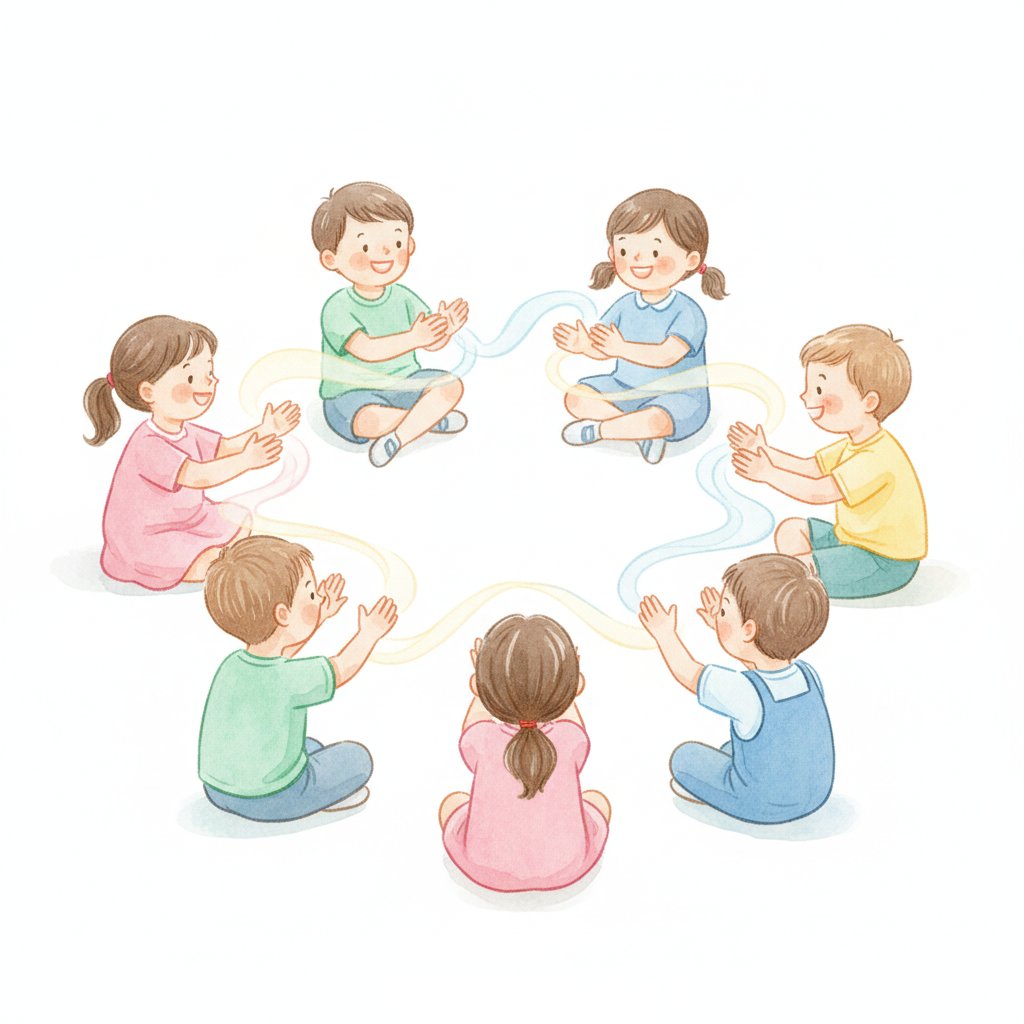
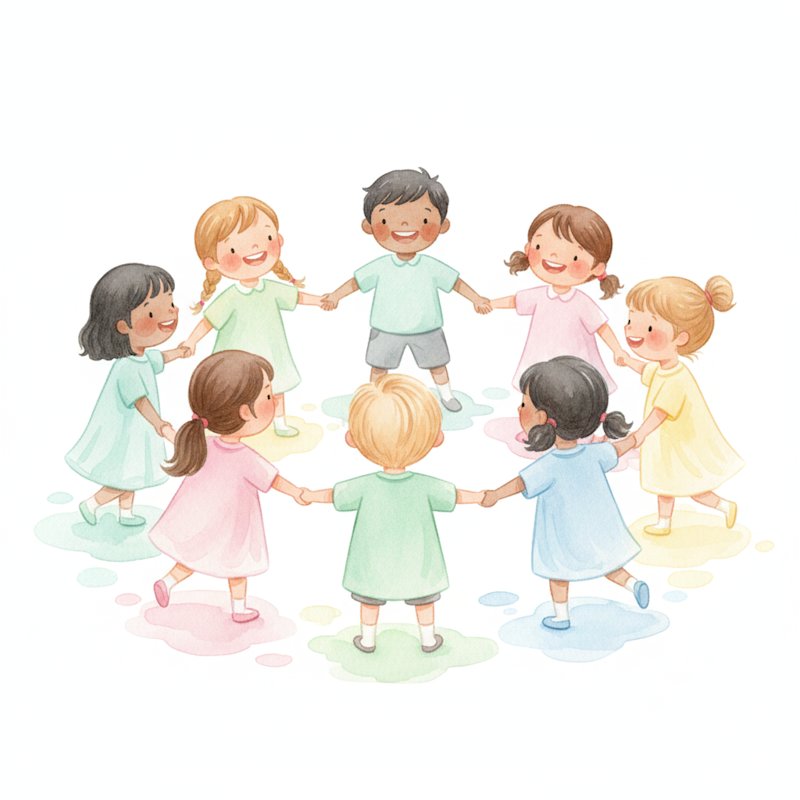
What to do: Children sit in a circle. The teacher does an action (clap, stomp, nod, wave) and "passes" it to the next child. That child does the same action and passes it. Add actions: clap then stomp. Clap, stomp, nod. The growing sequence practices memory and attention.

Why it works: Every child participates, every child watches, every child waits for their turn. The circle structure ensures inclusion — there's no front or back, no one is left out. For more circle activities, see our circle time guide.

2. Group story round
What to do: Each child adds one word to a group story: "Once" → "there" → "was" → "a" → "dragon" → "who" → "loved" → "dancing." The story is unpredictable and funny. Children listen carefully to add a word that makes sense.

3. Guess the leader
What to do: One child leaves the room. The group silently chooses a leader who starts movements (clapping, patting head, stomping). Everyone follows the leader. The child returns and tries to guess who's leading. The game requires coordinated group following — the leader succeeds only if everyone copies them.

4. Group wave
What to do: Like a stadium wave, children stand up and raise their arms in sequence around the circle. "Start the wave! When the person next to you stands, you stand!" The wave only looks good when everyone participates together.

5. Invisible ball
What to do: Children pass an "invisible ball" around the circle. The ball changes: "Now it's HEAVY — use two hands!" "Now it's HOT — careful!" "Now it's TINY — use two fingers!" Children act out the imaginary properties, building dramatic play skills. For more imaginative play, see our dramatic play guide.

Movement Group Games (Ages 3-6)

6. Animal parade
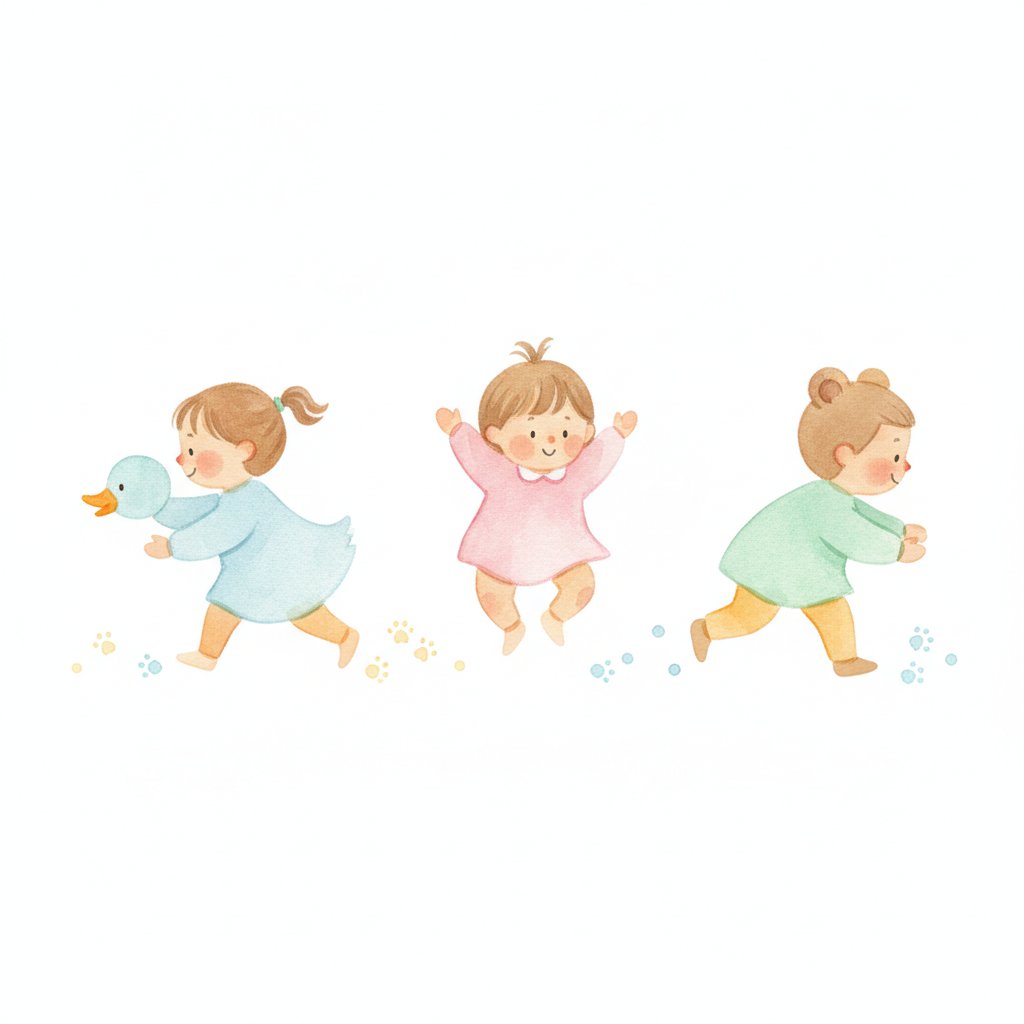
What to do: Children line up and move together as a different animal: "Everyone waddle like ducks across the room! Now hop like frogs! Now slither like snakes!" The group moves together, and children try to match the group's pace.

Why it works: Movement games channel energy productively while practicing the skill of moving as a group — matching pace, staying together, following the leader. For more movement ideas, see our gross motor guide.

7. Group obstacle course
Materials: Cones, tunnels, balance beams, hoops.

What to do: Children navigate the obstacle course together in a line. Each child waits for the person ahead to finish an obstacle before starting. The course builds gross motor skills and patience simultaneously.

8. Cooperative balancing
Materials: Large foam blocks or cushions.

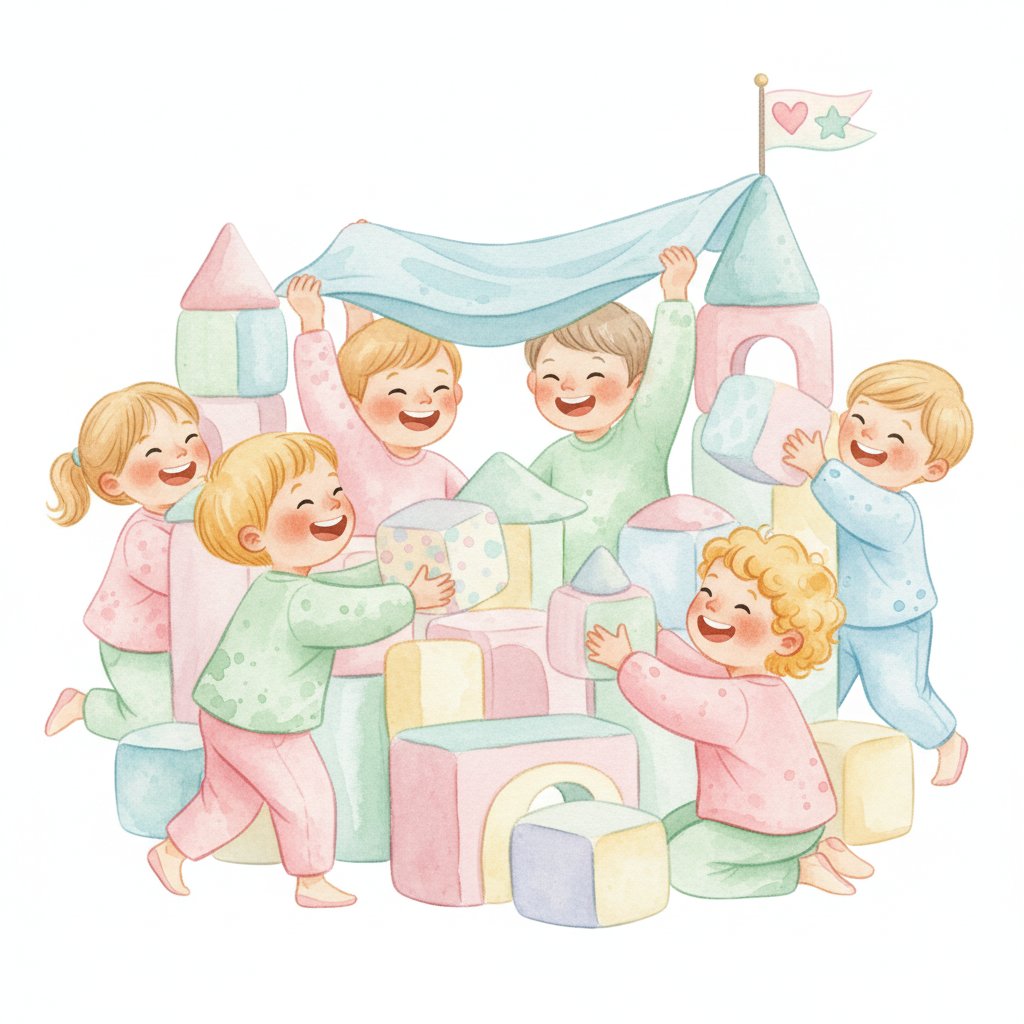
What to do: Children work together to build the tallest tower possible. "Everyone adds one block. If it falls, we rebuild together!" The collective effort teaches that group success requires everyone's contribution.

9. Shadow line
What to do: Children line up and follow the leader, copying their exact movements. The line of children should look like one long connected shadow. The leader changes every 30 seconds.

10. Group sculpture
What to do: Call out a shape: "Make a CIRCLE with your bodies! Make a STAR! Make a HOUSE!" Children arrange themselves into the shape. The challenge requires communication, spatial awareness, and cooperation.

Color sorting: the perfect first group game
Our Colors Flashcards make an instant group game: scatter the cards, call out 'Everyone find something RED!' and children run to find and collect red cards. 'Now BLUE! Now GREEN!' The group moves together, sorts together, and celebrates together. No winners, no losers — just a room full of children learning colors by moving their bodies. 11 colors, 11 rounds of cooperative fun.

Musical Group Games (Ages 3-6)

11. Group rhythm echo
Materials: Drums, rhythm sticks, or just hands.

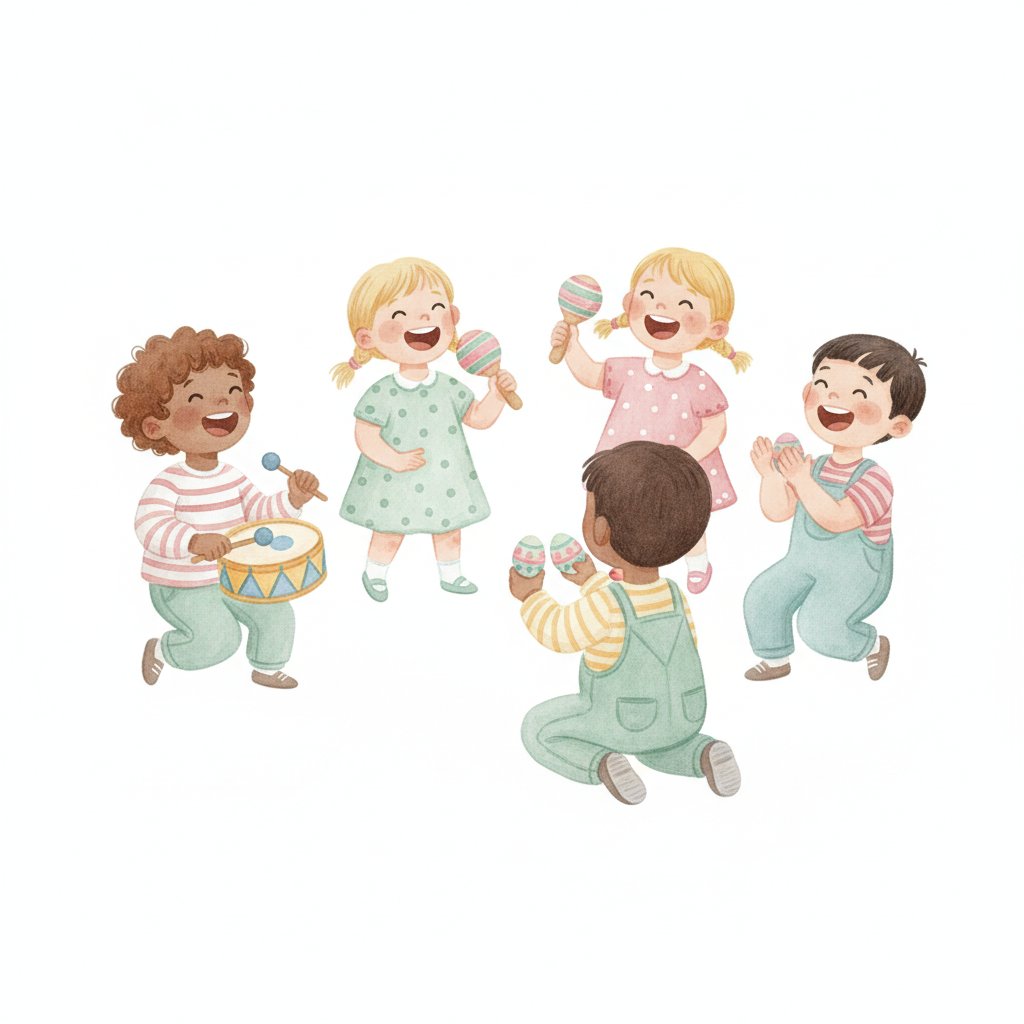
What to do: Teacher plays a rhythm. The entire group echoes it together. Start simple: tap-tap-tap. Add complexity: tap-tap-CLAP-tap. The group must stay together — one person off-beat and it doesn't sound right. For more music activities, see our music guide.

12. Group song with movements
What to do: Sing songs with coordinated movements: "Head, Shoulders, Knees and Toes," "The Hokey Pokey," "If You're Happy and You Know It." The songs require the group to move in sync. Children love the feeling of doing the same thing at the same time as everyone else.

13. Musical hugs
What to do: Play music. Children dance. When the music stops, children find a partner and hug. "Find TWO partners! Find someone wearing blue!" The game practices pairing and grouping without elimination. Everyone dances, everyone hugs, everyone belongs.

14. Sound story
Materials: Various instruments or sound-makers.

What to do: The teacher tells a story and the group provides sound effects: "The rain started" (everyone rubs hands together), "Thunder crashed" (everyone stomps), "The birds sang" (everyone whistles). Every child contributes to the soundscape.

15. Group dance freeze
What to do: Play music. Children dance. Freeze the music — everyone freezes in a fun pose. "Freeze like a dinosaur! Freeze like a tree!" Compare poses: "Look at all our different dinosaur poses!" The game celebrates individual expression within a group structure. For more movement, see our gross motor guide.

Cooperative Challenges (Ages 4-6)

16. Keep the balloon up
Materials: Balloon.

What to do: The group keeps one balloon in the air as long as possible. No one can hit it twice in a row. "You have to pass it to someone else!" The balloon only stays up if everyone participates. Count hits together: "1, 2, 3, 4, 5... can we beat our record?"

Why it works: The balloon doesn't care who's popular, who's fast, or who's smart. It just needs to be hit. The game is pure cooperation — the goal is shared, the success is shared, and when the balloon drops, nobody is "out." Just pick it up and try again.

17. Group puzzle
Materials: Large floor puzzle.

What to do: Children work together to complete a large floor puzzle. Assign roles: "Edge finders, corner finders, color sorters." The puzzle only gets finished when everyone contributes. For more problem-solving, see our puzzle activities guide.

18. Parachute games
Materials: Play parachute or large sheet.

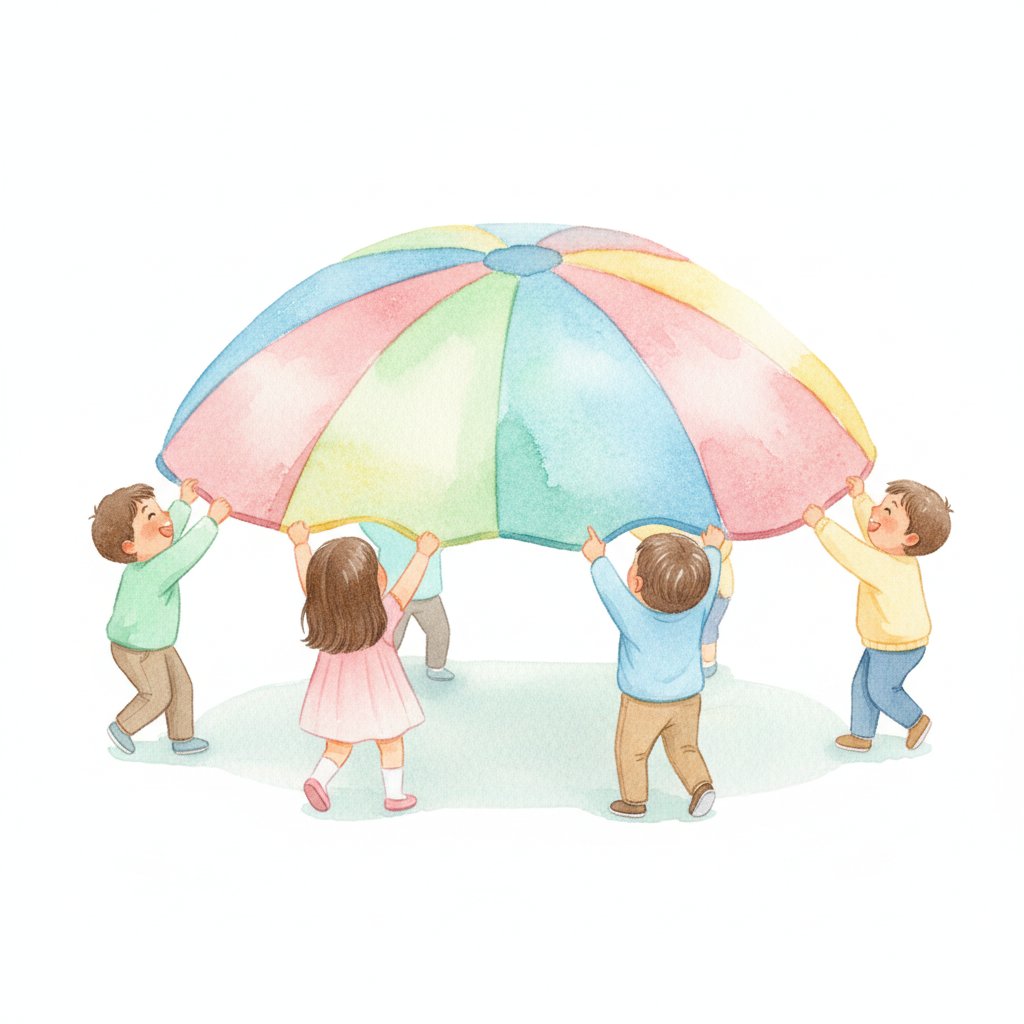
What to do: The classic cooperative activity. Children hold the edges and: make waves (small, medium, tsunami), launch a ball, make a tent (lift and step under), pop popcorn (bounce balls). Parachute play REQUIRES cooperation — one child can't do it alone.

19. Human bridge
Materials: None.

What to do: Children form pairs and create "bridges" with their arms (holding hands up high). Other children crawl under the bridges. Then the bridge builders become crawlers and the crawlers become bridges. Everyone plays every role.

20. Group count
What to do: The group counts to 20 together, but each child says only one number, in order, without planning who goes when. If two people speak at the same time, start over. The game requires listening, patience, and awareness of the group. For more counting, see our number activities.

Alphabet relay: run, find, return, repeat
Our Alphabet Monster Flashcards become a cooperative relay: scatter all 26 cards across the room. Children take turns running to find the next letter in alphabetical order — A, then B, then C — and bring it back to the group. The GROUP is working together to collect the whole alphabet. No one wins alone; everyone wins when A through Z are in order.
1.How do I handle a child who refuses to participate in group games?
Give them a "special job" instead of excluding them. "You can be the scorekeeper!" "You can be the DJ who starts and stops the music!" The job gives them a role in the group without requiring them to participate in the physical game. Often, children who start as observers gradually join in once they feel safe. Never force participation — the goal is belonging, not compliance.
2.What's the ideal group size for preschool games?
4-8 children is the sweet spot for ages 3-4. Larger groups become overwhelming — children lose focus and wait too long for turns. For ages 5-6, groups of 8-12 work well. With full classes of 15-20, split into two groups or play whole-group games where everyone participates simultaneously (freeze dance, group counting) rather than turn-based games.
3.How long should a preschool group game last?
5-10 minutes for ages 3-4, 10-15 minutes for ages 5-6. Stop while children are still having fun — ending on a high note leaves them wanting more. It's always better to play two short games than one long one. Watch for signs of fatigue: wandering, conflicts, or loss of focus signal the game has gone on too long.
4.Can I adapt these games for a mixed-age group?
Yes. Pair older children with younger ones as "buddies." Give older children leadership roles (choosing the game, demonstrating rules). Simplify rules for younger children while adding complexity for older ones. Mixed-age groups are actually beneficial — older children practice nurturing and younger children have skilled models to learn from.