Articles7 min read

The Cardboard Box That Was Worth More Than the Toy Inside

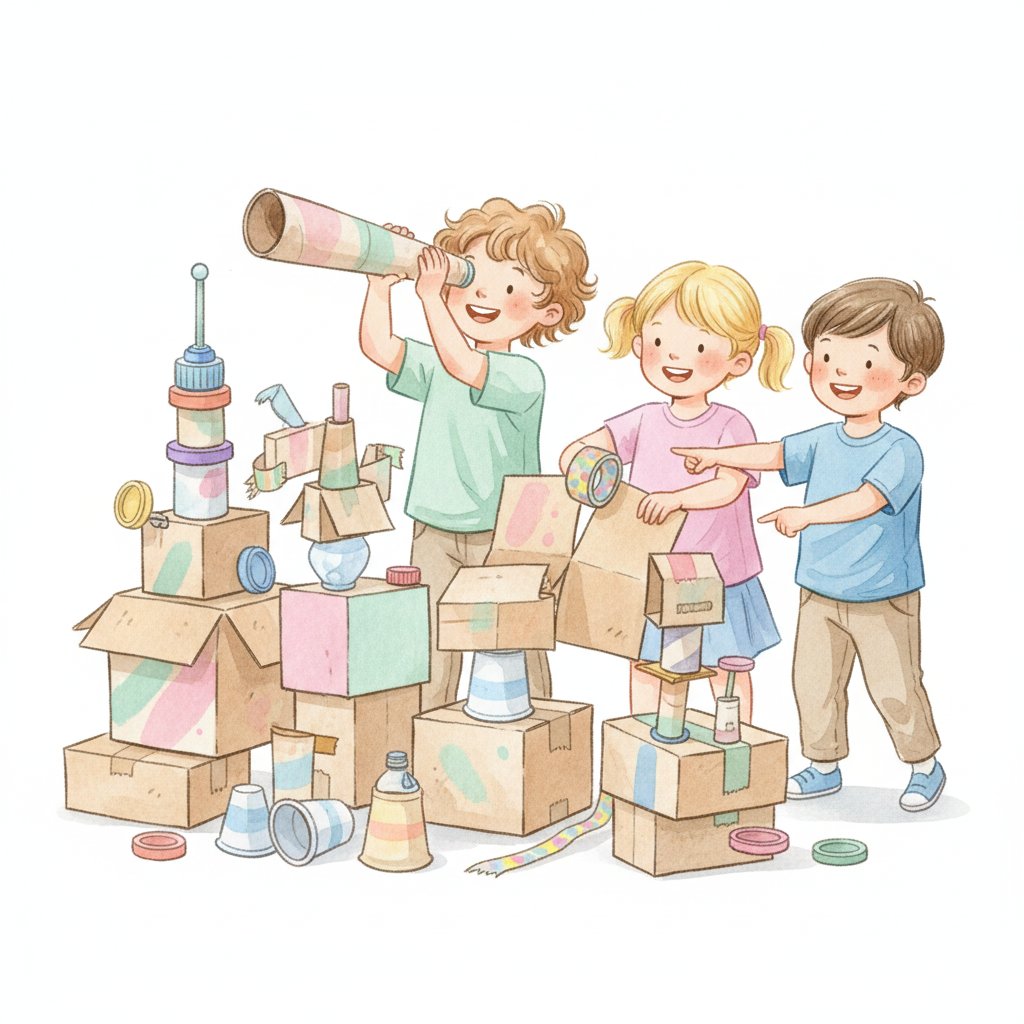
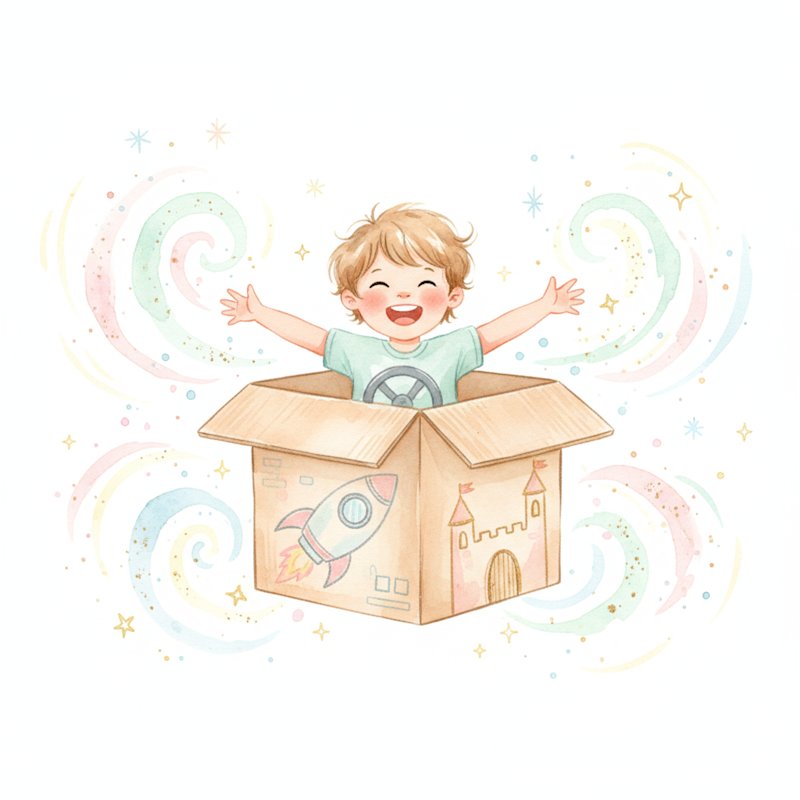
Last Christmas, my daughter ignored the dollhouse and spent three hours with the shipping box. She turned it into a rocket ship, then a castle, then a turtle shell, then a restaurant. I watched her transform one object into four completely different worlds — and realized she was doing something I can't do as an adult: she wasn't limited by what the box WAS, only by what she could IMAGINE it to be.

That's divergent thinking — the ability to generate multiple solutions, see multiple possibilities, and resist the pull of the obvious answer. According to research by Dr. Kyung Hee Kim published in the Creativity Research Journal, creativity scores in children have been declining since 1990, partly because structured activities leave less room for open-ended imagination.
The good news: imagination is a skill, not a gift. It can be nurtured through specific activities that challenge children to think beyond the obvious. This guide covers 20+ imagination activities for ages 3-6, organized by type: what-if thinking, pretend worlds, invention challenges, and creative storytelling. Pair it with our dramatic play guide for role-play scenarios and our storytelling guide for narrative skills.

What-If Thinking Activities (Ages 3-6)

1. What if animals could talk?
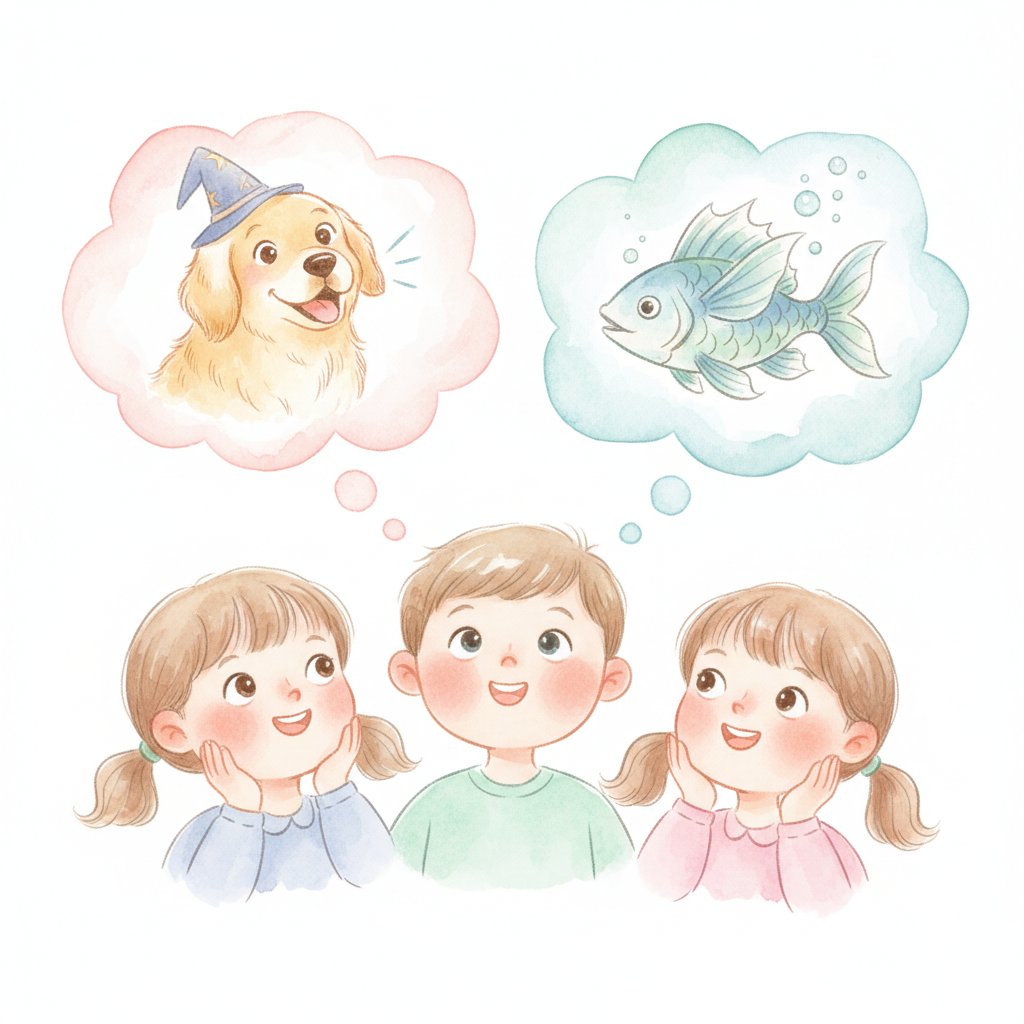
What to do: Ask open-ended "what if" questions and let children generate answers. "What if your dog could talk? What would they say?" "What if cats could drive cars? Where would they go?" "What if fish could fly? What would the sky look like?" No wrong answers — the wilder, the better.

Why it works: "What if" questions bypass the right-answer trap. Children stop looking for what adults want to hear and start generating genuinely original ideas. The practice builds divergent thinking — producing multiple possible answers instead of one correct one.

2. The "other use" game
Materials: One common object (paper clip, cup, shoe, spoon).

What to do: "This is a cup. What else could it be?" Children brainstorm: a hat, a telephone, a building block, a drum, a telescope, a boat, a flower pot. Count how many ideas the group can generate. For more creative thinking, see our science experiments.

3. What if we had no...
What to do: "What if we had no hands? How would we eat?" "What if we had no wheels? How would we get to school?" "What if we had no teeth? How would we eat apples?" Removing something essential forces creative problem-solving.

4. Mix and match animals
What to do: "What if you could combine two animals? What would you get?" "A bird and a horse=a Pegasus! What about a fish and a cat?" Children draw their invented creatures and describe what they can do. For more animal fun, see our safari animals guide.

5. Opposite day
What to do: Declare it "Opposite Day" where everything is reversed. "We eat dinner for breakfast! We wear pajamas to school! We say goodbye when we arrive!" The reversal requires children to hold two realities in mind — what's real and what's opposite.

Every animal card is a story starter
Our Safari Animals Art Activity Pack doesn't just teach animal names — it sparks imagination. 'Draw a lion in a DIFFERENT habitat. What if a lion lived in the ocean? What would it look like? What would it eat?' Each animal is a launch pad for a what-if story. 12 safari animals, 12 imagination adventures.

Pretend World-Building (Ages 3-6)

6. Cardboard box transformation
Materials: Large cardboard boxes, markers, scissors (adult use), tape.

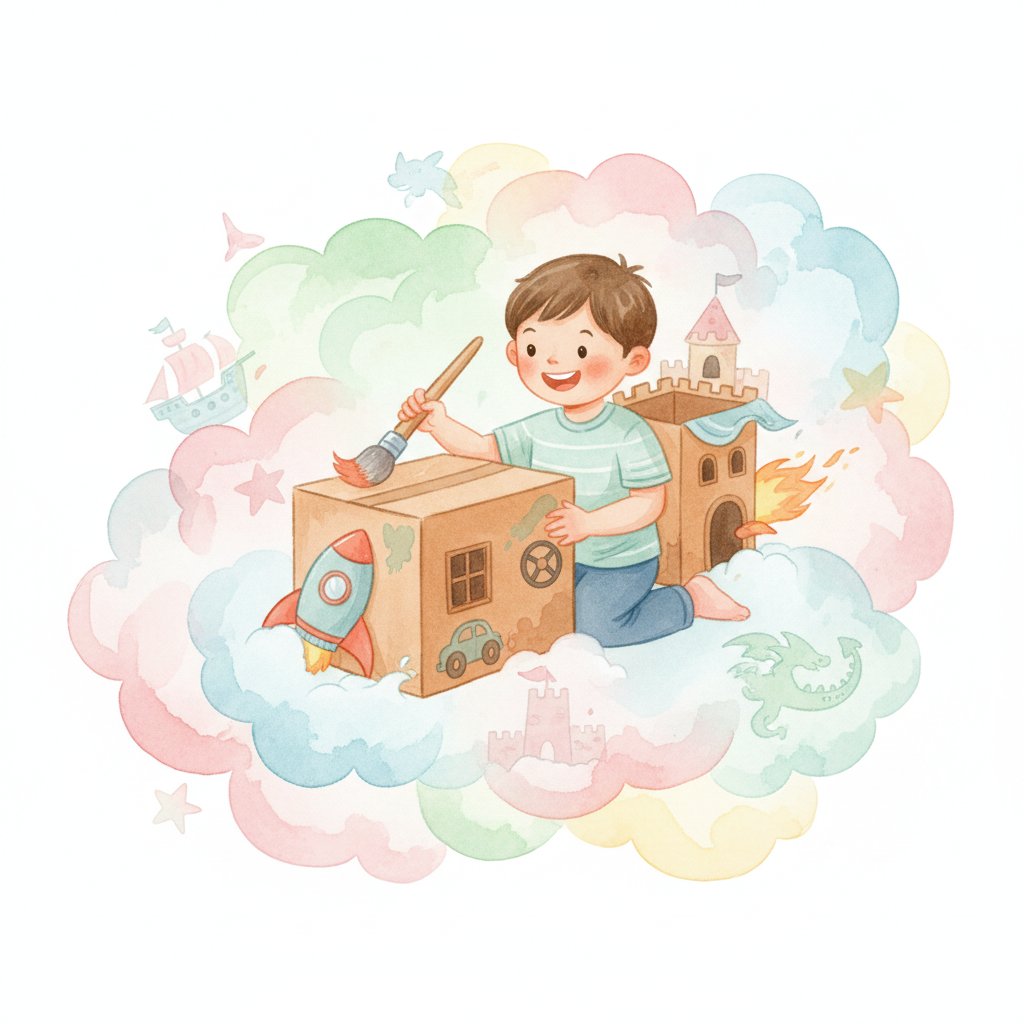
What to do: Give children boxes and let them decide what to build. Not "let's make a spaceship" but "what should this become?" Children design, decorate, and inhabit their creations. One box can become a different thing every day.

Why it works: Open-ended materials (boxes, fabric, tape) produce more creative play than structured toys (a toy kitchen can only be a kitchen). The box has no predetermined identity, so the child must supply one. For more building activities, see our block guide.

7. Fort building
Materials: Blankets, chairs, pillows, clips.

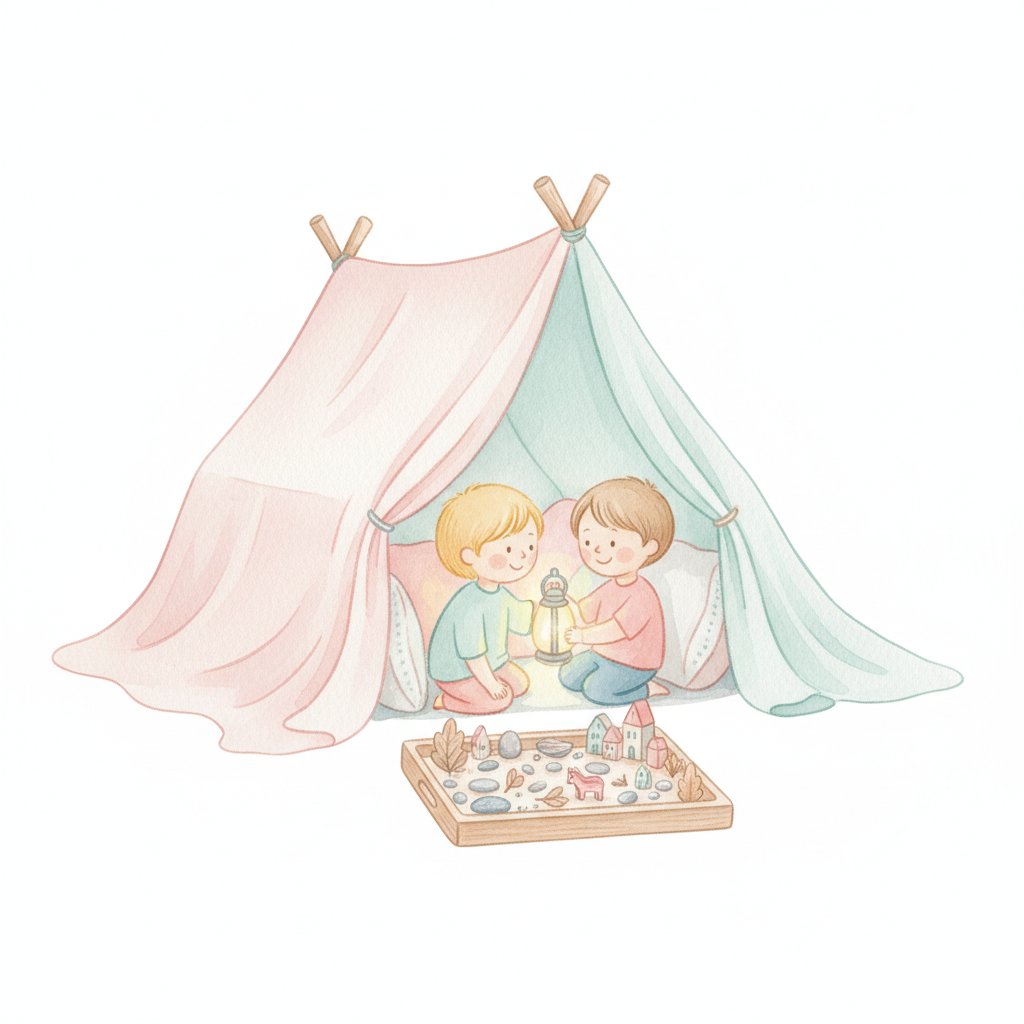
What to do: Children design and build a fort. Not a pre-planned fort — a fort that emerges from their ideas. "What kind of fort should we build? A castle? A cave? A spaceship? What do we need?" The design-build-revise cycle mirrors engineering thinking.

8. Tiny world
Materials: Small figures, natural materials (rocks, sticks, leaves), tray or box lid.

What to do: Children create a miniature world in a tray: a fairy garden, a dinosaur park, a bug city. The small scale invites detail and narrative. Children make decisions about everything: geography, who lives there, what the rules are.

9. Costume box free play
Materials: A box of costume pieces (hats, capes, scarves, ties, glasses).

What to do: Children choose costumes and become characters. The key: no script. The child decides who they are, where they are, and what's happening. The adult's role is to ask questions: "Who are you today? Where are you going? What's happening in your story?" For more pretend play, see our dramatic play guide.

10. Shadow theater
Materials: Flashlight, blank wall, paper cut-out shapes.

What to do: Children create shadow stories by moving paper shapes between the flashlight and the wall. "Make a butterfly shadow! Now make it fly!" The shadows transform abstract shapes into stories. Children learn that changing an object's position changes its shadow — a physics lesson wrapped in imagination.

Invention Challenges (Ages 4-6)

11. Invent a machine
Materials: Recycled materials, tape, glue.

What to do: "Invent a machine that [solves a problem]." "Invent a machine that cleans your room." "Invent a machine that makes you fly." Children build their machines from recyclables and explain how they work. The explanation matters as much as the building — children practice describing their creative thinking.

Why it works: Invention challenges combine divergent thinking (generating ideas) with convergent thinking (building something that works). Children practice the full creative cycle: imagine → plan → build → test → revise.

12. Design a new color
Materials: Paint or markers.

What to do: "If you could invent a brand new color that nobody has ever seen, what would it look like? What would you call it? What things would be this color?" Children mix paints to create their color, name it, and paint a picture using it. For more color work, see our color activities guide.

13. Build a bridge for a toy
Materials: Various building materials (blocks, straws, paper, tape).

What to do: "Your toy needs to cross this river (blue paper). Build a bridge that holds the toy's weight." Children choose materials, design, test, and revise. The open-ended challenge has infinite solutions — every child's bridge will be different.

14. Invent a holiday
What to do: "Invent a brand new holiday. What does it celebrate? What do people do? What do they eat? What do they wear?" Children create the holiday from scratch — name, traditions, food, decorations. The activity requires synthesizing multiple ideas into a coherent concept.

15. Design a bedroom for an alien
Materials: Paper, crayons.

What to do: "An alien is coming to live with us. Design a bedroom they would love. What do aliens need? What do they like?" The alien premise removes children from reality constraints — the bedroom can have anything. For more creative drawing, see our art activities guide.

26 monsters=26 imagination prompts
Our Alphabet Monster Flashcards aren't just for letter recognition — they're imagination starters. 'This is Monster A. What's their name? Where do they live? What's their favorite food? What are they afraid of?' Each monster becomes a character children invent stories about. The letter is the starting point; the imagination is the destination. 26 monsters, 26 stories waiting to be told.

Creative Storytelling Activities (Ages 4-6)

16. Story dice
Materials: Dice with pictures glued to each face (or picture cards).

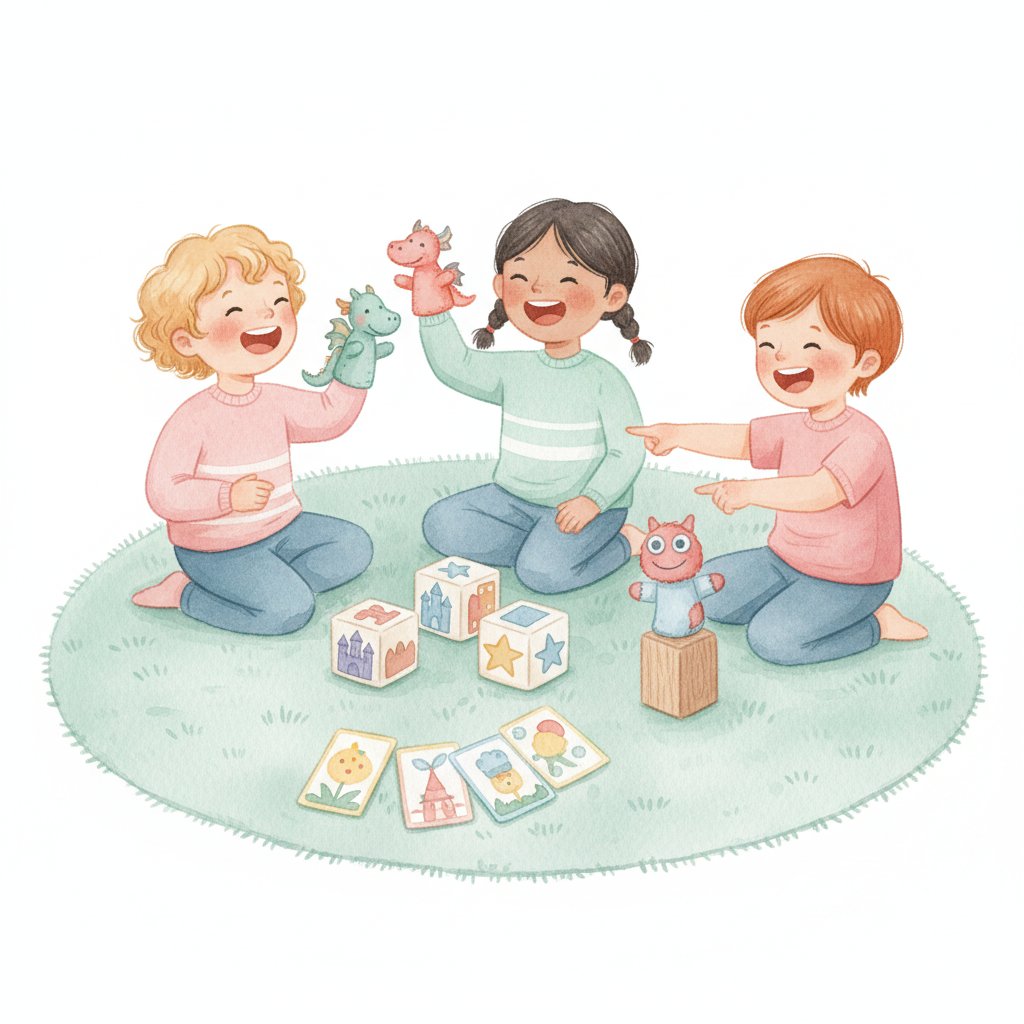
What to do: Roll 3 dice. The pictures must appear in a story. "You rolled a cat, a mountain, and a key. Tell a story with all three!" The random elements force creative connections — children discover stories they'd never think of on their own. For more storytelling, see our storytelling guide.

17. Story without pictures
Materials: Wordless picture book or just imagination.

What to do: Show illustrations from a wordless book (or just describe a scene) and ask: "What's happening? What happened before? What happens next?" Without text to guide them, children supply the narrative themselves. Every retelling is different.

18. "And then something surprising happened"
What to do: Tell a group story where the rule is: every person's addition must include something surprising. "Once there was a dog who liked to swim. And then something surprising happened... the dog grew WINGS!" The "surprise rule" trains children to subvert expectations — a core creativity skill.

19. Sound story
Materials: Objects that make interesting sounds (keys, crinkly paper, bells, shakers).

What to do: Make sounds and ask: "What story does this sound tell?" Jingle keys="A knight is coming!" Crinkle paper="Someone's opening a present!" Shake bells="It's Christmas!" Children match sounds to stories, then create their own sound stories. For more listening activities, see our listening guide.

20. Change the ending
What to do: Read a familiar story and change the ending. "What if the Big Bad Wolf was actually nice? How would the story be different?" "What if Goldilocks asked permission instead of breaking in?" Rewriting familiar stories is easier than inventing from scratch — the scaffold helps children practice creative variation.

Posters aren't just for reading — they're for imagining
Our 8 Educational Posters spark imagination beyond the facts: 'The solar system poster shows 8 planets. But what if there was a NINTH planet only you know about? What would you name it? What color is it? Who lives there?' Facts are the starting point. Imagination is the destination. 8 posters, 8 launch pads for creative thinking.
1.My child has a huge imagination but struggles with reality-based tasks. Should I be concerned?
Not at age 3-5. Rich imagination is a developmental strength, not a deficit. Children with vivid imaginations often become strong creative thinkers, writers, and problem-solvers. If a 5-6 year old consistently cannot distinguish fantasy from reality (genuinely believes their imaginary friend is physically present, insists their invented stories are real), mention it to your pediatrician. But most "immature" imagination at 3-4 is just... being 3-4.
2.How much screen time harms imagination?
Research suggests it's not screen TIME but screen CONTENT that matters. Passive consumption (watching videos) is linked to reduced creative play. Interactive, open-ended apps (drawing tools, building games) may support creativity. The key is balance: for every minute of screen time, ensure equal or greater time for open-ended creative play. If your child can play imaginatively for 30 minutes after 30 minutes of TV, the balance is probably fine.
3.Should I play along with my child's imaginary scenarios?
Absolutely. "I see you're running a restaurant! I'd like to order the soup, please." Your participation validates their creative effort and extends the play. Ask questions: "What's your restaurant called? What's the special today?" Your questions push the scenario further. You don't need to lead — just follow their imagination and occasionally nudge it deeper.
4.How is imagination connected to academic learning?
Directly. Imagination is the ability to think about what ISN'T — which is the same skill needed for math (what is 5 + 3? The answer isn't in front of you), reading (imagining the scene in a story), science (forming hypotheses about what might happen), and writing (creating something from nothing). Children with stronger imaginative play skills tend to be stronger in all academic areas because imagination IS thinking.