Articles6 min read

The Ant Trail That Started a Science Revolution

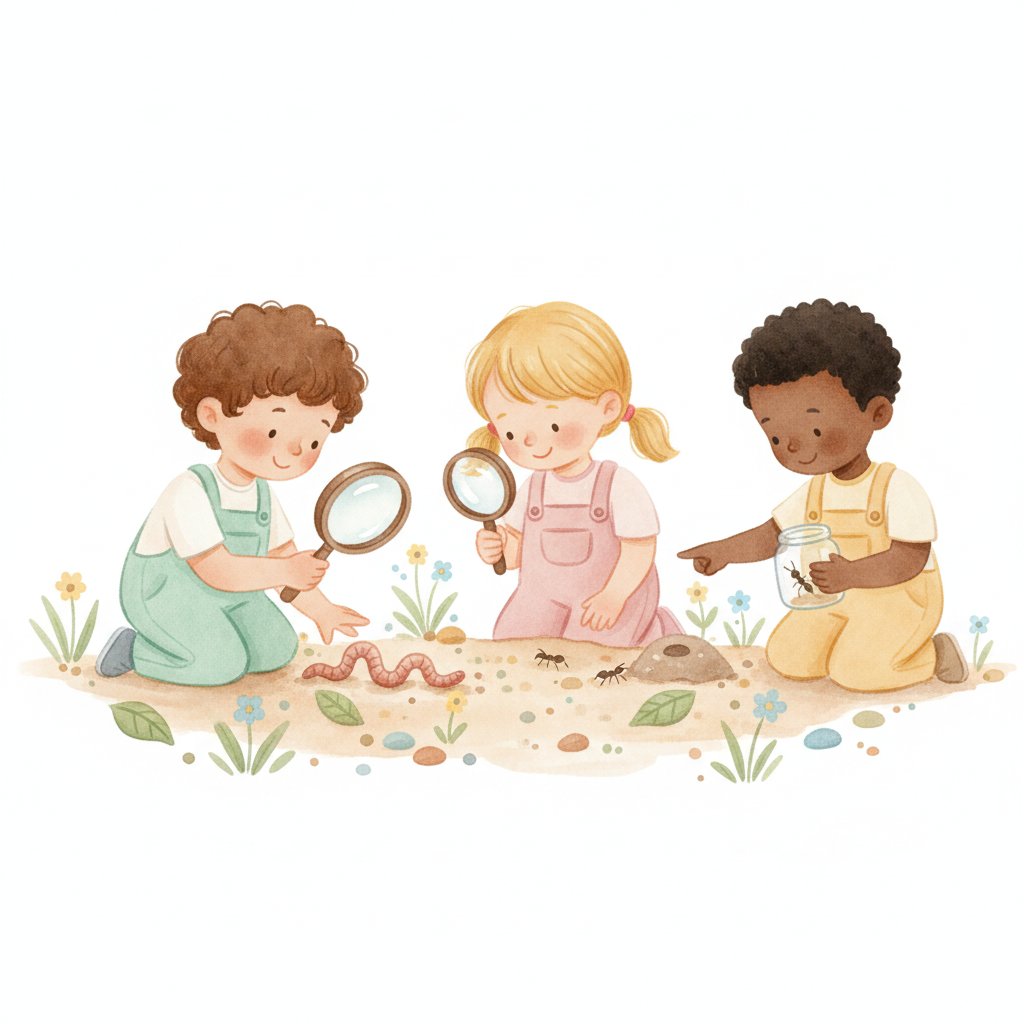
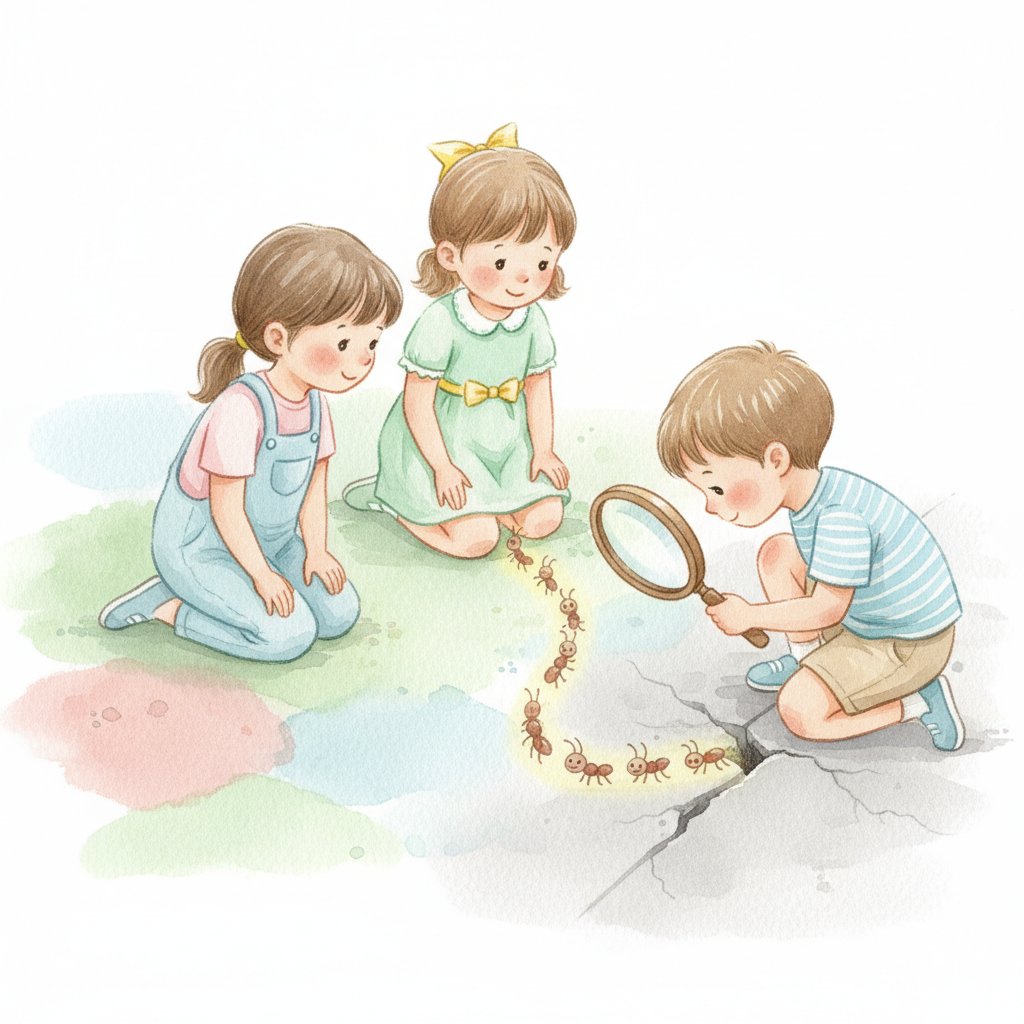
A line of ants marched across our playground carrying crumbs. "Where are they going?" asked four-year-old Kai. We followed the trail to a crack in the sidewalk and saw the ants disappear underground. "They live UNDER there?" The children spent 45 minutes watching ants that day — 45 minutes of focused observation, questioning, hypothesizing, and discussing from a group that usually couldn't sit still for five. I realized that insects are the PERFECT preschool science topic: they're everywhere, they're easy to observe, and children are naturally fascinated by them. You don't need a science lab — you need a magnifying glass and a patch of dirt.

According to the Entomological Society of America, insect education builds observation skills, scientific thinking, environmental awareness, and reduces irrational fear of the natural world. Children who learn about insects are more likely to explore outdoors, care about conservation, and think of themselves as scientists.
This guide covers 20+ insect and bug activities for ages 3-6. Pair it with our science experiments guide for more science and our outdoor play guide for nature exploration.

Insect Basics and Sorting (Ages 3-6)

1. What makes an insect?
Materials: Insect pictures, magnifying glass.

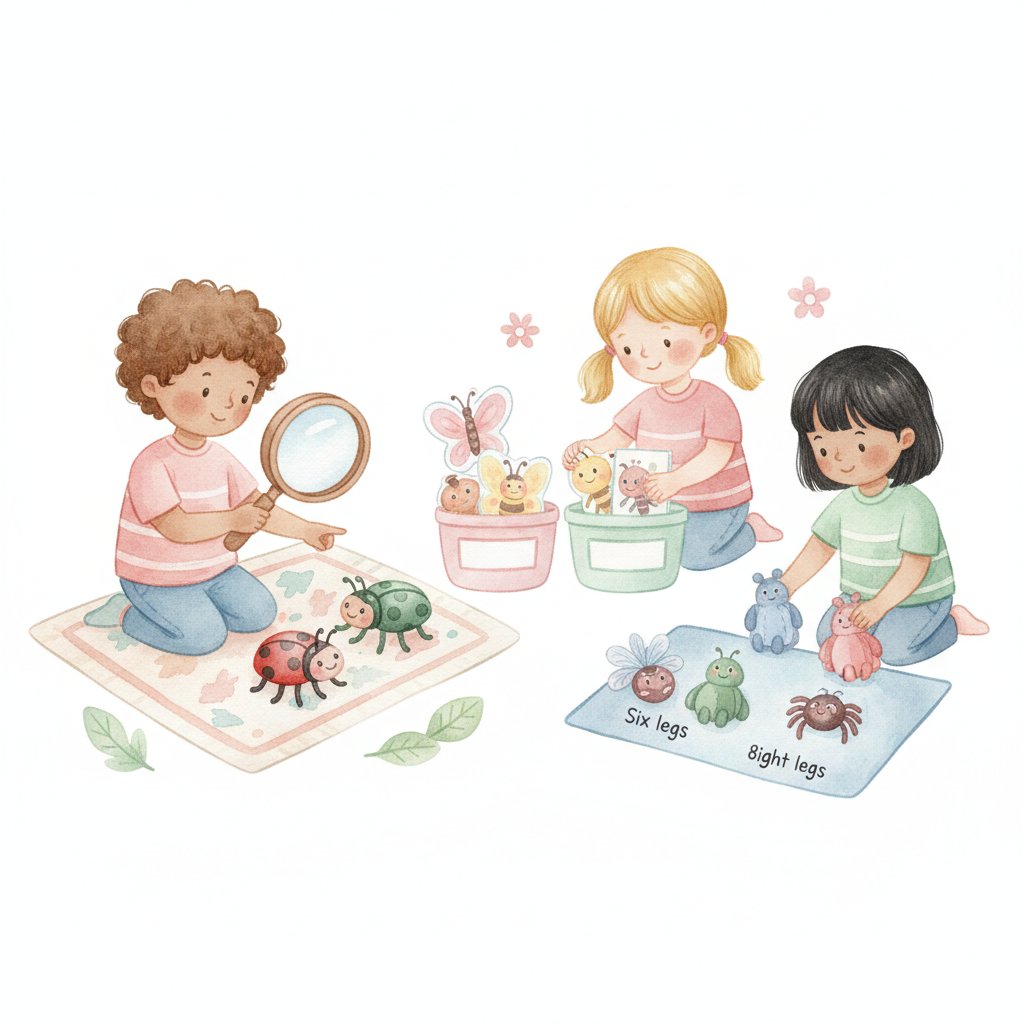
What to do: "Every insect has THREE body parts: head, thorax, and abdomen. SIX legs. TWO antennae." Count on pictures: "Head — 1, thorax — 2, abdomen — 3. Legs: 1, 2, 3, 4, 5, 6!" The counting teaches anatomy through math. For more body activities, see our body parts guide.

Why it works: The three-part body/six-leg rule gives children a CONCRETE test for identifying insects. "Is a spider an insect? Count the legs — 1, 2, 3, 4, 5, 6, 7, 8! EIGHT legs! Spiders are NOT insects — they're arachnids!" The classification skill is the same one they use for sorting shapes and colors.

2. Insect or not?
Materials: Pictures of insects and non-insects (spiders, worms, snails, centipedes).

What to do: "Is this an insect? Count the legs! 6 legs=insect. 8 legs=NOT an insect (spider). No legs=NOT an insect (worm)." The sorting teaches classification. For more sorting, see our sorting guide.

3. Bug hunt
Materials: Magnifying glasses, containers.

What to do: "Go outside and find a bug! Look under rocks, on leaves, in the dirt. Catch it GENTLY in your container. Observe it: How many legs? What color? What is it doing?" The hunt teaches real scientific observation. For more outdoor activities, see our outdoor guide.

4. Insect counting
Materials: Insect counters or pictures.

What to do: "How many antennae does one ant have? 2! How many antennae do 3 ants have? 6! How many legs does one bee have? 6! How many legs do 2 bees have? 12!" The counting teaches multiplication as repeated addition. For more counting, see our number guide.

5. Insect symmetry
Materials: Butterfly pictures, paper.

What to do: "Look at this butterfly — the left side is EXACTLY the same as the right side! That is called SYMMETRY." Fold paper in half, paint one side, fold to create a symmetrical butterfly print. The art teaches symmetry through beauty. For more art, see our art guide.

Safari animals share their world with insects
Our Safari Animals Art Activity Pack opens conversations about animal habitats — and insects share ALL of them. 'Elephants walk through grasslands where GRASSHOPPERS jump. Lions rest under trees where CATERPILLARS crawl. Giraffes eat leaves where BEES collect pollen. Every big animal shares its home with tiny insects!' After painting their safari animals, children add the insects that share the habitat. The art becomes an ecosystem lesson: big animals and tiny bugs, all connected.

Butterfly and Bee Activities (Ages 3-6)

6. Butterfly life cycle
Materials: Pasta shapes: orzo (egg), rotini (caterpillar), shell (chrysalis), bowtie (butterfly).

What to do: "The butterfly starts as a tiny EGG (orzo). It hatches into a CATERPILLAR (rotini) that eats and eats. It wraps itself in a CHRYSALIS (shell) and changes completely. It emerges as a BUTTERFLY (bowtie)!" Glue the pasta in order on paper. The cycle teaches metamorphosis through tangible objects. For more life cycles, see our science guide.

7. Caterpillar measurement
Materials: Egg cartons, green paint.

What to do: "Make a caterpillar! Each cup is one body segment. How many segments is YOUR caterpillar? 5? Mine is 8! Which is LONGER?" The measurement teaches length comparison. For more measurement, see our math guide.

8. Bee pollination role-play
Materials: Yellow pompoms (pollen), flower pictures.

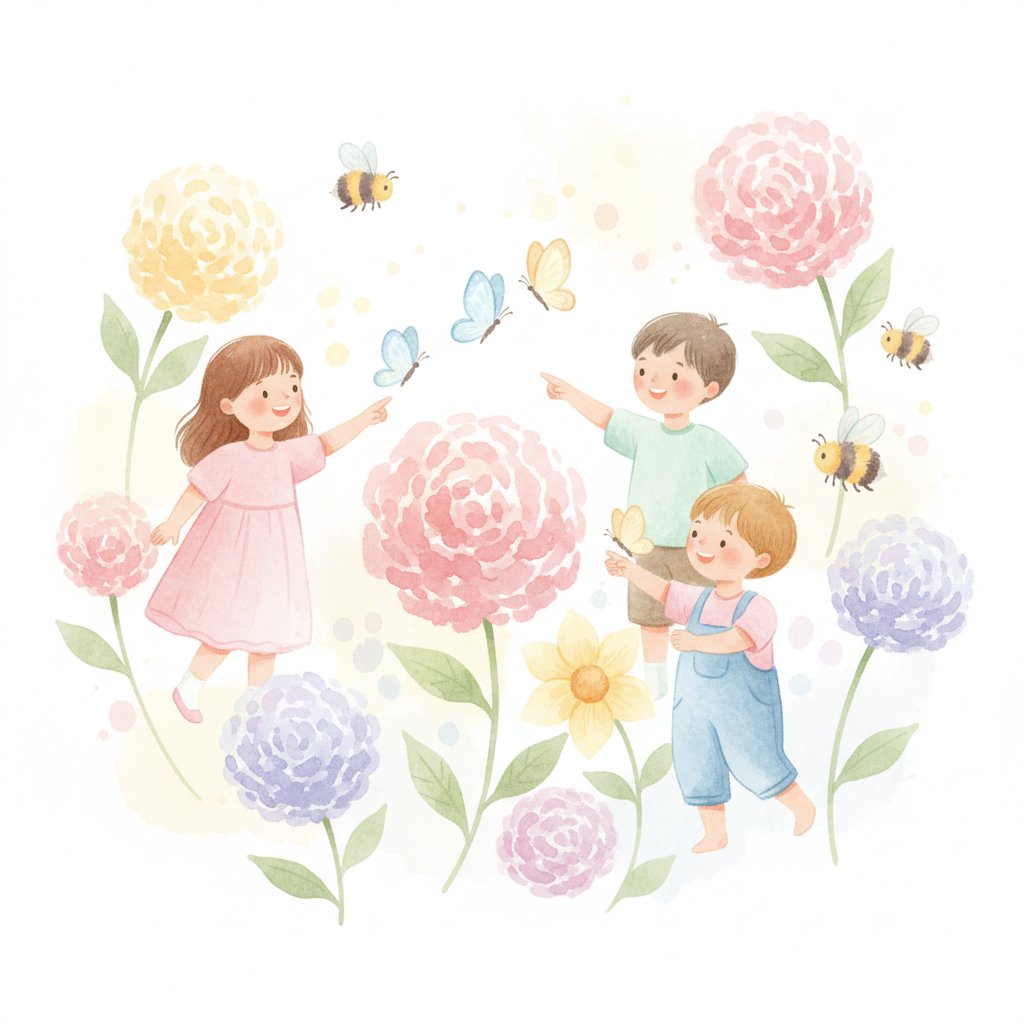
What to do: "You're a bee! Fly to a flower and collect pollen (pick up a pompom). Now fly to the NEXT flower and drop some pollen off! That is POLLINATION — how plants make seeds and fruit!" The role-play teaches the bee's critical ecological role through movement.

9. Honeycomb hexagons
Materials: Hexagon pattern or honeycomb picture.

What to do: "Bees build their homes in HEXAGONS — six-sided shapes! Why? Because hexagons fit together perfectly with no gaps!" Draw or build hexagon patterns. The geometry teaches shape awareness through nature. For more shapes, see our shape guide.

10. Nectar relay
Materials: Yellow water (nectar), eyedroppers, small cups.

What to do: "Bees collect nectar from flowers and bring it to the hive! Use your dropper to collect nectar from the flower and carry it to the hive cup!" The relay teaches fine motor skills and the bee's work ethic.

Farm animals need insects to survive
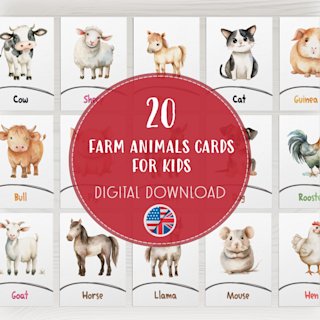
Our Farm Animals Flashcards open a surprising conversation: 'Cows eat GRASS — but grass grows because INSECTS pollinate the grass flowers. Chickens eat INSECTS directly — bugs are chicken food! Pigs root in the dirt and find GRUBS and WORMS. Horses stand in fields full of BUTTERFLIES and BEES. Farm animals NEED insects!' Children learn that the food web starts with tiny creatures. The flashcards connect big farm animals to the little bugs that make their food possible. 12 farm animals, 12 reasons to appreciate insects.

Ant and Earthworm Activities (Ages 3-6)

11. Ant observation
Materials: Magnifying glass, piece of fruit.

What to do: "Put a piece of apple on the ground. Wait 10 minutes. What happens? ANTS! Watch them: Where are they going? Are they carrying anything? How do they know where the food is?" The observation teaches patience and scientific watching. For more patience, see our self-regulation guide.

12. Ant tunnel drawing
Materials: Paper, brown crayons.

What to do: "Ants build tunnels underground! Draw what you think an ant city looks like: tunnels, rooms for food, rooms for babies, rooms for the queen." The drawing teaches underground awareness and spatial imagination.

13. Earthworm exploration
Materials: Earthworms (from bait shop or garden), magnifying glass.

What to do: "Earthworms are NOT insects — they have no legs! But they're nature's helpers. They eat dirt and make it healthy for plants." Children observe: "Which end is the head? Do they have eyes? How do they move?" The exploration teaches that not all crawly things are insects. For more animals, see our pets and animals guide.

14. Worm measurement
What to do: "How long is this worm? Let's measure with Unifix cubes! It's 4 cubes long! Now it stretched — it's 7 cubes!" The measurement teaches that living things change shape.

15. Composting with worms
Materials: Clear container, dirt, fruit scraps, worms.

What to do: "We're making a worm home! The worms will eat our fruit scraps and turn them into rich soil." Observe over weeks: "The banana peel is disappearing! The worms are eating it and making dirt!" The composting teaches decomposition and recycling in nature. For more recycling, see our earth day guide.

Insect Learning Extensions (Ages 3-6)

16. Insect alphabet
What to do: "A is for ANT. B is for BEE. C is for CATERPILLAR. D is for DRAGONFLY. F is for FIREFLY. G is for GRASSHOPPER. L is for LADYBUG. M is for MOSQUITO." The alphabet connection teaches letter sounds through insect vocabulary. For more alphabet, see our alphabet guide.

17. Bug movement
What to do: "Move like different bugs! Hop like a GRASSHOPPER! Crawl like a CATERPILLAR! Fly like a BUTTERFLY! Jump like a FLEA! Wiggle like a WORM!" The movement teaches gross motor skills through insect behavior. For more movement, see our gross motor guide.

18. Insect patterns
Materials: Insect counters.

What to do: "Butterfly, ant, butterfly, ant — what comes next? BUTTERFLY! Bee, bee, ladybug, bee, bee, ladybug — what comes next? BEE!" The patterning teaches math through bug sequences. For more patterns, see our pattern guide.

19. Bug drawing and labeling
Materials: Paper, crayons.

What to do: "Draw a bug! Label the parts: head, thorax, abdomen, legs, antennae, wings." The labeling teaches scientific illustration and vocabulary. For more drawing, see our writing guide.

20. Bug journal
Materials: Notebook, crayons.

What to do: "Every day, find one bug and draw it in your journal. What did it look like? Where did you find it? What was it doing?" The journal teaches ongoing scientific observation. For more journaling, see our science guide.

Wait — are there insects in the ocean?
Our Ocean Animals Watercolor Art Activity Pack sparks a fascinating question: 'Are there bugs in the ocean? Actually, almost NONE! Insects live on LAND and in FRESH water, but almost no insects live in the OCEAN. That makes oceans unique — full of animals but almost bug-free!' Children paint their ocean animals and discuss: crabs and shrimp are NOT insects (too many legs!), jellyfish are NOT insects (no legs!), but sea skaters are one of the ONLY true ocean insects. The art becomes a marine biology lesson. Paint, learn, discover.
1.How do I handle a child who is afraid of bugs?
Start with pictures and videos — no real bugs yet. "Let's look at this beautiful butterfly! It can't hurt you — it's just a picture." Then move to observing from a distance: "Let's watch that ant from WAY over here." Gradually move closer as comfort grows. Never force a child to touch a bug. The goal is curiosity, not fearlessness. Some children need weeks of pictures before they're ready to observe live insects.
2.Are bug activities safe for preschoolers?
Yes, with basic precautions: observe, don't touch unknown insects. Wash hands after outdoor exploration. Avoid stinging insects (wasps, hornets). Use containers for observation so children don't handle bugs directly. Release all bugs after observation. Common safe insects for preschool: ants, pill bugs (roly-polies), ladybugs, caterpillars, and earthworms.
3.What if a child wants to keep a bug as a pet?
Temporary observation containers are great! "Let's watch this ladybug for one day, then let it go back to its family." Teaching catch-and-release is itself a lesson in respect for living things. If they want a longer-term pet, an ant farm or butterfly kit (purchased from a science supply company) is safe and educational.
4.How do insect activities connect to other learning?
Math: count legs, measure worms, sort by attributes. Literacy: read insect books, label body parts, write bug journals. Art: draw bugs, paint butterflies, build ant tunnels. Science: observe, hypothesize, test. Movement: move like different bugs. Music: sing insect songs. Insects are a theme that integrates EVERY subject area naturally.