Articles6 min read

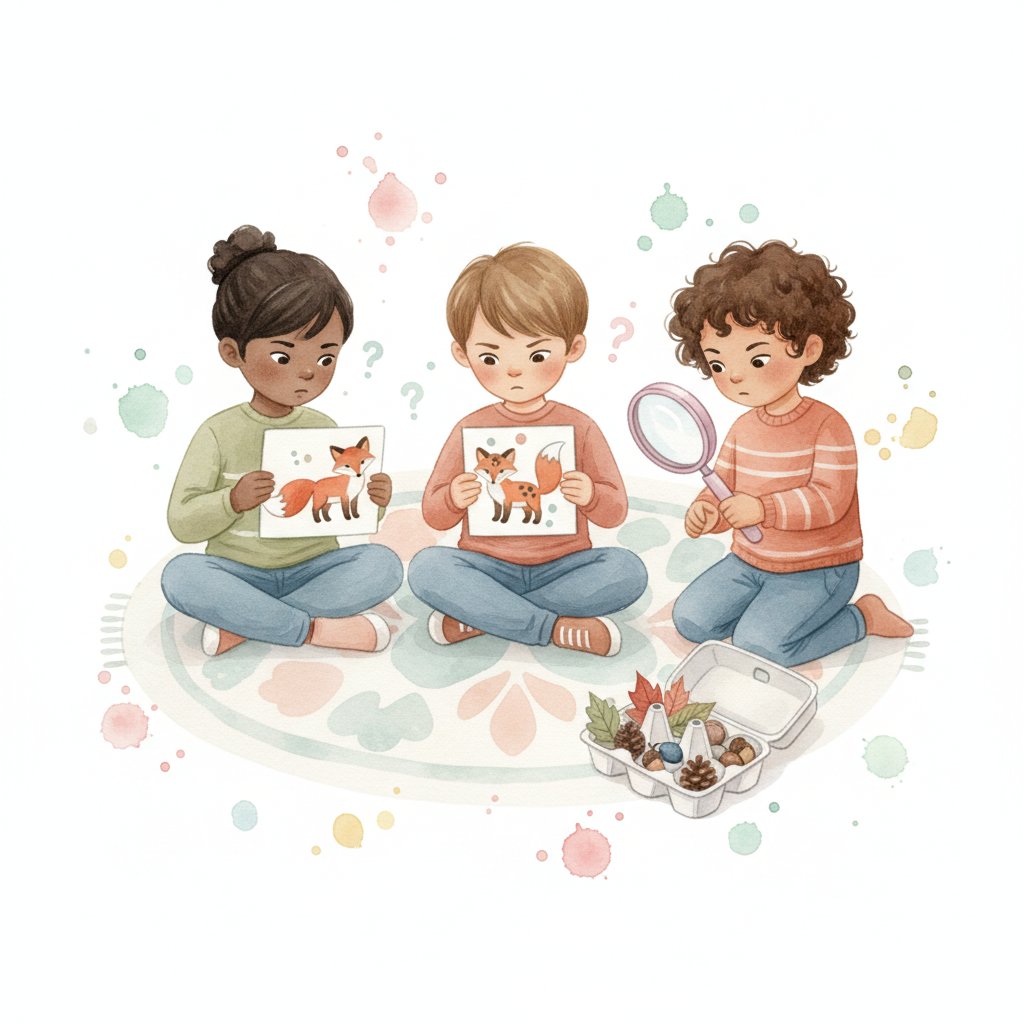
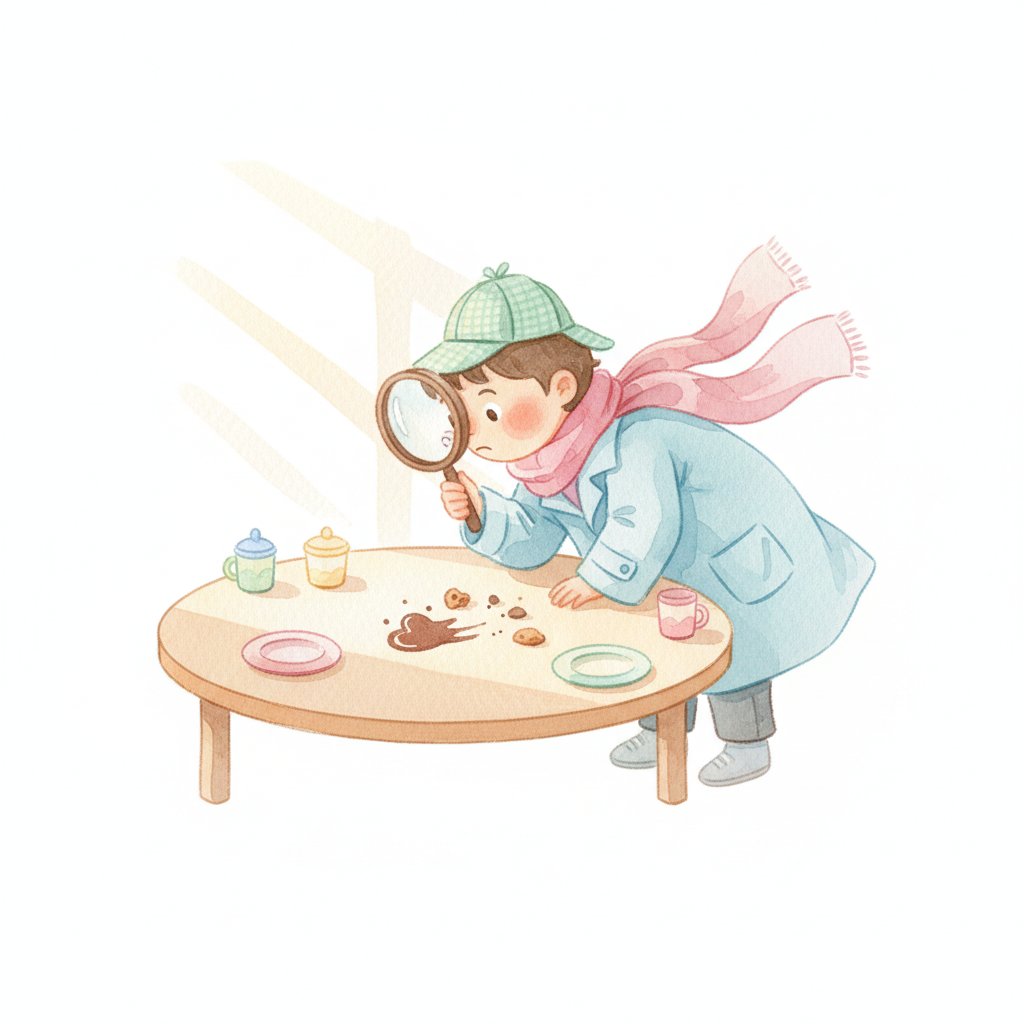
"Someone ate the last cookie, and I need a DETECTIVE to solve the mystery!" I held up a magnifying glass and five little hands shot up. "Detectives, here is what we know: the cookie was on the plate at snack time. Now it is gone. There are CRUMBS on the table. There is a SMUDGE of chocolate on the chair. And someone left a NAPKIN on the floor." Five-year-old Emma picked up the magnifying glass and examined the crumbs: "These crumbs go from the plate to... THE BLOCK AREA!" She followed the trail. "And the napkin is under the blocks!" Then she looked at the chocolate smudge: "This is on JAKE'S chair!" The evidence pointed to one suspect. Jake looked at his hands: "I have chocolate on my fingers!" Case closed. In 10 minutes, five children had practiced OBSERVATION (noticing crumbs and smudges), DEDUCTION (following the trail), HYPOTHESIS (Jake did it), and VERIFICATION (checking his fingers). That is the scientific method, disguised as a cookie mystery.
According to the National Science Teaching Association, investigation activities develop observation skills, hypothesis formation, evidence-based reasoning, logical deduction, and the scientific method — all through play that feels like adventure rather than academics.

This guide covers 20+ investigation and detective activities for ages 3-6. Pair it with our science guide for more experiments and our problem-solving guide for critical thinking.
Mystery Solving Activities (Ages 3-6)

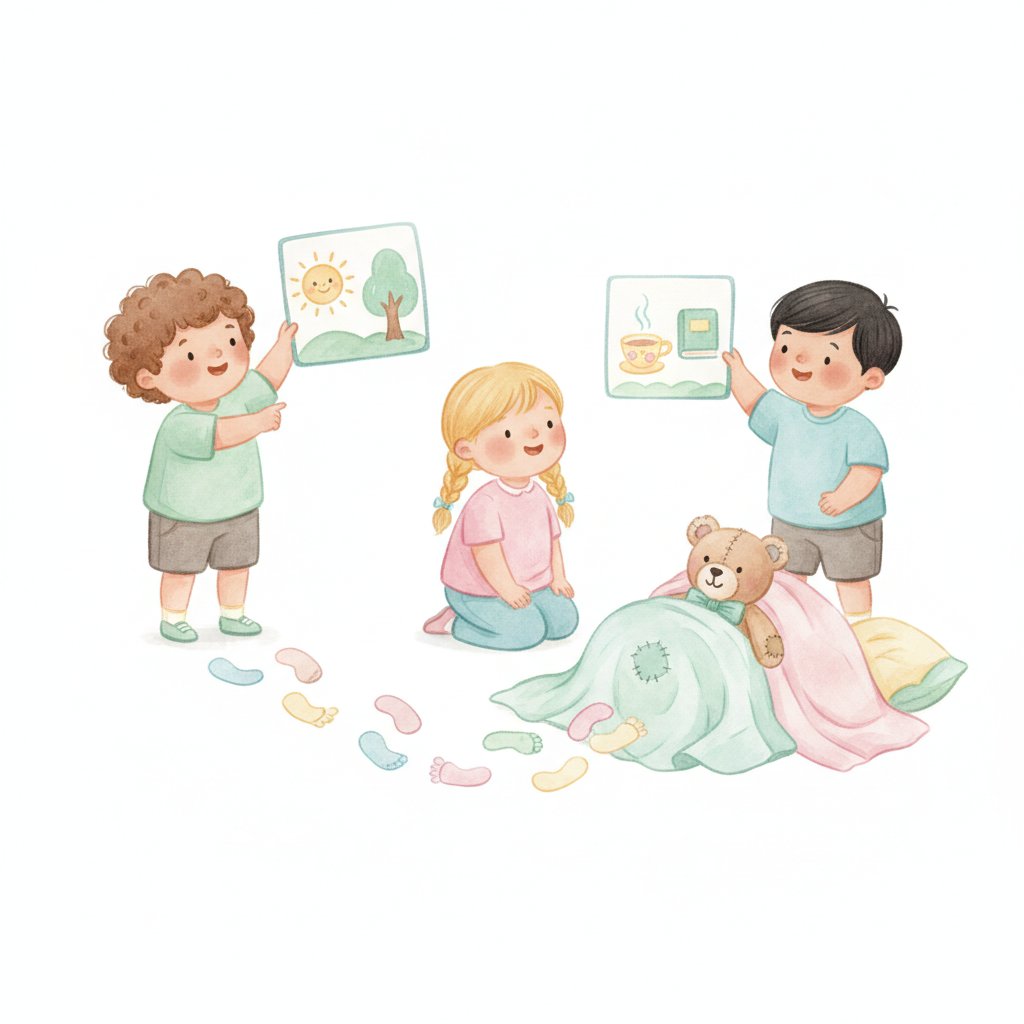
1. Missing object mystery
Materials: Object, clues on cards.

What to do: "The teddy bear is MISSING! Here are three clues: Clue 1 — 'I am somewhere WET.' Clue 2 — 'I am NEAR something you drink from.' Clue 3 — 'I am sitting on something COLD.' Where is the bear? The water fountain!" The mystery teaches deductive reasoning. For more thinking, see our problem-solving guide.

Why it works: Detective activities work because children are NATURAL investigators. They want to know WHY and HOW and WHO. Every "why?" question from a three-year-old is a detective investigation. When we channel that curiosity into structured mysteries, we teach them that answers come from EVIDENCE, not guessing. The key skills — observing details, forming hypotheses, testing ideas, drawing conclusions — are identical to the scientific method. Detective play is science play in a fedora.

2. Mystery bag
Materials: Bag, mystery object.

What to do: "Reach inside the bag. Do NOT look. Feel the object. Describe what you feel: hard or soft? Big or small? Smooth or rough? What do you THINK it is? Now pull it out!" The mystery bag teaches tactile observation. For more texture, see our texture guide.

3. Who am I?
Materials: Animal cards.

What to do: "I am thinking of an animal. It has four legs. It says moo. It gives us milk. What am I? A COW!" The guessing game teaches categorization through elimination. For more animals, see our farm animals guide.

4. What is missing?
Materials: Tray of objects, towel.

What to do: "Look at the tray: keys, spoon, block, car, crayon. Close your eyes! (Remove one item.) Open! What is MISSING?" The memory game teaches visual observation. For more memory, see our memory guide.

5. Footprint trail
Materials: Paper footprints, stuffed animal.

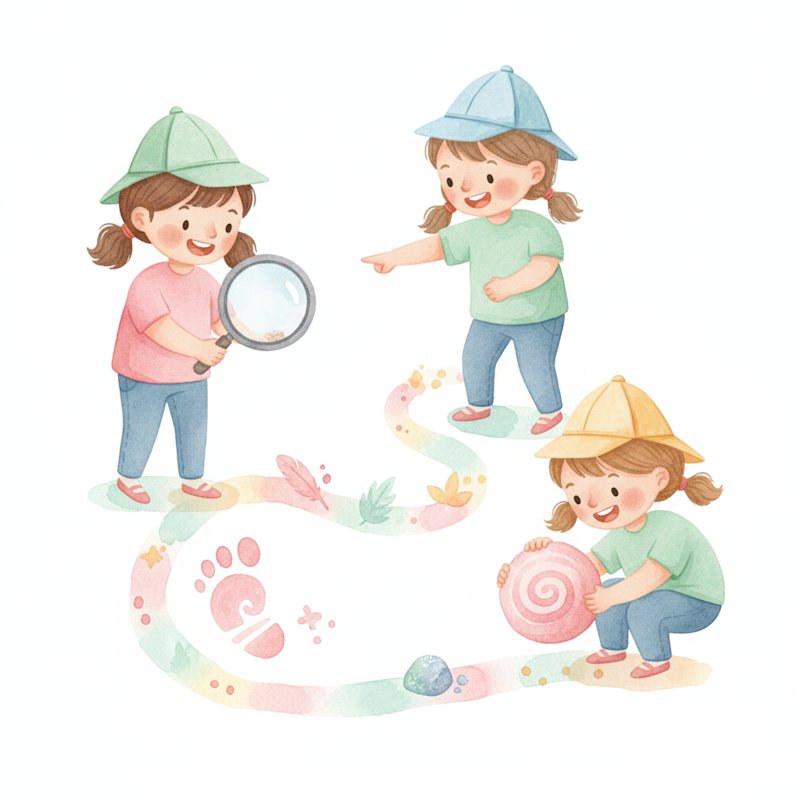
What to do: "Someone left footprints! Follow them to find who made them!" The trail teaches tracking and spatial reasoning. For more spatial, see our map guide.

Become an animal detective
Our Safari Animals Art Activity Pack becomes a wildlife investigation: 'Look at the LION card. What CLUES tell you this animal lives in hot places? Short fur, big ears, sandy color. Now the ELEPHANT: wrinkly skin, big ears that cool it down, a trunk that reaches water. Now the GIRAFFE: long neck to reach HIGH leaves, spotted pattern for camouflage, long legs for running from predators.' Each card is an investigation: examine the animal, identify its adaptations, explain WHY it looks that way. The art pack makes children animal scientists who paint AND deduce. Six animals, six investigations, six discoveries.

Science Detective Activities (Ages 3-6)

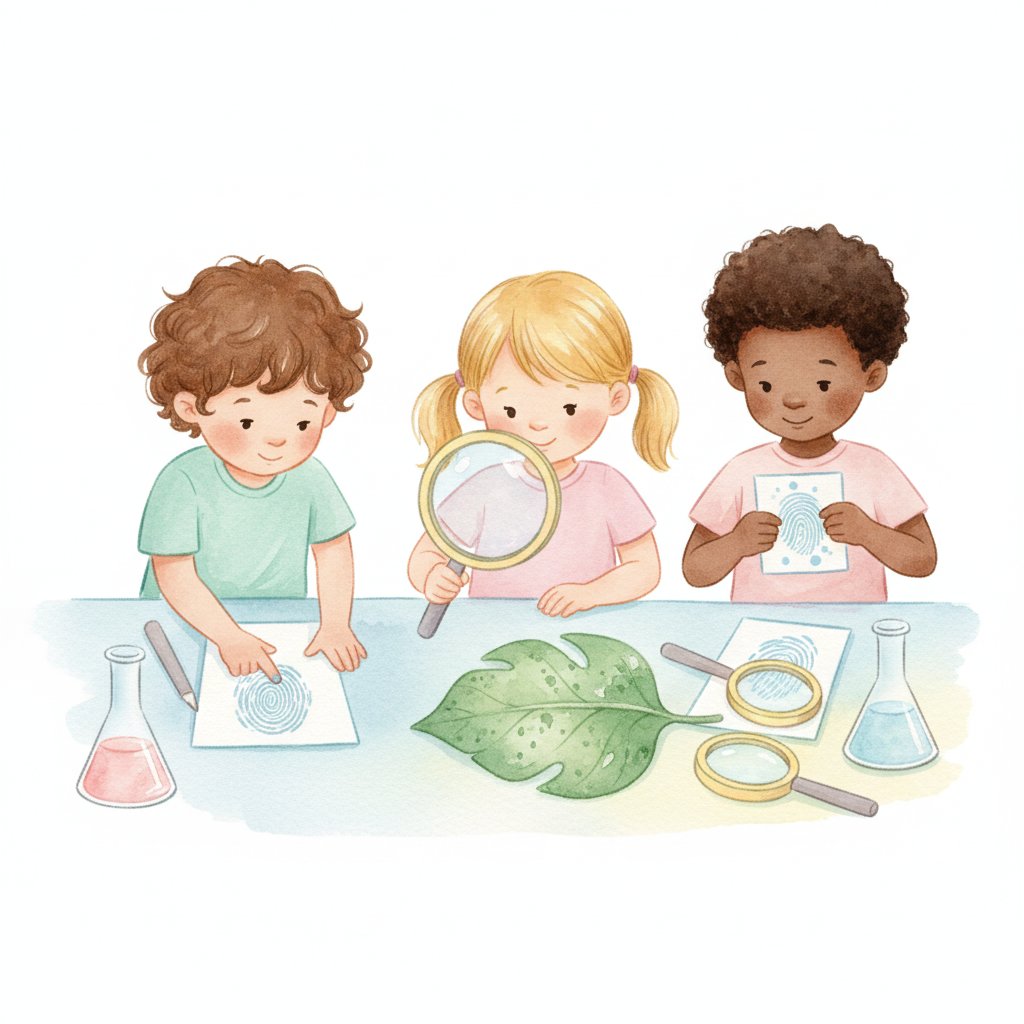
6. Fingerprint investigation
Materials: Ink pad, paper, magnifying glass.

What to do: "Press your finger on the ink pad, then on the paper. Look through the magnifying glass: does your fingerprint have loops? Whorls? Arches? Every person's fingerprint is DIFFERENT!" The fingerprint teaches that each person is unique. For more science, see our science guide.

7. Magnifying glass walk
Materials: Magnifying glasses.

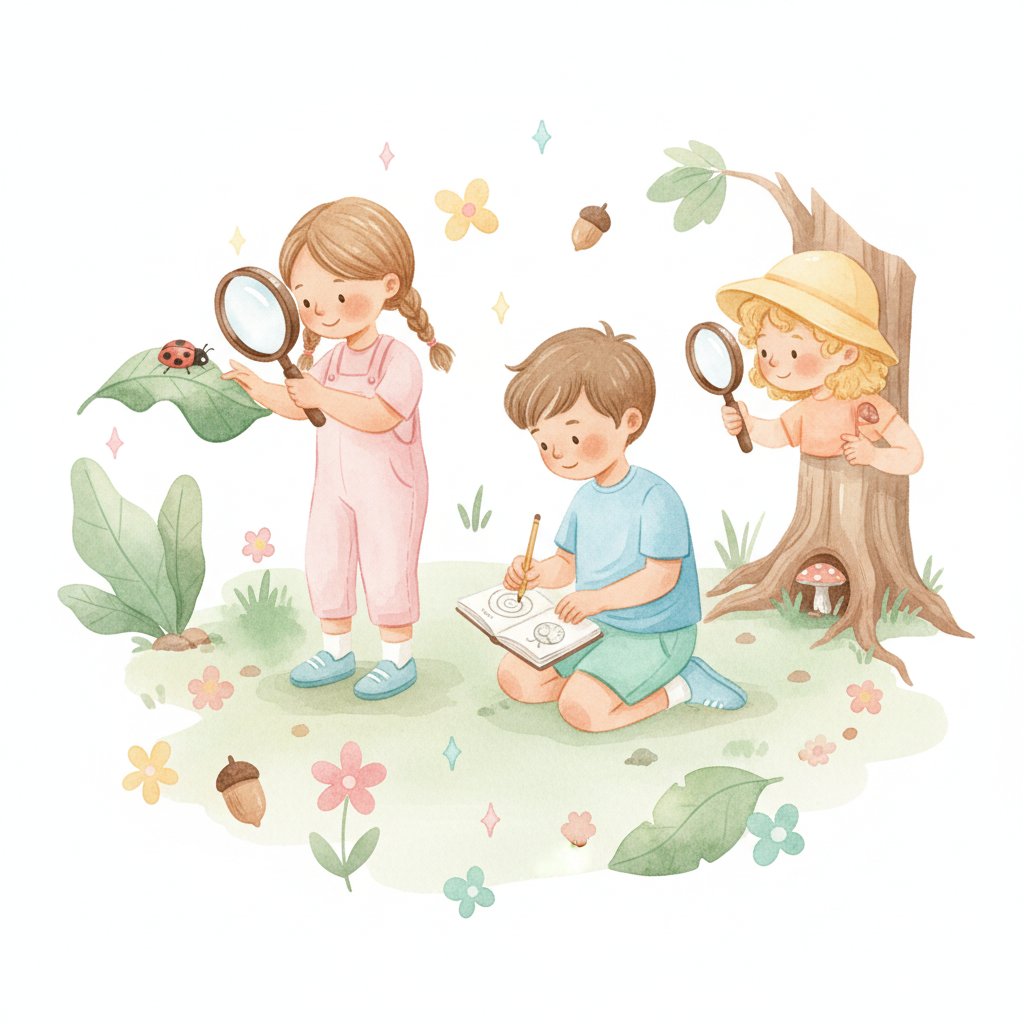
What to do: "Take a magnifying glass outside. Look at a leaf UP CLOSE. The veins! Look at bark. The cracks! Look at a flower. The pollen! The world looks COMPLETELY different when you zoom in." The walk teaches detailed observation. For more outdoor, see our outdoor guide.

8. Sound detective
Materials: Blindfold, noisemakers.

What to do: "Close your eyes. I will make a sound. What made it? Keys jingling? Paper crumpling? Water pouring? A pencil tapping?" The sound game teaches auditory observation. For more listening, see our listening guide.

9. Scent investigation
Materials: Containers with smelly items (cinnamon, lemon, onion, vanilla, coffee).

What to do: "Close your eyes and smell. What is this? Sweet? Spicy? Sour? Can you guess what it is?" The scent game teaches olfactory observation. For more senses, see our five senses guide.

10. Color hunt investigation
Materials: Color cards.

What to do: "Your mission: find something in this room that is EXACTLY this shade of red. Not dark red, not orange-red — THIS red. Is it harder than you thought?" The hunt teaches precise visual discrimination. For more colors, see our color guide.

Letter detectives wanted
Our Alphabet Flashcards become a letter investigation: 'I hid 10 letter cards around the room. Your mission: find them all and put them in alphabetical order. Here are your clues: Card 1 is hiding UNDER something BLUE. Card 2 is NEXT TO something that makes NOISE. Card 3 is BEHIND something SOFT.' Each clue uses spatial vocabulary AND descriptive language. The flashcards are the treasure; the clues are the map; the alphabetical order is the final puzzle. Twenty-six letters, ten hiding spots, one completed alphabet. Detective work meets letter mastery.

Observation and Deduction Activities (Ages 3-6)

11. Spot the difference
Materials: Two similar pictures with differences.

What to do: "These two pictures look the same, but FIVE things are different. Can you find them all?" The spot-the-difference teaches visual comparison. For more visual skills, see our matching guide.

12. What is wrong here?
Materials: Deliberately incorrect scene (upside-down picture, seasonally wrong items).

What to do: "Look at this picture of a snowy day. What is WRONG? That person is wearing shorts! That tree has green leaves! That bird should have migrated!" The error-finding teaches logical reasoning. For more seasons, see our seasonal guide.

13. Nature specimen collection
Materials: Egg carton, labels.

What to do: "Collect 12 specimens from outside: leaf, rock, seed, feather, bark, flower, dirt, sand, moss, acorn, grass, and something MYSTERIOUS. Examine each one with your magnifying glass. What do you notice?" The collection teaches systematic observation. For more nature, see our outdoor guide.

14. Shadow investigation
Materials: Flashlight, objects.

What to do: "Make a shadow with this object. Now move the flashlight closer. The shadow gets BIGGER! Move it away. SMALLER! Why? The angle of light changes the shadow size." The shadow investigation teaches light physics. For more shadows, see our light guide.

15. Pattern detective
Materials: Pattern blocks or stickers.

What to do: "I made a pattern: red, blue, red, blue, red... What comes NEXT? Blue! Now I made a harder one: red, red, blue, red, red, blue... What comes next?" The pattern detective teaches pattern recognition. For more patterns, see our pattern guide.

More Investigation Activities (Ages 3-6)

16. Invisible ink
Materials: Lemon juice, paper, cotton swab, lamp.

What to do: "Write a message with lemon juice. It is INVISIBLE! Hold it near a warm lamp and watch the words APPEAR. The heat turns the juice brown!" The invisible ink teaches chemistry basics. For more science, see our science guide.

17. Footprint match
Materials: Paint, paper, shoes.

What to do: "Dip the bottom of each shoe in paint and stamp it on paper. Each shoe makes a DIFFERENT pattern! Match the print to the shoe." The footprint match teaches pattern matching. For more matching, see our matching guide.

18. Treasure hunt with riddles
Materials: Riddle clues.

What to do: "Clue 1: 'I have hands but cannot clap.' (A clock!) Go to the clock. Clue 2 is there: 'I have four legs but cannot walk.' (A table!) Go to the table. Clue 3 is there: 'I have pages but cannot read.' (A book!)" The riddle hunt teaches riddle-solving and following sequential clues. For more riddles, see our rhyming guide.

19. Observation journal
Materials: Notebook, pencil.

What to do: "Be a nature detective. Sit outside for 5 minutes and write or draw EVERYTHING you notice: sounds, movements, colors, smells, textures." The journal teaches sustained observation. For more writing, see our writing guide.

20. Case closed folder
Materials: Manila folder.

What to do: "Every detective keeps a case file. Decorate your folder. After each mystery, draw what happened: the clues, the suspect, the solution. By the end of the month, you have a BOOK of solved cases!" The folder teaches documentation and reflection. For more organization, see our sorting guide.

Every poster is an investigation
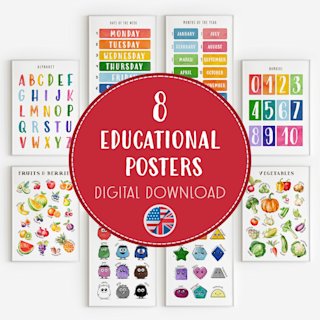
Our 8 Educational Posters Pack becomes 8 investigation stations: 'Study the SOLAR SYSTEM poster — which planet is biggest? Smallest? Closest to the sun? Study the HUMAN BODY poster — where is the brain? The heart? The stomach? Study the WORLD MAP poster — where do we live? Where do lions live? Where is it cold?' Each poster is a crime scene of information waiting to be investigated. The child becomes a detective who searches for answers hidden in plain sight. The magnifying glass makes it official. Eight posters, eight investigations, one expert observer.
1.Are mystery activities appropriate for 3-year-olds?
Yes, with simple mysteries. Three-year-olds can solve "what is missing" games, follow 2-3 step clues, identify objects by touch in mystery bags, and spot differences between pictures. Keep mysteries CONCRETE (real objects, not abstract) and SHORT (5 minutes maximum). By age 4-5, children can handle multi-clue hunts, deductive reasoning ("if the footprint is BIG, it was not the mouse"), and simple riddles.
2.How do detective activities teach the scientific method?
The mapping is direct: OBSERVE (look at the clues)=scientific observation. HYPOTHESIZE (who did it?)=form a hypothesis. TEST (check the footprint size)=run an experiment. CONCLUDE (it was the bear!)=draw conclusions from evidence. Every detective game is a mini scientific investigation. The difference is that detective play is MOTIVATING because children love mysteries. The same child who resists "let us form a hypothesis" will eagerly say "I THINK it was the cat because of the paw prints!"
3.What supplies do I need for a detective theme?
Essentials: magnifying glass (real or toy), notebook and pencil for "case files," manila folder for "evidence," small flashlight, tape for "crime scene" marking, markers for drawing clues, and a "detective badge" (paper star with their name). Optional: ink pad for fingerprints, small bags for "evidence collection," tweezers for "specimen collection." Most supplies cost under $5 and can be found around the house or at a dollar store.
4.How do I make clues the right difficulty?
For age 3: direct clues ("Look UNDER the table"). For age 4: descriptive clues ("Find something that is soft, brown, and has four legs"). For age 5: riddle clues ("I have hands but cannot clap — go there"). For age 6: deductive clues ("The suspect is NOT tall, NOT wearing blue, and IS holding something green — who is it?"). Adjust by watching: if children solve it instantly, make the next clue harder. If they are frustrated, make it simpler. The sweet spot is when they have to THINK but can solve it.