Articles7 min read

The Egg That Learned to Float
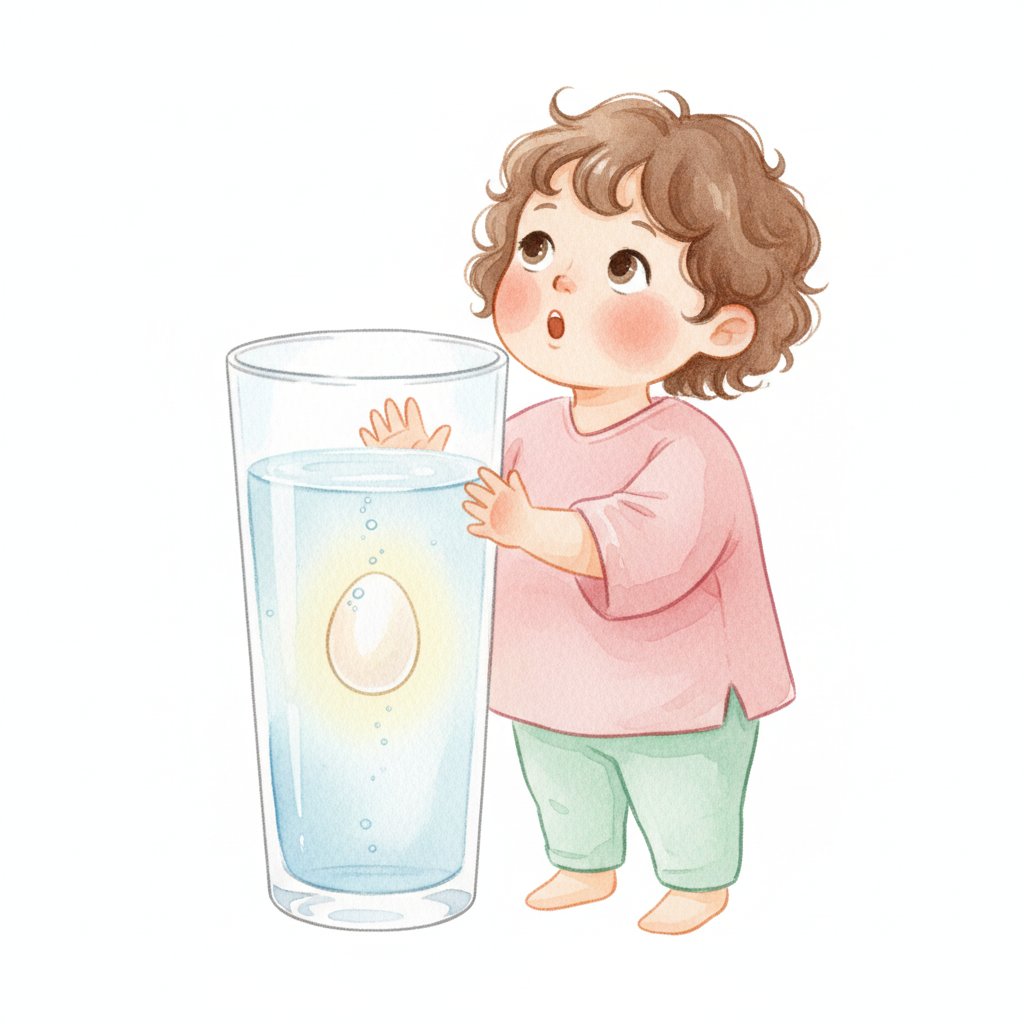
"Watch this," I said, dropping an egg into a glass of water. It sank to the bottom. "Now... MAGIC!" I poured salt into the water and stirred. Slowly, the egg ROSE to the top. "IT IS FLOATING!" five-year-old Aiden yelled. "How did you DO that?" "It is not magic," I said. "It is SCIENCE. The salt made the water HEAVIER than the egg, so the egg floats." He stared at me. "Can I make it sink again?" "How?" "ADD MORE WATER!" He diluted the salt water and the egg sank. "NOW how do I make it float?" "Add more salt!" Back and forth, sink and float, he experimented for 20 minutes. The wonder of watching something impossible — an egg floating — drove him to figure out WHY. That is the teaching power of "magic" science: it creates WONDER, and wonder creates the desire to UNDERSTAND.

According to the National Science Teaching Association, wow-factor experiments develop curiosity, hypothesis formation, observation skills, the understanding that science explains seemingly magical phenomena, and the motivation to investigate. Children learn best when they are AMAZED.

This guide covers 20+ magic science activities for ages 3-6. Pair it with our science guide for more experiments and our five senses guide for sensory science.
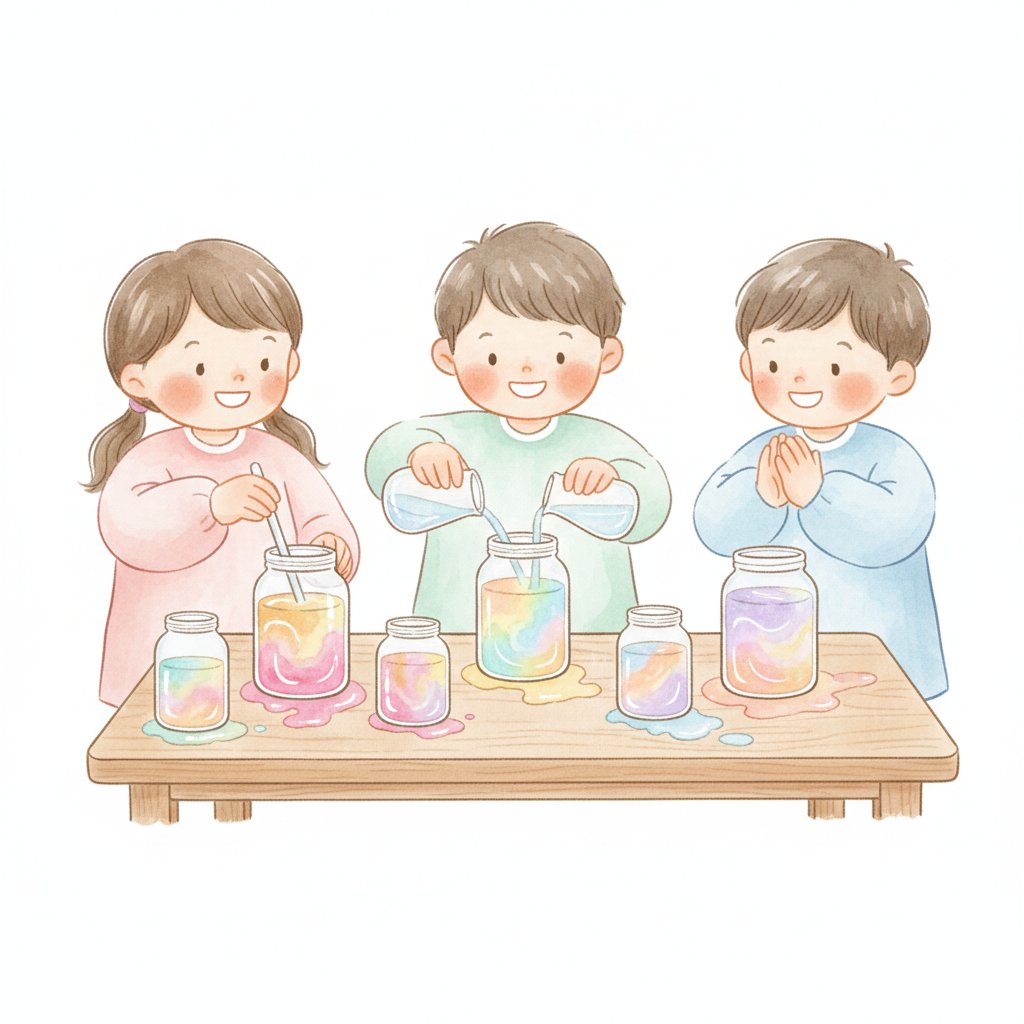
Color Chemistry Magic (Ages 3-6)

1. Color-changing milk
Materials: Whole milk, food coloring, dish soap, shallow plate.

What to do: "Pour milk on the plate. Add drops of food coloring. Now touch the milk with dish soap on your finger... WHOA! The colors EXPLODE and dance!" The soap breaks the surface tension and the colors swirl. For more color, see our color guide.

Why it works: "Magic" science works because the DISCONNECT between what children expect and what happens creates cognitive SURPRISE. That surprise triggers curiosity — the brain's way of saying "Wait, that cannot be right. I need to understand this." When a child sees colors explode in milk, their brain is HOOKED. The explanation (surface tension, fat molecules, soap as a disruptor) becomes INTERESTING because the phenomenon was AMAZING. Wonder is the gateway to understanding.

2. Walking water
Materials: 3 cups, water, food coloring (red, blue, yellow), paper towels.

What to do: "Red water in cup 1. Empty cup 2. Blue water in cup 3. Fold paper towels to connect them. Wait 30 minutes... the colors WALK across the towels and MIX in the middle cup to make PURPLE!" The walking water teaches capillary action and color mixing. For more color, see our color guide.

3. Baking soda and vinegar volcano
Materials: Baking soda, vinegar, food coloring, bottle.

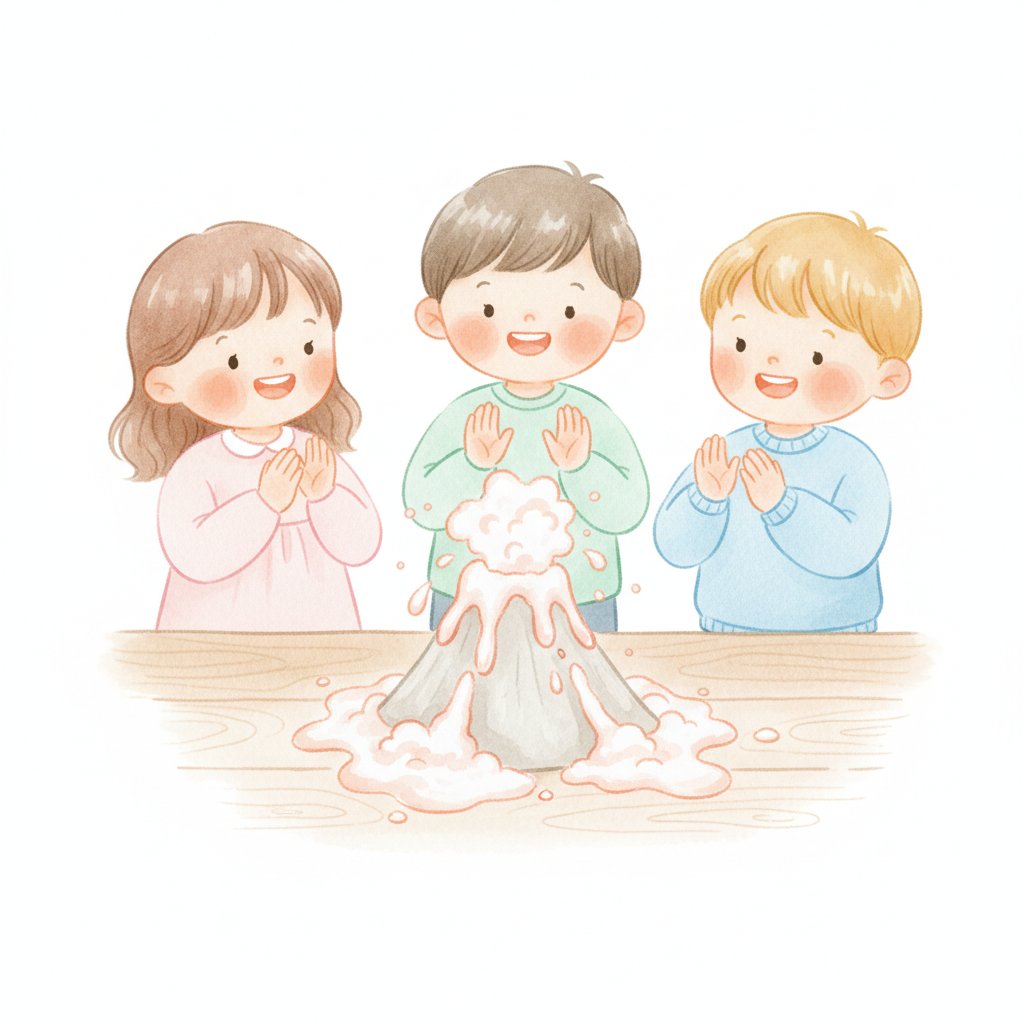
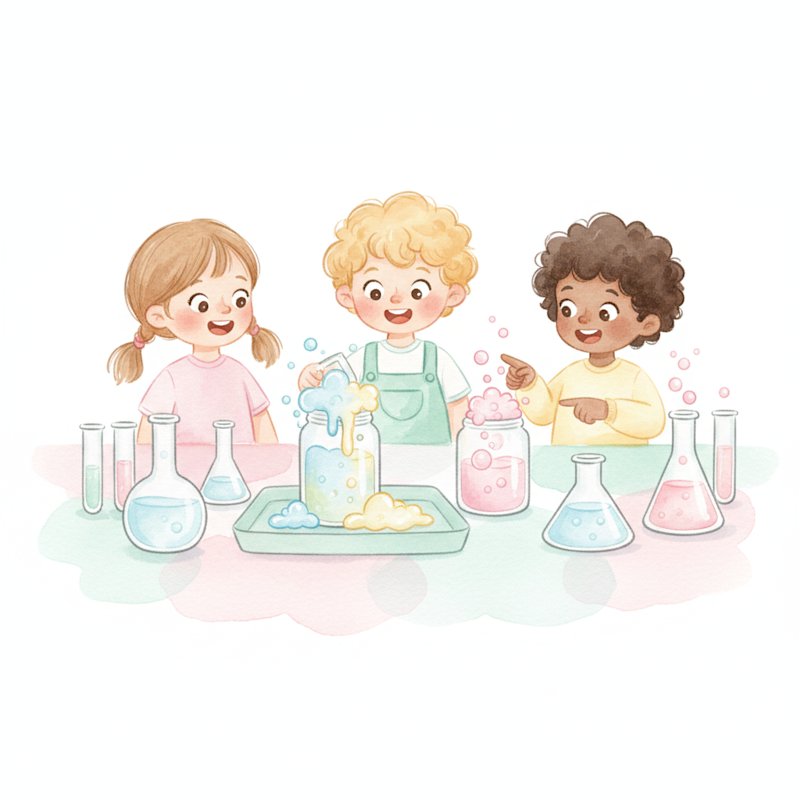
What to do: "Put baking soda in the bottle. Add red food coloring. Pour in vinegar and... ERUPTION! Bubbles everywhere!" The volcano teaches acid-base reaction. For more reactions, see our science guide.

4. Magic flowers
Materials: Paper flowers with folded petals, water.

What to do: "Fold the paper flower petals closed. Put it in water and... the petals OPEN by themselves! The paper absorbs the water and expands!" The magic flower teaches capillary action in paper. For more nature, see our plant guide.

5. Rainbow in a jar
Materials: Honey, corn syrup, dish soap, water, oil.

What to do: "Pour honey. Then corn syrup. Then soap. Then water. Then oil. They do NOT mix — they STACK into layers! Each liquid has different DENSITY." The rainbow jar teaches liquid density. For more layers, see our measurement guide.

Colors that mix like magic
Our Colors Flashcards become a color-mixing prediction tool: 'The RED card plus the BLUE card — what color will they make? Let us test with food coloring! RED plus BLUE equals... PURPLE! Now YELLOW plus BLUE — the cards say it should make GREEN. Let us test! YELLOW plus BLUE equals... GREEN! The cards PREDICTED it!' Each flashcard becomes a hypothesis: mix the two colors the cards show, predict the result, test with real paint or food coloring. The flashcards are the theory; the mixing is the experiment. Eleven colors, dozens of combinations, one color laboratory.

Physics Magic (Ages 3-6)

6. Floating egg
Materials: Egg, water, salt, glass.

What to do: "Drop the egg in water — it SINKS. Now add lots of salt and stir... it FLOATS! The salt water is DENSER than the egg." The floating egg teaches density. For more sinking, see our science guide.

7. Dancing raisins
Materials: Raisins, clear soda, glass.

What to do: "Drop raisins in soda. They SINK... then bubbles attach to them and they RISE... then the bubbles pop and they SINK again... DANCING raisins!" The dancing teaches buoyancy from gas bubbles. For more physics, see our science guide.

8. Balloon rocket
Materials: Balloon, string, straw, tape.

What to do: "Thread the string through the straw. Tape the inflated balloon to the straw. Let go... the balloon ROCKETS across the string! The air rushing out pushes it forward." The rocket teaches action and reaction. For more motion, see our outdoor guide.

9. Magnetic magic
Materials: Magnet, paper clip, paper.

What to do: "Put the paper clip on the paper. Put the magnet UNDER the paper. Move the magnet... the paper clip MOVES by itself! It looks like magic but it is MAGNETISM!" The magnet magic teaches invisible forces. For more magnets, see our magnet guide.

10. Pepper scatter
Materials: Bowl of water, pepper, dish soap.

What to do: "Sprinkle pepper on the water. Now touch the surface with soap on your finger... the pepper SCATTERS to the edges! The soap breaks the surface tension!" The scatter teaches surface tension. For more reactions, see our science guide.

Shapes that transform like magic
Our Shapes Flashcards become a transformation game: 'Two TRIANGLES make a DIAMOND when you put them together! A SQUARE cut diagonally makes two TRIANGLES! A RECTANGLE plus a TRIANGLE on top makes a HOUSE!' Each flashcard shows what IS; the magic shows what it CAN BECOME. Children place the cards together and discover that shapes combine, split, and transform. The triangle becomes a diamond. The square becomes triangles. The rectangle becomes a house. Geometry is not just naming shapes — it is seeing how shapes TRANSFORM. Twelve shapes, infinite combinations, one geometry magic show.

More Wow-Factor Experiments (Ages 3-6)

11. Invisible ink
Materials: Lemon juice, paper, cotton swab, heat source.

What to do: "Write with lemon juice. It dries INVISIBLE. Hold it near a warm lamp and the words APPEAR in brown! The heat oxidizes the lemon juice." The invisible ink teaches chemical reactions. For more writing, see our writing guide.

12. Rubber egg
Materials: Egg, vinegar, jar.

What to do: "Put the egg in vinegar. Wait 24 hours. The shell DISSOLVES and the egg becomes RUBBERY and bouncy! The vinegar dissolves the calcium carbonate shell." The rubber egg teaches acid-base reactions over time. For more patience, see our self-regulation guide.

13. Skittles rainbow
Materials: Skittles, plate, warm water.

What to do: "Arrange Skittles in a circle on the plate. Pour warm water in the center. The colors DISSOLVE outward and create a perfect rainbow ring!" The rainbow teaches dissolving and diffusion. For more color, see our color guide.

14. Oobleck
Materials: Cornstarch, water.

What to do: "Mix cornstarch and water. When you press it HARD, it is SOLID. When you let go, it MELTS through your fingers like liquid! It is both solid and liquid at the same time!" The oobleck teaches non-Newtonian fluids. For more sensory, see our sensory guide.

15. Candle in a jar
Materials: Candle, glass jar, lighter (adult only).

What to do: "Light the candle. Cover it with the jar. The flame slowly DIES. Why? Because the fire used up all the OXYGEN inside the jar!" The candle teaches that fire needs oxygen. For more safety, see our health guide.

More Magic Science Activities (Ages 3-6)

16. Sound through string
Materials: Two cups, string.

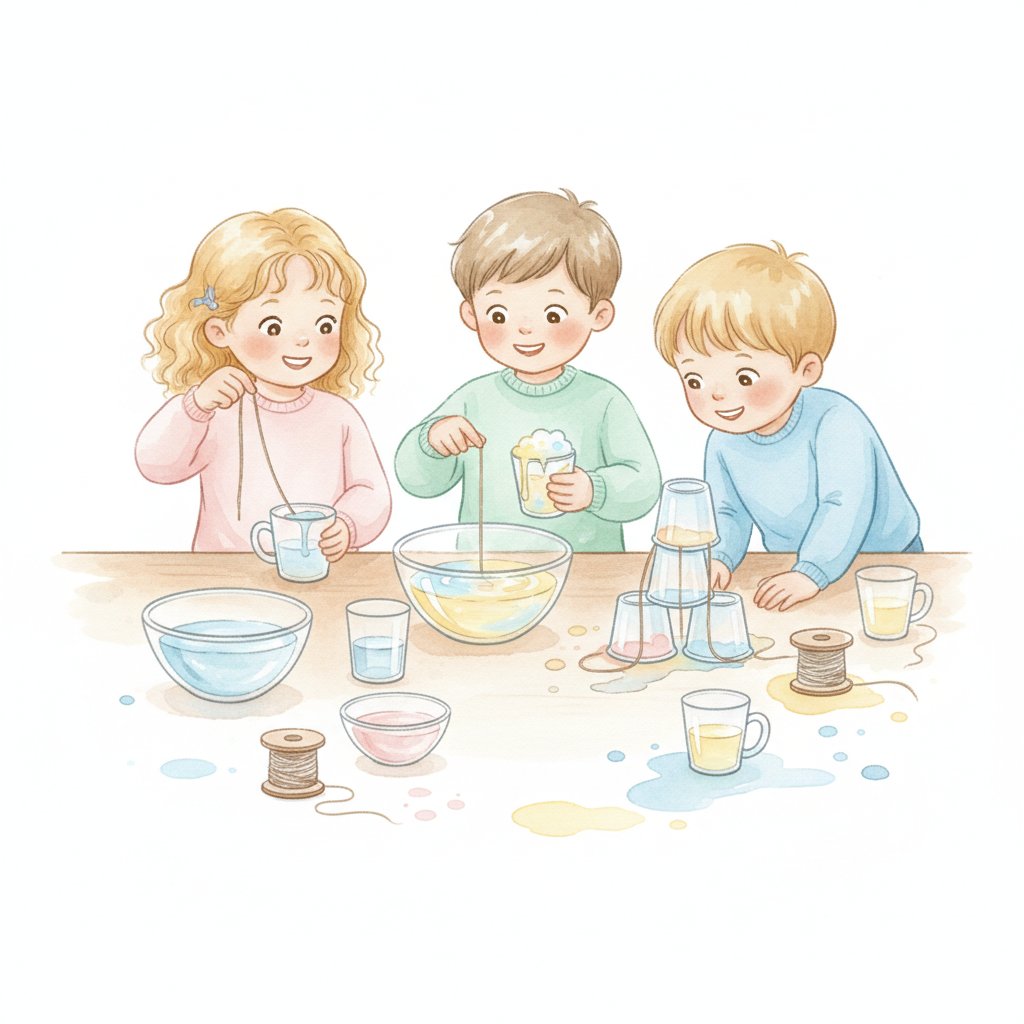
What to do: "Poke holes in the cups. Thread string between them. Walk apart until the string is tight. Whisper into your cup — your friend can HEAR you through the string!" The string phone teaches sound vibration. For more sound, see our music guide.

17. Shadow puppets
Materials: Flashlight, hands or paper cutouts, wall.

What to do: "Turn off the lights. Shine the flashlight on the wall. Make a bunny with your hand! Make the bunny GROW by moving the flashlight closer!" The shadow puppets teach light and shadow. For more shadows, see our shadow guide.

18. Ice excavation
Materials: Small toy frozen in ice, warm water, salt, droppers.

What to do: "The dinosaur is frozen in ICE! How can you free it? Try warm water. Try salt. Which melts the ice FASTER?" The excavation teaches states of matter and problem-solving. For more problem-solving, see our problem-solving guide.

19. Cloud in a jar
Materials: Jar, hot water, ice, hairspray.

What to do: "Put hot water in the jar. Spray a little hairspray. Put ice on top. A CLOUD forms inside the jar! The warm air rises, cools, and condenses on the spray particles." The cloud teaches the water cycle. For more weather, see our weather guide.

20. Magic science show
Materials: All of the above.

What to do: "You are a SCIENCE MAGICIAN. Pick your 3 best experiments. Practice them. Then put on a show for your family! Before each trick, ask: 'What do you THINK will happen?' After, explain: 'It is not magic — it is SCIENCE!'" The show teaches presentation and science communication. For more confidence, see our confidence guide.

Weather magic you can make yourself
Our Weather Flashcards become experiments: 'The RAINY card — make rain in a jar! Hot water at the bottom, a plate of ice on top. Water vapor rises, cools, and rains! The CLOUDY card — spray hairspray in a jar of warm air, add ice on top, and a cloud appears! The FOGGY card — put ice over a jar of hot water and watch fog form!' Each weather card becomes an experiment that recreates that weather phenomenon INDOORS. The flashcard names the weather; the experiment makes it happen. Twelve weather cards, twelve experiments, a meteorology lab in your kitchen.
1.Is it okay to tell children science is magic?
Use "magic" as a HOOK, not a conclusion. Say: "This LOOKS like magic! But it is actually SCIENCE — there is a reason it works, and we can figure it out together." The wonder is the entry point; the understanding is the destination. Never STOP at "it is magic." Always follow with "let us find out WHY." The goal is children who say "That looks like magic! But I bet there is science behind it — let me investigate."
2.Which experiment is the best one to start with?
Baking soda and vinegar. It is the #1 preschool science experiment for a reason: it is dramatic (BIG bubbles), safe (non-toxic), cheap (pantry ingredients), repeatable (do it 20 times and children still gasp), and it introduces the concept of chemical reactions. After that: color-changing milk (visual and beautiful), oobleck (tactile and bizarre), and the floating egg (surprising and understandable). These four give you chemistry, physics, states of matter, and density — a full science curriculum in four experiments.
3.How do I explain complex science to 3-year-olds?
Use simple analogies and focus on WHAT HAPPENS before WHY: (1) "The egg floats because the salt water is HEAVIER than the egg — like how you float in a pool but sink in a bathtub." (2) "The bubbles make the raisin float, like a life jacket makes you float." (3) "The pepper runs away because the soap SCARES it — soap breaks the invisible skin on the water." Simple metaphors that are scientifically INACCURATE but DEVELOPMENTALLY APPROPRIATE. Precision comes later; understanding starts now.
4.Are these experiments safe for preschoolers?
All experiments in this guide use household materials that are non-toxic: baking soda, vinegar, food coloring, salt, water, cornstarch, milk, dish soap, paper, balloons, and string. The only experiments requiring adult handling are: candle-in-a-jar (fire), lemon juice invisible ink (heat source needed), and cloud-in-a-jar (hairspray spray). All others are safe for children to do themselves with supervision. Always supervise. Always have children wash hands after experiments.