Articles6 min read

The Paperclip That Jumped
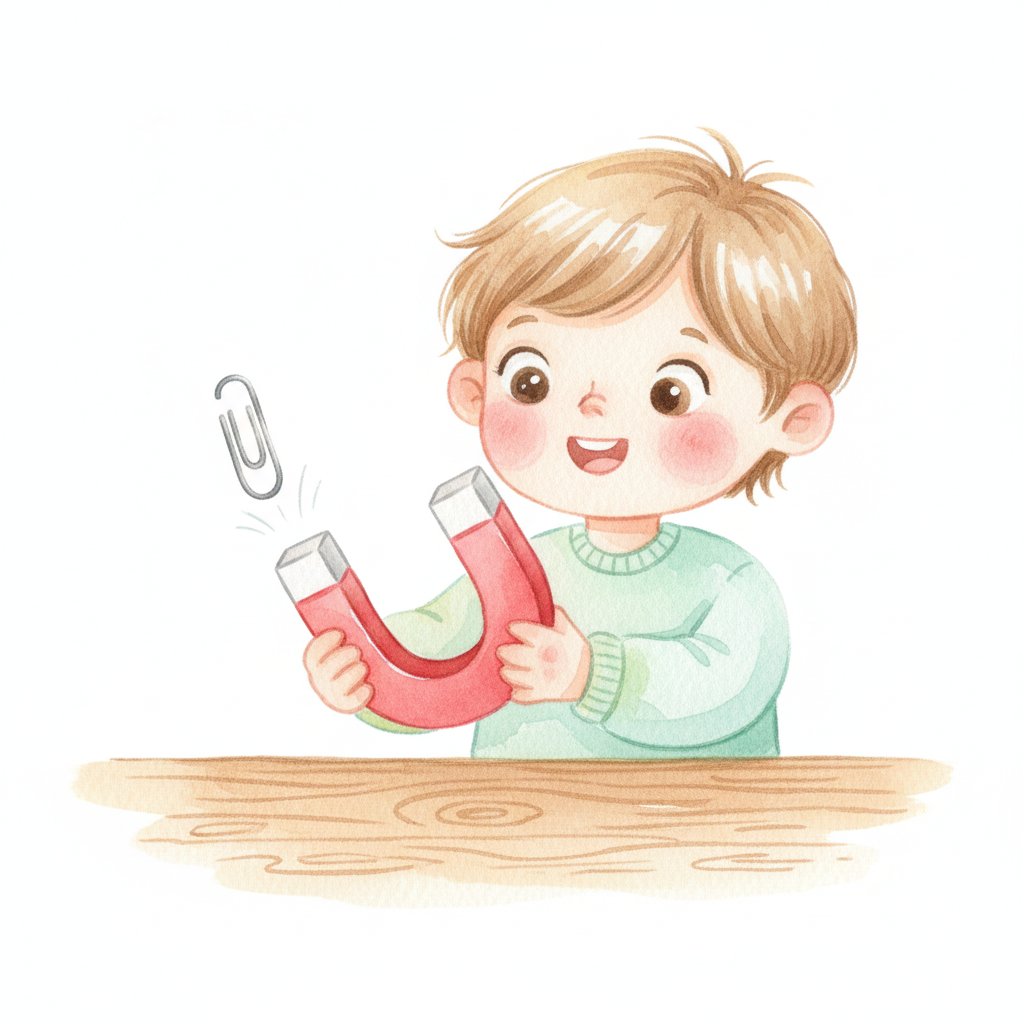
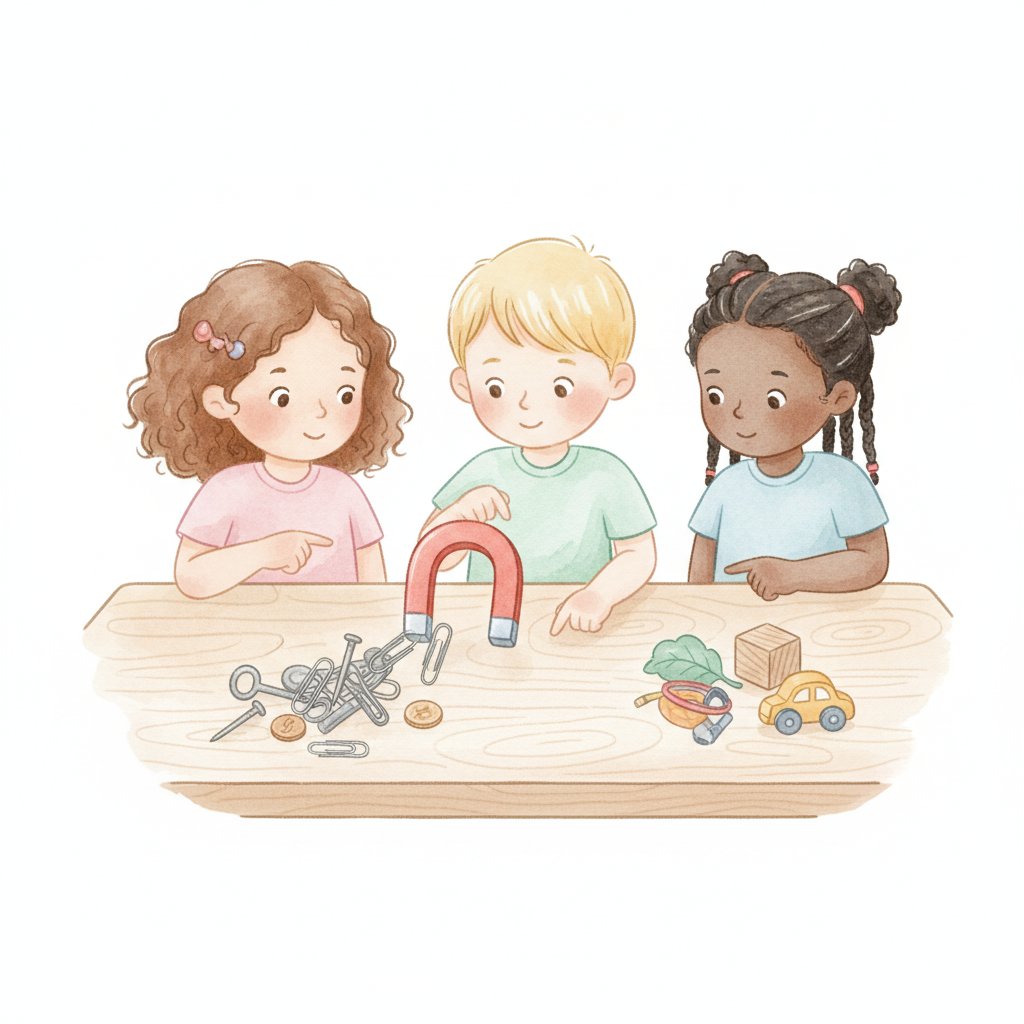
I held a magnet above a paperclip on the table. Nothing happened. I moved it closer. Closer. Suddenly — CLINK — the paperclip LEAPT off the table and stuck to the magnet. Four-year-old Aiden gasped like he'd seen magic. "Do it AGAIN!" He spent the next 20 minutes testing everything: crayons (no), scissors (yes), blocks (no), coins (some yes, some no), his shoe (no), the table leg (yes). He was doing REAL SCIENCE: forming a hypothesis ("Will this stick?"), testing it, and categorizing the result. Magnets are the perfect preschool science tool because the cause and effect is INSTANT, VISIBLE, and SATISFYING. No waiting, no setup, no mess — just the pure joy of discovery.

According to the National Science Teaching Association, magnet activities teach physics concepts (force, attraction, polarity), scientific thinking (hypothesis, testing, categorization), math (sorting, counting, comparing), and fine motor skills (picking up, placing, sorting).

This guide covers 20+ magnet activities for ages 3-6. Pair it with our science experiments guide for more science and our sorting guide for more categorization.
What Do Magnets Attract? (Ages 3-6)

1. Magnetic treasure hunt
Materials: Strong magnet, tray with various objects (paperclips, coins, plastic toys, crayons, fabric, leaves).

What to do: "Wave the magnet over each object. Does it STICK or NOT STICK? Sort into two piles: MAGNETIC and NOT MAGNETIC." The sorting teaches categorization. For more sorting, see our sorting guide.

Why it works: Magnets are the perfect science tool for preschoolers because the feedback is INSTANT. No waiting for results, no complicated setup. The paperclip either sticks or it doesn't. This immediate cause-and-effect feedback loop keeps children engaged and motivated to test MORE objects. They're not doing science — they're PLAYING science.

2. Magnetic vs. non-magnetic sort
Materials: Collection of items, two labeled bins.

What to do: "Before you test, GUESS: will it be magnetic? Make a prediction! Now test. Were you right?" The prediction teaches the scientific method. For more science, see our science guide.

3. Magnetic materials discovery
What to do: "Test ONLY the things that stuck. What are they made of? Metal! But wait — not ALL metal. The penny didn't stick! The aluminum foil didn't stick! Magnets attract IRON and STEEL, not all metals." The discovery teaches material properties.

4. Through the table trick
Materials: Magnet, paperclip, thin table or paper.

What to do: "Put the paperclip on TOP of the paper. Hold the magnet UNDERNEATH. Move the magnet — the paperclip MOVES!" The trick teaches that magnetic force passes through some materials.

5. Magnetic chain
Materials: Strong magnet, paperclips.

What to do: "Attach one paperclip to the magnet. Can you attach another to THAT one? And another? How long a chain can you make? Count them: 1, 2, 3, 4, 5!" The chain teaches magnetic transfer and counting. For more counting, see our number guide.

Magnets have shapes too
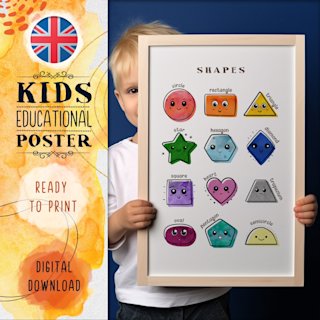
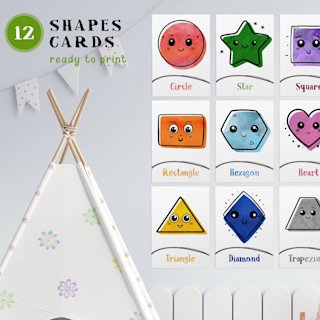
Our Shapes Flashcards connect magnet play to geometry: 'This magnet is a RECTANGLE bar magnet. This one is a ROUND disc magnet like a CIRCLE. This U-shaped magnet looks like a HORSESHOE. The magnetic field goes from one pole to the other in curved LINES.' After sorting magnetic and non-magnetic objects, ask: 'What shapes are your magnets? What shapes are the things that stuck?' Children learn that science is full of shapes — and shapes are full of science. 12 shapes, 12 ways to see geometry in physics.

Magnet Fishing and Games (Ages 3-6)

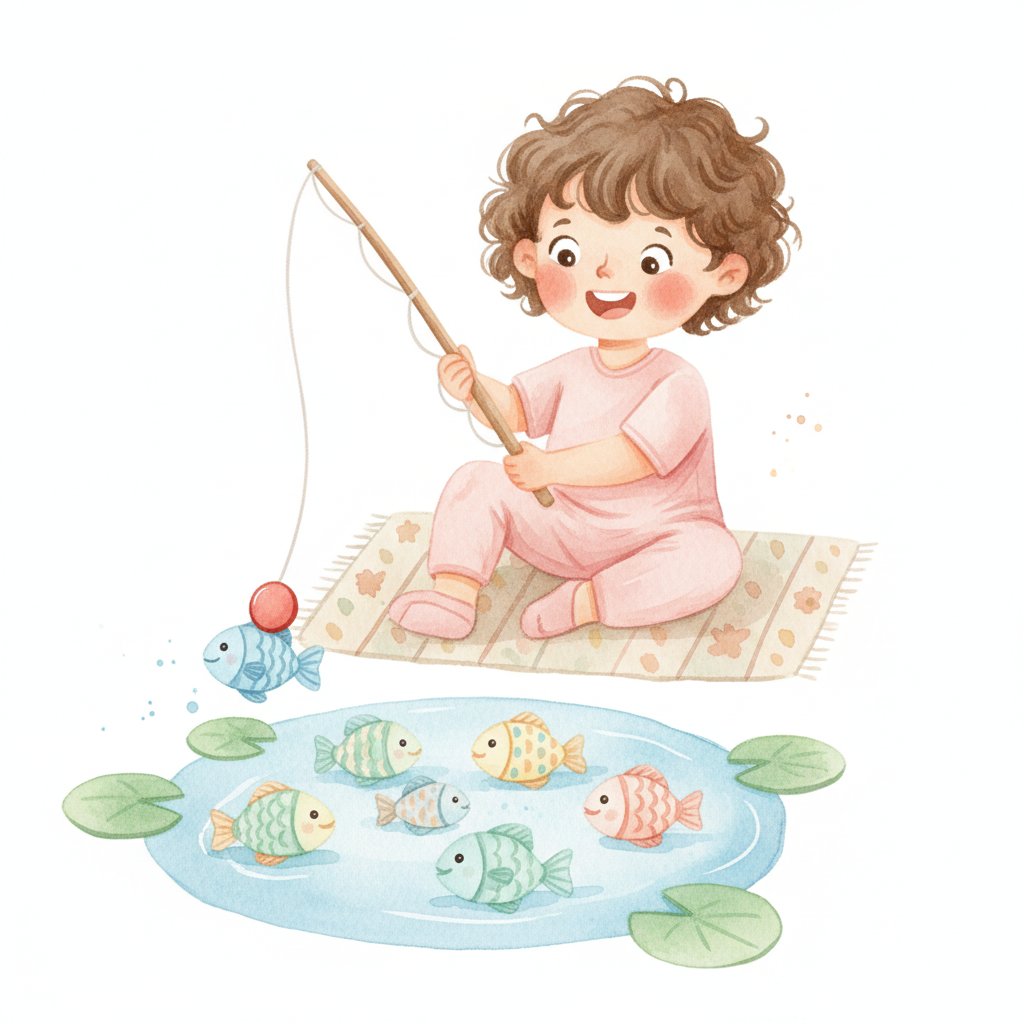
6. Magnetic fishing
Materials: Magnet on a string (fishing rod), paper fish with paperclips.

What to do: "Cast your line! The magnet catches the fish because the paperclip STICKS to the magnet. How many fish can you catch?" The fishing teaches cause and effect and counting. For more counting, see our number guide.

7. Magnetic letter fishing
Materials: Magnetic letters, magnet on string.

What to do: "Fish for letters! What letter did you catch? Say its sound! 'F! Fuh-fuh-FISH!'" The letter fishing teaches phonics through play. For more alphabet, see our alphabet guide.

8. Magnetic number fishing
Materials: Magnetic numbers.

What to do: "Fish for numbers! Catch two and ADD them: 3 + 2=5!" The number fishing teaches addition through fishing. For more math, see our math guide.

9. Magnetic maze
Materials: Paper maze on a tray, magnet underneath, paperclip on top.

What to do: "Move the paperclip through the maze by moving the magnet UNDER the tray! Don't let it hit the walls!" The maze teaches fine motor control and spatial reasoning. For more problem-solving, see our problem-solving guide.

10. Magnetic painting
Materials: Paper, paint, paperclip, magnet under the paper.

What to do: "Dip the paperclip in paint. Put it on the paper. Move the magnet underneath to DRAG the paperclip through the paint!" The painting creates art through magnetic force. For more art, see our art guide.

Sort the farm — magnetic or not?
Our Farm Animals Flashcards become a magnetic sorting game: 'Which farm animal items are magnetic? The cow BELL — yes, it's metal! The horse SHOE — yes, iron! The tractor — yes, steel! The hay bale — no, it's dried grass. The chicken FEED — no, it's seeds. The sheep WOOL — no, it's fiber.' Children sort the farm into magnetic and non-magnetic. They learn about farm animals AND physics in one activity. The flashcards make abstract science concrete by connecting it to animals they know and love. 12 animals, 12 sorting decisions, one physics lesson.

Magnet Science Experiments (Ages 3-6)

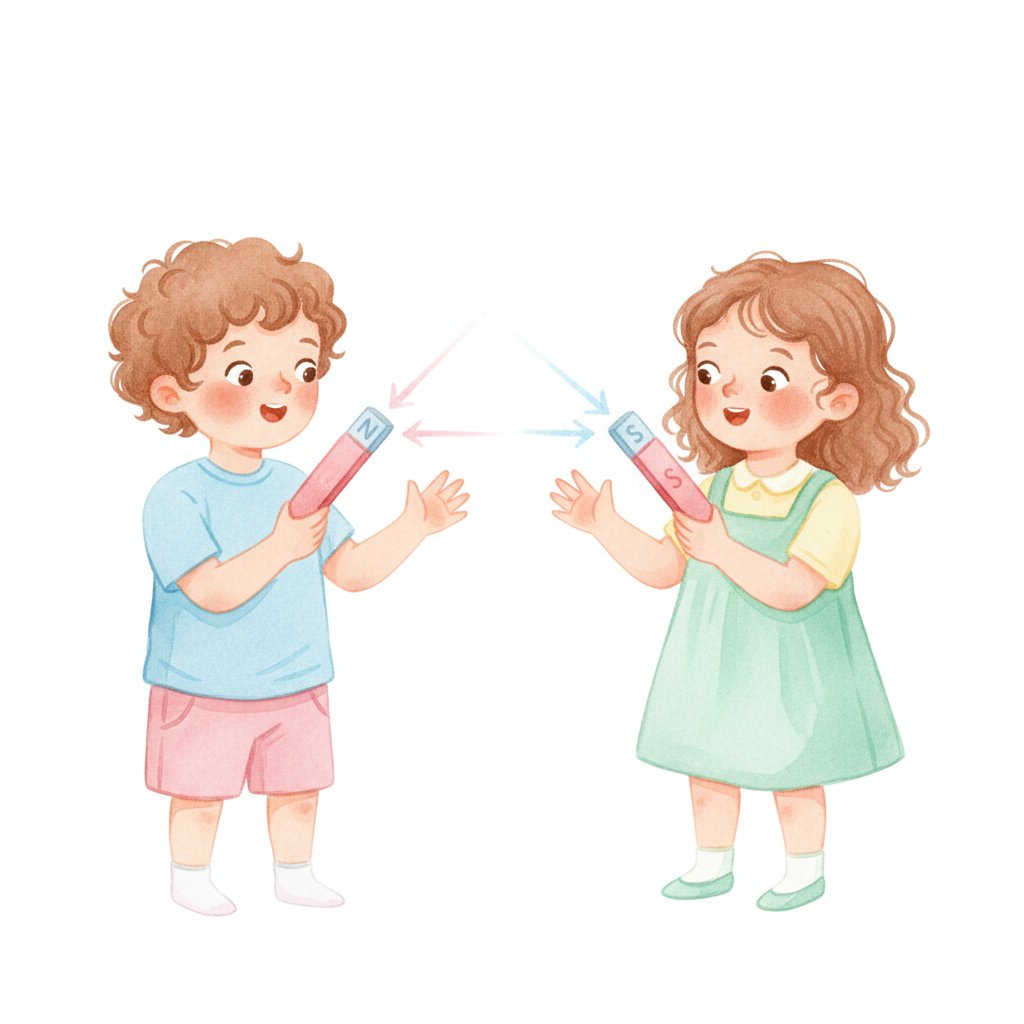
11. Push and pull with magnets
Materials: Two magnets.

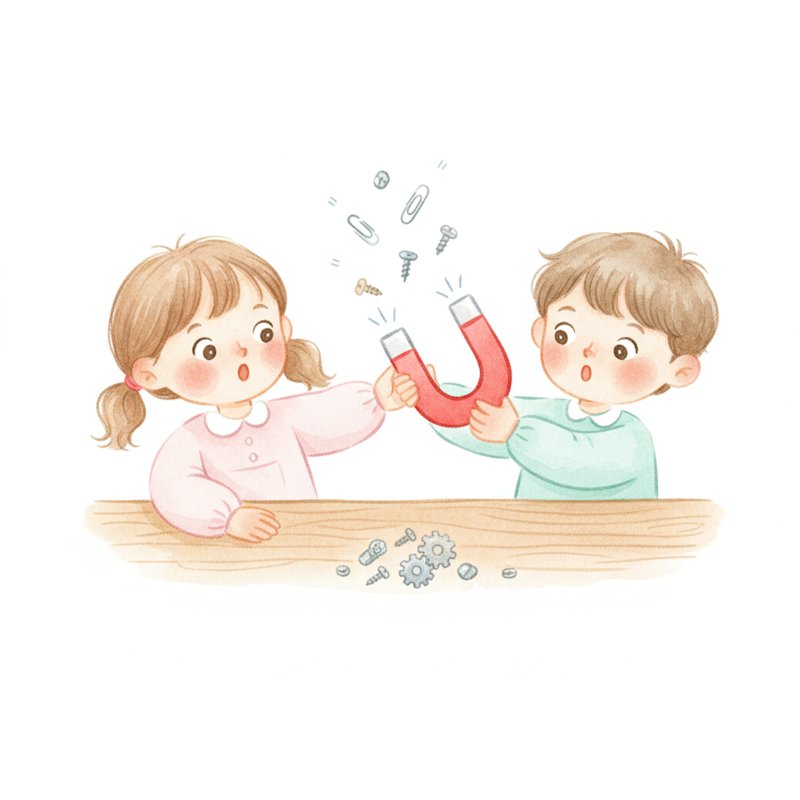
What to do: "Hold two magnets close. Do they STICK together or PUSH apart? Flip one around — now what happens? Opposite sides ATTRACT, same sides REPEL!" The push-pull teaches magnetic polarity. For more science, see our science guide.

12. Magnet strength test
Materials: Magnets of different sizes, paperclips.

What to do: "How many paperclips can each magnet hold? Count them! The big magnet holds 8, the small one holds 3. Which magnet is STRONGER?" The test teaches comparison and measurement.

13. Magnetic distance test
Materials: Magnet, paperclip, ruler.

What to do: "Start far away. Move closer. At what distance does the paperclip JUMP to the magnet? Measure: 3 inches! Try with a thicker magnet: 5 inches!" The distance test teaches measurement and comparison. For more measuring, see our math guide.

14. Magnet through water
Materials: Magnet, paperclip, glass of water.

What to do: "Drop the paperclip in the water. Can the magnet get it out WITHOUT getting wet? Hold the magnet on the OUTSIDE of the glass!" The experiment teaches that magnetic force passes through water and glass.

15. Magnetic pendulum
Materials: String, magnet, paperclip, paper.

What to do: "Tie the magnet to a string. Swing it like a pendulum over paperclips on the table. Which ones does it catch? The ones closest to the swing path!" The pendulum teaches motion and force. For more physics, see our science guide.

More Magnet Activities (Ages 3-6)

16. Magnetic building
Materials: Magnetic tiles or blocks.

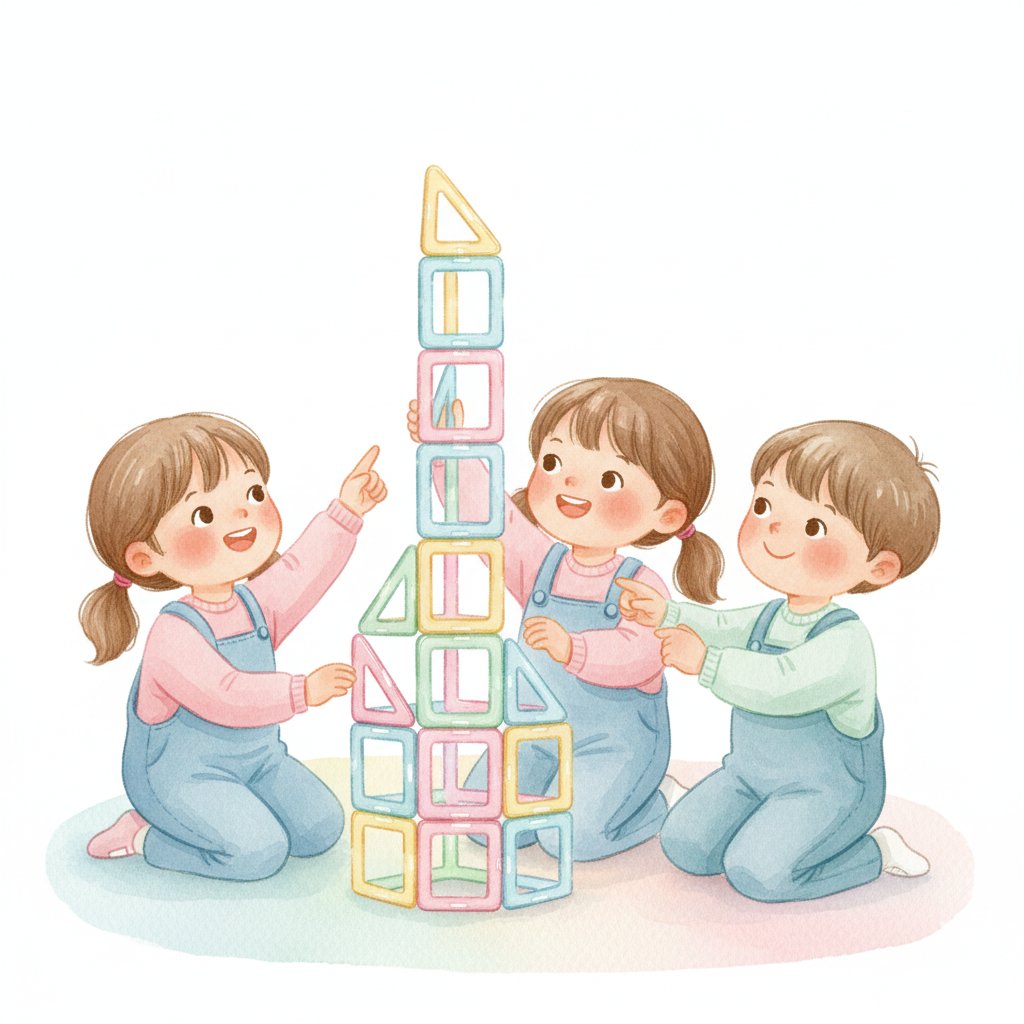
What to do: "Build with magnetic tiles! They SNAP together. How tall can you build before it falls? Make a house, a bridge, a tower!" The building teaches engineering and spatial reasoning. For more building, see our block guide.

17. Magnetic storytelling
Materials: Magnet board, magnetic characters.

What to do: "Move the characters on the magnet board and tell a story: 'The cat chased the mouse around the house. The mouse hid behind the fence...'" The storytelling teaches narrative with magnets as puppets. For more storytelling, see our storytelling guide.

18. Magnetic sensory bin
Materials: Bin with rice, hidden magnetic items, magnet wand.

What to do: "Buried treasure! Wave the magnet wand over the rice. What comes up? Paperclips, washers, nails — all MAGNETIC treasures hiding in the rice!" The sensory bin combines tactile play with science. For more sensory play, see our sensory guide.

19. Magnet journal
Materials: Notebook.

What to do: "Draw what stuck to the magnet and what didn't. Make two pages: MAGNETIC and NOT MAGNETIC. Draw each item." The journal teaches recording and documentation. For more writing, see our writing guide.

20. Compass and Earth magnet
Materials: Compass.

What to do: "Watch the compass needle. It always points NORTH! Why? Because the Earth is a giant magnet! The North Pole and South Pole are like the two ends of a magnet." The compass connects magnet play to Earth science. For more Earth science, see our Earth Day guide.

Science belongs on the wall
Our Educational Posters for Kids include the periodic table, solar system, and human body — and magnets connect to ALL of them: 'Iron is an ELEMENT on the periodic table (poster 1). Magnets on Earth point north because the Earth has a magnetic core (poster 2). Your body has iron in your BLOOD — that is why a very strong magnet can affect a blood drop (poster 3).' The posters create a science wall where magnet experiments happen in front of context and reference. Children look up from their magnets and see the bigger picture. Eight posters, one science wall, infinite discoveries.
1.Are magnets safe for preschoolers?
Yes, with important safety rules: (1) Use LARGE magnets that cannot be swallowed — at least 1.5 inches in diameter. (2) Never give small rare-earth magnets (like Buckyballs) to children under 6 — if swallowed, they can pinch tissue between them and cause serious injury. (3) Keep magnets away from electronics and pacemakers. (4) Supervise all magnet play. The magnets in this guide (horseshoe magnets, wand magnets, magnetic tiles) are safe for ages 3+ with supervision.
2.What types of magnets work best for preschool activities?
Horseshoe magnets (classic, easy to hold), magnetic wands (great for fishing and sweeping), magnetic tiles (building), and disc magnets (large ones for sorting). Avoid: small neodymium magnets, flexible magnetic strips (weak), and refrigerator magnets with small decorative parts that can detach. For the activities in this guide, 2-3 horseshoe magnets and one magnetic wand are sufficient.
3.How do I explain WHY magnets work to a preschooler?
Keep it simple and concrete: "Inside the magnet, there are tiny invisible arrows that all point the same direction. These arrows create an invisible FORCE — you can't see it but you can FEEL it. The force PULLS things made of iron toward the magnet. When two magnets have their arrows pointing the same way, they PUSH apart. When arrows point opposite ways, they PULL together." Use visual analogies: invisible hands, invisible strings, invisible force fields.
4.Can magnet play lead to real science learning?
Absolutely. Magnet play teaches the scientific method: predict, test, observe, categorize. Children learn physics concepts (force, polarity, materials), math skills (counting, sorting, comparing), and scientific vocabulary (attract, repel, magnetic, non-magnetic). The key is ASKING QUESTIONS during play: "What do you think will happen? Why did that stick but this didn't? How many paperclips can it hold?" Questions turn play into inquiry.