Articles6 min read

The Store That Taught Counting

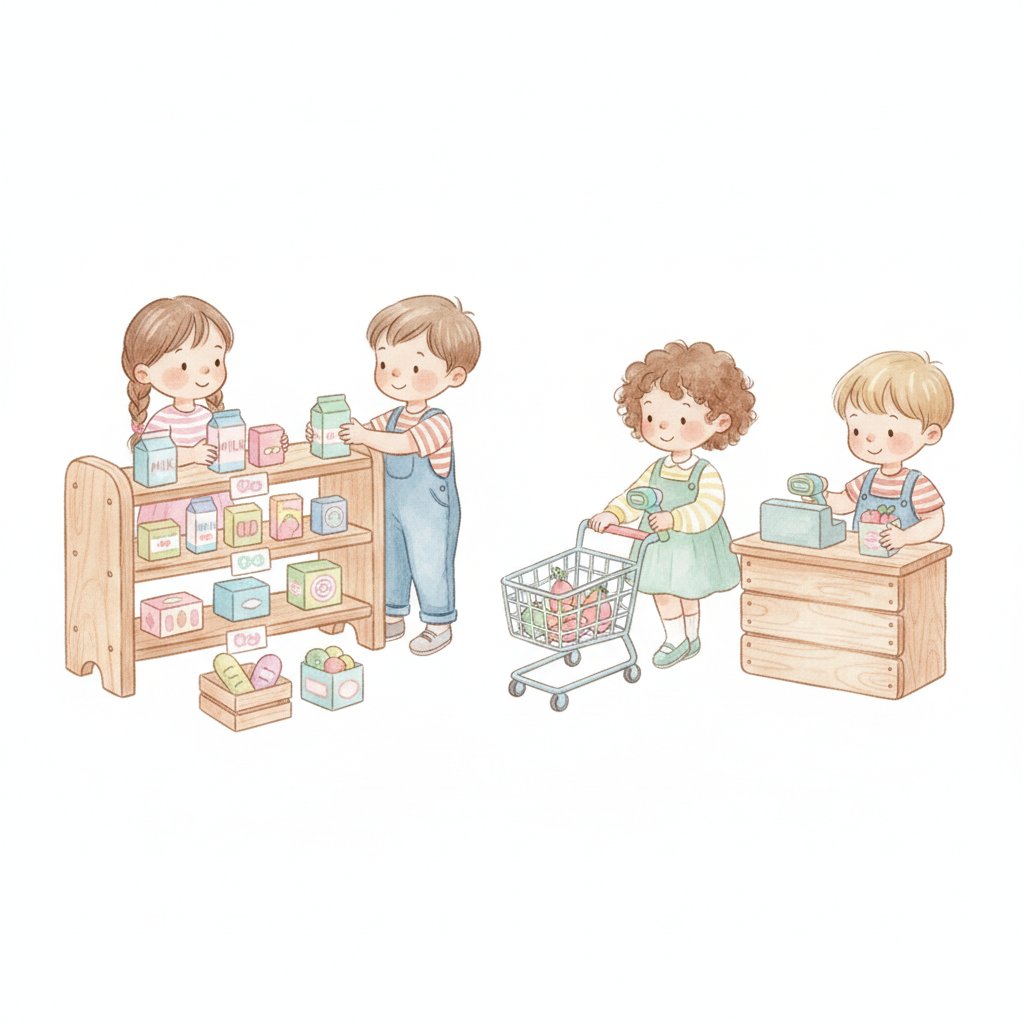
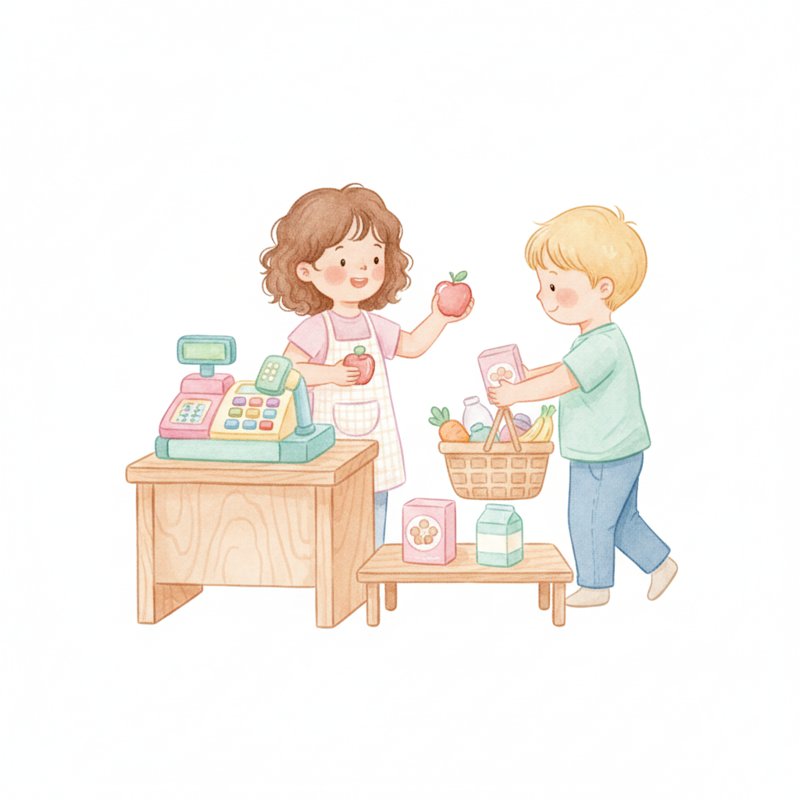
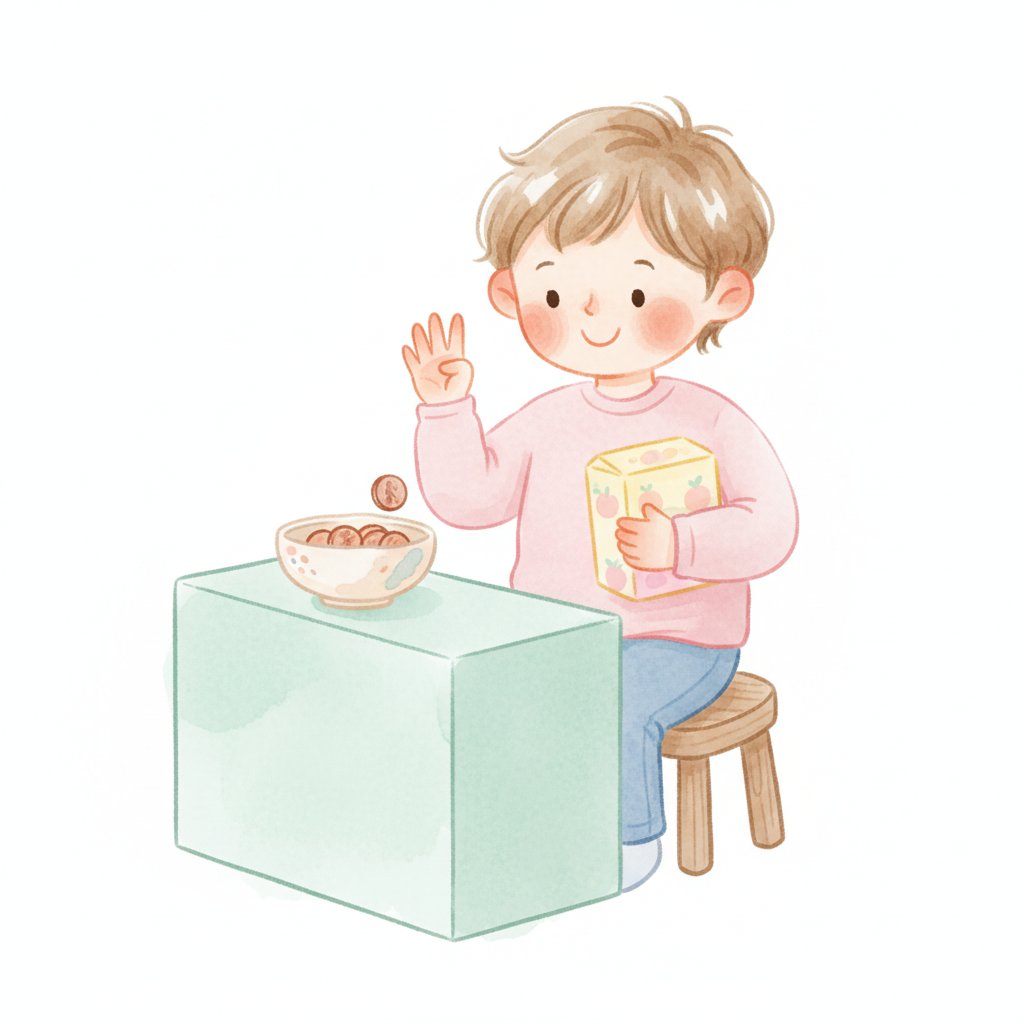
I set up a store in the dramatic play area: a shelf with empty food boxes, price tags (1 cent, 2 cents, 5 cents), a toy cash register, a shopping basket, and a bowl of pennies. "Welcome to the store! Everything has a price. You have 10 pennies to spend." Five-year-old Marcus picked up a box of cereal: "This says 3 cents." He counted out three pennies. "I have 7 left." He picked up juice: "2 cents." Counted two more. "5 left!" Then cookies: "5 cents!" He spent every penny and carried his three items to the checkout. "You are a SMART shopper," I said. He grinned. Then he became the STOREKEEPER and the next child became the customer. In 20 minutes, Marcus had practiced counting, subtraction, one-to-one correspondence, budgeting, and the concept of exchange. He did not know he was doing math — he was just shopping. That is the power of store play.

According to the National Association for the Education of Young Children, store and money activities teach one-to-one correspondence, number operations (addition and subtraction through buying), coin recognition, the concept of exchange and value, and social roles (buyer, seller, cashier). These are foundational math and life skills.
This guide covers 20+ money and store activities for ages 3-6. Pair it with our number guide for counting and our dramatic play guide for more role-play.
Coin and Money Activities (Ages 3-6)

1. Coin sorting
Materials: Pennies, nickels, dimes, quarters, sorting mat.

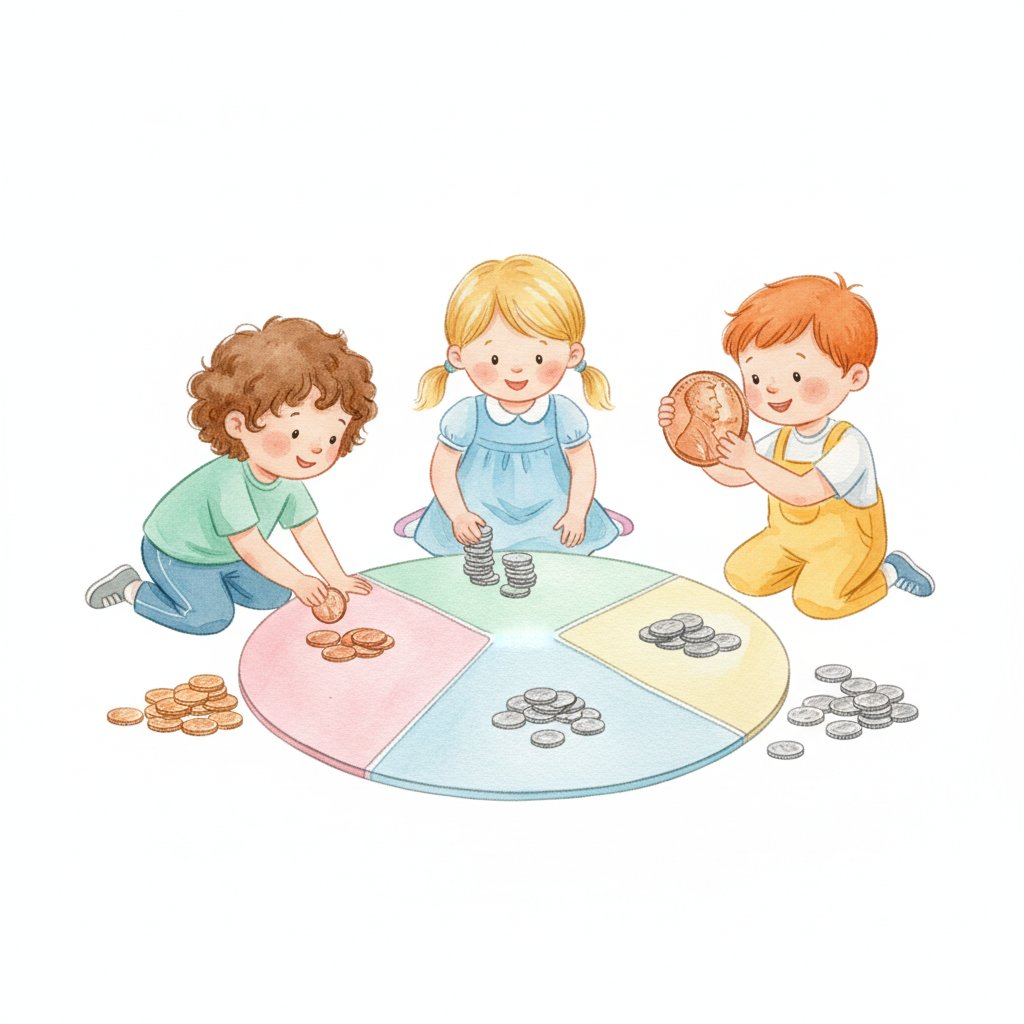
What to do: "Sort the coins by size: the SMALLEST is a dime. The BIGGEST is a quarter. The COPPER ones are pennies. The SILVER ones are nickels, dimes, and quarters." The sorting teaches classification and size comparison. For more sorting, see our sorting guide.

Why it works: Money is the most MOTIVATING math manipulative in existence. Children see adults using money every day, and they want to use it too. Coins are perfect for preschool because they are countable, sortable, and stackable — three math skills in one shiny package. The added benefit is that money play teaches the concept of VALUE — that some things cost more than others, and that resources (pennies) are LIMITED. This is the beginning of financial literacy, taught through play.

2. Coin rubbing
Materials: Coins, paper, crayons.

What to do: "Put the coin under the paper. Rub the crayon over it. The picture APPEARS! Which coin made the biggest rubbing? The smallest?" The rubbing teaches coin recognition through art. For more art, see our art guide.

3. Penny stacking
Materials: Pennies.

What to do: "How many pennies can you stack before the tower falls? Count them! Can you beat your record?" The stacking teaches counting and fine motor. For more stacking, see our block guide.

4. Coin count
Materials: Pennies, number cards.

What to do: "Draw a card. It says 5. Put 5 pennies on the card. Now draw another: 3. Put 3 pennies. How many TOTAL?" The counting teaches one-to-one correspondence and addition. For more counting, see our number guide.

5. Heads or tails
Materials: Coin.

What to do: "Before I flip the coin, guess: HEADS or TAILS? Let's flip! Were you right? Keep track: how many heads and how many tails out of 10 flips?" The flipping teaches probability and data collection. For more data, see our graphing guide.

The alphabet store is open for business
Our Alphabet Flashcards become products on store shelves: 'Each letter card costs 1 penny. You have 10 pennies. Which 10 letters will you BUY? Can you buy the letters of your NAME? E-M-M-A is 4 letters — that costs 4 pennies! You have 6 pennies left. What else can you buy?' The flashcards combine letter recognition with budgeting. Children must CHOOSE which letters to buy, COUNT their pennies, and BUDGET their resources. Some children buy their name. Some buy their friend's name. Some try to buy the whole alphabet (26 pennies needed!). The store makes letter learning a financial decision. Twenty-six letters, 10 pennies, tough choices.

Store Setup and Shopping Play (Ages 3-6)

6. Grocery store
Materials: Empty food boxes, shelves, price tags, basket, cash register, play money.

What to do: "Set up the store: food on shelves, prices on each item, a checkout counter, and a cash register. Shop with your list and your budget!" The store teaches real-world math. For more dramatic play, see our pretend play guide.

7. Price tag math
Materials: Items with price tags (1-5 cents), pennies.

What to do: "You have 10 pennies. Can you buy items that cost exactly 10 cents total? What combinations work?" The price math teaches addition within constraints. For more math, see our number guide.

8. Shopping list
Materials: Picture shopping list, store items.

What to do: "Here is your list: milk, bread, apples, and cheese. Find each item in the store and put it in your basket. Check off each item!" The list teaches following directions and organization. For more following directions, see our directions guide.

9. Bakery shop
Materials: Playdough, bakery tags.

What to do: "Make cookies, cakes, and bread with playdough. Price each item. Sell them to your customers!" The bakery teaches production and sales. For more playdough, see our sensory guide.

10. Restaurant
Materials: Menu, play food, notepad.

What to do: "Welcome to the restaurant! Here is the menu. What would you like? That will be 5 cents. Here is your food! Enjoy!" The restaurant teaches order-taking and service roles. For more social skills, see our social skills guide.

The farm stand is open
Our Farm Animals Flashcards become a farm stand: 'The cow gives MILK — 1 penny. The chicken gives EGGS — 2 pennies. The sheep gives WOOL — 3 pennies. The pig gives... well, pigs are just cute — 5 pennies to visit! You have 10 pennies. What will you buy at the farm stand?' The flashcards teach that products come from animals — a real economics lesson disguised as a shopping game. Children learn that farmers SELL what animals PRODUCE, and that customers BUY with money. The exchange is real economics, made playful. Twelve farm cards, twelve products, one bustling farm stand.

Value and Exchange Activities (Ages 3-6)

11. Needs vs. wants
Materials: Picture cards of items.

What to do: "Sort these cards: things you NEED (food, water, clothes, a home) and things you WANT (toys, candy, a balloon). Which do you buy FIRST?" The sort teaches prioritization. For more sorting, see our sorting guide.

12. Save or spend
Materials: Two jars, pennies.

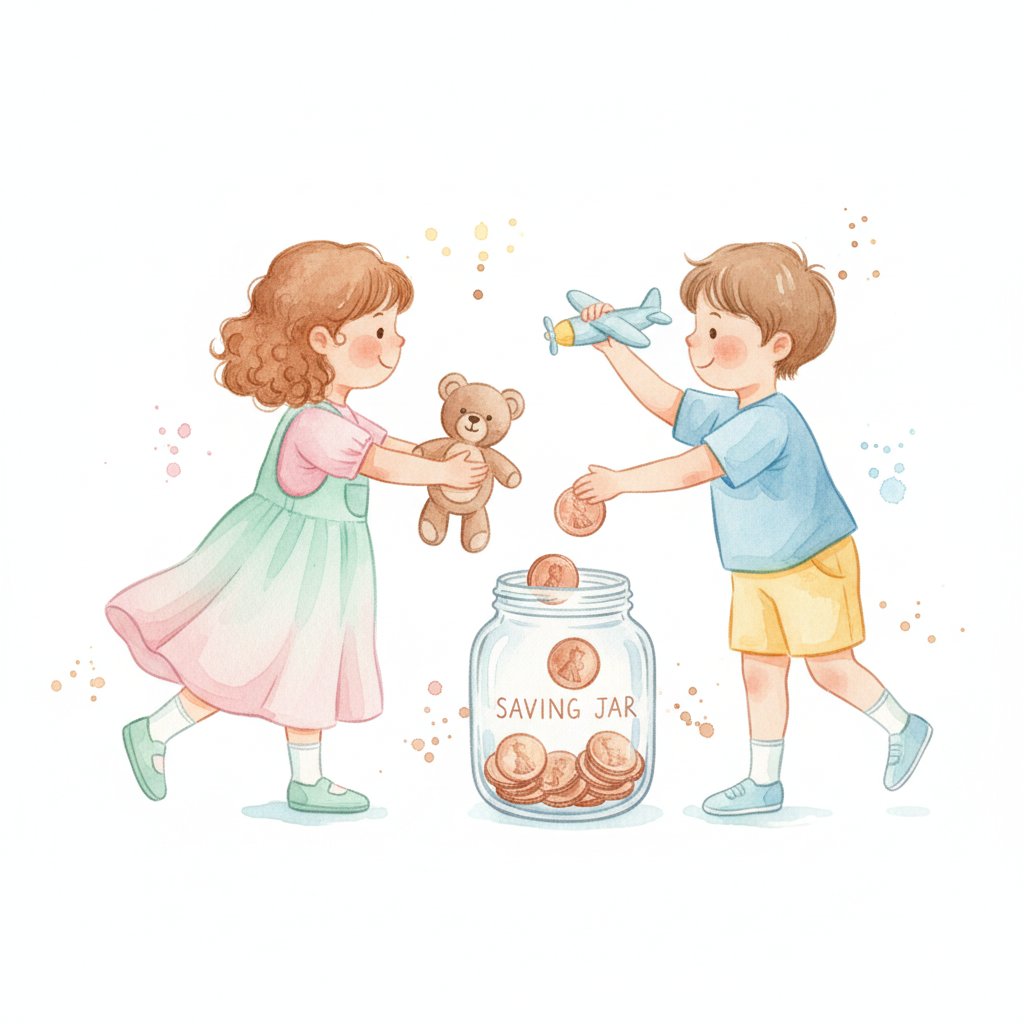
What to do: "Every day you earn 3 pennies for helping. You can SPEND them now or SAVE them in this jar. If you save 10 pennies, you can buy the BIG prize!" The save-or-spend teaches delayed gratification. For more patience, see our self-regulation guide.

13. Barter game
Materials: Small toys.

What to do: "You have a car. Your friend has a dinosaur. Can you TRADE? What if your friend does not want the car? What else could you offer?" The barter teaches negotiation before money. For more social skills, see our sharing guide.

14. Earning pennies
Materials: Job chart, pennies.

What to do: "Here are jobs you can do: put away toys (1 penny), water the plant (1 penny), help set the table (2 pennies). Do a job, earn a penny!" The earning teaches work-reward connection. For more routines, see our routine guide.

15. Change maker
Materials: Items with prices, pennies.

What to do: "This apple costs 3 cents. You gave me 5 pennies. How much CHANGE do I give you back? 2 pennies!" The change-making teaches subtraction. For more subtraction, see our number guide.

More Store Activities (Ages 3-6)

16. Garage sale
Materials: Old toys, price tags.

What to do: "Set up a garage sale with toys you do not play with anymore. Price them and sell them to your friends!" The garage sale teaches recycling and commerce. For more recycling, see our recycling guide.

17. Farmer's market
Materials: Real fruits and vegetables, scale, bags.

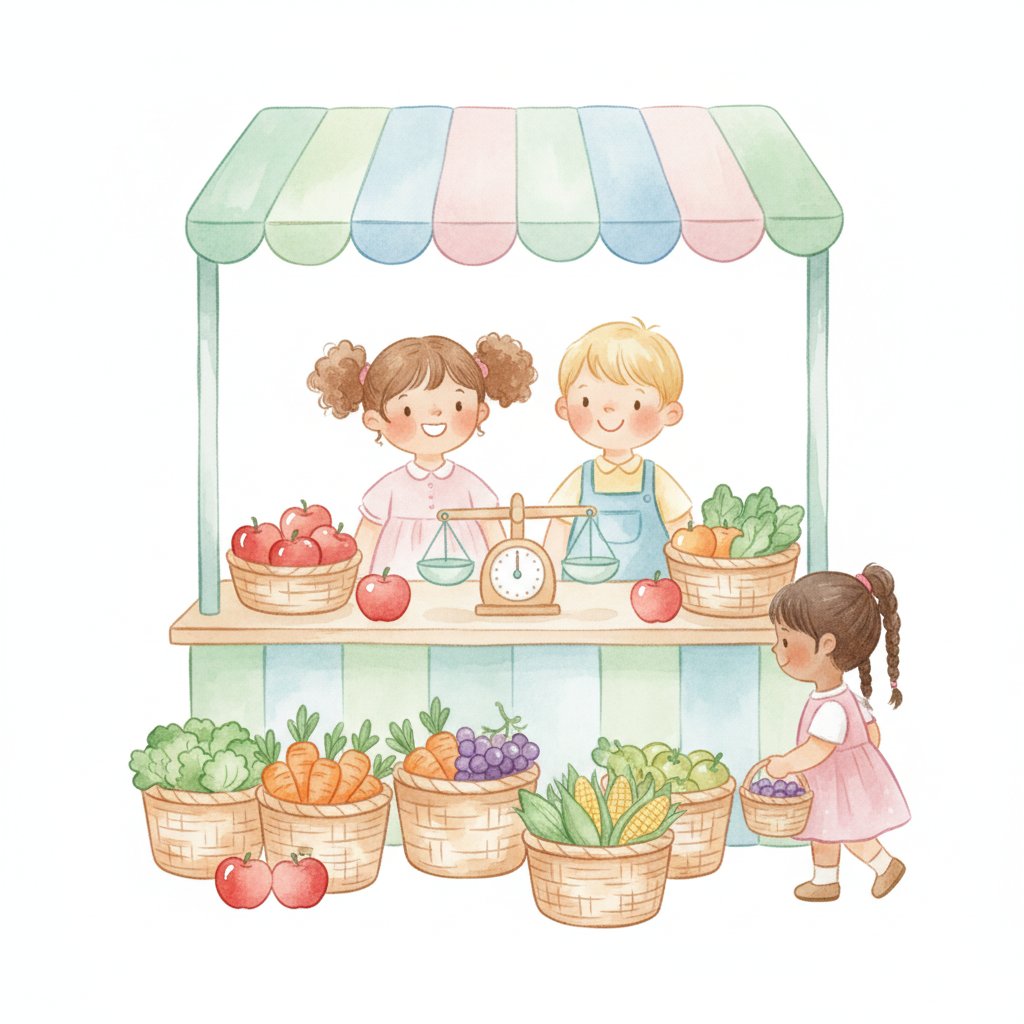
What to do: "Weigh the apples on the scale. That is 2 pennies. Weigh the bananas. That is 3 pennies. Total: 5 pennies!" The farmer's market teaches weight and price. For more measurement, see our measurement guide.

18. Bank play
Materials: Piggy bank, coins.

What to do: "Bring your pennies to the bank. The banker counts them and writes the total in your bank book. Next time you come, you can DEPOSIT more or WITHDRAW some to spend." The bank play teaches banking vocabulary. For more writing, see our writing guide.

19. Catalog shopping
Materials: Catalog or flyer, scissors, glue, paper.

What to do: "Cut out 5 things you want to buy from the catalog. Add up the prices. Can you afford them with 20 pennies?" The catalog teaches budgeting through real prices. For more scissors, see our scissor guide.

20. Class store economy
Materials: Job chart, class store, play money.

What to do: "All month, earn money by doing classroom jobs. At the end of the month, the class store opens! Save your money and shop!" The class economy teaches long-term saving and budgeting. For more classroom management, see our classroom guide.

Every routine earns something
Our Morning Routine Visual Schedule Cards become an earning system: 'Card 1: Wake up on time — earn 1 penny. Card 2: Brush teeth without being asked — earn 1 penny. Card 3: Get dressed by yourself — earn 1 penny. Card 4: Eat breakfast — earn 1 penny. Card 5: Put on shoes — earn 1 penny. That is 5 pennies every morning!' The routine cards connect daily habits to earning. Children learn that responsibilities have VALUE and that consistent effort earns rewards. The pennies add up, and on Friday, the class store opens. Seven cards, seven habits, seven pennies a day.
1.Is it too early to teach preschoolers about money?
No — the concepts are age-appropriate when kept concrete. Preschoolers can learn: counting with coins (one-to-one correspondence), sorting coins by size and color, understanding that money is exchanged for goods, the difference between needs and wants, and basic saving (delaying a small reward for a bigger one). They do NOT need to understand interest rates, credit cards, or complex economics. Keep it to coins, counting, and choices.
2.Should I use real coins or play money?
Real coins are better because they have authentic weight, texture, and visual details that help children learn to distinguish them. However, always supervise coin play — coins are choking hazards. Wash coins before use. Some teachers prefer laminated paper coins for safety. Either way, the math learning is the same: count, sort, exchange. The key is that the money feels REAL enough to motivate the play.
3.How do I set up a classroom store?
You need: (1) A shelf or table displaying items for sale. (2) Price tags on each item (start with 1-5 cents). (3) A checkout area with a cash register (toy or real) and a tray for money. (4) Play money or pennies for each child. (5) A shopping list or basket. Rotate the store theme: grocery, bakery, toy shop, bookstore, farm stand. Change prices as children get better at math. The store should be a permanent fixture that children visit daily.
4.What math skills does store play develop?
Store play is a math powerhouse: (1) COUNTING — counting pennies to pay. (2) ONE-TO-ONE CORRESPONDENCE — one penny per cent. (3) ADDITION — buying two items and adding the prices. (4) SUBTRACTION — making change. (5) COMPARISON — which costs more? (6) BUDGETING — you only have 10 pennies, choose wisely. (7) NUMBER RECOGNITION — reading price tags. (8) GREATER THAN / LESS THAN — you cannot afford that because it costs MORE than you have. All of this feels like play, not math class.