Articles8 min read

The Day We Tasted the World

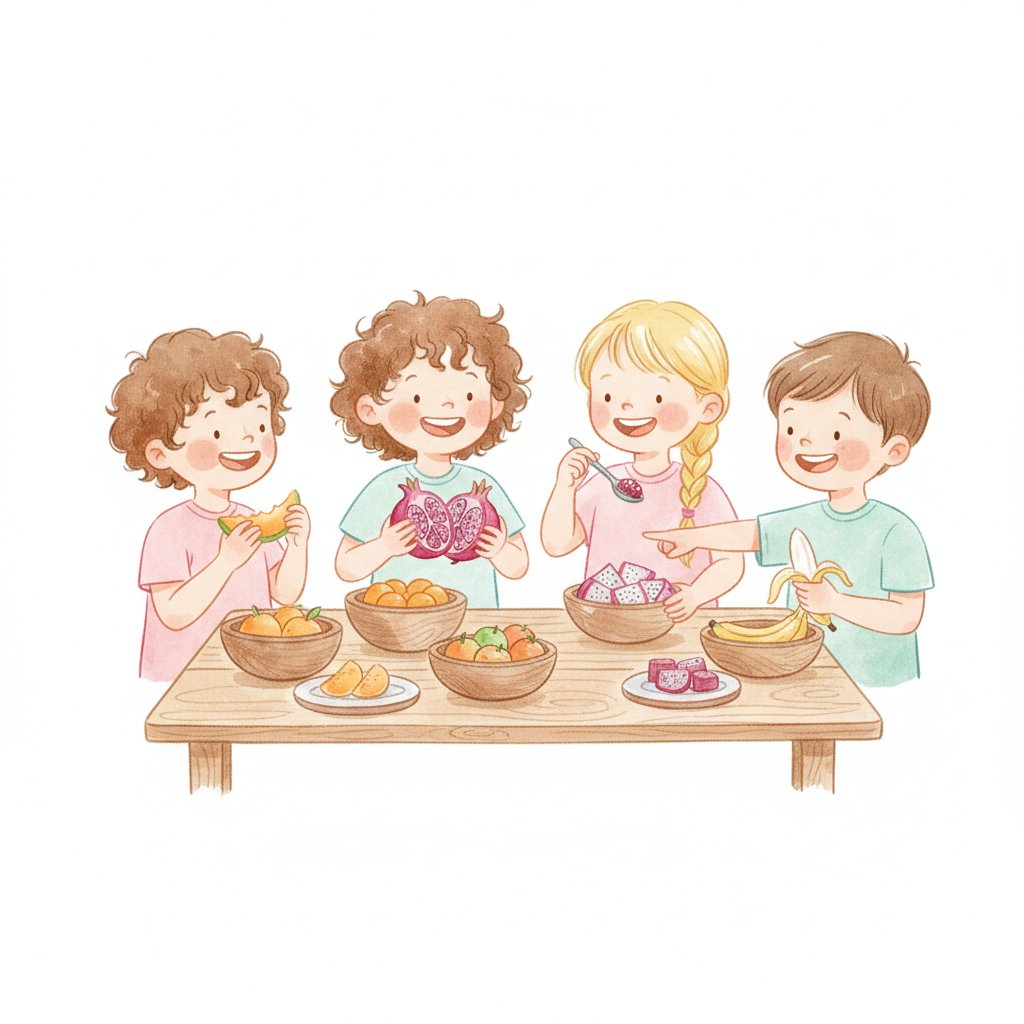
One Monday, I brought in three fruits the children had never seen: a pomegranate, a mango, and a dragon fruit. "These fruits grow in different parts of the world! Pomegranates grow in the Middle East. Mangoes grow in India. Dragon fruit grows in Southeast Asia." We cut them open, touched them, smelled them, and tasted them. The pomegranate was "like little jewels!" The mango was "the best thing I ever ate!" The dragon fruit was "it looks like an alien but it tastes like a kiwi!" In 20 minutes, we had practiced sensory observation, geography, vocabulary, and — most importantly — curiosity about the wider world.

According to NAEYC, early multicultural education doesn't just teach children ABOUT diversity — it teaches them TO BE diverse thinkers. Children exposed to multiple cultures, languages, and traditions develop greater cognitive flexibility, stronger empathy, and more inclusive social skills. The key is to present cultural differences as interesting, not exotic; as normal, not foreign.
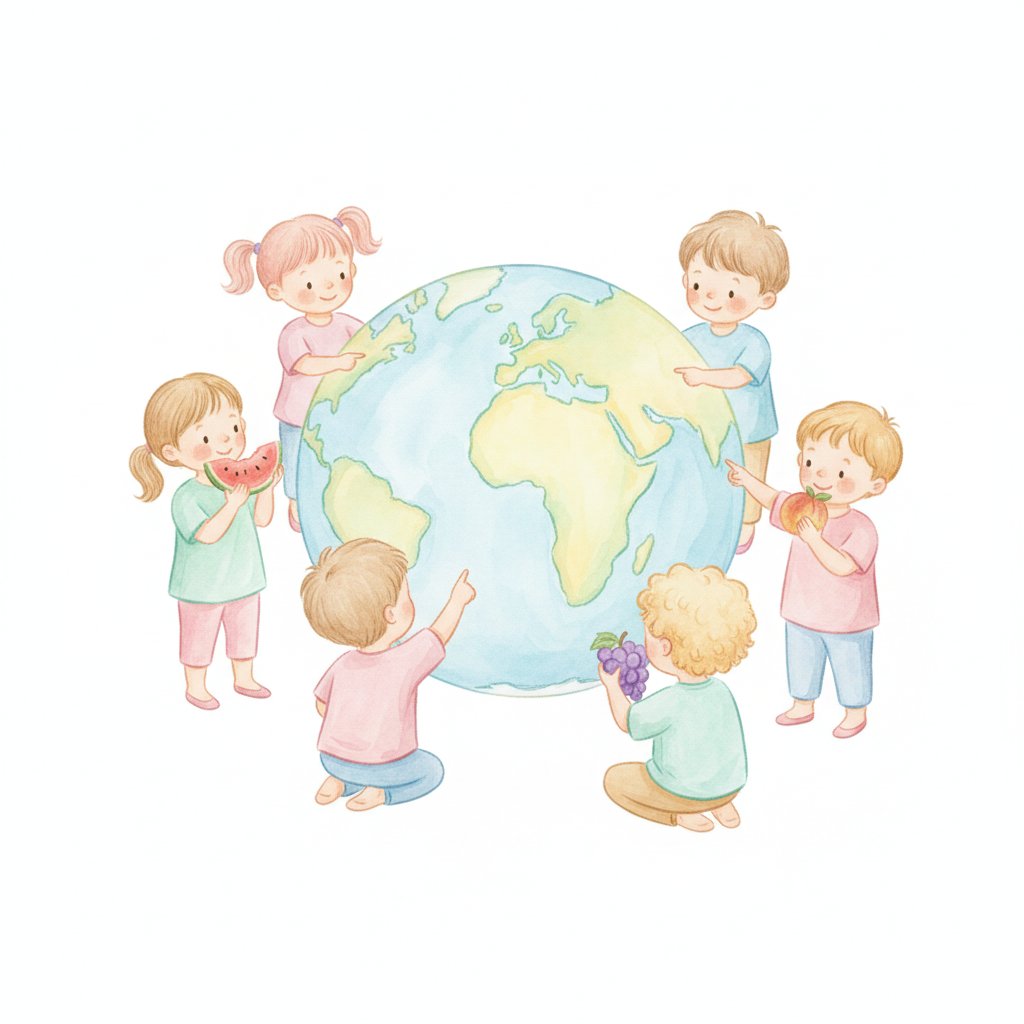
This guide covers 20+ multicultural activities for ages 3-6, organized by type: food, music, language, art, and celebrations. Pair it with our bilingual activities guide for multilingual learning and our social skills guide for inclusive play.
Food From Around the World (Ages 3-6)

1. International snack tasting
Materials: Foods from different cultures (check allergies first).

What to do: Introduce one food per day or week: "Today we're trying EDAMAME — it's a snack from Japan! People eat it by squeezing the beans out of the pod." Describe where the food comes from, show the country on a map or globe, then taste together. For more food activities, see our cooking guide.

Why it works: Food is the most accessible entry point to another culture. Children who are hesitant to try new activities will often try a new food. The sensory experience (look, smell, touch, taste) creates a memorable connection to a place and its people. Frame it as adventure, not obligation: "We're food explorers!"

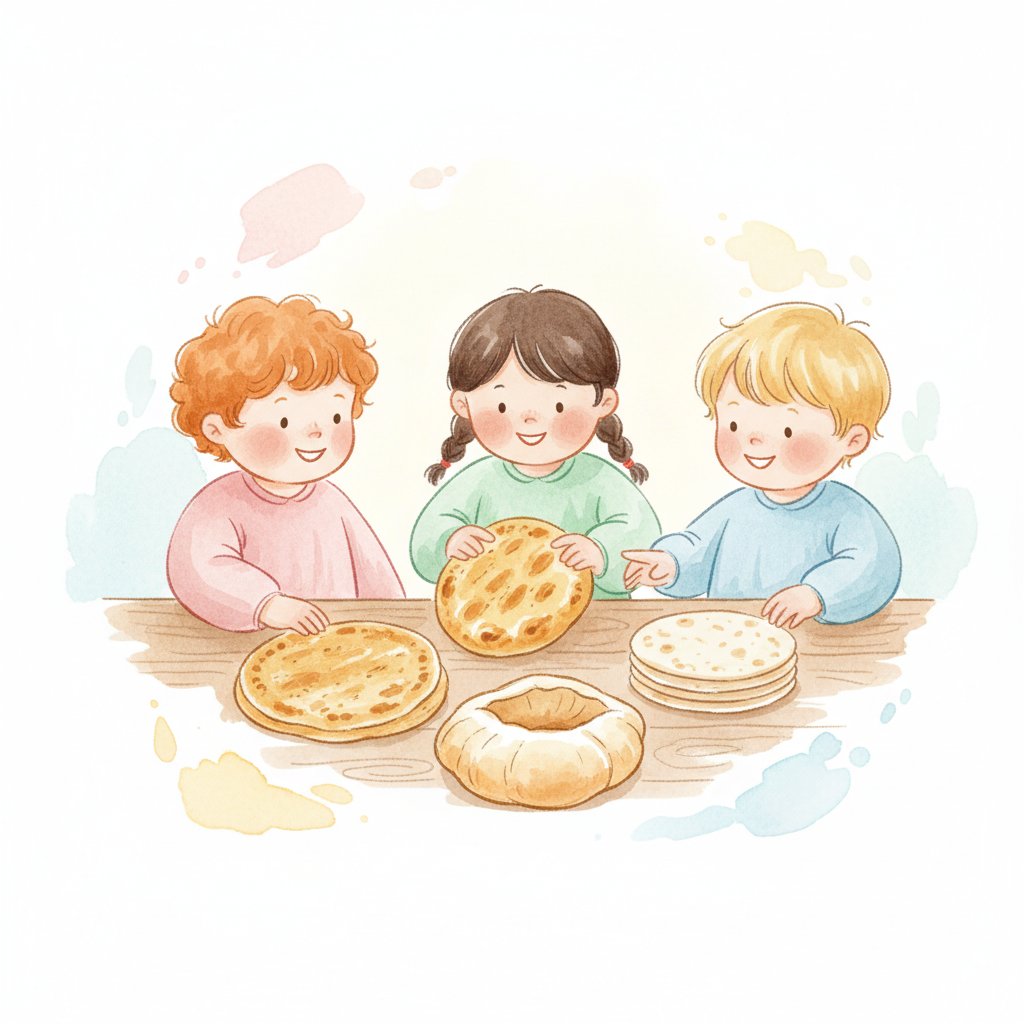
2. Bread from many cultures
Materials: Different breads — tortilla, naan, pita, baguette, challah, roti.

What to do: "Every culture makes bread, but they all look and taste different! This is NAAN from India. This is PITA from the Middle East. This is TORTILLA from Mexico. Let's try them all!" The comparison teaches that different cultures solve the same need (food) in different ways. For more sorting, see our sorting guide.

3. Fruit passport
Materials: Paper passport, fruit stickers or stamps.

What to do: Each time children try a food from a new country, they get a stamp in their "fruit passport": "You tried mango from India! Stamp! You tried plantain from Nigeria! Stamp!" The passport gamifies food exploration and creates a record of world experiences.

4. Family recipe sharing
What to do: Ask families to share a recipe that represents their culture: "What does your family eat at home that you love?" Compile the recipes into a class cookbook. "This is how Mateo's family makes rice. This is how Priya's family makes rice. They're DIFFERENT — and both are delicious!" The activity celebrates family diversity.

5. Kitchen around the world
What to do: Cook simple dishes from different cultures: "Let's make GUACAMOLE from Mexico! We need avocado, lime, and salt." "Let's make ONIGIRI from Japan! We need rice and seaweed." The cooking teaches following directions, measuring, and cultural awareness. For more cooking, see our cooking guide.

Same letter, different sounds: phonics around the world
Our Phonics CVC Words Flashcards introduce English letter sounds, but the conversation goes further: 'The letter M says mmm in English. In Spanish, it also says mmm but it is used in different words — MANO for hand, MAR for sea. In French, M is for MAISON, which means house!' The flashcards become a multilingual launchpad: one sound, many languages, many words. Children learn that letters connect us across cultures — they're a universal code with local accents.

Music and Dance From Many Cultures (Ages 3-6)

6. World music listening
Materials: Music from different cultures.

What to do: Play a song: "This music is from AFRICA. What instruments do you hear? How does it make you want to move?" Play another: "This music is from IRELAND. Does it sound the same or different? Which one is faster? Which makes you want to dance?" The listening teaches auditory discrimination and cultural awareness. For more listening, see our listening guide.

7. Instrument exploration
Materials: Instruments or recordings of instruments from different cultures.

What to do: Show instruments: "This is a DJEMBE drum from West Africa. This is a SITAR from India. This is a BAGPIPE from Scotland. They all make music but they sound completely different!" Let children hear each one and move to the sound. For more music, see our music guide.

8. Dance from around the world
What to do: Teach simple dances: "In Mexico, people dance the JARABE — like this! In Hawaii, people dance the HULA — with their hands telling a story!" Watch short videos of children dancing in different countries, then try the movements. The physical experience creates embodied cultural memory.

9. Make your own instruments
Materials: Various craft supplies.

What to do: Create instruments inspired by world cultures: shakers (like maracas from Latin America), drums (like djembe from Africa), rain sticks (from Chile). "People in different parts of the world make instruments from what they have around them. Let's make our own!" For more art, see our art guide.

10. Lullabies from many lands
What to do: Play lullabies from different countries at rest time: "This is a lullaby from Japan. This one is from Brazil. This one is from Russia. Every culture sings their babies to sleep — but the songs are different." The lullabies teach that love is universal but expressed differently. For more music, see our music guide.

Feelings are the same in every language
Our Emotions Monster Feelings Flashcards teach an important multicultural lesson: 'Children in Japan feel HAPPY like this monster. Children in Kenya feel SAD like this monster. Children in Brazil feel SCARED like this monster. Feelings are the same EVERYWHERE — even if we speak different languages, eat different foods, and wear different clothes.' The monsters become empathy bridges: we are different on the outside, but our feelings connect us. 12 emotions, 12 universals, one world.

Language and Story Activities (Ages 3-6)

11. Hello in many languages
What to do: Teach greetings: "In Spanish, HOLA! In French, BONJOUR! In Mandarin, NI HAO! In Arabic, MARHABA! In Japanese, KONNICHIWA!" Use a different greeting each morning: "Today we're saying BONJOUR!" The daily practice introduces the concept that people speak different languages. For more bilingual activities, see our bilingual guide.

Why it works: Language is culture. When children learn even one word in another language, they learn that their way of speaking is not the only way. This simple realization is the foundation of cultural awareness and respect for difference.

12. Counting in different languages
What to do: Count to 5 in English, then try Spanish: "Uno, dos, tres, cuatro, cinco!" Then French: "Un, deux, trois, quatre, cinq!" The counting teaches that the QUANTITY is the same — only the WORDS are different. For more counting, see our number guide.

13. Folk tales from around the world
Materials: Picture books of folk tales from different cultures.

What to do: Read a folk tale: "This is a story from NIGERIA about a turtle who was very clever." Compare stories: "Does this story remind you of any story you know?" Many cultures have versions of the same tale (Cinderella exists in hundreds of cultures). The comparison teaches that stories connect us. For more storytelling, see our storytelling guide.

14. Alphabet in different scripts
What to do: Show children different writing systems: "This is English: A B C. This is Arabic: أ ب ت. This is Japanese: あ い う. They look different but they all make WORDS!" The activity introduces the concept that writing is a tool humans invented — and different humans invented different tools. For more alphabet work, see our alphabet guide.

15. Name meanings
What to do: "Your name means something! SARAH means 'princess' in Hebrew. JORGE means 'farmer' in Spanish. ASHOK means 'without sorrow' in Sanskrit." Research children's name meanings together. The activity celebrates each child's cultural heritage and teaches that names carry history.

Celebrations and Art Activities (Ages 3-6)

16. Holiday comparison chart
Materials: Chart paper, markers.

What to do: "In America, we celebrate Thanksgiving. In India, they celebrate Diwali. In Mexico, they celebrate Dia de los Muertos. In China, they celebrate Lunar New Year. Every culture has special days!" Create a chart comparing holidays: "What do they have in common? FOOD! FAMILY! LIGHTS! GIFTS!" For more traditions, see our family activities guide.

17. Art from many traditions
Materials: Various art supplies.

What to do: Create art inspired by world traditions: "In Australia, Aboriginal people paint with DOTS. Let's try it!" "In Japan, people fold paper into shapes — it's called ORIGAMI!" "In Mexico, people make colorful paper banners called PAPEL PICADO!" Each project connects to a specific cultural tradition. For more art, see our art guide.

18. Flag matching
Materials: Flag pictures.

What to do: "Every country has a flag! This is the flag of the United States — it has STARS and STRIPES. This is the flag of Japan — it has a RED CIRCLE on WHITE. This is the flag of Brazil — it has GREEN, YELLOW, and BLUE." The matching teaches visual discrimination and geography. For more matching, see our matching guide.

19. Homes around the world
Materials: Pictures of homes in different countries.

What to do: "This is a house in America. This is an IGLOO in the Arctic. This is a HUT in Africa. This is an APARTMENT in Japan. This is a HOUSEBOAT in Thailand. People build different homes because they live in different places with different weather and materials." The activity teaches adaptation and diversity. For more building, see our block guide.

20. We are all similar, we are all different
Materials: Photos of children from around the world (from books or printed).

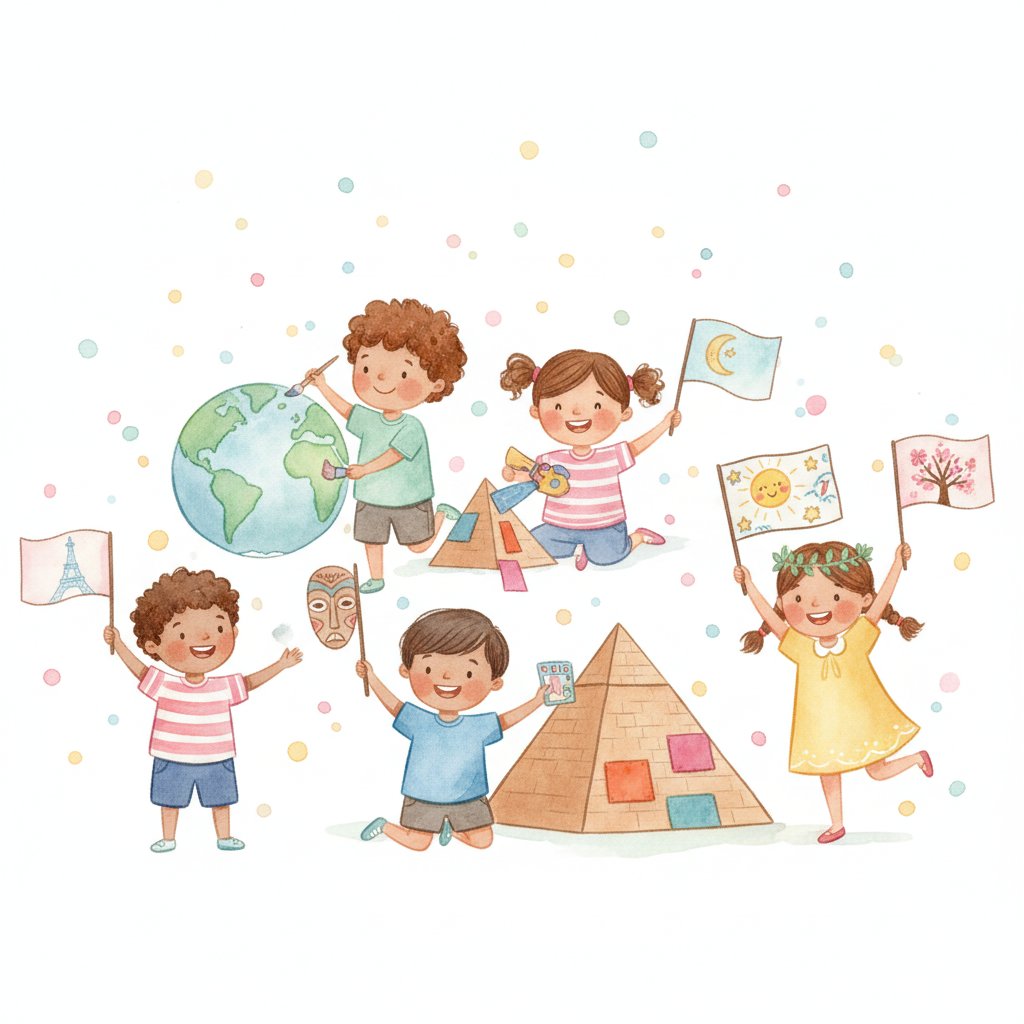
What to do: "Look at these children! They live in different countries, wear different clothes, and speak different languages. But they all PLAY. They all LAUGH. They all have FAMILIES who love them. They all FEEL happy when they're with friends. We are different — and that's what makes the world interesting!" The lesson is the most important one: diversity enriches us; humanity connects us. For more social skills, see our kindness guide.

26 letters, infinite words
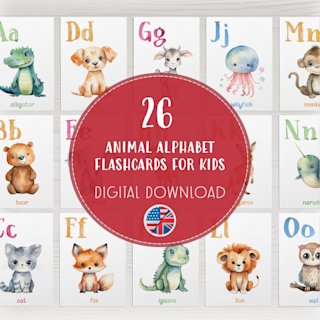
Our Alphabet Monster Flashcards teach the English alphabet, but the conversation extends worldwide: 'These 26 letters make ALL the English words! But did you know Russian has 33 letters? Korean has 24! Some languages don't use letters at all — Chinese uses characters, and each one means a whole word!' The flashcards launch a world tour of writing systems: same purpose (communication), different tools. Children who understand that their alphabet is one of many are children who think globally. 26 monsters, 26 sounds, one passport to literacy.
1.How do I teach multicultural activities respectfully?
Focus on what you know to be accurate. Use books and resources created by people from that culture. Avoid stereotypes (not all Mexican food is tacos, not all African art is tribal). Say "in many parts of Mexico" not "in Mexico, everyone..." Present cultures as living and diverse, not frozen and singular. When in doubt, learn WITH the children: "I don't know much about this — let's find out together!"
2.Is it appropriate to celebrate holidays from other cultures?
Yes, when done with respect and context. Share the MEANING of the holiday, not just the crafts. "Diwali is a festival of lights that celebrates good winning over evil. Families light candles, share sweets, and spend time together." The celebration should educate, not appropriate. If families in your class celebrate the holiday, invite them to share how their family observes it.
3.What if a parent objects to multicultural activities?
Frame multicultural education as learning ABOUT the world, not adopting other beliefs: "We're learning that people around the world have different traditions. Understanding our neighbors makes us better citizens." Emphasize that learning about another culture doesn't mean changing your own — it means understanding the world you live in.
4.How young is too young for multicultural education?
It's never too early. By age 2, children notice physical differences. By age 3, they can learn that people speak different languages. By age 4, they can understand that families have different traditions. The key is to start simple (foods, greetings, music) and build complexity as children grow. Multicultural education at this age is about CURIOSITY and RESPECT, not politics or ideology.