Articles7 min read

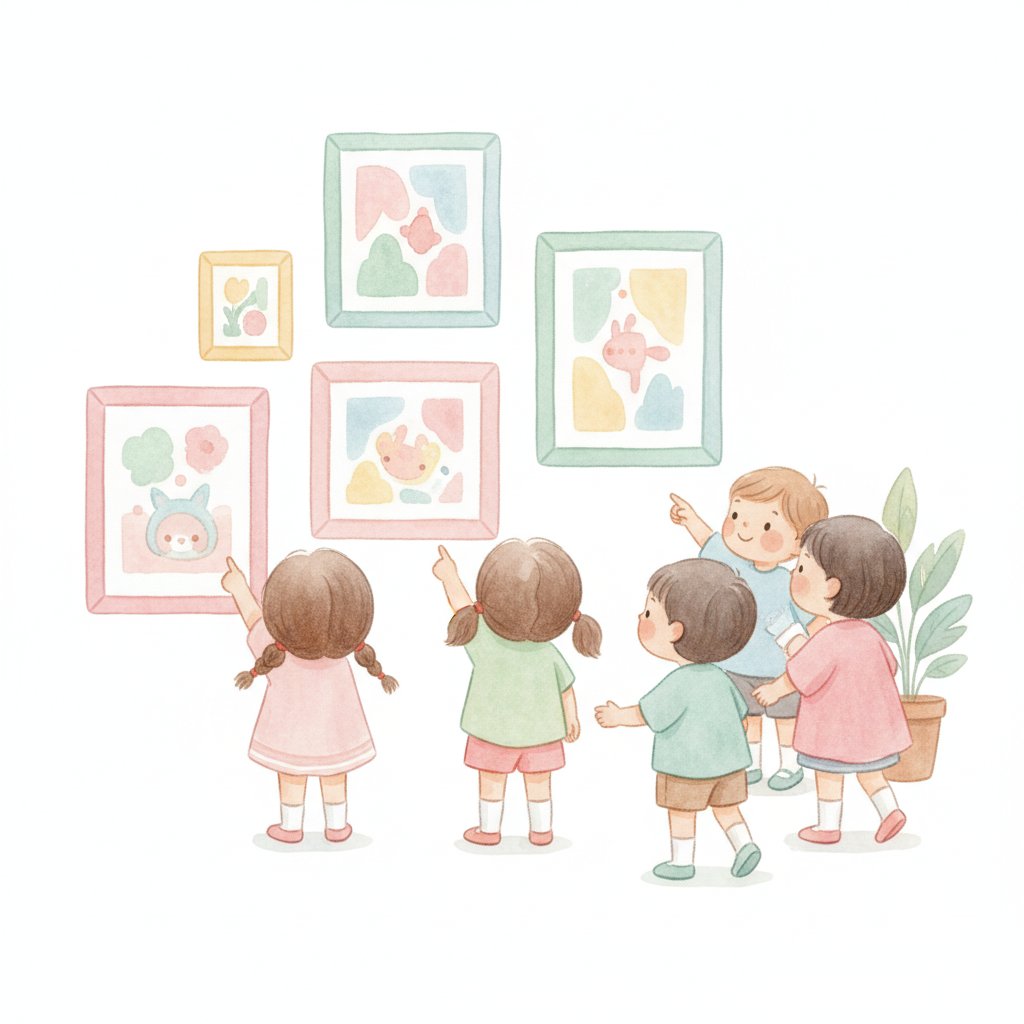
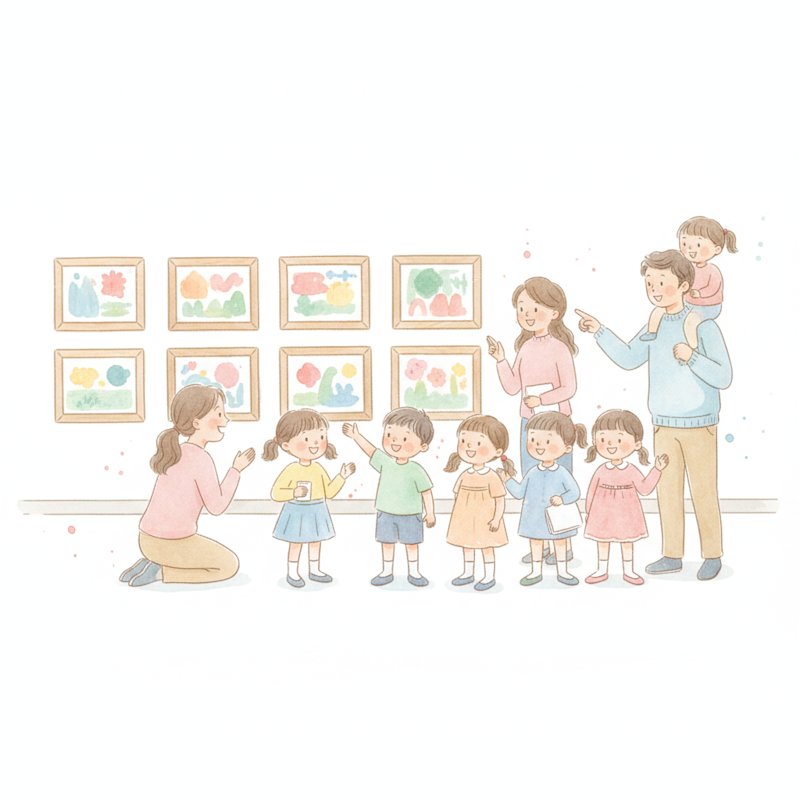
"Welcome to the Lovely Learning Art Gallery!" I announced. The children had spent two weeks creating artwork, and today was the GRAND OPENING. Each child chose their 3 best pieces, matted them on construction paper, wrote a title card ("Blue Sunset" by age-4 Mia), and helped hang them at eye level along the hallway. Then we did a GALLERY WALK. Every child stood next to their work while visitors (parents, other classes) walked through. "Tell me about your painting," a parent asked Leo. "It is a T-Rex eating spaghetti," he said confidently. "Why spaghetti?" "Because dinosaurs are HUNGRY and spaghetti is the BEST food." The parent laughed. Leo beamed. In that moment, he was not a preschooler showing a picture. He was an ARTIST explaining his work. That shift — from student to artist, from classroom to gallery — is what museum activities create.

According to the National Art Education Association, museum and gallery activities teach visual literacy, curation and decision-making, presentation and public speaking, art appreciation and critique vocabulary, and the understanding that art is meant to be SHARED, not just made. Children who display their work take more pride in it and invest more effort.
This guide covers 20+ museum and gallery activities for ages 3-6. Pair it with our art guide for art-making and our conversation guide for discussion skills.
Setting Up a Classroom Museum (Ages 3-6)

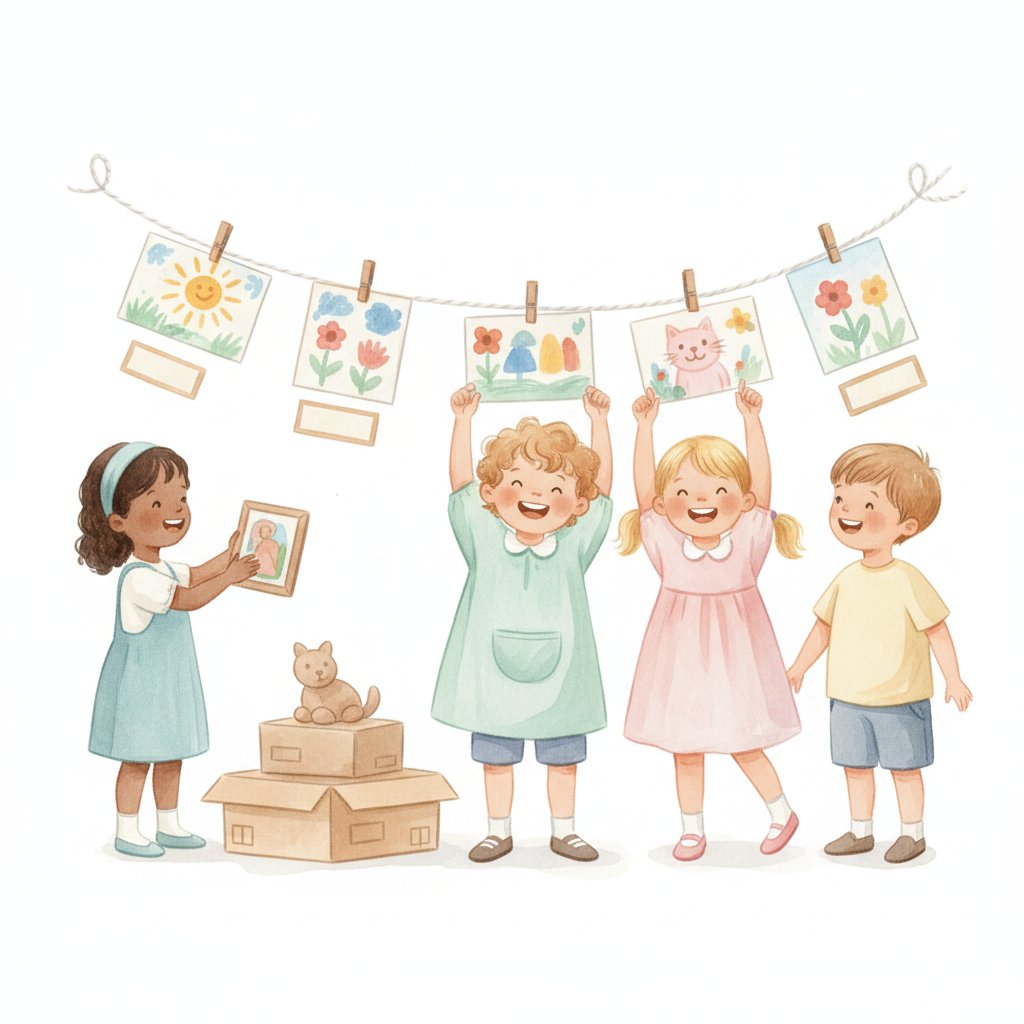
1. Art gallery wall
Materials: String, clips, artwork.

What to do: "Hang a string across the wall. Use clips to hang your BEST artwork. Add a label: the title, the artist, and the date. This is our GALLERY." The gallery wall teaches selection and display. For more art, see our art guide.

Why it works: Museum activities work because they give children the EXPERIENCE of being artists whose work is valued by an audience. When a child chooses which 3 of 10 paintings to display, they are making CURATORIAL decisions: "Which one is my BEST? Which one tells a STORY? Which one SURPRISED me?" This evaluative thinking — judging quality, selecting for impact, considering audience — is sophisticated cognitive work disguised as picking favorites. The display transforms the work from "something I made" to "something I am PROUD of," and that pride drives future effort.

2. Museum labels
Materials: Index cards, markers.

What to do: "Every museum piece has a LABEL. Write: the title, your name, the materials you used, and one sentence about it. 'Rainbow Explosion by Emma. Made with watercolors. It makes me feel happy.'" The labels teach title-writing and artist statements. For more writing, see our writing guide.

3. Ticket booth
Materials: Paper tickets, cash register.

What to do: "Welcome to the museum! Here is your ticket. The cashier collects tickets and the docent leads the tour. Who wants to be the CASHIER? Who wants to be the DOCENT?" The ticket booth teaches roles and economics. For more store play, see our money guide.

4. Museum gift shop
Materials: Small art items, price tags.

What to do: "Every museum has a gift shop! Set up bookmarks, postcards, and small drawings for sale. Use play money to buy them." The gift shop extends the museum into economics. For more dramatic play, see our pretend play guide.

5. Audio guide
Materials: Recording device.

What to do: "Record yourself talking about your artwork. When visitors come, they can press PLAY and hear the artist explain the work in their own words!" The audio guide teaches oral presentation and technology use. For more recording, see our photography guide.

A gallery organized by color
Our Colors Flashcards become gallery section markers: 'The RED section shows art that uses red as the main color. The BLUE section is for blue-dominant work. The YELLOW section celebrates yellow.' Children sort their artwork by DOMINANT COLOR and display it in the matching section. The flashcard on the wall identifies the section; the artwork below is the exhibit. Visitors walk from red to orange to yellow and experience a RAINBOW gallery. Each color section has its own mood: red is bold, blue is calm, yellow is joyful. The flashcards organize the gallery; the children fill it with color. Eleven sections, one rainbow gallery, every child represented.

Art Appreciation Activities (Ages 3-6)

6. Gallery walk
Materials: Displayed artwork.

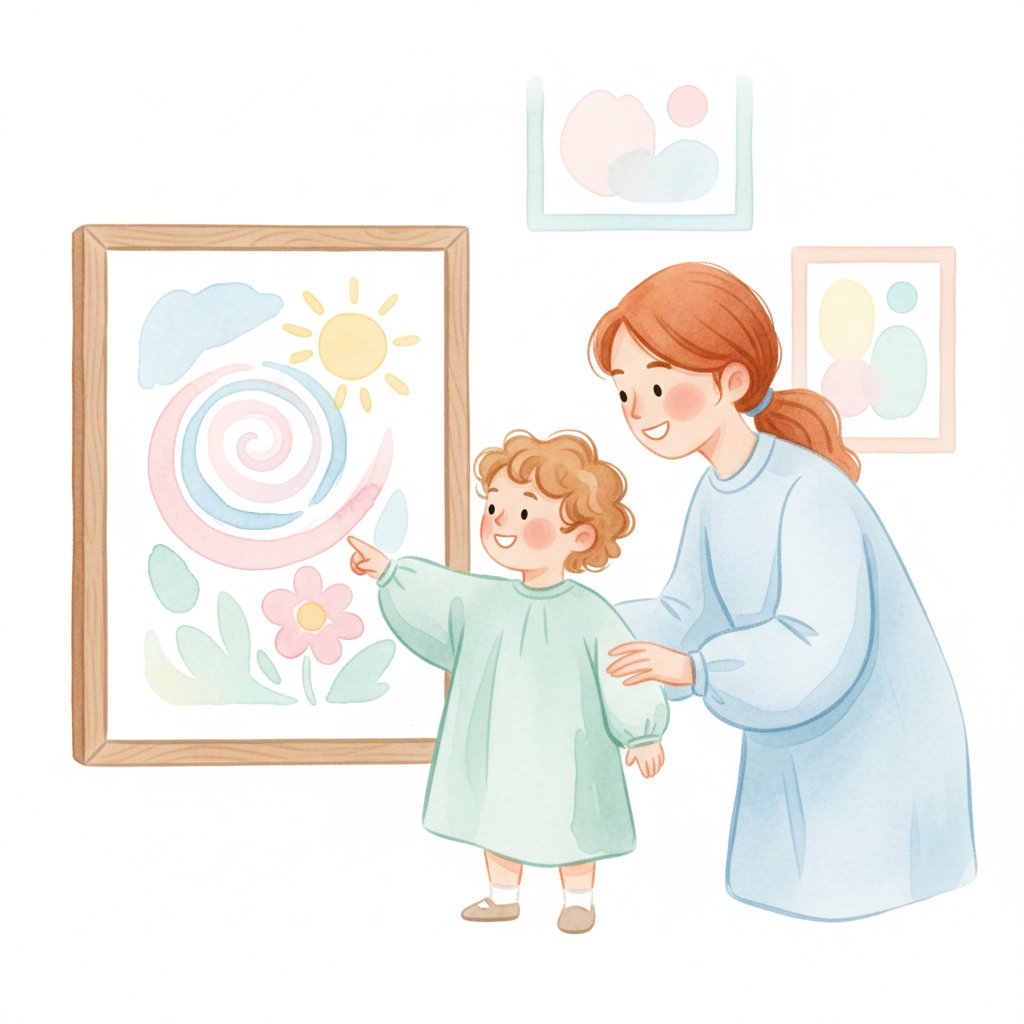
What to do: "Walk through the gallery SLOWLY. Stop at each piece. Look at it for 10 seconds before saying anything. Then share: what do you SEE? What do you WONDER about? What does it REMIND you of?" The gallery walk teaches observation and critique vocabulary. For more observation, see our photography guide.

7. Artist study
Materials: Books or prints of famous artists.

What to do: "Today we study [Monet]. Look at his water lilies. What COLORS does he use? What makes his painting SPECIAL? Now paint YOUR version of water lilies!" The artist study teaches art history and style imitation. For more art, see our art guide.

8. I spy in art
Materials: Large art prints.

What to do: "Look at this painting. I spy with my little eye... something RED. Can you find it? I spy something ROUND. I spy someone who looks SAD." The I-spy teaches visual scanning and detail observation. For more looking, see our scavenger guide.

9. Art matching
Materials: Pairs of art postcards.

What to do: "Mix the cards face down. Turn over two. Are they by the SAME artist? Are they the SAME style? Are they the SAME subject?" The art matching teaches visual memory and art categorization. For more memory, see our memory guide.

10. Feelings in art
Materials: Art prints showing different moods.

What to do: "Look at this painting. How does it make you FEEL? Happy? Calm? Excited? Worried? Artists use COLOR and LINES to create feelings." The feelings activity teaches emotional interpretation of art. For more feelings, see our feelings guide.

A museum of shape art
Our Shapes Flashcards become an exhibit theme: 'Today the museum shows SHAPE ART. The TRIANGLE section shows art made with triangles. The CIRCLE section is all circles. The RECTANGLE section shows rectangles in famous buildings and paintings.' Children create art using ONLY the shape on their assigned flashcard. A child with the triangle card makes a collage of triangles: a roof, a pizza slice, a mountain, a sail. The flashcard is the CONSTRAINT; the creativity is in how the child uses that shape. The resulting gallery is a SHAPE MUSEUM where every section celebrates a different geometric form. Twelve shapes, twelve exhibits, one geometry gallery.

Curation and Exhibit Activities (Ages 3-6)

11. Curator for a day
Materials: Collection of class artwork.

What to do: "You are the CURATOR. Choose 5 pieces from all the class artwork for a show called 'Our Best Work.' Why did you choose each one?" The curator role teaches selection and justification. For more choices, see our opinion guide.

12. Themed exhibit
Materials: Theme card, artwork.

What to do: "The theme is ANIMALS. Everyone makes one animal artwork. We hang them together in the animal exhibit. What will YOU create?" The themed exhibit teaches working within a theme. For more animals, see our animals guide.

13. Before and after exhibit
Materials: First and latest artwork.

What to do: "Display your FIRST painting of the year next to your LATEST painting. How have you GROWN as an artist? What can you do now that you could not do then?" The before-and-after teaches growth mindset and reflection. For more growth, see our growth mindset guide.

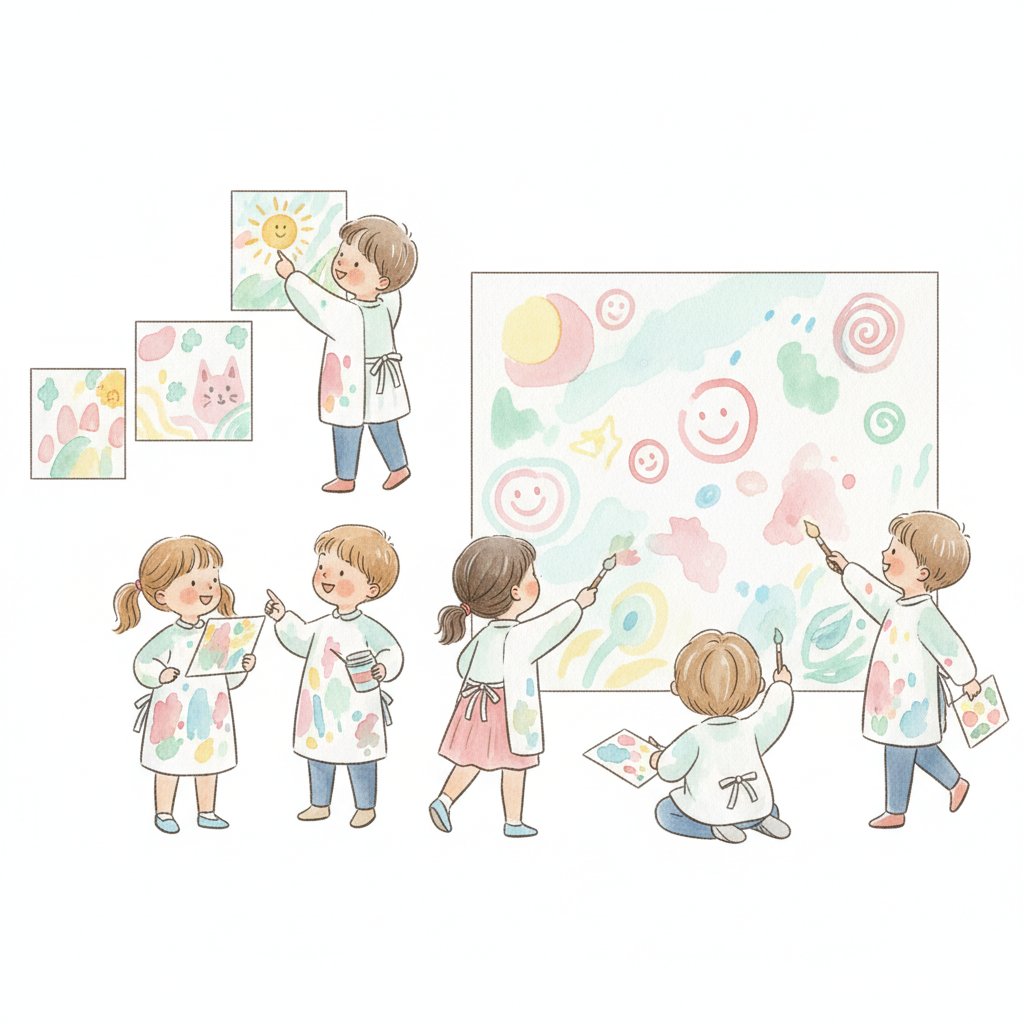
14. Collaborative mural
Materials: Large paper, paints.

What to do: "Everyone paints ONE SECTION of this giant mural. When we hang it on the wall, it becomes ONE BIG PICTURE made by MANY artists. That is how murals work!" The collaborative mural teaches teamwork and shared art-making. For more teamwork, see our social skills guide.

15. Art auction
Materials: Artwork, play money.

What to do: "Each artist presents their work. Then we AUCTION it: 'Who will pay 2 pennies for this beautiful sunset? 3 pennies? SOLD to Mia for 3 pennies!' The money goes to the class charity jar." The auction teaches presentation and value. For more money, see our money guide.

More Museum Activities (Ages 3-6)

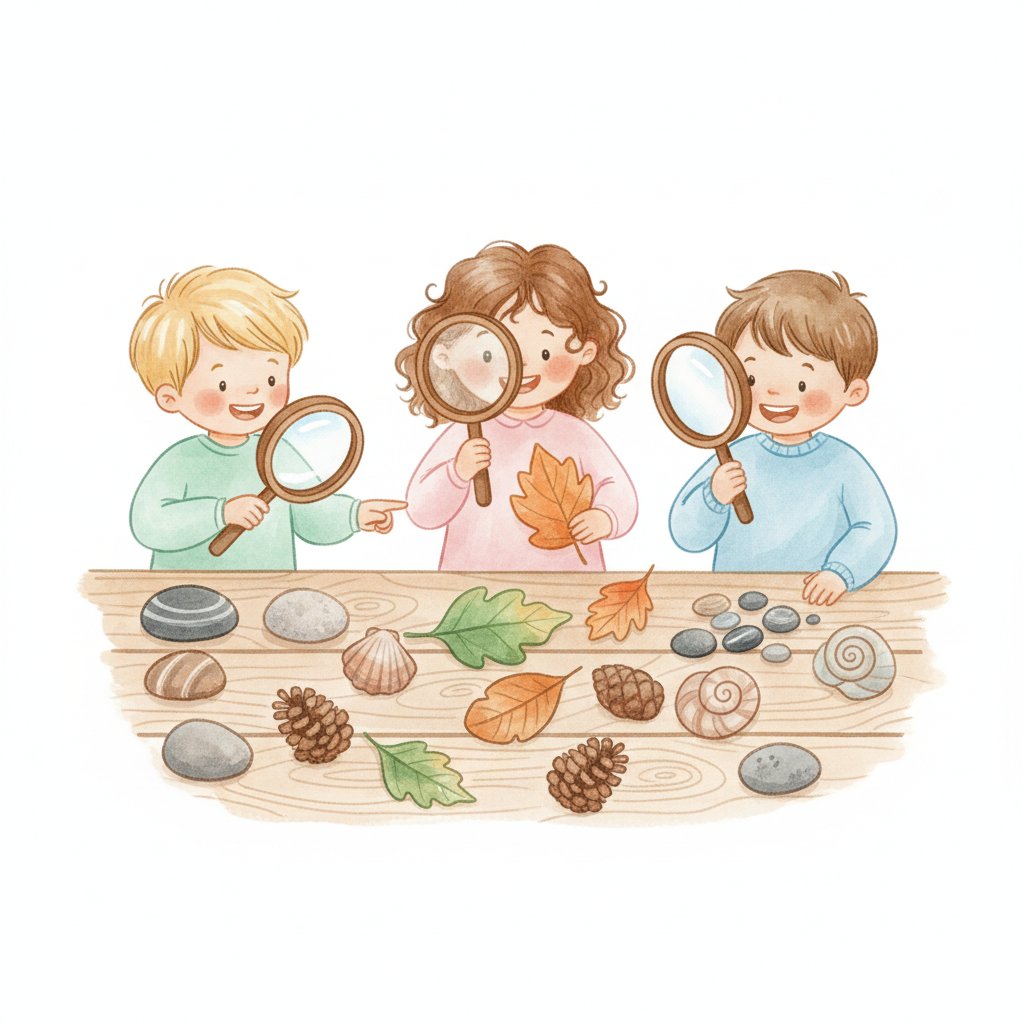
16. Natural history museum
Materials: Rocks, leaves, shells, pinecones, insect specimens.

What to do: "Set up a nature museum with collected items. Label each one: 'Oak Leaf — found on the playground.' Add magnifying glasses for close inspection." The nature museum teaches natural science display. For more nature, see our outdoor guide.

17. Science museum
Materials: Science experiments on display.

What to do: "Display the experiments we did this week with labels explaining what happened: 'Vinegar + Baking Soda=BUBBLES. The bubbles are GAS.'" The science museum teaches scientific communication. For more science, see our science guide.

18. Toy museum
Materials: Old and new toys.

What to do: "Bring a toy from home and a toy your PARENTS played with. Display them side by side. How are they DIFFERENT? How are they the SAME?" The toy museum teaches comparison and history. For more comparing, see our opposites guide.

19. Portrait gallery
Materials: Photos or drawings of each child.

What to do: "Draw a self-portrait. Hang all the portraits in a row. This is our CLASS PORTRAIT GALLERY. Can you find your friend by their portrait?" The portrait gallery teaches self-representation. For more identity, see our all about me guide.

20. Grand opening event
Materials: All of the above, invitations, refreshments.

What to do: "Send invitations to parents and other classes. Set up the gallery with all exhibits. Train docents to give tours. Serve refreshments. Welcome visitors to the GRAND OPENING of our museum!" The grand opening teaches event planning and celebration. For more events, see our birthday guide.

A gallery of weather art
Our Weather Flashcards become exhibit sections: 'The SUNNY section shows art about sunshine — yellow paintings, bright landscapes, shadow photography. The RAINY section shows rain art — blue watercolors, raindrop patterns, puddle reflections. The SNOWY section shows winter art — white on white, snowflakes, frost patterns.' Children create weather art and sort it into the correct section using the flashcards as category markers. The flashcard identifies the weather; the art interprets it. The resulting gallery is a YEAR of weather captured in paint, crayon, and paper. Visitors walk through seasons without leaving the room. Twelve weather cards, twelve exhibits, a meteorological art museum.
1.How do I set up a gallery in a classroom with limited wall space?
Wall space is not required: (1) STRING GALLERY — hang string across the room and clip artwork to it. (2) EASEL DISPLAY — set up easels at different heights. (3) BOOK DISPLAY — lay artwork open on tables like a museum catalog. (4) WINDOW GALLERY — tape artwork to windows (light comes through like stained glass!). (5) FLOOR GALLERY — lay artwork on the floor in a path and walk through it like a maze. The GALLERY is an idea, not a location. Any space becomes a museum when you display work with labels and invite visitors.
2.What if a child does not want their art displayed?
Respect their choice absolutely. Say: "It is YOUR art and YOU decide who sees it. Some artists keep their work private and that is OK." Offer alternatives: display it face-down with just the label showing, display it in a closed portfolio that visitors can ask to see, or let the child be the DOCENT who shows it only to people they choose. Consent over display teaches children that they OWN their creative work — a powerful lesson in agency and boundaries.
3.How do I teach art critique vocabulary to preschoolers?
Use three simple sentence starters: (1) "I NOTICE..." — factual observations: "I notice it has a lot of blue." (2) "I WONDER..." — questions: "I wonder what the red part is." (3) "It REMINDS ME of..." — connections: "It reminds me of the ocean." These three starters give children a vocabulary for talking about art without saying "I like it" or "It is pretty." Over time, add: "The artist used TEXTURE by..." "The COLORS make me feel..." "The SHAPES are..." Children as young as 4 can learn to talk about art like critics when given the right sentence starters.
4.How do museum activities connect to other subjects?
Museums are cross-curricular by nature: (1) LITERACY — writing labels, titles, and artist statements. (2) MATH — measuring display spacing, counting pieces, pricing items in the gift shop. (3) SCIENCE — natural history and science museum displays. (4) SOCIAL STUDIES — learning about artists from different cultures and time periods. (5) SPEAKING — docent tours and artist talks. A museum is not just an art activity — it is a LEARNING FRAMEWORK that organizes and celebrates everything children do.