Articles8 min read

The Song That Saved My Morning Circle

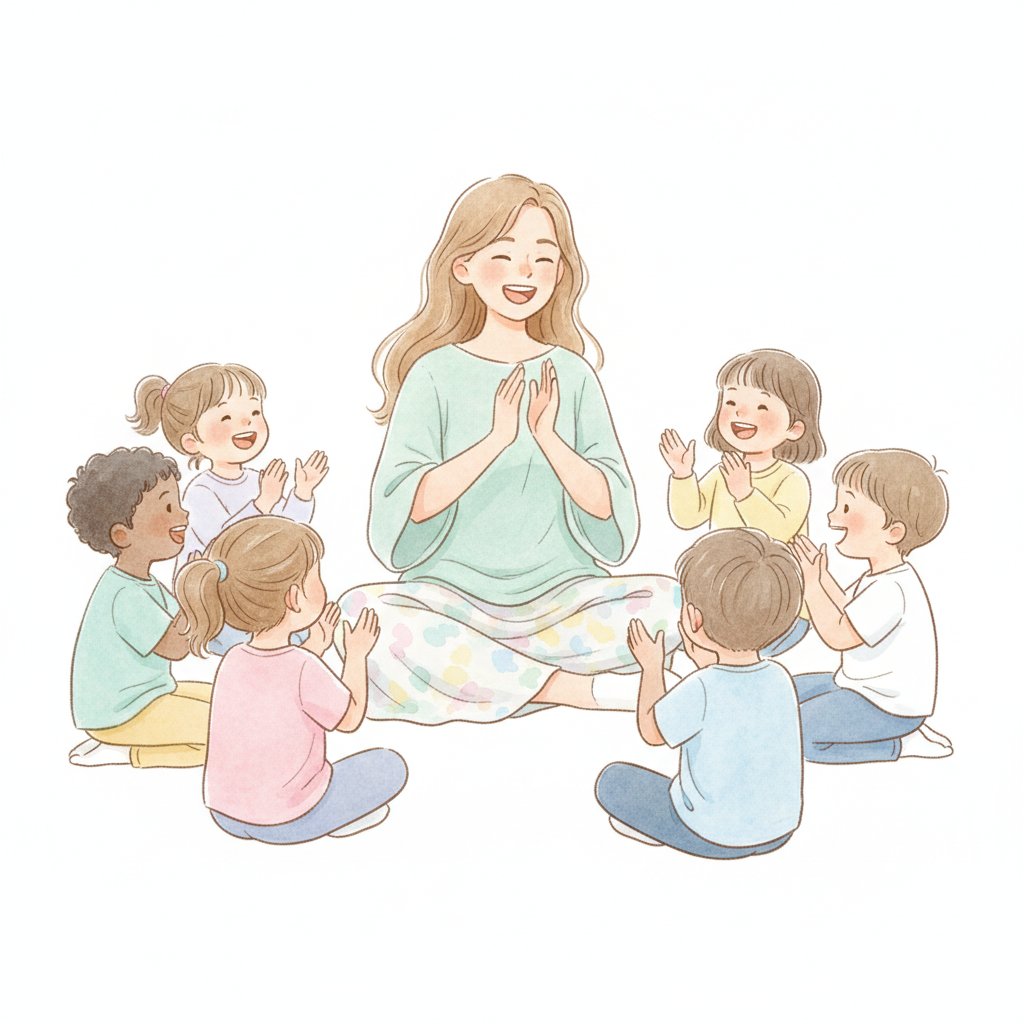
It was one of those mornings. Three kids crying, two fighting over a crayon, one hiding under the table. I had a lesson plan nobody was ready for. In desperation, I started singing: "If you're happy and you know it, clap your hands!" The criers looked up. The fighters paused. The hider crawled out. By the second verse, every child was singing along.

That moment taught me what researchers have documented for decades: music is one of the most powerful tools in early childhood. According to a study in the Journal of Applied Developmental Psychology, children who participated in regular music activities showed significantly stronger vocabulary development, phonological awareness, and social cooperation compared to children without music exposure.

This guide covers 18+ music activities for ages 3-6, from simple rhythm games to full-body movement songs, homemade instruments, and singing activities that build literacy. Pair it with our nursery rhyme activities for traditional song-based learning and our circle time activities for structuring music into your daily routine.
Why Music Builds Brains

The language connection: Music and language share neural pathways. When children learn to hear and reproduce rhythmic patterns, they're strengthening the same auditory processing skills used to hear and reproduce speech sounds. Children who can clap a steady beat at age 4 tend to read more fluently at age 7.

Five benefits of music activities:

BenefitHow Music HelpsEvidence
Language developmentLyrics teach vocabulary and sentence structureChildren who sing regularly have larger vocabularies
Phonological awarenessRhythm and rhyme train sound discriminationStrongest predictor of reading success
Social skillsGroup singing requires cooperation and turn-takingChildren in music groups show better peer relationships
Motor developmentInstrument play and movement songs build coordinationFine and gross motor skills improve with musical practice
Emotional regulationCalming songs reduce anxiety; energetic songs channel excitementMusic reduces cortisol levels in children

No musical training needed: You do not need to be a musician to do these activities. If you can clap, sing "Twinkle Twinkle," and make silly sounds, you have all the skills required. The children don't need a performer — they need a participant.

When to use music: Transition times (clean-up songs), circle time (greeting songs), waiting times (fingerplays), outdoor play (movement songs), and calming periods (lullabies). Music fills the cracks in a preschool day with learning.

Sing the alphabet with monster friends
Our Alphabet Monster Flashcards pair perfectly with alphabet songs: hold up each card as you sing the letter, and children connect the abstract song to a concrete visual. 'A is for Alligator Monster!' — letter, sound, character, song, all in one. Try singing the alphabet backwards for an extra challenge.

Rhythm Activities (Ages 3-6)

1. Echo clapping (ages 3-6)
The adult claps a pattern: clap-clap-PAUSE-clap. Children echo it back. Start with 2-3 beats and increase complexity. This builds auditory memory, attention, and the ability to reproduce patterns — the same skill used when copying letters or repeating sentences.

2. Body percussion orchestra (ages 3-6)
Assign each child a body sound: one claps, one stomps, one pats their knees, one snaps (or clicks tongue for younger children). The conductor (adult) points to each group in rhythm. This teaches listening, waiting your turn, and ensemble cooperation.

3. Steady beat walk (ages 3-5)
Play music with a clear, steady beat. Children walk in time to the music. When the music stops, they freeze. This simplest of activities builds beat awareness, impulse control, and whole-body coordination. Try different tempos — slow walking music, then fast marching music.

4. Rhythm instruments parade (ages 3-5)
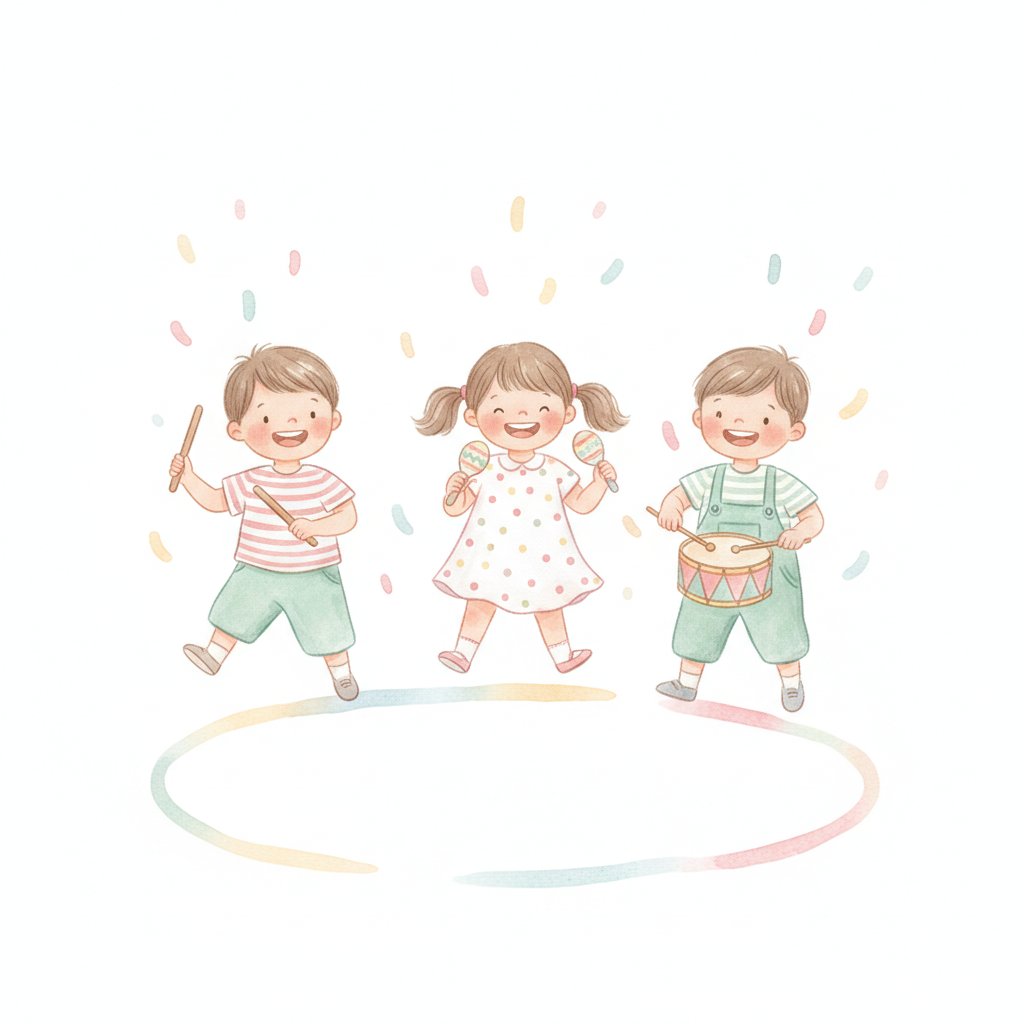
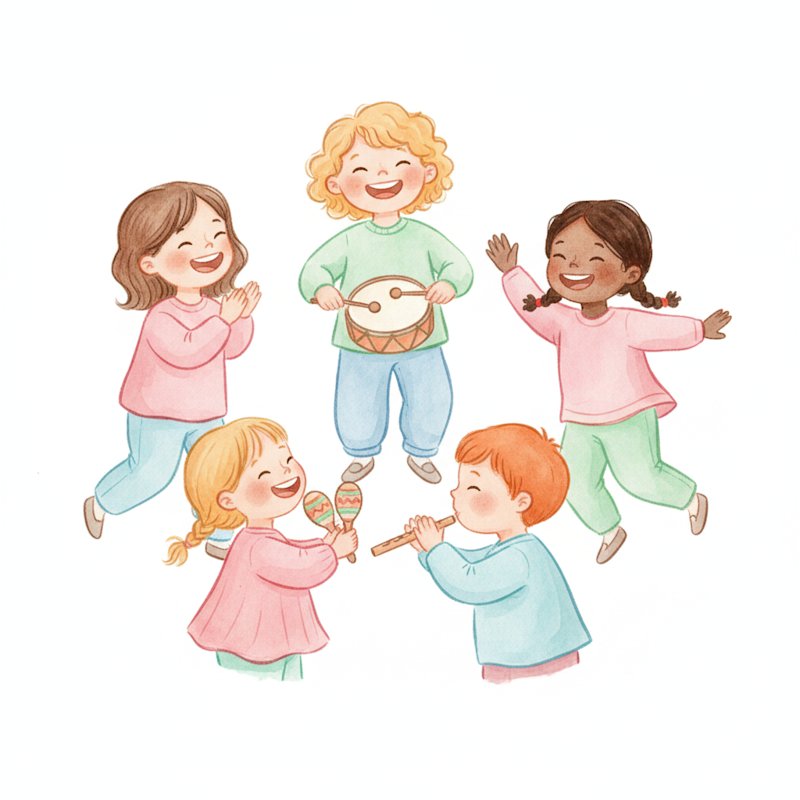
Give children rhythm sticks, shakers, drums (or homemade versions — see below). March around the room together, playing in time. The collective rhythm is the goal — if everyone plays together, the sound is powerful. This is ensemble music-making at its most basic.

5. Sound pattern guessing (ages 4-6)
The adult creates a pattern with classroom sounds: tap-tap-ring-tap-tap-ring (tapping the table twice, then a bell). Children listen and try to reproduce it. Advanced version: children create their own patterns for others to copy.

Singing Activities (Ages 3-6)

6. Fill-in-the-blank singing (ages 3-5)
Sing a familiar song but leave out the last word of each line: "Twinkle twinkle little..." (children shout "STAR!"). This builds active listening, word retrieval, and the satisfaction of completing a pattern. Works with any familiar song.

7. Substitute lyrics (ages 4-6)
Take "Old MacDonald" and change the focus: "Old MacDonald had a classroom, E-I-E-I-O. And in that classroom he had some CRAYONS, E-I-E-I-O. With color-color here and color-color there." Children love inventing new verses, and the word substitution builds vocabulary and phonological flexibility.

8. Name that tune (ages 4-6)
Hum or play the first few notes of a familiar classroom song. Children guess which song it is. This develops auditory discrimination and musical memory. Start with 5 notes, then decrease to 3, then 2. Children who can identify a song from 2 notes have exceptional auditory discrimination.

9. Passing song (ages 4-6)
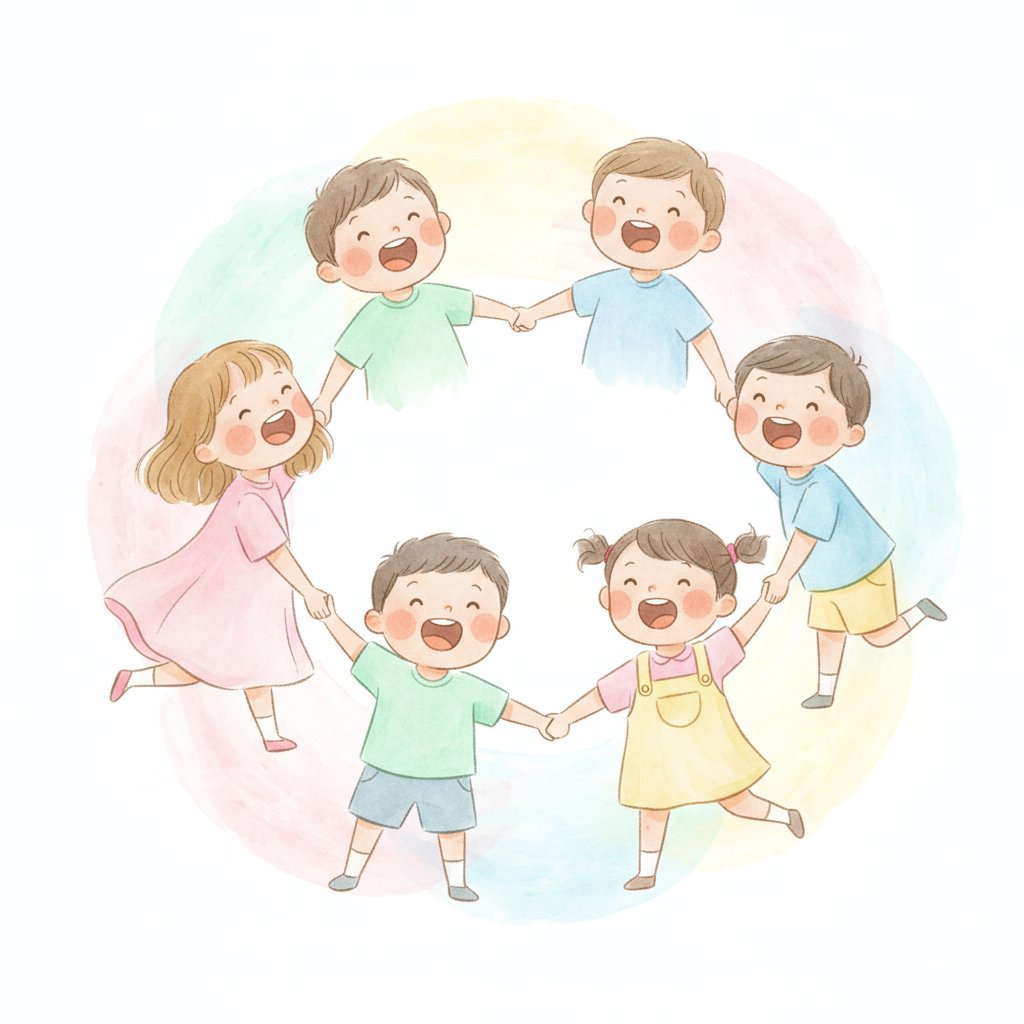
Sit in a circle. Pass a beanbag or stuffed animal while singing. When the song stops, whoever has the object says their name or answers a question. This builds turn-taking, self-regulation (you can't hold it forever), and social connection. For more circle games, see our circle time guide.

10. Telephone song (ages 5-6)
Whisper a short melody (3-4 notes hummed) to the first child. They pass it to the next. By the end of the circle, has the melody survived? This game teaches careful listening and reproduction — and the inevitable distortions are hilarious.

Songs about feelings help children name emotions
Our Emotions Monster Feelings Flashcards pair with feelings songs: 'If you're HAPPY and you know it, show me happy!' Children hold up the matching monster card. Song + visual=emotional vocabulary in action. Eight emotions, eight verses, zero prep.

Homemade Instrument Activities (Ages 3-6)

11. Shaker bottles (ages 3-5)
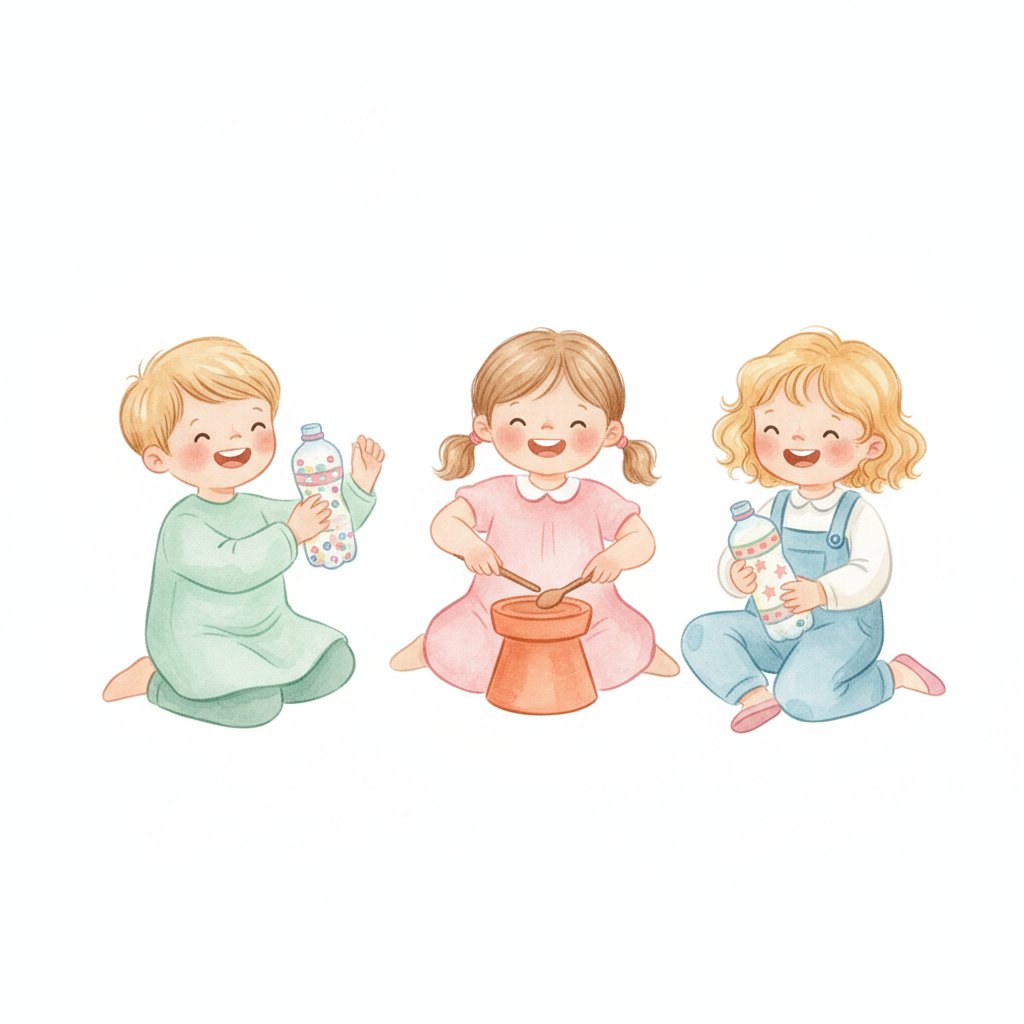
Fill plastic bottles with different materials: rice, dried beans, small pebbles, sand, paper clips (sealed tightly!). Each produces a different sound. Children compare: "Which is loudest? Which is softest? Which sounds like rain?" This is science (sound production), music (timbre), and vocabulary all in one.

12. Drum kit from pans (ages 3-6)
Turn over pots, pans, and plastic containers. Wooden spoons are drumsticks. Different sizes produce different pitches. Children naturally explore: "The big pot makes a low sound. The small bowl makes a high sound." That's physics education disguised as noise.

13. Rubber band guitar (ages 4-6)
Stretch rubber bands of different thicknesses around an open box (shoe box with a hole cut in the lid). Thicker bands produce lower pitches. Children pluck and compare. This introduces the concept that sound is vibration — a fundamental science concept.

14. Water glass xylophone (ages 4-6)
Fill 5-8 glasses with different amounts of water. Tap each with a spoon. More water=lower pitch. Less water=higher pitch. Children can arrange the glasses from low to high and play simple melodies. Adult supervision required (glass), or use plastic cups.

15. Paper plate tambourines (ages 3-5)
Staple two paper plates together with dried beans inside. Decorate the outside with markers, stickers, or paint. Shake to play. This is a craft activity and instrument-making in one — the creative process is as valuable as the musical result.

Movement & Music Activities (Ages 3-6)

16. Freeze dance with feelings (ages 3-6)
Play music. Children dance. When the music stops, call out a feeling: "Freeze like you're SURPRISED!" or "Freeze like you're ANGRY!" Children hold a pose expressing that emotion. This combines physical movement with emotional literacy — a dual benefit. For more movement ideas, see our gross motor activities guide.

17. Animal movement song (ages 3-5)
Sing: "Can you hop like a bunny? Hop hop hop! Can you fly like a bird? Fly fly fly!" Children move like each animal. Fast animals get fast music, slow animals get slow music. This teaches tempo, animal vocabulary, and whole-body coordination.

18. Scarf dancing (ages 3-6)
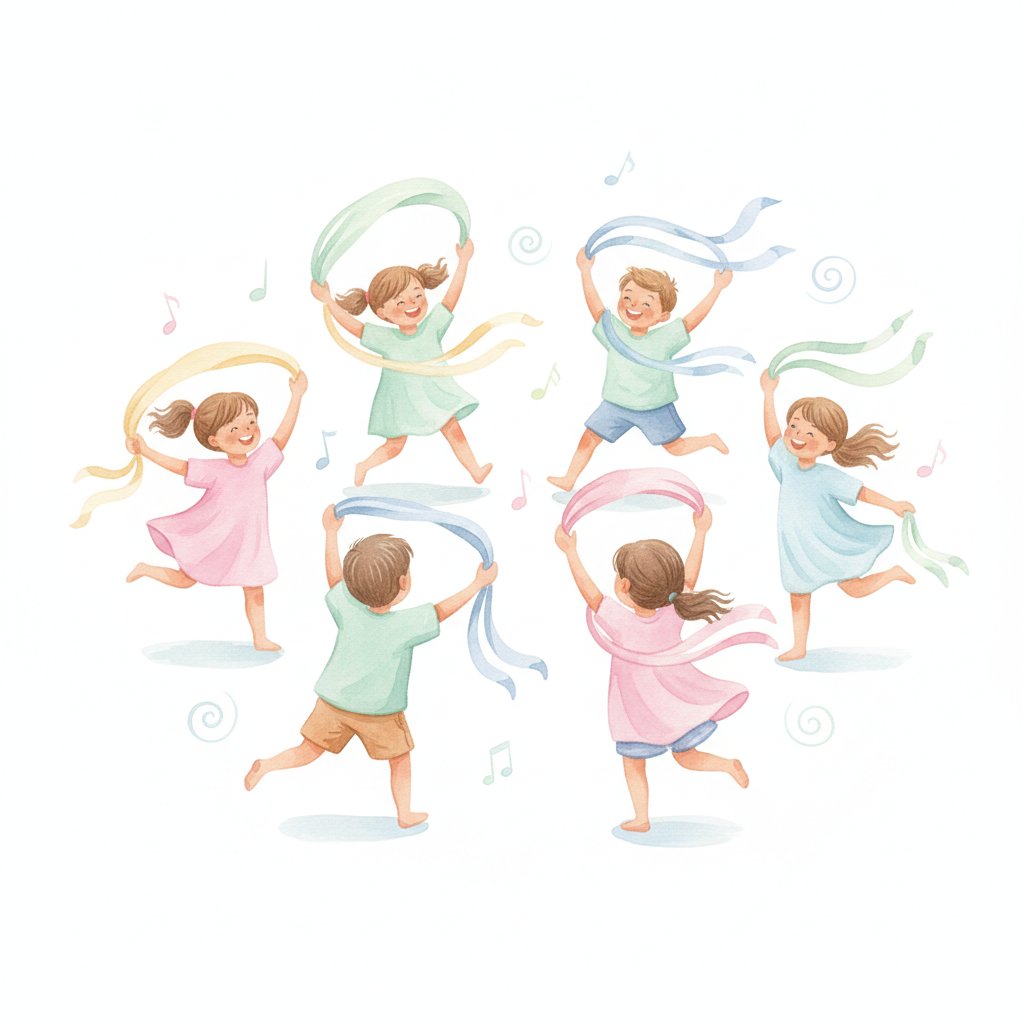
Give each child a lightweight scarf or ribbon. Play different types of music (classical, jazz, pop, world music) and children move their scarves to match. Slow music=slow, flowing movements. Fast music=quick, energetic movements. This builds creative expression, tempo awareness, and upper-body coordination.

19. Conduct the music (ages 4-6)
One child is the conductor. They control the group's volume (hands high=loud, hands low=quiet) and tempo (fast waving=fast, slow waving=slow). The conductor leads, the group follows. This teaches leadership, ensemble awareness, and the musical concepts of dynamics and tempo.

20. Musical storytelling (ages 4-6)
Tell a simple story and add sound effects. "The quiet mouse (tip-toe sounds) walked through the forest (wind sounds) and heard a loud ROAR (everybody roars)!" Children create sound effects with voices, bodies, or instruments. This builds narrative comprehension, creative expression, and cooperative listening.

Weather songs with visual vocabulary support
Our Weather Flashcards turn weather songs into literacy activities: sing 'Rain, Rain, Go Away' while holding the rain card, or 'Mr. Sun' with the sunny card. Children see the word, hear it in song, and connect the concept. Eight weather words, dozens of songs.

Tips for Music Activities with Preschoolers

You don't need a good voice. Children respond to enthusiasm, not pitch accuracy. If you sing with joy and energy, children will join you. The worst thing you can do is skip music because you're "not musical." Every adult is musical enough for preschool.

Repeat favorite songs. Children learn through repetition. If they request "Baby Shark" for the 47th time, they're not being annoying — they're consolidating learning. Each repetition strengthens neural pathways. Established favorites are the best foundation for introducing new songs.

Use music for transitions. A clean-up song transforms a power struggle into a game. A lining-up song turns chaos into order. A hand-washing song ensures 20 seconds of scrubbing. Music is a classroom management tool as much as a learning activity.

Watch for sensory sensitivities. Some children (particularly those with autism or sensory processing differences) may be overwhelmed by loud sounds. Offer noise-reducing headphones, instrument-free participation options, or quieter alternatives. Music should be joyful, not painful.

Connect music to themes. Learning about farms? Sing "Old MacDonald" with our farm animal activities. Learning about emotions? Sing "If You're Happy and You Know It." Music reinforces whatever you're teaching when you choose thematically connected songs.

1.How much music time should preschoolers have daily?
Aim for at least 15-20 minutes of structured music activities daily, plus background music during free play, transitions, and rest time. The structured time can be split across the day: a greeting song at circle time (5 min), a movement song mid-morning (5 min), and a calming song before nap (5 min). Total daily music exposure (including informal) of 30-60 minutes is ideal.
2.What if I'm not a good singer?
You do not need to be a good singer. Children respond to your energy and participation, not your pitch accuracy. If you're uncomfortable singing alone, use recordings and sing along. Children learn that music is for everyone when they see adults participating without self-judgment.
3.Should I use recorded music or sing live?
Both have value. Live singing is more interactive — you can adjust tempo, pause, add verses, and respond to children in real time. Recordings expose children to diverse instruments, styles, and cultures. A healthy mix: live singing for familiar songs and interactive activities, recordings for exposure to diverse musical genres.
4.Are music apps helpful for preschoolers?
Some music apps designed for young children offer valuable ear-training and rhythm activities. However, the hands-on, full-body music experiences described in this guide develop more skills simultaneously (motor, social, auditory, language). Use apps as a supplement, not a replacement, for active music-making.