Articles6 min read

The Freeze Dance That Taught Self-Control

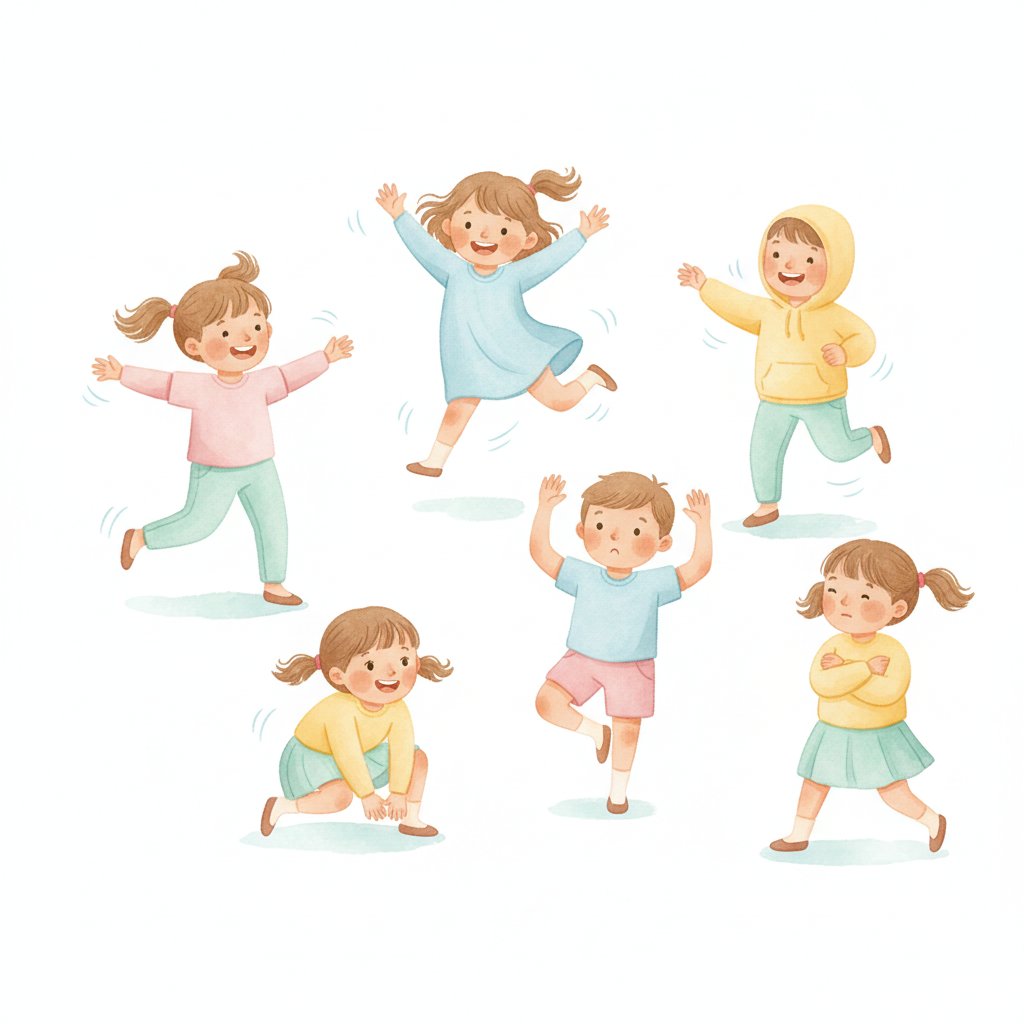
I put on music and told the class: "Dance while the music plays. FREEZE when it stops." Simple enough. But what happened next surprised me. Children who couldn't sit still for 30 seconds at circle time held a frozen pose for 10 seconds. Children who grabbed toys from peers stood perfectly still, respecting the rule. The music gave them a STRUCTURE for self-control — it wasn't about sitting still (boring), it was about FREEZING (fun). When the music started again, they exploded into movement with even more joy because they'd been holding it in. I realized that music and movement aren't just fun — they're a developmental powerhouse that teaches self-regulation, coordination, listening, and creative expression all at once.

According to the National Association for Music Education, early music experiences develop neural pathways for language, math, and social-emotional skills. Children who participate in regular music and movement activities show stronger phonological awareness, better spatial-temporal reasoning, and improved social cooperation compared to peers without music instruction.
This guide covers 20+ music and movement activities for ages 3-6. Pair it with our music activities guide for instrument-making and our gross motor guide for physical activities.
Rhythm and Beat Activities (Ages 3-6)

1. Clap my pattern
What to do: "Listen to my pattern: clap-clap-PAUSE-clap. Now YOU do it!" Start with simple patterns and increase complexity: "clap-clap-stomp, clap-clap-stomp." The echo teaches active listening and pattern reproduction. For more patterns, see our pattern guide.

Why it works: Rhythm is pattern in time. When children echo a rhythm, they practice the same sequencing skill they use in counting, reading, and writing — but through their bodies. The physical experience of pattern creates a deeper understanding than abstract practice alone.

2. Body percussion orchestra
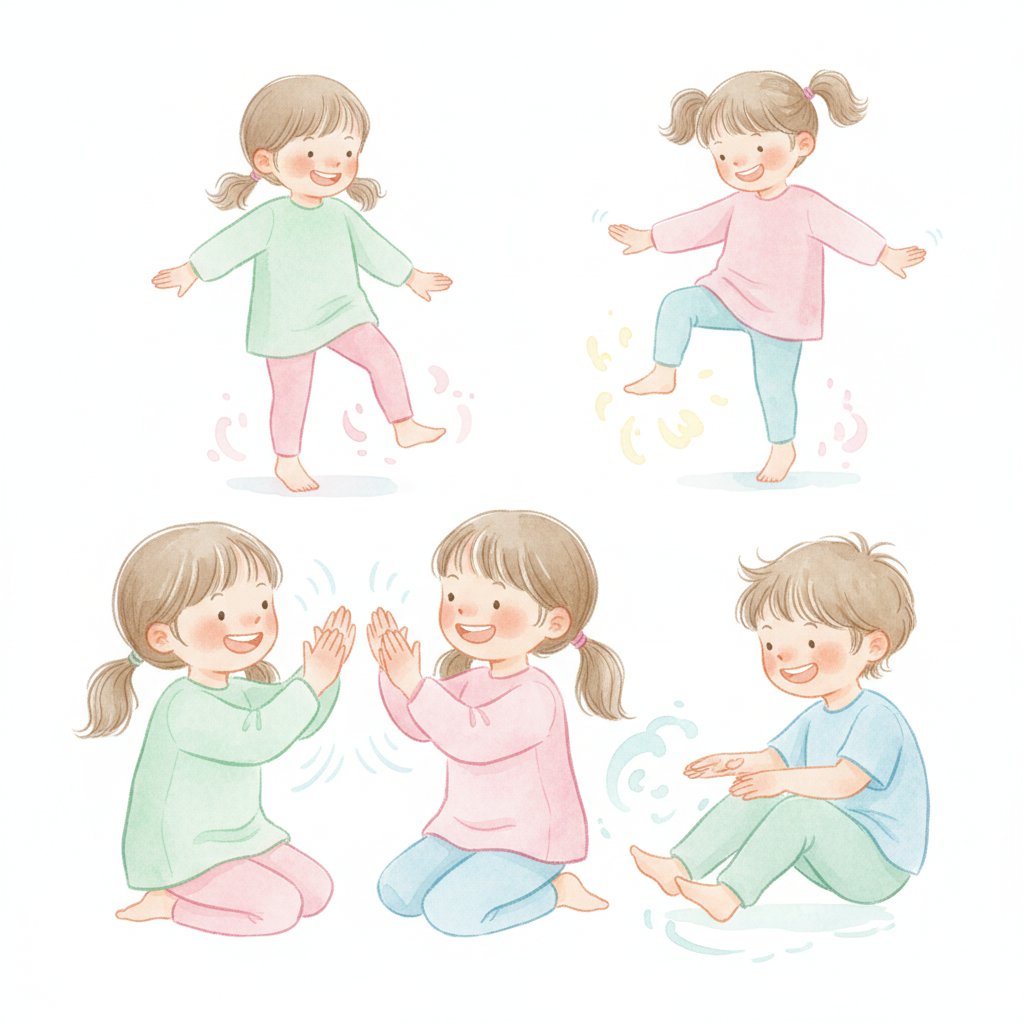
What to do: "Make music with your BODY! Clap your hands. Pat your knees. Stomp your feet. Snap your fingers. Click your tongue." Create a body percussion sequence: "Clap, pat, stomp, clap, pat, stomp!" Each child becomes an instrument. For more body activities, see our body parts guide.

3. Rhythm instrument parade
Materials: Shakers, drums, bells, rhythm sticks.

What to do: "March around the room! Shakers go shake-shake-shake! Drums go boom-boom-boom! Bells go jingle-jingle!" Switch instruments every verse. The parade teaches that different instruments make different sounds — just like different voices make different words. For more instrument making, see our music guide.

4. Fast and slow
Materials: Music player with varying tempos.

What to do: "Move FAST when the music is fast! Move SLOW when the music is slow!" Children adjust their body speed to the music. "How does your body feel when the music is slow? Calm. How about fast? Excited!" The activity teaches tempo awareness and connects music to body feelings.

5. Loud and soft
What to do: "Play LOUD like a thunderstorm! Now play SOFT like a whisper!" Children explore dynamics: "The loud music makes me want to JUMP! The soft music makes me want to TIP-TOE!" The exploration teaches dynamics and self-regulation.

A-B-C-D-E-F-G: every letter has a song
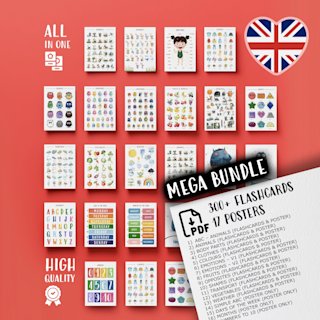
Our Alphabet Monster Flashcards become musical notes: 'Each letter makes a SOUND and each sound can become a SONG! A says ah-ah-ah like a marching song. B says buh-buh-buh like a bouncing beat. C says cuh-cuh-cuh like a clapping rhythm!' Hold up a card and children make the letter sound in rhythm. The flashcards turn phonics into percussion. Letter sounds become beats, words become songs, and reading becomes music. Every letter is a note waiting to be played.

Dance and Creative Movement (Ages 3-6)

6. Freeze dance
Materials: Music player.

What to do: "Dance while the music plays! FREEZE when it stops!" Add variations: "Freeze like a statue! Freeze like an animal! Freeze on one foot!" The game teaches impulse control through joyful movement. For more self-regulation, see our self-regulation guide.

7. Animal movement dance
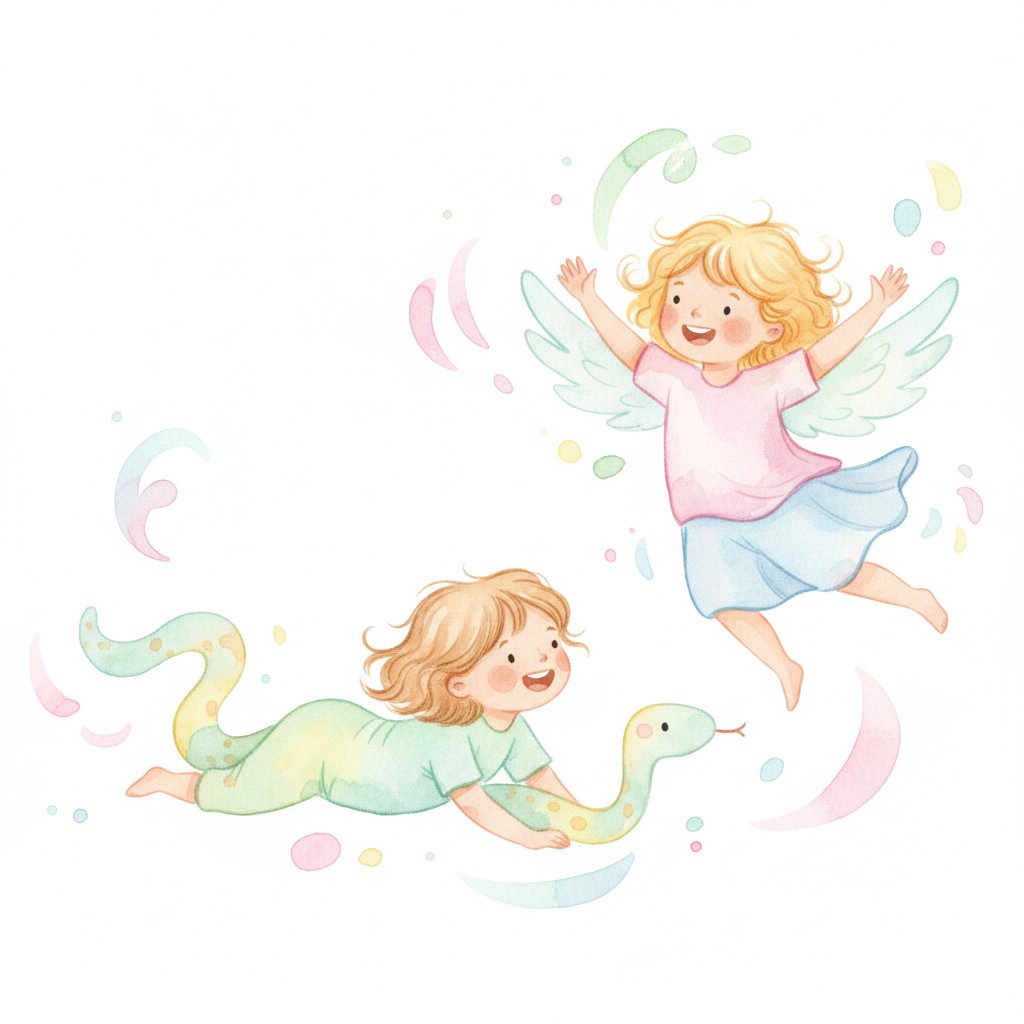
What to do: "Move like a SNAKE — slither on the floor! Move like a BIRD — flap your wings! Move like a KANGAROO — jump high! Move like a CAT — prowl slowly!" The dance teaches creative movement and animal knowledge. For more animals, see our pets and animals guide.

8. Scarf dance
Materials: Colorful scarves or fabric squares.

What to do: "Wave your scarf HIGH. Wave it LOW. Make it SPIN. Make it FLOAT." Children explore movement with the scarf as an extension of their body. "Throw it up and catch it! Make it dance like a butterfly!" For more creative play, see our imagination guide.

9. Mirror dancing
What to do: Pair children. One leads, the other mirrors: "Copy everything your partner does!" After a minute, switch. "Now YOU lead!" The mirroring teaches observation, coordination, and cooperation. For more cooperative activities, see our group games guide.

10. Story dance
What to do: Tell a story through movement: "Once upon a time, a tiny seed was planted in the ground (curl up small). The rain came (pat the floor). The sun came out (stretch arms up). The seed grew into a flower (stand up tall and open arms). The wind blew (sway side to side). The petals fell (flutter down to the ground)." The story-dance connects narrative to movement. For more storytelling, see our storytelling guide.

Every feeling has a soundtrack
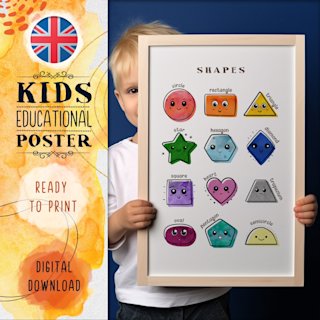
Our Emotions Monster Feelings Flashcards become movement prompts: 'Pick a monster card! The ANGRY monster — stomp your feet hard! The HAPPY monster — spin around with a smile! The SCARED monster — tip-toe and shiver! The EXCITED monster — jump as high as you can!' Children explore how emotions FEEL in their bodies through movement. The flashcards give them a feeling, and their bodies create the expression. 12 emotions, 12 dances, 12 ways to feel music in your bones.

Action Songs and Circle Games (Ages 3-6)

11. Head, Shoulders, Knees, and Toes
What to do: "Touch your HEAD, Shoulders, Knees, and Toes, Knees and Toes!" Speed up each round: "FASTER!" Then slow down: "SLOWER!" Then whisper: "Can you do it without making a sound?" The classic teaches body parts, following directions, and self-control through acceleration and deceleration.

12. The Hokey Pokey
What to do: "You put your RIGHT hand in, you put your RIGHT hand out." The song teaches left/right, body parts, and following directions. For more direction-following, see our following directions guide.

13. Ring Around the Rosie
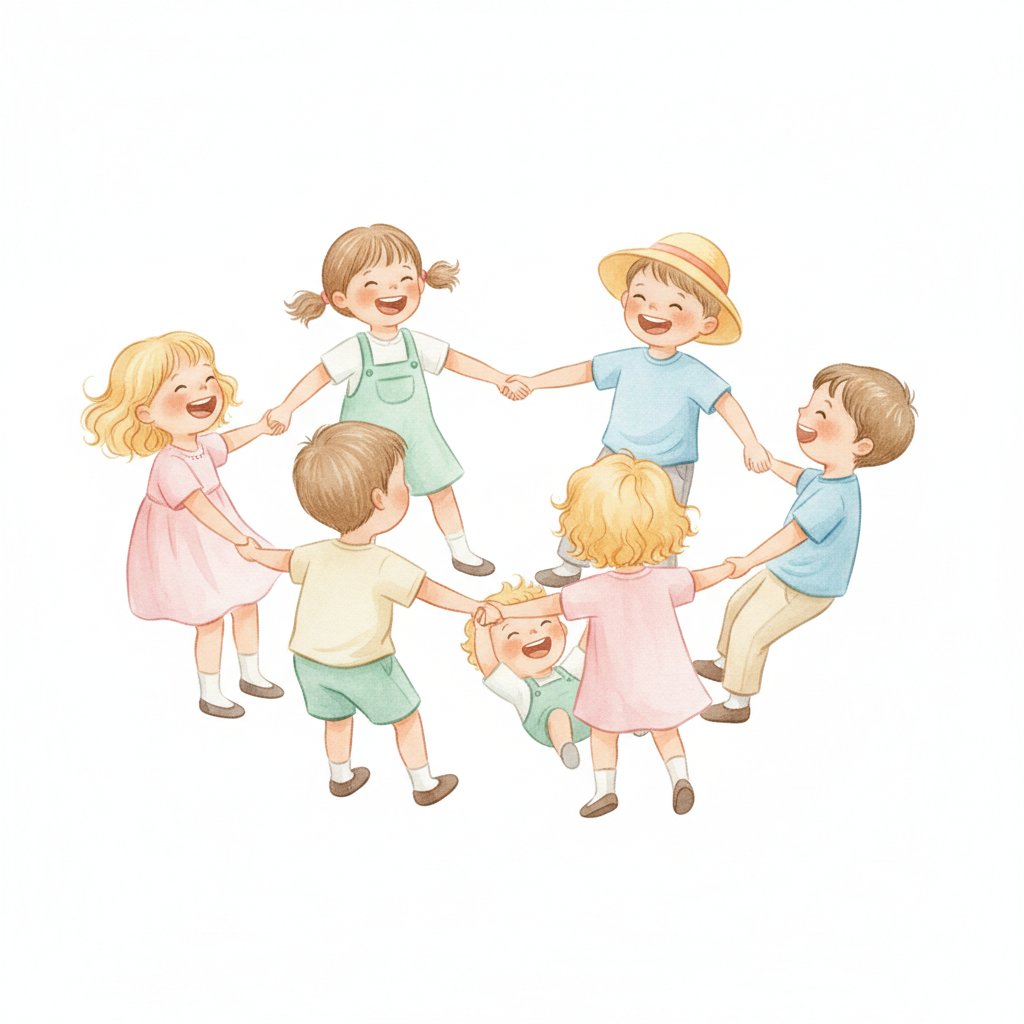
What to do: "Ring around the rosie, a pocket full of posies, ashes ashes, we all FALL DOWN!" The circle game teaches group coordination, social timing, and the joy of falling down together. For more group play, see our group games guide.

14. Musical chairs (cooperative version)
Materials: Chairs or carpet squares.

What to do: "When the music stops, find a spot! Each round we remove one spot — but NO ONE is out! You have to SHARE spots!" Children squeeze together: "3 people on 2 chairs! You figured it out!" The cooperative version teaches sharing and problem-solving instead of elimination.

15. Follow the leader musical
What to do: "Follow the leader! Do whatever I do: jump, spin, tiptoe, march, wiggle!" Add music that matches the movement: marching music for marching, soft music for tiptoeing. The game teaches imitation and movement vocabulary. For more following activities, see our following directions guide.

Music Learning Extensions (Ages 3-6)

16. Sound scavenger hunt
What to do: "Find something that makes a HIGH sound! Find something that makes a LOW sound! Find something that SHAKES! Find something that RINGS!" Children explore the environment for sounds. The hunt teaches listening and sound categorization. For more listening, see our listening guide.

17. Musical patterns
Materials: Two types of instrument or sound.

What to do: "Shake-stomp-shake-stomp. What comes next? SHAKE! Bell-clap-bell-clap. What comes next? BELL!" The musical patterning teaches math through sound sequences. For more patterns, see our pattern guide.

18. Draw the music
Materials: Paper, crayons, music player.

What to do: "Listen to this music and draw what it sounds like." Play different styles: classical (smooth curves), drum beats (sharp marks), lullaby (soft swirls). The drawing teaches that music has visual qualities. For more art, see our art guide.

19. Counting songs
What to do: "Five little monkeys jumping on the bed! One fell off and bumped his head. How many are left? FOUR!" Use songs for counting down: 5, 4, 3, 2, 1, 0. For more counting, see our number guide.

20. Conducting game
Materials: Stick (baton).

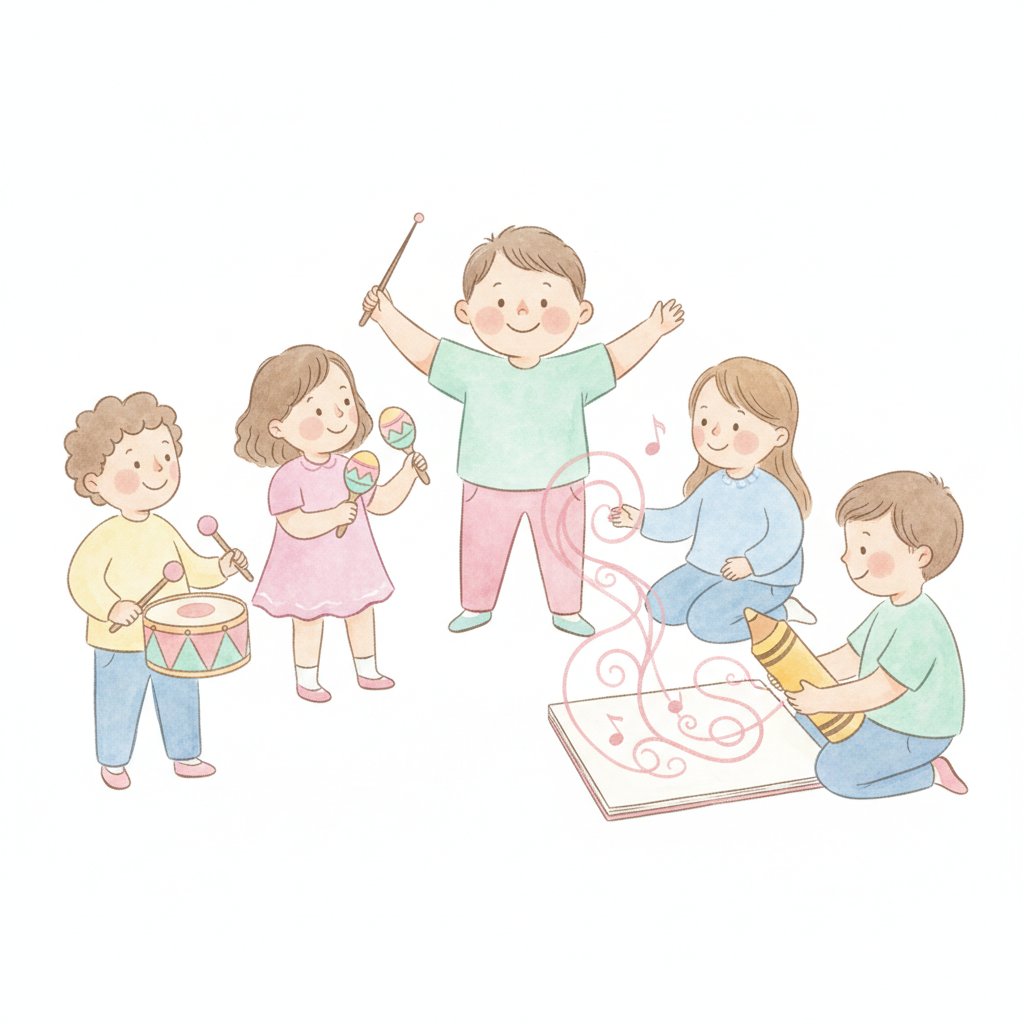
What to do: "I'm the conductor! When I raise my hands HIGH, sing LOUD! When I lower them, sing SOFT! When I move FAST, clap FAST! When I stop, everyone STOPS!" Let children take turns conducting. The game teaches leadership, dynamics, and ensemble awareness.

Every day has a rhythm
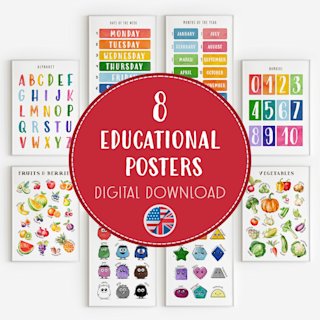
Our Days of the Week Poster becomes a musical calendar: 'Monday is a MARCHING day — stomp-stomp-stomp! Tuesday is a TWIRLING day — spin-spin-spin! Wednesday is a WHISPER day — shhh-shhh-shhh! Thursday is a TIP-TOE day — creep-creep-creep! Friday is a FREEZE DANCE day!' Children learn the days of the week by assigning each day a movement and a rhythm. The poster makes the abstract sequence of days into a physical, musical experience. 7 days, 7 dances, 7 chances to learn through movement.
1.I'm not musical. Can I still do music and movement activities?
Absolutely. You don't need to sing well or play an instrument. Put on recorded music and move with the children. Use a phone or speaker. The key is PARTICIPATION, not performance. Children don't care if you're off-key — they care that you're doing it WITH them. Your enthusiasm matters more than your talent.
2.How long should music and movement sessions be?
For ages 3-4: 10-15 minutes maximum. For ages 5-6: 15-20 minutes. End while they're still having fun — always leave them wanting more. Better to do 10 joyful minutes than 30 minutes where the last 10 are chaos. Short, frequent sessions are more effective than long, rare ones.
3.What if a child refuses to participate in movement activities?
Let them watch. Some children need to observe before they feel safe to join. "You can watch today and join when you're ready." Often, the music pulls them in eventually — a toe starts tapping, a hand starts clapping. Never force participation. Watching IS participation at the observational level.
4.How do I connect music activities to other learning areas?
Math: count beats, create patterns, explore fast/slow. Literacy: sing letter sounds, make up songs about stories. Science: explore sound waves with drums, high/low pitches. Social studies: music from different cultures. Art: draw to music. Music is a thread that runs through every subject.