Articles7 min read

The Tasting Party That Changed Snack Time

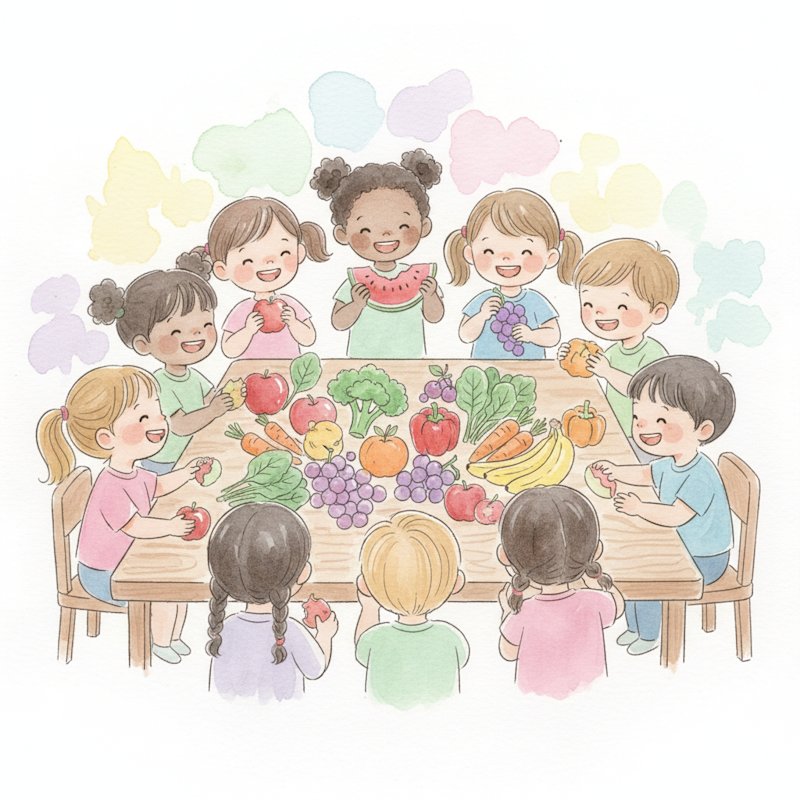
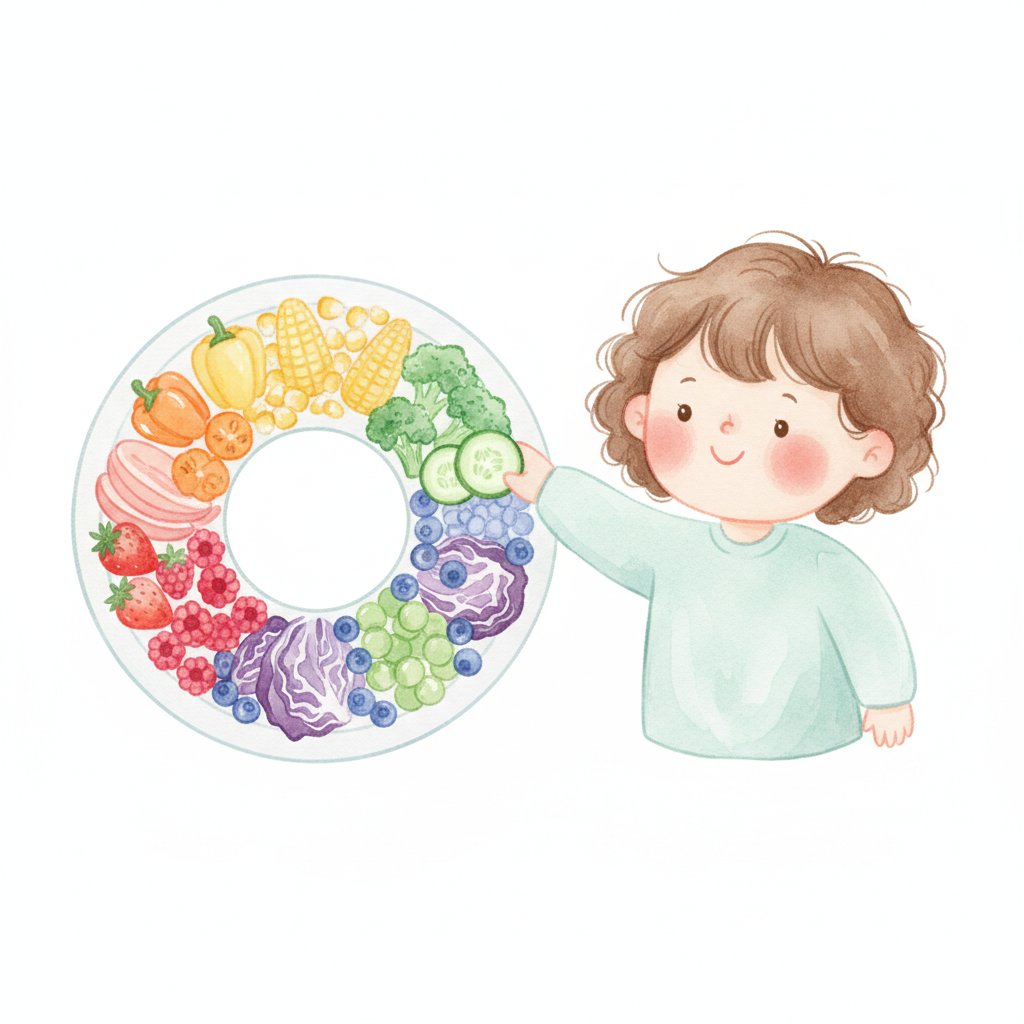
I set up a "rainbow tasting party" with fruits and vegetables in every color: red strawberries, orange carrots, yellow bananas, green cucumbers, blue blueberries, and purple grapes. "Can you eat a rainbow?" Most children tried everything. A few refused. One child who had never eaten a vegetable in her life ate three cucumber slices — because she wanted to "complete her rainbow." The next week, her mother told me she asked for cucumbers at the grocery store. Not because I lectured about vitamins, but because RAINBOWS are fun and cucumbers were GREEN.

According to the Academy of Nutrition and Dietetics, repeated exposure to new foods in a positive, no-pressure environment is the single most effective strategy for developing healthy eating habits in young children. It takes 10-15 exposures before a child accepts a new food. Nutrition education at this age isn't about telling children what NOT to eat — it's about making healthy food FUN, ACCESSIBLE, and NORMAL.
This guide covers 20+ nutrition activities for ages 3-6. Pair it with our cooking guide for kitchen activities and our health and hygiene guide for overall health.
Food Group Activities (Ages 3-6)

1. Food group sorting
Materials: Food pictures or play food, five category mats labeled: Fruits, Vegetables, Grains, Protein, Dairy.

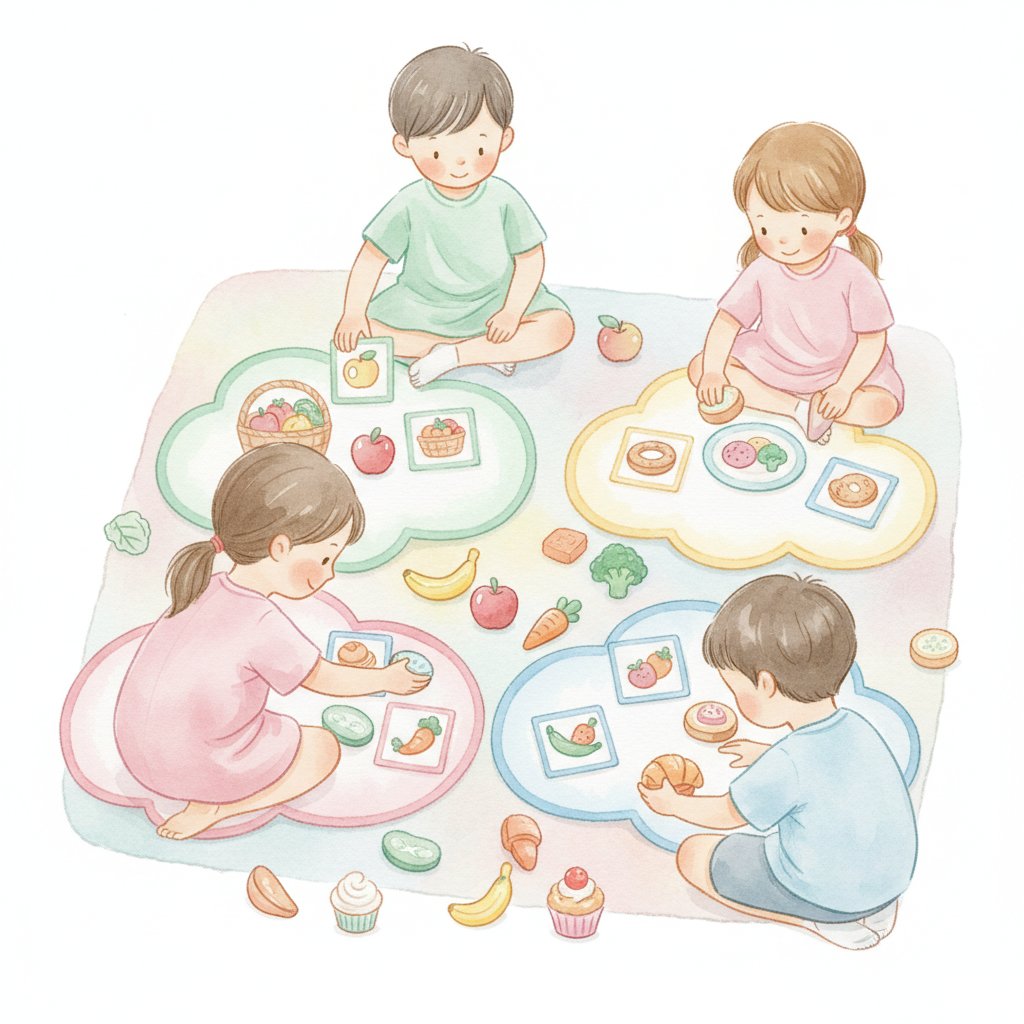
What to do: "Sort the foods into their groups! Apples are FRUIT. Chicken is PROTEIN. Bread is GRAINS. Milk is DAIRY. Broccoli is VEGETABLE." The sorting teaches the five food groups and classification. For more sorting, see our sorting guide.

Why it works: Children learn categories before they learn nutrition. "Fruit" is a category long before "vitamin C" is a concept. The sorting builds the mental framework that makes nutrition education possible later. You can't teach a child to "eat a balanced diet" until they know what the parts of that diet are.

2. Build a healthy plate
Materials: Paper plate, food pictures, glue.

What to do: "A healthy plate has foods from every group! Choose one food from each group and glue it on your plate: a fruit, a vegetable, a grain, a protein, and a dairy." The activity teaches the concept of balanced eating through a visual, hands-on project.

3. Food group relay
Materials: Food pictures, five baskets.

What to do: Children run to the pile, grab a food, and sort it into the correct basket. "Ready, set, SORT!" The relay combines physical activity with food group knowledge. For more movement, see our gross motor guide.

4. Colorful plate challenge
What to do: "The most colorful plates are usually the healthiest! How many colors can you find on your lunch plate today?" Children observe their real meals and count colors: "I have orange carrots, green peas, brown bread, and white milk — that's 4 colors!" The challenge makes healthy eating a game, not a lecture.

5. Food group hopscotch
Materials: Chalk or tape.

What to do: Draw hopscotch with food group names in each square. "Jump to FRUITS! Now VEGETABLES! Name a food in that group!" The hopscotch combines physical activity with nutrition vocabulary. For more counting games, see our number guide.

A is for Apple, B is for Banana: food vocabulary meets the alphabet
Our Alphabet Monster Flashcards become a food alphabet: 'A is for APPLE — a fruit! B is for BANANA — another fruit! C is for CARROT — a vegetable! D is for DUMPLING — a grain! Can you think of a healthy food for every letter?' Children practice letter sounds while building food vocabulary. The twist: challenge them to name ONLY healthy foods for each letter. 'F is for... FIG! Not french fries!' Letter recognition plus nutrition vocabulary equals double learning.

Fruit and Vegetable Activities (Ages 3-6)

6. Rainbow tasting
Materials: Fruits and vegetables in every color.

What to do: "Can you eat a rainbow? Red: strawberry. Orange: carrot. Yellow: banana. Green: cucumber. Blue: blueberry. Purple: grape." Children try each color and get a rainbow sticker for each one tasted. The tasting makes trying new foods an achievement, not a chore. For more sensory activities, see our sensory guide.

7. Fruit and vegetable printing
Materials: Cut fruits and vegetables, paint, paper.

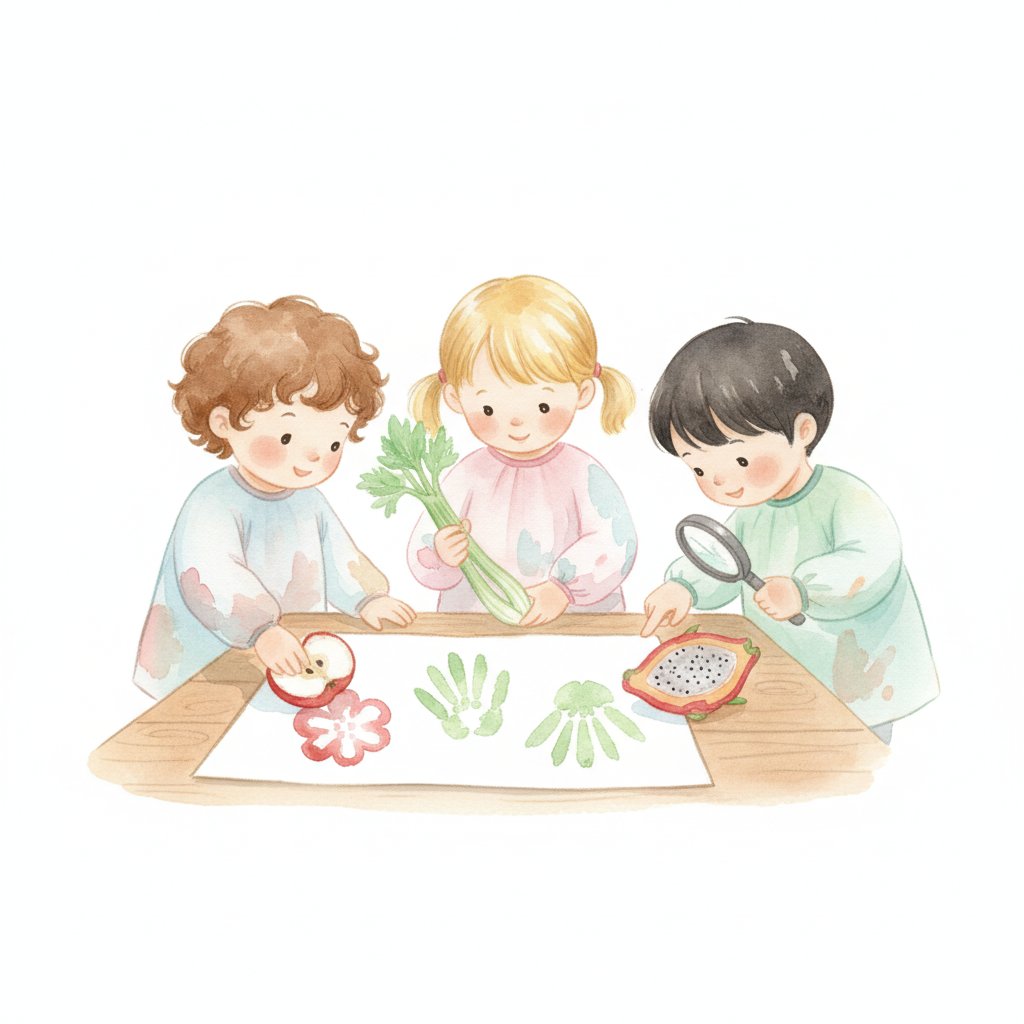
What to do: Dip cut surfaces in paint and press onto paper: "Look at the star inside the apple! The celery makes a rose shape! The orange prints a circle!" The art activity teaches food structure through observation. For more art, see our art guide.

8. Seed exploration
Materials: Various fruits with seeds.

What to do: Cut open fruits and examine seeds: "Apples have seeds in the MIDDLE. Strawberries have seeds on the OUTSIDE. Peaches have one BIG seed." Sort by seed type: many small seeds, few big seeds, no seeds. The exploration teaches observation and classification. For more science, see our science guide.

9. Garden in a glove
Materials: Clear plastic glove, cotton balls, water, seeds.

What to do: Put a wet cotton ball and a seed in each finger of the glove. "We're planting seeds! We'll watch them grow!" Hang in a window and observe daily. "The radish sprouted first! The bean is growing roots!" The activity teaches that food comes from plants. For more science, see our science guide.

10. Vegetable characters
Materials: Various vegetables, toothpicks, googly eyes.

What to do: Create characters from vegetables: "Mr. Potato Head but with REAL vegetables!" Use toothpicks to attach parts. Name the characters and tell stories. "This is Betty the Broccoli. She is very healthy and has lots of friends." The creativity makes vegetables friendly and fun.

Healthy food is full of shapes
Our Shapes Flashcards become a food shape hunt: 'A CIRCLE like an orange slice! A TRIANGLE like a watermelon wedge! A SQUARE like a cracker! A RECTANGLE like a granola bar! A STAR like the inside of an apple!' Challenge your preschooler to find one healthy food for every shape at snack time. Shapes are everywhere — especially on the plate. Shape recognition plus food awareness equals a snack that teaches.

Meal Planning and Cooking Activities (Ages 3-6)

11. Menu planning
Materials: Paper, crayons, food pictures.

What to do: "Let's plan a healthy lunch! We need one food from each group." Children cut and paste food pictures to create a balanced menu. "Main: chicken. Side: rice. Vegetable: carrots. Fruit: apple. Drink: milk." The planning teaches balanced meals through design. For more planning activities, see our following directions guide.

12. Snack preparation
Materials: Simple, safe ingredients.

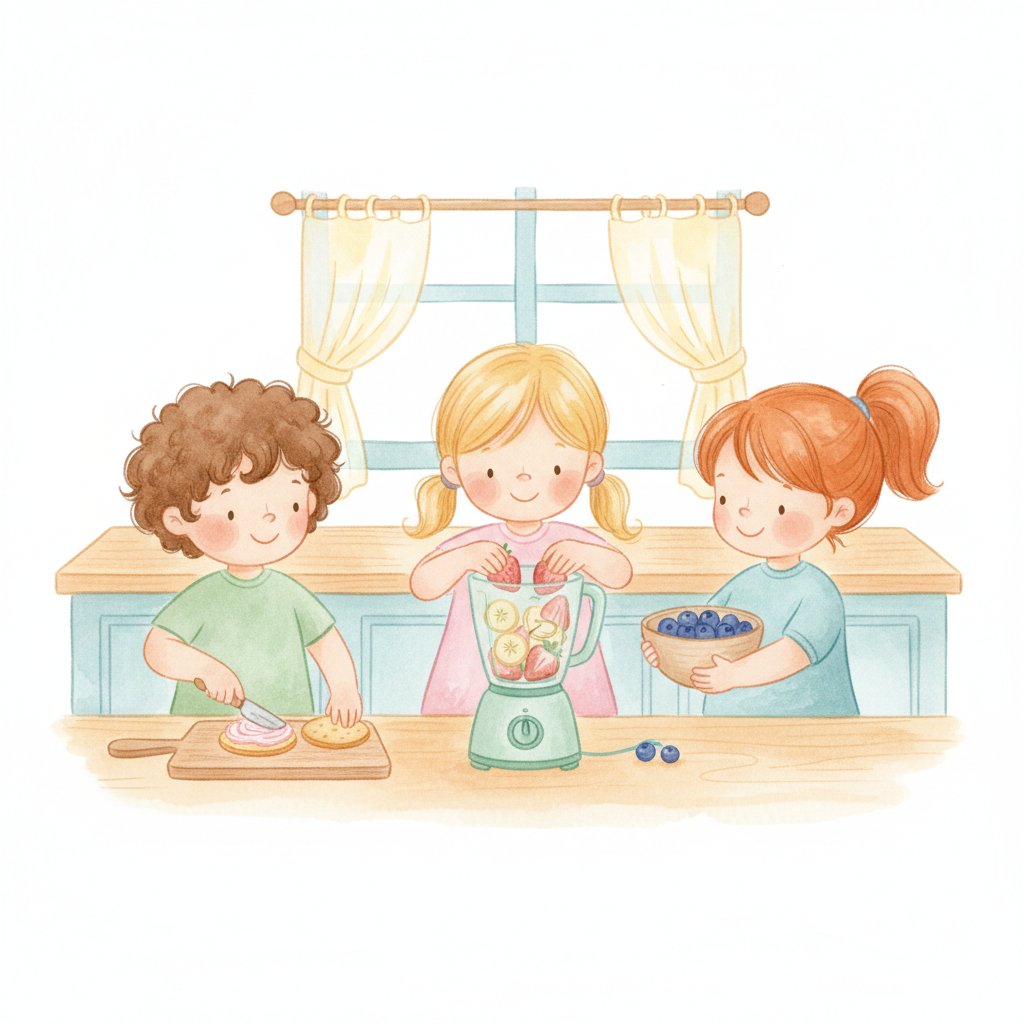
What to do: Children prepare their own snacks: "Spread peanut butter on a cracker. Add banana slices on top. You made a healthy snack!" The preparation teaches independence, sequencing, and fine motor skills. For more cooking, see our cooking guide.

13. Smoothie science
Materials: Blender, fruits, yogurt, juice.

What to do: "Let's make a fruit smoothie! What happens when we blend strawberries and bananas?" Children add ingredients, watch the blender, and taste the result. "The red strawberries and yellow bananas made an ORANGE smoothie!" The activity combines nutrition with color mixing science.

14. Food journal
Materials: Notebook, crayons.

What to do: "Draw everything you eat today! Breakfast, lunch, dinner, snacks." At the end of the day: "How many colors did you eat? Did you have foods from every group?" The journal builds self-awareness about eating habits. For more journaling, see our writing guide.

15. Grocery store scavenger hunt
What to do: At the store: "Find a GREEN vegetable! Find something from the DAIRY section! Find a fruit that starts with M!" The hunt makes grocery shopping a learning experience. For more real-world learning, see our outdoor guide.

Food Literacy Extensions (Ages 3-6)

16. "Sometimes" vs. "Anytime" foods
Materials: Food pictures, two labeled mats.

What to do: Sort foods into "Anytime foods" (eat every day) and "Sometimes foods" (eat occasionally): "Fruits and vegetables are ANYTIME. Cake and candy are SOMETIMES. It's not that sometimes foods are BAD — it's that our bodies need anytime foods every day and sometimes foods only sometimes." The framing avoids moralizing food while teaching balance. For more sorting, see our sorting guide.

17. Where food comes from
Materials: Food and source pictures.

What to do: Match foods to their sources: "Milk comes from COWS. Eggs come from CHICKENS. Apples grow on TREES. Carrots grow UNDERGROUND. Bread is made from WHEAT." The matching teaches food origins and builds appreciation for farming. For more matching, see our matching guide.

18. Food counting and measuring
Materials: Various foods, measuring cups.

What to do: "How many blueberries fit in this cup? Let's count! How many spoonfuls of yogurt make half a cup?" The measuring teaches math through food. For more counting, see our number guide.

19. Food pattern snack
Materials: Foods that can be threaded (cereal, berries, cheese cubes).

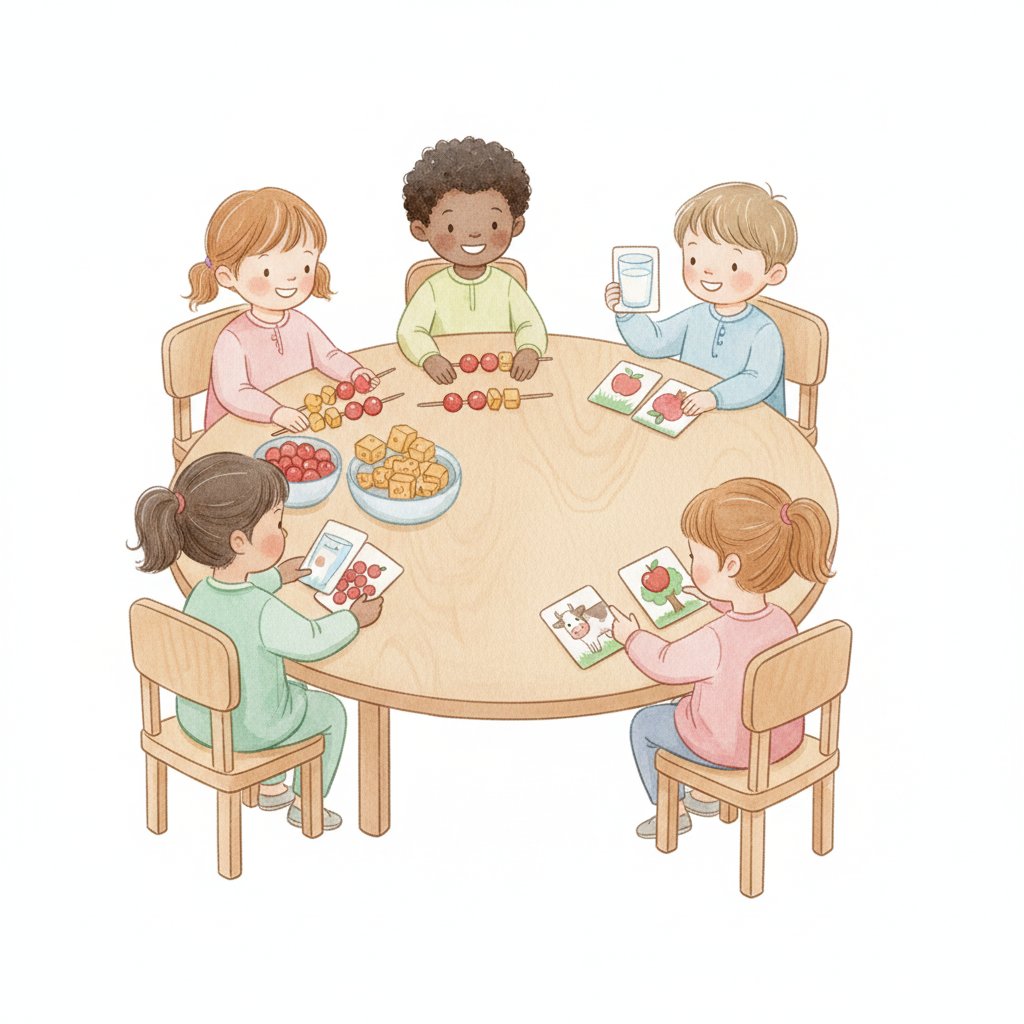
What to do: "Make a pattern on your skewer: berry, cheese, berry, cheese!" The snack teaches patterning while children eat. For more patterns, see our pattern guide.

20. Healthy food storytime
Materials: Books about food and nutrition.

What to do: Read food-themed books: "The Very Hungry Caterpillar ate through all that food! Which foods made his tummy feel GOOD? Which made it hurt?" The stories teach nutrition through narrative, which is more memorable than direct instruction. For more storytelling, see our storytelling guide.

Food is fuel: show them the engine
Our 8 Educational Posters include the human body — and when children can see the body, they can understand why food matters. 'Food is FUEL for your body. Just like a car needs gas to drive, your body needs healthy food to run, jump, think, and grow. The body poster shows your HEART, your MUSCLES, your BONES — and every one of them needs good food to stay strong.' When children see the machine, they understand the fuel. Nutrition education starts with body awareness.
1.How do I handle food allergies during nutrition activities?
Check allergies BEFORE any tasting activity. Post the allergy list prominently. Provide alternatives: sunflower butter instead of peanut butter, gluten-free crackers alongside regular ones. Never single out a child with an allergy — offer everyone the same safe options. Frame it as "we're all trying these foods together" rather than "some of you can't have this."
2.My child is extremely picky. Will these activities really help?
Research shows that repeated, no-pressure exposure is the most effective approach. The key is NO PRESSURE: offer, model, celebrate trying, but never force. "You don't have to eat it — you can just touch it. You don't have to eat it — you can just smell it." Each exposure counts, even if the child doesn't eat the food. It takes 10-15 exposures before acceptance. Be patient.
3.Should I talk about 'good' and 'bad' foods with preschoolers?
No. Use "anytime" and "sometimes" instead. "Good" and "bad" create shame around food, which leads to unhealthy relationships with eating. "Broccoli is an ANYTIME food — we can eat it every day! Cupcakes are a SOMETIMES food — we enjoy them at parties!" All foods can fit. The lesson is balance, not restriction.
4.How can parents reinforce nutrition learning at home?
Involve children in meal planning and prep. "Should we have carrots or broccoli with dinner?" Grow something — even just herbs in a window. Model healthy eating: children eat what they see YOU eat. Avoid using food as reward or punishment. Keep healthy snacks visible and accessible. And keep offering — even when they refuse. Exposure is education.