Articles7 min read

The Week Everything Was Ocean

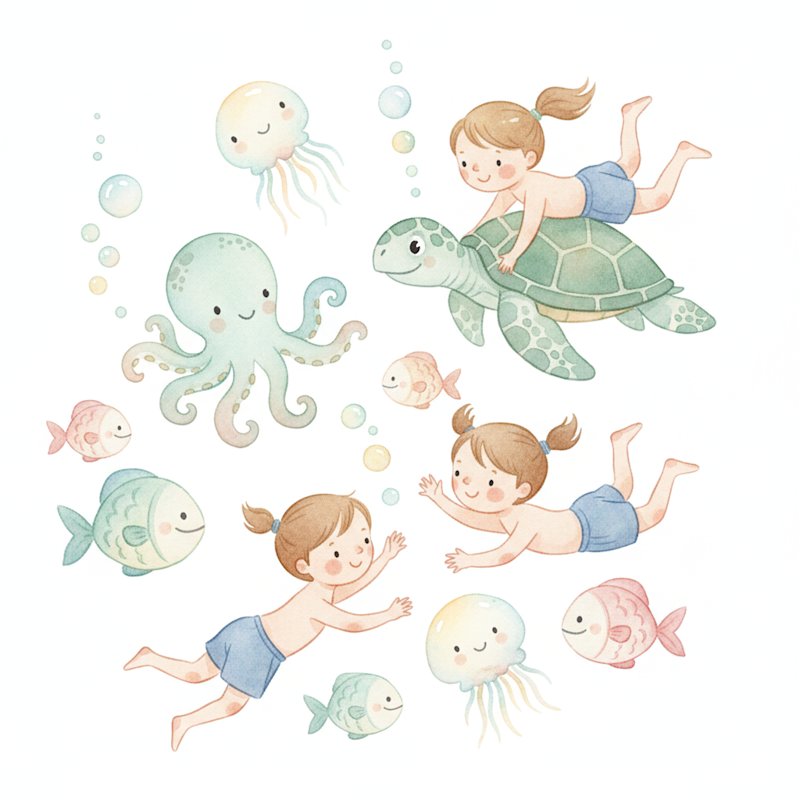
My daughter came home from school talking about jellyfish. For seven consecutive days, everything was ocean: books, drawings, bathtime stories, dinner conversation. She wanted to know why the ocean is salty, how fish breathe, whether sharks sleep. I couldn't answer half her questions — which made me realize that the ocean is the perfect preschool topic because it's endlessly fascinating and just mysterious enough to keep children curious.

According to the National Marine Educators Association, ocean literacy activities in early childhood build science inquiry skills, environmental awareness, and vocabulary simultaneously. The ocean theme naturally integrates biology (animals and habitats), physics (waves and sinking), chemistry (salt water), geography (beaches and depths), and art (colors and textures) — making it one of the richest cross-curricular topics available.
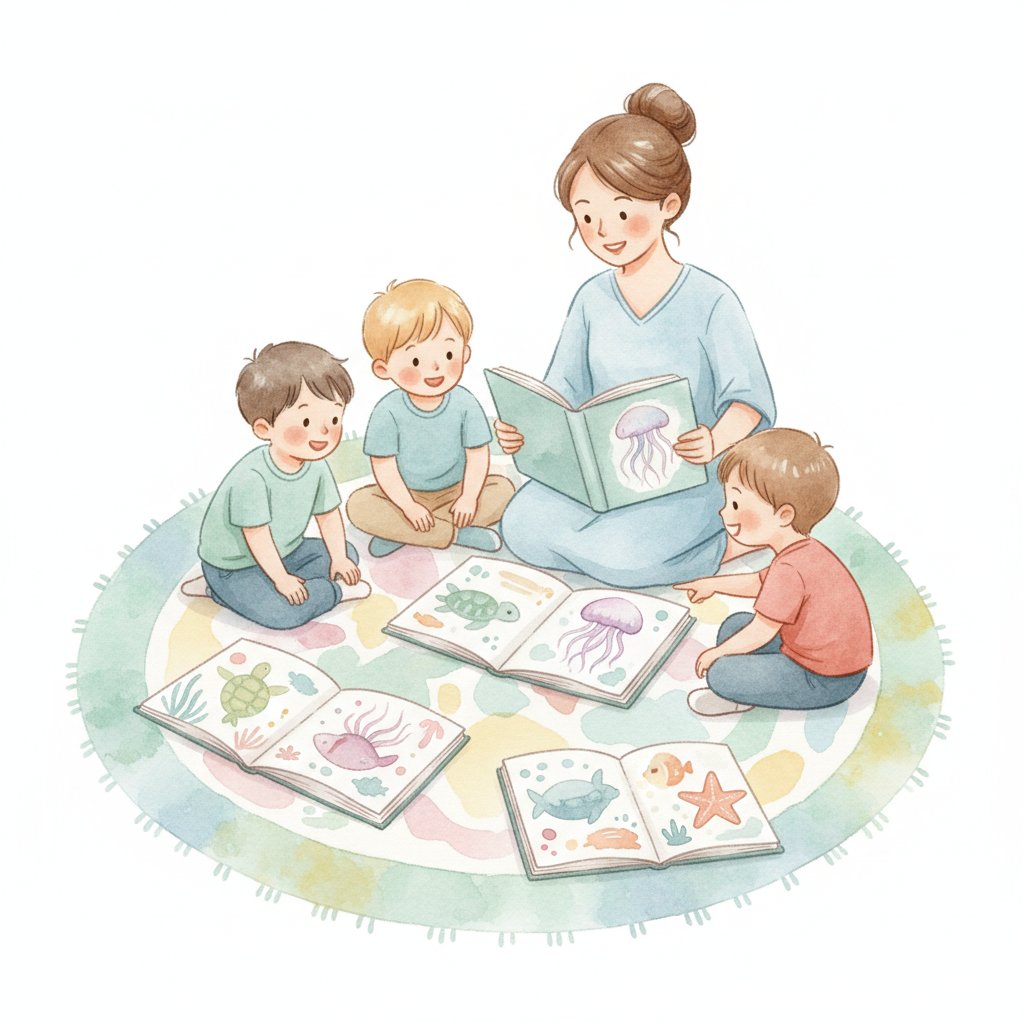
This guide covers 20+ ocean activities for ages 3-6, organized by type: sea life learning, ocean crafts, sensory exploration, and science experiments. Pair it with our science experiments guide for more hands-on science and our sensory guide for more tactile play.
Sea Life Learning Activities (Ages 3-6)

1. Ocean animal sorting
Materials: Pictures or toy ocean animals.

What to do: Children sort ocean animals by different attributes: "Sort by number of legs (0, 4, 8, lots). Sort by where they live (near the surface, deep down, on the ocean floor). Sort by how they move (swim, crawl, float)." Each sorting rule teaches a different attribute. For more sorting, see our sorting guide.

Why it works: Sorting requires close observation and attribute analysis — two foundational science skills. When children sort by movement, they're thinking about adaptation. When they sort by habitat, they're thinking about ecology. The sorting is simple; the thinking is sophisticated.

2. Ocean animal movement game
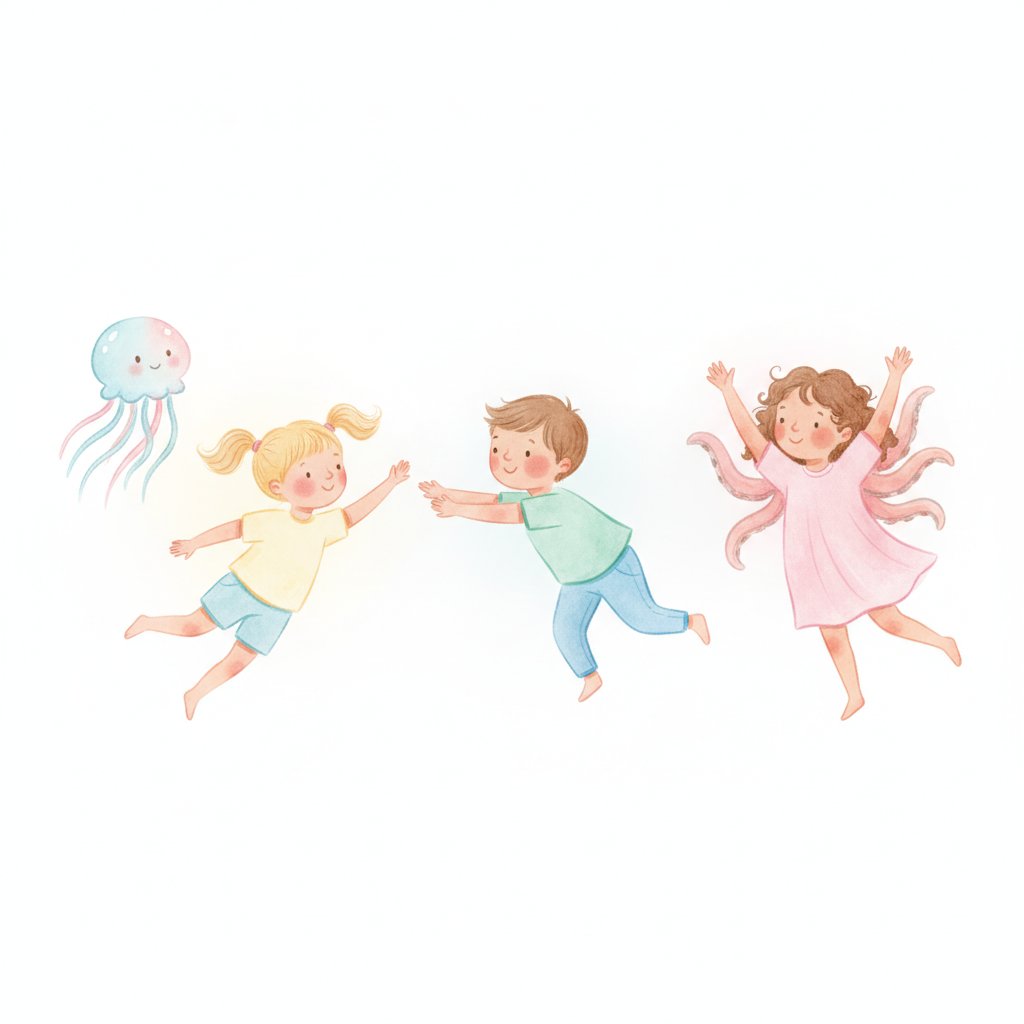
What to do: Children move like ocean animals: "Swim like a fish! Pinch like a crab! Glide like a stingray! Float like a jellyfish! Chomp like a shark! Wiggle like a seahorse!" The gross motor activity teaches animal characteristics through body experience. For more movement, see our gross motor guide.

3. Big, bigger, biggest ocean animals
Materials: Pictures of ocean animals at relative scale.

What to do: Show children the size range: "A blue whale is the BIGGEST animal that ever lived — bigger than dinosaurs! This is how big you are next to a blue whale." Line children up and measure out a blue whale's length with string. The physical measurement makes abstract size real.

4. Ocean layers discovery
Materials: Blue cellophane in different shades, flashlight.

What to do: Stack layers of blue cellophane and shine a flashlight through. "The top layer is the SUNLIGHT zone — lots of light, lots of animals. The next layer is TWILIGHT — getting darker. The deepest layer is MIDNIGHT — pitch black!" The visual demonstration teaches ocean depth zones. For more light experiments, see our science guide.

5. Ocean animal counting
Materials: Ocean animal counters or pictures.

What to do: "How many tentacles does an octopus have? Let's count! How many arms does a starfish have? How many legs does a crab have?" The counting integrates math with science. For more counting, see our number guide.

Watercolor your way through the ocean
Our Ocean Animals Watercolor Art Activity Pack brings sea creatures to life through art: paint a clownfish, a sea turtle, a jellyfish, an octopus, and more. Each template teaches the animal's shape, features, and colors while children develop fine motor control and artistic confidence. 'Paint the octopus — how many arms do you see? Let's count them as we paint!' Art meets science meets counting in one ocean-sized activity.

Ocean Crafts (Ages 3-6)

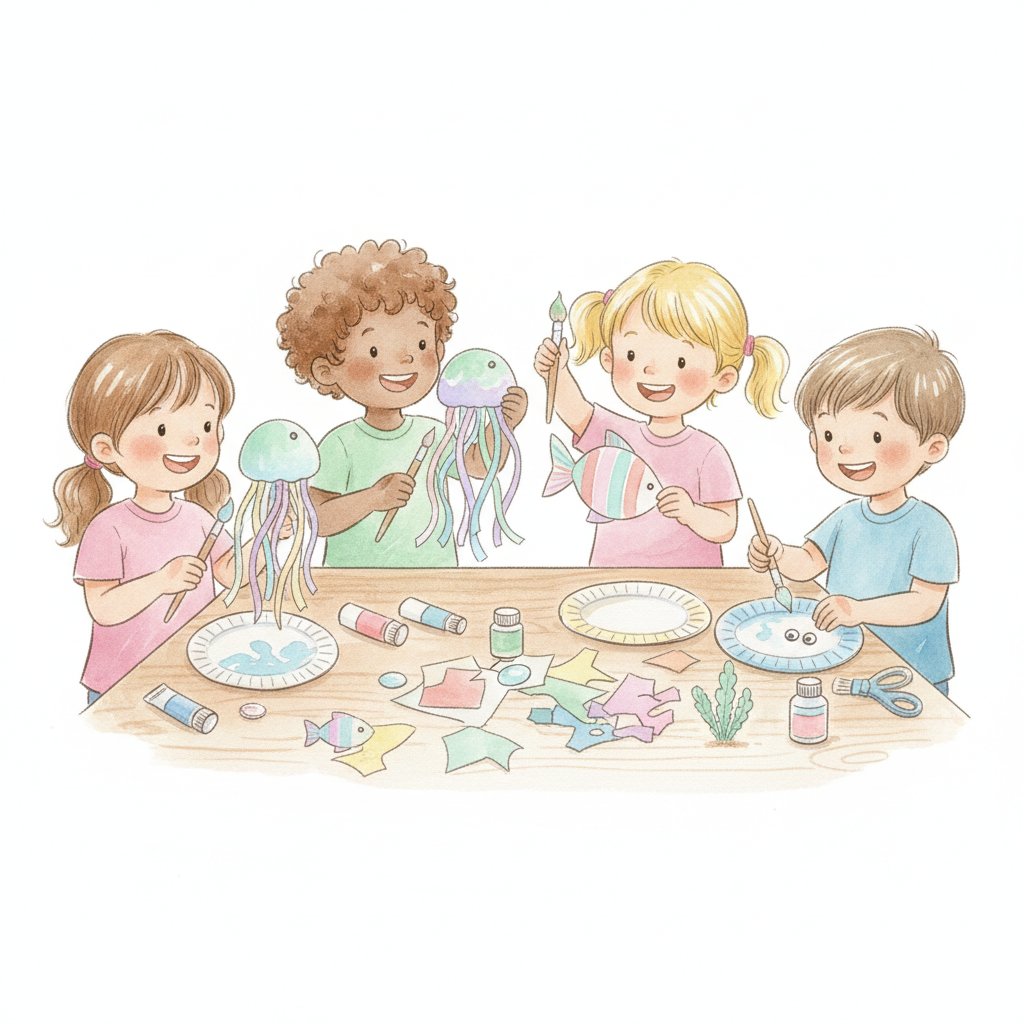
6. Paper plate jellyfish
Materials: Paper plates, paint, ribbon or crepe paper, scissors.

What to do: Children paint a paper plate, then attach ribbon "tentacles." Hang them for an underwater display. The craft teaches jellyfish anatomy (bell + tentacles) while developing fine motor skills. For more cutting practice, see our scissor skills guide.

7. Egg carton ocean creatures
Materials: Egg cartons, paint, googly eyes, pipe cleaners.

What to do: Children transform egg carton cups into crabs, turtles, and whales. Each cup becomes an animal with paint, eyes, and appendages. The recycling element adds an environmental lesson: "We're reusing something instead of throwing it away!"

8. Coffee filter coral reef
Materials: Coffee filters, watercolors, scissors.

What to do: Children paint coffee filters with watercolors (the colors spread and blend beautifully), then cut them into coral shapes. Display them together as a "coral reef." The color-mixing is a science lesson disguised as art. For more color activities, see our color guide.

9. Footprint fish
Materials: Washable paint, paper.

What to do: Children step in paint and make a footprint on paper. Add fins, eyes, and scales to transform it into a fish. The tactile experience (paint on feet) is sensory-rich and the result is personal — every fish is unique because every footprint is unique. For more sensory art, see our art activities guide.

10. Ocean in a bottle
Materials: Clear bottle, water, blue food coloring, oil, small ocean items (glitter, plastic fish).

What to do: Fill a bottle half with blue water, half with oil. Add glitter and small ocean items. When shaken, the oil and water create wave-like motion. "The oil and water don't mix — just like real ocean layers!" The sensory bottle is calming AND scientific.

Safari meets ocean: habitat comparison
Our Safari Animals Art Activity Pack pairs perfectly with the Ocean Animals pack for a habitat comparison: 'Lions live on the savanna — hot, dry, grassy. Dolphins live in the ocean — wet, salty, deep. What's different about their homes? What's the same? They both need food, water, and shelter!' Children create art from two habitats, then compare and contrast. Two packs, two biomes, one rich science lesson.

Ocean Sensory and Science Activities (Ages 3-6)

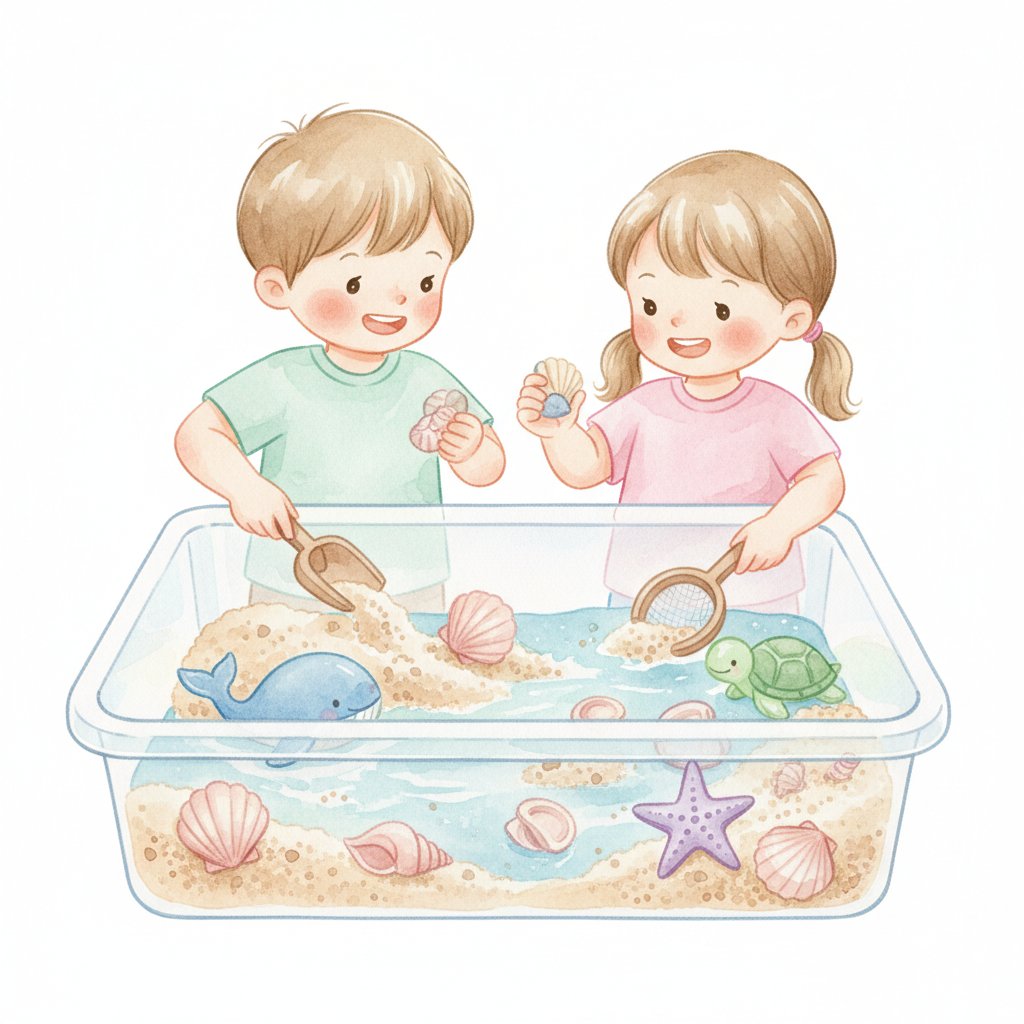
11. Ocean sensory bin
Materials: Large bin, blue-tinted water, sand, shells, plastic ocean animals.

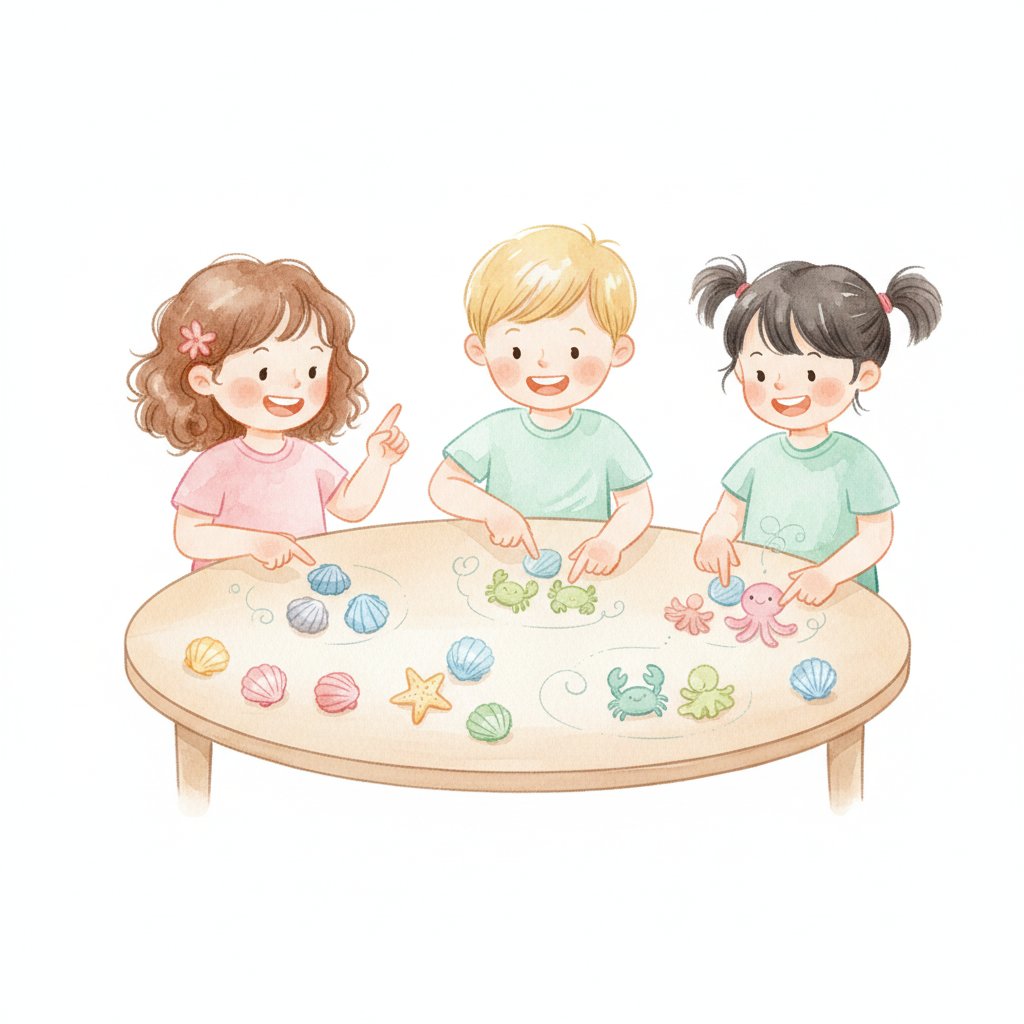
What to do: Fill a bin with blue water, add sand on one side, shells, and ocean animals. Children explore freely: scoop, pour, bury, discover. The sensory bin combines tactile, visual, and imaginative play in one activity. For more sensory ideas, see our sensory guide.

Why it works: Sensory bins are the preschool equivalent of a laboratory — children explore materials, test hypotheses ("will this shell float?"), and discover properties through direct experience. The open-ended nature means every child engages at their own level.

12. Sink or float: ocean edition
Materials: Water bin, objects that sink and float.

What to do: Children predict and test: "Will this shell sink or float? What about this piece of coral? This sponge? This pebble?" Record predictions and results. For more sink/float activities, see our science experiments guide.

13. Salt water experiment
Materials: Two glasses of water, salt, egg.

What to do: Place an egg in fresh water — it sinks. Add lots of salt to the other glass — the egg floats! "The ocean has salt in it, and salt makes things float more easily. That's why it's easier to float in the ocean than in a pool!" The experiment connects to real ocean swimming experiences.

14. Wave in a pan
Materials: Large pan, water, blue food coloring, small objects.

What to do: Fill a pan with blue water. Tilt the pan back and forth to create waves. Add small objects (a toy boat, a cork). "What happens to the boat when the waves get bigger?" The simple demonstration teaches wave physics through direct observation.

15. Beach sand exploration
Materials: Magnifying glass, sand samples, magnet.

What to do: Children examine sand with a magnifying glass: "What do you see? Tiny rocks, shells, maybe even sparkly minerals!" Run a magnet through sand — some sand contains magnetic minerals. The close observation teaches that sand isn't just "dirt" — it's a mixture of tiny materials. For more nature exploration, see our outdoor play guide.

Weather and ocean: the connection
Our Weather Flashcards help children understand the ocean-weather connection: 'Hurricanes start over the warm ocean! Rain comes from water that evaporated from the ocean! Fog is ocean air cooling down!' Each weather card connects to the ocean. The SUNNY card teaches evaporation. The RAINY card teaches the water cycle. The WINDY card teaches how ocean temperature creates wind. Weather IS ocean science.

Ocean Literacy and Math Extensions (Ages 3-6)

16. Ocean animal alphabet
What to do: Match ocean animals to letters: A is for Anemone, B is for Beluga Whale, C is for Crab, D is for Dolphin, E is for Eel... Create an ocean alphabet with a drawing for each letter. For more alphabet work, see our alphabet guide.

17. Ocean counting book
What to do: Create a counting book: "1 octopus, 2 seahorses, 3 starfish, 4 crabs, 5 jellyfish..." Children draw the correct number of each animal. The book combines counting, drawing, and ocean vocabulary. For more counting, see our number guide.

18. Ocean story starters
What to do: Provide story prompts: "A little fish got lost in the coral reef..." "An octopus found a treasure chest..." "A shark who was afraid of the dark..." Children continue the story orally or with drawings. For more storytelling, see our storytelling guide.

19. Ocean vocabulary matching
Materials: Picture cards, word cards.

What to do: Match ocean animal pictures to their names. Start with simple words (fish, crab, shell) and progress to longer words (jellyfish, seahorse, starfish). The matching builds vocabulary and print awareness simultaneously.

20. Ocean habitat diorama
Materials: Shoe box, art supplies.

What to do: Children create a 3D ocean habitat in a shoe box: blue cellophane for water, sand on the bottom, clay animals, paper seaweed. The diorama requires understanding what an ocean habitat contains and how animals relate to their environment. For more building, see our block activities guide.

1.What age is appropriate for ocean learning activities?
Ocean activities work beautifully for ages 3-6 with simple adaptations. Ages 3-4: focus on animal names, colors, counting, and sensory exploration. Ages 5-6: add habitat concepts, food chains, depth zones, and conservation. The theme is rich enough to grow with the child — start with "fish live in water" and progress to "coral reefs are ecosystems."
2.Do I need to live near the ocean for these activities to be meaningful?
No! Most activities use common materials (water, sand, art supplies). The wonder of the ocean is that it's vast and mysterious even from afar — children who've never seen the ocean are often the most fascinated by it. Videos and books complement the activities. If you CAN visit an aquarium or beach, do it — but it's not required.
3.How do I teach ocean conservation to preschoolers?
Keep it positive and action-oriented: "We can help the ocean by not wasting water, picking up trash at the beach, and being careful with animals when we visit." Avoid scary content (oil spills, animal deaths) — focus on what children CAN do. The "reduce, reuse, recycle" message connects naturally to ocean activities when you use recycled materials for crafts.
4.What books pair well with ocean activities?
"The Rainbow Fish" by Marcus Pfister (sharing and beauty), "Commotion in the Ocean" by Giles Andreae (ocean animal poems), "A House for Hermit Crab" by Eric Carle (months and growth), "Swimmy" by Leo Lionni (cooperation), and "Over in the Ocean" by Marianne Berkes (counting and animals). Read the book, then do the related activity — the story provides context, the activity provides experience.