Articles6 min read

The Bean That Taught Patience

"When will it grow?" Day 1. "When will it grow?" Day 2. "WHERE is it? I don't see anything!" Day 3. Then on Day 4, we pulled back the paper towel and there it was — a tiny white ROOT pushing out of the bean. Five-year-old Sofia screamed like she'd found treasure. "IT'S ALIVE!" By Day 7 the root was 2 inches long and a green shoot was curling upward. By Day 14 it was a full plant with leaves. She measured it every single day, drawing what she saw in her bean journal. That bean taught her more about patience, observation, and life cycles than any worksheet ever could. Growing plants with preschoolers is SLOW MAGIC — and that is exactly why it works.

According to KidsGardening.org, plant activities teach life cycles (seed, sprout, plant, flower, fruit, seed), scientific observation (tracking changes over time), responsibility (watering, caring for living things), patience (growth is slow but visible), and math (measuring, counting, graphing growth).
This guide covers 20+ plant and seed activities for ages 3-6. Pair it with our science experiments guide for more science and our outdoor play guide for more nature.
Seed Sprouting Activities (Ages 3-6)

1. Bean in a bag
Materials: Lima bean, ziplock bag, paper towel, water.

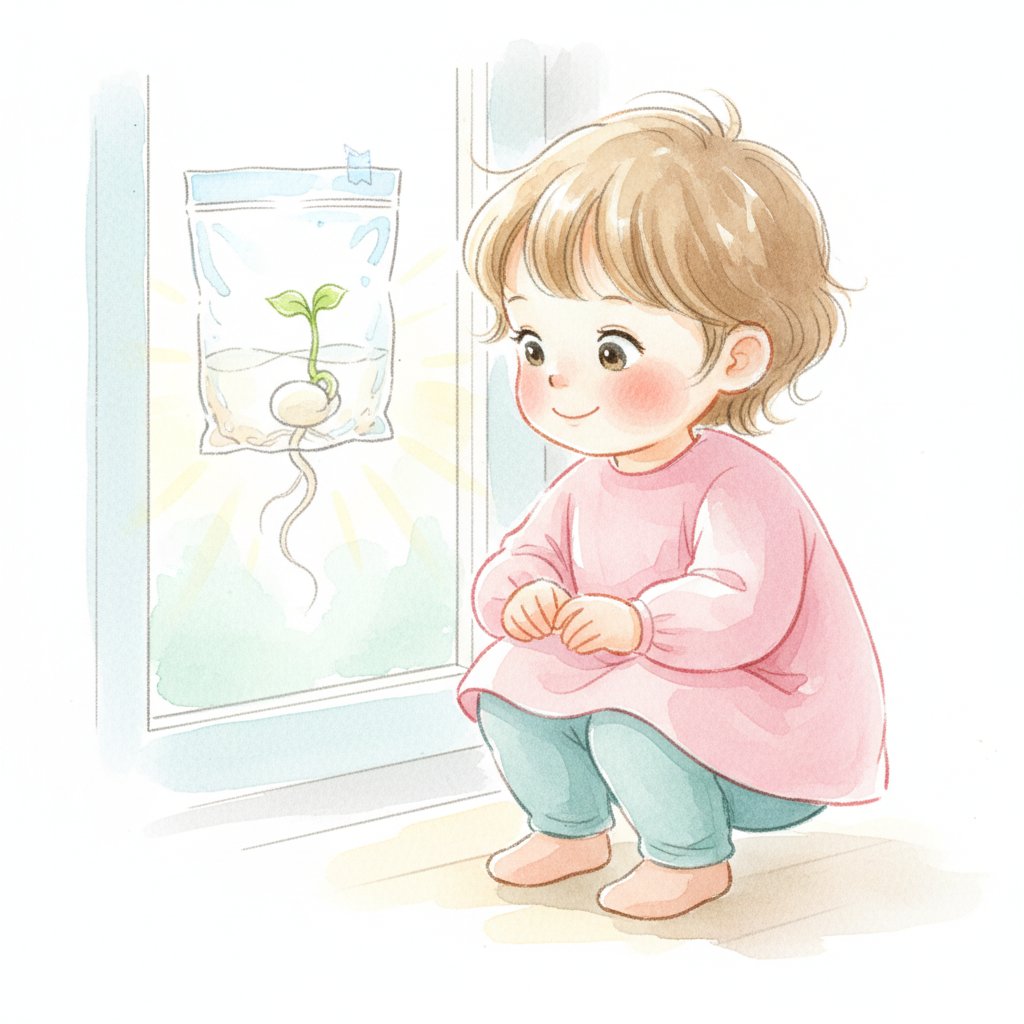
What to do: "Wet the paper towel. Fold it around the bean. Put it in the bag. Tape the bag to the window. Watch what happens!" The bean sprouts in 3-5 days, roots first, then shoots. The bag lets children see EVERYTHING — roots growing down, shoots growing up.

Why it works: Growing plants is the ultimate delayed-gratification science experiment. Children learn that LIVING things take TIME. But unlike most long-term projects, seeds show visible change every single day — a new root, a taller shoot, an unfurling leaf. The daily change provides just enough reward to sustain attention over weeks. For more patience-building, see our growth mindset guide.

2. Bean journal
Materials: Notebook, pencil.

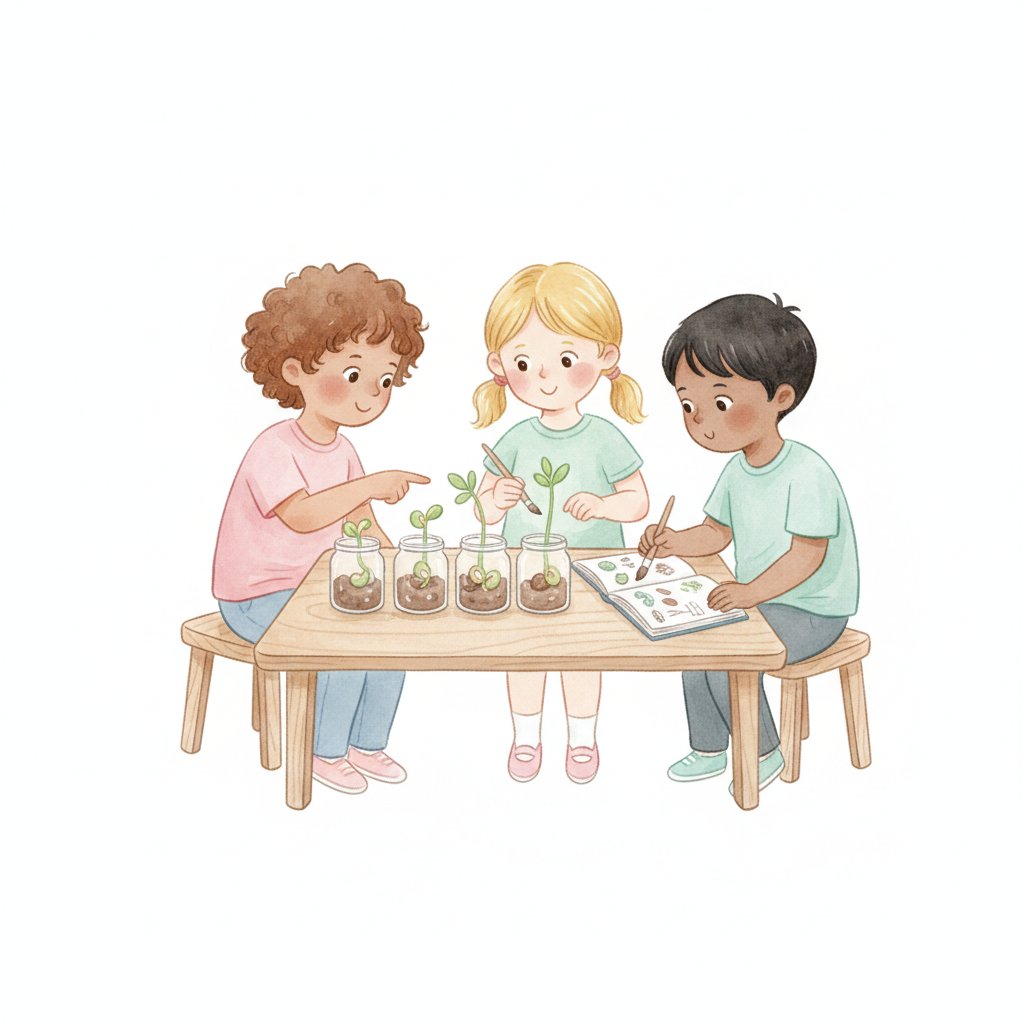
What to do: "Every day, draw what your bean looks like and write the date. Day 1: just a bean. Day 3: a tiny root! Day 5: root is longer and a green bump! Day 7: leaves!" The journal teaches scientific recording. For more writing, see our writing guide.

3. Sprout race
Materials: Three beans, three bags, three locations (window, dark closet, fridge).

What to do: "Which bean sprouts FIRST? The one in the sun, the one in the dark, or the one in the cold? Make your prediction!" The race teaches experimental variables and hypothesis testing. For more science, see our science guide.

4. Seed collection
Materials: Various seeds (apple seeds, orange seeds, sunflower seeds, bean seeds, grass seed).

What to do: "Look at all these seeds! Which is the BIGGEST? The smallest? The roundest? The flattest? Sort them by size, shape, and color." The sorting teaches categorization and close observation. For more sorting, see our sorting guide.

5. Seed to plant timeline
Materials: Pictures of seed stages.

What to do: "Put the pictures in order: First, a seed. Then, a root comes out. Then, a shoot pushes up. Then, leaves open. Then, a flower blooms. Then, the flower makes NEW seeds!" The timeline teaches life cycle sequencing. For more sequencing, see our following directions guide.

Every plant starts with a color
Our Colors Flashcards turn plant observation into a color hunt: 'Find something in the garden that is GREEN — a leaf! Find BROWN — the soil! Find YELLOW — a sunflower! Find RED — a tomato! Find ORANGE — a carrot! Find WHITE — a daisy!' Children walk through the garden with flashcards, matching each color to a plant part. They learn that plants come in every color AND that each color has a purpose: green leaves make food, red fruits attract animals, brown soil holds water. The flashcards make botany a color adventure. 11 colors, 11 garden treasures.

Plant Parts and Flowers (Ages 3-6)

6. Flower parts dissection
Materials: Large flower (lily, tulip, or daffodil).

What to do: "Take the flower apart GENTLY. These soft pieces are PETALS. This tall thing in the middle is the STEM. These little yellow dots are POLLEN. This bump at the bottom will become a SEED!" The dissection teaches plant anatomy. For more body/parts, see our body parts guide.

7. Leaf rubbing
Materials: Leaves, paper, crayons.

What to do: "Put a leaf UNDER the paper. Rub the crayon SIDEWAYS over it. The leaf shape appears like MAGIC!" The rubbing teaches leaf shapes and veins. For more art, see our art guide.

8. Roots investigation
Materials: Plant pulled from soil with roots intact.

What to do: "Look at the ROOTS! They're like fingers reaching down into the dirt. They drink WATER and hold the plant in the ground. What would happen if a plant had no roots?" The investigation teaches root function. For more water, see our bath guide.

9. Plant part salad
Materials: Various edible plant parts.

What to do: "We eat different plant parts: ROOTS (carrots), STEMS (celery), LEAVES (lettuce), FLOWERS (broccoli), FRUITS (tomatoes), SEEDS (sunflower seeds). Which part are you eating?" The salad teaches that every part of a plant has a purpose — and some are delicious. For more nutrition, see our nutrition guide.

10. Tree parts walk
What to do: "Let's find a big tree. The TRUNK is like the stem — it holds the tree up. The BRANCHES are like arms reaching out. The LEAVES are like hands catching sunlight. The ROOTS are underground like feet holding on." The walk teaches tree anatomy through body analogies.

Plants need weather to grow
Our Weather Flashcards teach what plants need: 'SUNNY — plants need sunshine to make food in their leaves. RAINY — plants need water to drink through their roots. CLOUDY — plants can still grow, just slower. WINDY — wind blows seeds to new places and helps plants get stronger stems. SNOWY — some plants sleep underground all winter and wake up in spring.' The flashcards connect weather to plant life: every weather card is a plant need. Children learn that weather isn't just what to wear — it's what plants depend on to survive. 12 weather cards, 12 plant lessons.

Garden and Growing Activities (Ages 3-6)

11. Egg carton garden
Materials: Egg carton, soil, seeds.

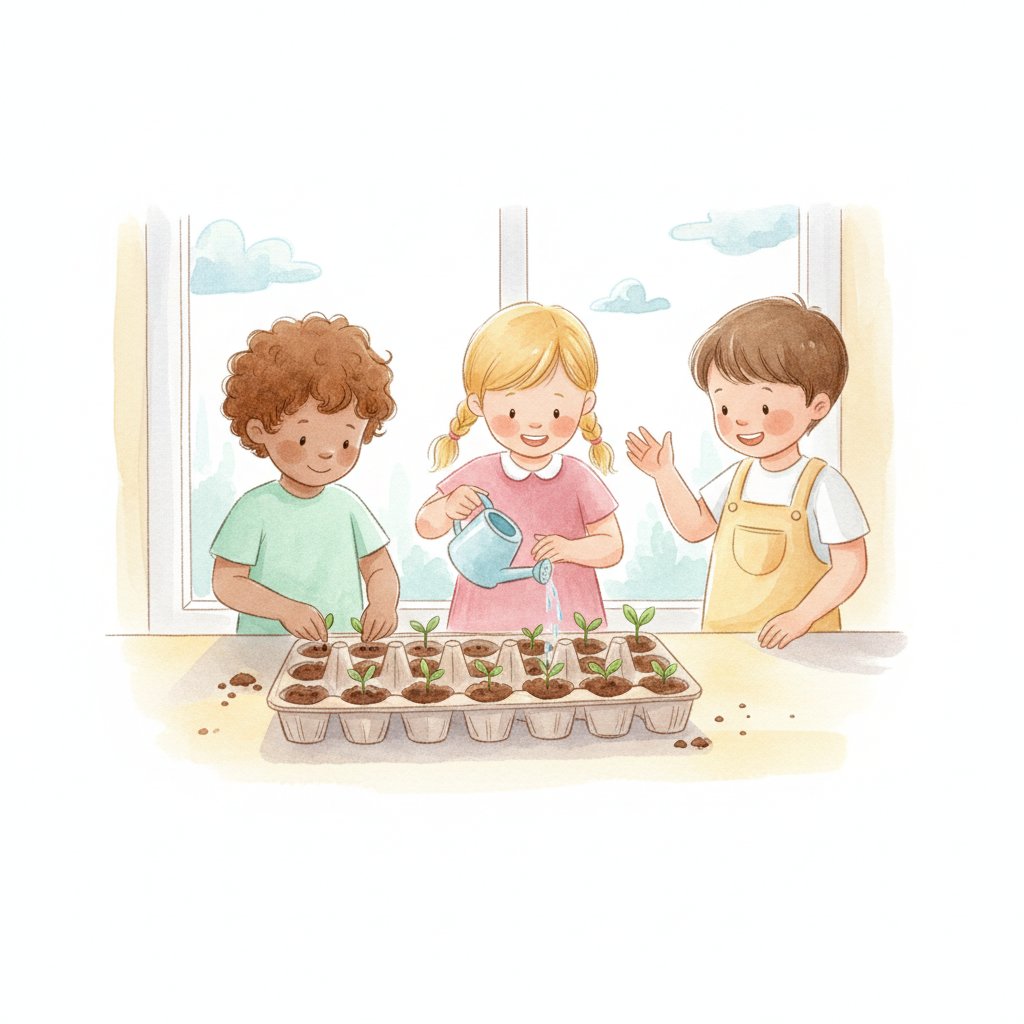
What to do: "Fill each cup with soil. Poke a hole. Drop in a seed. Cover it. Water it. Put it in the sun. Which cup will sprout first?" The garden teaches planting basics in a small space. For more recycling, see our recycling guide.

12. Grass head
Materials: Cup, soil, grass seed, decorations for face.

What to do: "Fill the cup with soil. Sprinkle grass seed on top. Draw a face on the cup. Water it. In a week, your cup will grow HAIR!" The grass head teaches growing with personality and humor.

13. Plant measurement
Materials: Ruler, growing plant.

What to do: "Measure your plant every week. Week 1: 1 inch. Week 2: 3 inches. Week 3: 6 inches! How much did it grow each week? Make a chart!" The measurement teaches data collection and comparison. For more math, see our number guide.

14. Watering schedule
Materials: Calendar, stickers.

What to do: "Plants need water every OTHER day. Put a sticker on Monday, Wednesday, Friday. On sticker days, water the plant!" The schedule teaches time, routine, and responsibility. For more schedules, see our days of the week guide.

15. Planting by number
Materials: Seed packets, garden plot.

What to do: "Plant 3 bean seeds in this row. Plant 5 radish seeds in this row. Plant 2 sunflower seeds in this row. Count them out!" The counting teaches one-to-one correspondence through planting. For more counting, see our number guide.

More Plant Activities (Ages 3-6)

16. Photosynthesis role play
What to do: "You're a LEAF! Stretch your arms wide to catch SUNLIGHT. Your roots drink WATER from the ground. You mix sunlight + water + air and make FOOD for the plant! That's photosynthesis!" The role play teaches photosynthesis through body movement. For more dramatic play, see our dramatic play guide.

17. Seed art
Materials: Various seeds, glue, paper.

What to do: "Make a picture with seeds! Bean seeds for big shapes, tiny seeds for details. Sort by color and size before gluing." The art teaches fine motor and material categorization. For more art, see our art guide.

18. Plant life cycle wheel
Materials: Paper plate, brad fastener, cut-out pictures.

What to do: "Pin the pictures around the plate: seed, sprout, plant, flower, fruit, seed again. Spin the wheel! The cycle never ends — one seed becomes a plant that makes more seeds." The wheel teaches cyclical life processes.

19. Pollinator observation
What to do: "Sit by a flower for 5 minutes. Watch for bees, butterflies, and hummingbirds. What are they doing? They're moving POLLEN from flower to flower so plants can make seeds!" The observation teaches interdependence. For more insects, see our insects guide.

20. Harvest and eat
Materials: Grown vegetables or herbs.

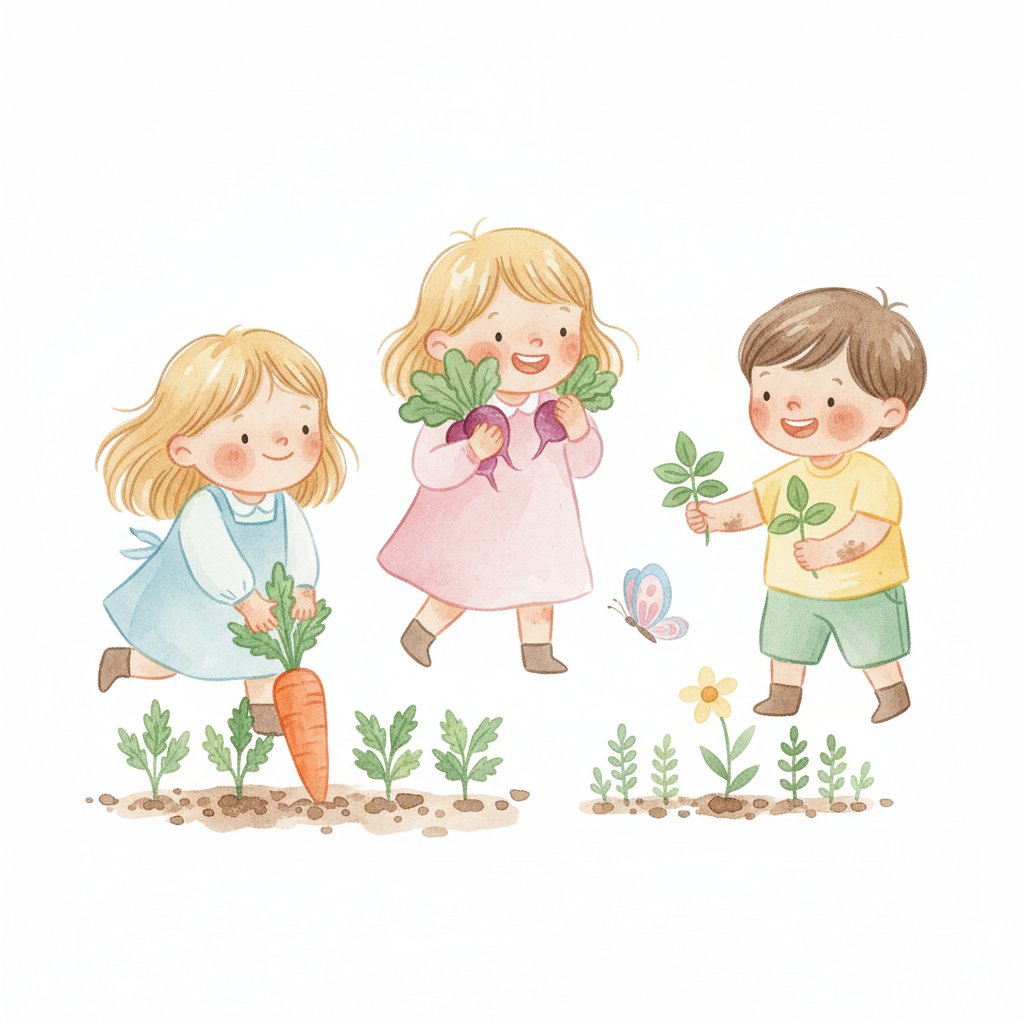
What to do: "You GREW this! Pick it. Wash it. TASTE it. How does it feel? How does it smell? How does it TASTE?" The harvest teaches the complete cycle from seed to plate. For more cooking, see our cooking guide.

Every farm has a garden
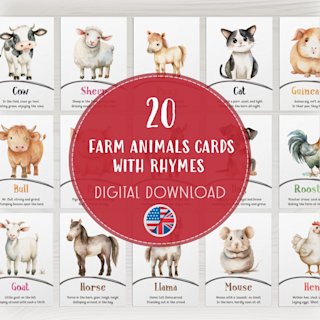
Our Farm Animals Flashcards connect animals to plants: 'COWS eat grass — grass is a PLANT with roots and leaves. CHICKENS eat seeds — seeds grow into plants. HORSES eat hay — hay is dried grass. PIGS root for roots — ROOTS are the part of the plant underground. SHEEP graze on clover — clover is a plant that makes flowers.' Each farm animal card becomes a plant lesson: what does this animal eat, and what part of the plant is it? The flashcards bridge animals and botany, teaching children that farms are ECOSYSTEMS where animals depend on plants and plants depend on soil, sun, and rain. 12 animals, 12 plant connections.
1.What are the fastest-growing seeds for preschoolers?
Radish seeds (sprout in 3-4 days, harvest in 3-4 weeks), lima beans (sprout in 3-5 days in a bag), grass seed (sprout in 5-7 days), sunflower seeds (sprout in 5-10 days), and bean sprouts (edible in 3-5 days). For maximum excitement, start with lima beans in a ziplock bag — children can see the root emerge without soil blocking the view. Then transplant to soil for continued growth.
2.Can we do plant activities indoors?
Absolutely. Bean-in-a-bag on a window, grass heads in cups, herb gardens on a sunny windowsill, and leaf rubbing at a table are all indoor activities. You need a sunny window (south-facing is best) and regular watering. Many preschools set up a "science shelf" with growing plants as a permanent center that children observe daily.
3.How do I explain photosynthesis to a preschooler?
"Leaves are like tiny kitchens! They catch SUNSHINE with their flat surfaces. Their roots drink WATER from the soil. They mix sunshine + water + air and make FOOD — sugar that the plant eats to grow. The EXTRA food goes into the fruit and vegetables that WE eat. So when you eat an apple, you're eating SUNSHINE that a tree caught and turned into food!" Keep it magical and concrete — sunshine becomes food becomes fruit.
4.What if seeds don't grow?
That's a LEARNING opportunity, not a failure. Ask: "Why do you think it didn't grow? Was there enough water? Enough sun? Was it too cold? Did something eat the seed?" Test each hypothesis. Some seeds are duds, some get overwatered, some get eaten by birds. Real scientists deal with failed experiments all the time — and that's where the best learning happens. Plant backup seeds and try again.