Articles6 min read

Printable Alphabet Flashcards for Toddlers: A Guide for Ages 1–3

Teach letter recognition to toddlers with free printable alphabet flashcards — age-appropriate activities, teaching tips, and the best ABC cards for ages 1–3.

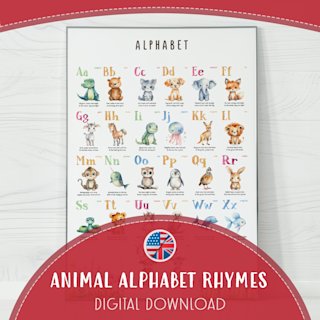
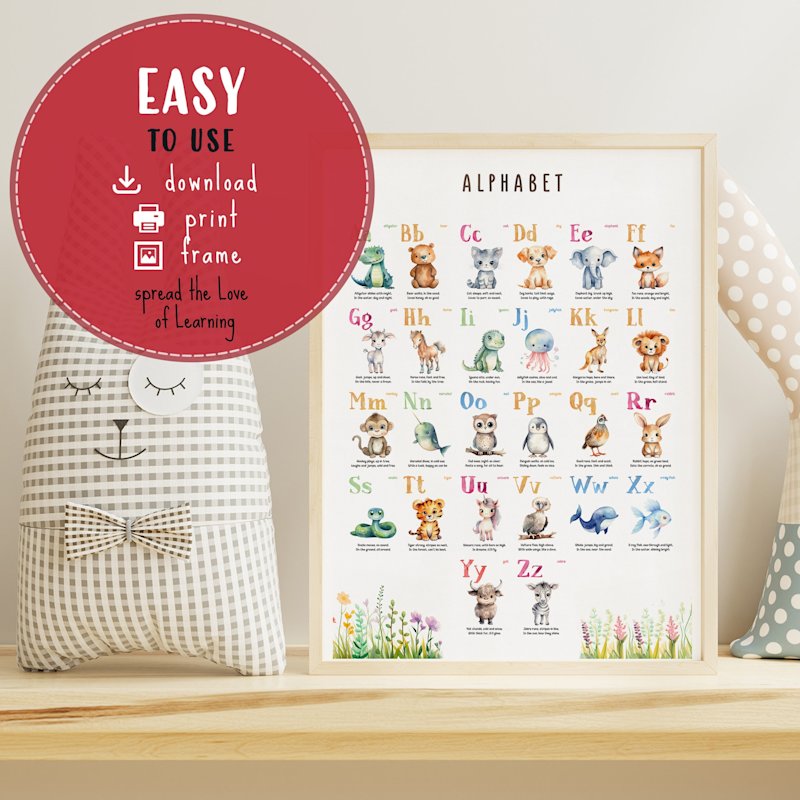
english-alphabet-poster-animals-rhymes - Image 4

When Toddlers Meet the Alphabet

My daughter was 18 months old when she pointed at a stop sign and said, "S!" She couldn't say "stop" yet, but she recognised the letter. That moment taught me something important: toddlers absorb letter shapes long before they can use them to read. The key is exposure without pressure — making letters a natural part of their environment rather than a lesson they have to sit through.

Printable alphabet flashcards for toddlers are one of the most effective tools for this early exposure. They're visual, tactile, and flexible. You can use them for five minutes or fifteen, at the table or on the floor, one-on-one or with a small group. And because they're printable, you can replace them when (not if) your toddler chews on them.

This guide covers how to use alphabet flashcards with toddlers ages 1–3, including age-specific activities, teaching tips from early childhood educators, and free printable resources you can use today.

For more letter-learning ideas, see our free printable alphabet flashcards for preschool and our alphabet activities for preschoolers.

Alphabet learning starts with the right cards
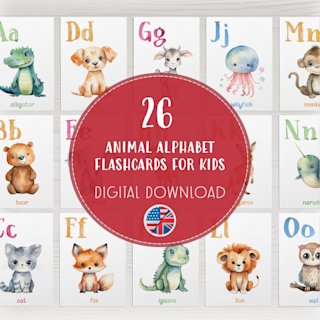
Our watercolor alphabet flashcards feature friendly animals paired with each letter. Large, clear, and designed for little hands. Print today and start building letter familiarity.

Alphabet Flashcards by Age

Toddlers change fast. What works at 12 months is different from what works at 36 months. Here's how to use flashcards at each stage.

Ages 12–18 Months: Exposure Phase

At this age, don't "teach" letters — just make them visible. Scatter large flashcards on the floor during playtime. When your toddler picks one up, say the letter casually: "Oh, you found B!" No quizzing, no pressure. Just naming.

What to expect: Your toddler will treat flashcards like any other object — stacking, sorting, chewing, waving. This is fine. The goal is familiarity, not mastery. Some toddlers this age will start pointing to letters on signs and packaging. That's letter awareness in action.

Best card design: One large letter per card with a simple, clear picture. Avoid cards with multiple letters, words, or busy backgrounds. The simpler, the better.

Ages 18–24 Months: Naming Phase

Now your toddler is building vocabulary rapidly. Hold up a flashcard and say the letter AND the picture: "A is for apple!" Then hand your toddler the card. Let them hold it, flip it, carry it around.

Activity: Letter of the Day. Pick one letter each day. Tape the flashcard to the fridge. Point to it at meals: "There's our A! A is for apple, and you're eating an apple!" Real-world connections make letters meaningful.

What to expect: Some toddlers this age will begin to match identical letters (finding two "A" cards from a scattered set). This is matching, not reading, and it's an important pre-literacy skill.

Ages 2–3: Recognition Phase

Most two-year-olds can learn to recognise 10–15 letters with consistent exposure. Some will learn all 26. The ones they learn first are usually the letters in their own name.

Activity: Name Letters. Write your child's name on a piece of paper. Help them find each letter from a stack of flashcards and place them in order. "Your name starts with M! Can you find M?"

Activity: Letter Hunt. Hide flashcards around the room. Call out a letter and your toddler finds it. This combines movement with letter recognition, which is how toddlers learn best — with their whole body.

What to expect: By age 3, many toddlers can identify most uppercase letters and some lowercase ones. Don't worry about letter sounds yet — that's a preschool skill. Focus on visual recognition and enjoyment.

8 Toddler-Friendly Alphabet Flashcard Activities

1. Flashcard Treasure Hunt

Hide 5–6 flashcards around a room. Call out a letter and help your toddler find it. Celebrate each find with clapping or a happy noise. Start with letters your child already recognises, then add new ones.

2. Sensory Bin Letters

Bury flashcards in a bin of rice, beans, or sand. Your toddler digs through the sensory material to find letters. When they pull one out, say the letter name. This combines tactile play with letter exposure.

3. Flashcard Match

Print two sets of flashcards. Lay out 4–6 cards face up. Hand your toddler the matching cards one at a time and help them find the pair. This is visual discrimination practice disguised as a game.

4. Letter Stomp

Scatter flashcards on the floor. Call out a letter and your toddler runs to stomp on it. High-energy toddlers love this one. It's especially good for kids who won't sit still for traditional flashcard time.

5. Feed the Monster

Tape a picture of a friendly monster to a box with a hole for a mouth. Call out a letter and your toddler "feeds" that flashcard to the monster. "The monster is hungry for... D!" This is our most-requested activity in parent workshops.

6. Bedtime Letter Story

Before bed, pick 3 flashcards and make a short story using the letters: "Once upon a time, A went on an adventure with B and C. They met a Dinosaur..." Your toddler will start requesting specific letters and contributing to the story.

7. Flashcard Ladder

Tape flashcards to the bottom of each stair. As your toddler climbs, they step on each letter and you say it together. This works for any age and turns a daily routine into letter practice.

8. Letter Sorting by Colour

If your flashcards have coloured borders or backgrounds, your toddler can sort them by colour first and letter second. Colour sorting is developmentally appropriate for young toddlers and gives you a natural opening to name the letters as they sort.

Make learning letters fun with animal-themed flashcards
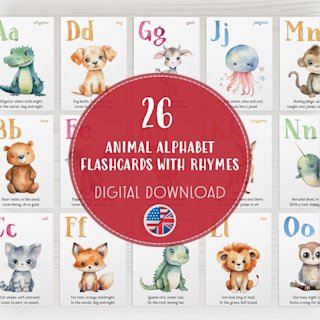
Each card pairs a letter with a friendly animal illustration and a fun rhyme. Designed by teachers, loved by toddlers, and ready to print in minutes. No prep required.

Tips for Using Flashcards with Toddlers

Keep sessions short. Two to five minutes is plenty. Toddlers learn in short bursts, not sustained lessons. Three five-minute sessions throughout the day are better than one fifteen-minute session.

Follow their lead. If your toddler is obsessed with the letter "M" this week, lean into M. If they lose interest in flashcards entirely for a few days, that's fine. Forced learning with toddlers is counterproductive — they resist and associate letters with negativity.

Use uppercase first. Uppercase letters are easier for toddlers to distinguish visually. E, F, L, H, T, and I are particularly clear because they're made of straight lines. Save lowercase for age 3+.

Don't test. "What letter is this?" creates pressure. Instead, model: "This is B! B for ball!" If your toddler starts naming letters on their own, celebrate it. If not, keep modelling without expectation.

Make them durable. Print on card stock, laminate, or slip into plastic sleeves. Toddlers will bend, bite, and spill on flashcards. Plan for it.

Frequently Asked Questions

Can a 1-year-old learn the alphabet?

A 1-year-old can become familiar with letter shapes, but "learning the alphabet" in the sense of naming all 26 letters is rare before age 2. The goal at this age is exposure and enjoyment, not mastery. Think of it like hearing a song repeatedly — the melody becomes familiar before the words make sense.

Should I teach letter names or sounds first?

For toddlers, start with letter names. "This is A" is simpler and more useful for everyday conversations than "This says /a/." Letter sounds are a preschool skill (ages 3–5) that builds on the visual recognition toddlers develop earlier.

How many flashcards should I use at once?

With toddlers, 3–5 cards at a time is ideal. Too many cards overwhelm them. Rotate which letters you use every few days to maintain variety without overload.

Are digital flashcards okay for toddlers?

The American Academy of Pediatrics recommends limiting screen time for children under 18–24 months. Physical flashcards are better for toddlers because they can hold them, flip them, carry them, and incorporate them into physical play — all of which support learning better than passive screen viewing.

Start building letter recognition today
From animal alphabet flashcards to ABC wall posters, our printable resources are designed for the way toddlers actually learn — through play, repetition, and real-world connections. Download and print in minutes.