Articles7 min read

The Sock That Talked Back

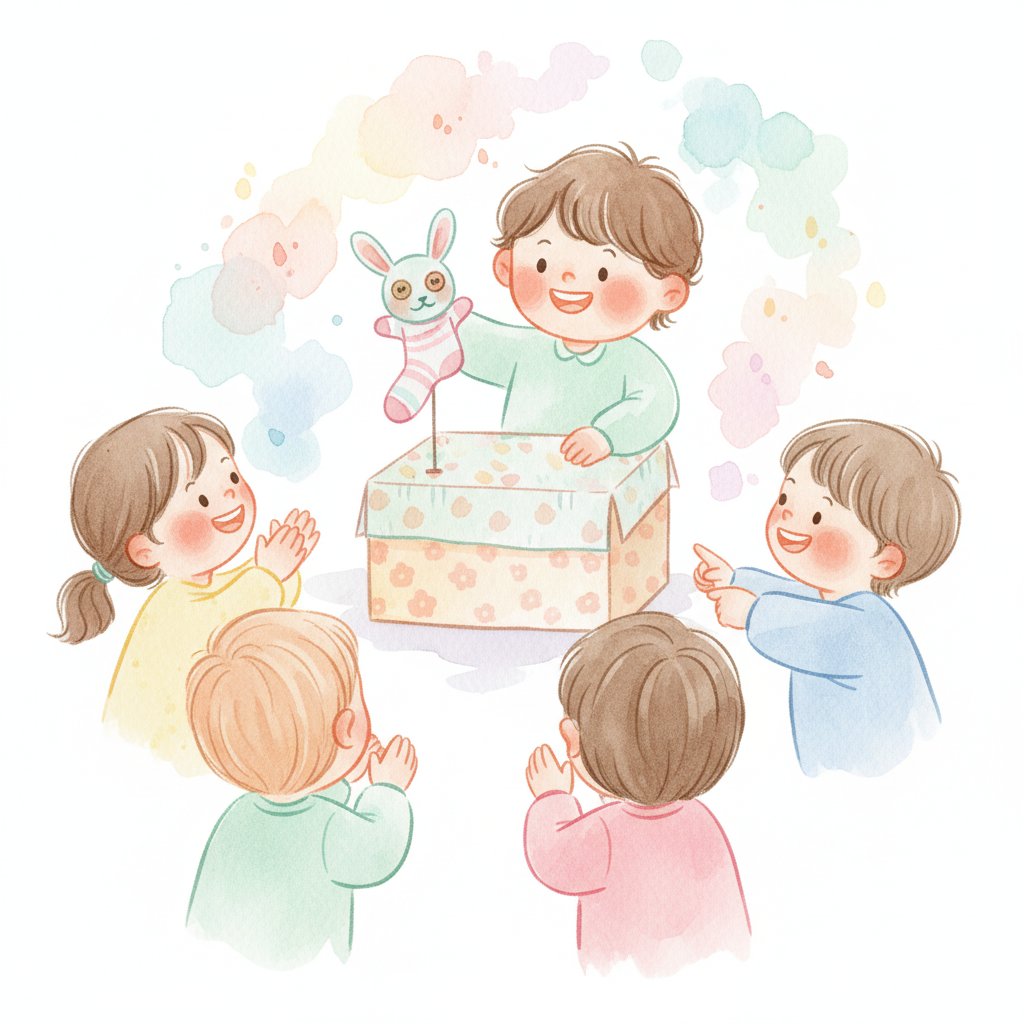
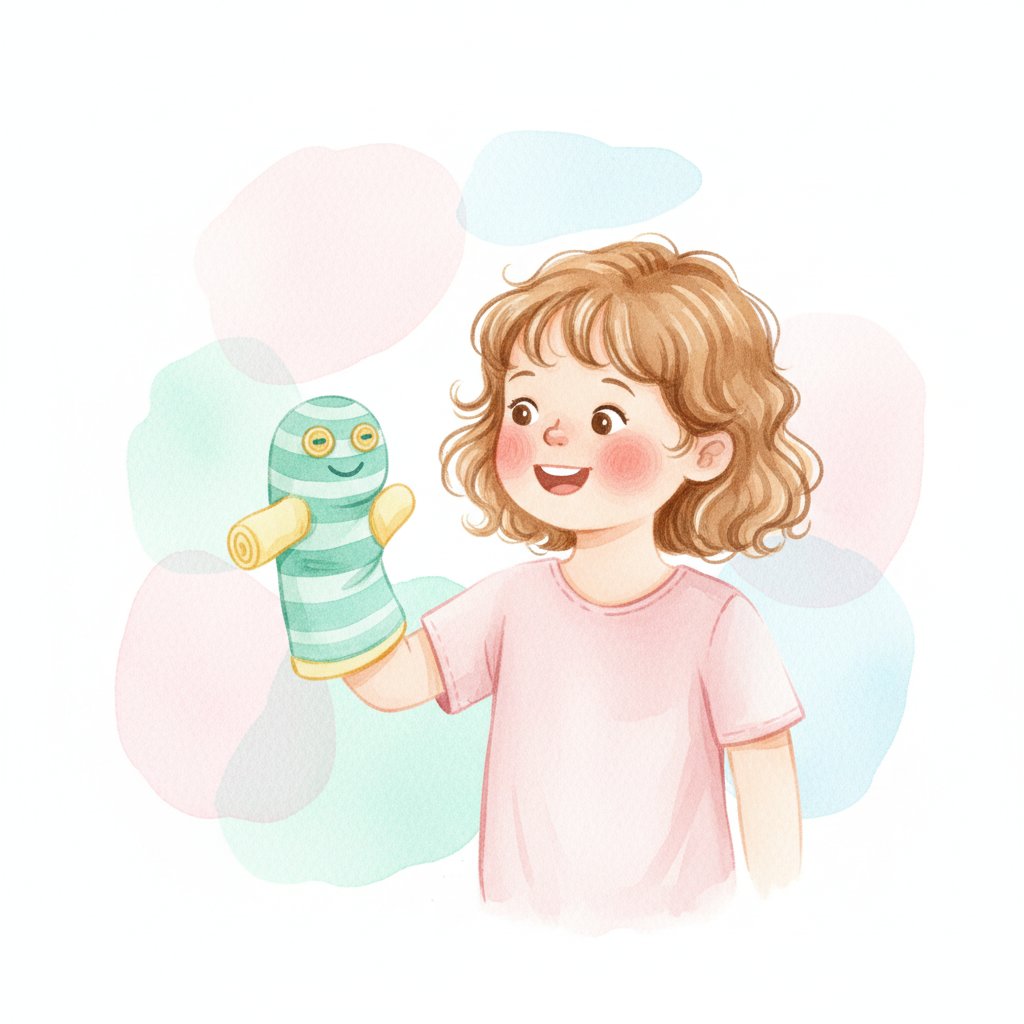
I put a sock on my hand, drew eyes on it with a marker, and made it look at five-year-old Tyler. "Hi! I am Mr. Sock and I am NEW here. What is your name?" Tyler stared. Then he whispered: "Tyler." "TYLER! That is a GREAT name! Do you like dinosaurs?" Tyler nodded. "I LOVE dinosaurs but I am scared of the T-Rex. Is he nice?" Tyler forgot he was talking to a sock. He forgot I was behind it. He talked to Mr. Sock for 10 minutes about which dinosaurs were scary and which were friendly. Then he asked: "Can I make a puppet too?" He made a sock dinosaur named Chompy. Mr. Sock and Chompy had a conversation about sharing toys. It was the longest, most articulate conversation Tyler had ever had. The puppet gave him DISTANCE from the social pressure of eye contact. It gave him a CHARACTER to hide behind while being fully himself. That is the power of puppets: they let children be brave, honest, and creative through a stand-in.

According to the National Association for the Education of Young Children, puppet activities develop expressive language, narrative skills, social-emotional expression, confidence in performing, and creative thinking. Children who are shy often speak freely through puppets, and children who struggle with direct communication find their voice through puppet characters.
This guide covers 20+ puppet activities for ages 3-6. Pair it with our storytelling guide for narrative skills and our dramatic play guide for more role-play.
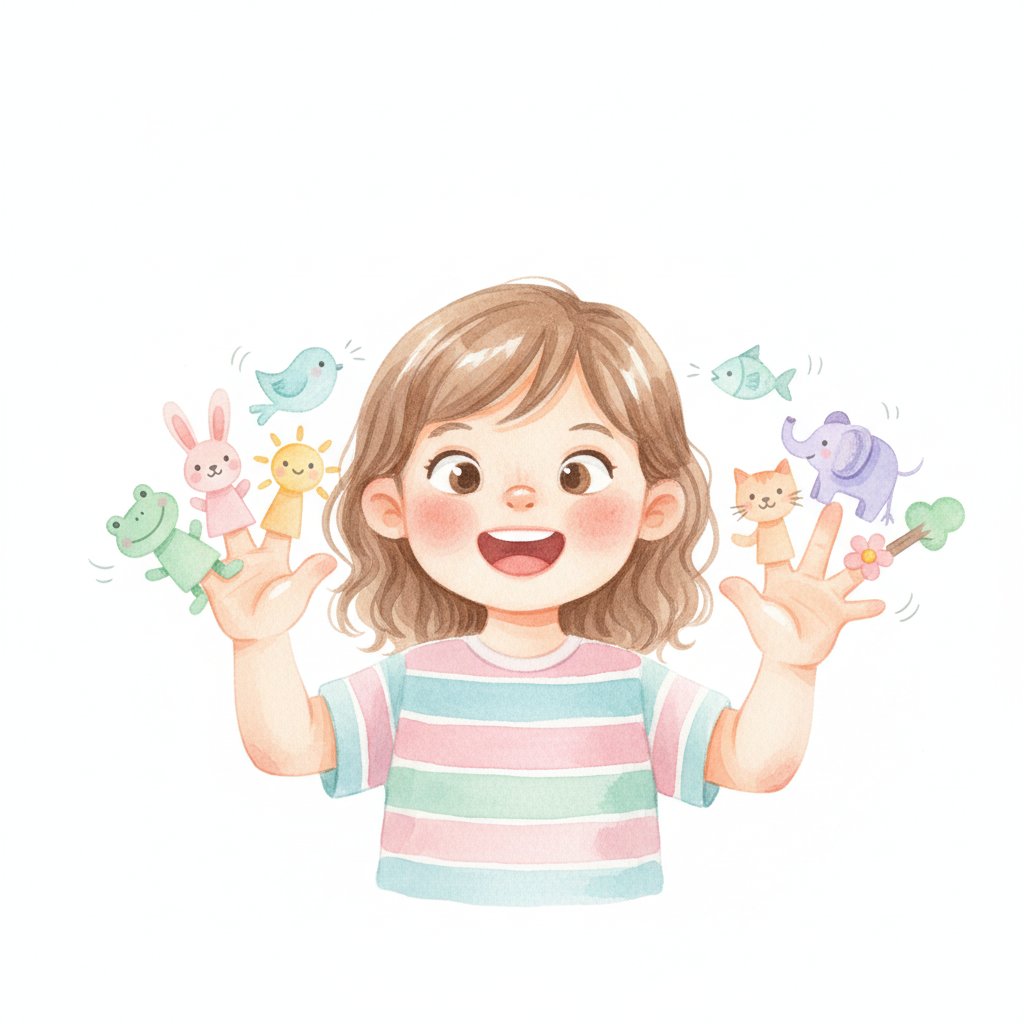
Puppet Making Activities (Ages 3-6)

1. Paper bag puppets
Materials: Paper lunch bags, markers, glue, construction paper.

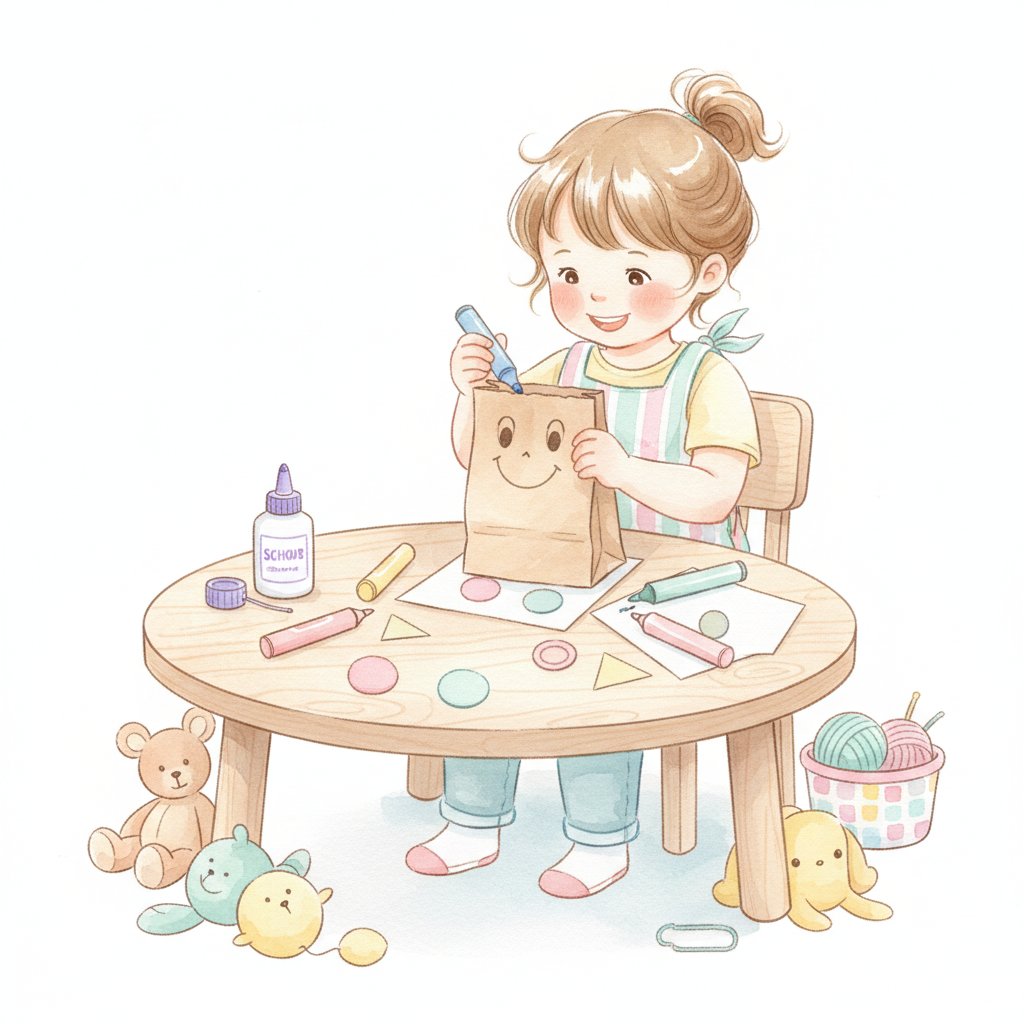
What to do: "The flap on the bag is the MOUTH. Draw eyes above it. Decorate the body below. When you move the flap, your puppet TALKS!" The paper bag puppet teaches character creation. For more paper crafts, see our scissor guide.

Why it works: Puppets work because they create PSYCHOLOGICAL DISTANCE between the child and the performance. A child who freezes when asked "Tell the class about your weekend" will talk for 10 minutes through a puppet: "ROAR! I am Chompy the Dinosaur and this weekend I went to the PARK and I ate LEAVES and I saw a DOG and it was SCARY!" The puppet removes the self-consciousness. The child is not performing — the PUPPET is performing. This freedom unlocks language, emotion, and creativity that direct interaction often suppresses. The puppet is a bridge between the child's inner world and the outer world.

2. Sock puppets
Materials: Clean socks, felt, googly eyes, glue.

What to do: "Put the sock on your hand. The TOES are the mouth. Glue eyes on top. Add a felt tongue, ears, or a hat. Give your puppet a NAME and a VOICE." The sock puppet teaches fine motor and character voice. For more fine motor, see our fine motor guide.

3. Finger puppets
Materials: Paper strips, markers.

What to do: "Cut a strip of paper that wraps around your finger. Draw a face on it. Now your FINGER is a character! Make five finger puppets — one for each finger — and they can all talk to each other!" The finger puppet teaches small-scale creation and ensemble casting. For more finger play, see our finger play guide.

4. Stick puppets
Materials: Craft sticks, paper cutouts, tape.

What to do: "Draw or cut out a character. Tape it to a craft stick. Hold the stick below the stage and your character appears ABOVE it!" The stick puppet teaches staging and performance mechanics. For more crafts, see our craft guide.

5. Paper plate puppets
Materials: Paper plates, craft sticks, markers.

What to do: "Draw a BIG face on the paper plate. Tape a stick to the bottom. These are HUGE puppets — perfect for big emotions! Make a happy face on one side and a sad face on the other. FLIP the plate when the mood changes." The plate puppet teaches emotion expression. For more emotions, see our feelings guide.

Your flashcards are puppet blueprints
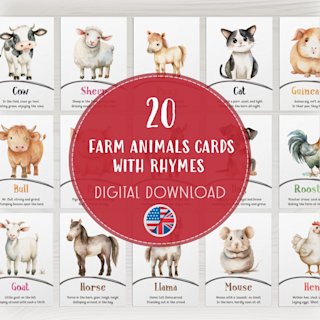
Our Farm Animals Flashcards become puppet design sheets: 'Pick the COW card. Now make a cow puppet! The card shows you what the cow looks like: white body, black spots, pink nose, horns. Use a paper bag — the flap is the mouth. Draw the spots. Add construction paper horns. Give your cow puppet a NAME and a VOICE. Moo-rgaret speaks in a deep, slow voice. Mooriah is high-pitched and fast.' Each flashcard is a DESIGN SPECIFICATION: the animal's colors, features, and shape become the puppet's design. The child looks at the card, then translates the 2D image into a 3D puppet. Twelve animals, twelve puppets, one farm puppet show.

Puppet Shows and Theater (Ages 3-6)

6. Puppet theater stage
Materials: Large cardboard box, scissors, paint.

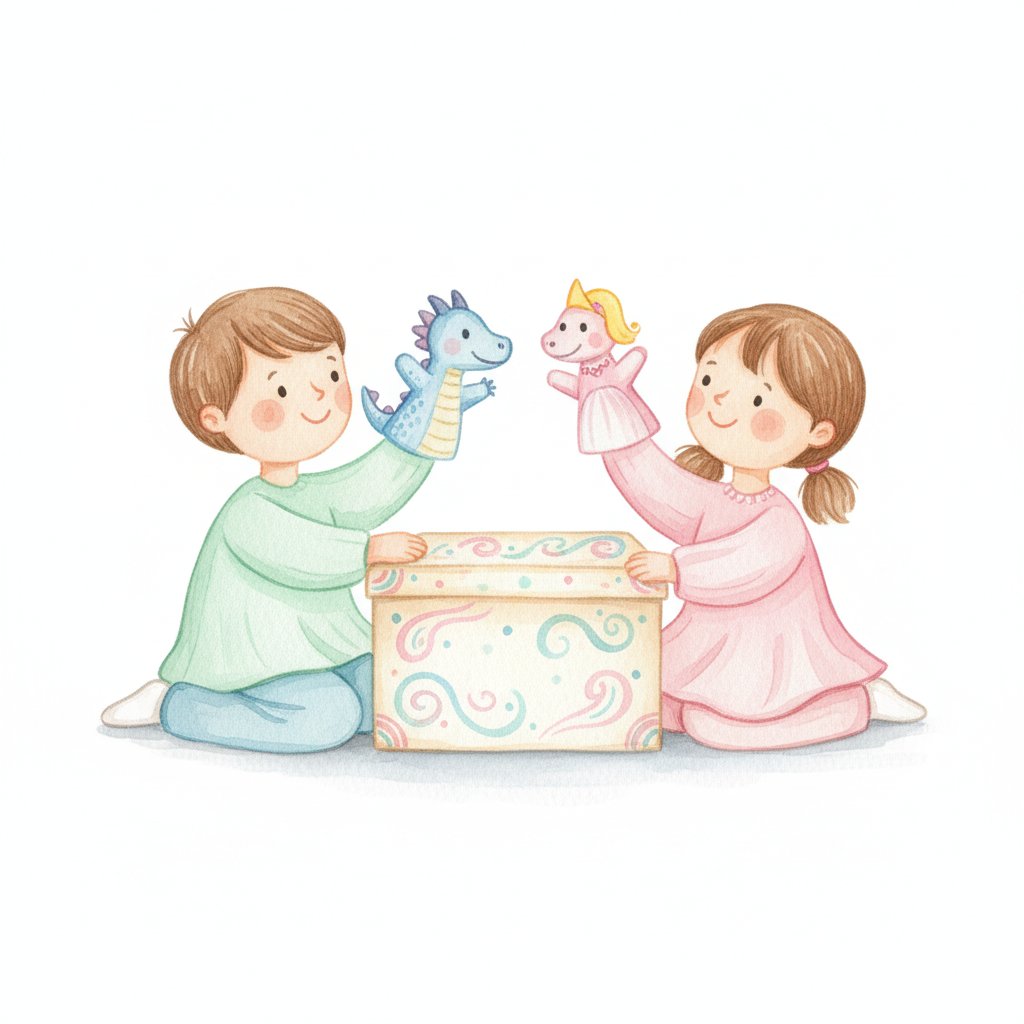
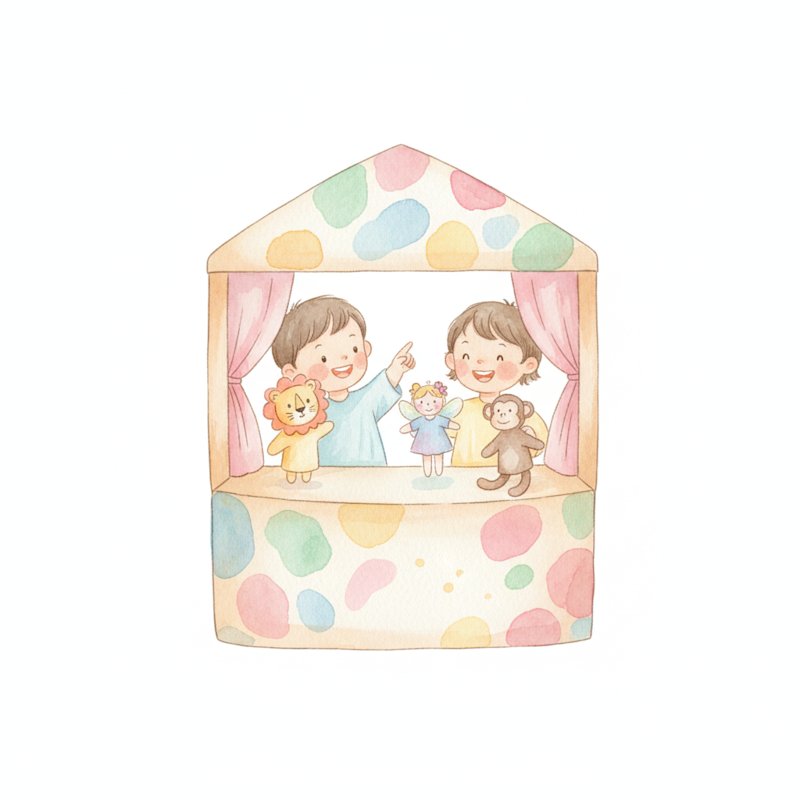
What to do: "Cut a window in the box. Paint curtains around the opening. The puppeteers crouch BEHIND the box and only the puppets appear in the window. It is a REAL theater!" The stage teaches performance boundaries. For more dramatic play, see our pretend play guide.

7. Retell a story with puppets
Materials: Book, matching puppets.

What to do: "Read 'The Three Billy Goats Gruff.' Now use puppets to ACT IT OUT: small goat, medium goat, big goat, and the troll. Who goes trip-trap over the bridge first?" The story retell teaches comprehension through performance. For more stories, see our storytelling guide.

8. Puppet interview
Materials: Puppet, microphone prop.

What to do: "I will interview your puppet. 'Hello, what is your name? Where do you live? What is your favorite food? What makes you scared? What makes you happy?' The puppet answers — and the child speaks through it." The interview teaches question-answering and character development. For more conversation, see our conversation guide.

9. Problem-solving puppet show
Materials: Puppets, problem scenario.

What to do: "Two puppets want the same toy. What should they do? Act out the solution with your puppets: sharing, taking turns, asking, or finding another toy." The problem-solving show teaches conflict resolution through puppet modeling. For more problem-solving, see our problem-solving guide.

10. Puppet news report
Materials: Puppet, microphone.

What to do: "Breaking news! Your puppet is a REPORTER. What happened in the classroom today that is newsworthy? 'This just in: someone built a TOWER taller than their HEAD!'" The news report teaches summarizing and reporting. For more language, see our vocabulary guide.

Puppets that show what you feel
Our Emotions Flashcards become emotion puppets: 'Pick the ANGRY card. Make a puppet with an angry face — furrowed eyebrows, frown, red cheeks. Now pick the SURPRISED card. Make a surprised puppet — wide eyes, open mouth. Now make them TALK: Angry puppet says: I am MAD because someone took my block! Surprised puppet says: OH! I did not know you were using it!' The flashcards give the emotion; the puppet gives it a VOICE. Children act out feelings they might not be able to express directly. The angry puppet is not the child being angry — it is a CHARACTER being angry. That distance makes it SAFE to feel and express big emotions. Twelve emotions, twelve puppets, twelve conversations about feelings.

Shadow and Special Puppets (Ages 3-6)

11. Shadow puppets
Materials: Flashlight, wall, paper cutouts on sticks.

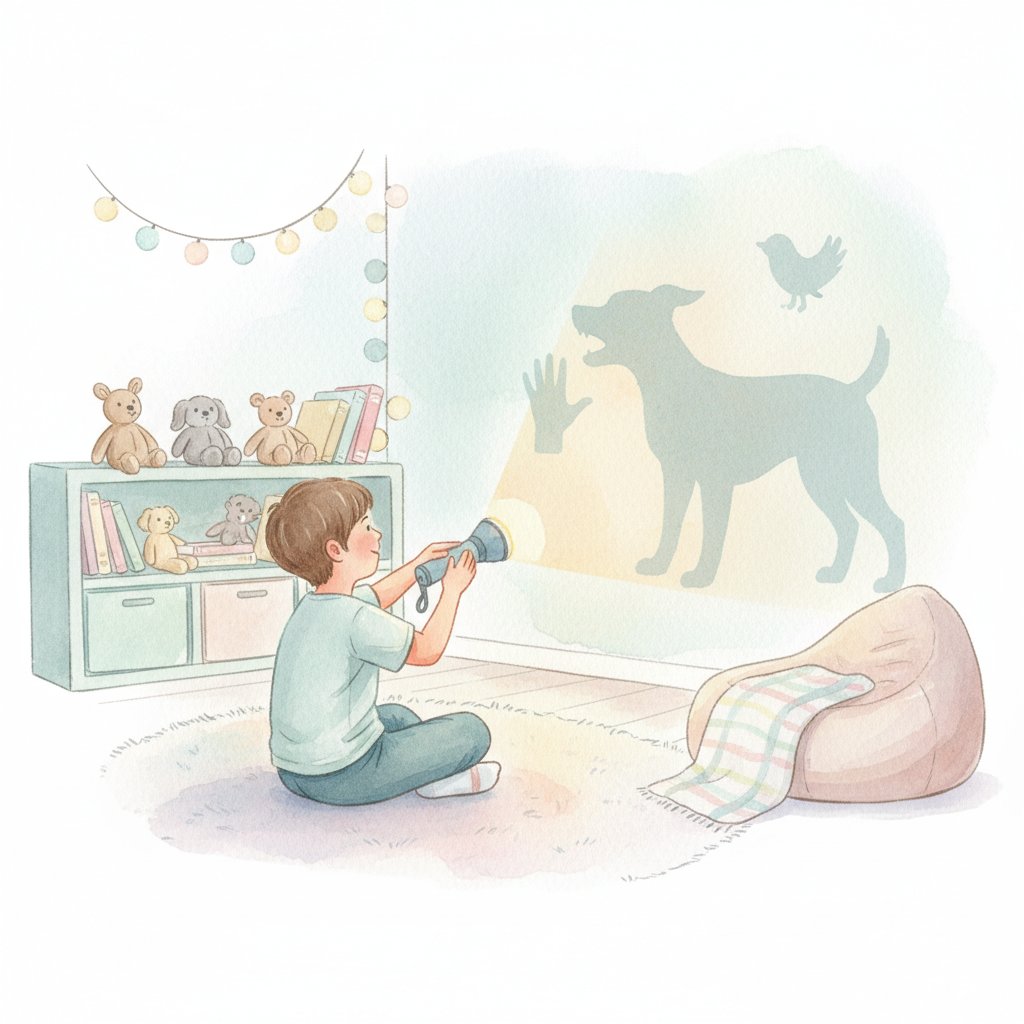
What to do: "Shine the flashlight on the wall. Hold your puppet between the light and the wall. See its SHADOW? Move it closer to the light — the shadow gets BIGGER. Move it away — it gets smaller!" The shadow puppets teach light physics. For more light, see our shadow guide.

12. Hand shadow animals
Materials: Flashlight, wall, hands.

What to do: "Make a bunny with your hand — two fingers up for ears. Make a bird — thumbs together, hands flapping. Make a dog — four fingers for the snout. No materials needed, just your HANDS!" The hand shadows teach body awareness and creativity. For more body, see our body guide.

13. Moving mouth puppet
Materials: Two paper plates folded in half, stapled at the hinge.

What to do: "Decorate the inside of the mouth RED. Add teeth on the edges. Hold the two halves and open and close — CHOMP CHOMP! A talking mouth!" The moving mouth puppet teaches mechanical design. For more design, see our engineering guide.

14. String marionette
Materials: Toilet paper roll, string, craft sticks.

What to do: "Tie string to the top of the roll (the head). Tie strings to the sides (arms). Tie all strings to a craft stick crossbar. Hold the crossbar and make your puppet WALK!" The marionette teaches cause and effect through string control. For more cause and effect, see our science guide.

15. Nature puppet
Materials: Leaves, sticks, pebbles, glue.

What to do: "Collect natural materials. Glue a leaf to a stick for a leaf puppet. A pebble with googly eyes becomes a rock monster. A pinecone becomes a porcupine!" The nature puppet teaches using found materials. For more nature, see our outdoor guide.

More Puppet Activities (Ages 3-6)

16. Puppet greeting circle
Materials: Puppets.

What to do: "Every morning, your puppet greets a friend's puppet. 'Good morning, Chompy! How are you today?' 'I am GREAT, Mooriah! I ate three leaves for breakfast!'" The greeting circle teaches social scripts through puppets. For more social skills, see our social skills guide.

17. Puppet counting song
Materials: Five finger puppets.

What to do: "Five little monkeys jumping on the bed! One fell off and bumped his head. Put one puppet down. How many LEFT? Four! Keep singing and counting down to zero." The counting song teaches subtraction through puppets. For more counting, see our number guide.

18. Puppet feelings check-in
Materials: Puppets.

What to do: "How is your puppet feeling today? Happy? Sad? Scared? Excited? Tell us in your puppet's VOICE. The puppet feels it so YOU do not have to say it directly." The feelings check-in teaches emotional awareness at a safe distance. For more feelings, see our feelings guide.

19. Puppet alphabet teacher
Materials: Puppet, alphabet cards.

What to do: "The puppet is the TEACHER today! The puppet holds up a letter card and says: 'What is this letter? Who can tell me? It makes the /b/ sound!' Let the puppet teach the lesson." The puppet teacher teaches letter recognition through role reversal. For more alphabet, see our alphabet guide.

20. Puppet talent show
Materials: Puppets, stage, audience.

What to do: "Welcome to the Puppet Talent Show! Each puppet has a TALENT: singing a song, telling a joke, doing a dance, or doing a magic trick. The audience CLAPS after each act!" The talent show teaches performance confidence and audience etiquette. For more confidence, see our confidence guide.

Puppets teach body parts and body science
Our Human Body Poster becomes a puppet anatomy lesson: 'Make a body puppet! The HEAD goes on TOP — draw eyes, nose, mouth, ears. The BODY is in the MIDDLE — where does the heart go? The ARMS go on the SIDES — bend them at the elbow. The LEGS go on the BOTTOM — can your puppet walk? Dance? Jump?' Each body part on the poster becomes a puppet part. The child builds the puppet from the poster reference: head, torso, arms, legs, hands, feet. The poster is the DIAGRAM; the puppet is the 3D model. When the puppet is done, it can POINT to where its brain is, where its heart is, where its stomach is. Body parts learned through a character the child created.
1.What age is best to start puppet activities?
Age 3 is ideal for simple puppets like paper bags and finger puppets. Younger children (2-2.5) enjoy watching adult puppet shows and holding simple puppets, but the creative making and performing really starts at 3. By 4-5, children can write (or dictate) scripts, design characters, build stages, and perform full shows. Start simple and increase complexity with age. The key is that the puppet gives the child a VOICE — and every child deserves to be heard, regardless of age.
2.How do puppets help shy children?
Puppets are the #1 tool for shy children because they provide PSYCHOLOGICAL DISTANCE. The child is not speaking — the PUPPET is speaking. The child is not performing — the PUPPET is performing. This removes the self-consciousness that blocks communication. Start by having the puppet talk TO the child (not the child talking through the puppet). Then have the puppet ask the child to make a puppet too. Two puppets talking to each other is much easier than two children talking directly. Gradually, the confidence transfers from the puppet to the child.
3.Do I need a puppet theater?
No. A puppet theater is nice but not necessary. Children perform behind a table, a couch, a cardboard box, or even just holding the puppet up in the air. The THEATER is not what makes it work — the PUPPET is what makes it work. A child holding a sock puppet on their hand, sitting on the rug, will create just as rich a performance as a child behind a painted stage. If you do want a stage, a large cardboard box with a window cut out and painted curtains takes 15 minutes to make.
4.How do puppets connect to literacy?
Puppets connect to literacy in four ways: (1) RETELLING — children act out stories they have heard, building comprehension. (2) ORIGINAL STORIES — children create narratives with characters, settings, and plots. (3) DIALOGUE — puppets speak in complete sentences, modeling conversational structure. (4) WRITING — older preschoolers can write or dictate scripts for puppet shows. Every puppet show is a STORY, and storytelling is the foundation of reading and writing. Children who tell stories through puppets become children who write stories on paper.