Articles7 min read

Welcome to the Preschool Cafe

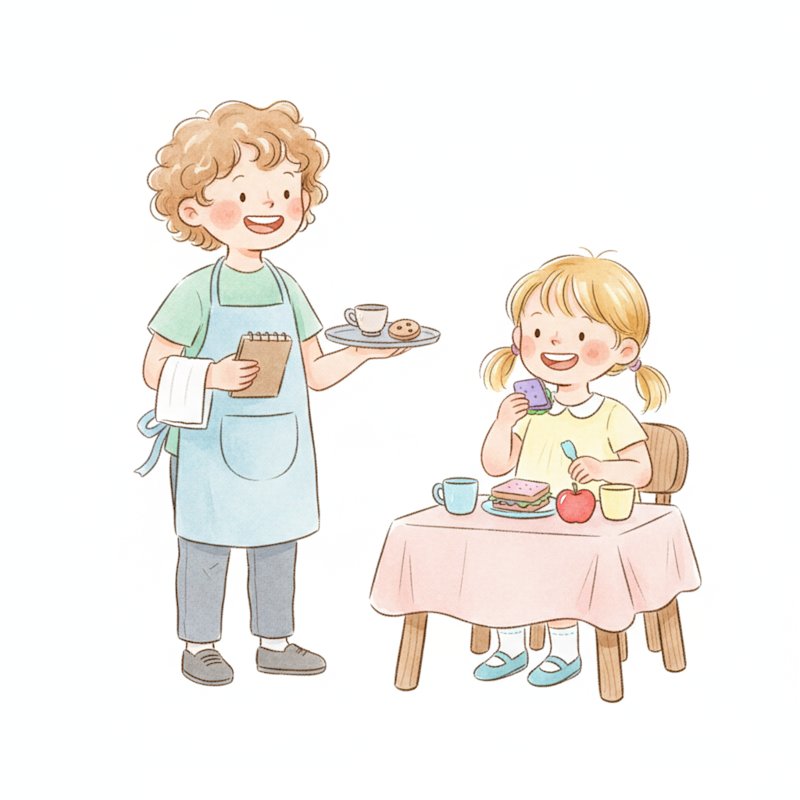
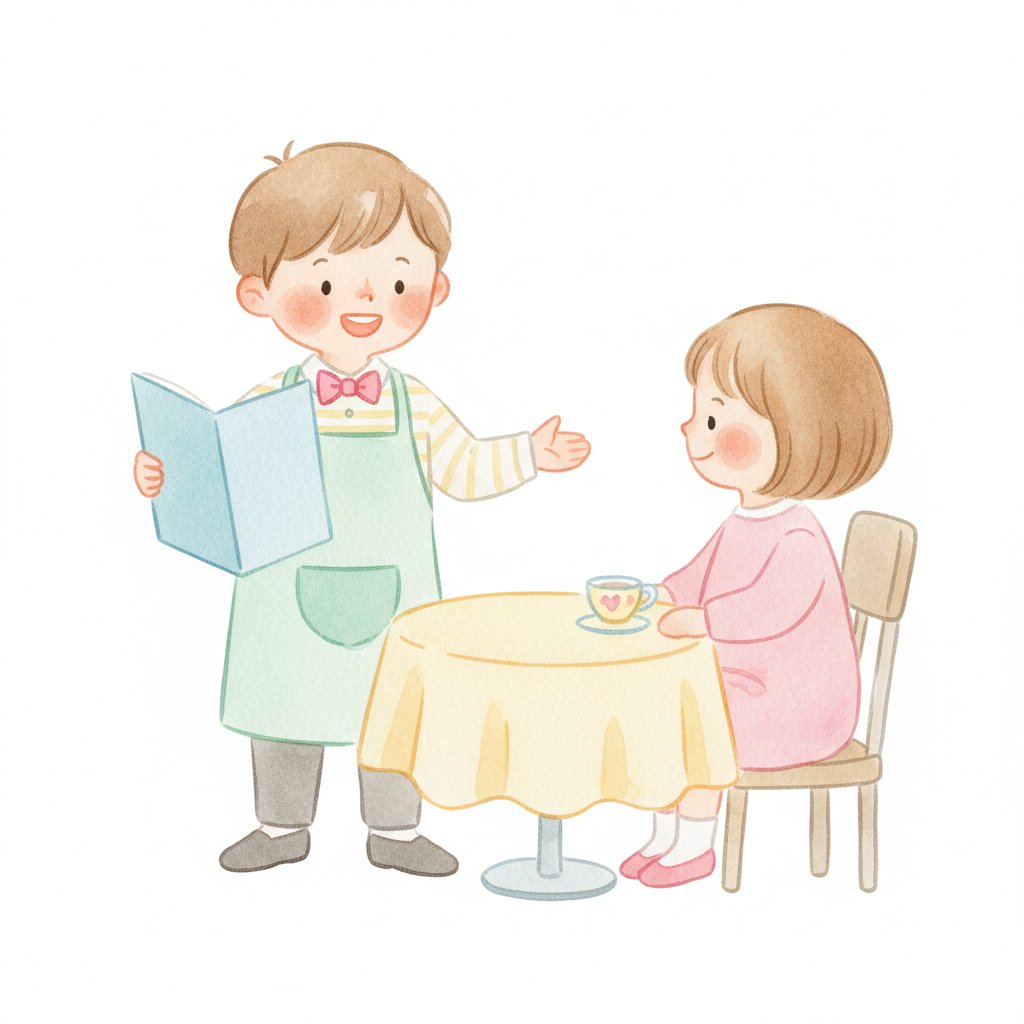
"Table for two?" asked five-year-old Emma, holding a pencil behind her ear like a seasoned server. "Right this way." She seated two stuffed animals at a table set with paper plates and plastic utensils. "Here is your MENU. Today we have pizza, soup, salad, and cookies. Would you like to hear the SPECIALS?" She paused, consulting her handwritten menu. "The special is GRILLED CHEESE with tomato soup. It is DELICIOUS." She took the order on a notepad, delivered it to the kitchen (the sensory table), where the chef (four-year-old Jayden) assembled it from felt food and play dough. "Order up!" Jayden called. Emma delivered the food, refilled water cups, and presented the bill: "That will be THREE dollars, please." The customer (a teacher with a stuffed bear) paid with play money. "Thank you for dining with us! Come again!" In 20 minutes, Emma had practiced writing (menu, order pad), reading (the menu), math (counting money), social skills (greeting, eye contact, please/thank you), sequencing (seat, order, cook, serve, pay), and empathy (anticipating what the customer needs). She thought she was playing restaurant.

According to the National Association for the Education of Young Children, restaurant dramatic play integrates literacy (menus, orders), math (counting, money), social skills (customer service etiquette), and real-world communication into one seamless play experience. Children practice every academic subject while thinking they are just having fun.
This guide covers 20+ restaurant and cafe activities for ages 3-6. Pair it with our cooking guide for real food and our money guide for economics.
Setting Up the Restaurant (Ages 3-6)

1. Restaurant zone
Materials: Table, chairs, tablecloth, dishes.

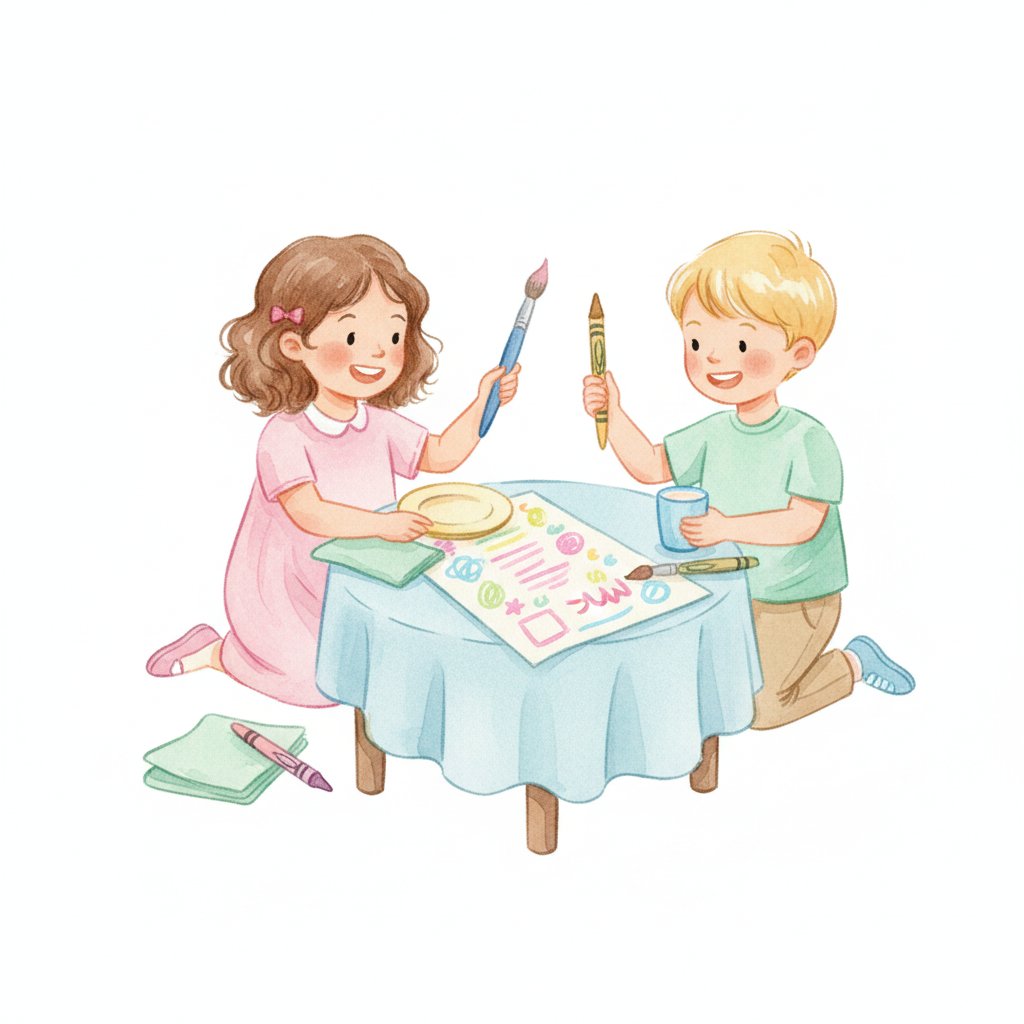
What to do: "Set up the restaurant: a table with a tablecloth, plates, cups, napkins, and utensils. Add a sign on the door: OPEN. When you flip it to CLOSED, the restaurant is not taking customers." The setup teaches organization and environmental print. For more dramatic play, see our pretend play guide.

Why it works: Restaurant play works because it mirrors an experience EVERY child has had. They have been to restaurants. They have SEEN servers take orders, cooks make food, and cashiers collect money. This familiarity means they come to the play already knowing the SCRIPT — they just need to practice the PARTS. The menu is writing practice. The order pad is listening and recording. The kitchen is sequencing. The bill is math. The service is social skills. Every restaurant role practices a different set of skills, and children rotate through all of them. It is a complete learning center disguised as a pizza place.

2. Menu creation
Materials: Paper, markers, pictures of food.

What to do: "Write or draw your menu: APPETIZERS, MAIN DISHES, DRINKS, DESSERTS. Put a PRICE next to each item: pizza $2, soup $1, cookie $1. Every customer gets a menu to read." The menu creation teaches writing, drawing, categorization, and pricing. For more writing, see our writing guide.

3. Order pad
Materials: Notepad, pencil.

What to do: "The server writes down what each customer wants. 'What would you like? The soup? Great. And to drink? Water. Perfect.' Write it or draw it on the pad so the chef knows what to make." The order pad teaches listening, recording, and symbolic representation. For more listening, see our listening guide.

4. Kitchen station
Materials: Play food, pots, pans, play dough.

What to do: "The kitchen receives orders from the server. The chef reads the order and makes the food. Pizza: play dough crust, felt cheese, paper pepperoni. Soup: water in a pot with foam vegetables. COOK, PLATE, and ring the bell: ORDER UP!" The kitchen station teaches following multi-step instructions. For more cooking, see our cooking guide.

5. Cash register
Materials: Play money, calculator, receipt book.

What to do: "The bill is $4. The customer gives you $5. How much CHANGE do you give back? $1! Write the receipt: $4 total, $5 paid, $1 change." The cash register teaches addition, subtraction, and money handling. For more money, see our money guide.

A menu for every letter of the alphabet
Our Alphabet Flashcards become menu sections: 'Pick the A card. Everything on the A page starts with A: Apple pie, Avocado toast, Antipasto. Pick the B card: Banana bread, Broccoli soup, Blueberry muffins. Pick the P card: Pizza, Pasta, Pancakes, Pretzels!' Children create a menu organized by letter. Each flashcard page shows foods that START with that letter. The connection between the letter shape and the food word is reinforced every time a customer orders: 'I would like the B-food please. Which one? The BANANA bread!' Twenty-six letters, twenty-six menu pages, one alphabetical restaurant where every order is a phonics lesson.

Restaurant Roles and Activities (Ages 3-6)

6. Host and hostess
Materials: Seating chart, name tags.

What to do: "Welcome to our restaurant! How many in your party? Two? Right this way. Here is your table. Your server will be with you in one moment." The host role teaches greeting, counting, and spatial planning. For more social skills, see our social skills guide.

7. Chef special
Materials: Play food, recipe cards.

What to do: "Today the chef's special is RAINBOW SALAD. Follow the recipe: 1 red tomato, 2 orange carrots, 3 yellow peppers, 4 green cucumbers. Count each ingredient as you add it!" The chef special teaches counting and following recipes. For more counting, see our number guide.

8. Server training
Materials: Tray, dishes.

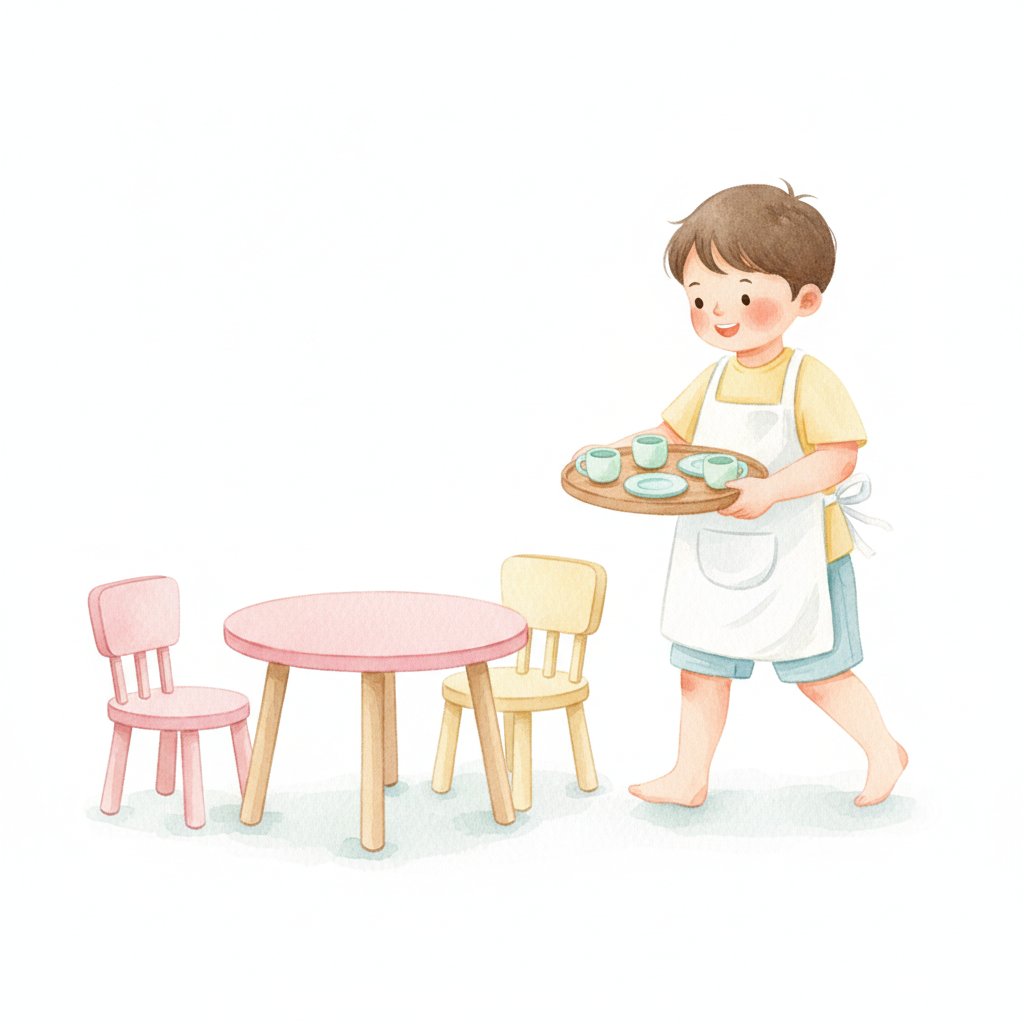
What to do: "Balance the tray with three plates. Walk SLOWLY. Don't drop anything! Serve each customer the right dish: the pizza goes to the person who ORDERED pizza." The server training teaches balance, memory, and matching. For more balance, see our gross motor guide.

9. Dishwasher station
Materials: Tub of soapy water, sponges, dishes.

What to do: "The dishes need washing! Scrub each plate with the sponge, rinse it in the clean water, and stack it to dry. Every restaurant needs a DISHWASHER!" The dishwashing teaches practical life skills and sensory play. For more sensory, see our sensory guide.

10. Food critic
Materials: Rating sheet with smiley faces.

What to do: "Taste the food. Was it YUMMY (3 stars), OK (2 stars), or NOT GREAT (1 star)? Write or draw your review. What did you like? What would you change?" The food critic teaches opinion expression and evaluation. For more opinions, see our conversation guide.

Where does our food come from?
Our Farm Animals Flashcards become a farm-to-table lesson: 'Our restaurant serves FARM FOOD. The COW gives us MILK — we make cheese and butter. The CHICKEN gives us EGGS — we make omelets and cakes. The SHEEP gives us WOOL — wait, we don't eat wool! But the sheep live on the farm too.' Each flashcard becomes a FARM-TO-TABLE connection: this animal, this product, this menu item. Children match the animal card to the food on the menu. The cow card goes next to the cheese pizza. The chicken card goes next to the egg sandwich. Twelve animals, twelve connections, a restaurant that teaches where food REALLY comes from.

Bakery and Cafe Activities (Ages 3-6)

11. Bakery shop
Materials: Play dough, cookie cutters, baking sheet.

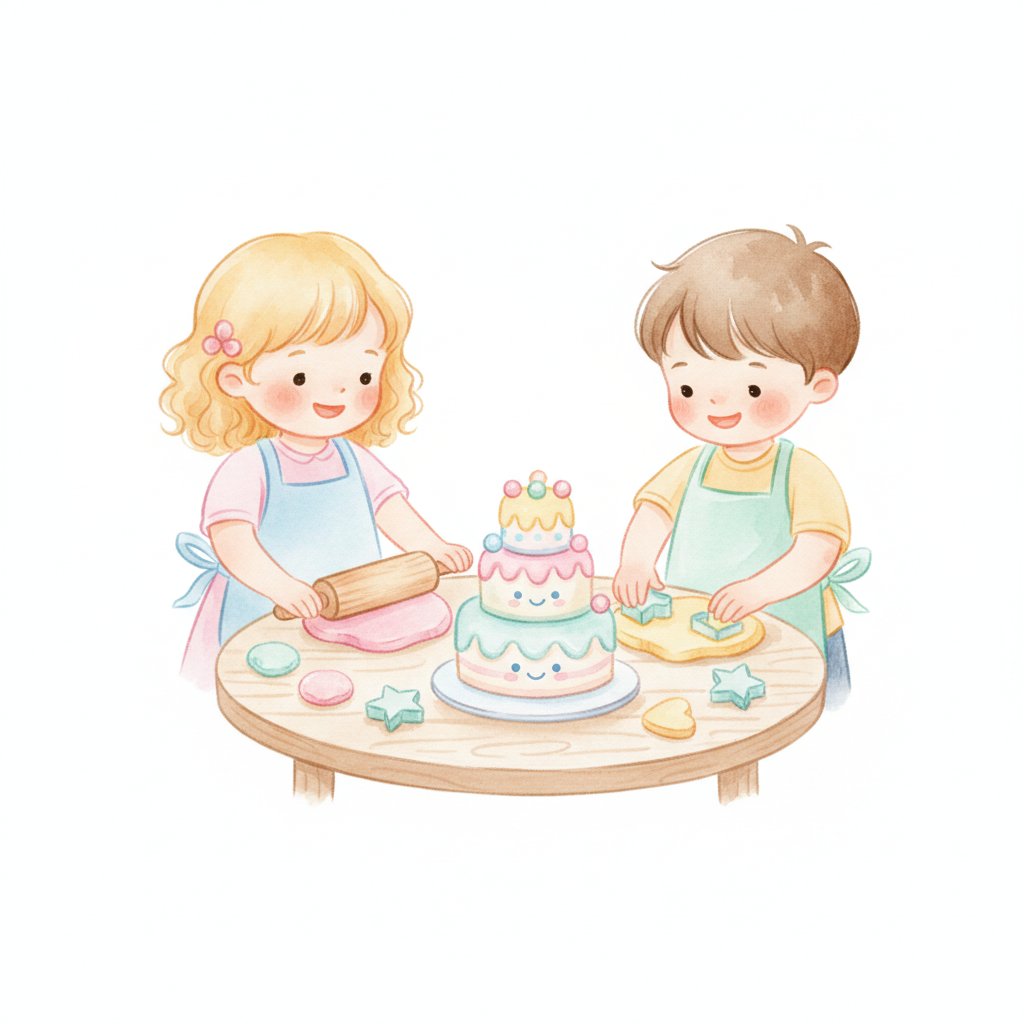
What to do: "Welcome to the BAKERY! Make cookies with play dough: roll it flat, cut shapes, put them on the tray, and set the timer. DING! Cookies are done! How many did we make? COUNT them." The bakery teaches counting and shape recognition. For more shapes, see our shapes guide.

12. Birthday cake orders
Materials: Play dough, candles, order forms.

What to do: "The customer wants a birthday cake with 5 candles. Make the cake, add 5 candles, and write HAPPY BIRTHDAY on the card. Deliver it singing the birthday song!" The birthday cake teaches one-to-one correspondence. For more counting, see our number guide.

13. Coffee shop
Materials: Cups, brown play dough or water, labels.

What to do: "Welcome to the COFFEE SHOP. Here is the menu: hot chocolate $1, coffee $2, tea $1. Would you like whipped cream on top? That is 50 cents extra." The coffee shop teaches pricing and addition. For more money, see our money guide.

14. Smoothie bar
Materials: Toy blender (or bowl), colored pom-poms as fruit.

What to do: "Pick 3 fruits for your smoothie: 2 red (strawberries) and 1 blue (blueberry). Put them in the blender and MIX! What color did it turn? PURPLE! Red + blue=purple!" The smoothie bar teaches color mixing and counting. For more colors, see our color guide.

15. Ice cream shop
Materials: Play dough, cones, scoops.

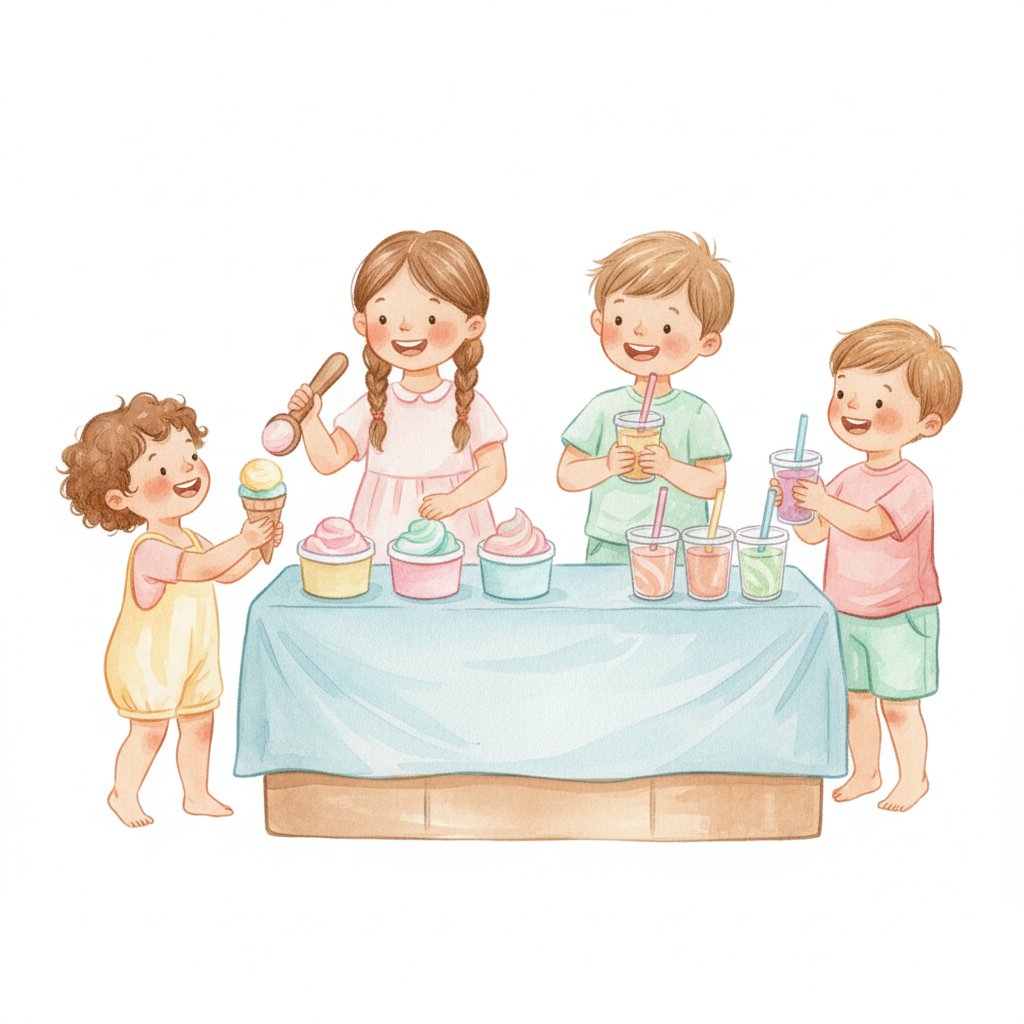
What to do: "How many scoops? 1, 2, 3! What flavor? Chocolate, vanilla, strawberry. That will be $2. Would you like SPRINKLES?" The ice cream shop teaches flavor vocabulary and counting. For more vocabulary, see our vocabulary guide.

More Restaurant Activities (Ages 3-6)

16. International restaurant
Materials: Flags, international food pictures.

What to do: "Today is MEXICAN day! The menu has tacos, rice, and beans. Tomorrow is ITALIAN day: pizza, pasta, and gelato. Each day we visit a different country through FOOD." The international restaurant teaches cultural awareness. For more cultures, see our multicultural guide.

17. Healthy choices menu
Materials: Food pictures sorted by category.

What to do: "Sort the menu: SOMETIMES foods (cake, fries) and EVERYDAY foods (fruit, vegetables, water). Design a menu where every meal has one EVERYDAY food." The healthy menu teaches nutrition. For more health, see our nutrition guide.

18. Restaurant manners
Materials: None.

What to do: "Practice restaurant manners: say PLEASE and THANK YOU, use a NAPKIN, chew with your mouth CLOSED, wait for everyone to be served before eating. Customers with good manners get a GOLD STAR." The restaurant manners teach etiquette. For more manners, see our manners guide.

19. Restaurant signs
Materials: Paper, markers.

What to do: "Every restaurant needs SIGNS: OPEN/CLOSED, PUSH/PULL on the door, WAIT TO BE SEATED, RESTROOMS, EMPLOYEES ONLY. Make the signs and hang them up!" The signs teach environmental print and functional reading. For more reading, see our reading guide.

20. Restaurant review journal
Materials: Journal, markers.

What to do: "After visiting the restaurant, write a REVIEW: What did you eat? What did you like? Would you go back? Draw a picture of your meal. Give it STARS: 1, 2, 3, 4, or 5!" The review journal teaches reflective writing and evaluation. For more writing, see our writing guide.

A different special every day of the week
Our Days of the Week Poster becomes the daily specials board: 'MONDAY special: Macaroni and Cheese — because Monday needs comfort food. TUESDAY special: Tacos — Two-Taco Tuesday! WEDNESDAY special: Waffles — Waffle Wednesday! THURSDAY special: Toast and jam — Throwback Thursday to breakfast for dinner. FRIDAY special: Fish and chips — because the WEEK is done!' Each day of the week poster card pairs with a food special. Children learn the days by their FOOD association: Monday is mac-and-cheese day, Tuesday is taco day. The poster structures the week; the restaurant theme gives each day a FLAVOR. Seven days, seven specials, one delicious week.
1.How do I set up a restaurant in a small space?
A restaurant fits on a SHELF: (1) MENU shelf — menus, order pads, pencils. (2) KITCHEN shelf — play food, pots, pans, utensils. (3) CASHIER shelf — play money, cash register, receipts. One table with two chairs is the dining area. Rotate the restaurant into your existing dramatic play center and swap out the theme weekly: Monday is pizza shop, Tuesday is bakery, Wednesday is smoothie bar. The entire restaurant fits in a 4-foot area and packs into a storage bin when not in use.
2.What if children fight over roles?
Use a ROLE ROTATION system: "Everyone gets to be every role. Set a timer for 5 minutes. When the timer rings, we SWITCH. The server becomes the chef, the chef becomes the cashier, the cashier becomes the customer." Children learn to wait their turn and experience every perspective. For younger children, start with just 2 roles (server and customer) and gradually add more. Emphasize: "Every role is IMPORTANT. Without the dishwasher, the chef has no clean pans. Without the host, customers don't know where to sit."
3.How does restaurant play teach math?
Restaurant play is a math LABORATORY: (1) COUNTING — count scoops of ice cream, pieces of pizza, cookies on the tray. (2) ADDITION — the pizza is $2 and the drink is $1, that is $3 total. (3) SUBTRACTION — the bill is $4, you paid $5, here is $1 change. (4) ONE-TO-ONE — one plate per customer, one napkin per plate. (5) SORTING — sort silverware by type, food by category, dishes by size. (6) MEASUREMENT — recipe cards call for "2 cups of flour." Every interaction with the menu, money, and food is a math problem.
4.Can I do restaurant activities with real food?
Absolutely — and it deepens the learning. Make simple recipes: (1) ENGLISH MUFFIN PIZZAS — children assemble their own toppings and you bake them. (2) FRUIT SALAD — children cut soft fruit with plastic knives and mix. (3) SANDWICH SHOP — set up a sandwich assembly line with bread, cheese, lettuce, and turkey. Children take orders, make the sandwich, and serve it. Real food adds the sensory dimensions of smell, taste, and texture. Always check for allergies first and keep it simple and safe.