Articles8 min read

The Moment My Daughter Said "I Can't" and What Changed It

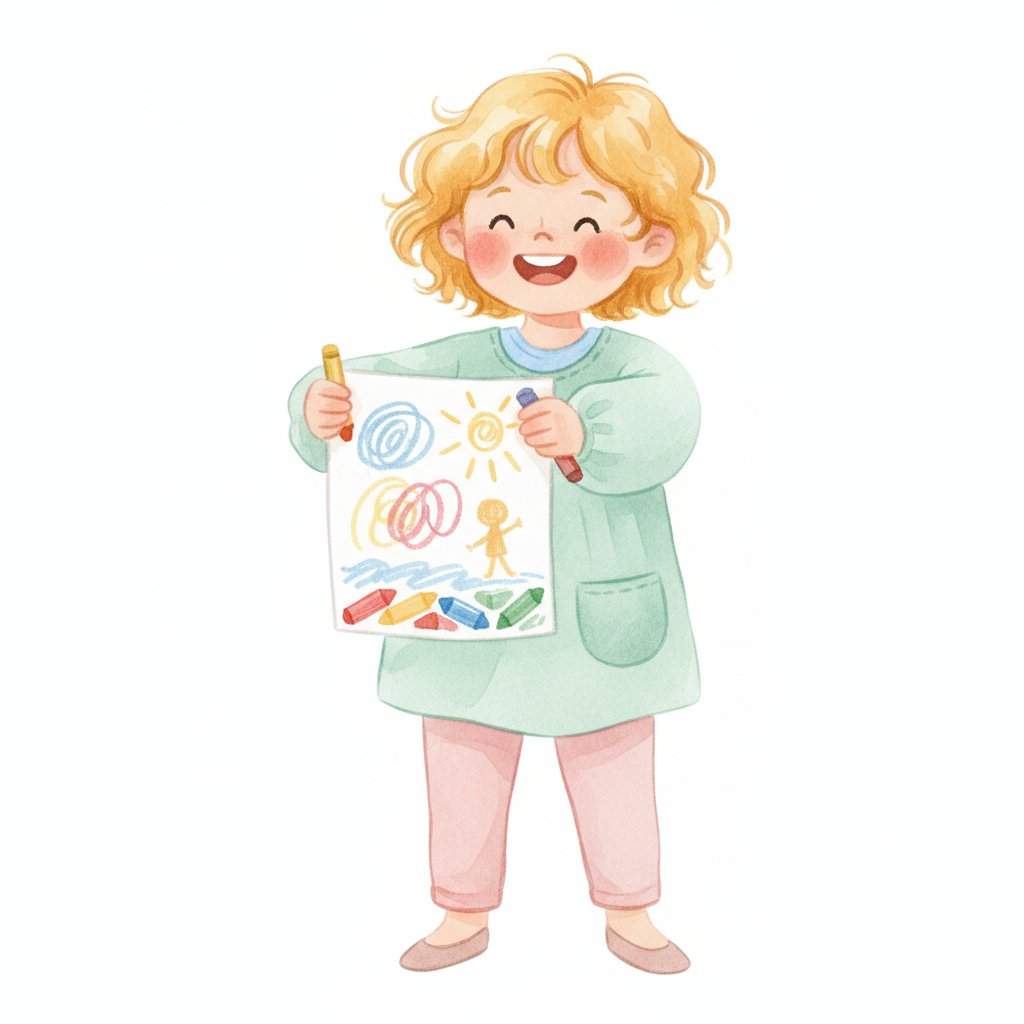
"I can't draw a dog." My daughter was four, holding a crayon, staring at a blank page with genuine despair. She'd seen her older cousin draw a recognizable dog and concluded that her scribbles were failures. In that moment she wasn't lacking skill — she was lacking the belief that skill comes from trying.

What changed wasn't my saying "yes you can." What changed was shifting from outcome to process: "You haven't drawn a dog YET. Let's see what happens when you try." She drew something that looked vaguely like a potato with legs. I said: "You did it! And tomorrow it'll be even better because your brain learned something today." She drew dogs for a week. By day seven, they had ears.
According to research by Dr. Carol Dweck at Stanford, children who develop a "growth mindset" (the belief that abilities develop through effort) show significantly more resilience, motivation, and confidence than children with a "fixed mindset" (the belief that abilities are innate). And the critical window for establishing this orientation is ages 3-7.

This guide covers 20+ self-confidence activities for ages 3-6, organized by approach: self-expression, bravery challenges, growth mindset, and social confidence. Pair it with our self-regulation guide for emotional foundations and our social skills guide for peer confidence.

What Confidence Looks Like at Ages 3-6

Age 2-3: Emerging autonomy. "I do it!" Wants to do everything independently but lacks the skills. Confidence is impulsive — they believe they can do anything because they haven't yet experienced many failures.

Age 3-4: First experiences with comparison. Notices what peers can do: "She can write her name but I can't." Confidence starts to waver as children become aware of their limitations. This is the critical window for normalizing struggle.

Age 4-5: Developing self-concept. Can describe themselves: "I'm good at running but not at drawing." The self-description becomes self-fulfilling — children avoid activities they've labeled themselves "bad at." Intervention here is crucial.

Age 5-6: Social confidence emerges. Can speak in front of a group, ask a new friend to play, try a new activity without excessive fear. Children who've had confidence-building experiences approach new challenges with curiosity rather than dread.

Confidence IndicatorAge EmergingWhat It Looks Like
"I do it!" autonomy2Wants to try independently
Trying new things3Approaches novelty with curiosity
Asking for help3-4Seeks assistance when needed
Accepting mistakes4-5"That didn't work, I'll try again"
Speaking up in groups4-5Raises hand, shares ideas
Initiating with peers5Asks "Can I play?"
Positive self-talk5-6"This is hard but I can do it"

Key principle: Confidence is not the absence of fear — it's the willingness to try despite fear. A confident child isn't one who never worries; they're one who worries and tries anyway. For more on emotional awareness, see our feelings guide.

Feelings flashcards: the starting point for self-confidence
Our Emotions Monster Feelings Flashcards help children identify and name their feelings — the first step toward managing them. 'When you feel PROUD, show me the proud monster! What made you feel proud today?' Each monster represents an emotion children experience but can't always name. Naming feelings builds emotional vocabulary, which builds emotional regulation, which builds confidence. 12 monsters, 12 emotions, one foundation for self-esteem.

Self-Expression and Identity Activities (Ages 3-6)

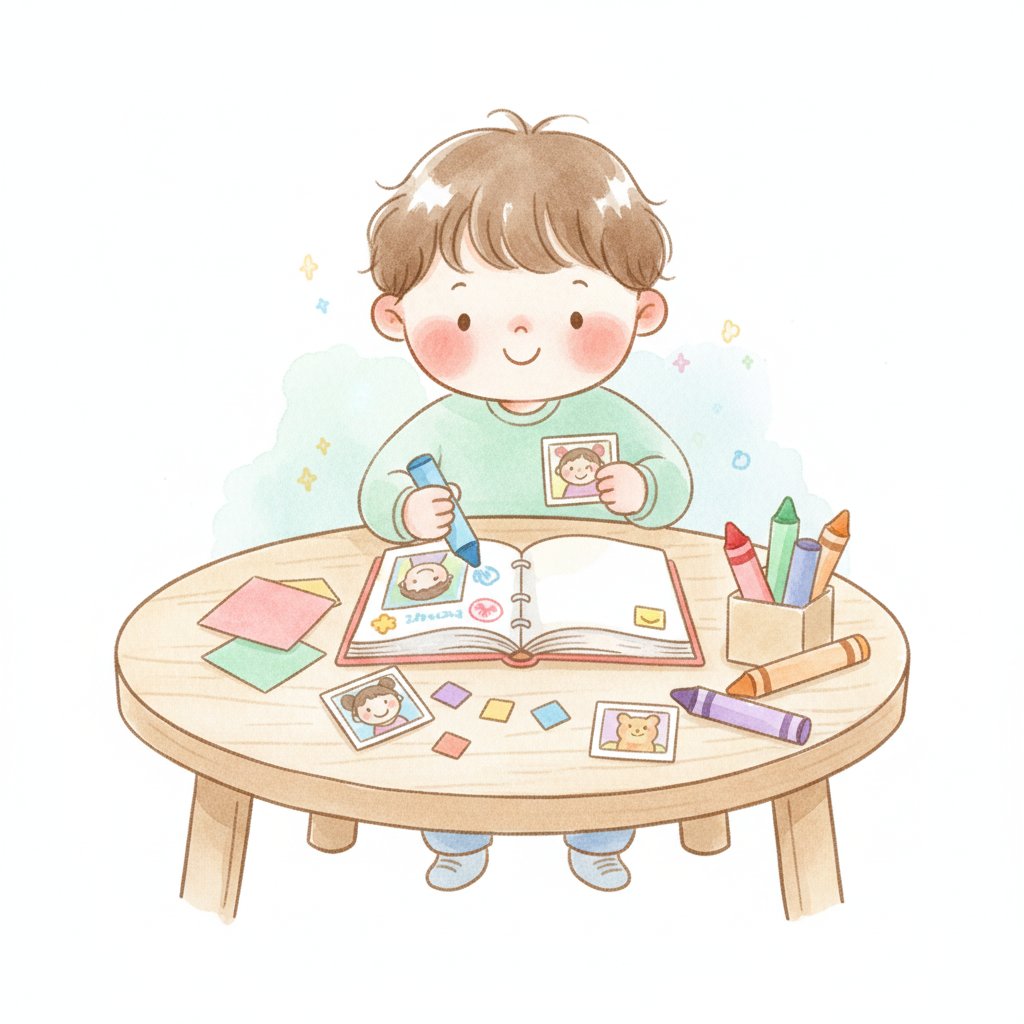
1. "All about me" book
Materials: Paper, crayons, photos.

What to do: Children create a personal book: "My name is _. I am _ years old. My favorite color is _. I am good at _. I want to learn _. My family has _ people." The book celebrates identity and gives children language to describe themselves positively.

Why it works: Self-knowledge is the foundation of self-confidence. Children who can articulate who they are, what they like, and what they're good at have a stronger sense of self. The book also gives adults insight into how children see themselves — revealing confidence gaps that need support. For more self-expression, see our dramatic play guide.

2. "I am" mirror
Materials: Mirror, dry-erase markers.

What to do: Children look in a mirror and say something positive about themselves: "I am kind. I am funny. I am a good friend." Write their words around the mirror. Children see themselves AND their positive attributes simultaneously.

3. Strengths collage
Materials: Magazines, scissors, glue, paper.

What to do: Children cut out pictures representing things they're good at: a runner for fast, a book for reading, a heart for caring. The visual representation of strengths is concrete and reviewable — children can look at their collage when they need a confidence boost.

4. Talent show (low-pressure)
What to do: Children perform something they're good at for a small audience: a song, a dance, a joke, a trick. The key is EVERYONE performs something and EVERYONE claps. The experience of being seen and appreciated builds social confidence. For more performance ideas, see our music guide.

5. "My brave moment" story
What to do: Children tell a story about a time they were brave: "I was brave when I went to the dentist. I was scared but I did it anyway." Recalling past bravery builds a narrative of courage children can draw on when facing new challenges. For more storytelling, see our storytelling guide.

Bravery Challenges (Ages 3-6)

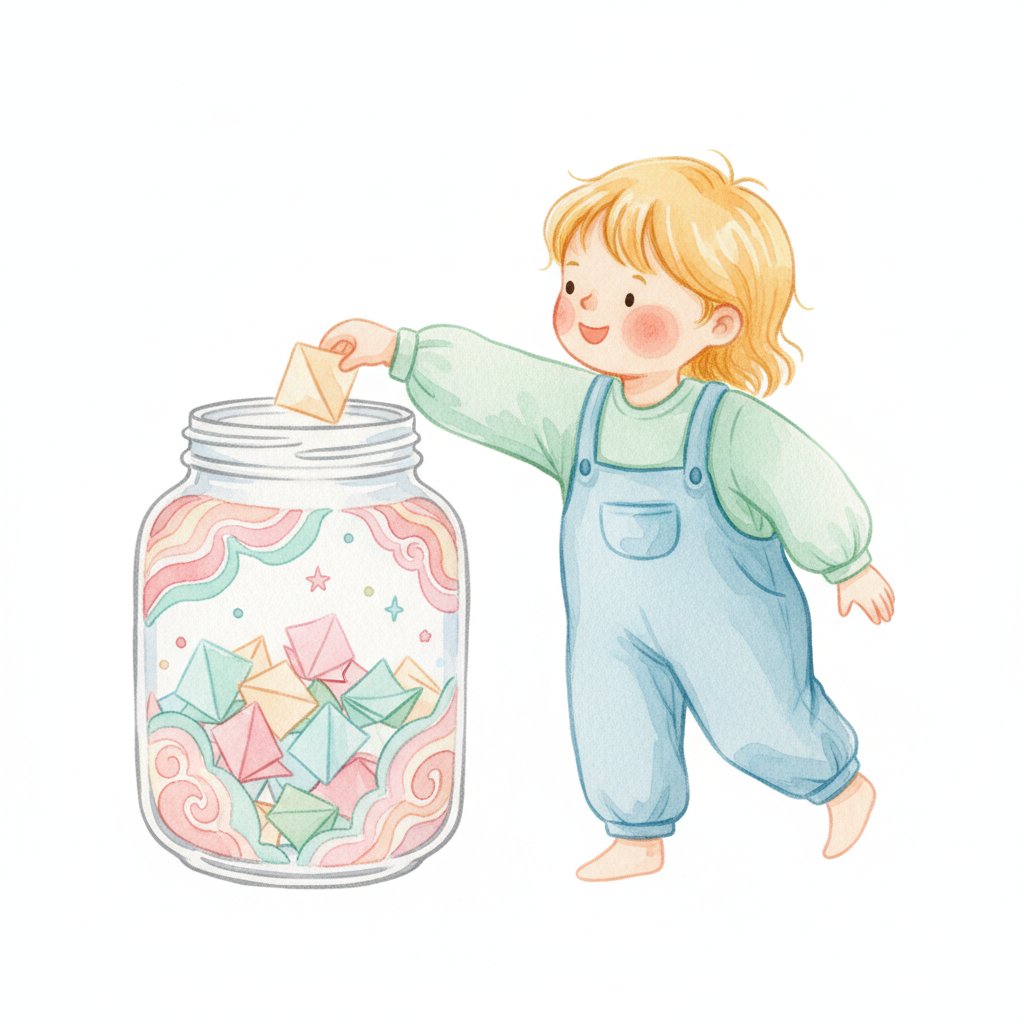
6. The "try something new" jar
Materials: Jar, slips of paper with new activities.

What to do: Fill a jar with "brave challenges": try a new food, paint with your non-dominant hand, ask someone new to play, try a puzzle you've never done, wear a silly hat. Each day, pull one challenge. "Today's brave challenge is..." Children learn that new experiences are adventures, not threats.

Why it works: Confidence grows from experience — specifically, the experience of trying something new and surviving (or even enjoying) it. The jar makes novelty routine. Each small brave act builds the neural pathway: "New thing → I tried it → I'm okay → I can try more new things."

7. The "mistake celebration"
What to do: Deliberately make mistakes and celebrate them. "Oh no, I spilled the water! That was a GREAT mistake because now I get to practice wiping!" Model the response you want: mistakes aren't failures, they're information and opportunities. For more on this mindset, see our science experiments guide where "failed" experiments are celebrated as data.

8. Challenge ladder
Materials: Paper ladder drawn on paper.

What to do: Identify something the child wants to do but is scared of (e.g., speak in front of the class). Break it into tiny steps on a ladder: Step 1: whisper to one friend. Step 2: say one sentence to two friends. Step 3: share during circle time. Each step completed gets a sticker. The ladder makes big fears manageable.

9. "What would you do?" scenarios
What to do: Present scenarios and ask for solutions: "If you were at a new school and didn't know anyone, what would you do?" Children problem-solve hypothetical challenges, building the confidence that they COULD handle new situations. For more problem-solving, see our problem-solving guide.

10. The "I did it" journal
Materials: Simple notebook.

What to do: Each day, children draw or dictate one thing they accomplished: "I did it! I zipped my jacket!" The journal accumulates evidence of competence. On hard days, flip back: "Remember all these things you did? You can do hard things."

Letter mastery=confidence mastery
Our Alphabet Monster Flashcards build confidence through mastery: 'Last week you knew 5 letters. This week you know 10! You learned 5 new letters!' The concrete progress — measurable, visible, celebratable — teaches children that effort produces results. Each letter learned is proof that 'when I practice, I get better.' 26 letters, 26 mastery moments, 26 confidence boosts.

Growth Mindset Activities (Ages 4-6)

11. "Yet" power
What to do: Every time a child says "I can't," add "yet." "I can't tie my shoes... yet." "I can't write my name... yet." The three-letter word transforms a permanent statement into a temporary one. Put a "YET" sign on the wall. For more on persistence, see our fine motor guide.

Why it works: Dweck's research shows that the language children use about their abilities shapes their actual abilities. "I can't" is a door that closes. "I can't yet" is a door that's still open. The single word changes the child's relationship with challenge.

12. Brain growing lessons
What to do: Teach children that their brain is a muscle that grows stronger with practice. "When you try hard things, your brain actually grows bigger! It makes new connections!" Use a sponge in water as a metaphor: "Your brain is like this sponge — it soaks up learning and gets bigger." For more science learning, see our science experiments guide.

13. Effort praise practice
What to do: Replace "You're so smart!" with "You worked really hard on that!" Praise the process (effort, strategy, persistence) rather than the trait (smart, talented, pretty). The difference: trait praise creates pressure to maintain the label; process praise encourages continued effort.

14. "My brain learned" reflection
What to do: After any activity, ask: "What did your brain learn today?" The reframing shifts focus from performance ("Did I do it right?") to learning ("What did I gain?"). "My brain learned that red and blue make purple." "My brain learned that blocks fall if the bottom isn't flat."

15. Famous failures discussion
What to do: Tell age-appropriate stories of people who failed before succeeding: "Did you know the person who invented the light bulb failed 1,000 times first? He said 'I didn't fail 1,000 times — I found 1,000 ways that don't work!'" The stories normalize failure as part of the process.

Social Confidence Activities (Ages 4-6)

16. "Hello, friend" challenge
What to do: Each morning, children say hello to one person they don't usually talk to. Start with a wave, progress to "Hi, I'm [name]," then to "Hi, can I play?" The structured approach makes social initiation less scary. For more social skills, see our social skills guide.

17. Compliment circle
What to do: In a group, each child gives a compliment to the person next to them: "I like your shirt. You're good at drawing. You're a fast runner." Giving compliments is easier than receiving them — and it builds the habit of noticing others' strengths. For more kindness, see our kindness guide.

18. Leader for a day
What to do: Each child gets a turn being the "leader" who chooses the game, leads the line, or picks the song. Leadership experiences in safe environments build the confidence to take initiative in less safe ones. For more group activities, see our group games guide.

19. Show and tell with a twist
What to do: Instead of "bring a toy," try themed show-and-tell: "Bring something you made. Bring something that makes you happy. Bring something you're proud of." The themes give children practice talking about themselves in positive ways.

20. Role-play courage
What to do: Act out scary situations with puppets or dolls: "The puppet is scared to go to the doctor. What could we say to help the puppet be brave?" The distance of the puppet makes it safe to explore fear and practice courageous responses. For more role-play, see our dramatic play guide.

Independence IS confidence
Our Morning Routine Visual Schedule Cards build confidence through independence: 'I can get dressed BY MYSELF. I can brush my teeth BY MYSELF. I can pack my bag BY MYSELF.' Each self-completed task is proof of competence. The visual schedule provides the structure; the child provides the action. By the end of the week, they don't need the cards — they've internalized the routine AND the belief that they can do things independently. Confidence isn't a feeling — it's evidence accumulated through action.
1.My child says 'I'm stupid' when they make a mistake. How should I respond?
Respond with curiosity, not correction: "You said you're stupid. I'm surprised to hear that because I see someone who's learning. What made you say that?" Then separate the action from the identity: "You made a mistake. That's not the same as BEING a mistake. Everyone who's good at anything made lots of mistakes first." Add "yet": "You can't do it yet. And that's okay — you're learning."
2.How do I build confidence in a very shy child?
Don't label them "shy" (it becomes an identity). Instead, reframe: "You like to watch before you join in. That's smart." Provide structured entry points to social situations: "You can stand next to me and watch, or you can go play, or you can hold my hand while we watch together." Remove the pressure to participate immediately. Shy children often become the most socially skilled — they're observing and learning before they act.
3.Is it possible to give too much praise?
Yes. Empty praise ("Good job!" for everything) becomes meaningless. Effective praise is specific, process-focused, and genuine: "I noticed you kept trying even when that puzzle was frustrating. That's what learners do." Praise what children CONTROL (effort, strategy, persistence) not what they don't (innate talent, appearance). One specific observation is worth ten generic "good jobs."
4.Should I let my child quit an activity they're struggling with?
Distinguish between "I don't like this" and "This is hard." If they genuinely don't enjoy the activity, quitting is fine — confidence comes from activities that align with interests. If they're quitting because it's hard, encourage persistence: "Let's try three more times. If you still want to stop after that, we can." Often, a few more attempts produce a breakthrough — and the breakthrough builds more confidence than quitting ever could.