Articles8 min read

The Moment I Stopped Saying "Share!"

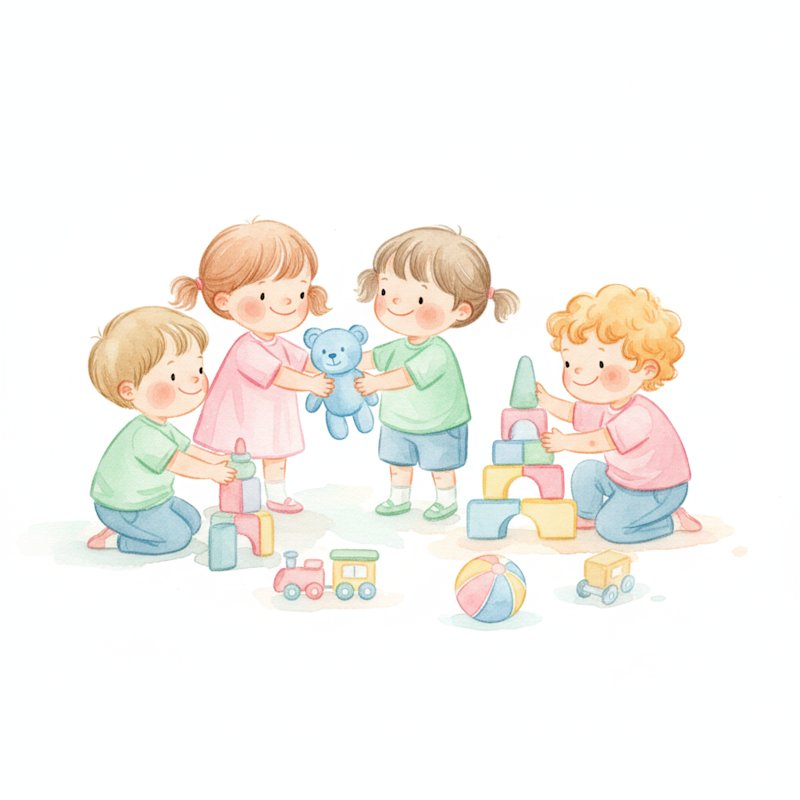
I was that parent. Every time my daughter grabbed a toy from another child, I'd say "We share!" She'd hand it over reluctantly, face crumpled. Then I watched a preschool teacher handle the same situation differently: "You really want that truck. Lily is using it right now. You can have a turn when she's done. Let's set a timer." My daughter nodded, walked away, and came back when the timer went off. No tears, no resentment. She understood the system.

"Share!" is one of the most common commands in preschool — and one of the least effective. It's vague (share what? how much? for how long?), arbitrary (why do I have to give up something I'm using?), and fails to teach the actual skills involved: waiting, negotiating, and managing disappointment.
According to the Collaborative for Academic, Social, and Emotional Learning (CASEL), children who receive explicit social-emotional instruction demonstrate significantly better social skills, fewer behavior problems, and even improved academic outcomes. Social skills aren't soft — they're foundational.

This guide covers 20+ social skills activities for ages 3-6, organized by skill: turn-taking, sharing, cooperation, empathy, and conflict resolution. Pair it with our feelings activities for emotional vocabulary and our circle time guide for group routines.

Social Skills Development: What to Expect at Each Age

Ages 2-3 (Parallel play): Children play beside each other, not with each other. "Sharing" means sitting near someone with similar toys. They may grab, push, or cry when conflicts arise — this is developmentally normal, not a behavior problem.

Ages 3-4 (Associative play): Children begin interacting during play but without a shared goal. They may borrow toys, mimic each other, and have brief conversations. Turn-taking is emerging but inconsistent.

Ages 4-5 (Cooperative play): Children play together with shared goals: building a tower together, putting on a "show," playing a game with rules. Negotiation, compromise, and rule-following develop rapidly.

Ages 5-6 (Collaborative play): Children can sustain cooperative play, assign roles, resolve most conflicts independently, and understand that others have different perspectives.

SkillEmergingDevelopingMastered
Turn-taking345
Sharing materials345-6
Cooperative play3-44-55-6
Conflict resolution456
Empathy/perspective-taking34-55-6

Key principle: Social skills develop through practice, not lectures. Children learn sharing by sharing, turn-taking by taking turns, and conflict resolution by having conflicts — with scaffolding from adults. Every conflict is a curriculum opportunity.

Before kids can share, they need to understand feelings
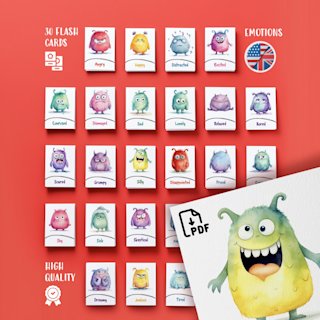
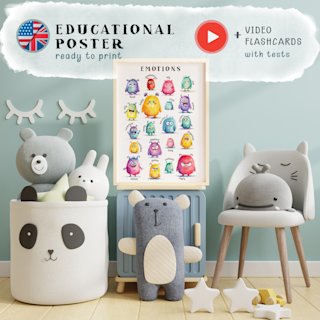
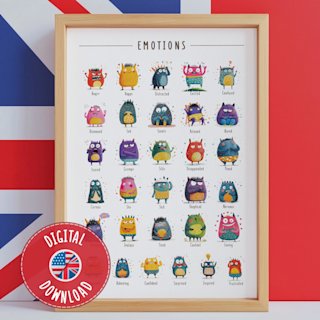
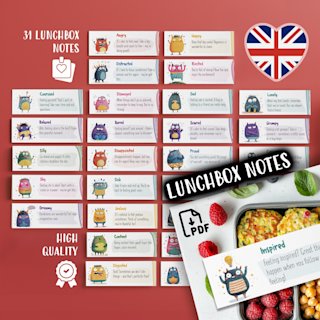
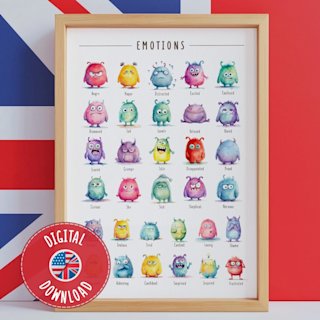
Our Emotions Monster Feelings Flashcards are social skills tools in disguise. Before children can empathize with a crying friend, they need to recognize what sadness looks like. Before they can negotiate, they need words for frustration. 'How does your friend feel right now? Show me the monster card that matches.' 12 emotions, 12 stepping stones from self-awareness to social awareness.

Turn-Taking Activities (Ages 3-5)

1. Timer turns
Materials: Visual timer (sand timer, kitchen timer).

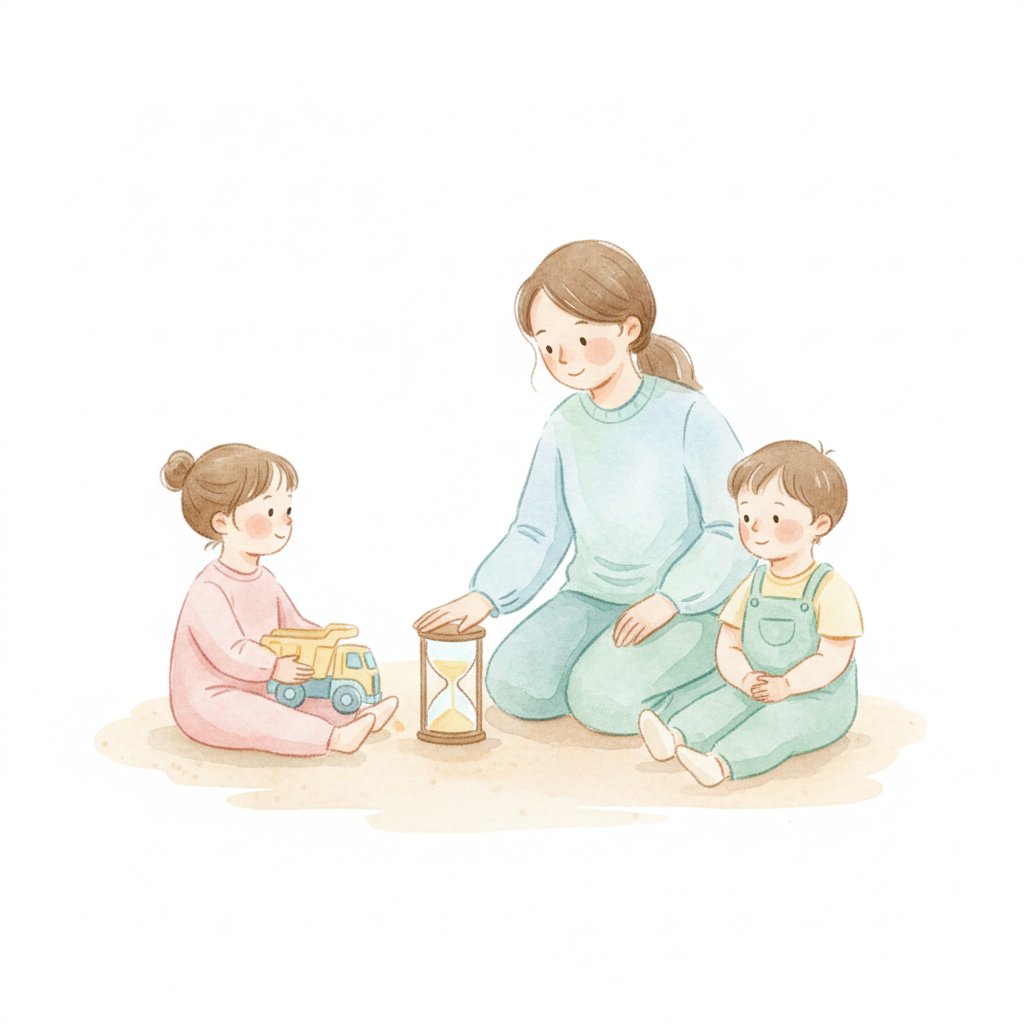
What to do: When two children want the same toy, set a timer. "Sophie gets the truck for 3 minutes. When the timer beeps, it's your turn." Children can see the timer counting down — the wait is visual and predictable.

Why it works: "Share!" is arbitrary. A timer is a system. Children accept systems better than commands because systems are fair and predictable. The timer, not the adult, decides when the turn is over.

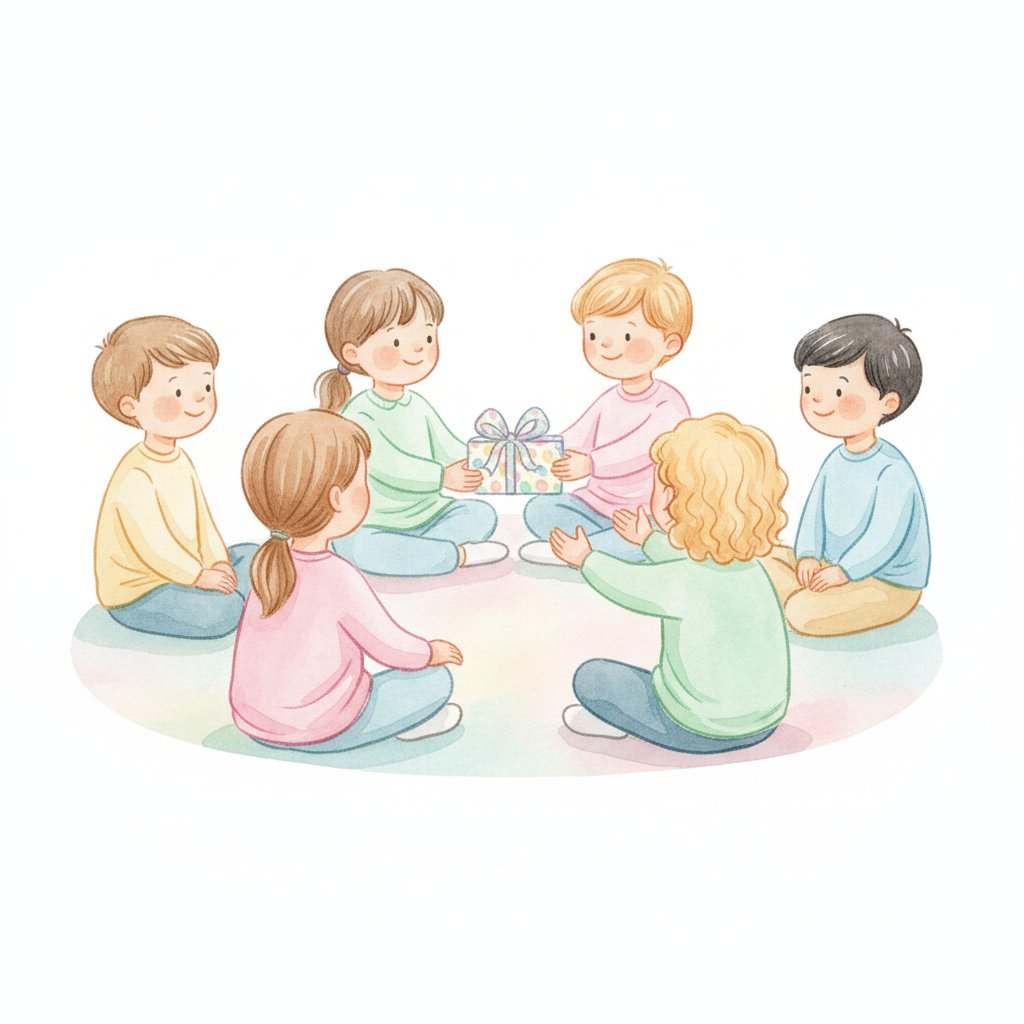
2. Pass the parcel
Materials: A small wrapped gift or object, music.

What to do: Children sit in a circle and pass the parcel while music plays. When music stops, the child holding it unwraps one layer. Continue until the final layer reveals the surprise. Every child gets a turn to unwrap.

3. Taking turns stack
Materials: Building blocks.

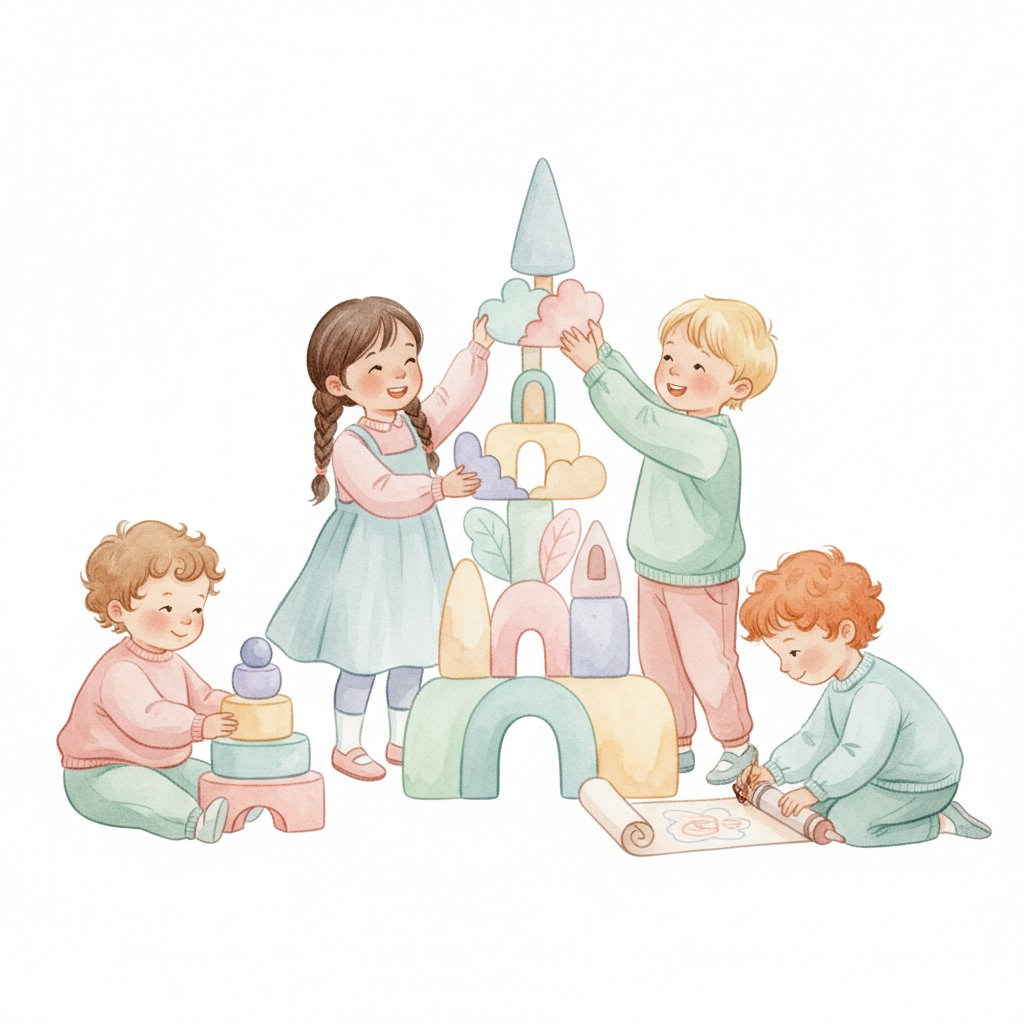
What to do: Two children take turns adding blocks to a shared tower. "Your turn, my turn, your turn, my turn." The tower only grows when both contribute — cooperation is built into the activity.

Why it works: The alternating structure is visible: one block each, in sequence. Children can see the turn-taking happening. For more building play, see our block activities guide.

4. Turn-taking art
Materials: Large paper, crayons.

What to do: Two children share one paper and take turns adding to a drawing. "You draw something, then I draw something. Together we're making a picture!" The final product is genuinely collaborative.

5. Board game turn practice
Materials: Simple board games (Candy Land, Hi Ho Cherry-O).

What to do: Board games are turn-taking curriculum. Roll, move, pass the dice. The structure enforces turn-taking and children practice waiting while watching others. Keep games short (10 minutes) and celebrate the playing, not the winning.

Sharing Activities (Ages 3-5)

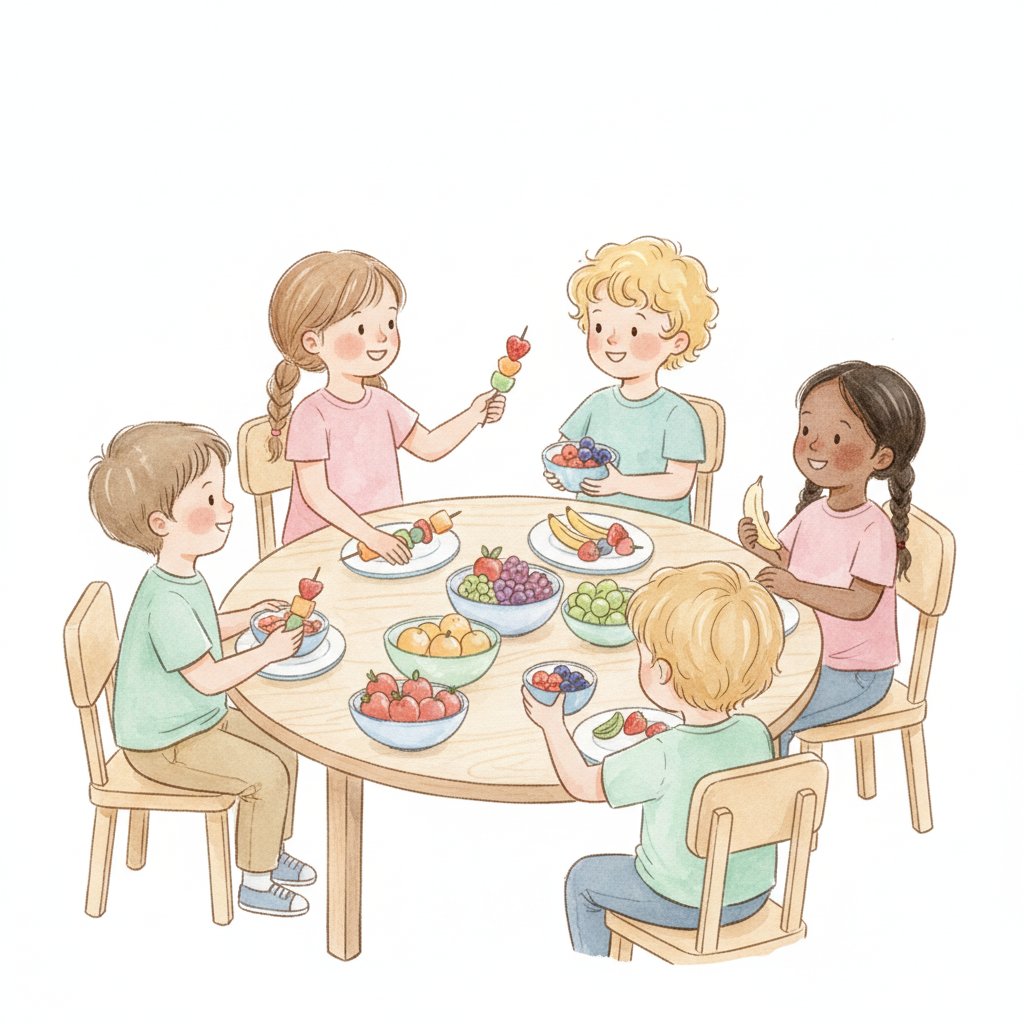
6. Shared snack preparation
Materials: Snack ingredients, serving tools.

What to do: Children prepare snack together and share it. "Make enough fruit skewers for everyone at your table. Count: how many friends? Make that many." The sharing is purposeful — they're sharing because they made it for each other.

Why it works: Children share more readily when they've participated in creating what's being shared. Ownership of the creation process translates to willingness to distribute the result. For more kitchen activities, see our cooking guide.

7. Dividing limited materials
Materials: Limited art supplies (e.g., 3 glue sticks for 6 children).

What to do: Present a sharing challenge: "We have 3 glue sticks and 6 friends. How can we make sure everyone gets to glue?" Children problem-solve: "We can take turns!" "We can pass them around!"

8. Community toy collection
Materials: A collection bin for donated toys.

What to do: Children bring in a toy from home to add to the "classroom collection." The toy becomes a shared resource. Children learn that sharing goes both ways — they contribute and they benefit.

9. Sharing circle
What to do: At circle time, each child shares one thing: a story, a favorite color, a weekend experience. "Sharing" isn't just about objects — it's about giving of yourself. Model first: "I'm sharing that I went to the park this weekend."

10. Buddy reading
Materials: Books.

What to do: Pairs of children share one book. One holds the book, the other turns pages. Then switch. The shared reading experience teaches that co-ownership of an experience can be better than solo ownership.

Classroom routines are social skills practice in disguise
Our Morning Routine Visual Schedule Cards teach cooperation by making it visual: 'First we hang up backpacks, then we wash hands, then we sit at circle.' Every child follows the same routine, at the same time, in the same space. That's community. That's cooperation. That's 20+ morning opportunities to practice being part of a group.

Cooperation Activities (Ages 4-6)

11. Parachute play
Materials: Play parachute (or large bedsheet).

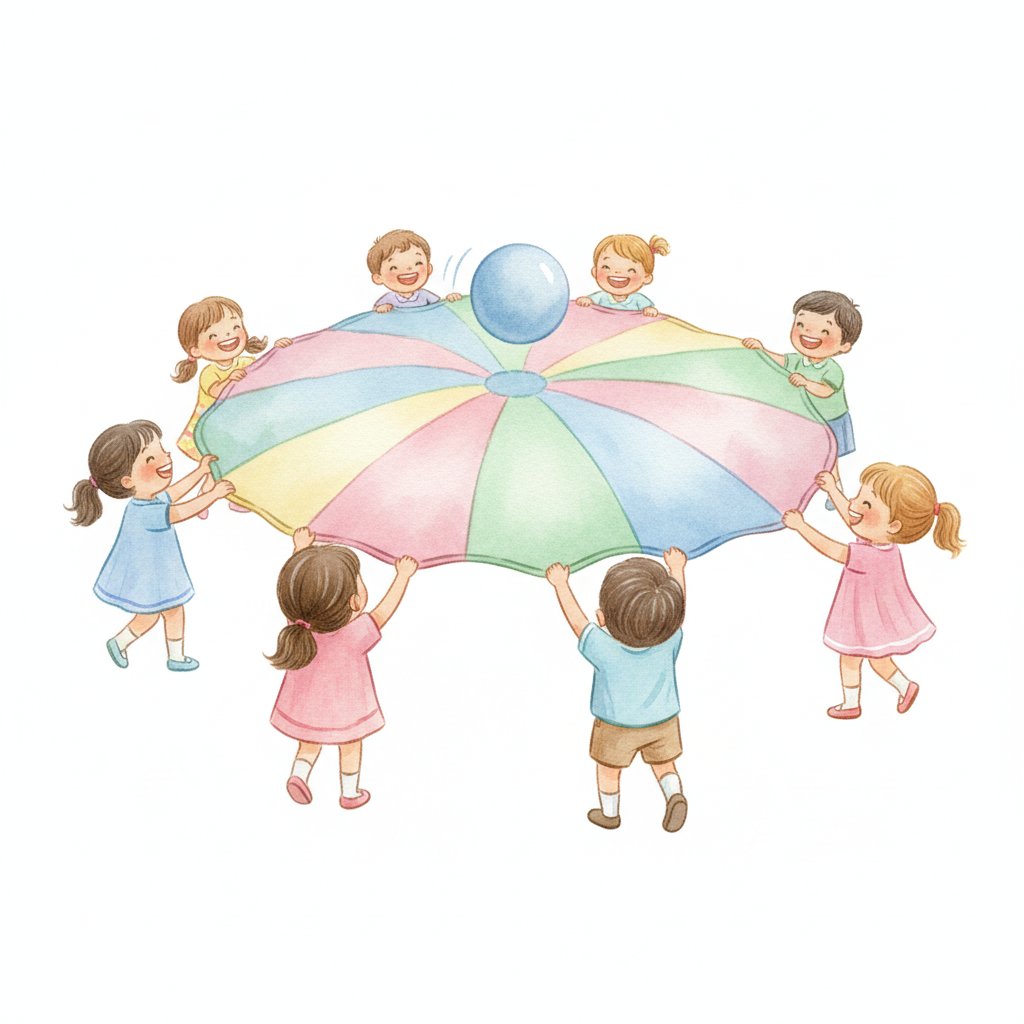
What to do: Children hold the edges and cooperate to make waves, bounce balls, or launch a stuffed animal. "Everyone lifts at the same time or it doesn't work!" Parachute play REQUIRES cooperation — one child cannot do it alone.

Why it works: The parachute provides immediate, visual feedback on cooperation. When children work together, the parachute does amazing things. When they don't, nothing happens. The cause-effect is undeniable.

12. Group mural
Materials: Large butcher paper, paint, crayons, markers.

What to do: The whole group creates one mural. Assign sections or let children organically overlap. The final product is bigger and more complex than any child could make alone.

13. Buddy obstacle course
Materials: Playground equipment, cones, ropes.

What to do: Pairs navigate an obstacle course together. One child is blindfolded, the other gives verbal directions. Or pairs must hold hands through the course. Success requires communication and trust. For more movement ideas, see our gross motor guide.

14. Cooperative cleanup
What to do: Cleanup is a group effort with roles. "Block team puts away blocks. Art team cleans the tables. Book team organizes the library." Each team is responsible for their area. The room gets clean because everyone contributes.

15. Building a group structure
Materials: Large blocks or magnetic tiles.

What to do: The group builds one structure together. "We're building a zoo. Who wants to build the elephant enclosure? The bird house? The entrance?" Each child contributes a section to the shared project.

Empathy and Conflict Resolution (Ages 4-6)

16. Feelings check-in
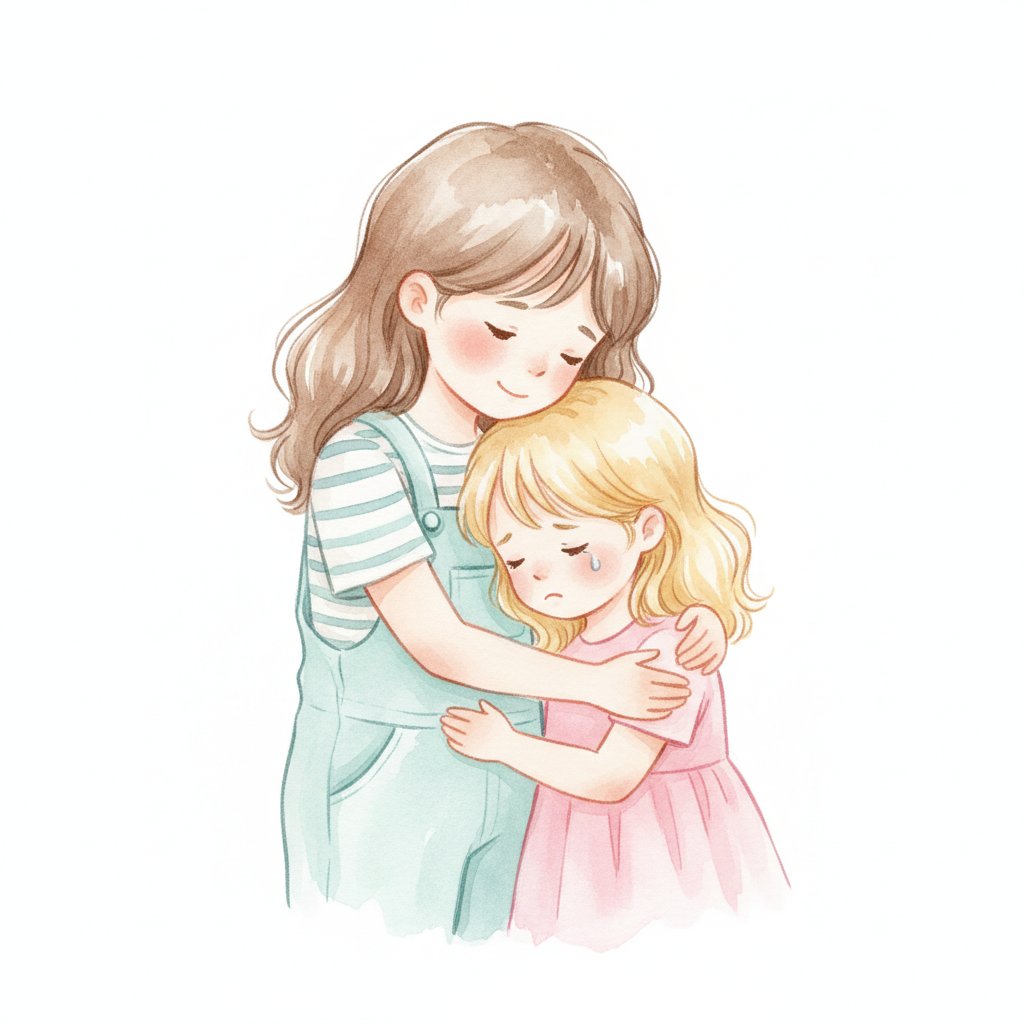
What to do: At circle time, each child names how they feel and why. "I feel happy because I played with blocks." "I feel sad because my friend couldn't come today." Hearing others' feelings builds the understanding that everyone has an inner emotional life.

Why it works: Empathy starts with awareness that other people have feelings. Daily feelings check-ins make this explicit. For more emotional learning, see our feelings activities.

17. Puppet conflict scenarios
Materials: Puppets, simple scenario cards.

What to do: Use puppets to act out common conflicts: two puppets want the same toy, one puppet is excluded from a game, one puppet accidentally knocks over another's tower. Children watch, then suggest solutions. "What should Bear do? What should Bunny do?"

Why it works: Puppets create emotional distance — children can think about the conflict objectively because it's happening to puppets, not to them. The solutions they generate transfer to real situations.

18. Role-play rehearsals
What to do: Practice social situations before they happen. "Let's pretend someone takes your toy. What could you say? 'I was using that. Can I have it back please?' Let's practice saying that." Rehearse the exact words and tone.

19. Apology of action
What to do: Teach children that apologies include action, not just words. "I'm sorry I knocked over your tower. Let me help you build it again." The repair is part of the apology. Model this as adults — apologize to children when appropriate. For more social routines, see our dramatic play guide.

20. Friendship recipe
Materials: Paper, markers.

What to do: As a group, write a "recipe for friendship." "A good friend is someone who: shares, listens, helps, says kind words, takes turns." Children illustrate each ingredient. Post the recipe in the classroom.

Why it works: Making friendship explicit — naming what it looks like, sounds like, and feels like — gives children concrete behaviors to aim for. "Friendship" is abstract; "taking turns" is actionable.

Shared observations build community
Our Weather Flashcards create a daily shared experience: every morning, the class checks the weather and agrees on the card. 'Is it sunny or cloudy? Let's look together.' The act of agreeing on a shared observation — not 'what I see' but 'what WE see' — is community building. Weather watching is cooperation practice.
1.My preschooler refuses to share. Is this normal?
Yes, completely normal through age 4-5. Sharing requires understanding that someone else's needs matter as much as your own — a cognitive skill that develops gradually. Instead of forcing sharing, teach systems: "You can use it for 3 more minutes, then it's his turn." Systems teach sharing better than commands. Most children share willingly by age 5-6 when they trust the turn-taking system.
2.How do I handle hitting and grabbing in a preschool group?
Separate immediately, comfort the hurt child, and address the grabber with curiosity, not punishment: "You grabbed the toy. You must have really wanted it. What could you do differently next time?" Teach the alternative behavior: "Next time, say 'Can I have a turn?' and wait." Rehearse the alternative. Punishment stops the behavior in the moment; rehearsal prevents it in the future.
3.Should I make children apologize?
Forced apologies teach children to say words they don't mean. Instead, model genuine repair: "Look at Sarah's face. She's crying. Your grab hurt her. What could we do to help her feel better?" Let the child generate the repair. If they can't, offer suggestions: "Some people say sorry. Some people help fix what was broken. What feels right to you?" Authentic repair > forced apology.
4.How can I teach social skills at home with an only child?
Practice turn-taking with adults: "My turn with the blocks, your turn, my turn." Use puppets or stuffed animals to create social scenarios. Role-play conflicts: "Let's pretend Teddy wants your crayon. What could you say?" Play board games (structured turn-taking). Arrange playdates for real peer practice. Social skills can be rehearsed at home even without siblings.