Articles7 min read

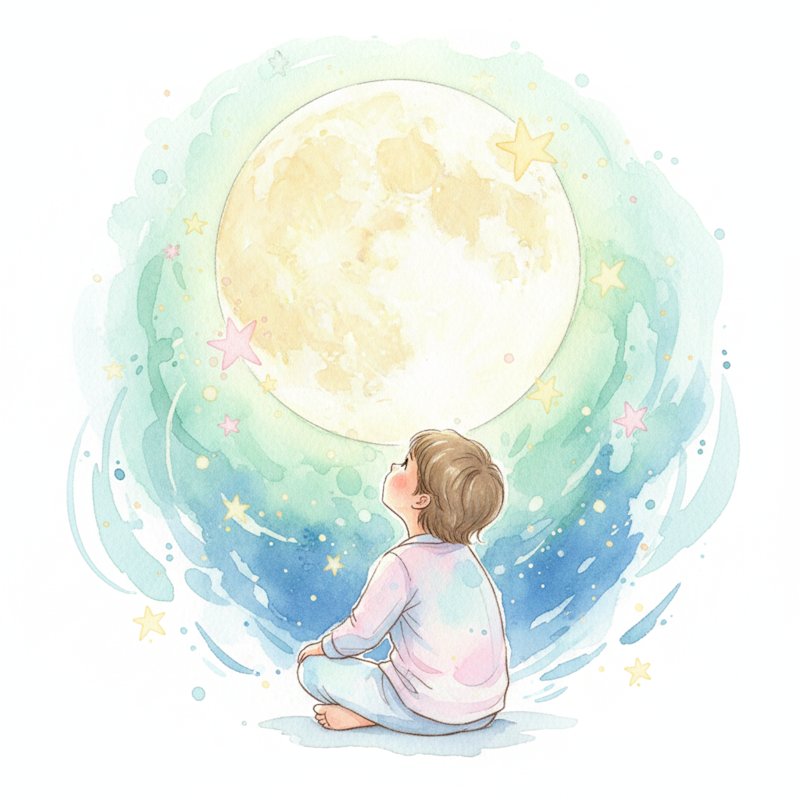
The Night My Daughter Discovered the Moon

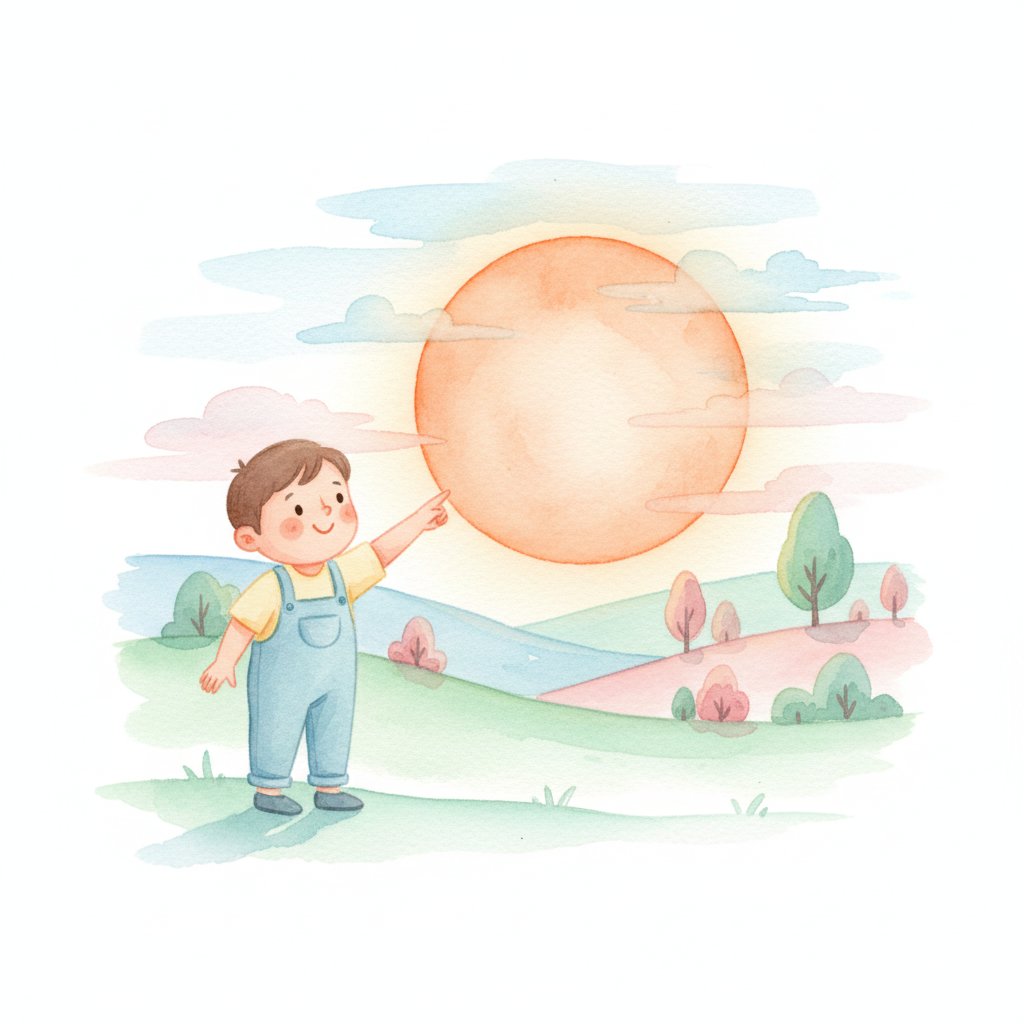
We were walking to the car after dinner when my three-year-old stopped dead and pointed up: "WHAT IS THAT?" It was the full moon — enormous, orange, hanging low on the horizon. She'd seen the moon before, of course, but this was the first time she REALLY saw it. For the next three weeks, she checked the moon every night. "Where is it? Why is it small now? Where did the rest go?" Her questions launched a space unit that taught her more science, math, and vocabulary than I could have planned.

According to the American Astronomical Society, early childhood is the ideal time to introduce astronomy because children are naturally fascinated by the sky. Space activities build observation skills, scale understanding, pattern recognition, and scientific curiosity — all through a topic that children find inherently magical.
This guide covers 20+ space activities for ages 3-6, organized by topic: solar system learning, space crafts, astronaut dramatic play, and sky observation. Pair it with our science experiments guide for more hands-on science and our counting guide for number activities.
Solar System Learning Activities (Ages 3-6)

1. Planet order song
What to do: Teach the planets in order with a simple song or chant: "Mercury, Venus, Earth, and Mars — these are the planets near the stars! Jupiter, Saturn, Uranus, Neptune — these are the planets we sing about, too!" The song makes the order memorable through rhythm and rhyme. For more songs, see our music guide.

Why it works: Space is abstract — children can't touch a planet or visit the moon. Songs, chants, and physical models make the abstract concrete. When children SING the planet order while POINTING to models, they're building knowledge through two channels simultaneously: auditory (the song) and kinesthetic (the pointing).

2. Planet size comparison
Materials: Balls of different sizes (marble, tennis ball, basketball, beach ball).

What to do: Use objects to represent planet sizes: "This marble is Mercury — the smallest. This beach ball is Jupiter — the BIGGEST. Earth is this tennis ball — medium, not too big, not too small. We live on the tennis ball planet!" The size comparison makes scale visual and tangible. For more size concepts, see our sorting guide.

3. Orbit movement game
Materials: Flashlight (sun), children (planets).

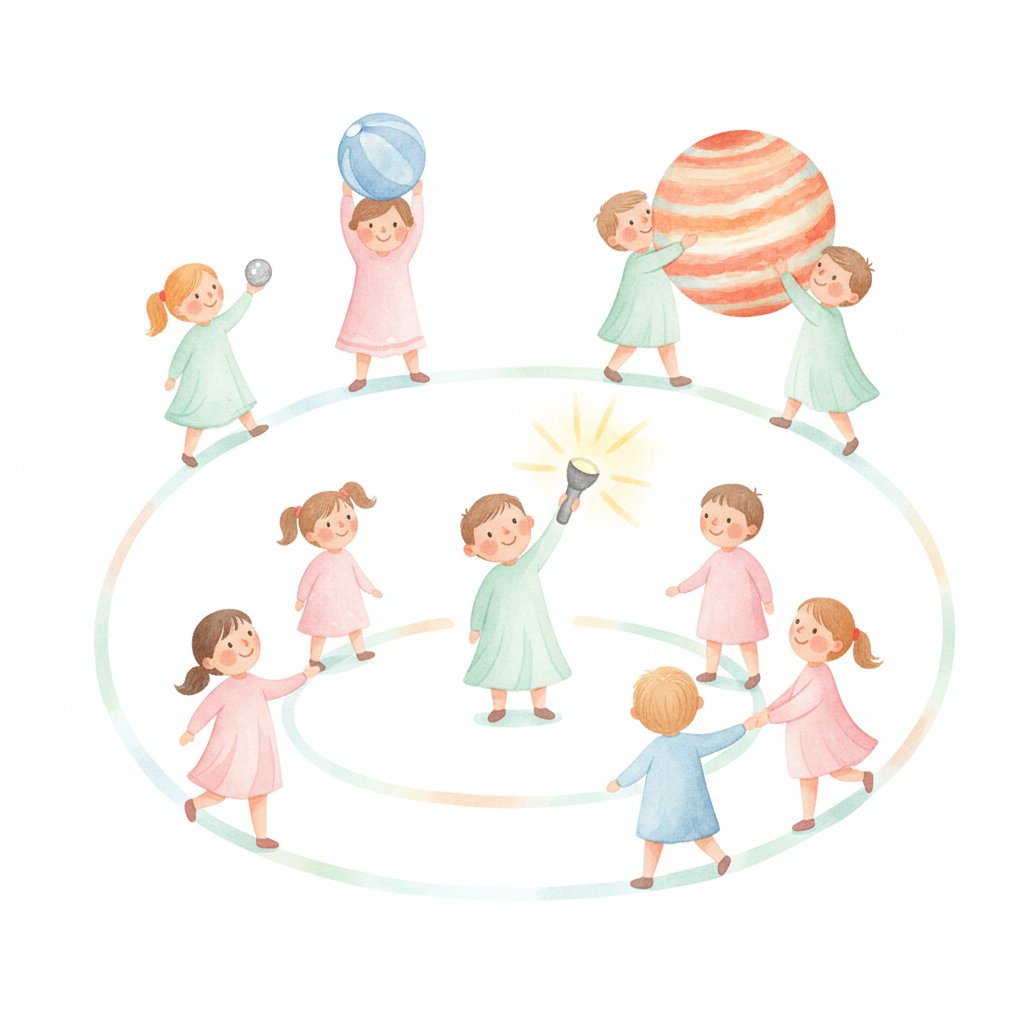
What to do: One child holds a flashlight in the center (the sun). Other children walk in circles around the sun at different distances (orbits). "Mercury orbits FAST and CLOSE. Neptune orbits SLOW and FAR." The physical movement teaches the concept of orbits through body experience. For more movement, see our gross motor guide.

4. Count the planets
Materials: Planet pictures or models.

What to do: Count the planets: "1-Mercury, 2-Venus, 3-Earth, 4-Mars, 5-Jupiter, 6-Saturn, 7-Uranus, 8-Neptune. EIGHT planets in our solar system!" Practice forward and backward. "Start at Neptune and count backwards!" For more counting, see our number guide.

5. Earth is special discussion
What to do: "What makes Earth different from other planets? It has WATER! And AIR! And PLANTS! And ANIMALS! And US!" The discussion teaches that Earth's conditions make life possible — an early introduction to planetary science and environmental awareness. For more science, see our science experiments guide.

The solar system on your wall
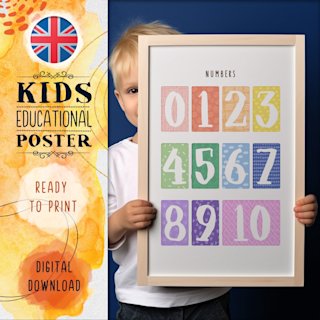
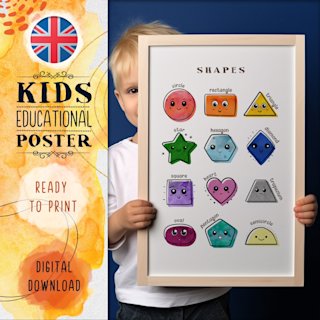
Our 8 Educational Posters include a solar system poster that makes planet learning visual and daily: every morning your child walks past Mercury, Venus, Earth, Mars, Jupiter, Saturn, Uranus, and Neptune. 'Which planet is RED? Which has RINGS? Which one do we live on?' The poster turns wall space into learning space. Combine with the counting poster (count the planets!) and the shapes poster (what shape is a planet?) for cross-topic reinforcement.

Space Crafts and Art (Ages 3-6)

6. Cardboard tube rockets
Materials: Toilet paper tubes, paper, glue, markers.

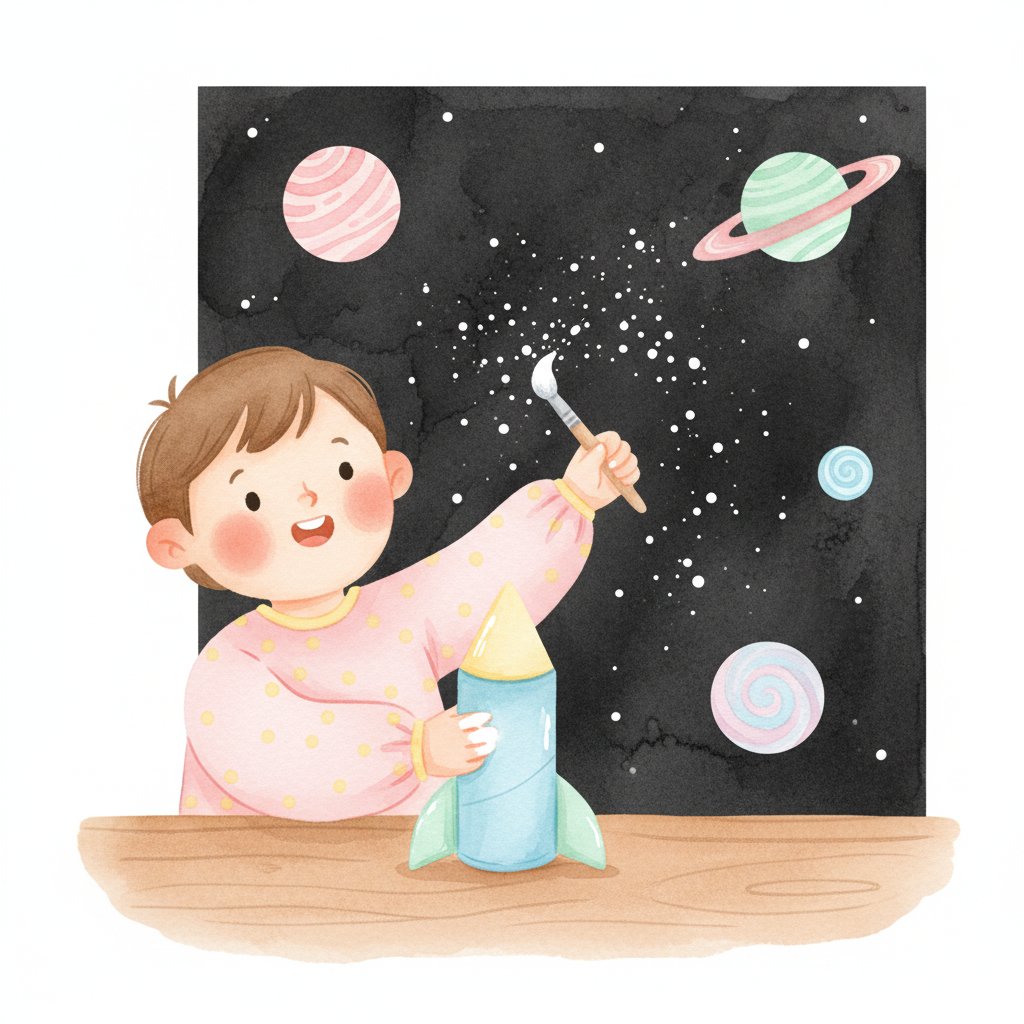
What to do: Children decorate tubes as rockets, add paper fins and a cone top. "Rockets need a nose cone, a body, and fins to fly straight!" The craft teaches rocket parts while developing fine motor skills. For more building, see our block activities guide.

7. Paper plate sun, moon, and Earth
Materials: Paper plates, paint, glitter.

What to do: Children paint three plates: one yellow-orange (sun), one white-gray (moon), one blue-green (Earth). "The sun gives LIGHT. The moon REFLECTS light. Earth has water and life!" The craft teaches the relationship between the three bodies. For more color mixing, see our color guide.

8. Starry night painting
Materials: Black paper, white paint, toothbrush.

What to do: Children flick white paint from a toothbrush onto black paper to create a starry sky. "Each dot is a star! There are billions of stars in the sky — we can't count them all!" The technique is fun and the result is beautiful. For more art, see our art activities guide.

9. Foil moon surface
Materials: Cardboard circle, aluminum foil, golf ball or marble.

What to do: Cover a cardboard circle with foil. Children press a golf ball into the foil to create craters. "The moon has craters because rocks from space crashed into it! Each dent is a crater!" The hands-on activity teaches lunar geology through texture.

10. Constellation drawing
Materials: Black paper, star stickers, white crayon.

What to do: Children place star stickers on black paper and connect them with white crayon lines to create their own constellations. "This is my constellation — I call it the DINOSAUR!" The activity combines creativity with the real concept of constellations (patterns of stars). For more shape activities, see our shape guide.

Space alphabet: A is for Astronaut
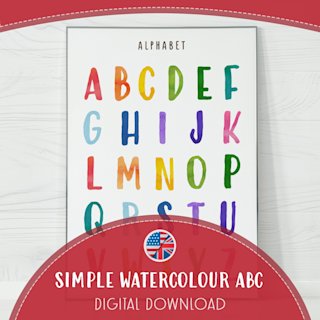
Our Alphabet Monster Flashcards become space vocabulary builders: 'A is for ASTRONAUT! S is for STAR! M is for MOON! P is for PLANET! R is for ROCKET!' Each letter gets a space word. Children learn the alphabet AND space vocabulary simultaneously. 26 letters, 26 space words, one out-of-this-world learning experience. The monsters make it fun; the alphabet makes it foundational.

Astronaut Dramatic Play (Ages 3-6)

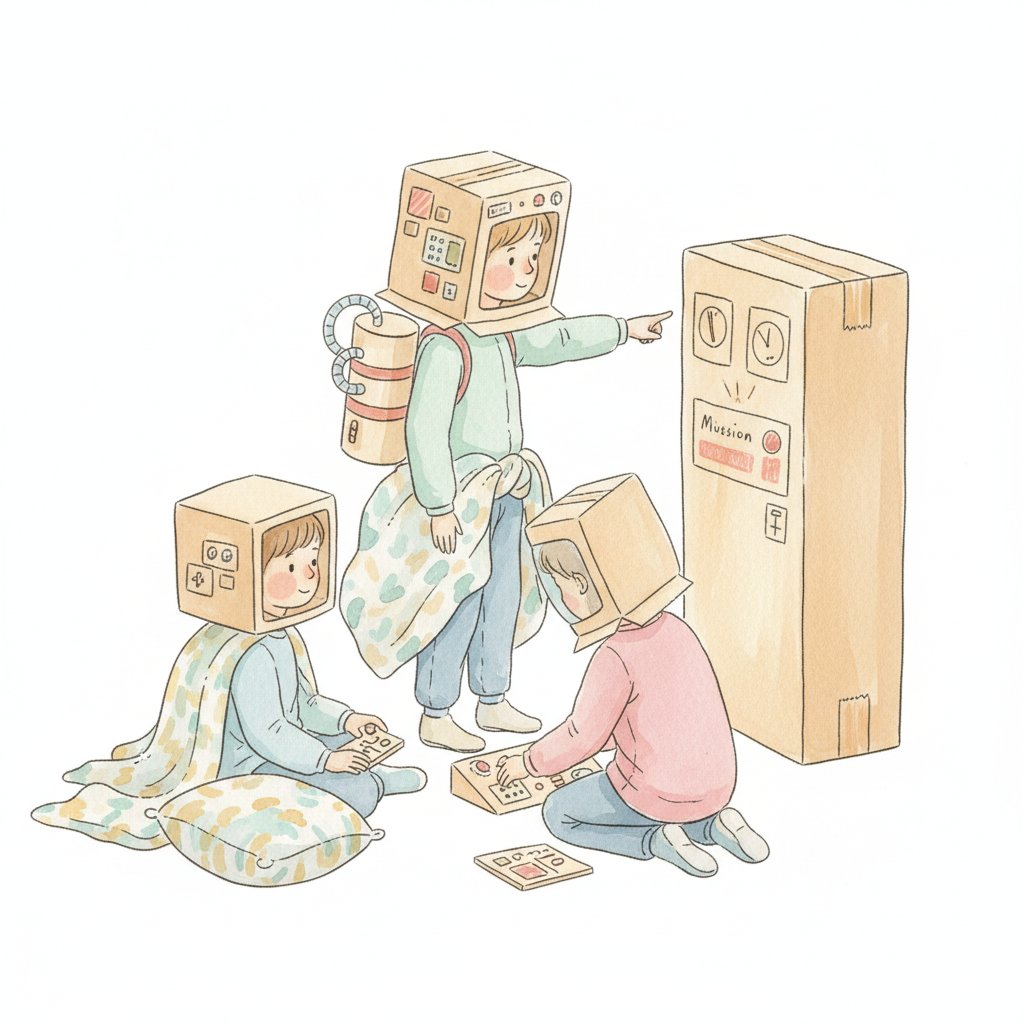
11. Mission control
Materials: Cardboard box, markers, buttons (bottle caps).

What to do: Transform a box into a mission control panel. Children draw buttons, dials, and screens. "3, 2, 1, BLAST OFF! Astronaut Maria is going to Mars!" The dramatic play integrates science vocabulary with imagination and social skills. For more dramatic play, see our dramatic play guide.

12. Space walk obstacle course
Materials: Pillows, tunnels, balance beams.

What to do: Create an "obstacle course in space." Children wear a backpack (oxygen tank) and navigate: "Float through the asteroid field (pillows)! Crawl through the space tunnel! Walk on the moon's surface (balance beam — low gravity means slow, bouncy steps)!" The physical play builds gross motor skills in a space context.

13. Astronaut training
What to do: "To be an astronaut, you need STRONG muscles, GOOD balance, and CAREFUL listening!" Children do exercises: jumping jacks, balancing on one foot, following a sequence of commands. "Astronauts have to be healthy and strong!" The exercise frame makes movement purposeful.

14. Moon rock collection
Materials: Rocks, aluminum foil.

What to do: Wrap rocks in foil to create "moon rocks." Hide them around the room. Children search, collect, and count: "How many moon rocks did you find? Let's sort them by size!" The hunt combines physical activity with counting and sorting.

15. Space food tasting
Materials: Freeze-dried fruit, crackers, juice boxes.

What to do: "Astronauts eat special food in space! Let's try some!" Children taste freeze-dried fruit (astronaut food), eat crackers carefully (no crumbs in space!), and drink from a pouch. The tasting makes space life tangible and real.

Sky Observation and Night Sky Activities (Ages 3-6)

16. Moon journal
Materials: Paper, crayons.

What to do: Children observe the moon every night and draw what they see. Over a month, the journal shows the moon getting bigger, then smaller, then disappearing, then reappearing. "The moon CHANGES! It grows and shrinks in a pattern!" The daily observation teaches patterns, patience, and the lunar cycle. For more pattern work, see our pattern guide.

Why it works: Observation is the foundation of science. When children observe something changing over time, they learn that (1) change is real, (2) patterns exist in nature, (3) keeping records helps us see patterns we'd otherwise miss. The moon journal is a child's first experience with longitudinal data collection.

17. Shadow sun clock
Materials: Chalk, sunny day.

What to do: Draw a circle. Stand in the center at different times of day and trace your shadow. "Morning shadow: LONG, pointing west. Noon shadow: SHORT. Afternoon shadow: LONG, pointing east." The sun's position changes the shadow — a sundial in action. For more outdoor learning, see our outdoor play guide.

18. Star counting
What to do: On a clear night, go outside and count stars: "1, 2, 3, 4, 5... I can count 10 stars! Can you count more?" The simple activity teaches that stars are real things you can see, not just pictures in books. For more counting, see our number guide.

19. Day sky vs. night sky sorting
Materials: Pictures of day and night sky items.

What to do: Children sort pictures: sun, clouds, rainbow, blue sky → DAY. Moon, stars, darkness, fireworks → NIGHT. "The sun comes out during the DAY. The moon and stars come out at NIGHT." The sorting teaches the day-night cycle. For more sorting, see our sorting guide.

20. "What if" space questions
What to do: Ask open-ended space questions: "What if the moon was made of cheese? What if you could visit any planet? What would you bring to space? What do you think aliens look like?" The questions spark imagination and language. There are no wrong answers — only creative thinking. For more imagination, see our imagination guide.

Weather flashcards: your sky observation starter kit
Our Weather Flashcards teach children to observe the sky: 'Is it CLEAR? We can see the sun and maybe the moon! Is it CLOUDY? The clouds might block the stars tonight! Is it RAINY? No stargazing tonight — but we can look at our moon journal!' Each weather card connects to sky observation. Clear days=sun watching. Clear nights=star counting. Cloudy days=cloud shape hunting. The cards make weather-watching and sky-gazing part of the same daily ritual.
1.Is space too complicated for preschoolers?
No. Preschoolers don't need to understand orbital mechanics or gravitational fields. They need to know: the sun is a star, the moon changes shape, there are planets, and astronauts explore space. These are observable, imaginable, and fascinating. Start with what they can SEE (sun, moon, stars) and build from there. The wonder comes first; the science comes later.
2.How do I explain gravity to a preschooler?
"Gravity is what keeps us on the ground! Without gravity, we'd float away like astronauts in space! Jump up — gravity pulls you back down! Drop this ball — gravity pulls it down!" Keep it experiential. Children don't need to understand WHY gravity works — they need to experience WHAT it does. Jumping and dropping are gravity lessons that don't require any physics background.
3.What if I don't know the answer to their space questions?
Say "I don't know — let's find out together!" Look up the answer in a book or online. Model curiosity and research skills. "I didn't know that Saturn's rings are made of ice and rock! We learned something new together!" Not knowing is an opportunity, not a failure. Children whose adults say "let's find out" learn that questions are valuable and research is normal.
4.Can space activities work for a classroom that doesn't have space-themed materials?
Absolutely. Most activities in this guide use basic supplies: paper plates, paint, cardboard tubes, balls, flashlights. The space theme comes from the CONVERSATION, not the materials. A paper plate is just a paper plate until you say "this is the moon." The learning happens in the language and the ideas, not in specialized products.