Articles7 min read

The Egg Experiment That Changed Brushing Forever

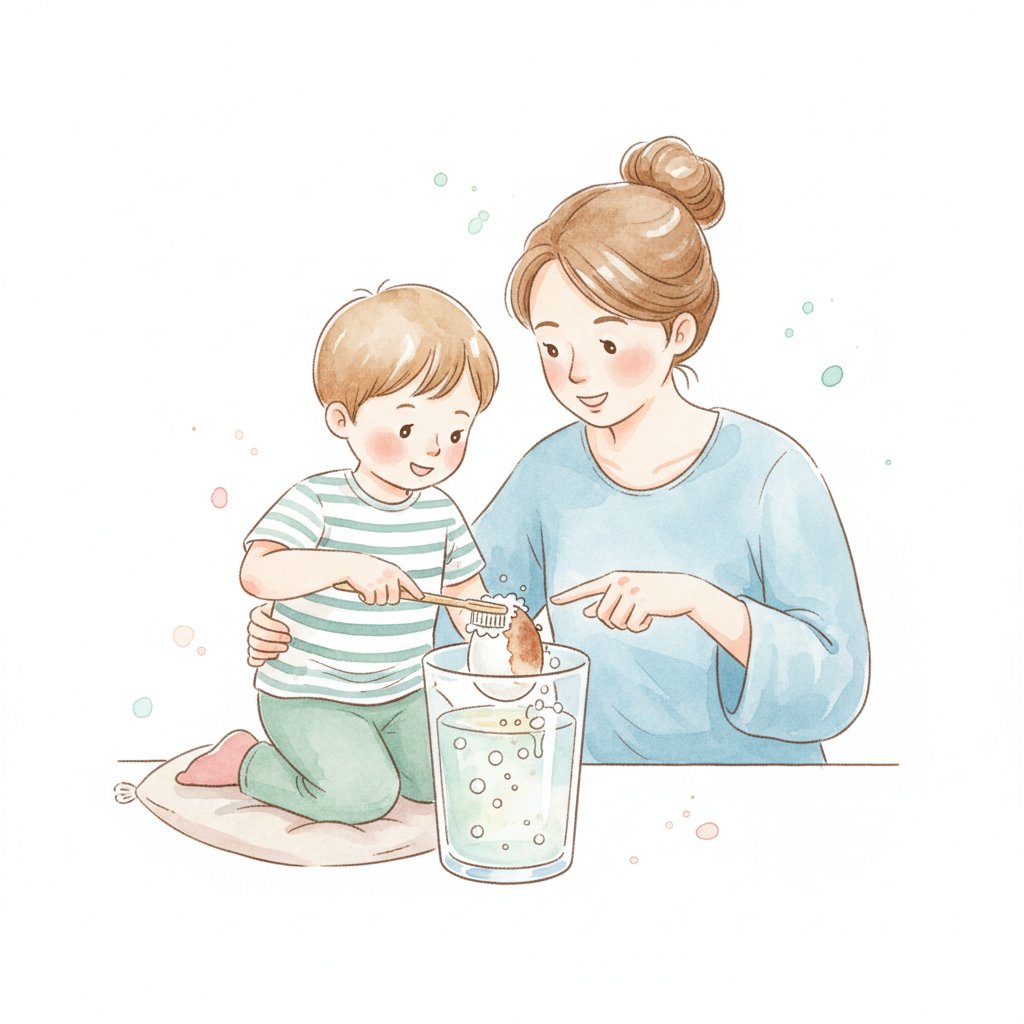
We hard-boiled an egg and soaked it in dark soda overnight. The next morning, the shell was BROWN. "This is what happens to your teeth when you drink soda and don't brush," I said. Four-year-old Jayden stared at the egg with horror. Then I gave him a toothbrush and toothpaste. "Brush the egg." He scrubbed. The brown started coming off. His eyes went wide. "It's WORKING!" By the time the egg was mostly white again, Jayden was a brushing convert. "I'm going to brush EVERY night so my teeth don't turn brown like the egg!" Three months later, his dentist reported zero new cavities. One egg experiment. Zero cavities. That is the power of making the invisible VISIBLE — when children SEE what happens to teeth, they CARE about what happens to THEIR teeth.

According to the American Dental Association, children should begin brushing as soon as the first tooth appears, visit the dentist by age 1, and brush twice daily for 2 minutes. But the biggest predictor of good dental habits is not rules — it is UNDERSTANDING. Children who understand WHY they brush are far more likely to maintain the habit independently.
This guide covers 20+ teeth and dental health activities for ages 3-6. Pair it with our health and hygiene guide for general health and our body parts guide for more body learning.
Brushing and Flossing Activities (Ages 3-6)

1. Egg brushing experiment
Materials: Hard-boiled egg, dark soda, toothbrush, toothpaste.

What to do: "Soak the egg in soda overnight. Look at it — BROWN! Now brush it with toothpaste. Watch the brown come off!" The experiment makes plaque and stains visible. For more science, see our science guide.

Why it works: Preschoolers cannot see plaque on their own teeth — it is invisible to them. The egg makes the invisible VISIBLE. When they see brown stains on the egg AND see brushing remove them, they understand: "Brushing removes the stuff I can't see." This understanding transforms brushing from a chore into a meaningful action.

2. Two-minute brushing song
What to do: "Brush for the whole song! Start at the top left, brush the outside. Now the top right. Now the bottom left. Now the bottom right. Now the chewing surfaces. Now the tongue!" Use a 2-minute timer or a brushing song. For more songs, see our music guide.

3. Brush the giant teeth
Materials: Large paper tooth outline, laminated.

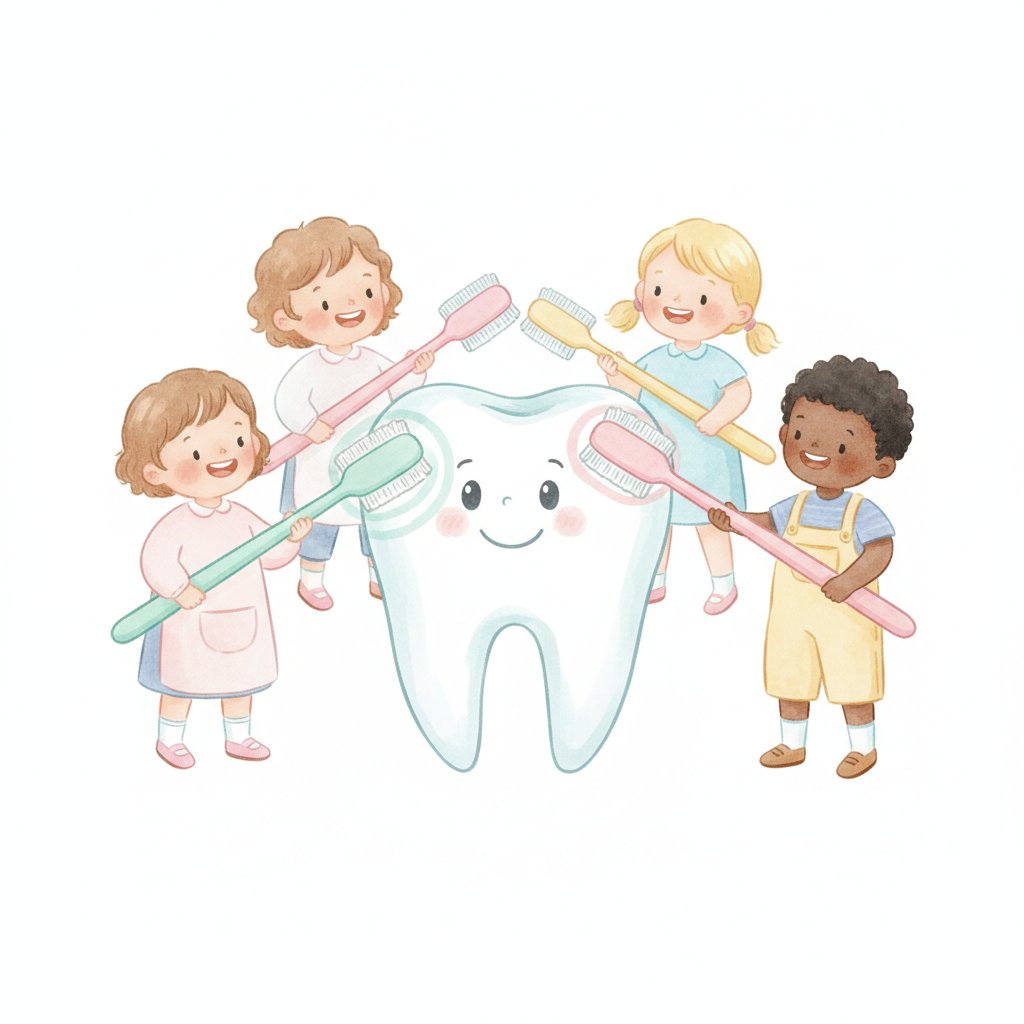
What to do: "Draw 'sugar bugs' on the tooth with a dry-erase marker. Now brush them off with a real toothbrush!" The giant tooth lets children practice brushing technique on a model they can SEE. For more body activities, see our body parts guide.

4. Flossing with playdough
Materials: Playdough, LEGO duplo blocks (teeth), string (floss).

What to do: "Put playdough between the blocks — that's food stuck between your teeth. Now use the string to FLOSS it out!" The model shows why brushing alone isn't enough. For more playdough, see our playdough guide.

5. Brushing chart
Materials: Printed chart with morning and evening boxes.

What to do: "Put a sticker in the box every time you brush! Morning AND night. How many stickers can you get this week? 14!" The chart teaches routine and self-monitoring. For more routines, see our morning routine guide.

Brushing is a habit, not a negotiation
Our Morning Routine Visual Schedule Cards make brushing non-negotiable: 'Wake up. Get dressed. Eat breakfast. BRUSH TEETH. Hair. Shoes. Go!' The card says it, so you don't have to. When brushing is one step in a VISUAL sequence, children don't argue about it — they just DO it, because it's part of the routine. The cards work because they externalize the rules: the CARD says brush your teeth, not just Mom or Dad. Routine becomes automatic. Automatic becomes habit. Habit becomes healthy teeth. Seven cards, seven steps, zero morning battles.

Tooth Science and Food Sorting (Ages 3-6)

6. Sugar acid experiment
Materials: Two glasses, water, vinegar, two pennies.

What to do: "Put a penny in water and a penny in vinegar. Wait an hour. The vinegar penny is SHINY — the acid ate the dirt! Acid from sugar does the same thing to your teeth — it eats the hard outside!" The experiment introduces acid and decay. For more science, see our science guide.

7. Apple cavity experiment
Materials: Apple, knife.

What to do: "Cut a hole in the apple. Leave it for 3 days. Look — the hole turned BROWN and spread! That's what a CAVITY does to a tooth — it starts small and gets bigger." The apple models tooth decay over time.

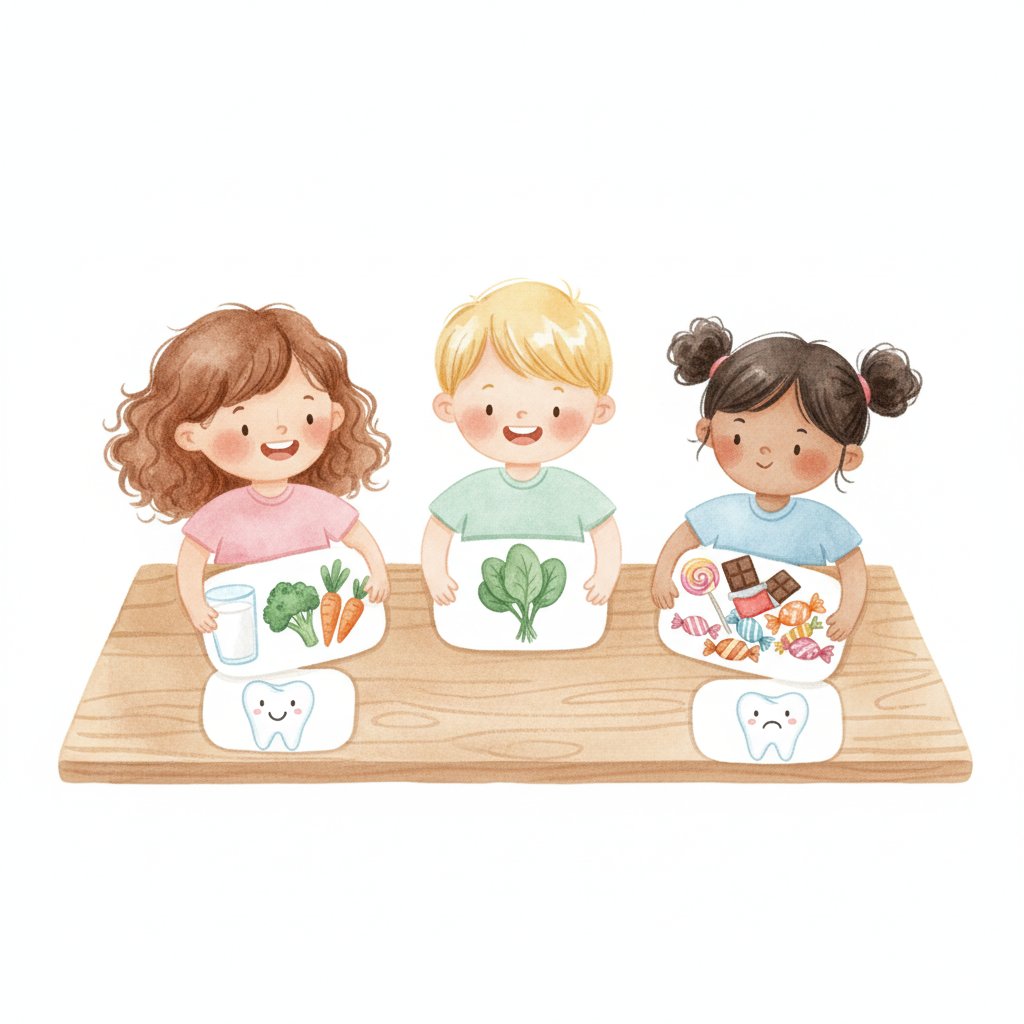
8. Healthy vs. sugary food sort
Materials: Food pictures.

What to do: "Sort the foods: TOOTH-FRIENDLY (milk, cheese, vegetables, water) vs. TOOTH-TRICKY (candy, soda, cookies, juice)." The sorting teaches which foods help and harm teeth. For more sorting, see our sorting guide. For more nutrition, see our nutrition guide.

9. Count your teeth
Materials: Mirror.

What to do: "Open wide! Count your teeth: 1, 2, 3... 20! Babies have 20 teeth. Grown-ups have 32! You have 20 baby teeth that will fall out and 32 grown-up teeth will grow in." The counting teaches one-to-one correspondence with their own body. For more counting, see our number guide.

10. Tooth timeline
What to do: "When were you born? No teeth! By 6 months, first tooth! By age 3, 20 teeth! At age 6, first tooth falls out! By age 12, all grown-up teeth!" The timeline teaches sequencing and life cycles. For more life cycles, see our science guide.

Teeth are part of the whole body system
Our Human Body Poster shows children where teeth fit in the whole body: 'Your teeth are in your MOUTH, which is part of your DIGESTIVE SYSTEM. Teeth chew food into tiny pieces so your STOMACH can digest it. If your teeth are sick, your whole body has to work harder.' The poster connects dental health to overall health — teeth aren't isolated, they're part of a SYSTEM. When children see the whole body, they understand that brushing protects not just teeth, but digestion, nutrition, and energy. One poster, one body, one connected system.

Dentist Role Play and Extensions (Ages 3-6)

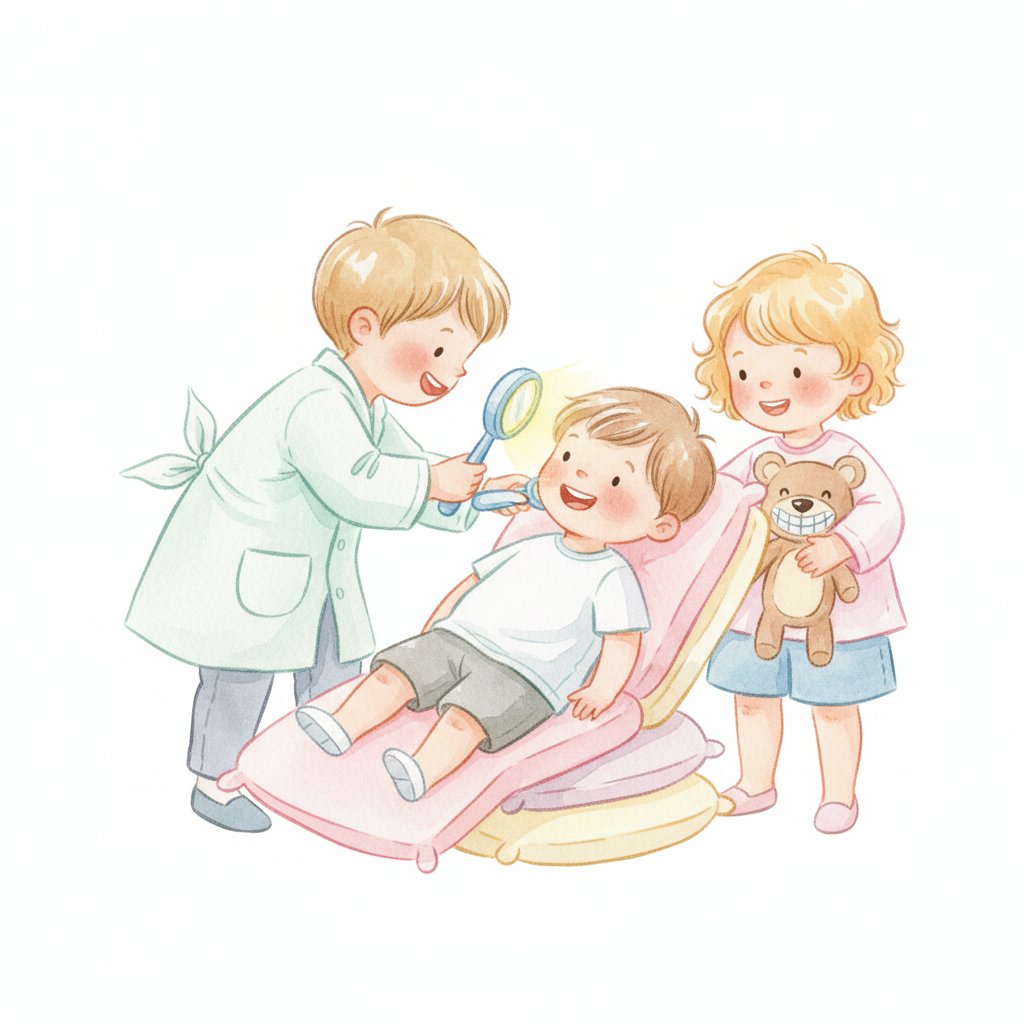
11. Dentist office dramatic play
Materials: Chair, flashlight, mirror, toothbrush, bib (towel).

What to do: "You're the DENTIST! I'm the patient. Check my teeth with the mirror. Are they clean? Any sugar bugs? Now I'll be the dentist and YOU be the patient!" The role play reduces fear of dentist visits. For more dramatic play, see our dramatic play guide.

12. Tooth puppet show
Materials: Tooth-shaped paper puppet.

What to do: "I'm Mr. Tooth and I love when kids brush me! But yesterday, someone gave me CANDY and didn't brush! I feel SICK! Can you help me feel better?" The puppet personalizes the tooth, making hygiene feel like caring for a friend. For more storytelling, see our storytelling guide.

13. Tooth fairy letter writing
Materials: Paper, pencil.

What to do: "Write a letter to the Tooth Fairy: 'Dear Tooth Fairy, I brushed my teeth twice today! Here is my tooth! Love, [name].'" The letter writing makes losing a tooth exciting instead of scary. For more writing, see our writing guide.

14. Happy tooth / sad tooth game
Materials: Two paper tooth faces (happy, sad), food pictures.

What to do: "Feed the happy tooth foods that keep it healthy! Feed the sad tooth foods that make it sick. Which foods go where?" The game teaches cause and effect between food choices and dental health.

15. Brushing with a partner
What to do: "Brush your partner's 'teeth' (their fingers held like teeth). Be GENTLE. Use tiny circles. Get every surface." The partner brushing teaches the MOTION of brushing and empathy for being gentle with someone's mouth.

More Dental Health Activities (Ages 3-6)

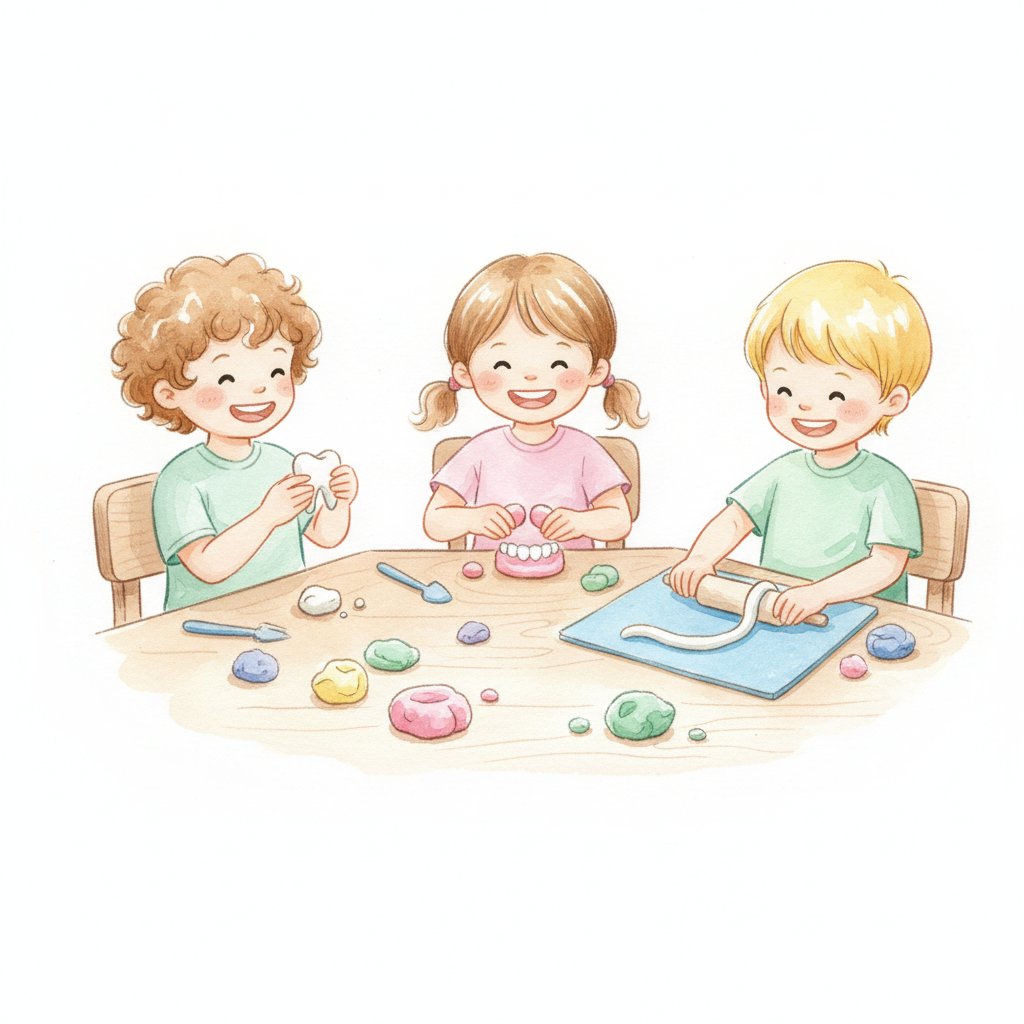
16. Tooth anatomy art
Materials: Clay or playdough.

What to do: "Make a tooth model! The white part is the CROWN — that's what you see. The yellow part is the ROOT — that's hidden in your gum. The pink part is the GUM holding it in place." The art teaches tooth anatomy. For more art, see our art guide.

17. Brushing sequencing
Materials: Sequencing cards.

What to do: "Put the steps in order: First, put toothpaste on the brush. Then, brush the top teeth. Then, brush the bottom teeth. Then, brush the chewing surfaces. Then, spit and rinse. Then, SMILE!" The sequencing teaches following directions. For more sequencing, see our following directions guide.

18. Tooth graph
Materials: Chart, stickers.

What to do: "How many children brush twice a day? Let's graph it! Blue sticker=morning AND night. Red sticker=morning only. Which has MORE?" The graphing teaches data collection and comparison. For more math, see our math guide.

19. Community helper: dentist
What to do: "A dentist is a community helper who keeps your teeth healthy. What tools does a dentist use? A mirror, a pick, a drill, a light, x-rays. Why do dentists matter? Because you only get ONE set of grown-up teeth!" The community helper lesson connects dental health to social studies. For more community helpers, see our community helpers guide.

20. Tooth promise
Materials: Paper, markers.

What to do: "Make a promise: I will brush my teeth twice a day. I will visit the dentist. I will eat healthy foods. I will drink water instead of soda. Draw your promise and hang it in the bathroom!" The promise teaches personal commitment to health.

Every day has two brushings
Our Days of the Week Poster builds brushing into the weekly calendar: 'Monday morning — BRUSH. Monday night — BRUSH. Tuesday morning — BRUSH. Tuesday night — BRUSH.' Seven days, fourteen brushings, zero cavities. The poster teaches that brushing isn't special or occasional — it's DAILY, like eating and sleeping. When children can SEE the whole week and know that brushing is part of EVERY day, it becomes as automatic as getting dressed. The poster makes time visible. Visible time makes habits stick.
1.When should children start brushing independently?
Children can start PRACTICING at age 2-3, but should not brush independently until age 7-8. Before that, their manual dexterity isn't sufficient for thorough cleaning. The best approach: let them brush first (practice), then you brush after (quality control). Say: "Your turn first! Now MY turn to get the spots you missed." This builds skill while ensuring cleanliness. Gradually shift the balance as they get older.
2.How do I make brushing fun instead of a battle?
Three strategies: (1) Give choice, not option: "Do you want the BLUE toothbrush or the RED one?" not "Do you want to brush?" (2) Make it playful: brush to a song, brush a stuffed animal first, let them brush YOUR teeth. (3) Connect it to something they care about: "Your teeth help you EAT your favorite food. Let's keep them strong!" Avoid making brushing a punishment or a negotiation — it's as routine as putting on shoes.
3.How do I prepare my child for their first dentist visit?
Play dentist at home first: use a flashlight, count their teeth, let them look in a mirror. Read a book about visiting the dentist. Explain what will happen in simple terms: "The dentist will count your teeth, brush them with special toothpaste, and maybe take a picture of them." Avoid words like "pain," "shot," or "drill." Schedule the visit for a time when your child is well-rested and fed. Bring a comfort item. And stay calm yourself — children pick up on parental anxiety.
4.What toothpaste should preschoolers use?
Use a fluoride toothpaste starting with the first tooth — but only a RICE-GRAIN sized amount for ages 0-3, and a PEA-SIZED amount for ages 3-6. The small amount prevents fluorosis (white spots on adult teeth) if swallowed. Teach spitting starting at age 2-3. If your child cannot spit yet, use a training toothpaste without fluoride until they can. The American Dental Association recommends fluoride toothpaste for cavity prevention from the first tooth.