Articles6 min read

The Blindfold That Taught Touch

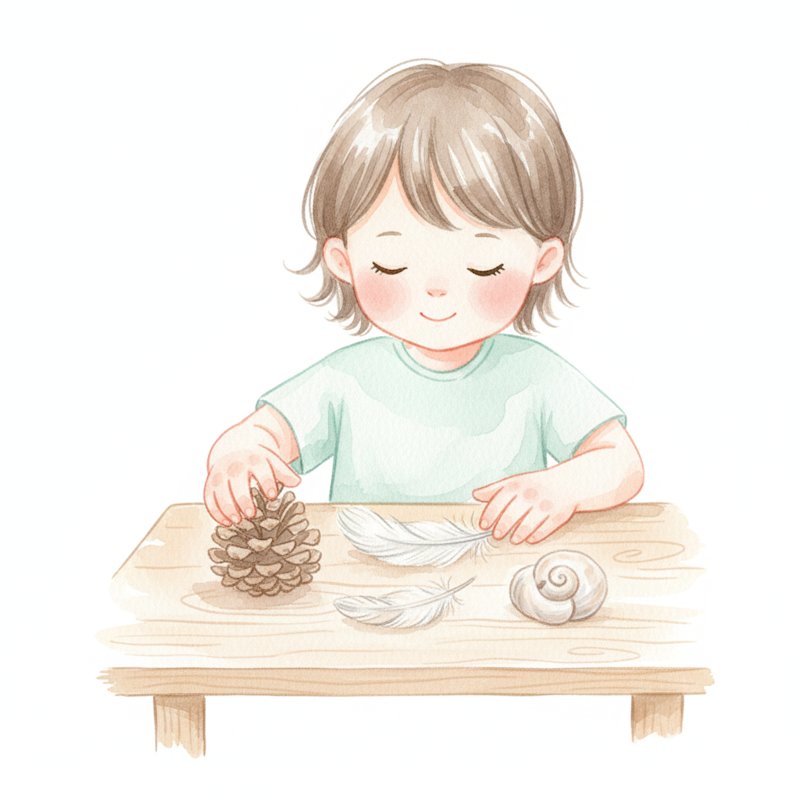
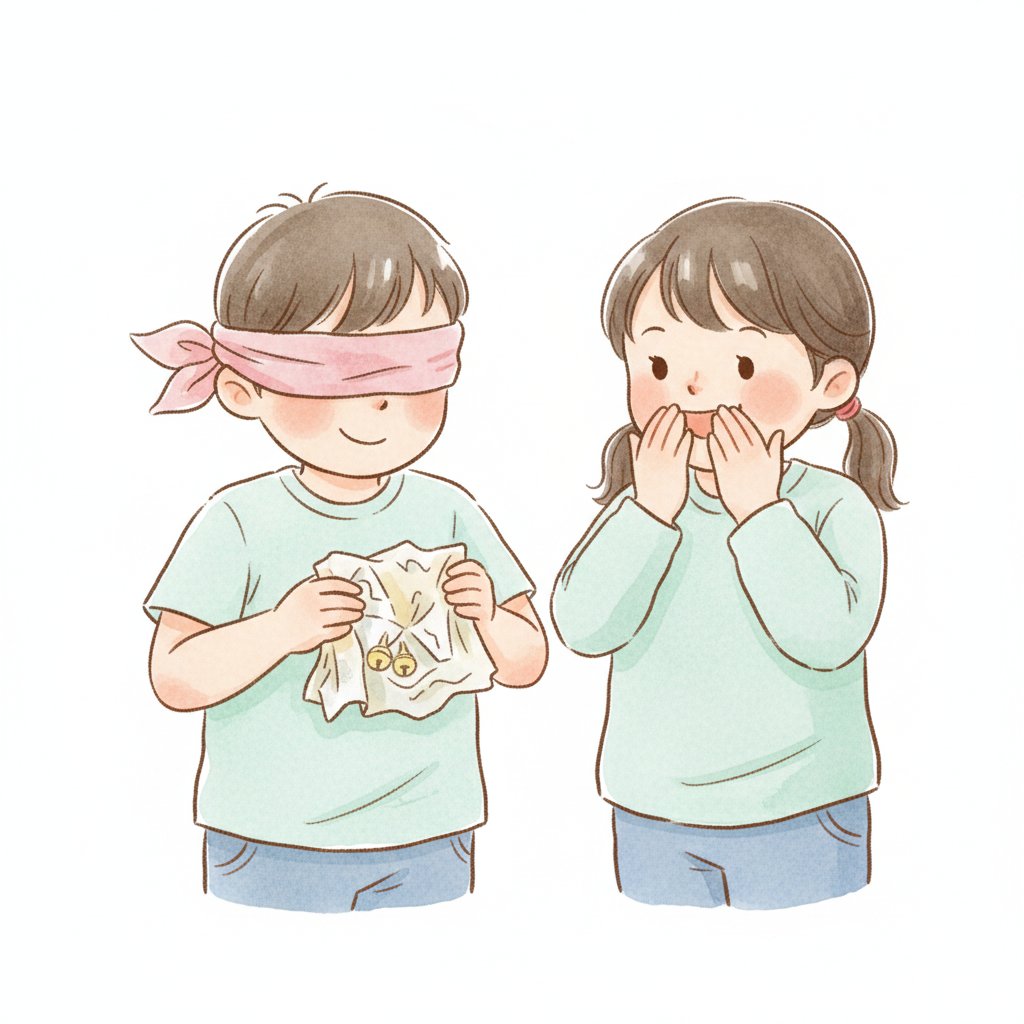
"Close your eyes. I'm going to put something in your hand. Tell me what you FEEL." I placed a pinecone in five-year-old Noah's palm. His fingers explored: "It's... prickly? No, BUMPY. And dry. And light. It has all these little... flap things sticking out. It's a PINECONE!" He opened his eyes and grinned. "I knew it!" Then I gave him a piece of velvet: "Soft. Very soft. Smooth and... fluffy? It's like a bunny." A seashell: "Hard. Curved. Cold. Smooth on the inside but RIDGES on the outside." A crumpled ball of foil: "Crinkly! Smooth but bumpy. It makes noise when I squeeze it. Cold." In five minutes, Noah had generated more descriptive vocabulary than a week of vocabulary worksheets. When you REMOVE sight, touch becomes sharp and precise. Texture activities teach children that their hands can SEE.

According to the American Academy of Pediatrics, tactile exploration builds sensory processing, descriptive vocabulary, fine motor skills, material science understanding, and cognitive categorization. Touch is the first sense to develop in the womb and remains our most fundamental learning tool.
This guide covers 20+ texture and material activities for ages 3-6. Pair it with our sensory guide for more sensory play and our five senses guide for multi-sensory learning.
Texture Exploration Activities (Ages 3-6)

1. Texture scavenger hunt
Materials: List of texture words, collection bags.

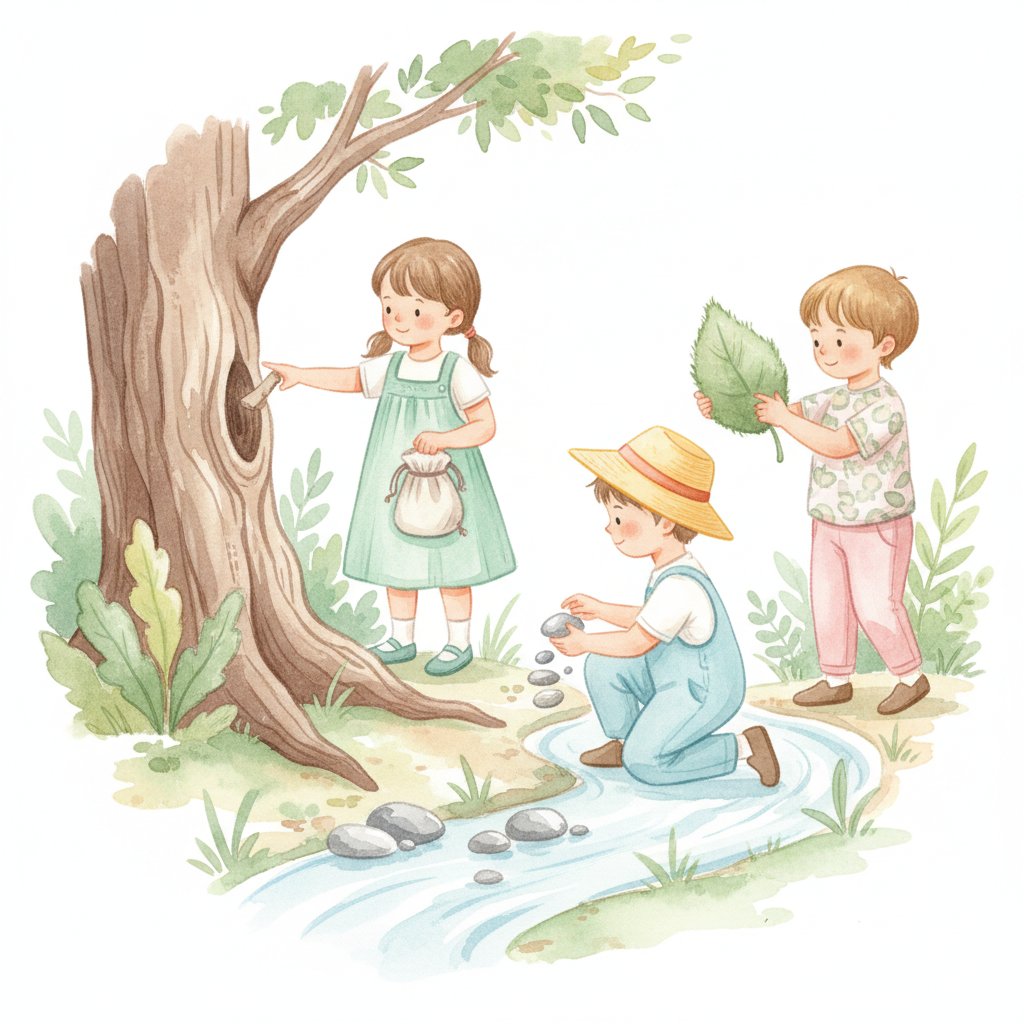
What to do: "Find something ROUGH. Find something SMOOTH. Find something SOFT. Find something HARD. Find something BUMPY. Find something FUZZY. Find something SLIPPERY. Find something PRICKLY." The hunt teaches texture vocabulary through real objects. For more outdoor exploration, see our outdoor guide.

Why it works: Texture activities work because they engage the LARGEST sensory organ in the body — the skin. Every square inch of skin has touch receptors that send information to the brain. When children actively explore textures, they're building neural pathways that connect sensory input to language, categorization, and memory. The vocabulary sticks because it's ANCHORED to a physical sensation. "Rough" isn't just a word — it's the feeling of bark under your fingertips.

2. Blindfold texture guessing
Materials: Blindfold, various textured objects.

What to do: "Close your eyes. Feel this object. Describe it BEFORE you guess what it is: Is it hard or soft? Rough or smooth? Warm or cold? Heavy or light? NOW guess!" The blindfold forces children to rely entirely on touch.

3. Texture rubbings
Materials: Paper, crayons, textured surfaces (bark, brick, leaves, coins, fabric).

What to do: "Put the paper ON TOP of the surface. Rub the crayon sideways. The texture APPEARS on the paper! What does bark look like? What about a coin? A leaf?" The rubbings make invisible textures visible. For more art, see our art guide.

4. Texture board
Materials: Cardboard, glue, various materials (sandpaper, cotton balls, foil, velvet, bubble wrap, corduroy, felt).

What to do: "Glue each material to a square on the board. Close your eyes and feel. Can you find the SANDPAPER? The COTTON? The FOIL?" The board creates a permanent texture reference. For more sensory boards, see our sensory guide.

5. Texture matching
Materials: Pairs of textured items in bags.

What to do: "Feel inside bag A and bag B. Do they feel the SAME or DIFFERENT? Match the pairs by touch alone!" The matching teaches tactile discrimination. For more matching, see our matching guide.

Colors have textures
Our Colors Flashcards become a texture-color hunt: 'Find something RED and SMOOTH — an apple! Find something GREEN and ROUGH — tree bark! Find something BROWN and SOFT — a teddy bear! Find something WHITE and FLUFFY — a cloud! Find something YELLOW and PRICKLY — a pineapple!' Children combine color vocabulary with texture vocabulary, building richer descriptions. The flashcards name the color; their hands find the texture. Two adjectives, one object, deeper language. Eleven colors, dozens of textures, hundreds of descriptions.

Material Sorting and Science (Ages 3-6)

6. Material sort
Materials: Collection of objects made from different materials.

What to do: "Sort by what things are MADE OF: wood, metal, plastic, fabric, paper, glass, stone. How can you TELL? What does each material feel like?" The sort teaches material identification. For more sorting, see our sorting guide.

7. Natural vs. manufactured sort
Materials: Mixed collection.

What to do: "Which things come from NATURE? (Leaves, rocks, shells, feathers.) Which are MADE by people? (Plastic toys, paper clips, fabric, coins.)" The sort teaches natural vs. artificial materials. For more nature, see our outdoor guide.

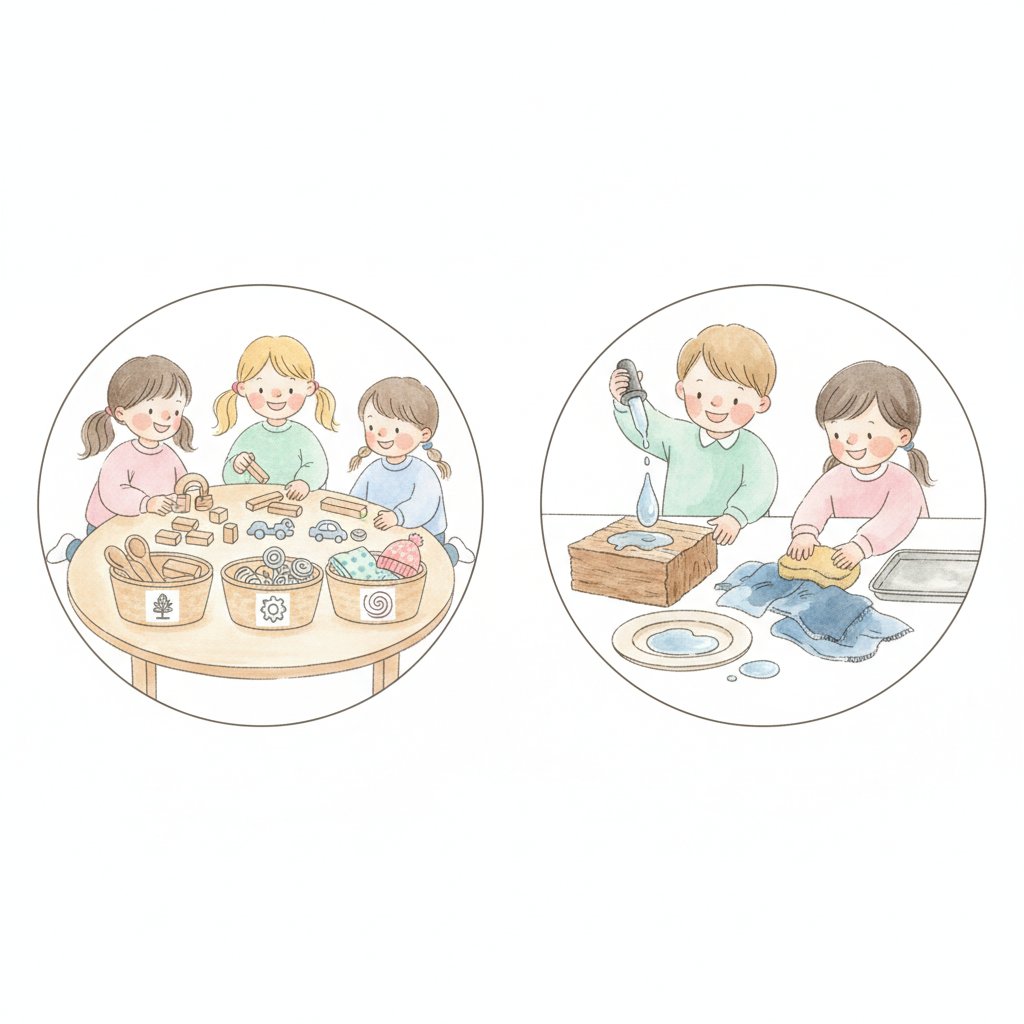
8. Waterproof test
Materials: Water, various materials (paper, plastic, foil, fabric, wax paper).

What to do: "Put a few drops of water on each material. What happens? The paper SOAKS it up! The plastic repels it! The wax paper beads up!" The test teaches absorption and waterproofing. For more science, see our science guide.

9. Stretch and tear test
Materials: Rubber band, paper, fabric, foil, clay.

What to do: "Pull each material. Which ones STRETCH? Which ones TEAR? Which ones BEND? Which ones SNAP BACK?" The test teaches elasticity and material properties.

10. Sound of materials
Materials: Various materials.

What to do: "Tap each material. What SOUND does it make? Metal goes CLINK. Wood goes THUD. Paper goes CRINKLE. Fabric goes... nothing! Why?" The sound test teaches that materials have acoustic properties. For more sound, see our music guide.

Weather has textures you can feel
Our Weather Flashcards connect weather to texture: 'SUNNY — the sun feels WARM on your skin. RAINY — rain feels WET and COLD. SNOWY — snow feels COLD and CRUNCHY. WINDY — wind feels PUSHY on your face. FOGGY — fog feels DAMP and MYSTERIOUS. STORMY — thunder feels LOUD in your chest.' Each weather card becomes a body experience: go outside, feel the weather, describe the texture. The flashcards name the weather; children's skin feels the proof. Weather isn't just something you see out the window — it's something you FEEL. Twelve weather cards, twelve textures on your skin.

Fabric and Fiber Activities (Ages 3-6)

11. Fabric matching
Materials: Swatches of different fabrics (cotton, silk, denim, velvet, wool, burlap).

What to do: "Feel each fabric. Match the pairs by TOUCH alone — no peeking! Which is the SOFTEST? Which is the ROUGHEST?" The matching teaches tactile discrimination between textiles.

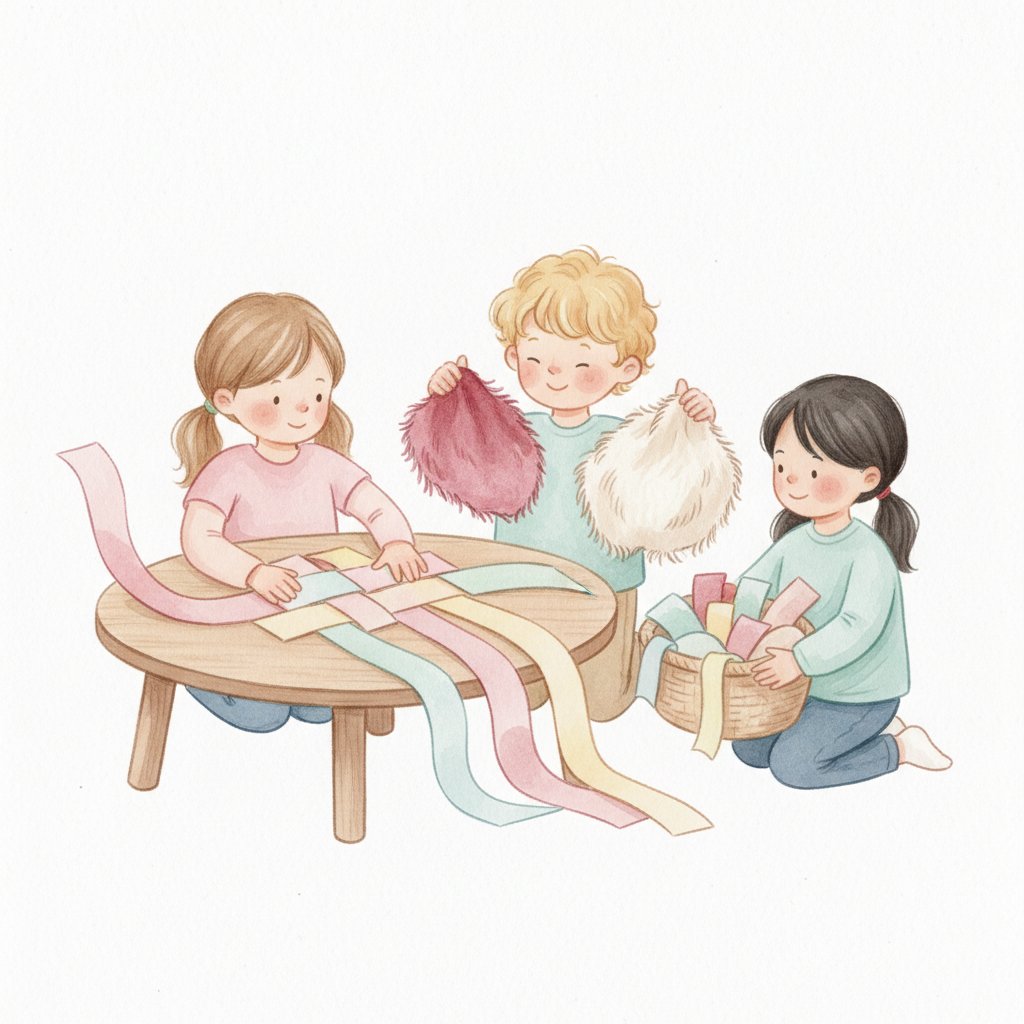
12. Weaving with paper
Materials: Strips of colored paper, paper with slits cut.

What to do: "Weave the strips OVER and UNDER: over, under, over, under. Make a pattern!" The weaving teaches patterning and fine motor. For more patterns, see our pattern guide.

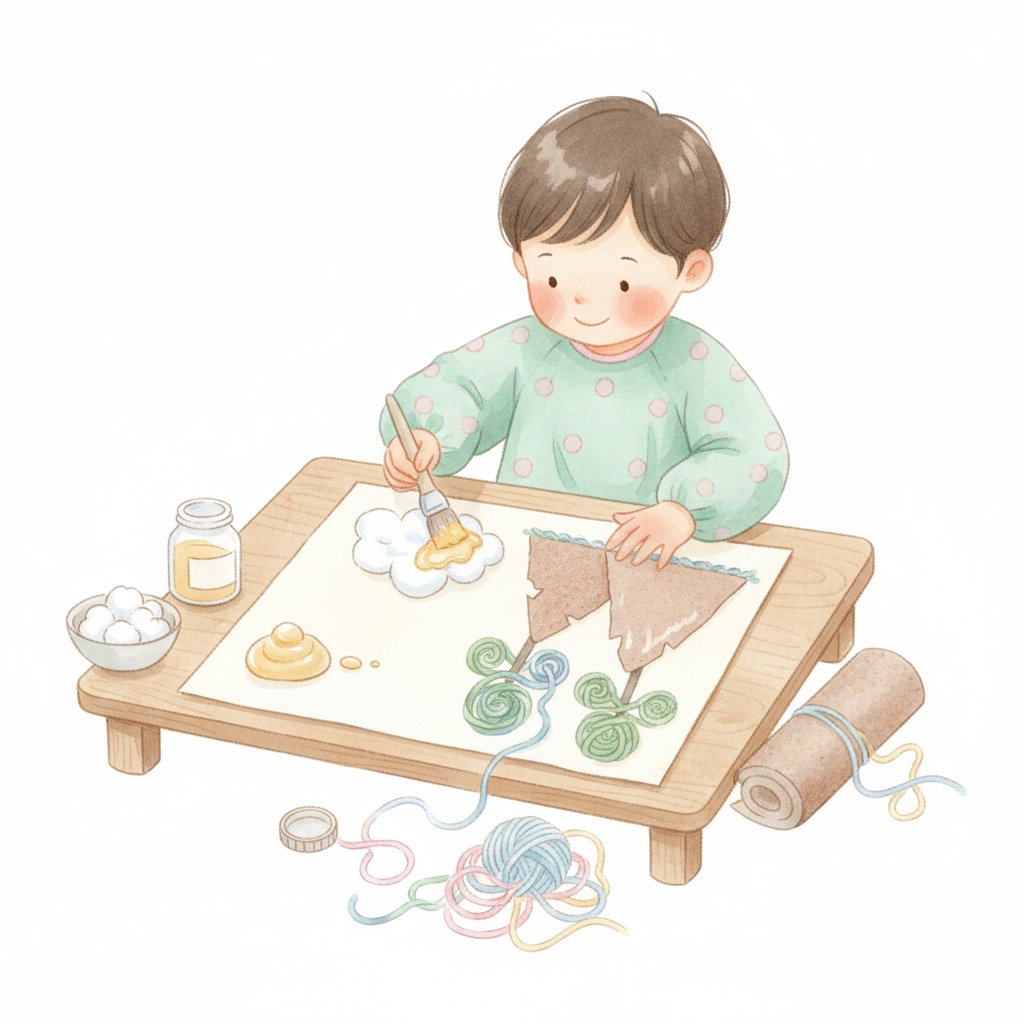
13. Texture collage
Materials: Various textured materials, glue, paper.

What to do: "Make a picture using different textures: cotton ball clouds, sandpaper mountains, foil river, fabric grass, yarn trees." The collage teaches art through texture. For more art, see our art guide.

14. Sensory stepping stones
Materials: Trays filled with different materials (sand, rice, bubble wrap, grass, water, foam).

What to do: "Step in each tray! How does it feel on your FEET? Squishy? Crunchy? Cold? Tickly?" The stepping teaches whole-body texture awareness. For more sensory, see our sensory guide.

15. Texture memory game
Materials: Pairs of textured cards (glued materials).

What to do: "Mix them up face down. Turn over two. Do they feel the SAME? If yes, keep the pair!" The game teaches tactile memory. For more memory games, see our memory guide.

More Texture Activities (Ages 3-6)

16. Texture alphabet
Materials: Sandpaper letters, textured materials.

What to do: "Feel the letter shape with your fingers. Trace it! The rough sandpaper helps you REMEMBER the shape." The textured letters teach letter formation through touch. For more alphabet, see our alphabet guide.

17. Temperature texture
Materials: Warm and cool objects.

What to do: "Feel this — it's WARM. Now this — it's COOL. Which is warmer? Which is cooler? Metals feel cooler than wood even at the SAME temperature because they conduct heat AWAY from your skin faster." The activity teaches thermal perception. For more science, see our science guide.

18. Texture story
What to do: "Tell a texture story: 'The princess walked on SOFT carpet (feel this). Then she stepped on CRUNCHY gravel (feel this). Then she touched a SMOOTH door (feel this). Then she sat on a BUMPY throne (feel this)!'" The story teaches narrative through texture. For more storytelling, see our storytelling guide.

19. Texture graph
Materials: Chart, texture samples.

What to do: "How many smooth things did you find? How many rough? Graph them! Which texture was most common?" The graphing teaches data collection through texture. For more graphing, see our math guide.

20. Texture journal
Materials: Notebook.

What to do: "Each day, find one new texture. Rub it, describe it, draw it. By the end of the month, you'll have a whole BOOK of textures!" The journal teaches daily observation and documentation. For more writing, see our writing guide.

Ocean animals have amazing textures
Our Ocean Animals Watercolor Art Activity Pack pairs art with texture learning: 'A starfish feels ROUGH and BUMPY — like sandpaper. A jellyfish feels SOFT and SLIPPERY — like wet gelatin. A clam shell feels SMOOTH on the inside and RIDGED on the outside. A sea urchin feels PRICKLY — like a pincushion. A whale feels SMOOTH and RUBBERY — like a wet balloon.' Paint each animal, then find something in the room that matches its texture. Art meets science meets sensory exploration. The pack makes ocean texture VISIBLE through paint and TANGIBLE through real-world texture matching.
1.What if a child doesn't like touching certain textures?
Respect their preference — never force a child to touch something they find aversive. Some children have tactile defensiveness (heightened sensitivity to touch). Instead, offer alternatives: "You can look at it, smell it, or tap it with a spoon instead of touching it." Gradually introduce textures through a "texture ladder" — start with preferred textures (usually soft, smooth) and slowly introduce more challenging ones. The goal is EXPLORATION, not endurance.
2.How do texture activities help with language development?
Texture activities build ADJECTIVE vocabulary faster than any other activity because the words are anchored to physical sensations. A child who feels sandpaper, cotton, and foil learns "rough, soft, crinkly" through direct experience — not definitions. The brain stores sensory-linked vocabulary more durably than abstract vocabulary. Children also learn COMPARATIVE language: "This is roughER than that. This is the softEST." Comparison requires higher-order thinking that builds through texture play.
3.Can texture activities help children with sensory processing difficulties?
Yes, when done gradually and with consent. Occupational therapists use texture play (called "tactile desensitization") to help children who are over- or under-responsive to touch. Start with dry textures (rice, beans, sand), progress to wet (water, paint, shaving cream), then to sticky (glue, playdough, honey). Always let the child control the pace and duration. If they pull away, that's information, not failure.
4.What are the best everyday materials for texture activities?
Free materials from around the house and yard: bark, leaves, pinecones, rocks, sand, dirt, grass, feathers, shells, aluminum foil, bubble wrap, sandpaper, cotton balls, velvet scraps, burlap, corduroy, rice, dried beans, pasta, cornmeal, shaving cream, and water. The BEST texture collections come from nature walks — every natural object has a unique texture. Keep a "texture box" where children add new finds.