Articles7 min read

The Highway Our Classroom Built

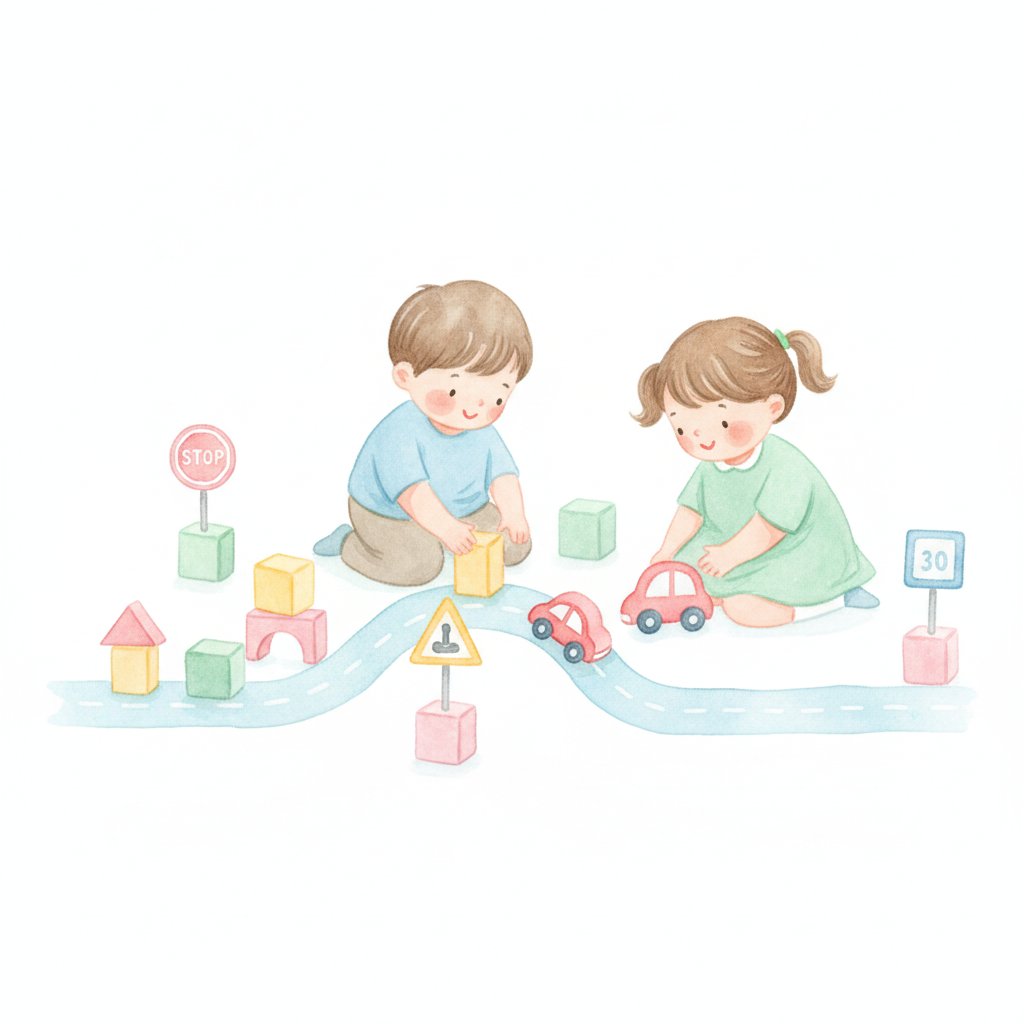
We taped roads made of black construction paper across the entire classroom floor — over the rug, around the reading corner, through the block center, past the art table. Children added buildings, parking lots, gas stations, and traffic signs made from recycled materials. What started as a "transportation theme" became a week-long city-planning project. Four-year-old Noah designed a roundabout because "cars don't have to stop at a roundabout — they just go around!" Emma added a hospital near the road "so the ambulance can get there fast." The city they built was more sophisticated than anything I could have planned — because it was THEIRS.

According to the National Association for the Education of Young Children, transportation themes naturally integrate STEM concepts (engineering roads, physics of motion, spatial mapping), social studies (community connections, jobs, geography), and literacy (signs, maps, labels). Children are fascinated by things that move — and that fascination is a powerful teaching tool.
This guide covers 20+ transportation activities for ages 3-6. Pair it with our community helpers guide for the people who drive the vehicles and our safety guide for road safety.
Vehicle Sorting and Classification (Ages 3-6)

1. Land, water, air sorting
Materials: Vehicle pictures or toy vehicles, three category mats.

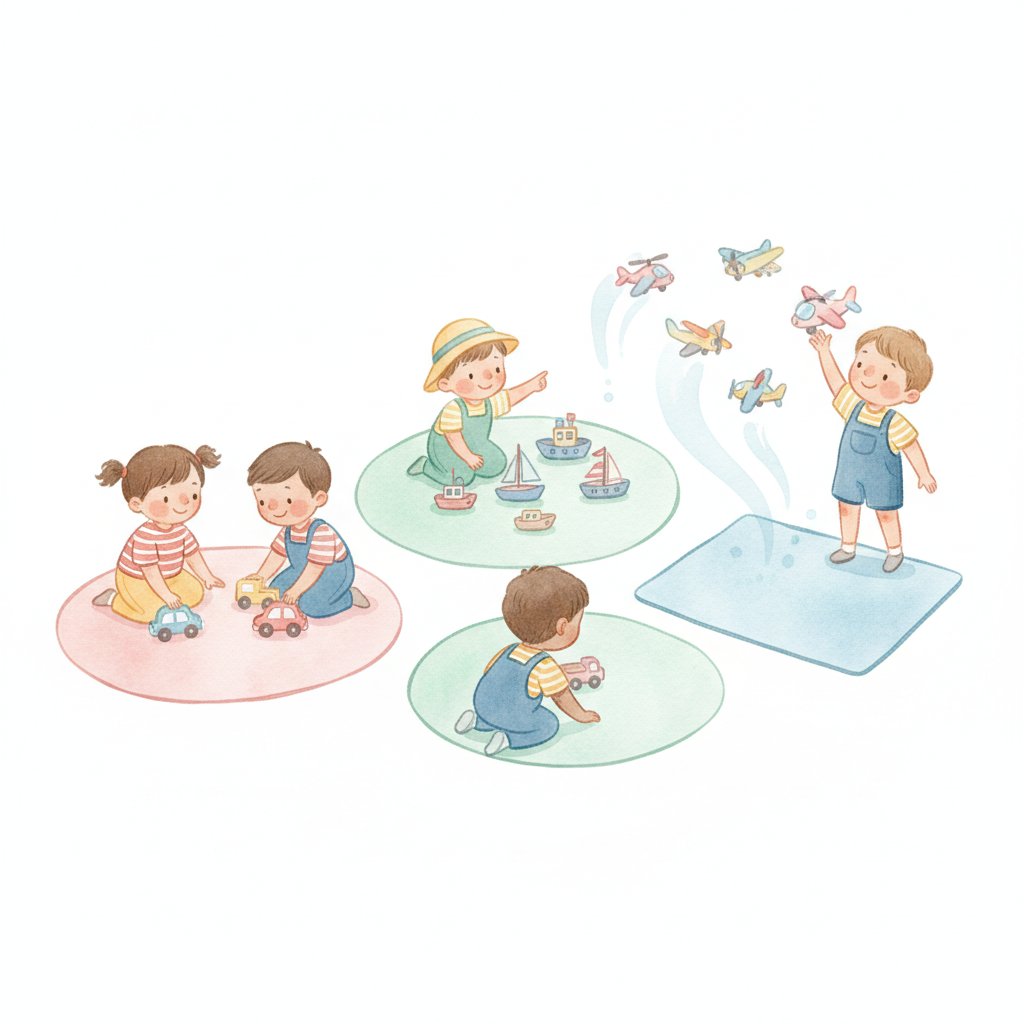
What to do: "Sort the vehicles: which go on LAND, which go on WATER, which go in the AIR?" Cars, trucks, buses=land. Boats, submarines=water. Airplanes, helicopters=air. "Some vehicles can go on land AND water — like a seaplane!" For more sorting, see our sorting guide.

Why it works: Classification is a foundational math skill. When children sort vehicles by where they travel, they practice the same thinking they use for sorting shapes, colors, and numbers. The transportation context makes the abstract skill concrete and engaging — every child has a favorite vehicle.

2. By purpose sorting
What to do: Sort vehicles by what they DO: "Work vehicles (bulldozer, crane, dump truck). Emergency vehicles (fire truck, ambulance, police car). People movers (bus, taxi, train). Fun vehicles (bicycle, skateboard, roller skates)." The secondary sort teaches that categories can overlap: "A school bus is a people mover AND it's yellow like an emergency vehicle!"

3. Size sequencing
Materials: Vehicle pictures of different sizes.

What to do: "Line up the vehicles from smallest to biggest! Bicycle, car, bus, truck, airplane." The sequencing teaches size comparison and ordering. For more sequencing, see our pattern guide.

4. Color matching parking lot
Materials: Toy cars, colored paper "parking spaces."

What to do: "Park each car in the matching color space! Red car in the red space. Blue car in the blue space." The matching teaches color recognition through a vehicle narrative. For more colors, see our color guide.

5. Vehicle counting
Materials: Toy vehicles.

What to do: "How many wheels does a car have? 4! How many wheels does a bicycle have? 2! How many wheels does a tricycle have? 3! How many wheels does a semi-truck have? 18!" Count wheels, windows, doors, headlights. For more counting, see our number guide.

Every vehicle is made of shapes
Our Shapes Flashcards turn vehicle observation into geometry: 'A car has a RECTANGLE body and CIRCLE wheels. A boat has a TRIANGLE sail. A rocket has a TRIANGLE top and a RECTANGLE body. A stop sign is an OCTAGON — that is an eight-sided shape!' Children spot shapes in every vehicle they see: circle wheels, rectangle windows, triangle roofs. The flashcards teach shape names, and the vehicles give shapes a real-world purpose. Geometry is not abstract when you see it on the road.

Road Building and Track Activities (Ages 3-6)

6. Tape road city
Materials: Masking tape, toy cars, blocks.

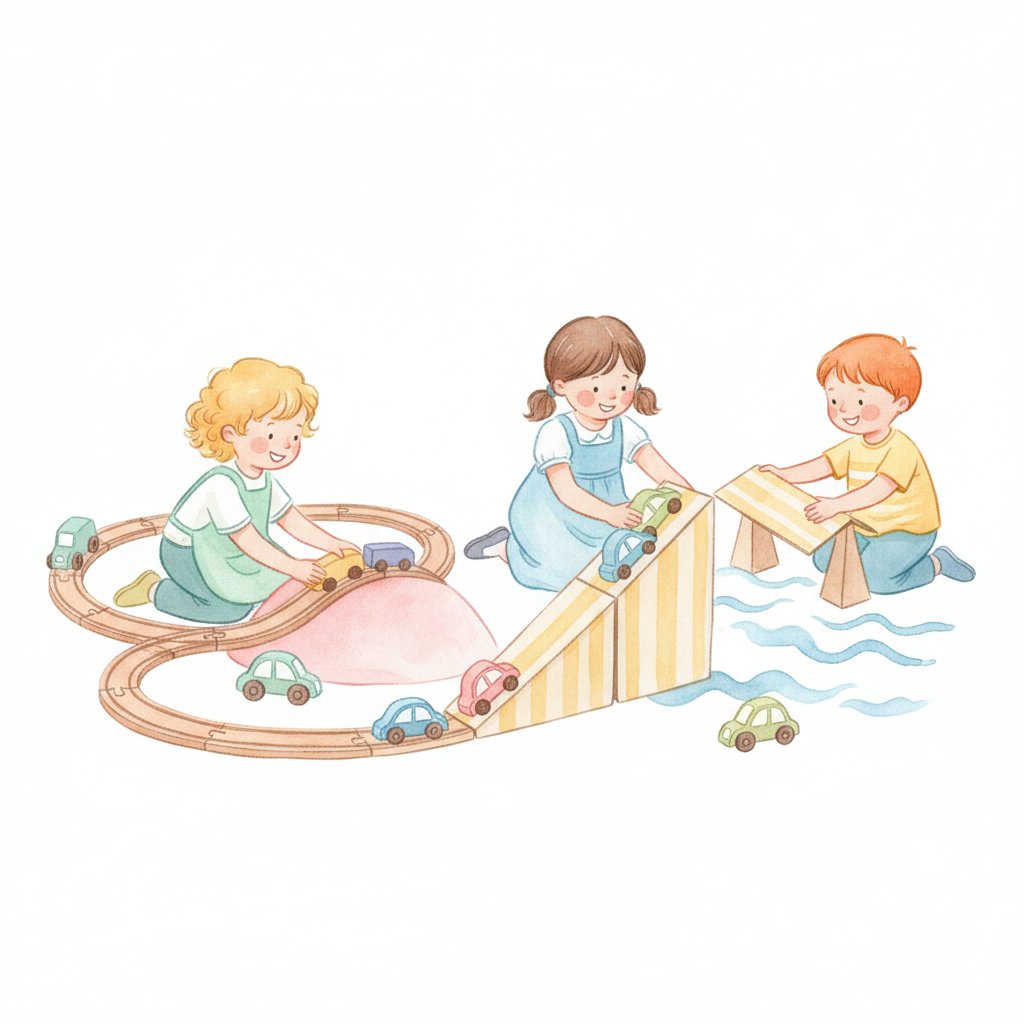
What to do: Tape roads on the floor: straight roads, curved roads, intersections, a roundabout. Children add buildings from blocks, signs from paper, and drive cars along the roads. "We need a hospital here! And a school here! And a gas station here!" The city-building teaches spatial planning and community awareness. For more building, see our block guide.

7. Ramp physics
Materials: Cardboard ramps, toy cars, measuring tape.

What to do: "Which car goes the farthest? Make the ramp steeper — what happens? The car goes FASTER and FARTHER!" Change ramp height and observe results. "The steep ramp makes the car go fast because gravity pulls harder!" The experiment teaches physics through play. For more science, see our science guide.

8. Train track engineering
Materials: Wooden train tracks, trains.

What to do: "Build a track that goes from the station to the city! You need straight pieces, curved pieces, and a bridge." Children plan and construct. "Oh no, the track doesn't connect! What piece do we need?" The engineering teaches planning, problem-solving, and spatial reasoning. For more problem-solving, see our problem-solving guide.

9. Bridge building challenge
Materials: Blocks, cardboard, paper.

What to do: "Build a bridge strong enough for a toy car to drive across! The gap is this wide. What materials will you use? How will you make it strong?" Children design, test, and revise. "It collapsed! Let's make the supports thicker." For more engineering, see our STEM guide.

10. Map making
Materials: Paper, crayons.

What to do: "Draw a map of roads from your house to school! What do you pass? A store? A park? A traffic light?" The map-making teaches spatial awareness, representation, and observation of the real world. For more drawing, see our writing guide.

Getting ready to go: the transportation morning
Our Morning Routine Visual Schedule Cards include the getting-dressed and leaving-for-school steps that connect to transportation: 'Put on your shoes — we're walking today! Grab your backpack — the bus is coming! Check the weather — do we need boots or an umbrella?' Every morning is a transportation lesson: walking, driving, busing, biking. The cards make the morning routine visual and predictable, and they open conversations about HOW we get where we need to go. Routine plus transportation awareness equals smoother mornings.

Vehicle Role-Play and Movement (Ages 3-6)

11. Human vehicles
What to do: "You ARE the vehicle! Cars drive on the road (walk). Fire trucks rush to emergencies (run). Airplanes fly (arms out, zoom). Boats float (swimming motion). Trains go on tracks (follow a line on the floor)." The movement game teaches vehicle types through gross motor play. For more movement, see our gross motor guide.

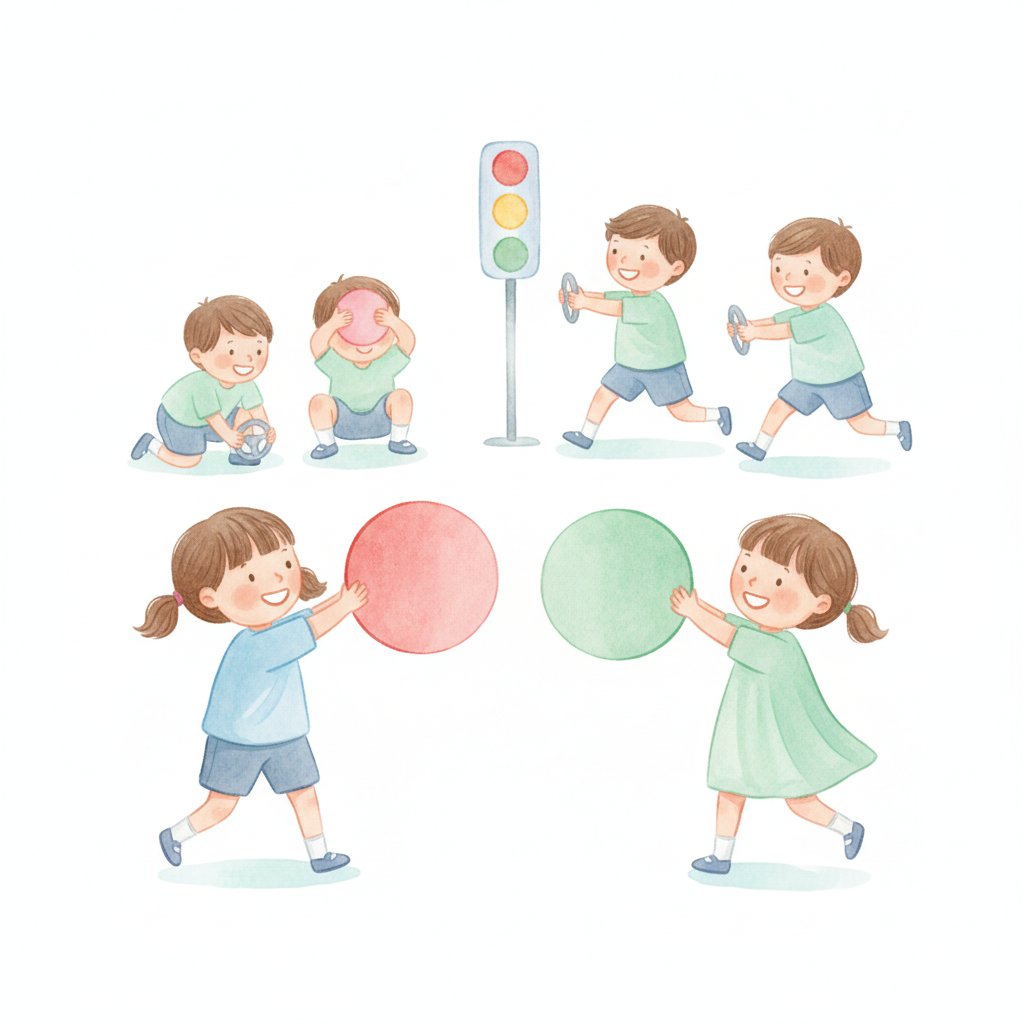
12. Traffic light game
Materials: Red, yellow, green circles.

What to do: "GREEN means GO! Run! YELLOW means SLOW DOWN! Walk slowly! RED means STOP! Freeze!" Children run, slow, and freeze based on the color held up. "Traffic lights keep cars safe — and they keep US safe when we cross the street!" The game teaches self-regulation and traffic safety. For more safety, see our safety guide.

13. Bus driver role-play
Materials: Chairs in rows, steering wheel (paper plate), tickets.

What to do: "All aboard! The bus is leaving! Where are you going? That will be 2 coins please." Children take turns as driver, passengers, and ticket collector. "Next stop: the LIBRARY! Next stop: the PARK!" The role-play teaches community geography, counting, and social skills. For more role-play, see our dramatic play guide.

14. Airplane adventure
Materials: Chairs, paper tickets, pretend luggage.

What to do: "Welcome aboard flight 123! Please fasten your seatbelts. We are flying to [child's choice]. The flight time is 2 hours. Enjoy the view!" Children pretend to fly: pilot, co-pilot, flight attendants, passengers. "What do you see out the window? Clouds! Mountains! The ocean!" The adventure teaches geography and imagination.

15. Construction site obstacle course
Materials: Obstacles, toy dump truck.

What to do: "You're a dump truck! Load the blocks (cargo), drive through the obstacle course (around cones, over the bridge, under the tunnel), and deliver to the construction site!" The course combines physical activity with vehicle narrative. For more obstacle courses, see our gross motor guide.

Transportation Learning Extensions (Ages 3-6)

16. Transportation alphabet
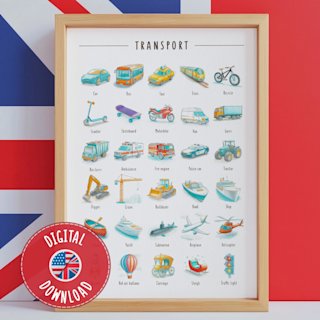
What to do: "A is for AIRPLANE. B is for BUS. C is for CAR. D is for DUMP TRUCK. E is for ELECTRIC CAR. F is for FIRE TRUCK." Go through the alphabet with vehicles. The alphabet connection teaches letter sounds through high-interest vocabulary. For more alphabet, see our alphabet guide.

17. Vehicle sound matching
What to do: "What sound does a train make? CHOO CHOO! What sound does a fire truck make? WEE-OO WEE-OO! What sound does a helicopter make? CHOP CHOP CHOP!" Match vehicles to their sounds. The matching teaches auditory discrimination. For more listening, see our listening guide.

18. Transportation patterns
Materials: Vehicle pictures.

What to do: "Car, truck, car, truck — what comes next? CAR! Bike, bike, bus, bike, bike, bus — what comes next? BIKE!" The patterning teaches math through vehicle sequences. For more patterns, see our pattern guide.

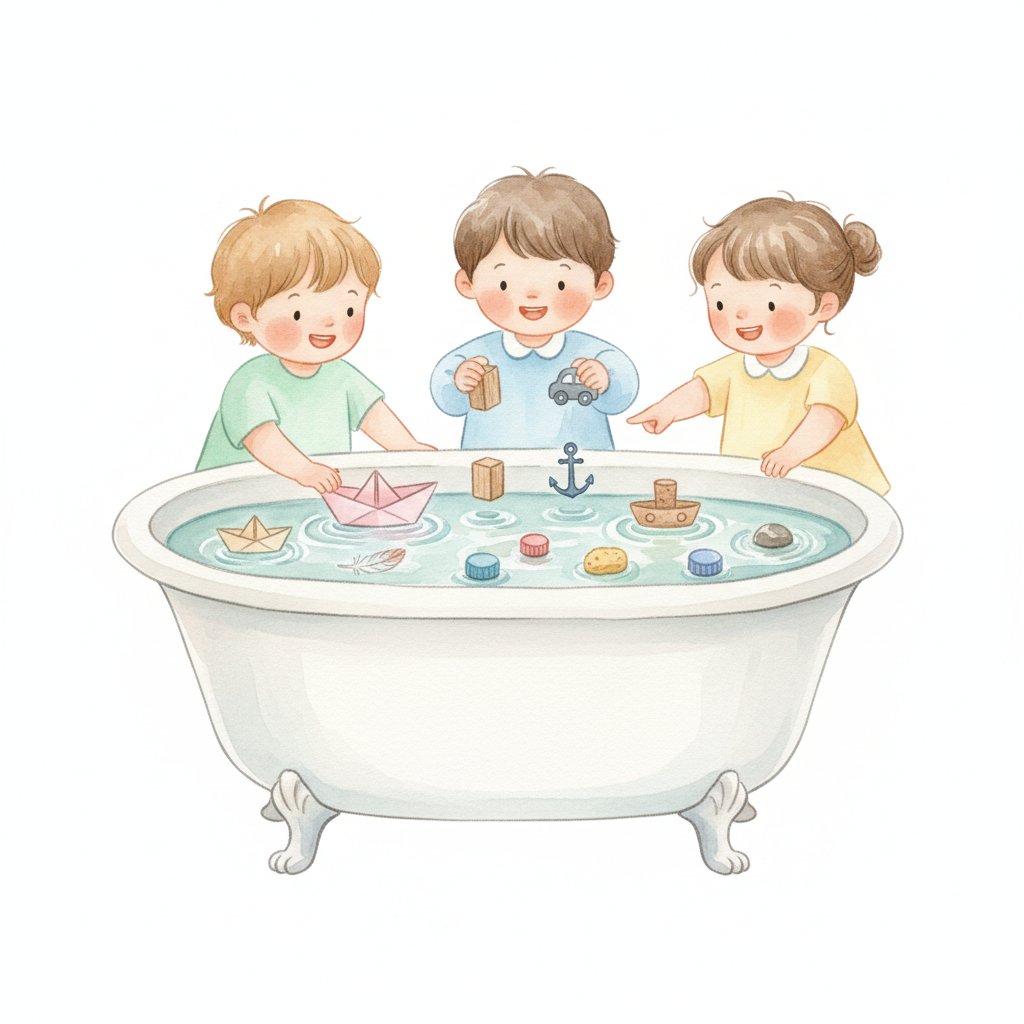
19. Sink or float boat test
Materials: Container of water, various materials.

What to do: "Will this foil boat float? Will this paper boat float? What about this wooden block?" Build simple boats and test them. "Boats float because they're shaped to push water aside and sit ON TOP of it!" The experiment teaches buoyancy through hands-on testing. For more science, see our science guide.

20. Transportation then and now
Materials: Pictures of old and new vehicles.

What to do: "This is how people traveled 100 years ago — horse and carriage! This is how we travel now — electric cars! What do you think cars will look like in 100 years?" The comparison teaches history and inspires future thinking. For more storytelling, see our storytelling guide.

Vroom vroom goes the letter V
Our Alphabet Monster Flashcards become a transportation alphabet hunt: 'V is for VAN and VROOM. T is for TRAIN and TRUCK and TRACTOR. B is for BUS and BOAT and BIKE. Every vehicle starts with a letter, and every letter has a vehicle!' Children learn letter sounds faster when they connect to things they love — and preschoolers LOVE vehicles. The V monster teaches V because VROOM is the best sound in the world. The T monster teaches T because TRUCKS are huge and loud. Letters become vehicles and learning becomes an adventure.
1.My child is obsessed with vehicles. Is this normal?
Completely normal and developmentally typical. Intense interests in specific topics (dinosaurs, vehicles, animals) are common in ages 3-6 and are actually linked to better vocabulary, longer attention spans, and deeper learning. Don't fight the obsession — USE it. "You love trucks? Let's count the wheels. Let's build a road. Let's read about construction. Let's draw a fire truck." The vehicle interest is a doorway to every learning domain.
2.How do I make transportation activities educational, not just playing with cars?
Add print and numbers. Put labels on the parking lot. Add price tags to the gas station. Count wheels. Write tickets. Read maps. Make signs. The vehicles are the MOTIVATION — the learning happens in the print, math, science, and social skills you layer on top. The car is the hook; the counting is the catch.
3.What transportation activities work for a small space?
Vehicle sorting needs a table and some toy cars. Tape roads need just floor space. Map making needs paper and crayons. The traffic light game needs only space to run. Transportation activities are very space-efficient — the key materials are toy vehicles and masking tape, both of which work in any size room.
4.How do I connect transportation to other learning areas?
Math: count wheels, sort by color, measure how far cars roll. Literacy: read transportation books, write vehicle names, make signs. Science: test which ramps make cars go faster, explore sink/float with boats. Art: paint with toy car wheels, draw maps, build cardboard vehicles. Social studies: visit a fire station, talk about who drives each vehicle. Transportation is a universal theme that connects to everything.