Articles7 min read

X Marks the Spot Where Learning Happens

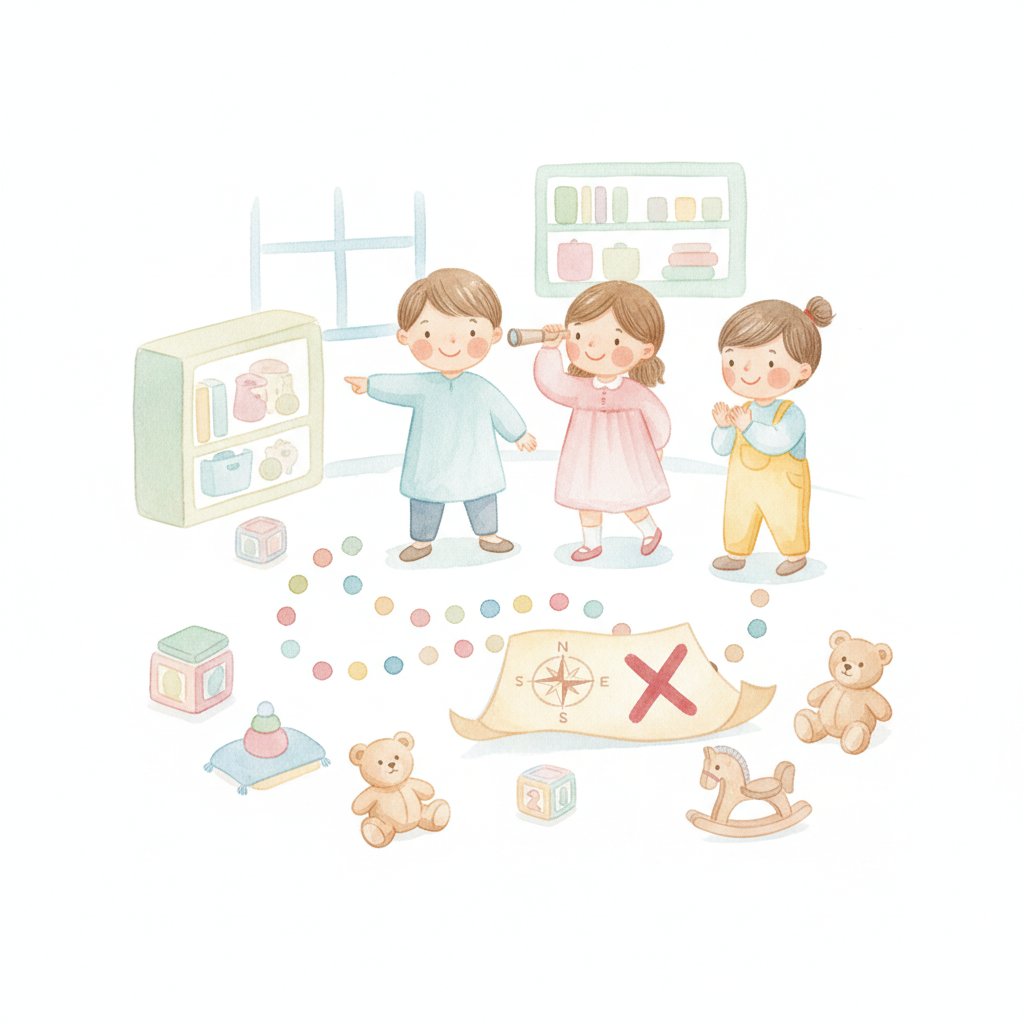
"I have a MAP," I whispered. Twenty eyes locked on me. I unrolled a crinkled paper with a dotted line winding from a palm tree, around a volcano, across a river, to a big red X. "Who wants to find the treasure?" Every hand shot up. "First, we need a CREW. Who can navigate? Who can dig? Who can carry the treasure chest?" Roles were assigned. The navigator held the map. The digger carried a shovel (a plastic spoon). The treasurer carried the chest (a shoebox). We followed the dotted line through the classroom: past the bookshelf island, around the table mountain, across the blue-tape river. At the X, the digger dug through a sensory bin filled with sand. "I FOUND IT!" She pulled out a gold-painted rock. Inside the treasure chest was a note: "The real treasure is ADVENTURE. You worked as a TEAM, followed a MAP, and never gave UP." The children cheered. Then they made their OWN maps and hid treasure for each other. For 45 minutes, every child was reading maps, counting steps, giving directions, negotiating roles, and solving problems. They were pirates — and they were learning.

According to the American Academy of Pediatrics, adventure and treasure activities develop spatial reasoning, symbolic thinking (maps represent real spaces), collaborative problem-solving, counting and measurement, and narrative creation through story-based play. A treasure hunt is a full-brain workout disguised as an adventure.
This guide covers 20+ treasure and pirate activities for ages 3-6. Pair it with our map guide for spatial skills and our scavenger hunt guide for more hunts.
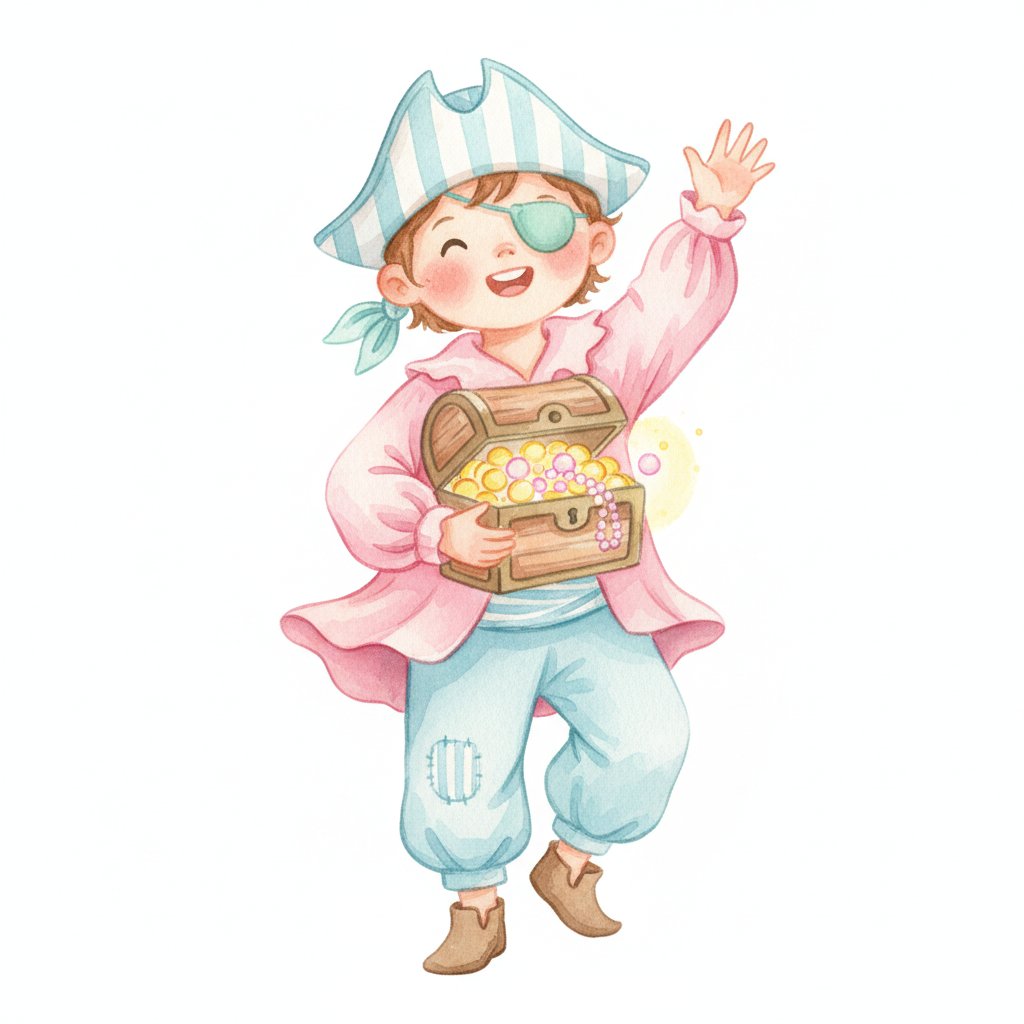
Pirate and Treasure Setup (Ages 3-6)

1. Make a treasure map
Materials: Paper, brown paint or tea staining, markers.

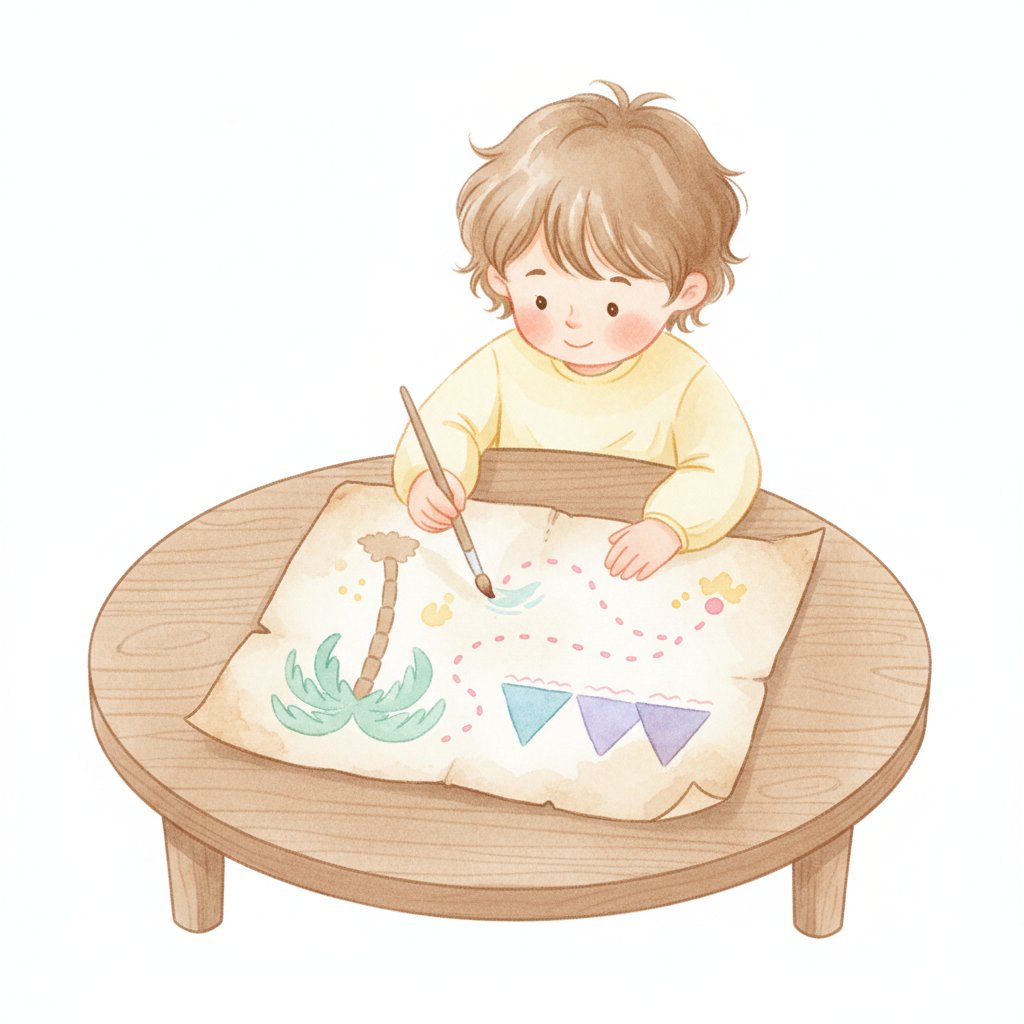
What to do: "Crumple the paper and paint it with tea to make it look OLD. Draw landmarks: a tree, a mountain, a river, a cave. Draw a dotted path. Draw a big X where the treasure is!" The map making teaches symbolic representation and spatial planning. For more maps, see our map guide.

Why it works: Treasure activities work because they combine EXPLORATION with PURPOSE. A child following a treasure map is not wandering — they are NAVIGATING. Each landmark is a CHECKPOINT. The dotted line is a PATH. The X is a GOAL. This structure teaches planning, sequencing, and persistence: "The map says go PAST the mountain, not STOP at the mountain. Keep going!" The treasure at the end provides MOTIVATION, but the learning happens on the JOURNEY: reading the map, counting steps, giving directions, overcoming obstacles, working as a team. The treasure is a rock painted gold. The ADVENTURE is the real reward.

2. Treasure chest craft
Materials: Shoebox, paint, jewels or stickers.

What to do: "Paint the shoebox brown. Add jewels or stickers as decorations. This is your TREASURE CHEST. What will you put inside?" The chest craft teaches fine motor and ownership. For more crafts, see our craft guide.

3. Pirate hat and eye patch
Materials: Paper, string.

What to do: "Fold the paper into a pirate hat. Cut an eye patch from black paper and tie it with string. Now you look like a pirate — but a FRIENDLY one who shares treasure!" The costume teaches role immersion. For more dramatic play, see our pretend play guide.

4. Pirate ship
Materials: Large cardboard box, markers.

What to do: "This box is our SHIP. Draw planks on the sides, a sail on the front, and a steering wheel. Climb aboard and sail to TREASURE ISLAND!" The ship building teaches cooperative construction. For more building, see our blocks guide.

5. Compass introduction
Materials: Paper plate compass, cardinal direction signs.

What to do: "A compass points NORTH, SOUTH, EAST, and WEST. The treasure map says go NORTH from the tree. Which way is north? Follow the compass!" The compass teaches cardinal directions. For more directions, see our map guide.

Each animal guards a treasure clue
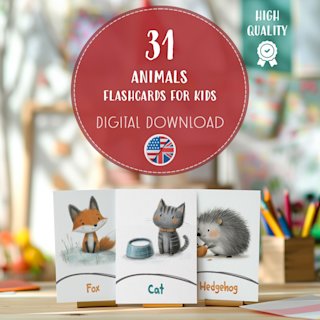
Our Farm Animals Flashcards become treasure guardians: 'On Animal Island, each animal guards ONE CLUE. Find the COW card. The cow says: Walk 5 steps toward the window. Find the PIG card. The pig says: Look under something RED. Find the CHICKEN card. The chicken says: The treasure is near where we READ.' The flashcards become both CHARACTERS and DIRECTIONS. Children find the card, read (or hear) the clue, and follow it to the next card. The hunt moves through the classroom with each animal providing one step. Twelve animals, twelve clues, one treasure. The cards turn a simple hunt into an ANIMAL ADVENTURE where every farm creature is a helper, not a guardian. Cooperation, not competition.

Treasure Hunt Activities (Ages 3-6)

6. Picture clue hunt
Materials: Picture cards hidden around the room.

What to do: "This picture shows a BOOK. Go to the books and find the next picture! It shows a SINK. Go to the sink and find the next one! Follow the pictures to the treasure." The picture hunt teaches visual decoding. For more visual skills, see our matching guide.

7. Color-path hunt
Materials: Colored paper squares on the floor.

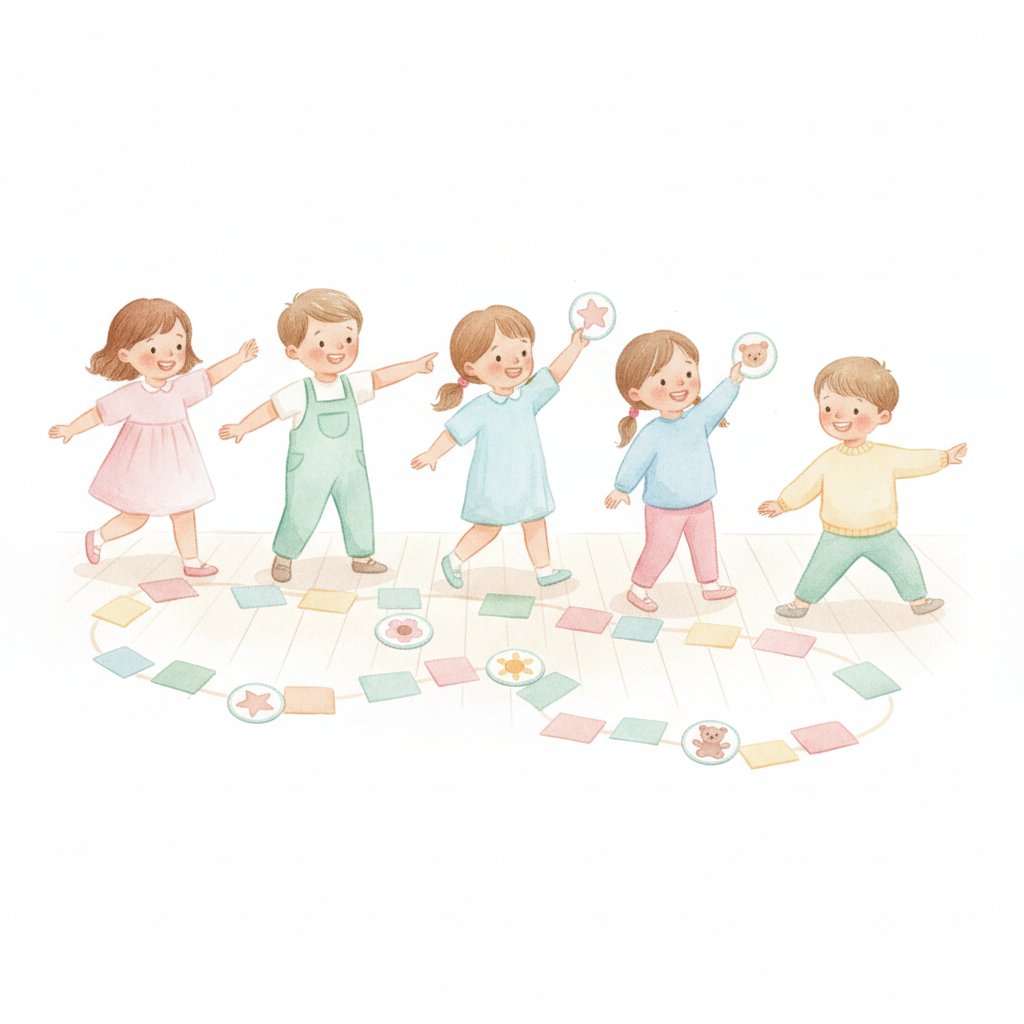
What to do: "Follow the RED squares. They lead to the BLUE squares. BLUE leads to GREEN. GREEN leads to the treasure!" The color-path teaches color recognition and sequencing. For more colors, see our color guide.

8. Number-step hunt
Materials: Number cards with directions.

What to do: "Card 1: Take 3 steps forward. Card 2: Turn LEFT. Card 3: Take 5 steps. Card 4: Look BEHIND you. Card 5: DIG here!" The number-step hunt teaches counting and direction-following. For more counting, see our number guide.

9. Map-to-reality hunt
Materials: Hand-drawn map of the classroom.

What to do: "Here is a map of our classroom. The X is somewhere in this room. Can you figure out WHERE the X is in real life by comparing the map to the room?" The map-to-reality hunt teaches map literacy. For more spatial, see our map guide.

10. Team treasure hunt
Materials: Multiple treasure locations.

What to do: "Team A follows the RED map. Team B follows the BLUE map. Both maps lead to different treasures. When both teams find their treasure, they SHARE!" The team hunt teaches cooperation and sharing. For more teamwork, see our social skills guide.

Find the golden letters before time runs out
Our Alphabet Flashcards become a letter treasure hunt: 'I have hidden alphabet cards around the room. Your mission: find ALL 26 letters and put them in ORDER from A to Z. Find A first — it is hidden near something that starts with A (the APPLE on the snack table). Find B — it is near something BOOK-shaped. Each letter is hidden near an object that STARTS with that letter!' The flashcards become treasure items. Children hunt for them, identify the letter, connect it to the nearby object, and place it in the alphabet line. The hunt teaches letter recognition, initial sounds, and alphabetical order — all while running around like pirates. Twenty-six letters, twenty-six hiding spots, one complete alphabet treasure line.

Pirate Learning Activities (Ages 3-6)

11. Gold coin counting
Materials: Plastic gold coins, treasure chest.

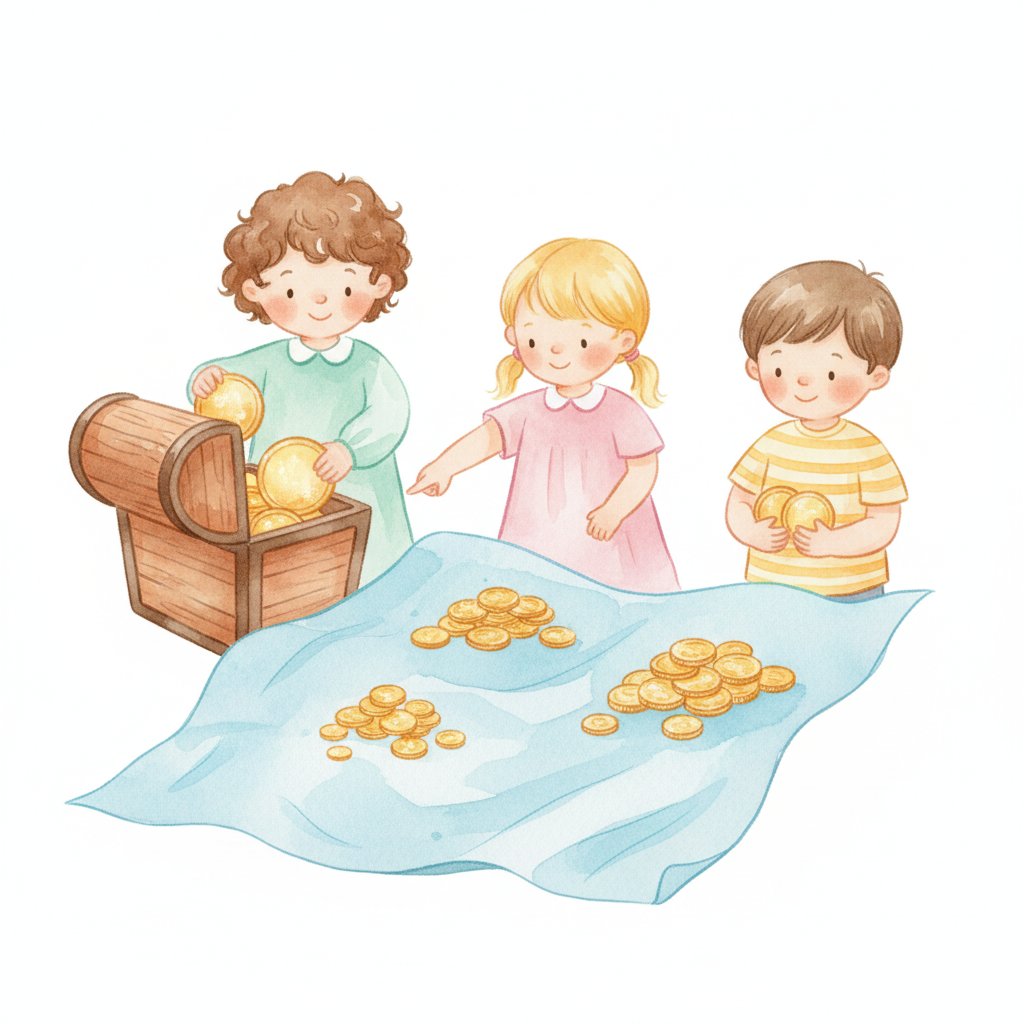
What to do: "Count the gold coins into the chest: 1, 2, 3, 4, 5! You found 5 coins! Now sort them: 2 big coins and 3 small coins. How many ALTOGETHER?" The coin counting teaches counting and sorting. For more math, see our number guide.

12. Treasure sorting
Materials: Gems, beads, shells, coins.

What to do: "Sort the treasure: gems in THIS pile, beads in THAT pile, shells in the other. Sort by COLOR: red, blue, green. Sort by SIZE: big and small. Sort by SHAPE: round and not round." The treasure sorting teaches categorization. For more sorting, see our sorting guide.

13. Walk the plank balance
Materials: Tape line on the floor.

What to do: "Walk the plank! Put one foot in front of the other on the tape line. Don't fall off — the sharks are below! Can you walk BACKWARDS on the plank?" The balance plank teaches balance and body control. For more balance, see our gross motor guide.

14. Pirate treasure story
Materials: Paper, crayons.

What to do: "Tell the story of how you found the treasure. Where did you sail? What did you see? Who helped you? Draw it as a STORY MAP." The treasure story teaches narrative and recall. For more stories, see our storytelling guide.

15. Sink or float
Materials: Tub of water, various objects.

What to do: "Pirates need to know what SINKS and what FLOATS. Drop objects in the water: a coin, a rock, a stick, a leaf, a ball. Which ones sink? Which float? Why?" The sink-or-float teaches scientific prediction and observation. For more science, see our science guide.

More Pirate Activities (Ages 3-6)

16. Pirate song and dance
Materials: None.

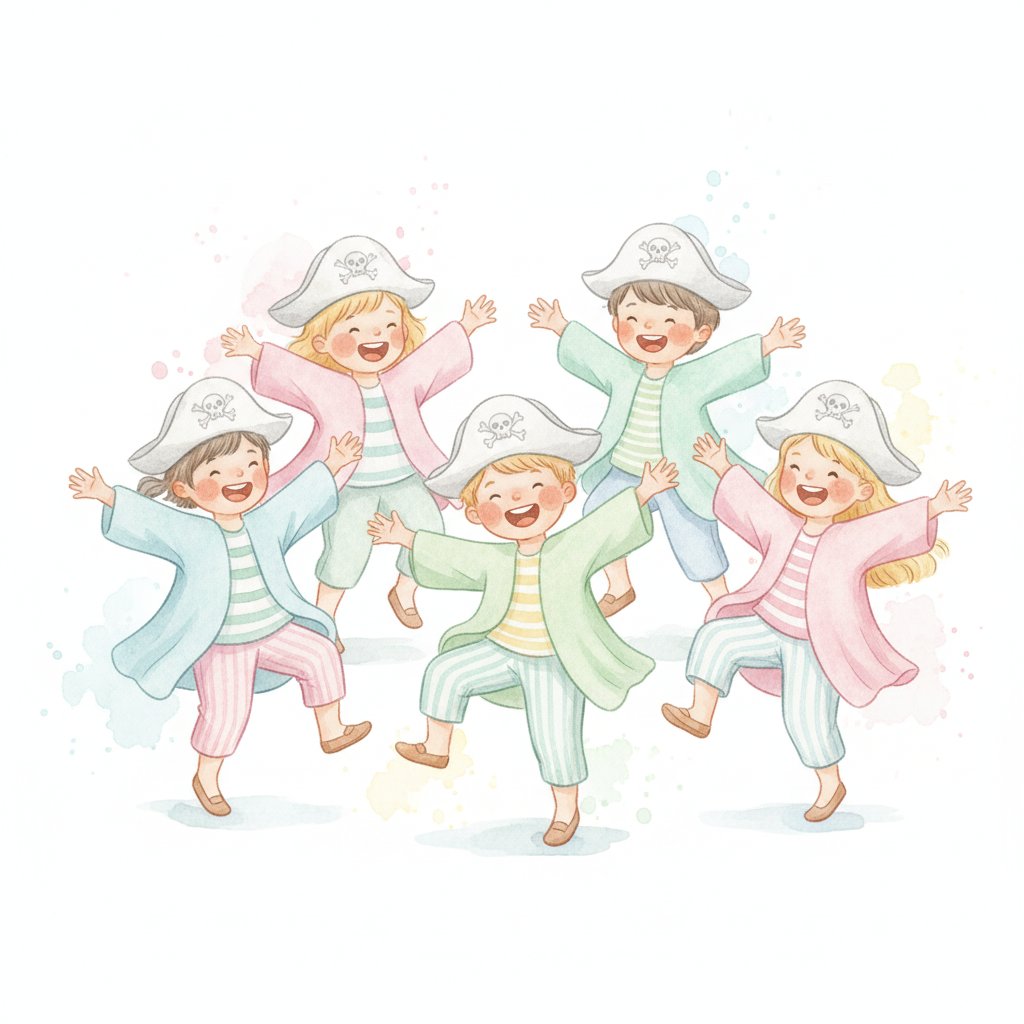
What to do: "Sing: Yo ho ho, it is a pirate's life for me! Walk like a pirate: swing your arms, squint your eyes, stomp your feet. Now DANCE like a pirate!" The pirate dance teaches creative movement. For more movement, see our dance guide.

17. Desert island drawing
Materials: Paper, crayons.

What to do: "Draw your desert island. What is on it? A palm tree? A volcano? A cave? A beach? A shipwreck? Draw everything an island needs for a pirate adventure." The island drawing teaches imagination and composition. For more art, see our art guide.

18. Pirate code of conduct
Materials: Poster paper.

What to do: "Every ship has RULES. Let us write the pirate code: (1) We share the treasure. (2) We help our crew. (3) We listen to the captain. (4) We use kind words. Sign your name!" The pirate code teaches rule-making and social contracts. For more rules, see our manners guide.

19. Message in a bottle
Materials: Plastic bottle, paper.

What to do: "Write or draw a message, roll it up, and put it in the bottle. Someone across the room finds it and reads it. Then they write back!" The message in a bottle teaches writing and communication. For more writing, see our writing guide.

20. Treasure share
Materials: Treasure chest, gold coins.

What to do: "You found 10 gold coins. There are 5 pirates. How many does each pirate get? DIVIDE the treasure fairly. If someone has more, is that fair? Share EQUALLY!" The treasure share teaches division and fairness. For more sharing, see our sharing guide.

Can you sail in this weather?
Our Weather Flashcards become sailing conditions: 'Pick a weather card. That is TODAY'S weather on the ocean. SUNNY? Perfect sailing! Smooth seas, clear skies, full speed ahead! RAINY? Rough waters! The ship rocks and rolls. Better tie down the treasure! WINDY? The sails are FULL! We are going FAST! STORMY? Batten down the hatches! Everyone below deck!' Each weather card creates a different SAILING SCENARIO that children act out. Sunny days are calm; stormy days are dramatic. The weather card determines the adventure, and children improvise the scene. Twelve weather cards, twelve voyages, each one a different story on the same ship.
1.Is the pirate theme too aggressive for preschoolers?
Not when framed correctly. In our classroom, pirates are ADVENTURERS, not criminals. The rules are: (1) Our pirates are FRIENDLY — they share treasure, not steal it. (2) Our pirates are HELPERS — they rescue people, not capture them. (3) Our ships are for EXPLORATION, not attacking. (4) The treasure is found by SOLVING CLUES, not taking from others. If any child starts acting aggressively, redirect immediately: "Our pirates are kind pirates. Kind pirates use their courage to HELP, not hurt." The THEME is adventure; the VALUES are cooperation and exploration.
2.How do I make treasure hunts age-appropriate for 3-year-olds?
For 3-year-olds, simplify: (1) Use PICTURE clues instead of words — a photo of the bookshelf, a picture of a red chair. (2) Use FEWER steps — 3-5 clues max. (3) Hide treasure in OBVIOUS places — they should find it without frustration. (4) Use COLOR as the primary clue system: "Find something RED." (5) Do the hunt TOGETHER as a group, not individually. For 4-5 year olds, increase to 8-10 clues, add map reading, and introduce directional words (left, right, forward, behind).
3.What should I use as treasure?
The treasure should be symbolic, not valuable: (1) Gold-painted rocks. (2) Glass gems from a craft store. (3) Special stickers. (4) A certificate that says "Treasure Finder!" (5) A note with a kind message. (6) A small handmade craft. The EXCITEMENT is in finding it, not in what it IS. A rock painted gold is just as thrilling as a real gold coin when the HUNT was the adventure. Avoid candy or expensive items — the reward should be the EXPERIENCE.
4.How do treasure activities teach math?
Treasure activities are math in disguise: (1) COUNTING — count steps, count coins, count clues. (2) SORTING — sort treasure by color, size, shape. (3) COMPARING — more/fewer coins, bigger/smaller gems. (4) SPATIAL — reading maps, understanding left/right, near/far. (5) PATTERNS — the clue sequence is a pattern: picture, direction, picture, direction. (6) MEASUREMENT — how many steps from here to the X? A single treasure hunt can cover six math standards without a single worksheet.