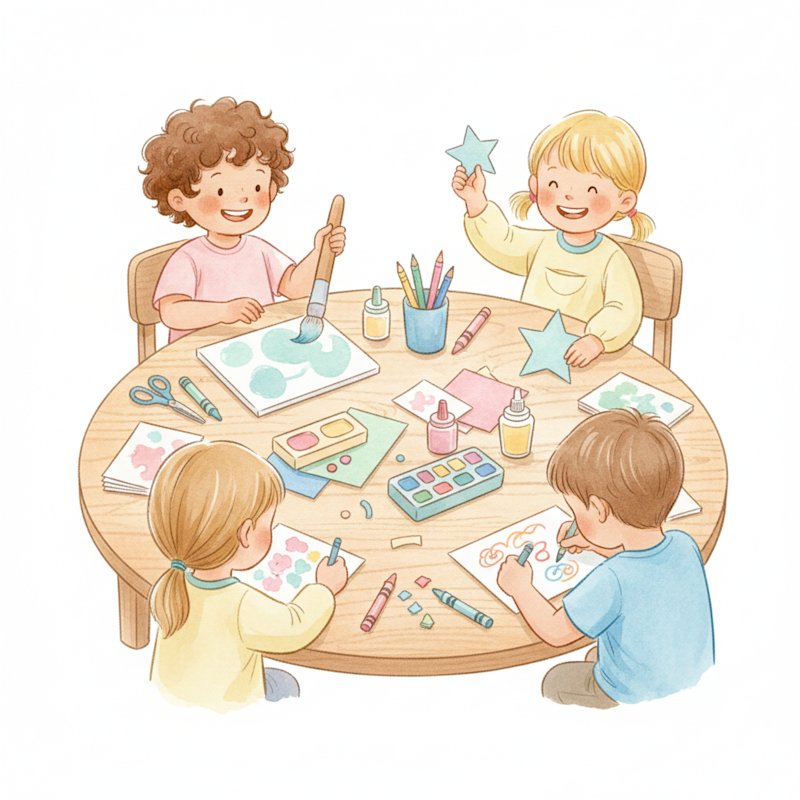
Art Time Starts Here
Preschoolers learn through their hands. Every time a child squeezes glue, drags a crayon across paper, or mixes two paint colors together, they are building fine motor control, practicing self-expression, and discovering cause and effect. The National Association for the Education of Young Children recommends open-ended art because children develop problem-solving skills and creative confidence when they make choices about materials, colors, and compositions — rather than following an adult's model.
This guide covers 25 art activities organized by type: process art, painting, drawing and coloring, collage and mixed media, and seasonal projects. Each activity includes an age recommendation, a key learning concept, and a connection to free printables you can download today. See our scissor skills guide for cutting practice.
Art Play by Age
| Age | What to Try |
|---|---|
| 2 | Finger painting, dot markers, stickers, sponge stamping |
| 3 | Crayon drawing, simple collage, watercolor, stamping |
| 4 | Tempera painting, cutting and gluing, directed drawing |
| 5 | Mixed media, printmaking, themed art projects |
| 6 | Multi-step projects, art journals, collaborative murals |
Process Art Activities (Ages 2-6)
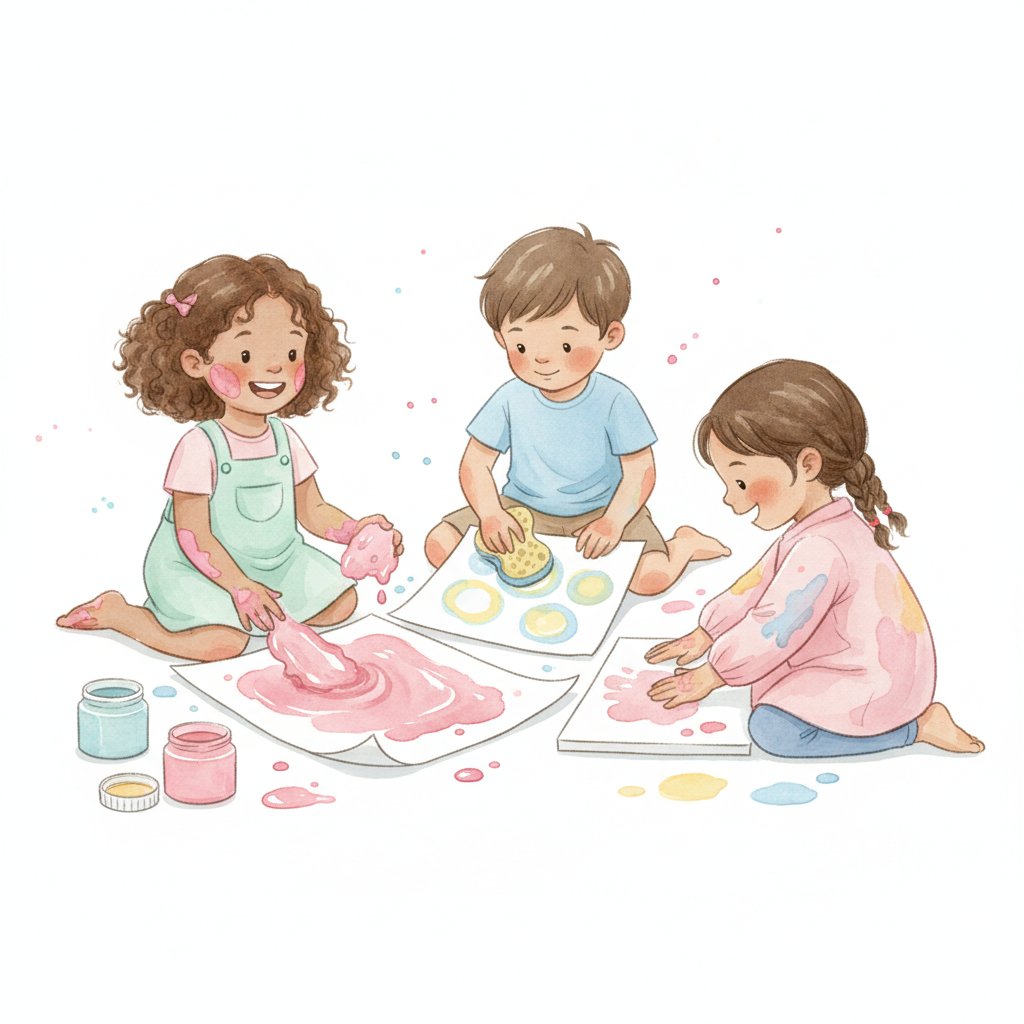 Process art focuses on the experience of making art, not the final product. There is no "right way" to do these activities — which makes them perfect for building creative confidence.
 - Sponge Stamping: Cut kitchen sponges into shapes — circles, triangles, stars. Dip in tempera paint and press onto paper. "My star stamp makes a STAR shape!" Shape recognition + cause and effect. Ages 2+.
- Finger Painting Station: Squirt two or three washable tempera colors onto a tray. Let children spread, swirl, and mix with their hands. "Blue and yellow make GREEN!" Color mixing + sensory. Ages 2+.
- Marble Rolling Art: Place a sheet of paper inside a shallow box. Dip a marble in paint, drop it in, and tilt the box to roll the marble around. "The marble drew a LINE across my paper!" Cause and effect + motion. Ages 3+.
- Spray Bottle Painting: Fill spray bottles with diluted liquid watercolor. Hang paper on an easel or tape to a wall outdoors. Spray from different distances. "Close up makes a BIG dot. Far away makes a TINY dot!" Distance + observation. Ages 3+.
- Bubble Wrap Printing: Paint onto bubble wrap, then press paper on top and peel away to reveal a dotted texture print. "The bubbles make a PATTERN!" Texture + pattern. Ages 2+.
Painting Activities (Ages 2-6)
Painting develops hand-eye coordination and gives children an immediate, satisfying way to cover large areas with color.
- Watercolor Resist: Draw shapes or patterns with a white crayon on white paper. Paint over the entire sheet with watercolor — the crayon lines "magically" appear. "The crayon STOPPED the paint!" Resistance concept + surprise. Ages 3+.
- Q-Tip Pointillism: Pour small amounts of tempera paint into a palette. Use cotton swabs to make dots and build pictures point by point. "Thousands of tiny DOTS make a picture!" Fine motor + patience. Ages 3+.
- Painting to Music: Play different types of music (classical, jazz, drums) and ask children to paint how the music feels. Fast music=fast brushstrokes. Slow music=slow, flowing lines. "The drums make me paint LOUD and FAST!" Emotional expression + listening. Ages 4+.
- Handprint Art: Dip hands in tempera paint and press onto paper. Turn handprints into animals, trees, or characters by adding details with markers. "My handprint is a TURKEY!" Transformation + creativity. Ages 2+.
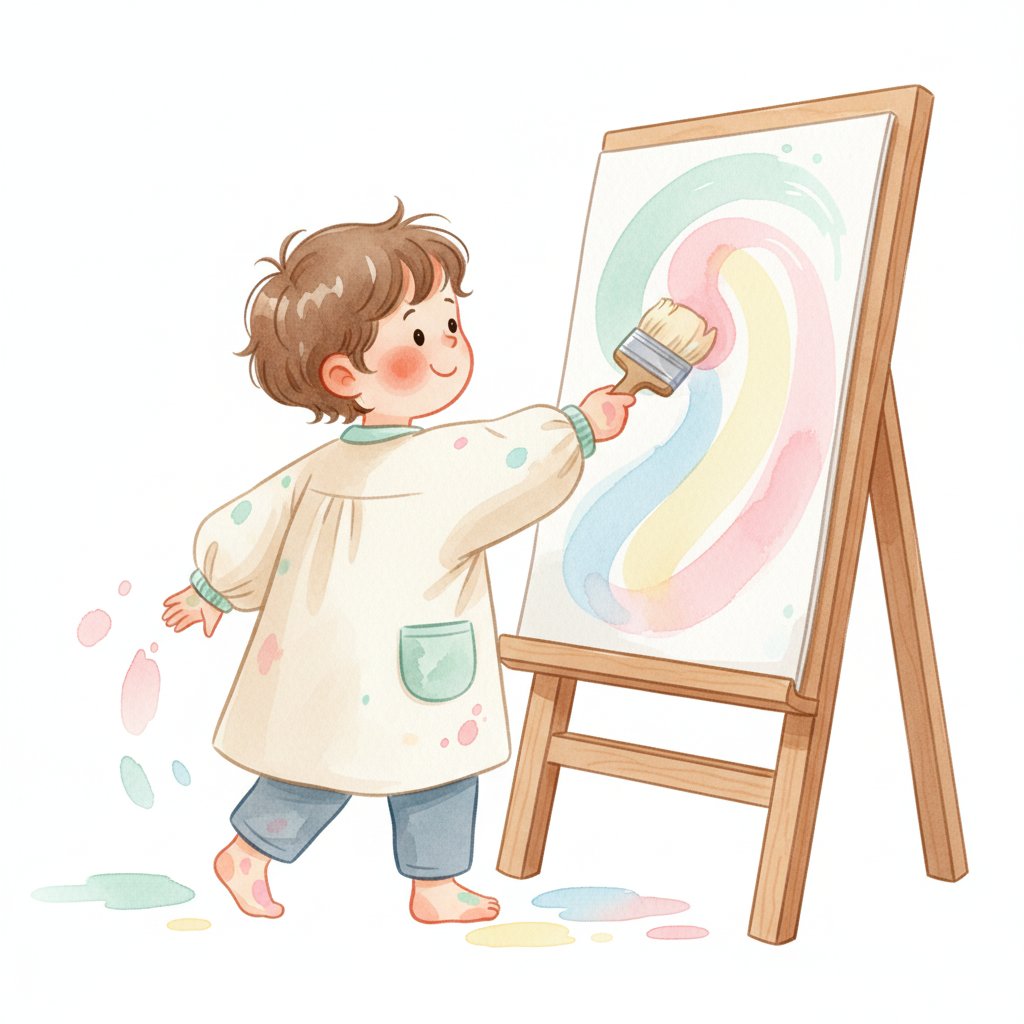 - **Ice Cube Painting**: Freeze tempera paint in ice cube trays with craft sticks. Let children paint with the melting cubes on thick paper outdoors. "The paint is MELTING as I draw!" Temperature + state change. Ages 2+.
 Drawing and Coloring Activities (Ages 2-6)
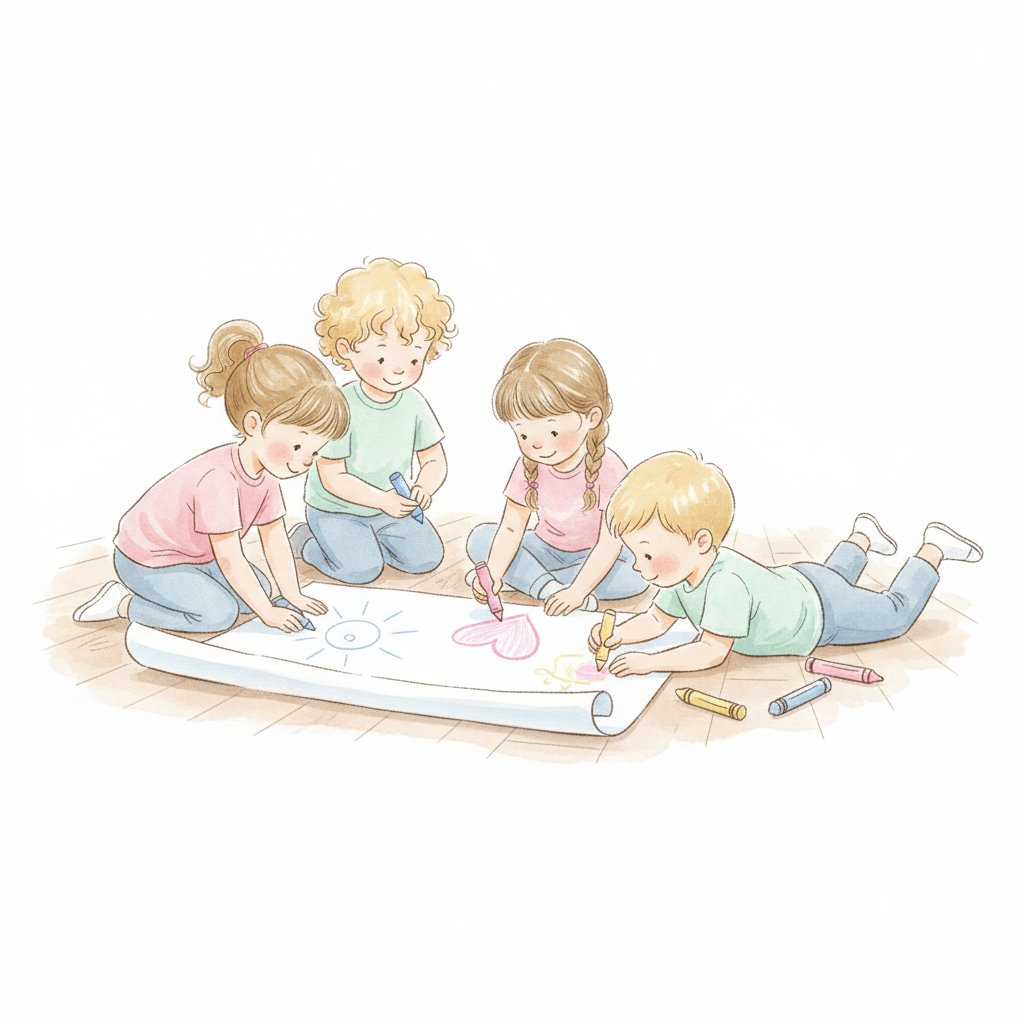
Drawing is where most art journeys begin. These activities meet children where they are — from random scribbles to recognizable shapes.
- Crayon Rubbings: Place leaves, coins, or textured objects under a sheet of paper. Rub a crayon on its side over the top to reveal the texture underneath. "The LEAF appeared on my paper!" Texture + observation. Ages 3+.
- Collaborative Mural: Tape a long strip of butcher paper to the floor or wall. Give every child crayons or markers and let them draw together on the same surface. "We are making a GIANT picture!" Cooperation + spatial sharing. Ages 3+.
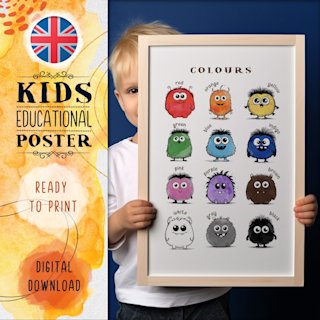
- Monster Drawing Prompt: Draw a random squiggle or blob on each child's paper. Ask them to turn it into a monster by adding eyes, teeth, arms, and legs. Pair with a color monster matching game for a feelings-and-colors extension. "My blob is a SILLY monster with three eyes!" Imagination + self-expression. Ages 4+.
- Directed Drawing: Guide children step by step to draw a simple object — a house, a cat, a flower. Say each step aloud: "Draw a big circle. Add two triangles on top. Now draw two dots for eyes." Following directions + shape building. Ages 4+.
- Free Coloring with Printables: Print our free coloring pages and templates and let children choose their own colors and approach. Coloring inside the lines is not the goal — exploring color choice is. "I colored my elephant PINK because I wanted to!" Color choice + autonomy. Ages 2+.
Collage and Mixed Media (Ages 2-6)
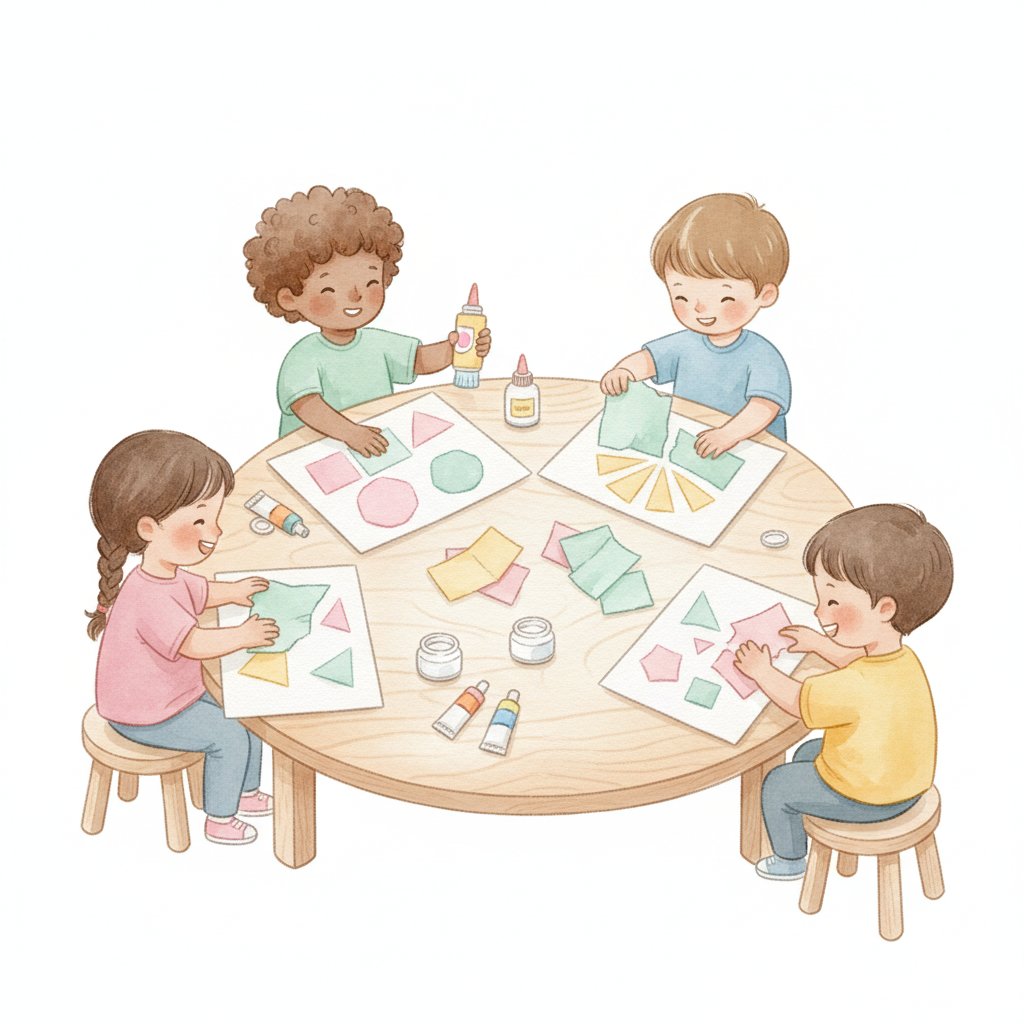 Collage teaches children to combine materials, plan compositions, and build layered artworks. These are the messiest and most creative activities on the list.
 - Torn Paper Collage: Tear colored paper into strips and pieces. Arrange and glue onto a background sheet to make a picture or pattern. No scissors needed — the tearing is part of the art. "I tore the paper into a RAINBOW!" Fine motor + composition. Ages 2+.
- Sticker Stories: Give children a sheet of stickers and a blank paper. They create a scene with the stickers and then draw a background around them. Tell the story out loud. "My stickers are at the BEACH!" Narrative + planning. Ages 3+.
- Nature Collage: Collect leaves, petals, small twigs, and seeds during an outdoor walk. Glue them onto paper to create nature scenes or abstract art. "My leaf is the BODY of a butterfly!" Nature + creativity. Ages 3+.
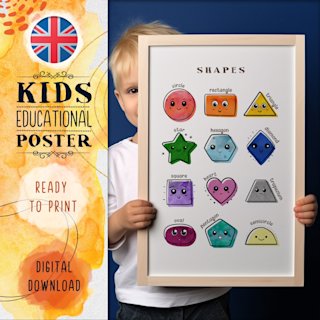
- Shape Monsters: Pre-cut circles, squares, and triangles from colored paper. Children choose shapes, glue them together, and add details with markers to make silly monsters. "My monster has SQUARE eyes and TRIANGLE teeth!" Shape recognition + humor. Ages 3+. For more shape learning, see our Shape Activities for Preschoolers — 20+ hands-on games for circles, squares, triangles, and beyond.
- Recycled Material Art: Set out clean recyclables — cardboard tubes, egg cartons, bottle caps, yogurt cups — along with glue and paint. Children build sculptures, robots, or anything they imagine. "My robot has ARMS made of tubes!" Engineering + creativity. Ages 4+.
Seasonal and Holiday Art (Ages 2-6)
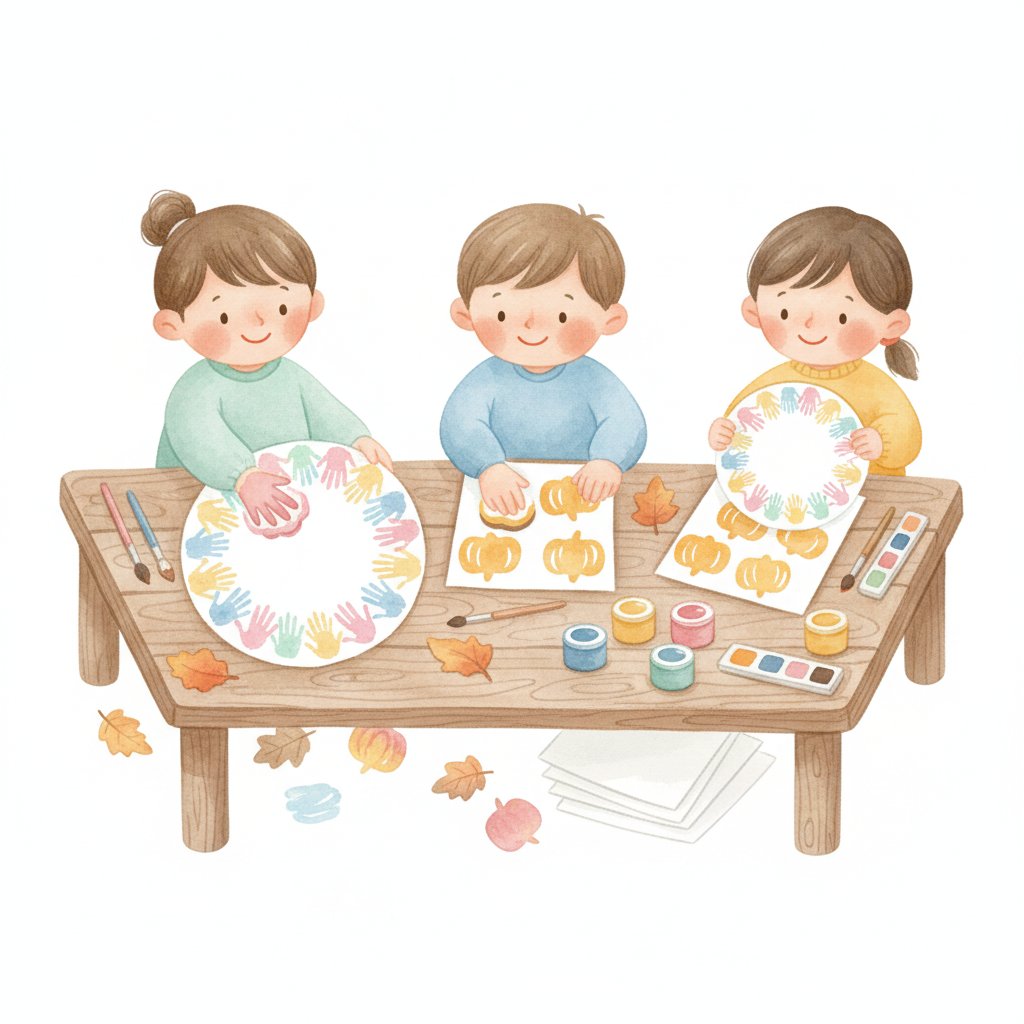
Seasonal art gives children a meaningful reason to create — decorating for a holiday, celebrating a season, or making a gift. These activities are the ones children remember most.
- Handprint Wreath: Trace and cut out multiple handprints from green paper. Glue them in a circle to form a wreath. Add red dots for berries. "My HANDS make the leaves!" Body awareness + repetition. Ages 3+.
- Sponge-Painted Pumpkins: Cut sponges into pumpkin shapes. Dip in orange paint and stamp onto paper. Add green stems with a brush. "Stamp, stamp, stamp — PUMPKINS everywhere!" Shape stamping + seasonal awareness. Ages 2+.
- Snowflake Fold-and-Cut: Fold a square of paper in half, then in half again. Cut small notches along the edges. Unfold to reveal a snowflake. Pair with our scissor skills guide for safe cutting practice. "My snowflake has a PATTERN of holes!" Symmetry + scissor skills. Ages 4+. See scissor skills activities.
- Heart Suncatchers: Cut a heart shape from the center of a piece of paper. Tape tissue paper squares over the heart opening. Hang in a window and watch the light shine through. "The light makes my heart GLOW!" Light + color. Ages 3+.
- Spring Flower Prints: Cut the bottom off a celery bunch. Dip in paint and press onto paper — the print looks like a rose. Add stems and leaves with a brush. "Celery makes a FLOWER print!" Observation + surprise. Ages 3+.
Art Activities Using Free Printables
Printables give you ready-made templates, coloring pages, and drawing prompts that extend every activity in this guide. Here is how to pair them with the projects above:
| Activity | Printable Pairing | What It Adds |
|---|---|---|
| Monster Drawing Prompt | Color Monster Matching Game | Feelings vocabulary + color recognition |
| Free Coloring | Coloring page printables | Age-appropriate line art for independent coloring |
| Shape Monsters | Shape template printables | Pre-cut shapes save prep time for group settings |
| Snowflake Fold-and-Cut | Snowflake template with fold lines | Visual guide for where to cut |
| Torn Paper Collage | Simple outline templates (animals, hearts) | A frame to fill — gives hesitant starters a starting point |
Browse all our printable learning resources in the Flashcards & Learning Cards category.
Setting Up a Preschool Art Center
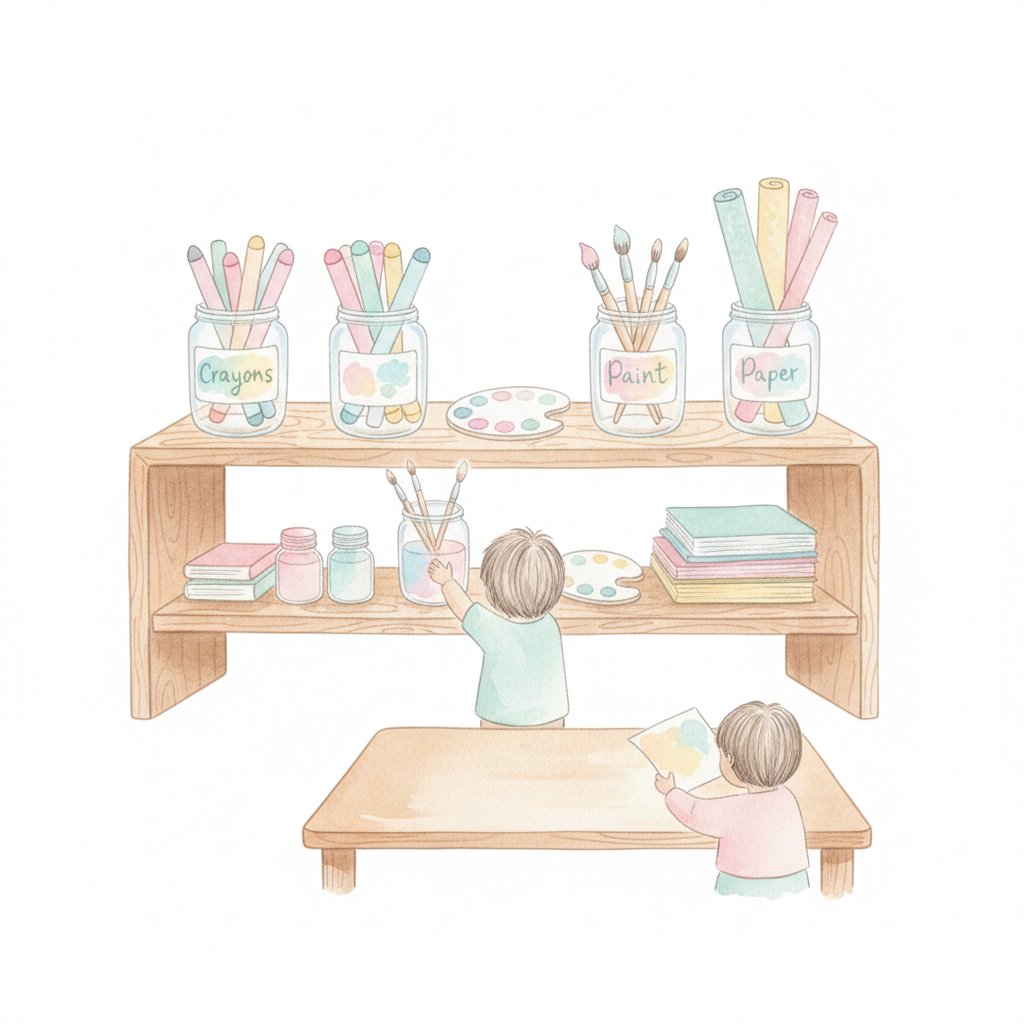
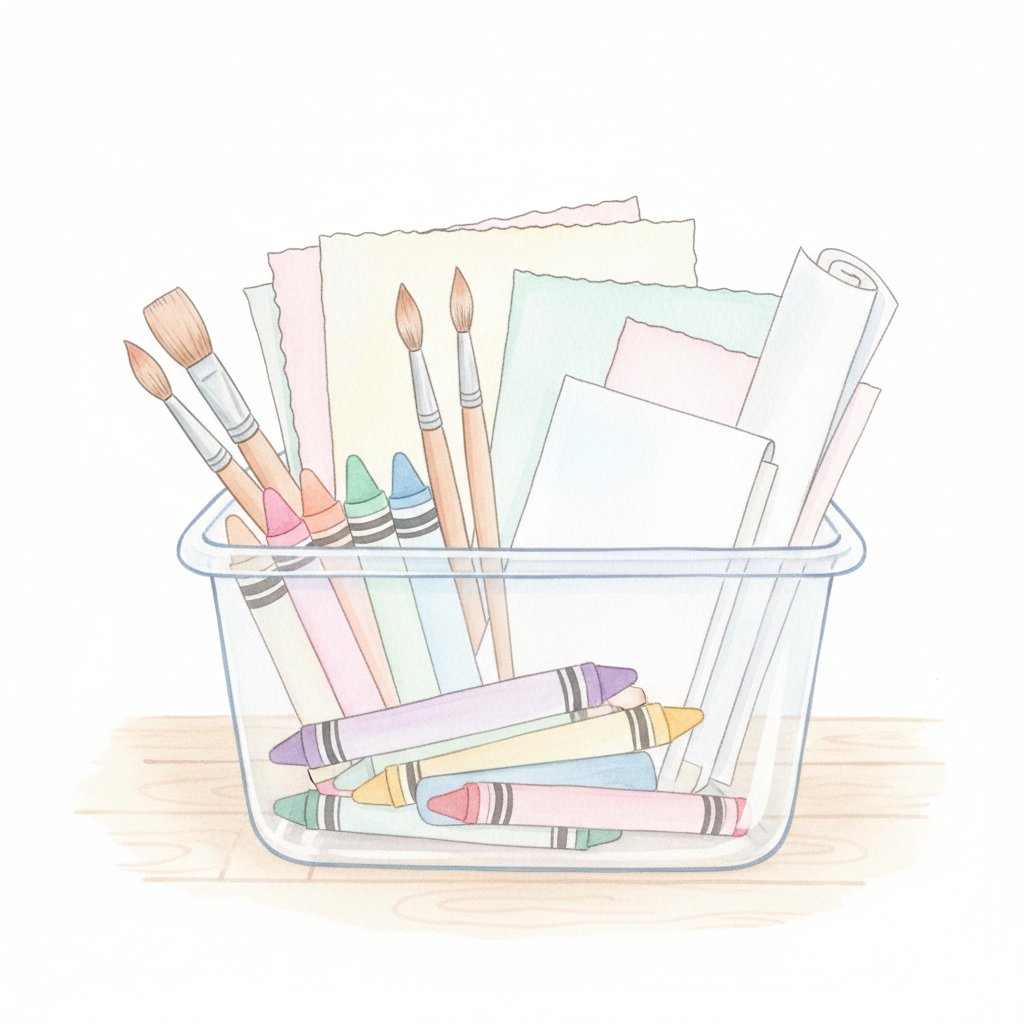
You do not need a dedicated art room. A small table or shelf with organized supplies gives children independence and makes cleanup manageable.
Materials to Stock
- Drawing: Crayons (jumbo for ages 2-3, standard for 4+), washable markers, colored pencils
- Painting: Washable tempera (primary colors + white), watercolor pans, assorted brushes, paint cups with lids
- Collage: Safety scissors, glue sticks, white glue, construction paper, tissue paper, cotton balls
- Printables: Printed coloring pages and templates in a labeled folder children can reach
- Protection: Plastic tablecloth or washable mat, smocks or old shirts
Organization Tips
- Store each supply type in its own labeled container or basket
- Keep printables in a vertical file sorter so children can flip through and choose
- Place a small trash bin next to the art table for scraps
- Display finished art on a clothesline with clips — it rotates easily and every child gets a turn
Art and Feelings
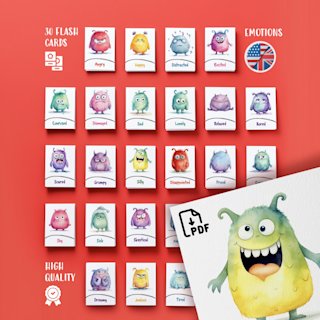
Art is one of the safest ways for preschoolers to express emotions they do not have words for yet. A child who paints an angry red scribble is processing something real. A feelings poster set pairs beautifully with art time — children point to the face that matches how they felt while creating, building emotional vocabulary alongside creative skills.
Adapting Activities for Different Ages
Every activity in this guide includes an age range, but children develop at different speeds. Here is how to scale each activity up or down:
Ages 2-3 (Toddlers): Focus on sensory exploration — feeling paint, squeezing glue, pressing stamps. The process is the entire point. Shorten activities to 5-10 minutes. Offer fewer choices (two paint colors instead of six) to prevent overwhelm.
Ages 4-5 (Pre-K): Add planning steps — "What are you going to make before you start?" Introduce scissors (see our scissor skills guide) and more complex materials like tissue paper layers, printmaking, and multi-step projects. Extend activity time to 15-25 minutes.
Age 6 (Early Elementary): Encourage intentionality — "Tell me about your choices." Introduce art journals, artist studies (look at a Monet painting, then paint like Monet), and collaborative projects where children plan and execute together.
Special Needs Adaptations: Offer adaptive scissors, larger brush handles, or taped-down paper for children with limited grip. Use high-contrast colors for children with visual impairments. Reduce sensory input (fewer materials, quieter environment) for children who are easily overstimulated.