Tips for Matching Activities
For Parents
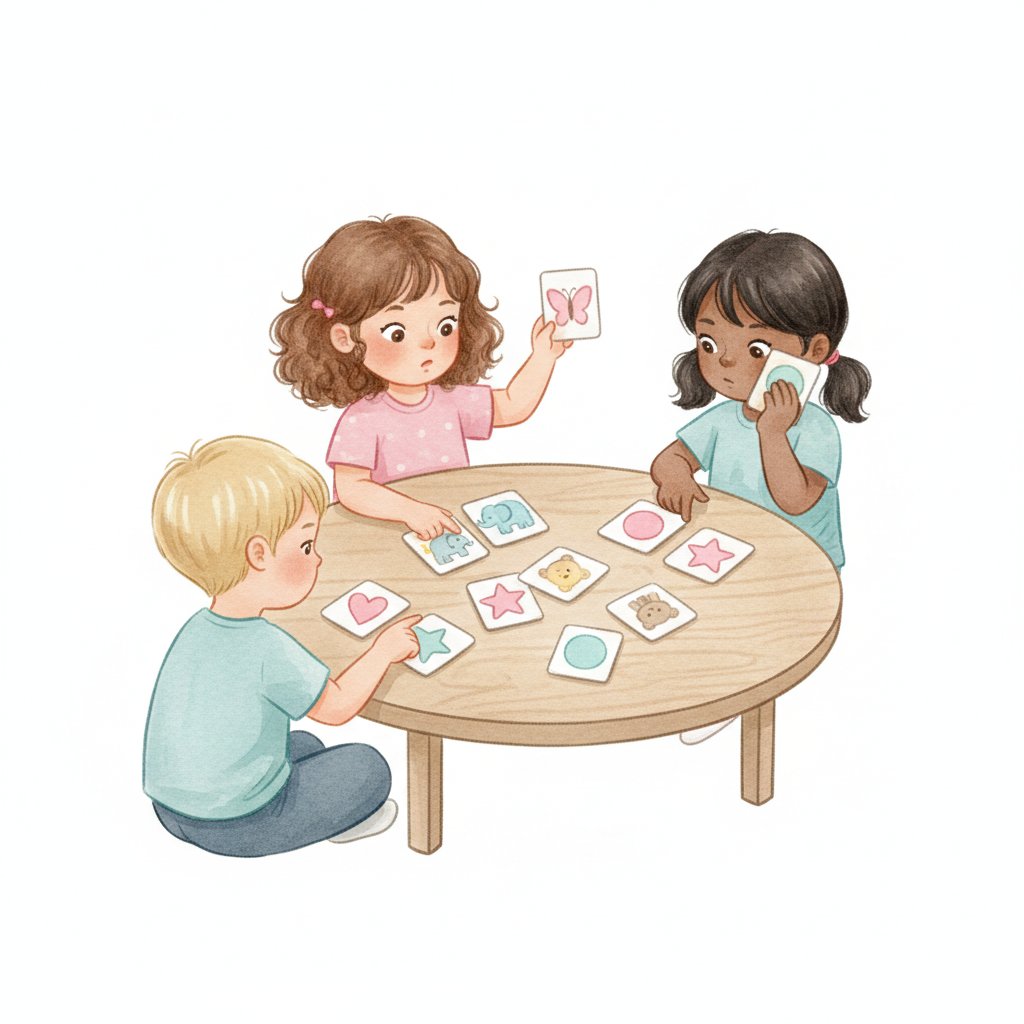
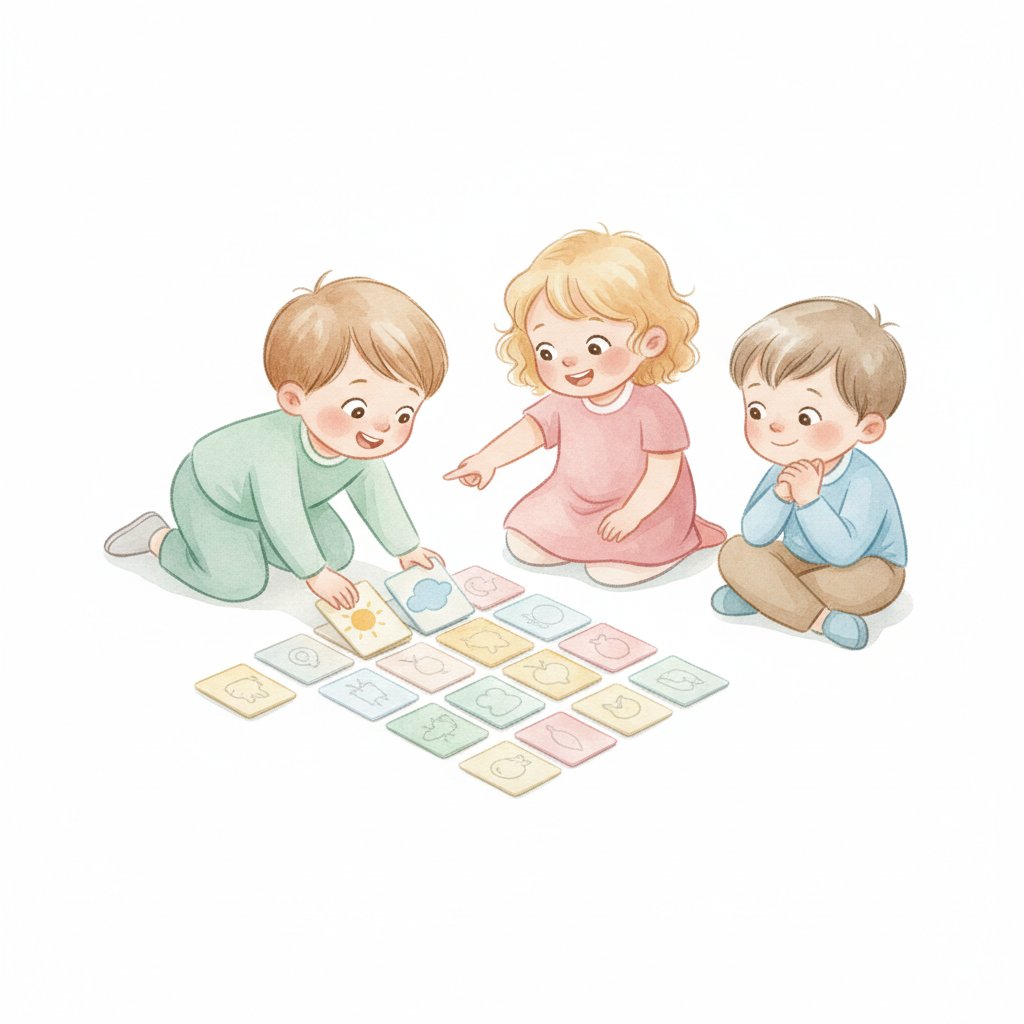
Start small and build. A 3-year-old can feel overwhelmed by 20 cards. Start with 4 pairs (8 cards). When they can complete it confidently, add 2 more pairs. Build up gradually — the challenge should grow with the child.
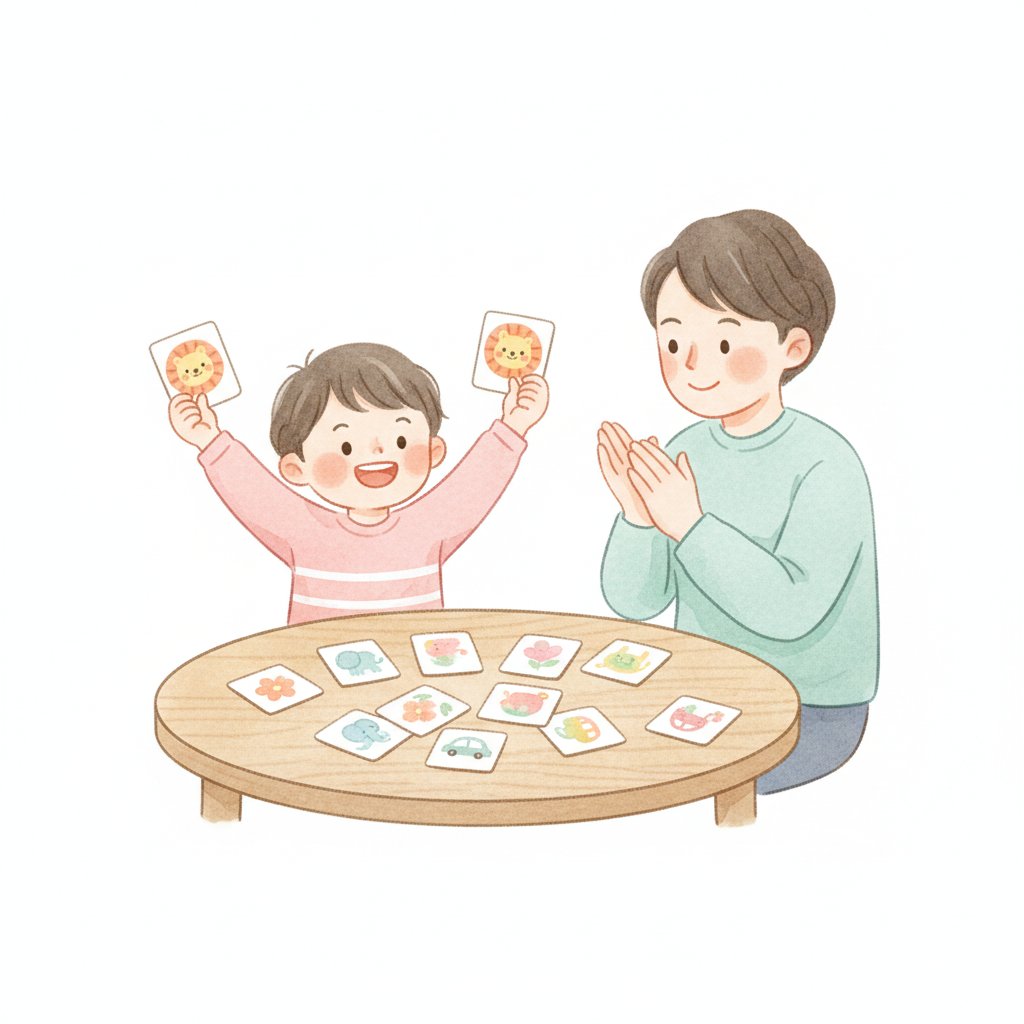
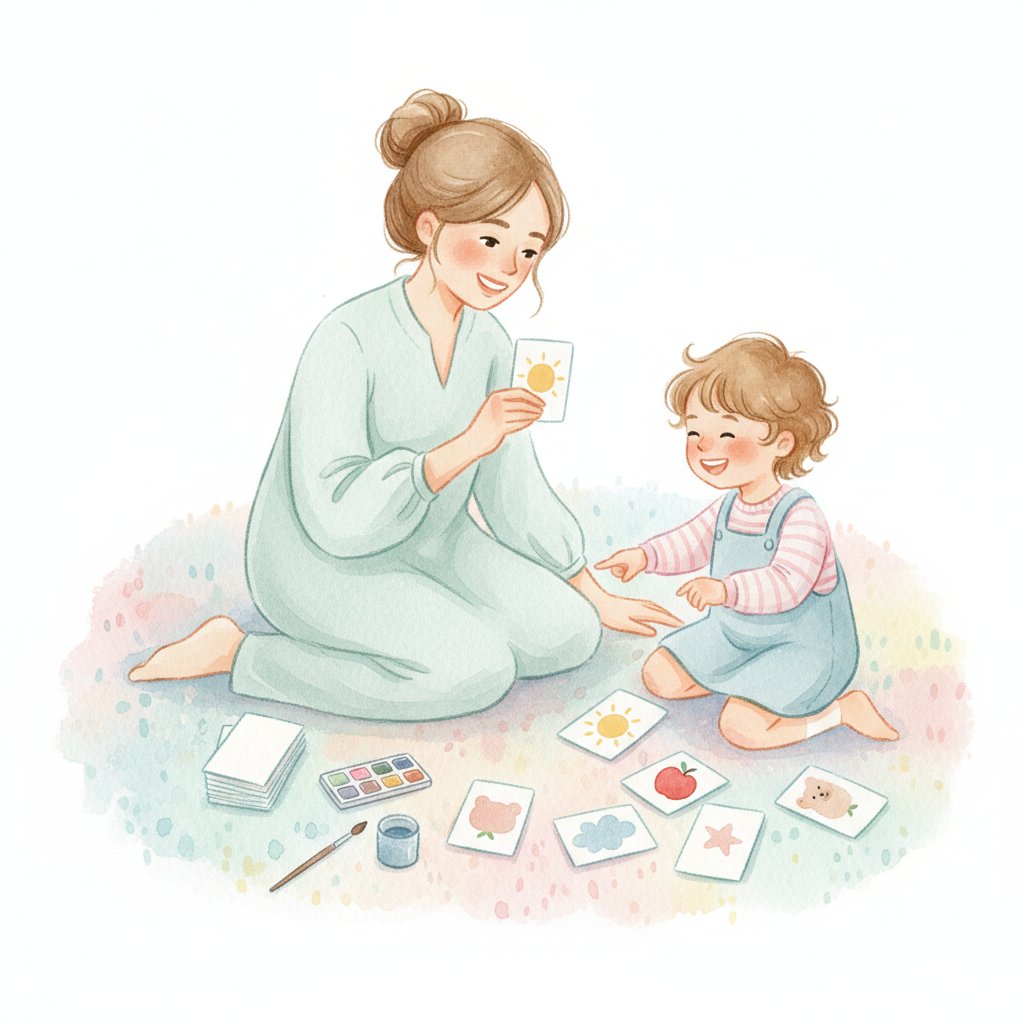
Play WITH your child, not just alongside. Model good matching behavior: "I remember seeing the cat card... was it here?" Narrating your thinking teaches children how to use memory strategies.
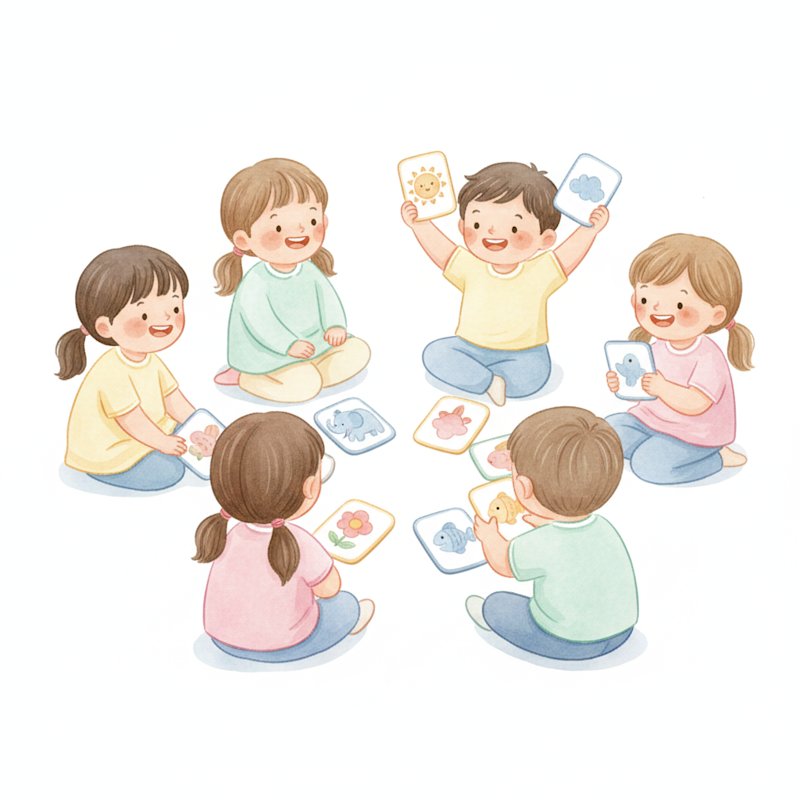
The "no winner" rule for young children. For ages 2-4, play cooperatively: everyone finds matches together, and the group celebrates each pair. Competitive matching can be frustrating for children who haven't yet developed the emotional regulation to handle losing.
For Classroom Teachers
Matching across the curriculum:
- Literacy: Letter matching (uppercase/lowercase), sight word match, rhyming match
- Math: Number-to-quantity match, shape match, pattern match
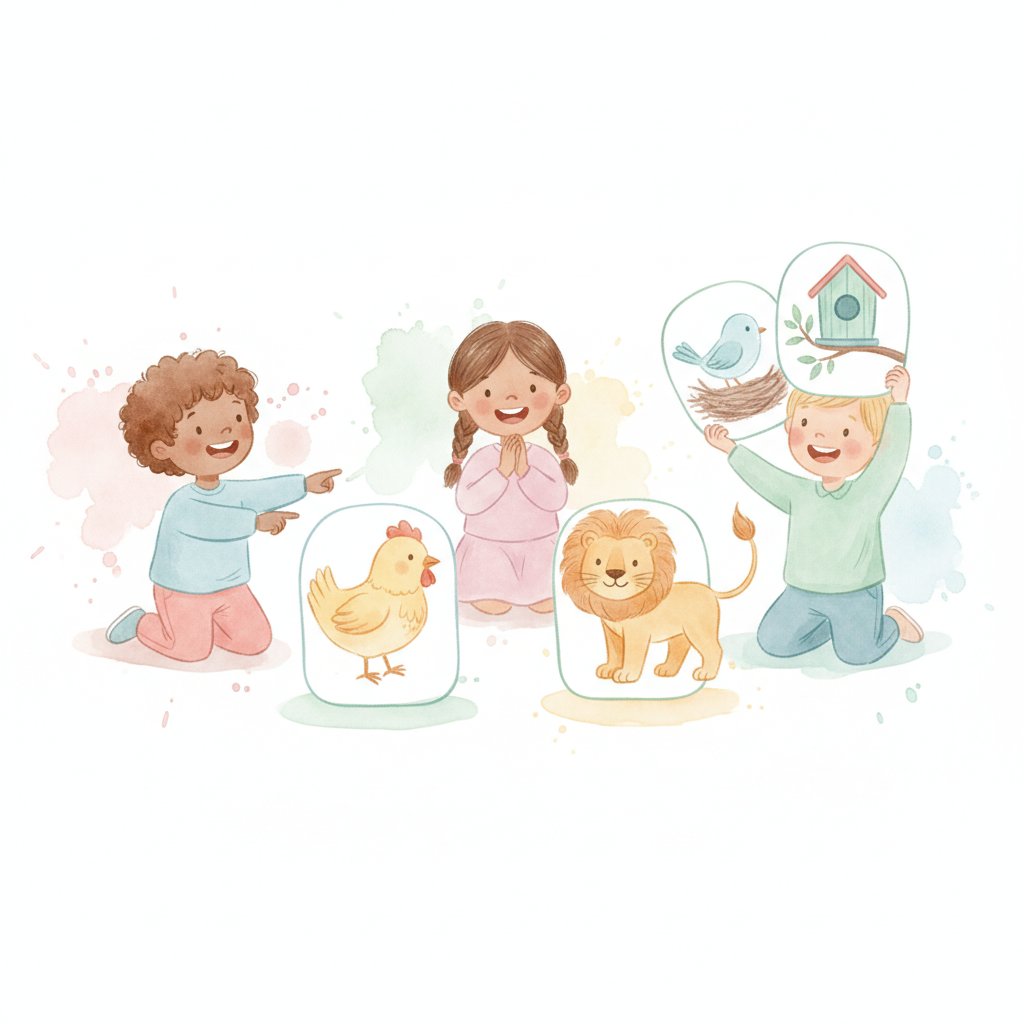
- Science: Animal-baby match, animal-habitat match, part-to-whole match
- Social studies: Community helper-to-tool match, flag-to-country match
- Art: Color matching, artist-to-artwork match
DIY matching center: Keep a set of blank cards and markers available. Children create their own matching games for classmates to play. Creating the game is as cognitively valuable as playing it — children must think about which pairs make sense and ensure they create exactly two of each.
For more classroom activities, see our circle time activities and classroom organization printables.
Frequently Asked Questions
What age can children start playing memory match?
Most children can play a simple 3-4 pair memory match at age 3. Some 2.5-year-olds are ready with just 2-3 pairs. The key is starting small enough that the child experiences success — frustration kills motivation.
How many pairs should I use?
| Age | Pairs | Total Cards |
|---|
| 2-3 | 3-4 | 6-8 |
| 3-4 | 6-8 | 12-16 |
| 4-5 | 8-12 | 16-24 |
| 5-6 | 12-18 | 24-36 |
Should I let my child win?
Don't deliberately lose, but don't crush them either. Play at their level. With a 3-year-old, take your time. Let them find pairs you clearly could have grabbed. The joy of the game is the finding — let them have it.
My child flips cards randomly without looking. What should I do?
This is common with 2-3 year olds. They're still learning the concept of the game. Model the process: "I'm going to look carefully. I see a cat! I'll remember where the cat is." Narrate every turn. Eventually they'll understand that watching and remembering is the point.
Can matching games help with reading?
Yes, directly. Visual discrimination (the skill matching games build) is the same skill children use to distinguish similar letters: b/d, p/q, m/w. Children who struggle with visual discrimination often struggle with letter recognition. Matching games are a fun, low-pressure way to strengthen this skill.