Articles14 min read

I Watched a Four-Year-Old Discover Geometry

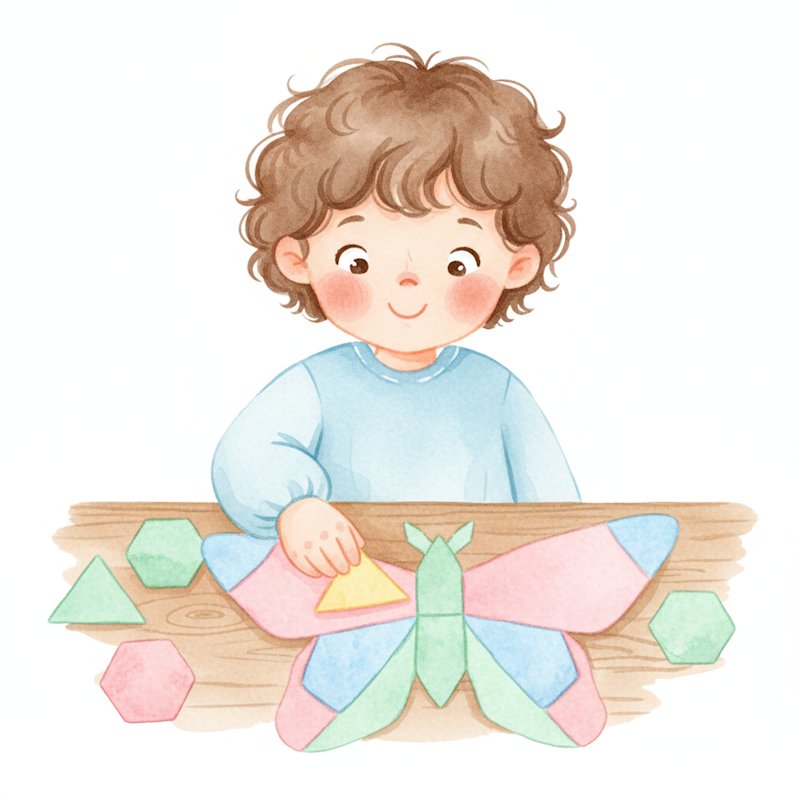
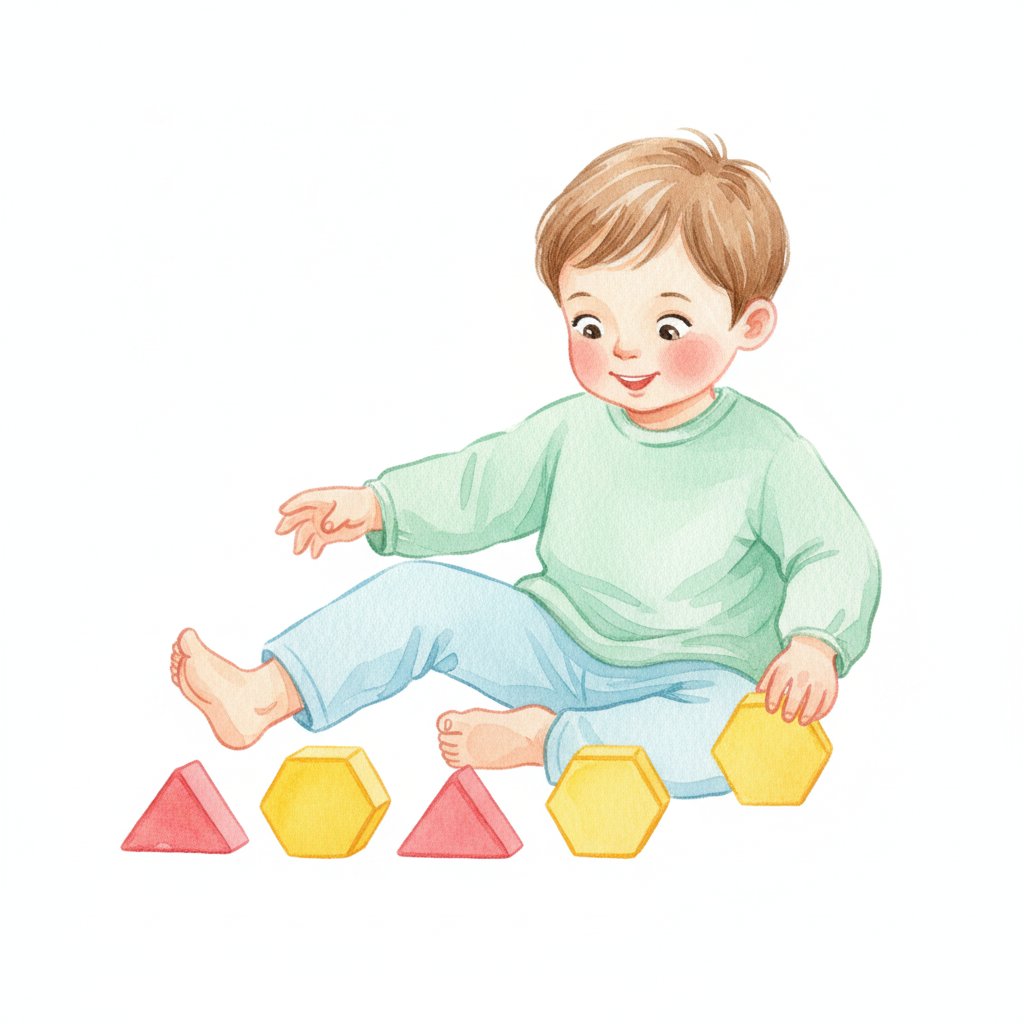
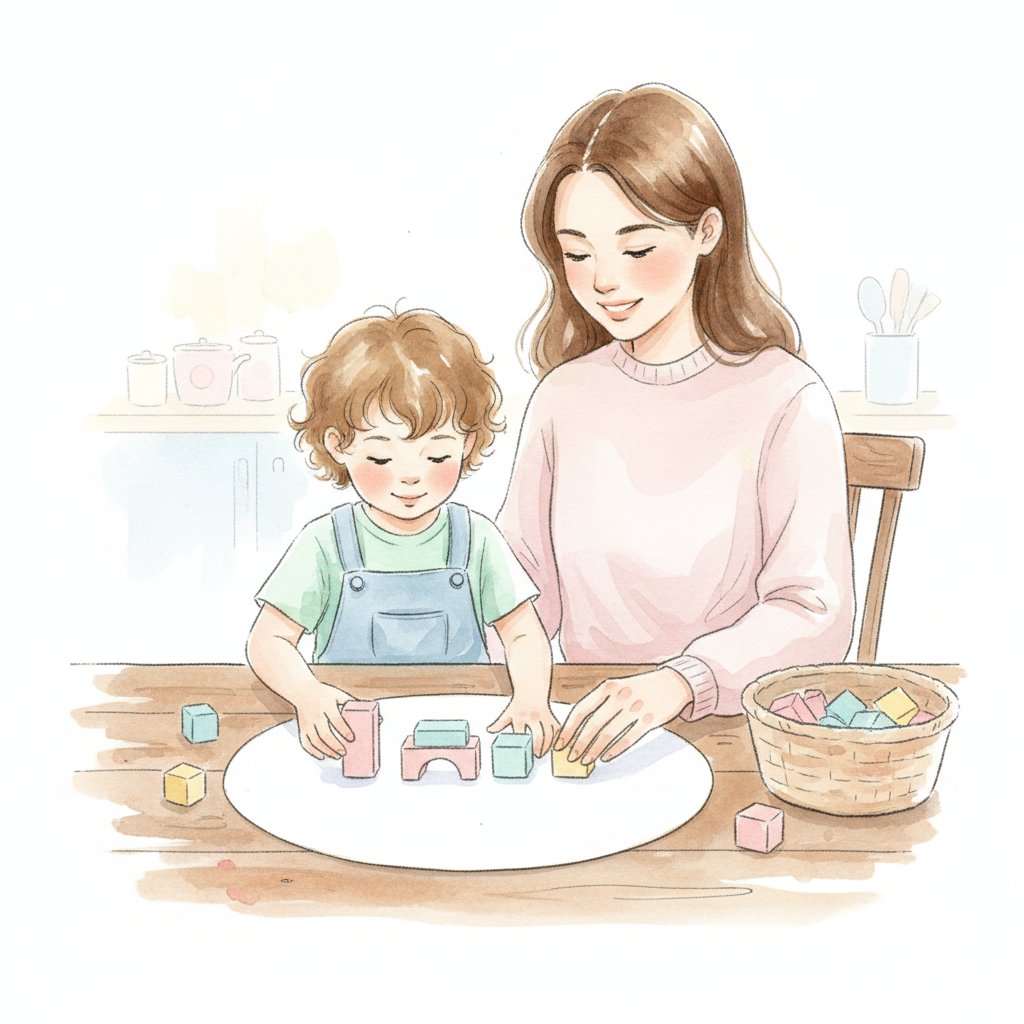
Last Tuesday, my preschooler lined up six yellow hexagons in a row, then replaced every other one with two red trapezoids. "Look — they're the same!" she announced. She had just discovered equivalent fractions, and she did it without a worksheet or a lesson plan.

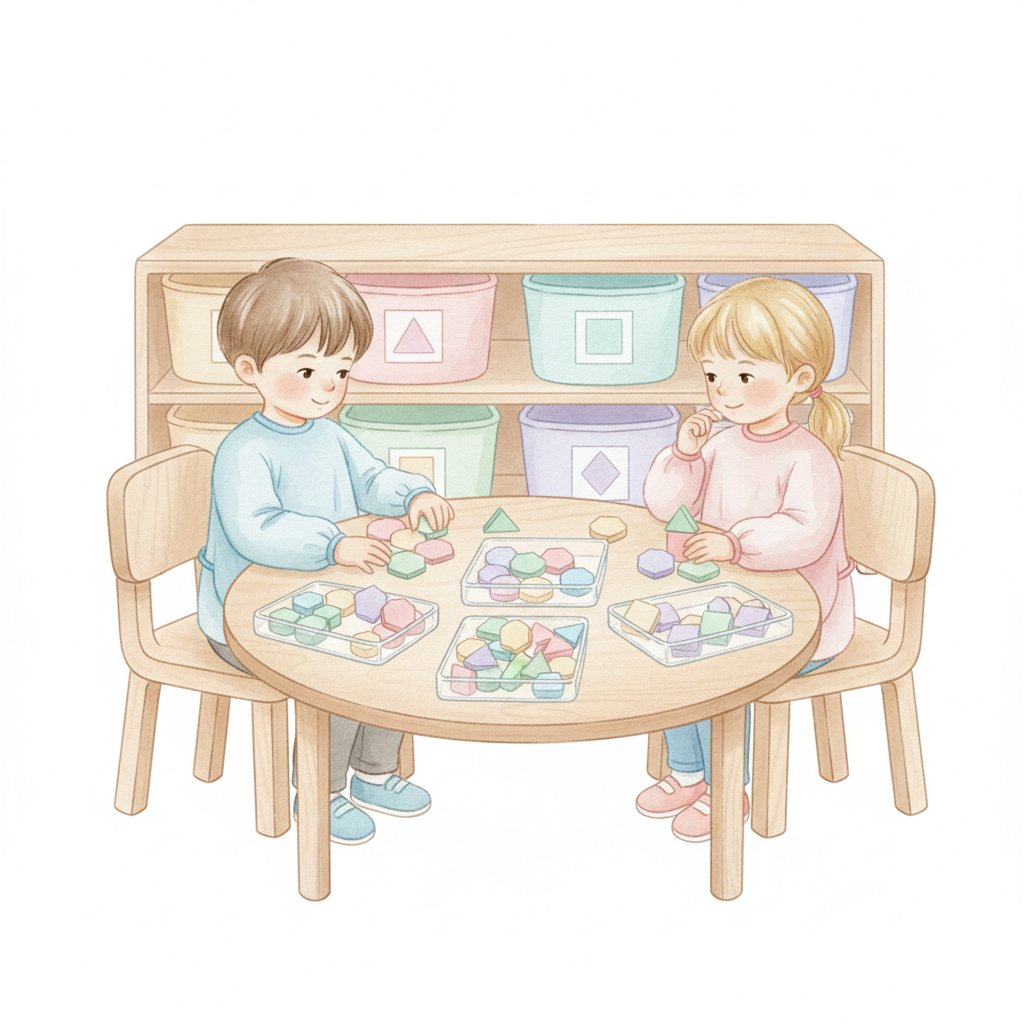
That moment captures why pattern blocks belong in every preschool classroom and home learning space. These six simple shapes — hexagon, trapezoid, rhombus, triangle, square, and parallelogram — unlock spatial reasoning, early geometry, sorting, symmetry, and problem-solving in ways that feel like play because they are play.

For more shape-based learning, see our shapes flashcards for kids and our shape activities for preschoolers guide. And if you're building a full math center, our counting activities for preschoolers pairs perfectly with pattern block work.

Research from the National Council of Teachers of Mathematics consistently shows that hands-on manipulatives like pattern blocks improve spatial reasoning scores in children as young as three. Let's dig into how to use them.

What Are Pattern Blocks and Why Every Preschool Needs Them

Pattern blocks are flat, colored geometric shapes made from wood or plastic. A standard set includes six shapes, each with a specific color:

ShapeColorAngles
HexagonYellow6 sides
TrapezoidRed4 sides
Rhombus (thick)Blue4 sides
TriangleGreen3 sides
SquareOrange4 sides
ParallelogramTan4 sides

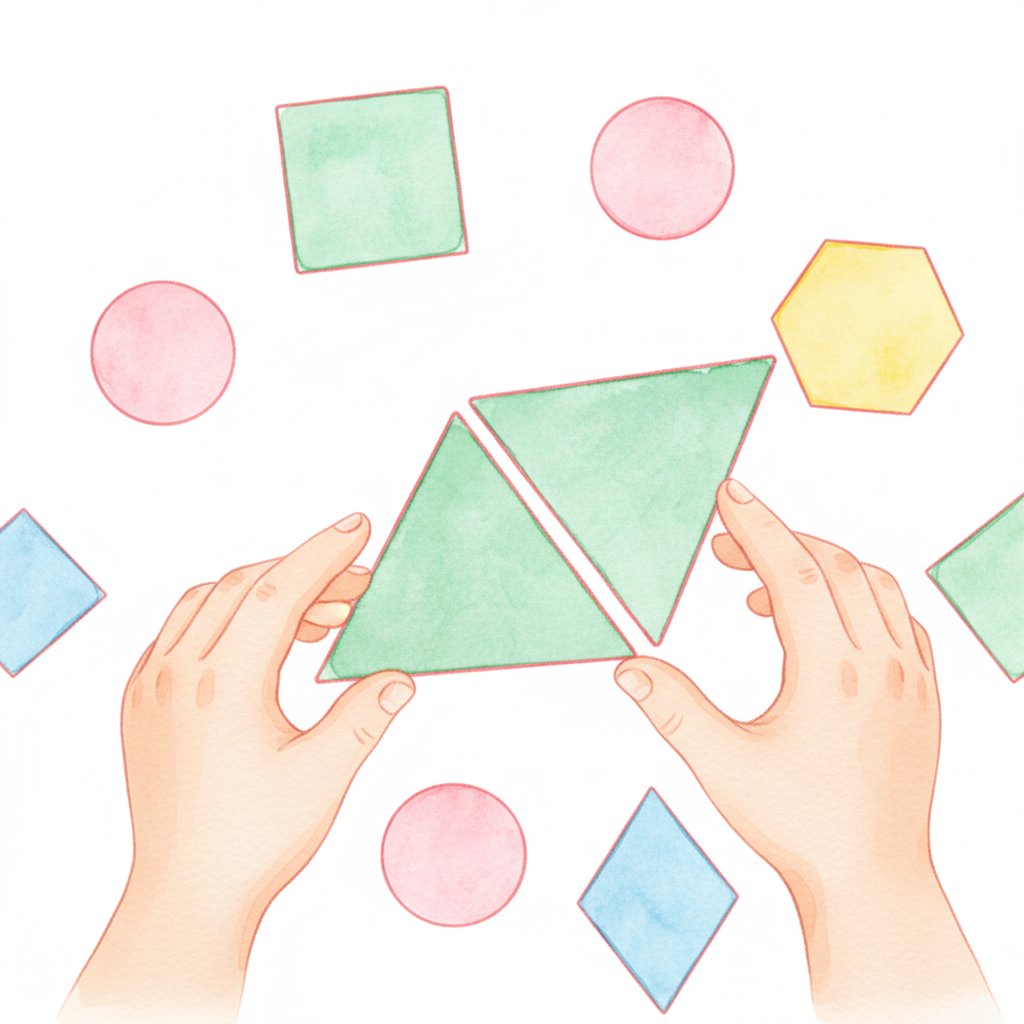
The genius of pattern blocks is the angle relationships. Three green triangles make one red trapezoid. Two red trapezoids make one yellow hexagon. Six green triangles fill a hexagon. Children discover these relationships through trial and error — no lecture required.

Most classrooms need 2-3 sets of 250 blocks per math center. For home use, a single set of 100-250 blocks is plenty.

{% product-block %}
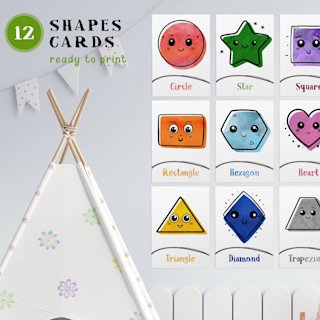
Shape recognition starts early. Our Shapes Flashcards reinforce the same geometric vocabulary children encounter with pattern blocks — triangle, square, hexagon, rhombus — in a portable, take-anywhere format that complements hands-on play.
{% end-product-block %}

Learning Benefits of Pattern Blocks in Early Childhood

Pattern blocks aren't just "fun filler." They target specific developmental domains:

Mathematical Thinking

  • Shape recognition and classification
  • Spatial reasoning and mental rotation
  • Fractions and part-whole relationships (three triangles=one trapezoid)
  • Symmetry and transformations
  • Patterning and algebraic thinking (AB, ABC, ABB sequences)

Fine Motor Development

  • Pincer grasp practice when picking up and placing blocks
  • Hand-eye coordination during precise placement
  • Bilateral coordination when stabilizing with one hand and placing with the other

Social-Emotional Learning

  • Turn-taking during shared pattern block center time
  • Frustration tolerance when designs don't work out
  • Pride and confidence from completing complex builds

Language and Vocabulary

  • Shape names (hexagon, rhombus, trapezoid)
  • Spatial language (next to, above, beside, between, on top of)
  • Comparative language (bigger, smaller, more, fewer)

For activities that build the fine motor foundation pattern blocks require, see our fine motor skills activities guide.

Pattern Block Activities by Age Group

Ages 2-3: Exploration and Sorting

At this age, children are learning to identify basic shapes and develop pincer grasp. The goal is exposure, not accuracy.

What to expect: Children will dump blocks, sort by color, stack them, and explore freely. Some will start matching to simple outlines. This is exactly right.

Key skills: Color recognition, shape identification, sensory exploration, basic sorting

Ages 3-4: Guided Matching and Simple Patterning

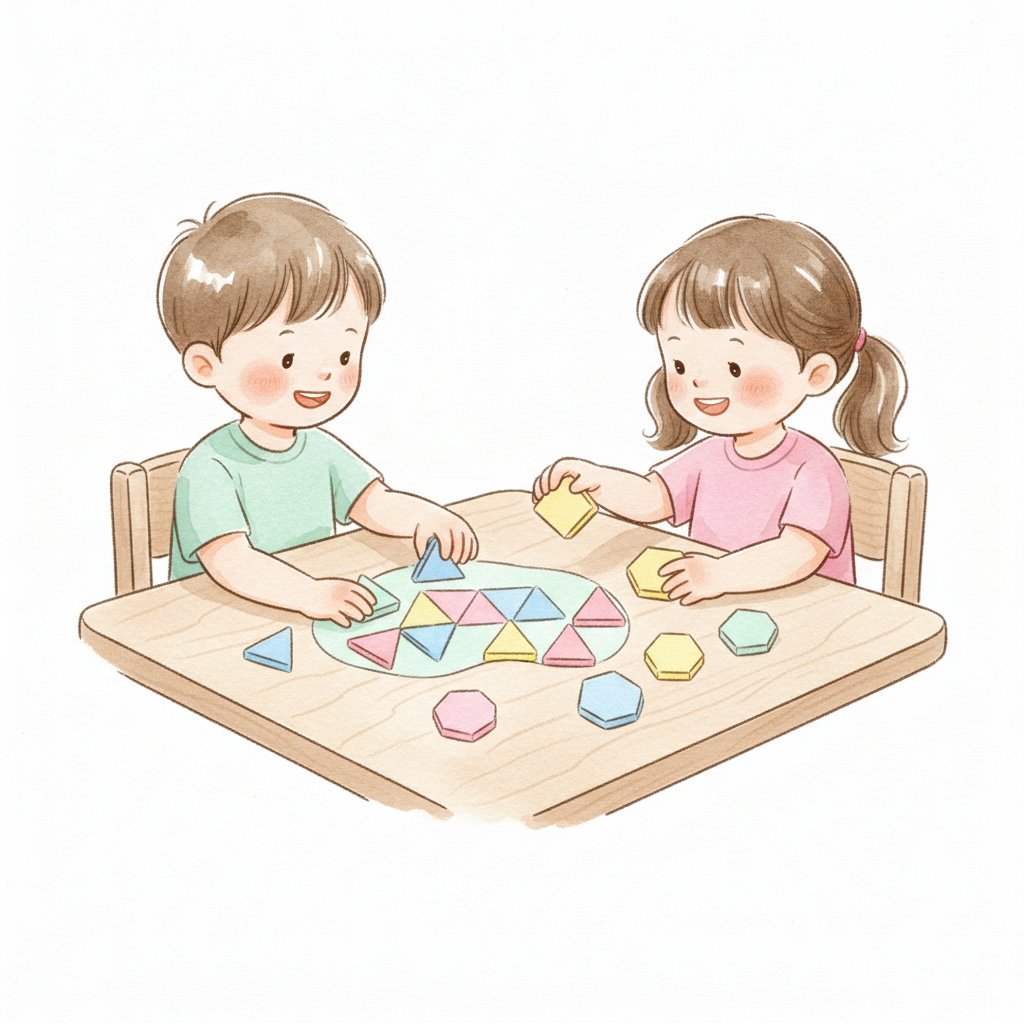
Children can follow simple pattern block mats, create basic patterns (AB, ABB), and begin combining shapes to fill outlined pictures.

What to expect: Children complete picture mats with some prompting. They begin to notice "two triangles make a diamond" but won't articulate it consistently.

Key skills: One-to-one matching, simple patterning, shape combination, following visual models

Ages 4-5: Independent Design and Problem-Solving

Children create their own designs, solve fill-in puzzles independently, and begin discussing why certain shapes fit together.

What to expect: Children complete complex mats, invent original designs, explain their thinking ("I used two trapezoids because that's the same as a hexagon"), and collaborate with peers.

Key skills: Spatial problem-solving, creative design, mathematical reasoning, verbal explanation

Ages 5-6: Symmetry, Fractions, and Recording

Children explore symmetry, fractional relationships, and begin recording their designs with drawings or photographs.

What to expect: Children build symmetrical designs, predict what shapes will fill a space, and compare solutions with classmates.

Key skills: Symmetry, equivalent fractions, data recording, mathematical communication

{% product-block %}
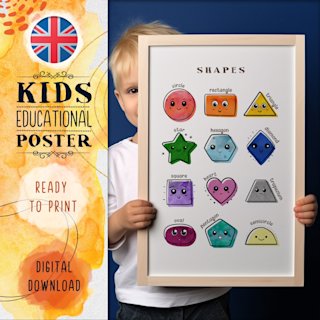
Anchor shape vocabulary on your wall. Our Shapes Poster for Kids gives children a permanent visual reference for the same shapes they handle during pattern block time — reinforcing the connection between 2D representations and physical manipulatives.
{% end-product-block %}

20 Pattern Block Activities for Preschoolers
Beginner Activities (Ages 2-3)

1. Color Sort Dump

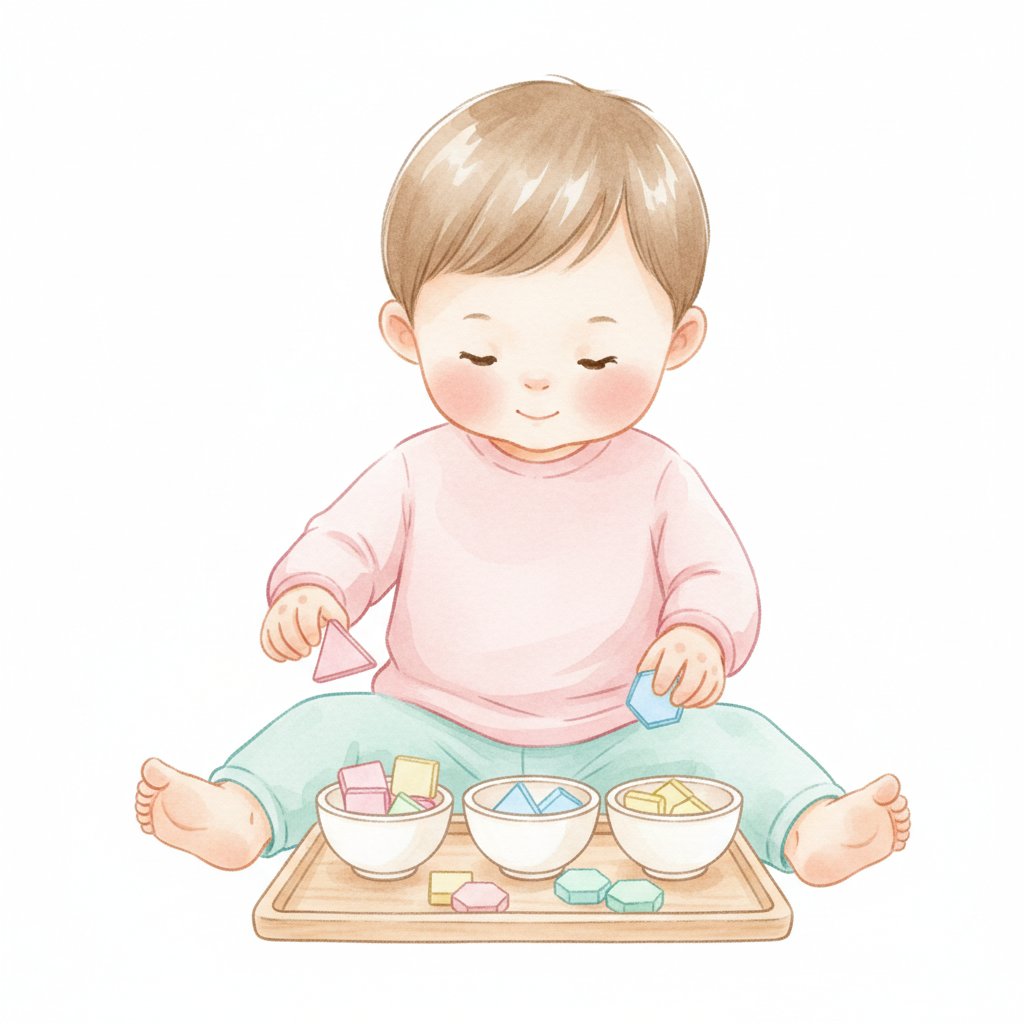
Dump all blocks on a tray. Give your child six small bowls labeled with colored dots. Ask them to sort blocks by color. Simple, satisfying, and builds color-word association.

Materials: 1 set of blocks, 6 small bowls, colored dot stickers

2. Mystery Bag Pull

Put blocks in a fabric bag. Have your child reach in, feel one block, and guess the shape before pulling it out. Builds tactile discrimination and shape vocabulary simultaneously.

Materials: Fabric bag, 10-15 blocks

3. Fill the Outline

Print large outlines of single shapes (hexagon, triangle, square). Your child places matching blocks directly on the outlines. Start with identical matches, then introduce combinations.

Materials: Printed outline mats, blocks

4. Shape Hunt Around the Room

Hold up a pattern block. "This is a triangle! Can you find something in our room that's shaped like a triangle?" Connects manipulatives to the real world.

Materials: 1 set of blocks

Intermediate Activities (Ages 3-4)

5. Picture Mat Puzzles

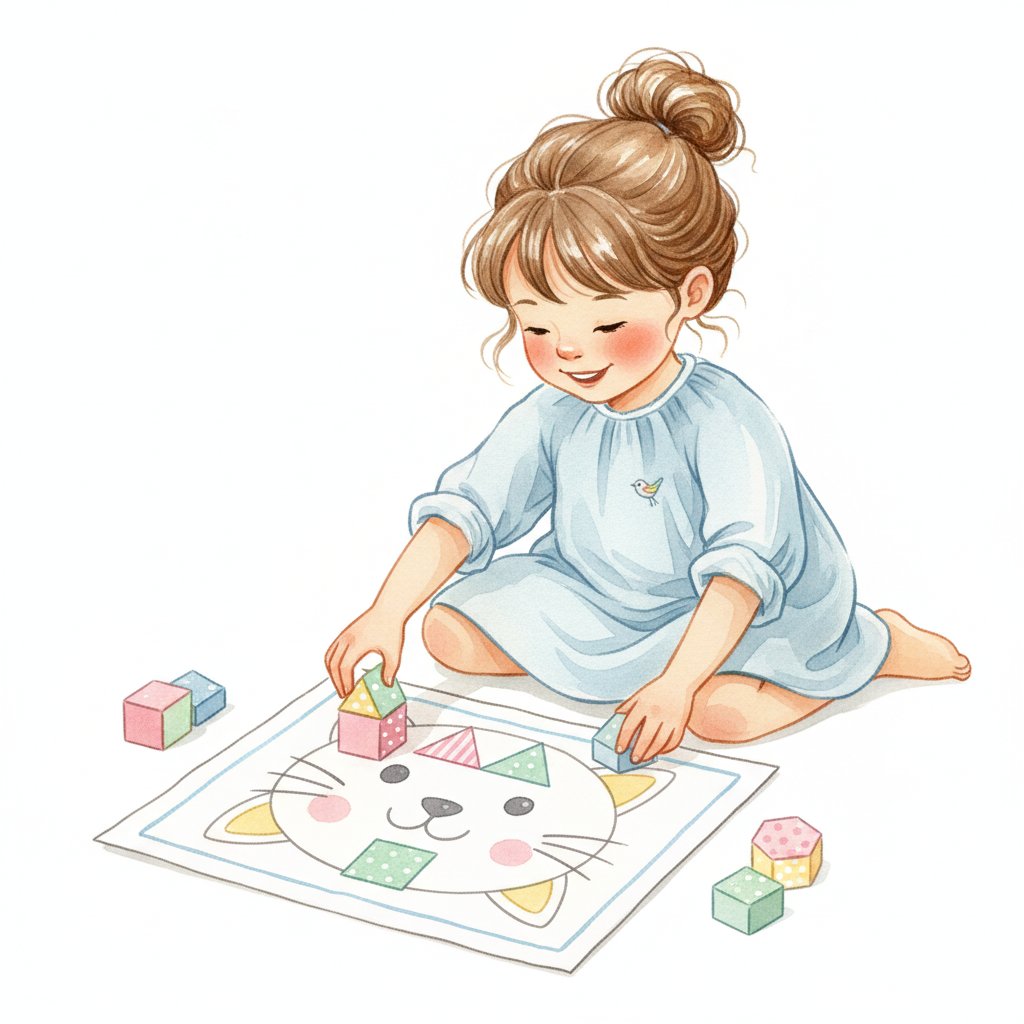
Provide printed pattern block picture mats (cat, house, flower, boat). Children place blocks on the mat to complete the picture. The visual guide supports independence.

Materials: Printed picture mats (free printable below), blocks

6. Pattern Train

Start a pattern: triangle, square, triangle, square. Ask your child "What comes next?" Extend to three-element patterns (triangle, square, hexagon) as skills grow.

Materials: Blocks, flat surface

7. Hexagon Fill Challenge

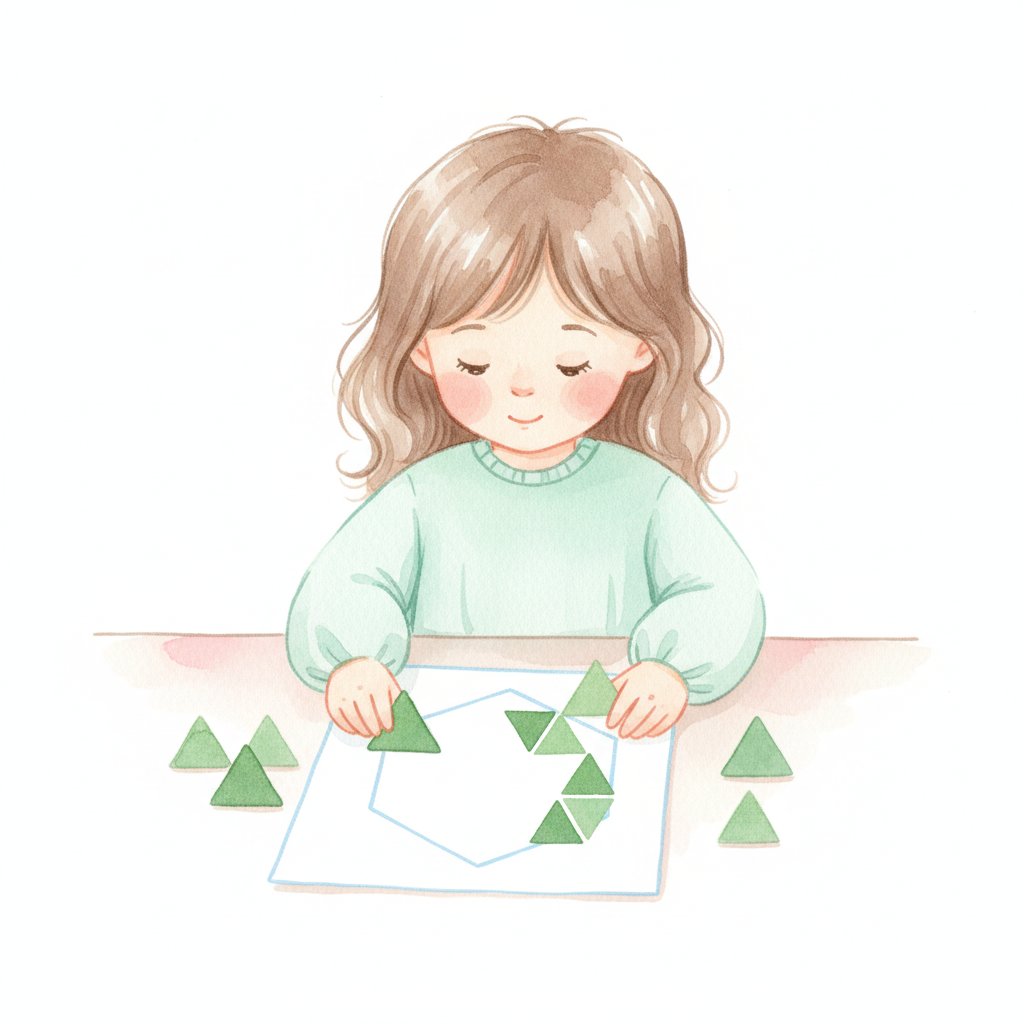
Give your child a hexagon outline and a pile of triangles. "Can you fill this hexagon using only triangles?" Count how many it takes. Try with trapezoids next.

Materials: Hexagon outline, triangles and trapezoids

8. Mirror Designs

Build a simple line of three blocks. Place a ruler as the "mirror line." Ask your child to build the mirror image on the other side. Early symmetry!

Materials: Blocks, ruler or stick

9. Tower Build

Stack blocks as high as possible without toppling. Count the blocks, then try to beat the record. Combines engineering with counting practice.

Materials: Blocks, flat building surface

10. Feed the Shape Monster

Draw "monster" faces on paper bags, each labeled with a shape. Children "feed" each monster only its matching shape blocks. Silly, motivating, and builds sorting accuracy.

Materials: 4-6 paper bags, markers, blocks

Advanced Activities (Ages 4-5)
11. Design and Describe

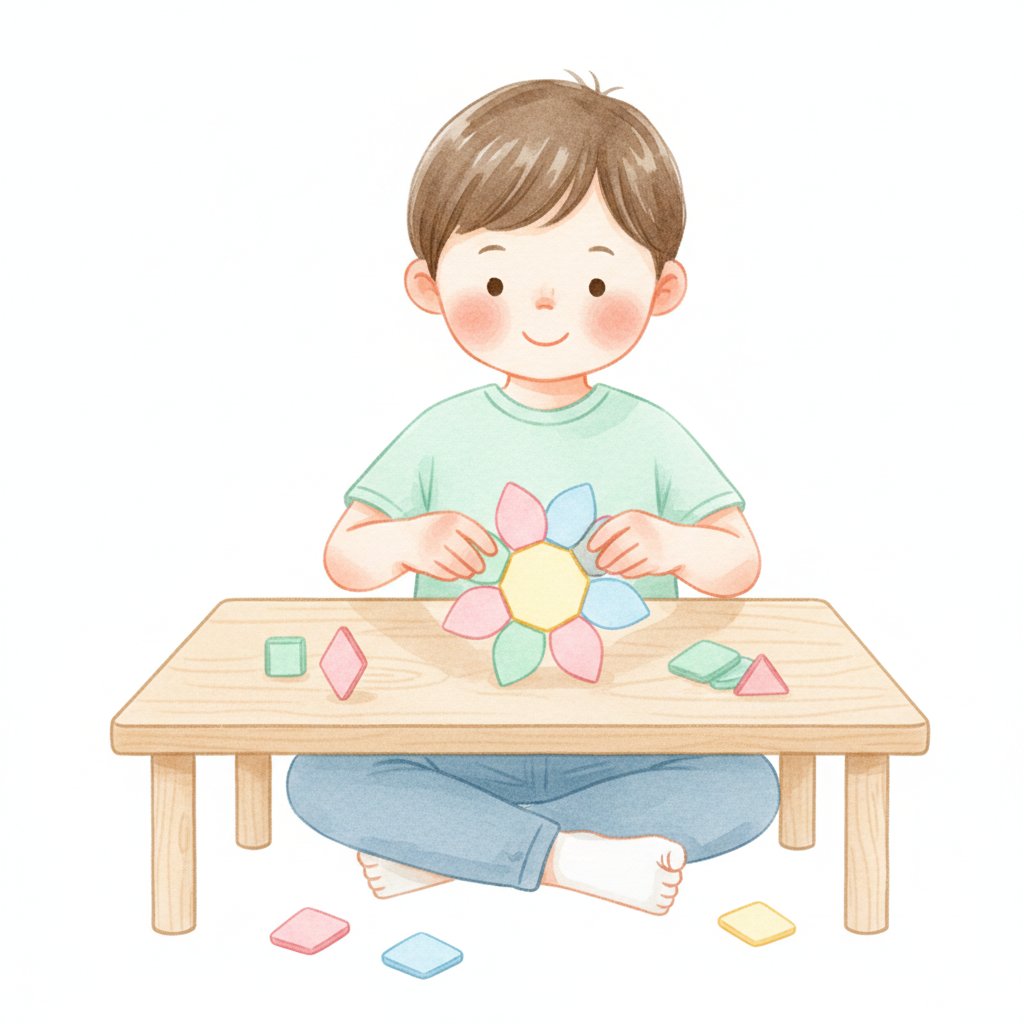
Children create any design they want, then describe it to a partner using shape and position words. "I put two red trapezoids on top of a yellow hexagon, then added green triangles around the edges."

Materials: Blocks, flat surface

12. Fill the Hexagon (Multiple Solutions)

Challenge: "How many different ways can you fill this hexagon?" Children discover that 6 triangles, 3 rhombuses, 2 trapezoids, or 1 hexagon all work. Record solutions with photos.

Materials: Hexagon outline, full block set, camera/phone

13. Pattern Block Symmetry Mats

Provide half-completed symmetrical designs. Children complete the other half. Start with vertical symmetry, then add horizontal.

Materials: Half-symmetry printed mats, blocks

14. Block Graphing

Sort blocks by shape, then create a bar graph on paper. "Which shape do we have the most of? The least?" Data analysis meets geometry.

Materials: Blocks, graph paper, markers

15. Story Mats

Provide a printed scene (farm, ocean, city). Children use blocks to build elements of a story within the scene, then narrate the story aloud.

Materials: Printed scene mats, blocks

Challenge Activities (Ages 5-6)
16. Fraction Discovery

Place a hexagon on the table. "What fraction of this hexagon is one triangle?" Children discover 1/6, 1/3, and 1/2 through hands-on investigation.

Materials: Hexagon outline, triangles, trapezoids, rhombuses

17. Pattern Block Tangrams

Show a silhouette card. Children figure out which blocks recreate the shape without seeing internal lines. Spatial reasoning at its best.

Materials: Silhouette cards, blocks

18. Build and Record

Children build a design, then draw it on grid paper, labeling each shape they used. Connects concrete to abstract representation.

Materials: Blocks, triangular grid paper, pencils

19. Cooperative Mural

Small groups create one large design on butcher paper. Each child adds their section, negotiating shape choices and placement. Builds collaboration alongside spatial skills.

Materials: Butcher paper, multiple block sets

20. Pattern Block Bingo

Create bingo cards with shape combinations. Call out shape clues ("a shape with three sides" or "two trapezoids make this"). First to cover their board wins.

Materials: Bingo cards, blocks, calling cards

Free Printable Pattern Block Mats

Printable pattern block mats are the single most requested resource in preschool math centers. Here's what to look for and how to use them effectively:

Types of Printable Mats:

  • Outline mats: Simple shape outlines that children fill with blocks. Best for ages 2-3.
  • Picture mats: Themed designs (animals, vehicles, seasonal objects) with internal guide lines. Best for ages 3-4.
  • Challenge mats: Silhouettes without internal lines — children must figure out which shapes fit. Best for ages 4-6.
  • Symmetry mats: Half-designs that children mirror. Best for ages 5-6.

Printing Tips:

  • Print on cardstock (65 lb or heavier) for durability
  • Laminate for repeated use in classroom settings
  • Scale mats to match your block size (standard 1-inch sides or mini blocks)
  • Store in labeled manila envelopes by difficulty level

How to Differentiate With the Same Mat:

  • Beginner: Use outline mats with internal guide lines showing each shape
  • Intermediate: Use the same mat with guide lines removed
  • Advanced: Use only the outer silhouette

For more free classroom printables, see our free printable coloring pages guide and our kindergarten daily schedule printable.

{% product-block %}
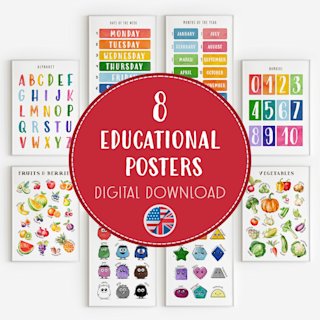
Create a complete math wall. Our Educational Posters for Kids Set includes shapes, numbers, and colors posters that pair perfectly with pattern block activities — children see the same concepts on the wall and in their hands.
{% end-product-block %}

Setting Up Pattern Block Centers in Your Classroom

A well-designed pattern block center runs itself. Here's how to set one up:

Materials List:

  • 2-3 sets of 250 pattern blocks (plastic or wood)
  • 6 small sorting bowls or cups
  • 10-15 printed mats at varied difficulty levels
  • One large tray or baking sheet per child (defines workspace and contains blocks)
  • Storage bin with lid

Organization Tips:

  • Store blocks in a clear bin with a picture label on the front
  • Keep mats in a hanging file folder sorted by difficulty (green=easy, yellow=medium, red=challenge)
  • Set out 2-3 trays at the center — one per child prevents territorial disputes
  • Add a "design book" where children glue photos of their completed work

Center Rotation Schedule:

  • 15-20 minutes per rotation is ideal for ages 3-5
  • Offer pattern blocks 2-3 times per week minimum
  • Introduce one new mat or challenge per week to maintain interest

What to Observe:

  • Does the child sort blocks before building?
  • Does the child match shapes to outlines accurately?
  • Does the child try multiple solutions when stuck?
  • Does the child use spatial language ("next to," "on top of")?

For help organizing your entire classroom, see our classroom organization printables guide.

Using Pattern Blocks at Home: A Parent Guide

You don't need a teaching degree to use pattern blocks at home. Here's your starter guide:

Getting Started (Under $15)

  • Buy one set of 100-250 plastic pattern blocks online or at a teacher supply store
  • Print free outline mats (search "free pattern block printables")
  • Use a baking sheet as a defined workspace

5-Minute Activities for Busy Parents:

  1. Breakfast Sort: Sort blocks by color while waiting for toast
  2. Before-Bed Pattern: Build one pattern together before storytime
  3. Shape of the Day: Put one block on the breakfast table. Find that shape everywhere today

Making It Work With Siblings:

  • Give each child their own tray and mat
  • Set a "no grabbing from another tray" rule
  • Have older children design mats for younger ones (builds leadership and reinforces their own learning)

Connecting to Everyday Life:

  • Kitchen: "This cracker is a square. What block matches?"
  • Park: "Look at that honeycomb — it's made of hexagons, just like our yellow blocks!"
  • Grocery store: "Can you spot a triangle shape in the produce section?"

For more home learning ideas, see our preschool lesson plans printable and our STEM activities for preschoolers.

Pattern Blocks for Inclusive and Special Needs Classrooms

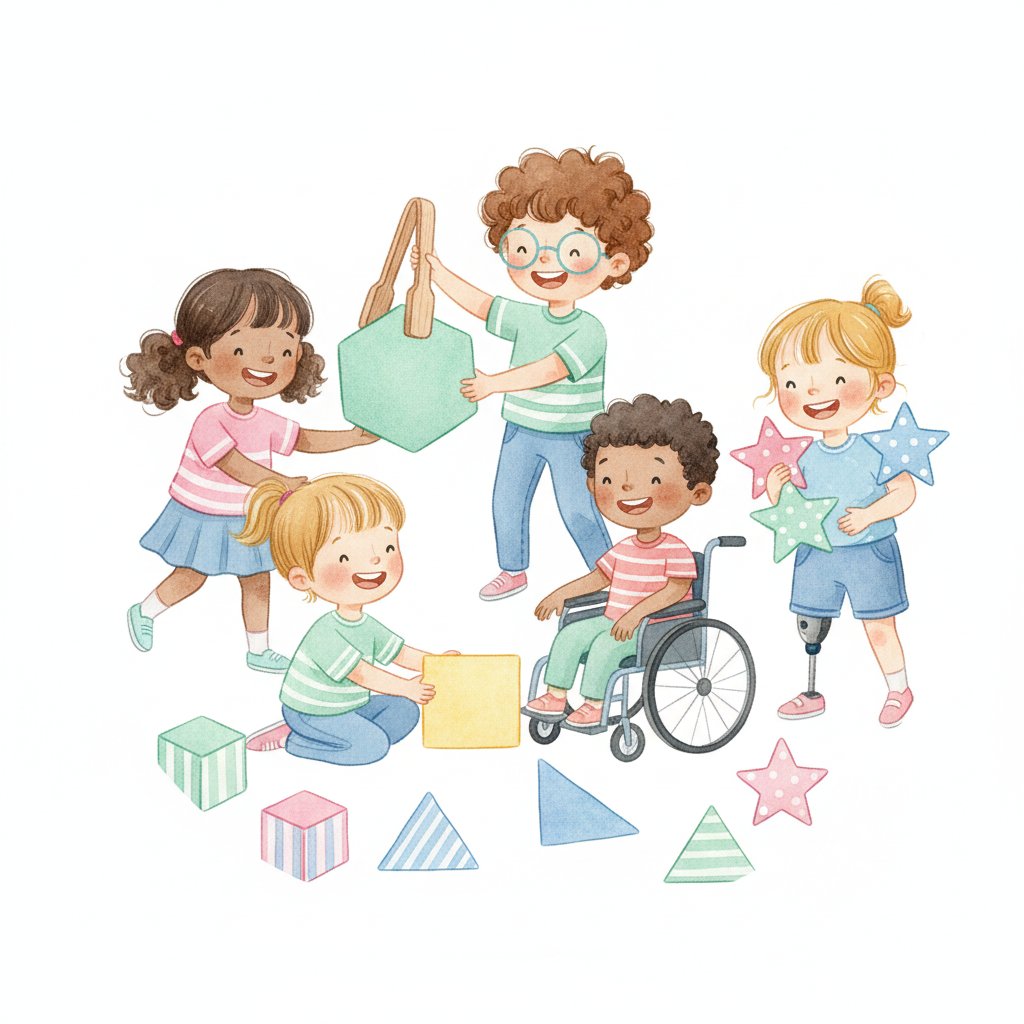
Pattern blocks are inherently accessible because they require no reading, no writing, and no verbal response to engage with meaningfully. Here's how to adapt for specific needs:

Fine Motor Challenges:

  • Use larger wooden blocks instead of standard plastic ones
  • Add non-slip shelf liner under the building tray to prevent sliding
  • Provide tweezers or chunky tongs as pickup tools for hand strengthening

Visual Impairments:

  • Add tactile markers (Velcro dots, bump dots) to distinguish shapes by touch
  • Use high-contrast mats (black outlines on white paper)
  • Describe shapes verbally during guided activities: "The hexagon is the big yellow one with six sides"

Autism Spectrum:

  • Pattern blocks' structured, rule-based nature often appeals to autistic learners
  • Offer visual task cards with step-by-step instructions
  • Allow open-ended exploration time alongside structured activities
  • Use the blocks for sorting routines that build comfort and predictability

ADHD and Attention Differences:

  • Use a timer for short, focused building sessions (5-8 minutes)
  • Provide one challenge at a time to prevent overwhelm
  • Allow standing or movement during block play
  • Use the "build and photograph" method to create a tangible completion record

English Language Learners:

  • Pattern blocks are language-free entry points to math concepts
  • Pair block play with bilingual shape vocabulary cards
  • Use blocks to teach spatial vocabulary (above, below, beside) through demonstration

For more inclusive classroom strategies, see our complete teacher's guide to SEL in the elementary classroom.

Assessment and Observation with Pattern Blocks

Pattern blocks are natural assessment tools. Here's what to watch for and how to document it:

Developmental Progression Checklist:

SkillAge 2-3Age 3-4Age 4-5Age 5-6
Sort by colorEmergingConsistent
Name shapes1-2 shapes3-4 shapesAll 6All 6 + properties
Match to outlineWith helpIndependent
Complete picture matWith promptingIndependent
Create original designSimpleComplexSymmetrical
Explain thinkingSingle wordsShort phrasesFull sentences
Discover equivalents"2 of these=1 of those"Names fractions

Documentation Methods:

  • Photo journal: Snap a photo of each child's completed work weekly
  • Anecdotal notes: Jot brief observations on sticky notes during center time ("Liam used 6 triangles to fill a hexagon and said 'they're all the same size!'")
  • Checklist: Use the progression table above as a quarterly checklist
  • Child self-reflection: Ask "How did you figure that out?" and record their answer

Red Flags to Discuss With Families:

  • Child avoids or seems distressed by block play after multiple exposures
  • Child cannot match identical shapes to outlines by age 4
  • Child shows no interest in building, sorting, or exploring shapes by age 3.5

These don't necessarily indicate a problem, but they're worth a conversation. For more on kindergarten readiness benchmarks, see our kindergarten readiness checklist for parents.

Frequently Asked Questions

What age should children start using pattern blocks?

Children as young as 18-24 months can explore pattern blocks with supervision. Start with sorting and free exploration. Structured activities with mats work best from age 3 onward.

How many pattern blocks do I need for a classroom?

For a class of 20 children with a math center of 4 children at a time, you need 2-3 sets of 250 blocks. For individual home use, one set of 100-250 blocks is plenty.

Are wooden or plastic pattern blocks better?

Both work well. Wooden blocks have a satisfying weight and durability but cost more. Plastic blocks are lighter, cheaper, and come in more vibrant colors. Choose based on budget and preference — the learning outcomes are identical.

Can pattern blocks be used for children older than 6?

Absolutely. Older children can explore angle measurement, area and perimeter, tessellations, and formal fractions using pattern blocks. The manipulatives grow with the child.

What's the difference between pattern blocks and tangrams?

Pattern blocks are designed around hexagonal angle relationships (all angles are multiples of 60°). Tangrams are seven specific pieces that form a square. Both build spatial reasoning, but pattern blocks' standardized angles make them better for teaching geometric relationships and fractions.

How do I store pattern blocks without losing pieces?

Use a clear plastic bin with a snap-on lid. Count blocks at the end of each session (especially in classrooms). Teach children a "block check" routine before cleanup. A 250-piece set should stay complete for years with proper storage.

For more preschool learning resources, explore our process art activities for preschoolers and science experiment printables for kids.