Articles8 min read

The Restaurant That Taught My Daughter to Write

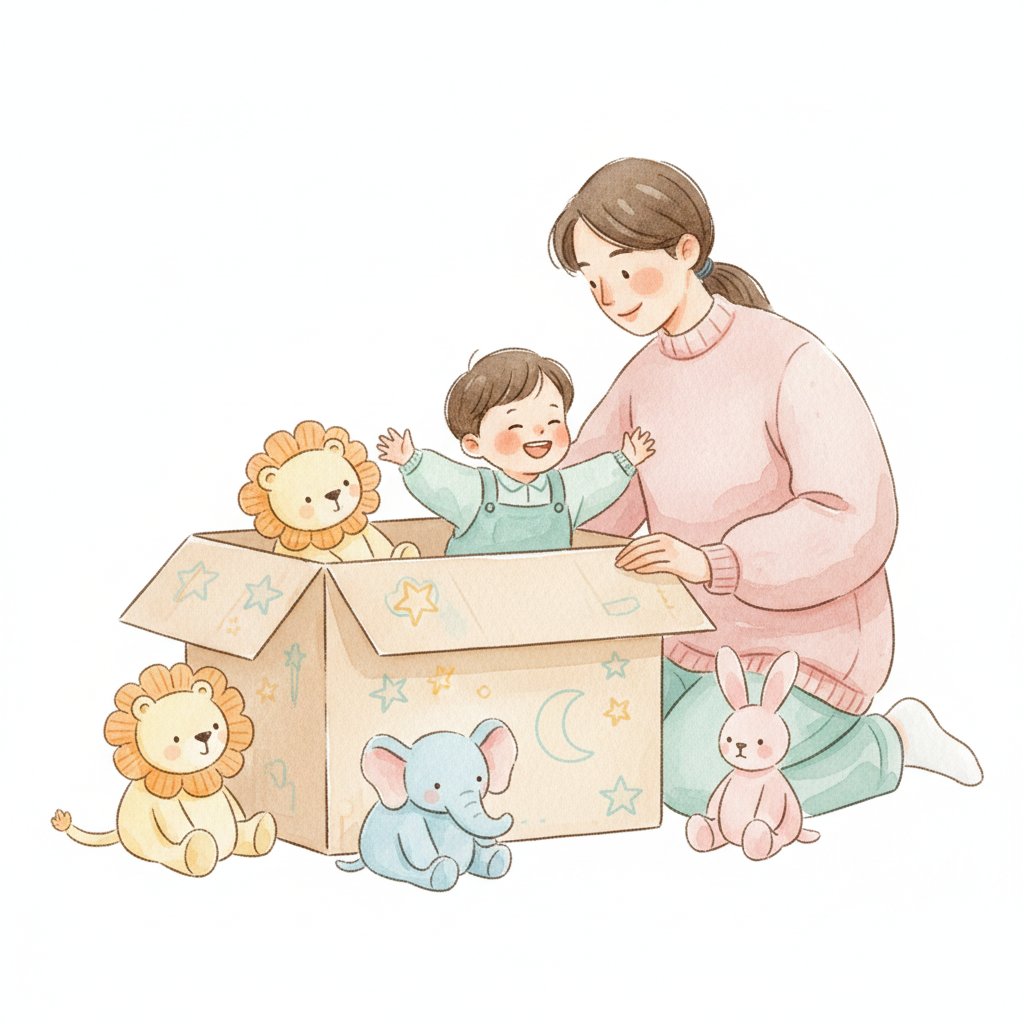
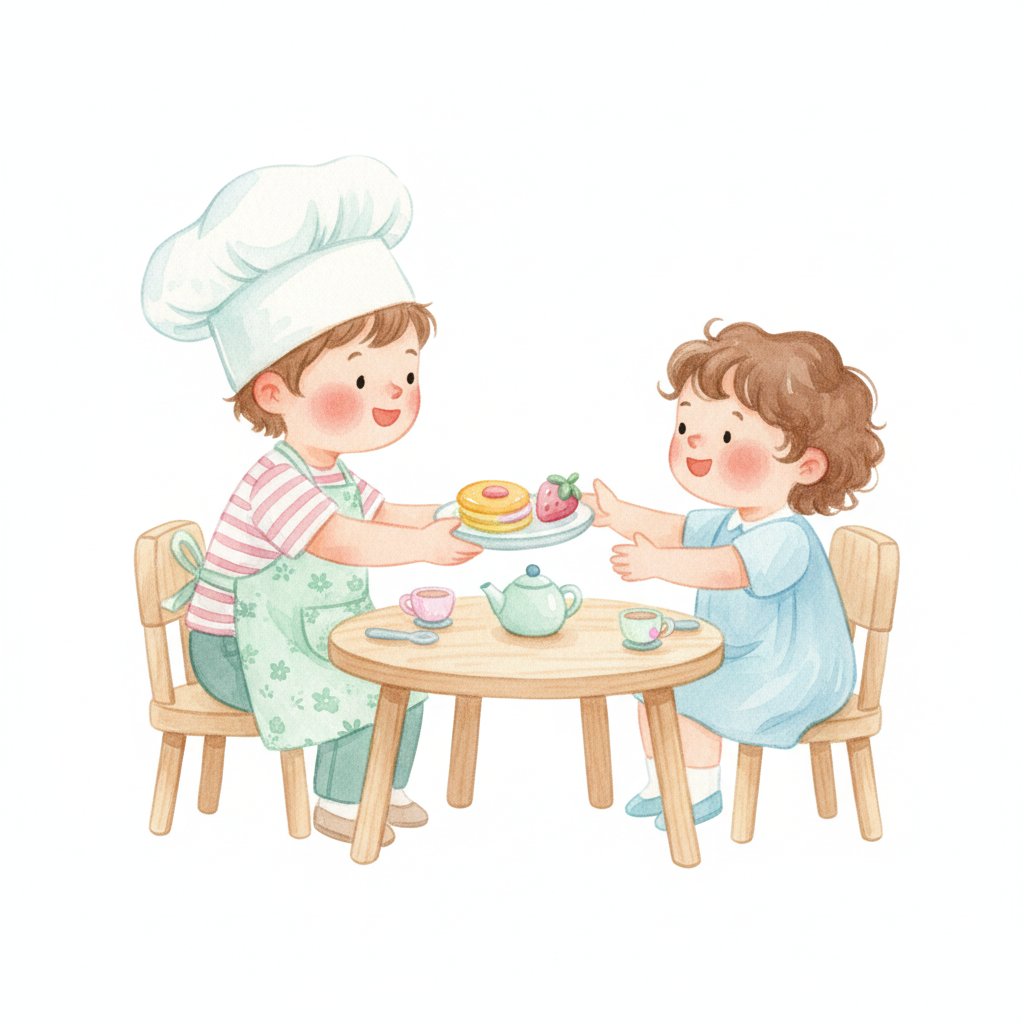
For three straight weeks, my kitchen was "Café Rosie." My four-year-old was the chef, the waiter, and the host. She made menus by drawing pictures of food and scribbling "prices" next to each one. She took orders on a notepad, writing actual letters for the first time: "P-Z-A" for pizza, "M-L-K" for milk. She counted play money, made change, and thanked every customer with a bow.

I hadn't taught her any of this. Pretend play had.
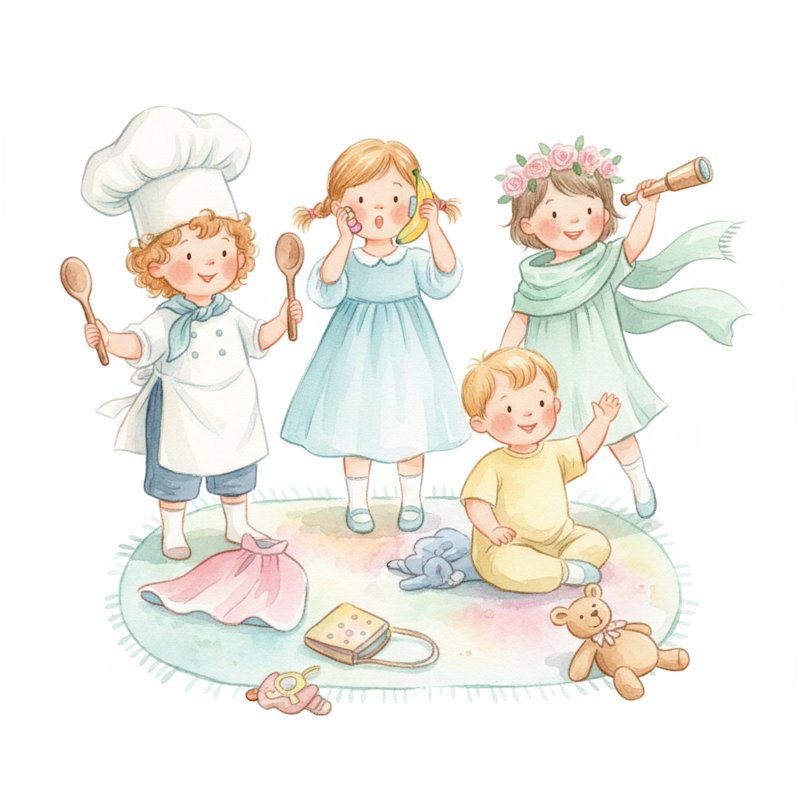
Research from the American Academy of Pediatrics confirms that pretend play is one of the most cognitively rich activities available to young children. It builds language (children use 2-3x more words in role-play than in regular conversation), social skills (negotiating roles, taking turns, resolving conflicts), executive function (planning, organizing, inhibiting impulses), and creativity (generating ideas, solving problems, adapting scenarios).

This guide covers 20+ pretend play activities for ages 2-6, with setup instructions, vocabulary lists, and extension ideas. Pair it with our vocabulary activities — pretend play and vocabulary development go hand in hand.
Why Pretend Play Matters

Pretend play develops five critical skills simultaneously:

1. Language development — Children use more words, longer sentences, and more complex grammar during pretend play than in any other activity. A child who says "want juice" at snack time says "Good morning, welcome to my restaurant! Would you like to see our menu?" during restaurant play.

2. Social-emotional skills — Pretending to be someone else builds empathy. "I'm the doctor and you're sick. Don't worry, I'll help you feel better." Children practice caring, patience, and emotional regulation through their characters.

3. Executive function — Planning a scenario ("First I'll be the shopper, then I'll be the cashier"), maintaining a role (staying in character even when distracted), and inhibiting impulses (not breaking character) are all executive function skills that predict academic success.

4. Problem-solving — "The restaurant ran out of pizza! What should we do?" Pretend play constantly generates problems that children solve creatively: make more pizza, offer a different food, apologize to the customer.

5. Cognitive flexibility — This block is a phone. This spoon is a thermometer. This box is a car. Symbolic thinking — using one object to represent another — is the same cognitive skill used in reading (this mark represents this sound).

AgePretend Play Milestone
2-3Imitates daily activities (cooking, talking on phone, putting baby to bed)
3-4Engages in simple role-play with peers (store, restaurant, family roles)
4-5Sustains complex scenarios with multiple roles and plot lines
5-6Creates elaborate scenarios with rules, scripts, and props

Restaurant Play (Ages 3+)

1. Café Dramatic Play

Setup: A table with a tablecloth, paper menus (children draw food), play money, a notepad for orders, an apron.

Vocabulary to teach: menu, order, chef, waiter, customer, bill, tip, receipt, appetizer, delicious, recommend

Roles: Chef (cooks), Waiter (takes orders, serves), Customer (orders, eats, pays), Host (greets, seats)

Extensions:

  • Write menus with real letters and prices
  • Make play food from clay or paper
  • Practice making change with coins
  • Read a restaurant-themed book before play

Time: 30-45 minutes

2. Grocery Store

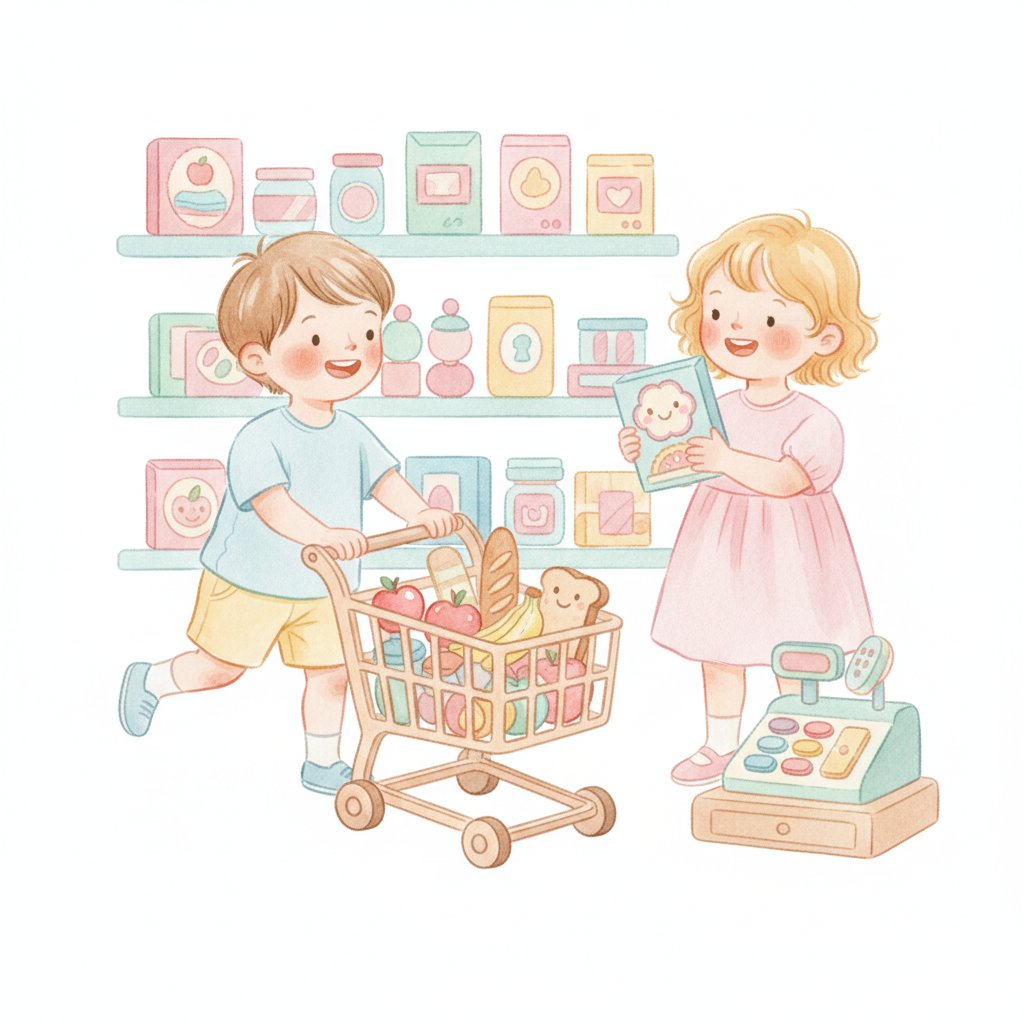
Setup: Shelves (or a table) with play food organized by category. A cash register (shoe box with buttons drawn on). Shopping bags. Play money.

Vocabulary: aisle, cart, cashier, produce, dairy, frozen, fresh, expired, sale, coupon

Extensions:

  • Sort food by food group (connects to sorting activities)
  • Write shopping lists (letter practice)
  • Weigh produce on a kitchen scale (number practice)
  • Use real grocery flyers to plan meals

Time: 30-45 minutes

Doctor and Veterinarian Play (Ages 3+)

3. Doctor's Office

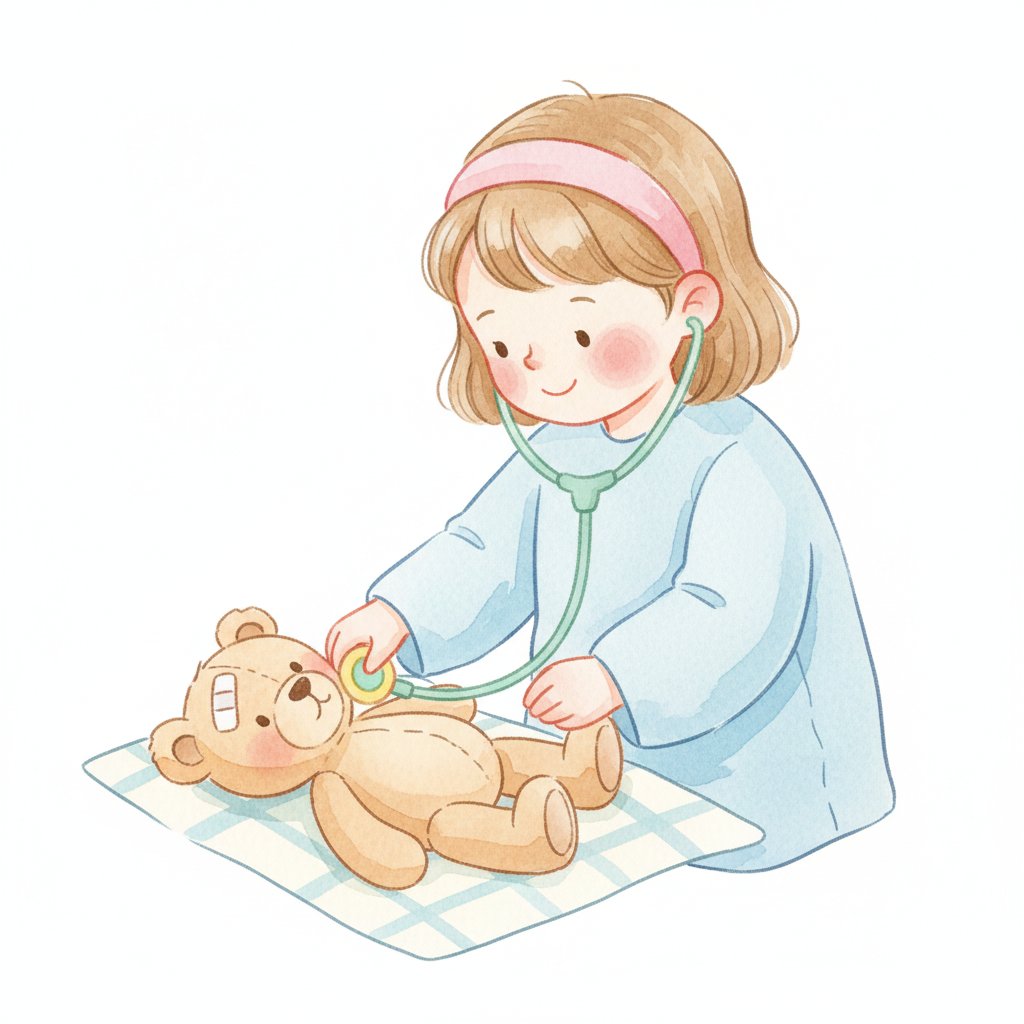
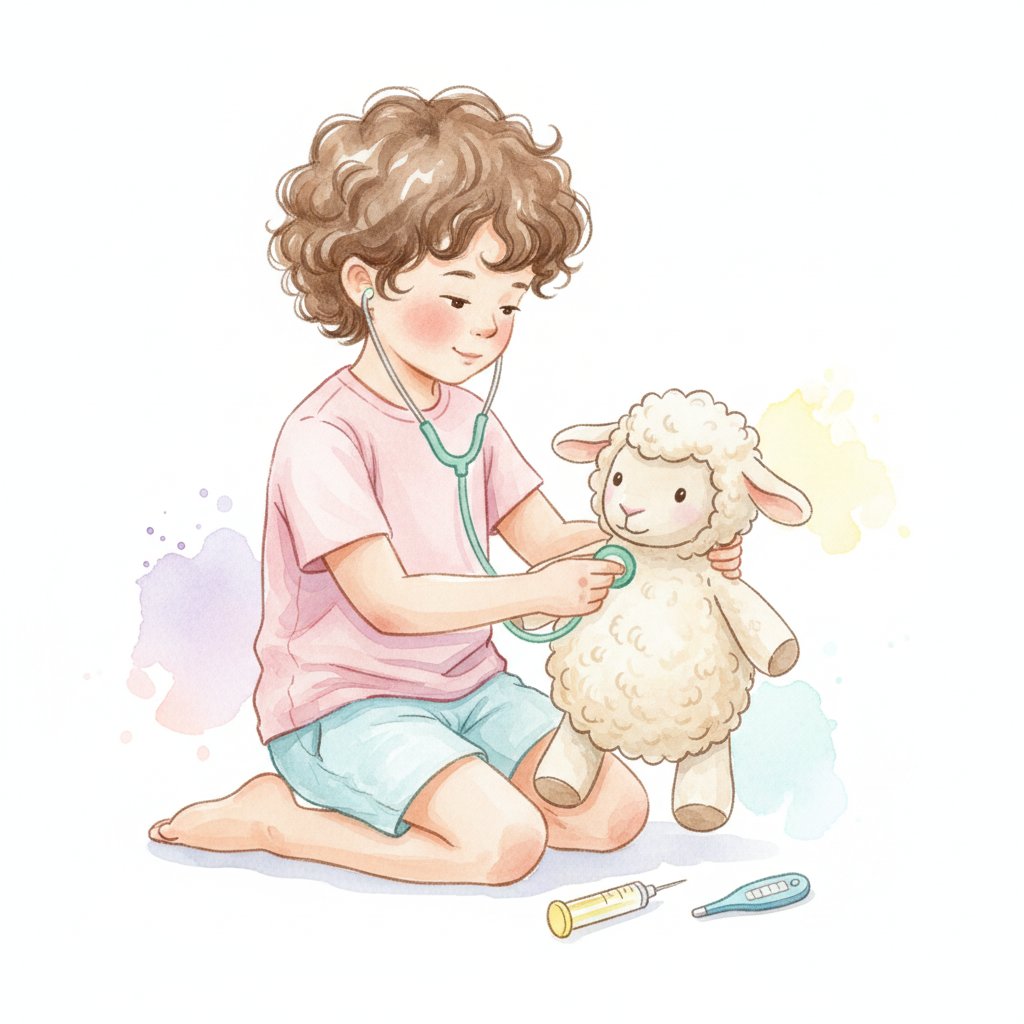
Setup: A waiting room (chairs), an exam table (couch), doctor tools (toy stethoscope or a real one from a drugstore, thermometer, bandages, a notepad). A stuffed animal or doll as the patient.

Vocabulary: stethoscope, thermometer, bandage, prescription, symptom, temperature, healthy, medicine, appointment, checkup

Roles: Doctor, Nurse, Patient, Receptionist

Why it matters: Doctor play reduces fear of real doctor visits. Children who role-play doctor appointments are less anxious during actual checkups because they understand the process.

Extensions:

  • Draw x-rays on black paper with white crayon
  • Make "get well" cards for the patient
  • Measure and weigh the patient (math connection)
  • Read "Going to the Doctor" by Anne Civardi before play

Time: 30 minutes

4. Veterinarian Clinic

Setup: Same as doctor's office but with stuffed animals as patients. Add a "kennel" (cardboard box) and "pet food" (dry beans in a bowl).

Vocabulary: veterinarian, kennel, leash, collar, examination, healthy, treat, vaccination, breed, habitat

Extensions:

  • Match animals to their habitats (science connection)
  • Feed the animals the right food (herbivore vs. carnivore discussion)
  • Use animal flashcards for species vocabulary

For more animal vocabulary, see our vocabulary activities guide.

Animal clinic pretend play starts with knowing the animals
Our Farm Animals Flashcards give your child the vocabulary for veterinarian play: cow, pig, sheep, duck, goat, horse, chicken, rooster, donkey, rabbit. 'The cow has a tummy ache! Let me listen with my stethoscope.' One deck=10 patients for the vet clinic.
Doctor play meets feelings vocabulary
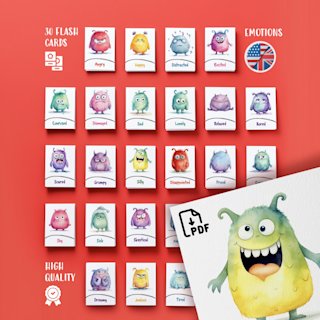
Our Feelings Poster Set helps children name how their 'patients' feel: scared, worried, brave, relieved, happy. 'The teddy bear was scared to get a shot, but now he feels brave!' Connecting emotions to pretend play builds both empathy and emotional vocabulary.
Weather reporter pretend play with real weather vocabulary
Our Weather Flashcards turn your child into a TV meteorologist: 'Today's forecast is sunny with afternoon clouds!' Set up a 'news desk,' hold up the weather cards, and deliver the forecast. Each card teaches a weather word through the most powerful method — using it in context.

More Pretend Play Themes

5. Post Office

Setup: Envelopes, stamps (stickers), a mail bag, a mailbox (decorated shoe box).

Vocabulary: envelope, stamp, deliver, mail carrier, address, letter, package, postage

Activity: Children write letters (or draw pictures), address envelopes, sort mail by "street" (colored bins), and deliver to family members. Writing for a real audience is the most powerful writing motivator.

Time: 20-30 minutes

6. Construction Site

Setup: Blocks, toy trucks, hard hats (or baseball caps), caution tape (or ribbon), blueprints (crayon drawings of structures).

Vocabulary: architect, blueprint, construction, crane, excavator, foundation, beam, safety, helmet

Activity: Children "read" blueprints and build structures. "The architect says we need a tall tower with a bridge." Teamwork + following directions + engineering vocabulary.

Time: 30 minutes

7. Bakery

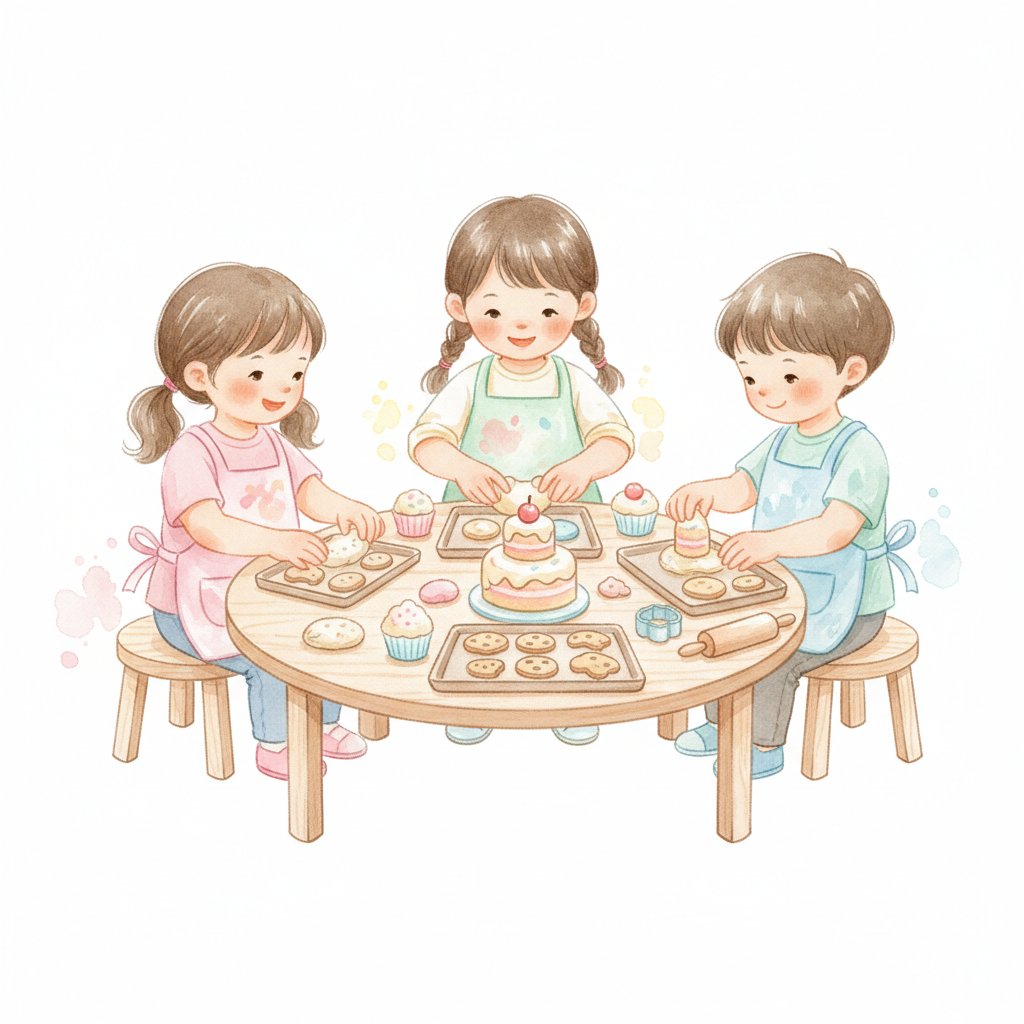
Setup: Play-Doh or salt dough, cookie cutters, a baking sheet, an oven (cardboard box with a drawn door), aprons, price tags.

Vocabulary: baker, dough, knead, recipe, ingredient, oven, batch, delicious, fresh, frosting

Activity: Children make "cookies," "bread," and "cakes," set prices, and sell to customers. Measuring ingredients introduces fractions and volume. Following a recipe introduces procedural text.

Time: 30 minutes

8. School

Setup: A small whiteboard or paper, markers, a pointer (pencil), a bell, small chairs for "students" (stuffed animals).

Vocabulary: teacher, student, lesson, recess, library, homework, answer, question, grade, correct

Activity: Children become the teacher and instruct their stuffed animal "class." Teaching is the highest form of learning — children who explain concepts retain them better. Let them teach letters, numbers, or colors.

Time: 20-30 minutes

9. Space Mission

Setup: A spaceship (cardboard box or blankets over chairs), a "control panel" (drawn on paper with buttons), a space helmet (colander or bike helmet).

Vocabulary: astronaut, mission, orbit, planet, rocket, launch, gravity, galaxy, constellation, telescope

Activity: Children blast off, explore planets, collect "moon rocks" (crumpled foil), and report back to "mission control" (you). Space vocabulary is some of the most exciting language children learn.

Time: 30 minutes

Pretend Play for Toddlers (Ages 2-3)

Toddlers engage in simpler pretend play — imitating what they see adults do. These activities are the building blocks for more complex dramatic play later.

10. Phone Call

Give a toy phone (or a block). "Let's call Grandma! Ring ring. Hi Grandma!" Model the conversation, then hand the phone to your toddler. They'll imitate your words and tone. This is the first form of role-play.

Time: 3-5 minutes

11. Feeding the Baby

A doll, a spoon, a bowl. "The baby is hungry! Let's feed her." Toddlers imitate feeding — scooping, bringing spoon to mouth, wiping. Nurturing play builds empathy from the earliest age.

Time: 5-10 minutes

12. Cooking Alongside

Give a pot, a spoon, and some dry pasta while you cook real dinner. Toddlers "cook" alongside you, imitating your stirring, tasting, and seasoning motions. Parallel pretend play at its finest.

Time: 10-15 minutes

13. Car Wash

A bin of soapy water and toy cars. Toddlers "wash" the cars with a sponge, "dry" them with a towel, and "park" them. The routine (wash, dry, park) builds sequencing skills.

Time: 10-15 minutes

For more toddler activities, see our toddler play and learning guide.

Tips for Pretend Play

For Parents

You don't need expensive props. The best pretend play materials are already in your house: cardboard boxes, blankets, kitchen utensils, old clothes, stuffed animals, paper, and markers. A cardboard box becomes a spaceship, a restaurant, a car, a house — all in the same afternoon.

Follow their lead. If your child wants the restaurant to also be a zoo where the animals order pizza, go with it. The best pretend play is child-directed. Your job is to provide materials, ask questions, and play your role.

Stay in character. When you break character to check your phone or redirect, the play collapses. Give it your full attention for 15-20 minutes — that's all it takes. The quality of your participation matters more than the duration.

For Classroom Teachers

Dramatic play center rotation: Change the theme every 2-3 weeks to maintain interest:

  • Week 1-2: Restaurant
  • Week 3-4: Doctor's Office
  • Week 5-6: Grocery Store
  • Week 7-8: Post Office
  • Week 9-10: Construction Site
  • Week 11-12: Veterinary Clinic

Vocabulary integration: Post theme-related vocabulary on the wall of the dramatic play center. Children will use the words naturally because the context demands it. A "restaurant" wall with menu, order, chef, and delicious written on it teaches reading through play.

For more classroom ideas, see our circle time activities and classroom organization printables.

Frequently Asked Questions

At what age does pretend play start?

Around 18 months, children begin pretend play by imitating simple actions: talking on a toy phone, feeding a doll, stirring an empty pot. By age 3, they engage in role-play with others. By age 4-5, they create complex scenarios with plots, rules, and multiple characters.

Is pretend play different from "just playing"?

All play is valuable, but pretend play is uniquely powerful because it requires symbolic thinking (this block is a phone), perspective-taking (I'm pretending to be someone else), and language use (explaining the scenario to others). No other play form develops all three simultaneously.

What if my child doesn't seem interested in pretend play?

Some children are more literal and prefer structured activities. Try starting with familiar scenarios: "Let's play grocery store! I'll be the shopper and you be the cashier." Give a specific role rather than an open-ended invitation. Most children engage when the scenario is concrete and the role is clear.

How long should pretend play last?

AgeTypical Duration
2-35-10 minutes
3-410-20 minutes
4-520-30 minutes
5-630-45 minutes

Don't force it to continue when children lose interest. Better to play intensely for 10 minutes and stop naturally than drag it to 30 minutes of flagging attention.

For more play-based learning, explore our sensory play ideas and STEM activities.