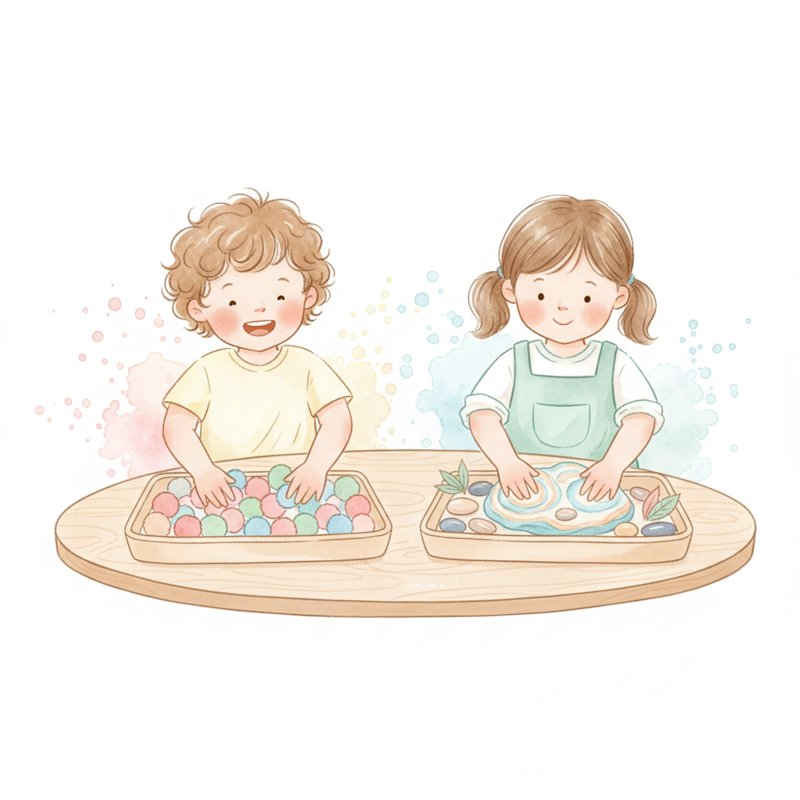
What Is Sensory Play?
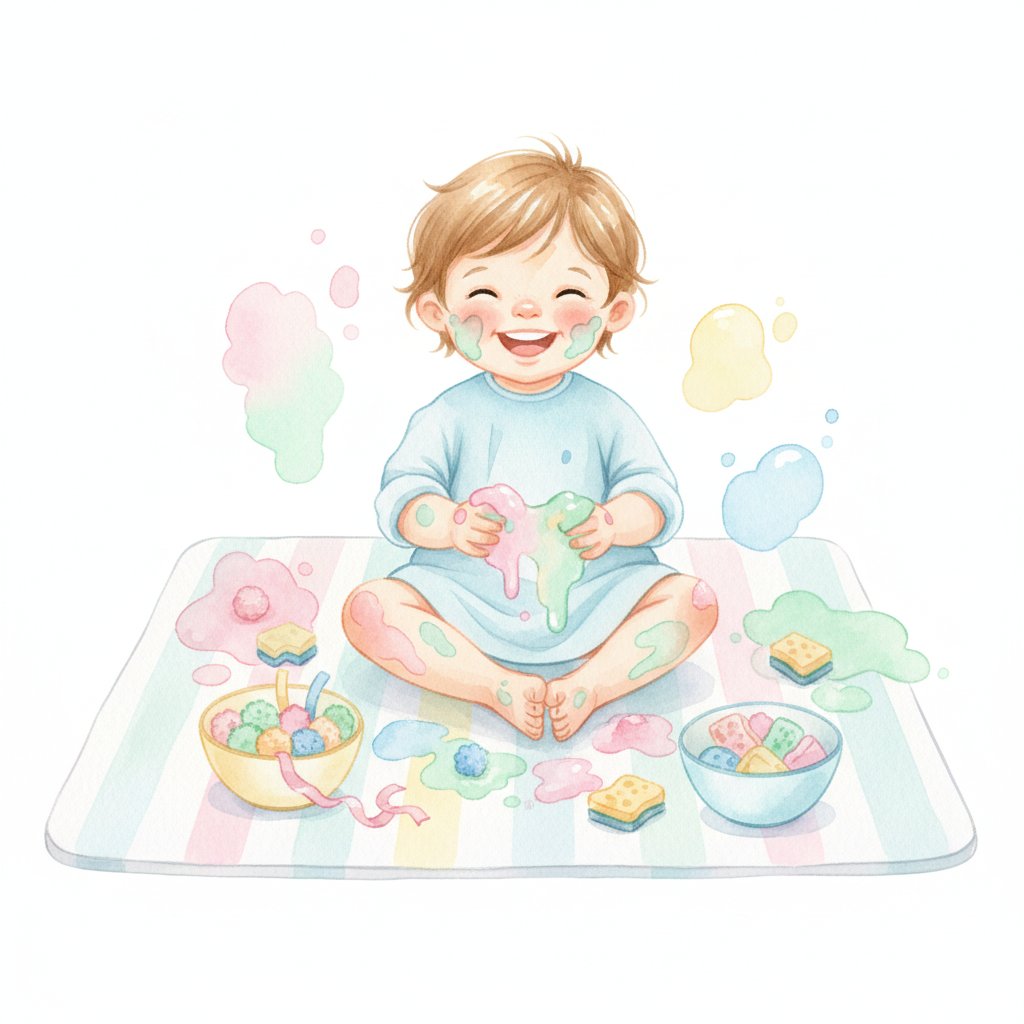
Sensory play is any activity that stimulates a child's senses — touch, sight, sound, smell, and taste. For toddlers and preschoolers, sensory play is how they explore the world, build brain connections, and develop the skills they need for reading, writing, and math.
For activities that build on sensory foundations, see our fine motor skills activities for kids and toddler activities for play and learning.
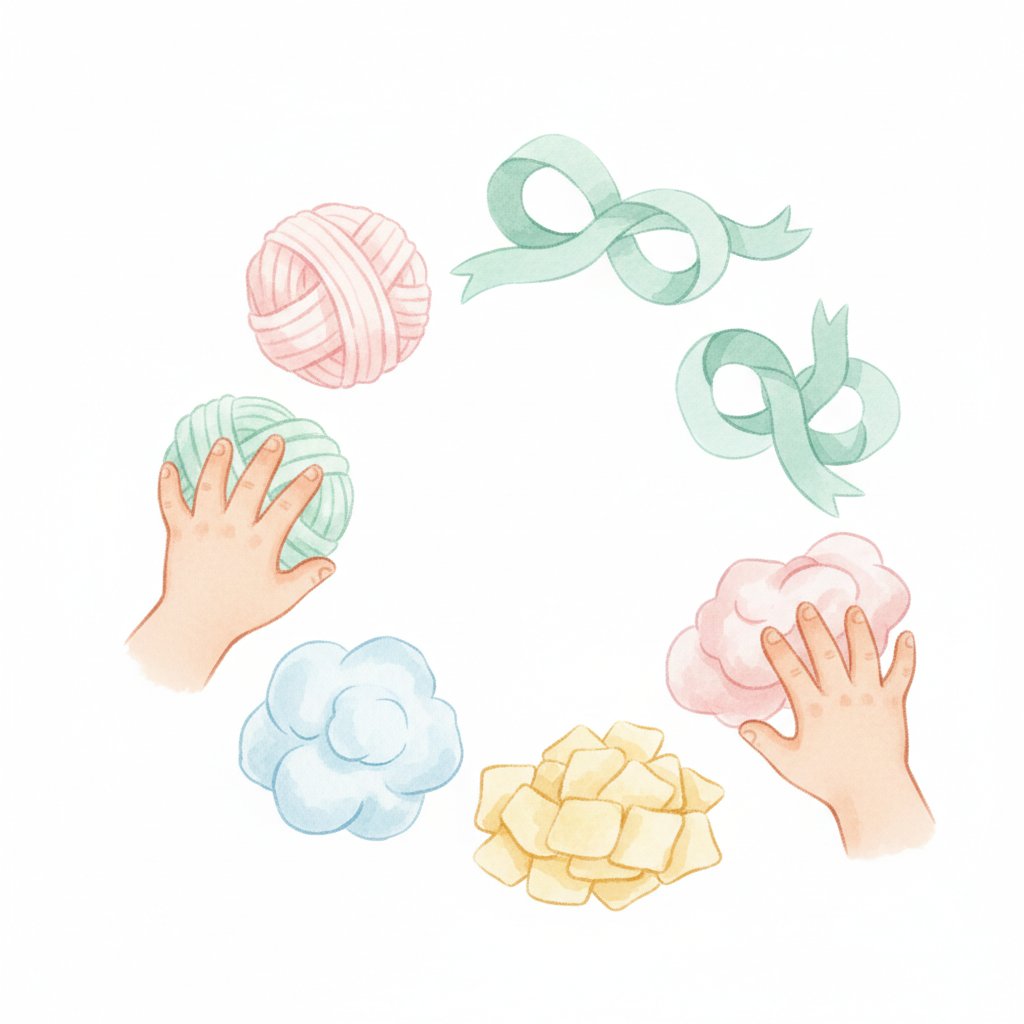
The American Academy of Pediatrics recognizes sensory play as essential for early development. It supports language growth, fine motor strength, problem-solving, and emotional regulation.
Why Sensory Play Matters
Brain Development
Every sensory experience creates neural connections. The more varied the experiences, the stronger the brain networks. Sensory play in the first five years builds the foundation for all future learning.
Language Development
Children learn new words through hands-on experience. "Slimy," "rough," "cold," "gritty" — these abstract concepts become real when a child touches slime, sandpaper, ice, or sand. See our language development activities for more vocabulary strategies.
Fine Motor Skills
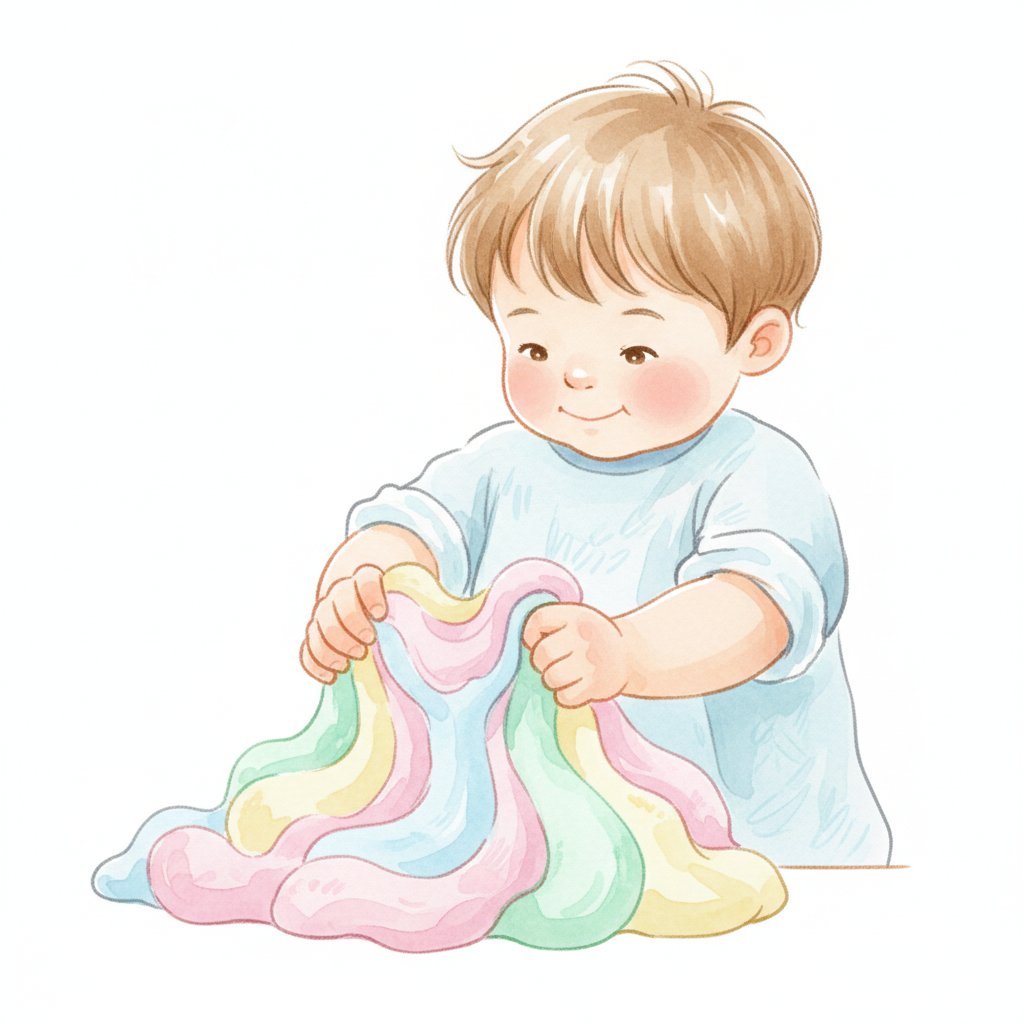
Scooping, pouring, squeezing, pinching, and stirring all strengthen hand muscles. These same muscles will hold a pencil for handwriting readiness later.
Emotional Regulation
Sensory play is calming. The repetitive motions (scooping, pouring, squishing) soothe the nervous system. Many occupational therapists use sensory activities to help children with self-regulation.
For more on how sensory experiences support school readiness, see our kindergarten readiness checklist for parents.
15 Sensory Activities by Age
Ages 1-2: Simple Exploration
1. Water Pouring Station
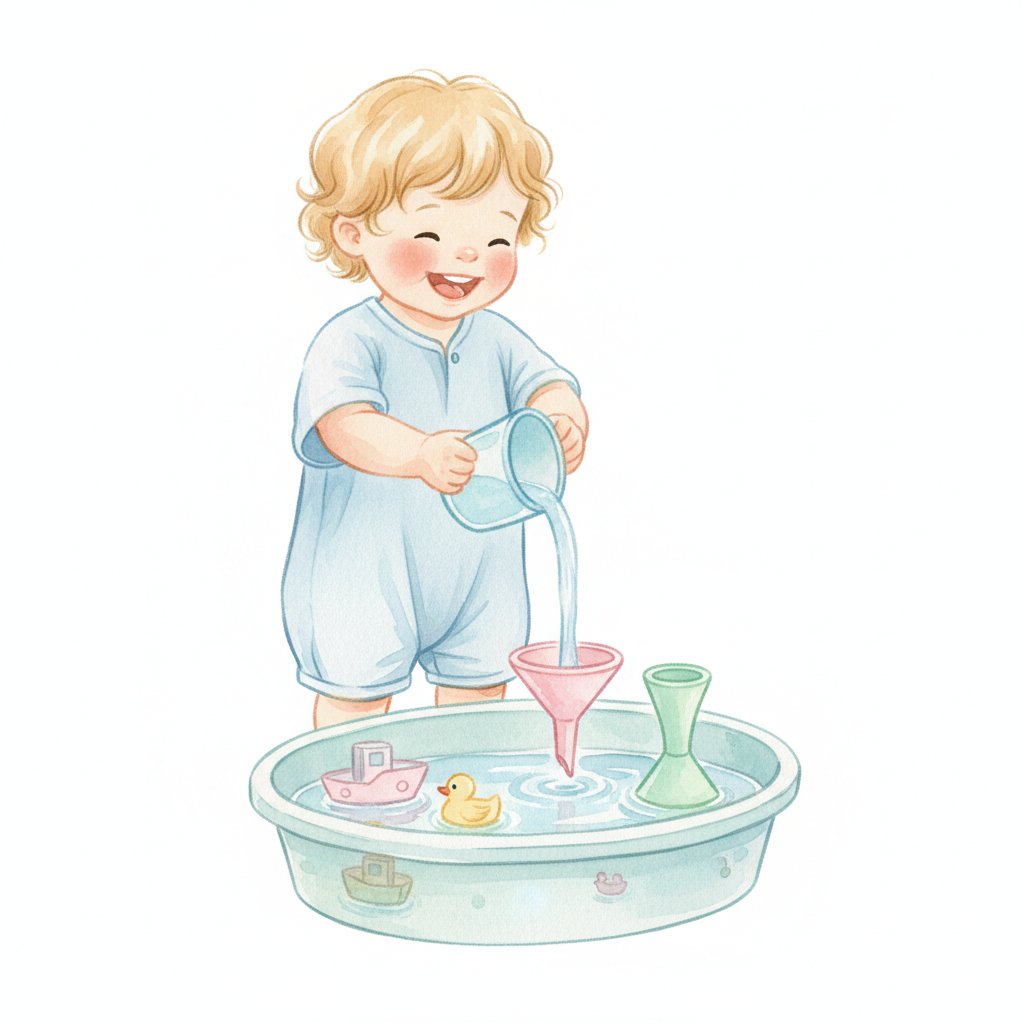
Set out cups, funnels, and containers of different sizes in a shallow bin. Your toddler pours water from one container to another. Add food coloring for visual interest.
Skills: Hand-eye coordination, cause and effect, volume concepts.
2. Texture Board
Glue different textures to a piece of cardboard: sandpaper, velvet, bubble wrap, corduroy, corrugated cardboard. Your child explores each texture with their fingers.
Skills: Tactile discrimination, vocabulary (smooth, rough, bumpy, soft).
3. Edible Finger Paint
Mix yogurt with food coloring. Spread on a highchair tray or paper. Safe for tasting and easy to clean up.
Skills: Sensory exploration, fine motor, color recognition.
Ages 2-3: Purposeful Play
4. Sensory Rice Bin
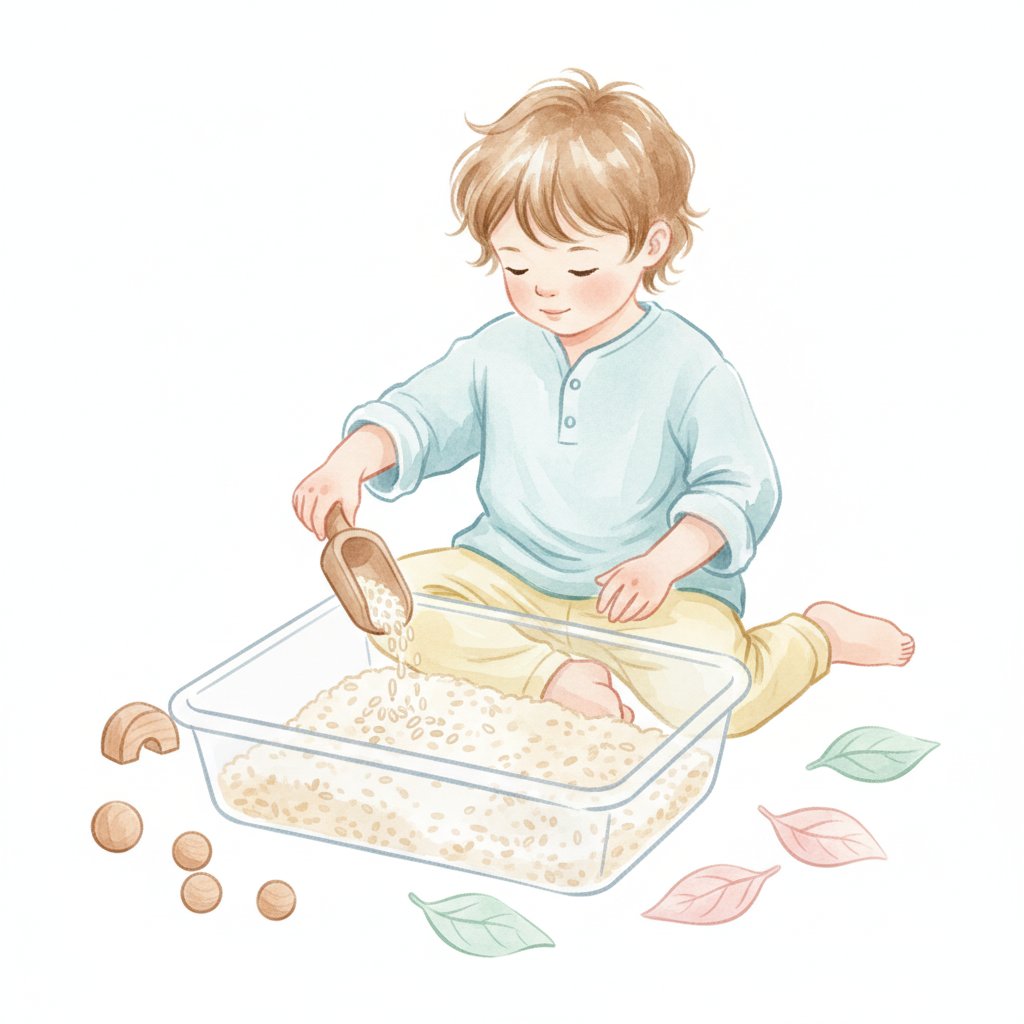
Fill a bin with colored rice (mix uncooked rice with food coloring and a drop of vinegar, let dry). Add scoops, cups, and small toys. Your child scoops, pours, and hides objects.
Skills: Fine motor, imaginative play, counting practice.
5. Playdough Exploration
Homemade or store-bought playdough with cookie cutters, rolling pins, and plastic knives. Add shape flashcards — your child cuts matching shapes.
Skills: Hand strength, shape recognition, creative expression.
6. Sound Shakers
Fill small containers with different materials: rice, beans, bells, sand, coins. Seal tightly. Your child shakes each one and describes the sound. Sort by loud/quiet.
Skills: Auditory discrimination, comparing, vocabulary.
7. Sticky Contact Paper Wall
Tape contact paper (sticky side out) to a wall. Your child sticks cotton balls, feathers, tissue paper squares, and pom-poms to it. Peel and restick.
Skills: Pincer grasp, spatial awareness, fine motor development.
Ages 3-4: Structured Activities
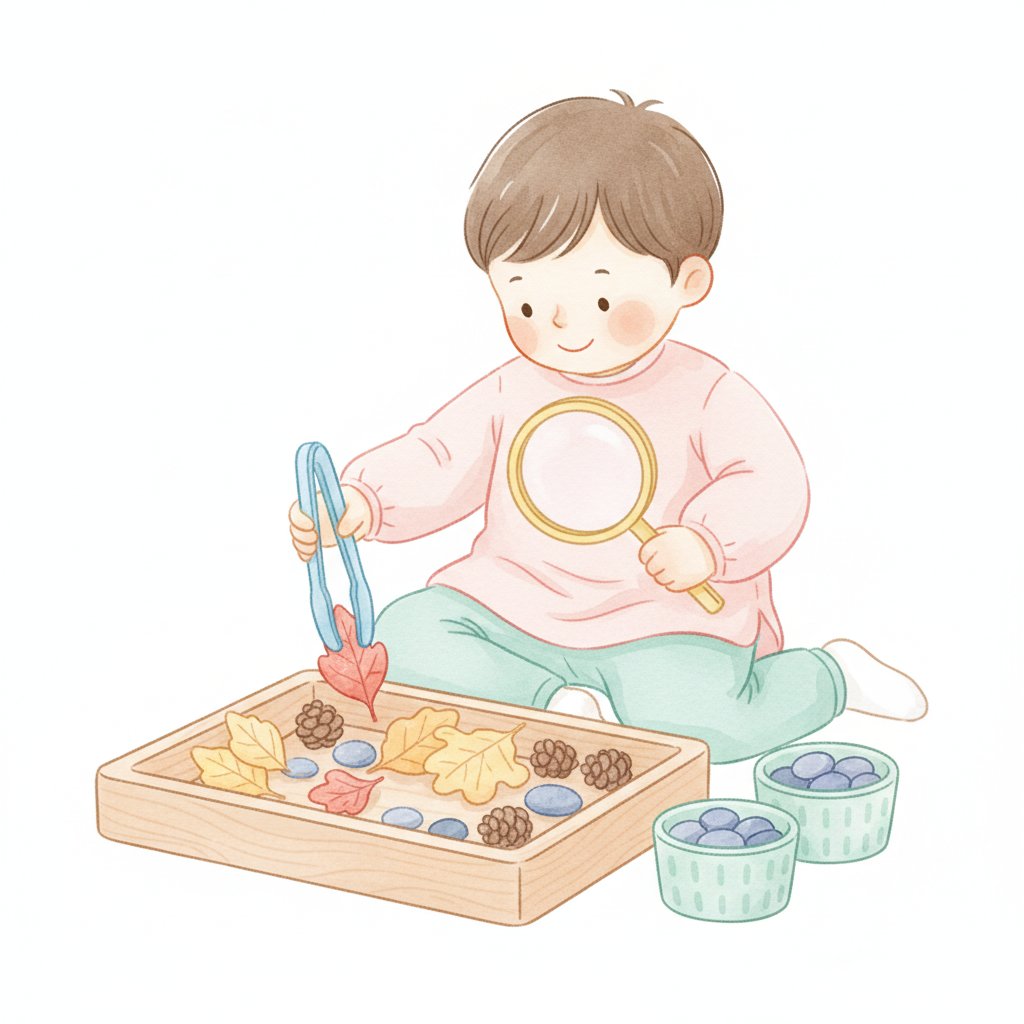
8. Nature Sensory Bin
Fill a bin with natural materials: leaves, pinecones, twigs, pebbles, flowers. Add magnifying glasses and tweezers. Sort by texture (smooth, rough, soft, hard).
Skills: Scientific observation, categorization, vocabulary. See nature flashcards for nature vocabulary.
9. Alphabet Sensory Hunt
Hide magnetic or foam letters in a sensory bin (rice, beans, or sand). Your child finds each letter and matches it to alphabet flashcards. Name the letter and its sound.
Skills: Letter recognition, phonemic awareness, tactile learning.
10. Scented Playdough
Add extracts to homemade playdough: vanilla, lemon, peppermint, cinnamon. Your child plays and identifies each scent. Connect scents to emotions — "Lemon makes me feel fresh and awake!" Pair with emotion flashcards.
Skills: Olfactory discrimination, emotional vocabulary, fine motor.
11. Foam Block Building
Soft foam blocks in a water table or bathtub. Blocks stick together when wet. Build towers and structures that require steady hands.
Skills: Balance, planning, spatial reasoning, hand strength.
Ages 4-5: Skill-Building
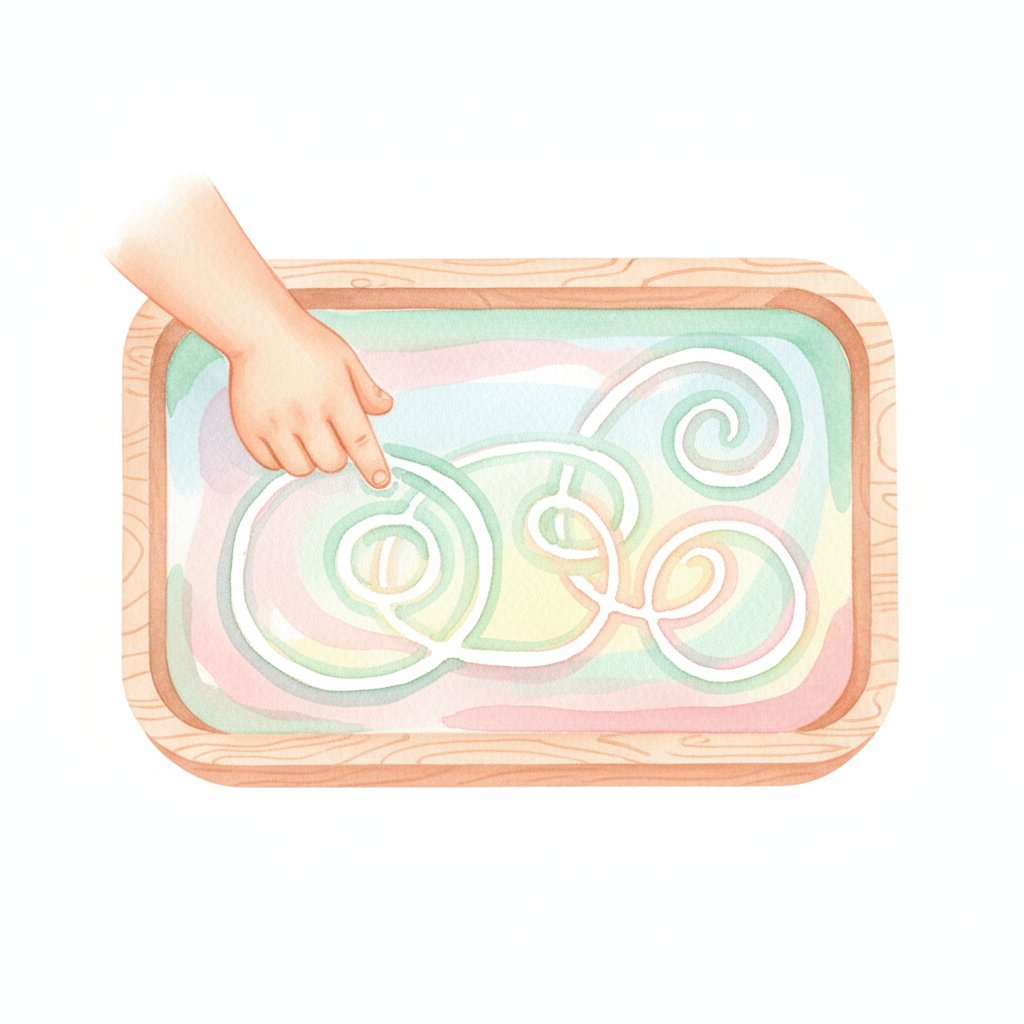
12. Writing Tray with Salt or Sand
Pour a thin layer of salt or sand into a tray. Your child writes letters, numbers, or sight words with their finger. Shake to erase and try again.
Skills: Pre-writing practice, letter formation, handwriting readiness.
13. Sorting Station
Set up 4-5 bowls with different materials to sort: buttons by color, beads by size, beans by type, pasta by shape. Use tweezers or tongs for extra fine motor challenge.
Skills: Categorization, counting, fine motor, math readiness.
14. Ice Excavation
Freeze small plastic toys in a block of ice. Your child uses warm water, salt, and droppers to "rescue" the toys. Discuss states of matter (solid/liquid).
Skills: Scientific inquiry, patience, fine motor (droppers), problem-solving.
15. Sound Matching Game
Fill pairs of containers with identical materials (two with rice, two with bells, two with sand). Your child shakes each and finds the matching pairs by sound alone.
Skills: Auditory memory, concentration, turn-taking.
Sensory Bin Fillers (Safe and Easy)
| Filler | Best Ages | Notes |
|---|---|---|
| Water | 1+ | Always supervise |
| Cooked pasta | 1+ | Use same day |
| Rice (colored) | 2+ | Non-toxic |
| Dried beans | 2+ | Supervise (choking) |
| Sand | 2+ | Outside or contained |
| Kinetic sand | 3+ | Less messy |
| Shredded paper | 2+ | Easy cleanup |
| Water beads | 4+ | Supervise closely |
| Cloud dough | 2+ | Flour + oil |
Sensory Play for Different Needs
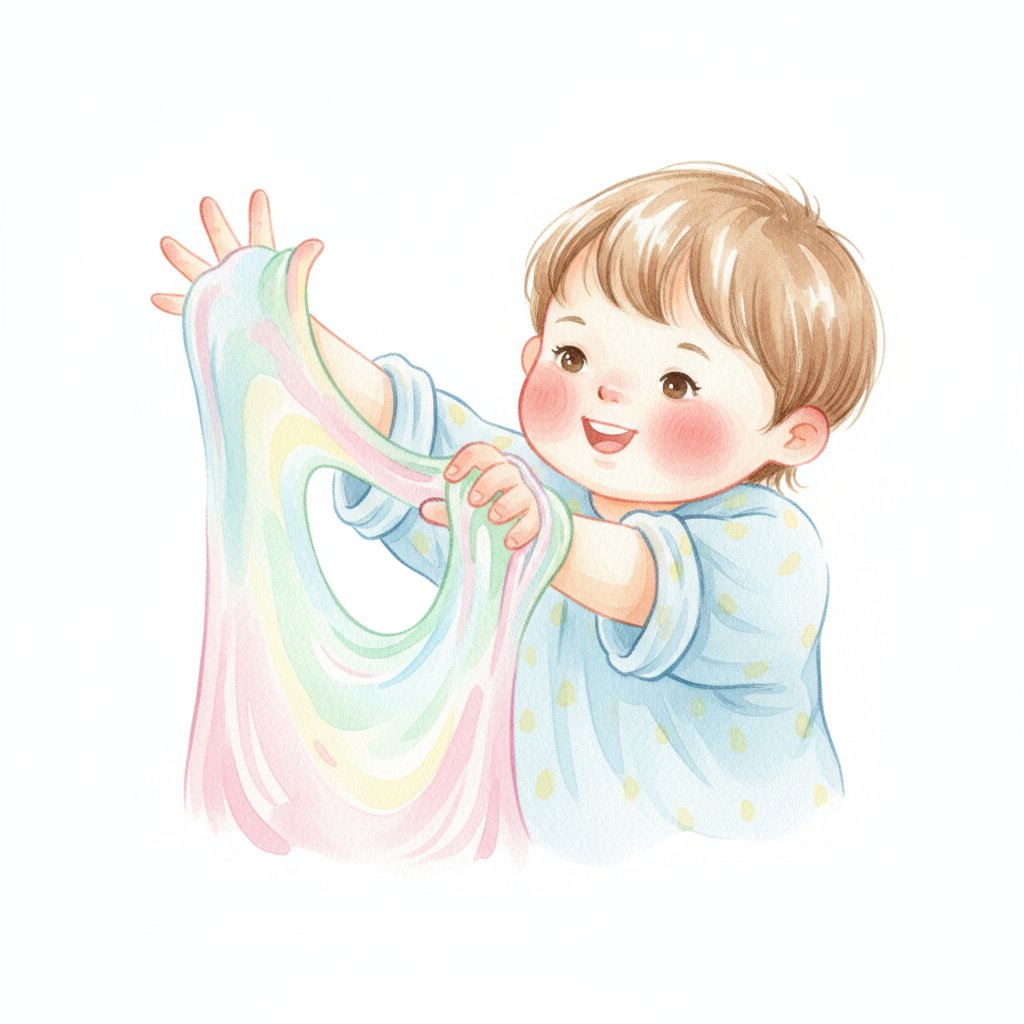
For sensory-seeking children (who love messy, active play):
- Use more intense textures (shaving cream, slime, water beads)
- Add weight (heavy blankets during play, weighted stuffed animals)
- Allow bigger movements (jumping into a ball pit, crashing into pillows)
For sensory-avoidant children (who resist messy textures):
- Start dry (rice, sand) before introducing wet (shaving cream, water)
- Offer tools (scoops, tweezers) so hands don't need to touch directly
- Respect "no" — never force sensory engagement
- See our self-regulation strategies for supporting sensitive children
Sensory Play Schedule
You don't need elaborate setups every day. Here's a realistic approach:
- Daily: 10-15 minutes of free sensory play (playdough, water table, sandbox)
- Weekly: One structured sensory activity from the lists above
- Seasonal: Rotate materials — see seasonal learning activities for themed sensory bins
Looking for learning tools? Our Monster Feelings Flashcards support emotional development — and handling cards provides tactile, sensory-rich learning between sensory play sessions.
More learning & activity guides:
- Fine Motor Skills Activities
- Handwriting Readiness for Kindergarten
- Scissor Skills Activities
- Language Development Activities
- Printable Flashcards for Kids
- Alphabet Flashcards for Preschool
- Shape Flashcards for Kids
- Counting Activities for Preschoolers
- Self-Regulation Strategies for Kids