Articles9 min read

Sorting Activities for Preschoolers: 20+ Categorizing Games That Build Math and Science Thinking

Practical sorting activities for preschoolers you can set up in under ten minutes using supplies already in your classroom. Covers individual exploration, small-group collaboration, and whole-class engagement — with adaptations for different ability levels.

Child sorting colorful objects by color into groups

My Son Sorted His Snacks by Color Before Eating Them

Goldfish crackers, grapes, and strawberry halves sat on the plate. Before taking a single bite, my three-year-old pushed them into three neat groups: "Orange ones, green ones, red ones." Then he ate them in order — orange first, then green, then red. When I asked why, he said: "Because that's how they go."

He didn't know it, but he was doing exactly what scientists do: observing, categorizing, and finding patterns. Sorting is one of the earliest mathematical thinking skills, and it's also one of the most natural. Children sort constantly — by color, size, shape, texture, type — without being taught. The goal isn't to teach sorting from scratch but to give children richer, more varied sorting experiences that stretch their categorizing muscles.
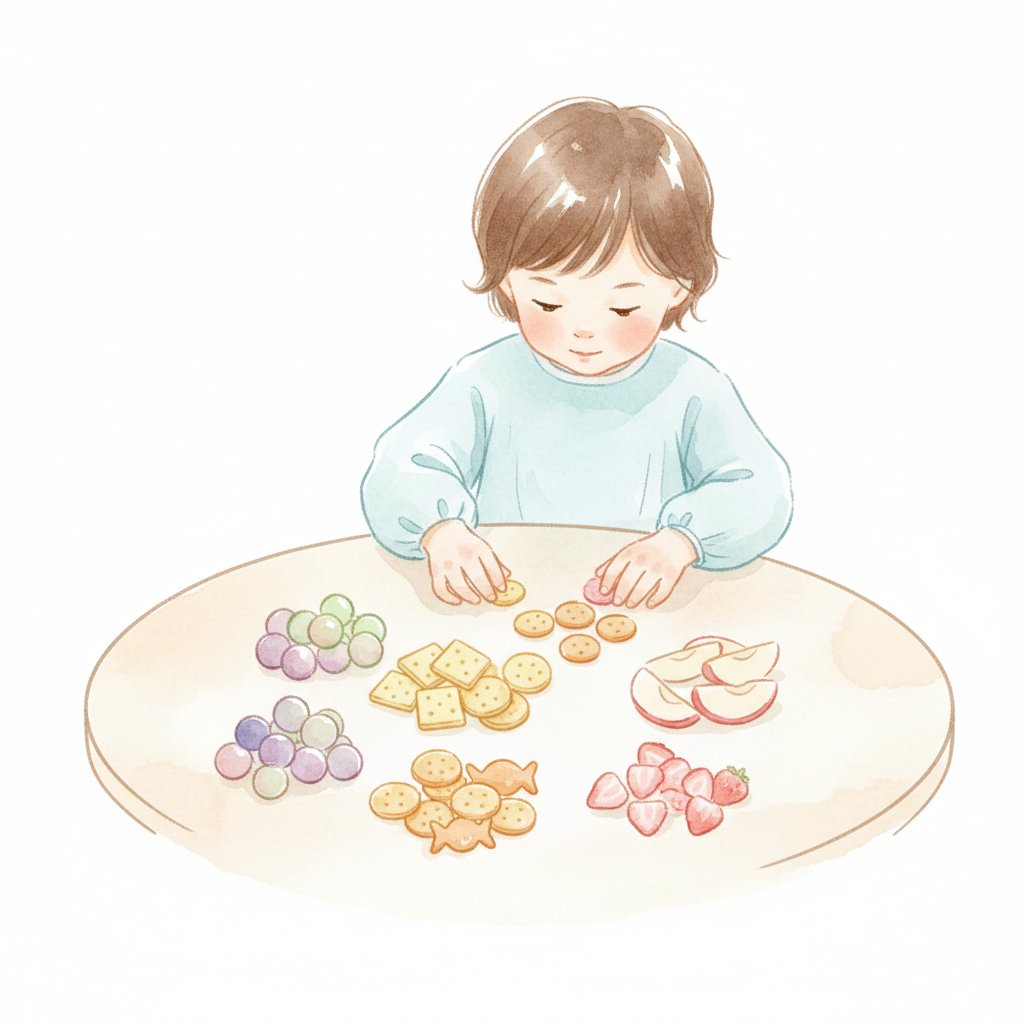
Child grouping colorful snacks by color before eating

The National Council of Teachers of Mathematics identifies classification and sorting as foundational math skills that support number sense, pattern recognition, data analysis, and logical thinking. Children who sort fluently at age 4 are better at algebraic thinking at age 8 — the connection is that direct.

This guide covers 20+ sorting activities for ages 2-6, from simple color sorting for toddlers to multi-attribute classification for pre-K. Pair it with our color activities guide — colors are the most common sorting attribute — and our shape activities for geometry-focused sorting.
Sort by animal, habitat, or number of legs — one deck, three activities
Our Farm Animals Flashcards are perfect for category sorting: farm animals vs. wild animals, animals with four legs vs. two legs, animals that lay eggs vs. animals that don't. One deck supports 5+ different sorting rules — and children can invent their own.

Why Sorting Matters (More Than You Think)

Sorting isn't just "putting things in piles." It's the foundation of three critical thinking skills:

1. Categorization — understanding that objects share properties and can be grouped. This is the basis of all scientific classification (living/non-living, mammal/reptile, solid/liquid/gas) and all mathematical thinking (odd/even, greater/less, 2D/3D).

2. Attribute recognition — identifying specific properties: color, shape, size, texture, function, quantity. Children who can name attributes can describe, compare, and analyze — the three core science skills.

3. Logical reasoning — understanding that a single object belongs to multiple categories simultaneously. A red apple is red AND round AND a fruit AND a food. Multi-attribute thinking is the precursor to database queries, Venn diagrams, and algebraic sets.

AgeSorting MilestoneWhat to Try
2-3Sort by one attribute (usually color) with guidanceColor sorting, big/small, hard/soft
3-4Sort independently by one attribute, attempt twoShape sorting, category sorting (animals, food)
4-5Sort by two attributes simultaneously ("red AND round")Multi-attribute sorting, Venn diagrams
5-6Create own sorting rules, explain reasoningOpen-ended classification, three-attribute sorts
Weather sorting: sunny, cloudy, rainy, snowy — and everything between
Our Weather Flashcards let children sort weather conditions multiple ways: by season, by temperature (hot/cold), by what you wear, or by whether you stay inside or go outside. The 12-card set covers enough variety for real categorization thinking.

Color Sorting Activities (Ages 2+)

1. Rainbow Scavenger Hunt

Children on a rainbow color scavenger hunt

Call out a color: "Find something red!" Children race around the room (or house, or yard) collecting items of that color. Bring them back and sort into a "red pile." Repeat for each rainbow color. The urgency of the hunt keeps toddlers engaged; the sorting at the end reinforces categorization.

Materials: None (use whatever's in the room)
Time: 10 minutes

2. Color Sorting with Snacks

Give children a mix of colored snacks: Goldfish (orange), grapes (green), berries (red/blue), corn (yellow). Sort by color onto a divided plate before eating. The motivation to eat ensures focus.

Materials: Assorted colored snacks, divided plate
Time: 5-10 minutes

3. Construction Paper Color Sort

Cut construction paper into squares (red, blue, yellow, green, orange, purple). Give children a mixed pile and ask them to sort into same-color groups. For toddlers, start with just 3 colors. For older children, add shades: "Is this light blue or dark blue?"

Materials: Colored paper squares
Time: 5-10 minutes

{% product-block %}
Our Color Monster Matching Game turns color sorting into a character-driven activity. Each monster represents a color — children match objects (or flashcards) to the correct monster. The friendly characters give color sorting a narrative element that keeps children engaged longer than plain color chips.
{% end-product-block %}

Emotion sorting: group feelings by energy level
Our Feelings Poster Set supports emotion sorting: high-energy feelings (excited, angry, surprised) vs. low-energy feelings (calm, sad, tired). Or sort by comfortable vs. uncomfortable. Children build emotional vocabulary while practicing classification skills.

Shape and Size Sorting (Ages 3+)

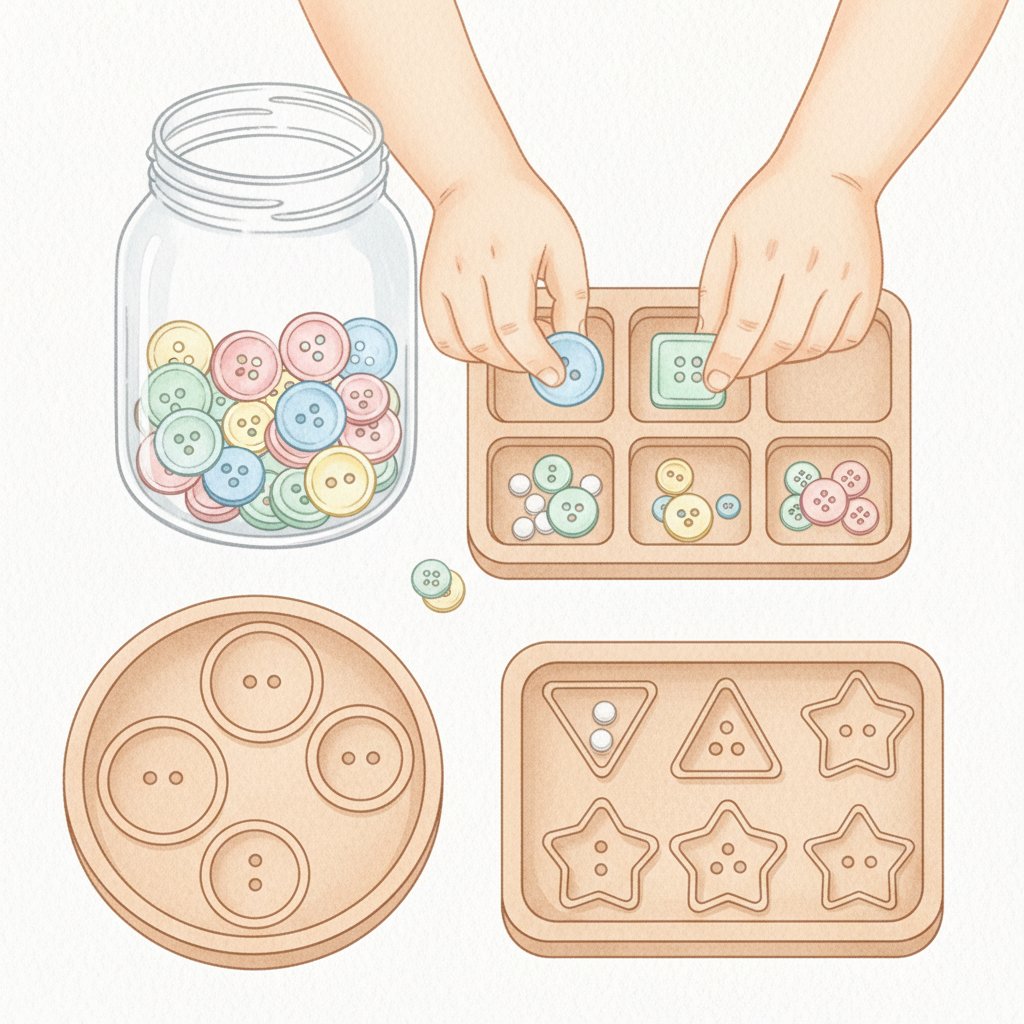
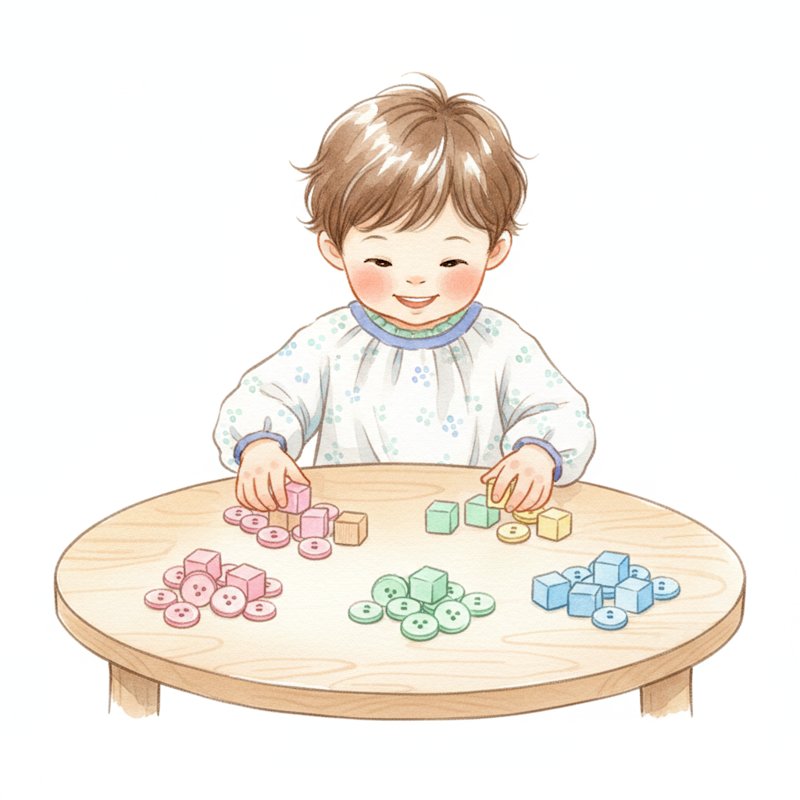
Child sorting mixed buttons into trays by size and shape

4. Button Sort

A jar of mixed buttons is one of the best sorting materials ever invented. Children can sort by:

  • Color (red buttons, blue buttons, white buttons)
  • Size (tiny, medium, large)
  • Shape (round, square, oval)
  • Number of holes (2 holes, 4 holes)
  • Texture (shiny, matte, ridged)

Each round uses a different attribute. One jar, infinite sorting.

Materials: Jar of assorted buttons, sorting trays
Time: 10-15 minutes

5. Nature Walk Sort

Collect items on a nature walk: leaves, rocks, sticks, acorns, flowers, pinecones. Back inside, sort them. But into what? Let the child decide the categories. "I'm sorting by pointy and round!" "I'm sorting by where I found them!" When children invent their own categories, they're doing real science.

Materials: Nature collection, sorting trays
Time: 10 minutes outside, 10 minutes sorting

6. Big, Medium, Small Sort

Gather objects in three sizes: big/medium/small teddy bears, big/medium/small blocks, big/medium/small bowls. Children sort into three groups. Then challenge them: "Can you find something BIGGER than the big bear?" Comparative language (bigger, smaller, biggest, smallest) develops alongside size sorting.

Materials: Objects in three sizes
Time: 5-10 minutes

For more shape activities, see our shape activities for preschoolers.

Category Sorting (Ages 3+)

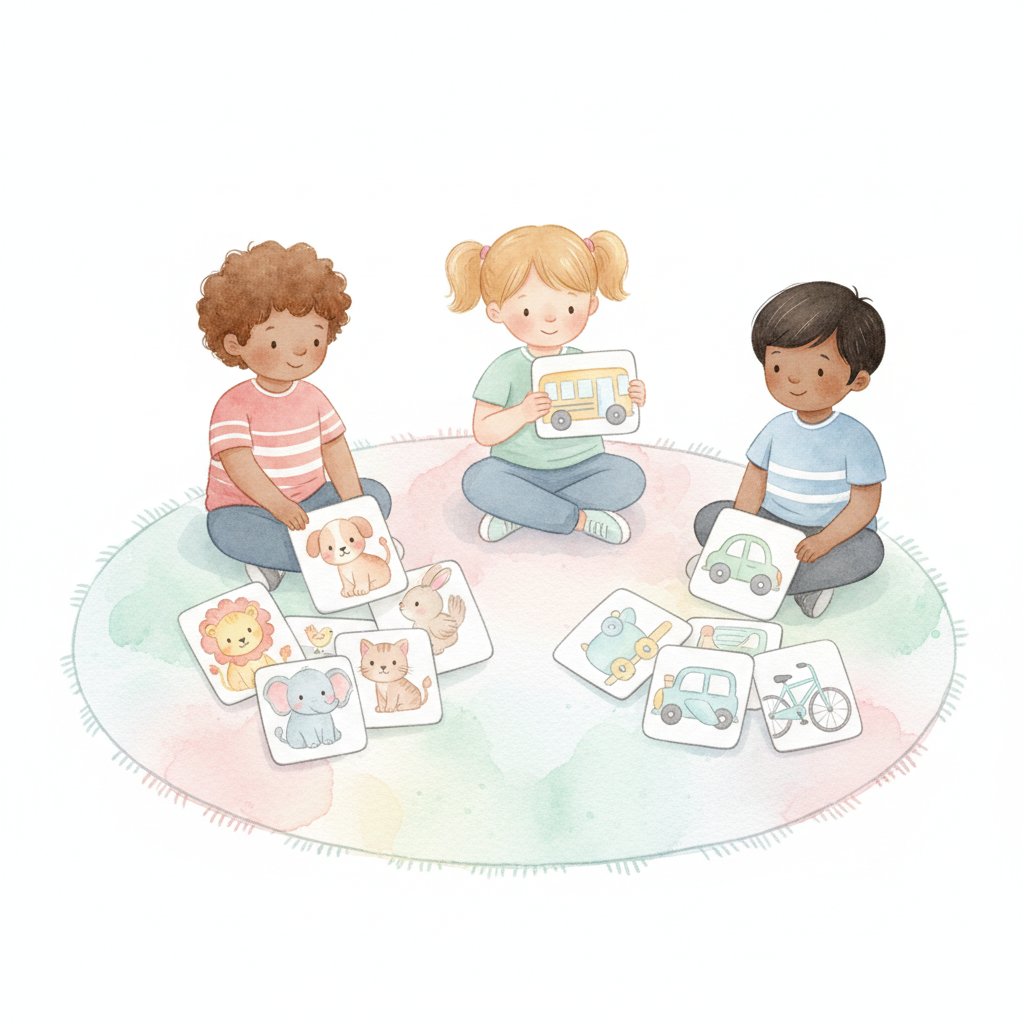
Children sorting picture cards into animal and vehicle categories

7. Animals vs. Not Animals

Using flashcards or magazine pictures, children sort into "animals" and "not animals." Simple on the surface, but it forces categorical thinking: "Is a bug an animal? Is a fish an animal? What about a dinosaur?" These questions are real biological classification problems disguised as a preschool game.

Materials: Picture cards or flashcards
Time: 5-10 minutes

8. Food Group Sort

Gather play food (or food flashcards). Sort into: fruits, vegetables, grains, proteins, dairy. Children learn food categories while building nutrition awareness. Extend: "Which foods grow on trees? Which come from animals?"

Materials: Play food or food flashcards
Time: 10 minutes

9. Things That Go Sort

Using vehicle flashcards or toys, sort by: land/water/air, or by size, or by number of wheels, or by "vehicles I've ridden in" vs. "vehicles I haven't." Multiple sorting criteria from one set of materials.

Materials: Vehicle flashcards or toys
Time: 10 minutes

10. Living vs. Non-Living

Sort picture cards into living things (dog, tree, person, fish) and non-living things (rock, car, cup, ball). The discussion at the boundary is where the real learning happens: "Is a seed living? Is a leaf living after it falls off the tree?"

Materials: Picture cards
Time: 10 minutes

For related classification practice, see our vocabulary activities guide — categorization and vocabulary develop together.

Multi-Attribute and Advanced Sorting (Ages 4+)

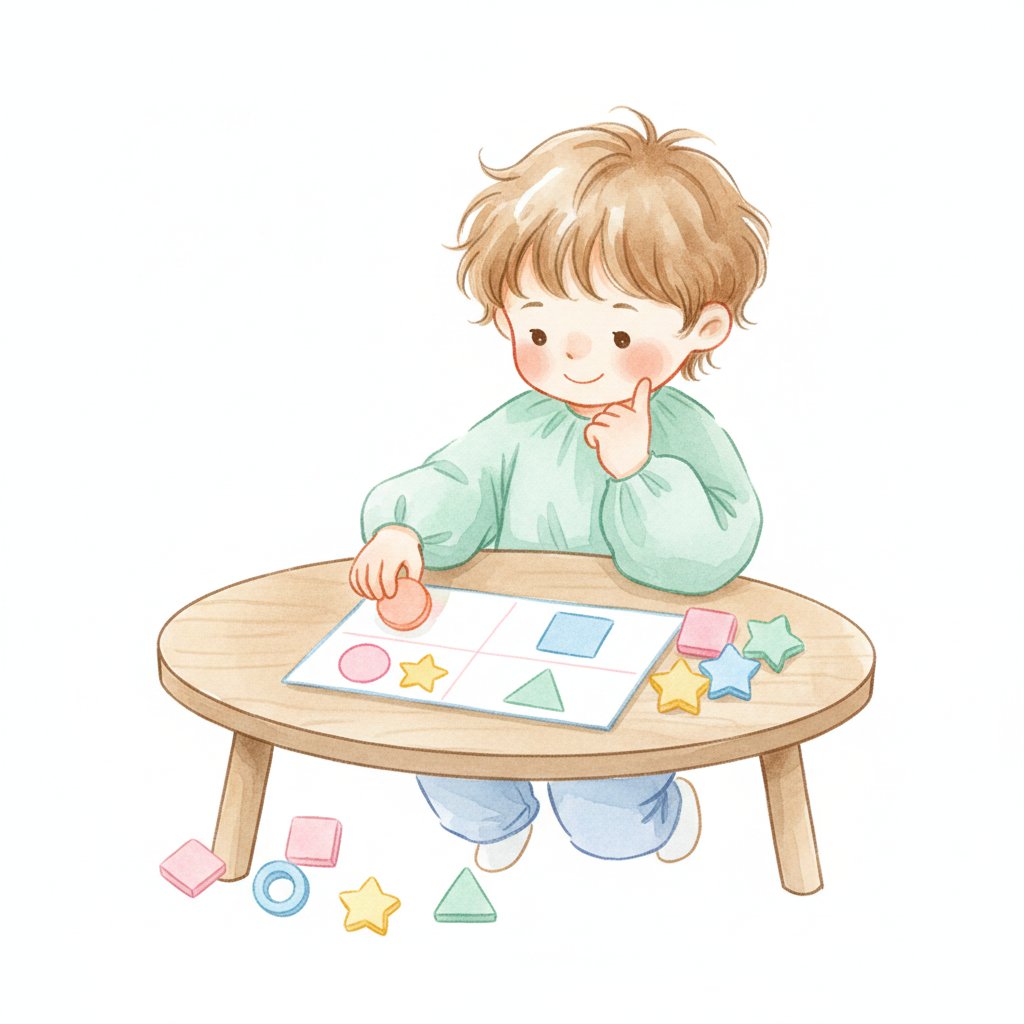
Child sorting shapes by two attributes on a chart

11. The Double Sort

Sort by two attributes at once. "Find everything that is RED and ROUND." Use a two-column chart:

Red + RoundRed + Not RoundNot Red + RoundNot Red + Not Round
Red ballRed squareBlue ballBlue block

This is a real Venn diagram in action. Children as young as 4 can handle it with physical objects.

Materials: Colored objects in multiple shapes
Time: 10 minutes

12. "Sort It Your Way"

Dump out a box of mixed objects (buttons, beads, blocks, shells, coins). Say: "Sort these any way you want. When you're done, tell me your rule." Children invent categories you'd never think of: "I sorted by which ones I like and which ones I don't" or "I sorted by how smooth they are." Open-ended sorting reveals how children think.

Materials: Mixed small objects
Time: 10-15 minutes

13. Attribute Train

Place one object down. The next object must share one attribute with it: same color, same shape, same size, or same material. Build a chain: red circle → red square (same color) → blue square (same shape) → blue triangle (same color). If you can't play, you draw from the pile. Works like Uno for attributes.

Materials: Attribute blocks or colored shape tiles
Time: 10-15 minutes

14. Mystery Sort

The teacher sorts objects into two groups silently while children watch. Children must figure out the sorting rule. "All the smooth ones are here, all the rough ones are here! The rule is texture!" Reverse roles — children sort, adults guess.

Materials: Mixed objects with varied attributes
Time: 10 minutes

For more advanced math, see our pattern blocks activities guide and number recognition activities.

Tips for Sorting Activities

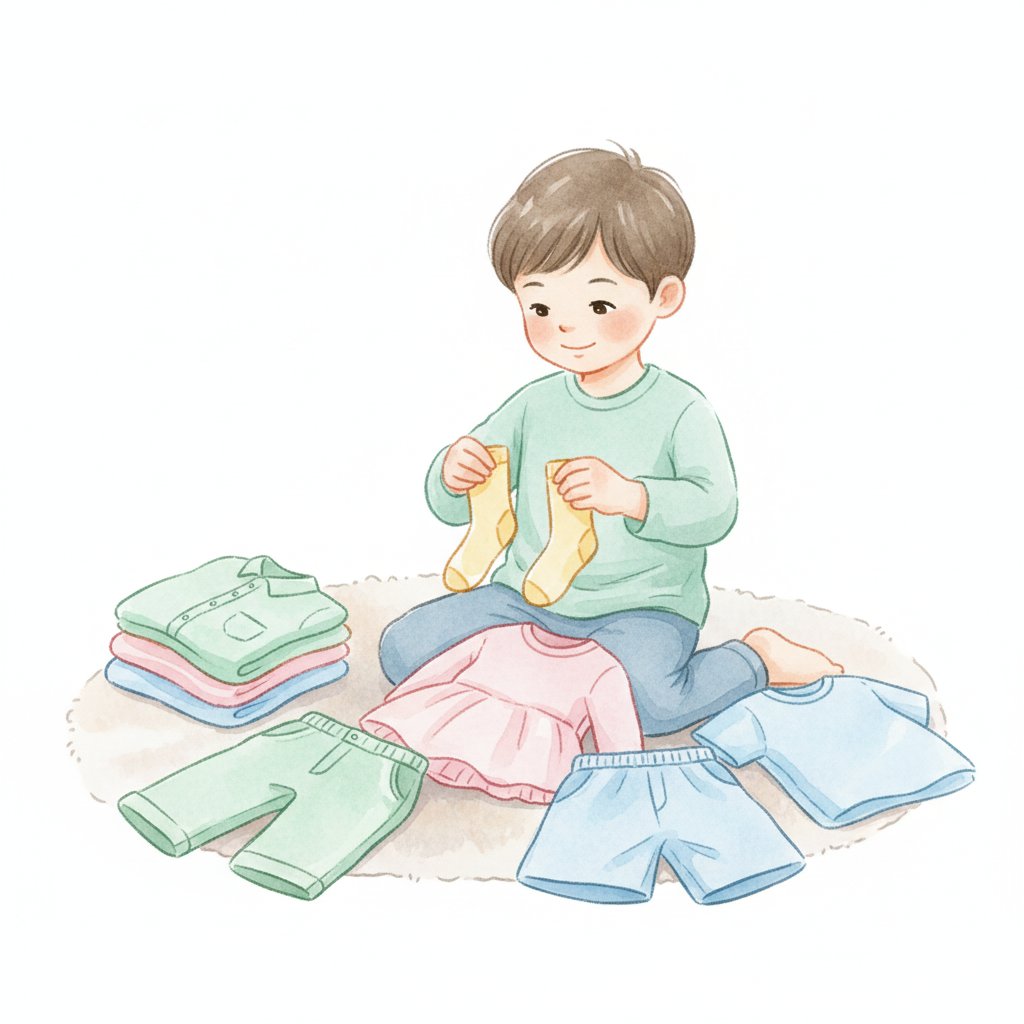
Child sorting laundry into piles by color at home

For Parents

You already have everything you need. The best sorting materials are already in your house: laundry (sort by color, owner, or clothing type), silverware (sort forks, knives, spoons), groceries (sort by fridge/pantry/freezer), books (sort by size, color, or topic). Sorting doesn't require special materials — just the habit of noticing attributes.

** narrate the sorting: "I'm putting all the red socks together because they match. The blue ones go in this pile." Your narration teaches attribute vocabulary in context.

For Classroom Teachers

Sorting across the curriculum:

  • Math: Sort by number (groups of 2, 3, 4, 5), by shape, by size
  • Science: Sort by living/non-living, sink/float, magnetic/non-magnetic
  • Literacy: Sort by beginning sound, number of syllables, real vs. nonsense words
  • Art: Sort by color family, warm/cool colors, texture
  • Social studies: Sort by community helper, neighborhood location, past/present

The sorting center: Keep a permanent sorting station in your classroom with a tray of mixed materials and sorting mats. Change the materials weekly: buttons, shells, beads, blocks, coins, seeds, pasta shapes. Children return to it independently because sorting is inherently satisfying.

For more classroom ideas, see our classroom organization printables and classroom decor ideas.

Frequently Asked Questions

At what age should children start sorting?

Children naturally start grouping similar objects around 18-24 months (putting all the cars together, all the blocks together). Guided sorting activities can begin at age 2 with simple one-attribute sorting (color). Multi-attribute sorting develops around age 4-5.

What if my child sorts "wrong"?

There's almost always no wrong way to sort — just different rules. If a child puts a red triangle with the red circles instead of the blue triangle, ask: "What's your rule?" They might say "I'm sorting by color!" which is correct. If they can explain their reasoning, it's valid.

How is sorting related to math?

Sorting teaches set theory (the mathematical study of collections), one-to-one correspondence (each item goes in exactly one group), attribute recognition (properties of objects), and logical reasoning (if A is in this group, then A has property X). These are all foundational math concepts that support counting, operations, and algebraic thinking.

How do I challenge a child who's already good at sorting?

Try:

  • Multi-attribute sorting (sort by color AND shape simultaneously)
  • Fuzzy boundaries (items that could go in either group)
  • Creating their own sorting rules and explaining them
  • Sorting with abstract attributes (living/non-living, real/pretend, heavy/light)

For more preschool learning, explore our STEM activities and counting activities.