Tips for Parents and Teachers
The Daily Routine Anchor
The single most important thing you can do is make days of the week part of a daily routine. Children who hear "Today is [day]" every single morning learn the sequence 3-4x faster than children who practice once a week. Two minutes of daily repetition beats thirty minutes of weekly practice.
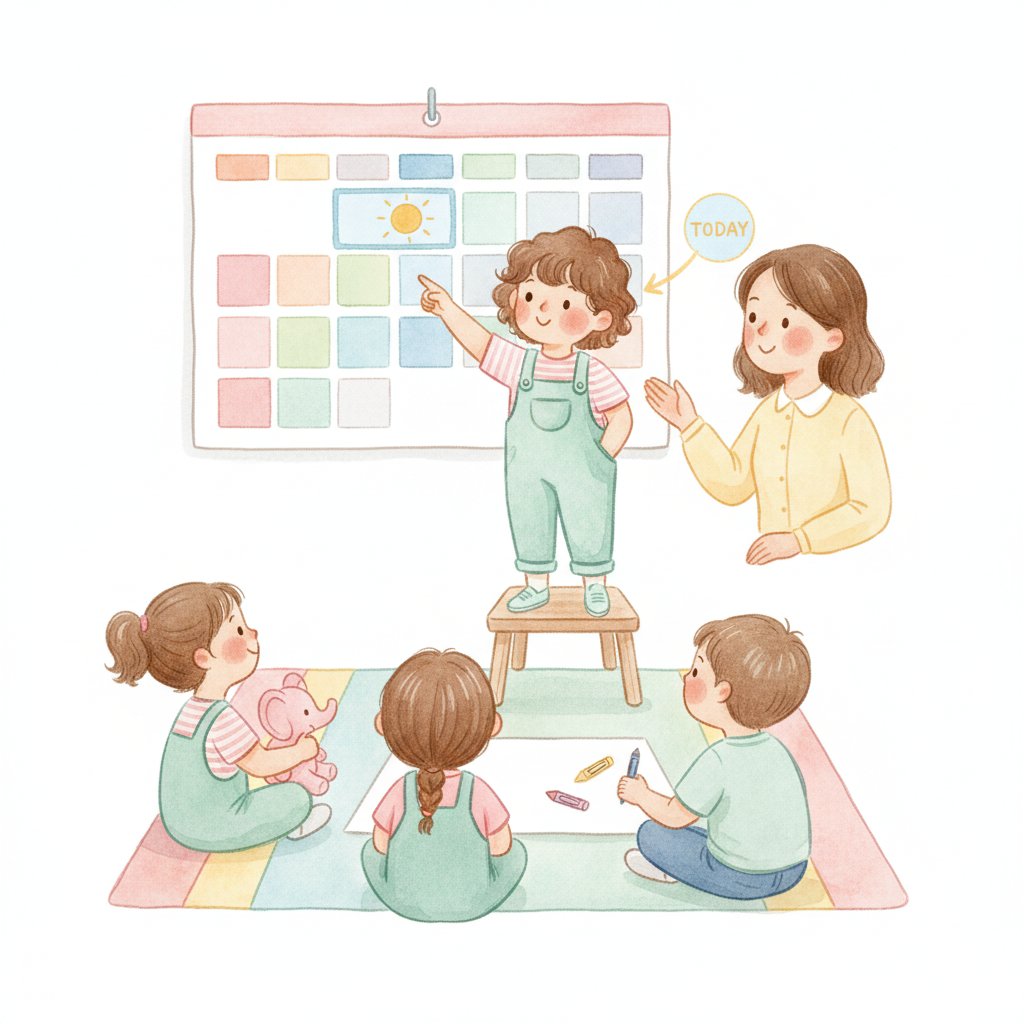
Best times for calendar check-in:
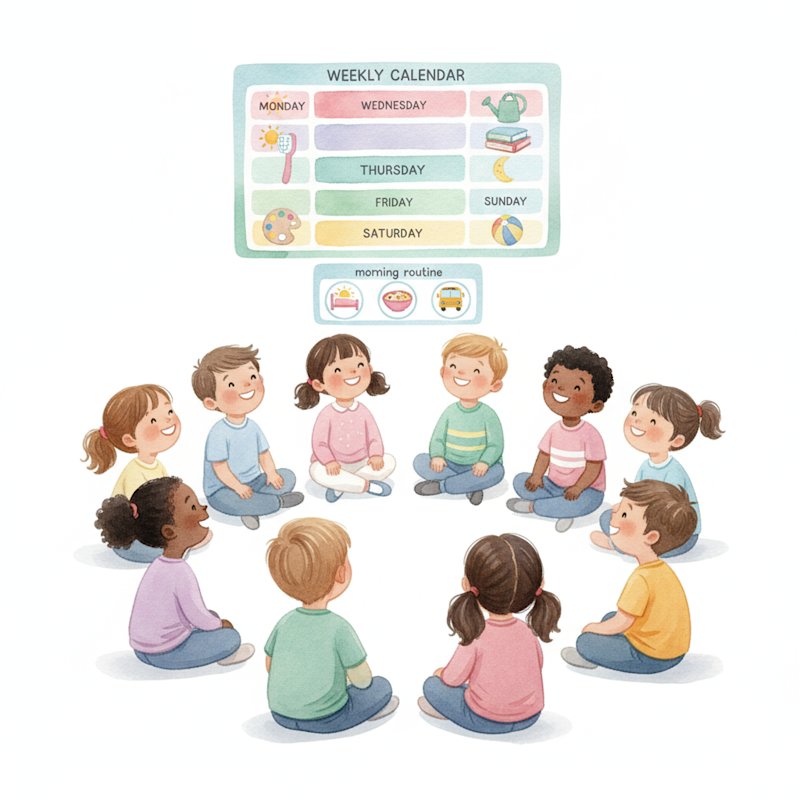
- Morning circle time (classrooms)
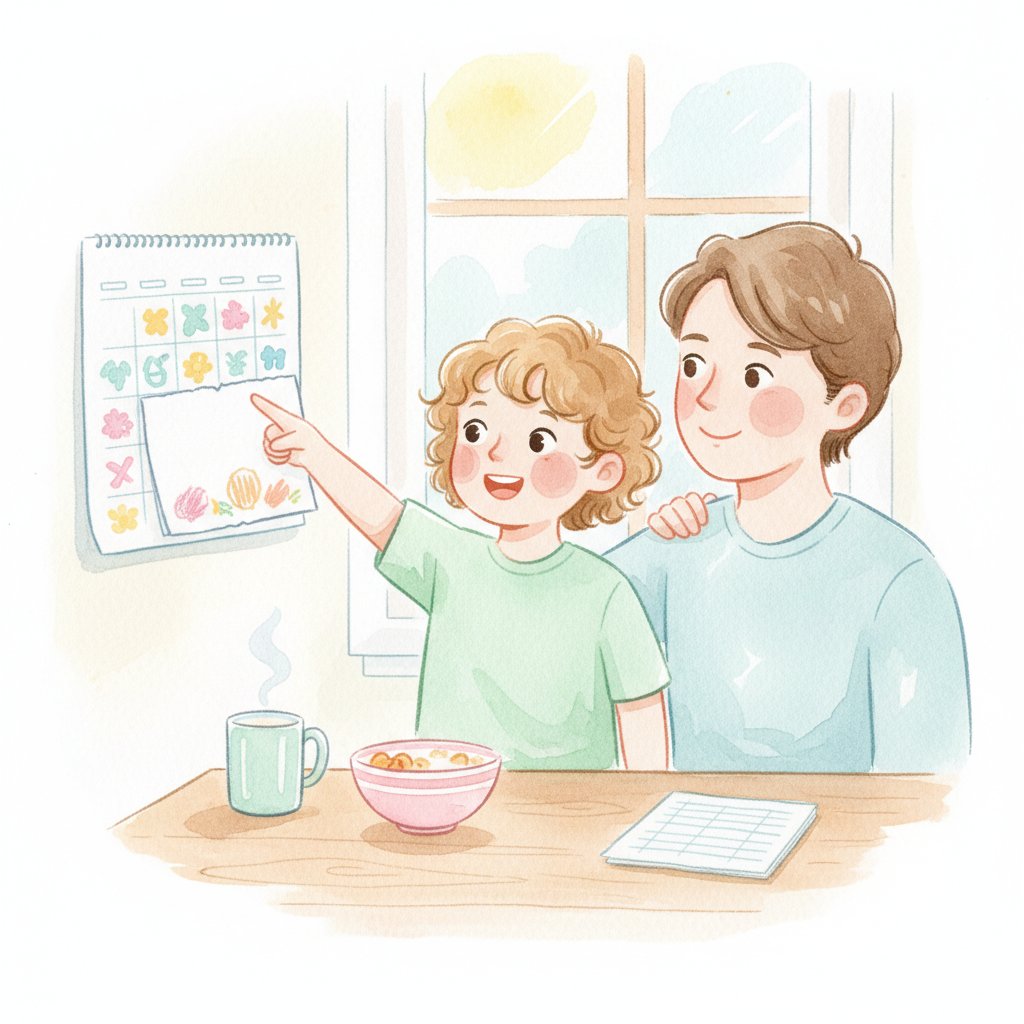
- Breakfast (home)
- Bedtime ("What day was today? What day is tomorrow?")
- Transition moments ("On Thursday we go to the library. Today is Wednesday, so library is tomorrow!")
Connecting Days to Events
Abstract day names become concrete when each day has a "thing":
- Music Monday — listen to a new song
- Taco Tuesday — tacos for dinner
- Wacky Wednesday — wear mismatched socks
- Thinking Thursday — ask a big question
- Fun Friday — movie night or special treat
- Saturday — park or playground
- Sunday — family breakfast or quiet time
When children can predict what happens on each day, the names gain meaning.
For Classroom Teachers
Calendar Time Best Practices:
- Do it at the same time every day — consistency is the entire mechanism
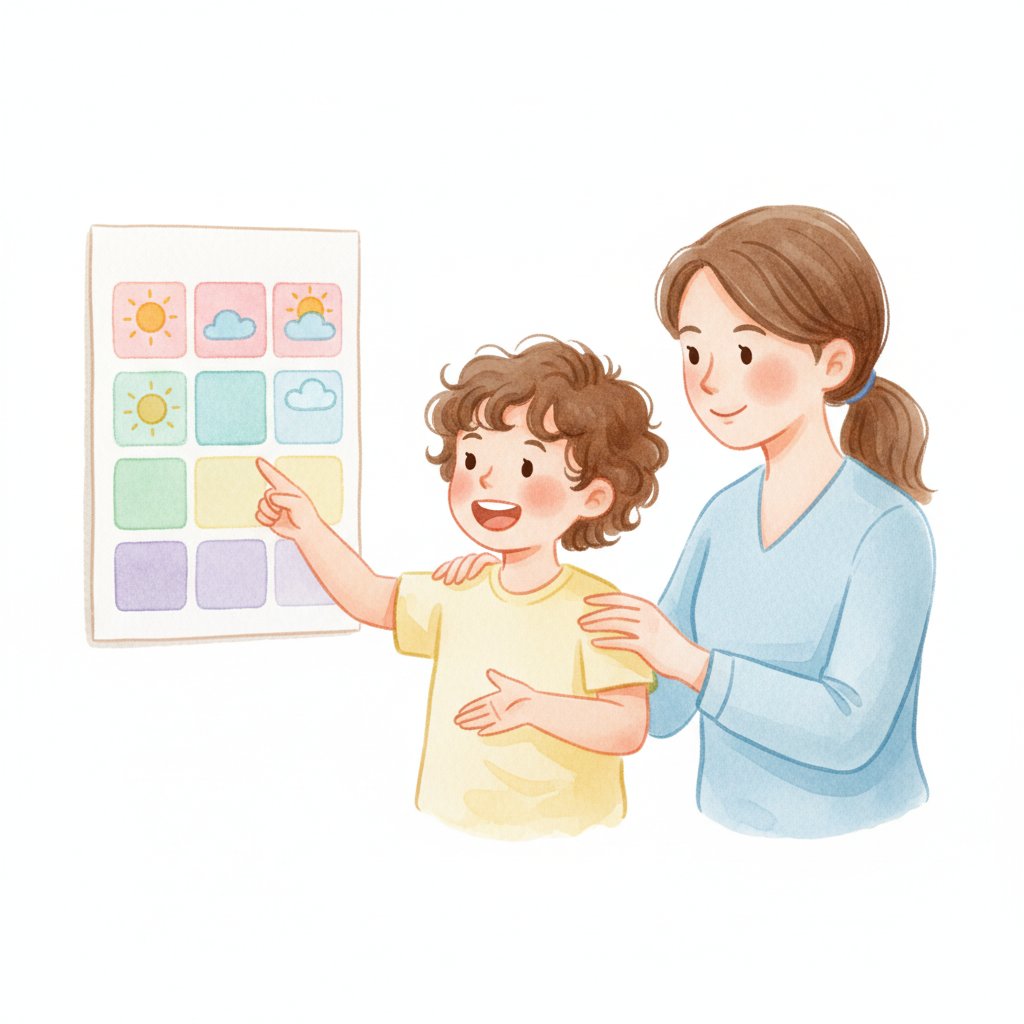
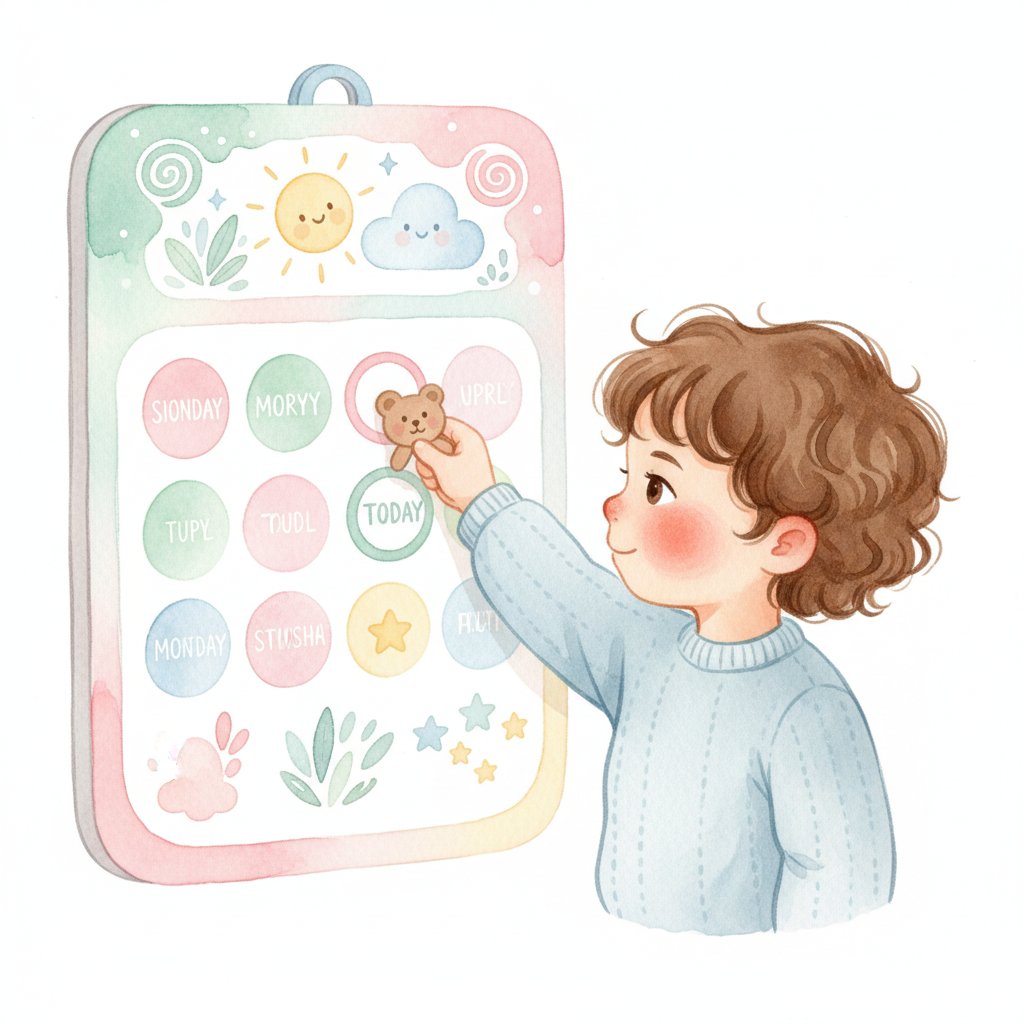
- Use a large, visible calendar at child height
- Let a different child be the "calendar helper" each day
- Track weather alongside the day — it adds observation skills
- Count days until a special event ("How many days until the field trip?")
For more classroom routines, see our classroom organization printables and kindergarten daily schedule.
Frequently Asked Questions
At what age should a child know the days of the week?
Most children can recite the days in order (with occasional mix-ups) by age 4-5. Reliable, independent sequencing without prompts typically comes at age 5-6. Don't worry if your 3-year-old can't keep them straight — the concept is genuinely abstract for that age.
What's the best song for teaching days of the week?
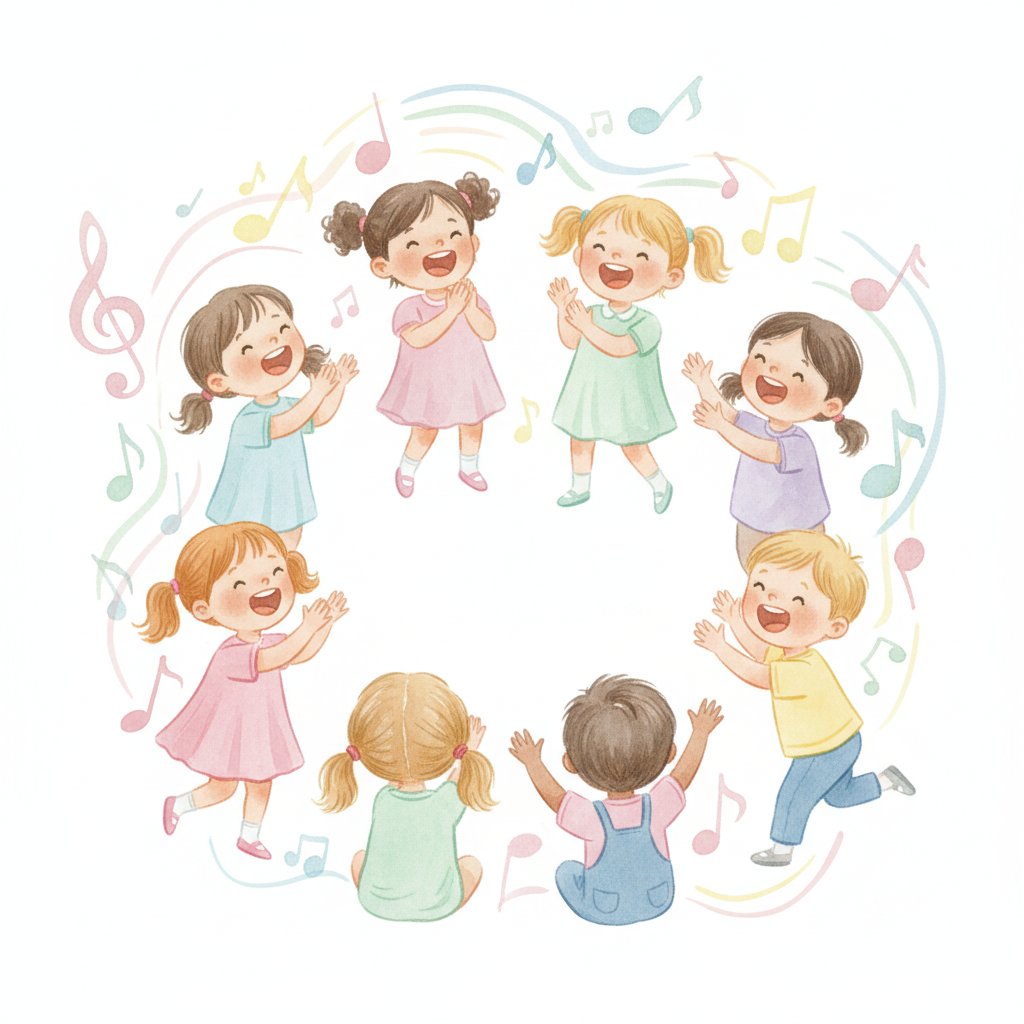
Any song your child enjoys that includes all seven days in correct order. The Addams Family tune and "There Are Seven Days" (to the tune of "Oh My Darling Clementine") are the two most popular in preschool classrooms. The melody matters less than daily repetition.
Should I start with Sunday or Monday?
In the United States, calendars typically start with Sunday. In many other countries, Monday is the first day. Use whatever your family or school convention is — just be consistent. Children will adapt to either convention if they see it the same way every time.
My child knows the days but can't spell them. Is that a problem?
Not at all. Spelling day names (especially Wednesday) is a kindergarten/first-grade skill. The sequence comes first, the spelling comes later. Focus on recognition and sequencing for ages 3-5.
How do I teach days of the week in multiple languages?
Teach the sequence in the dominant language first. Once that's solid (age 4+), introduce the same sequence in the second language using the same song tune. Children transfer the concept quickly — they already know the sequence, they're just learning new labels.
Can days of the week activities help with behavior?
Yes. Many behavior challenges in preschool come from unpredictability — children don't know what's happening next. A daily calendar routine creates predictability. "Today is Tuesday, so we go to school, then dance class, then dinner." When children can predict their day, anxiety decreases and cooperation increases.
For more daily routine support, see our toddler activities guide and morning routine visual schedule.