Articles11 min read

My Son Turned Flashcard Time Into a Flying Game

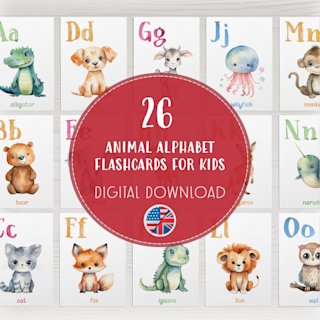
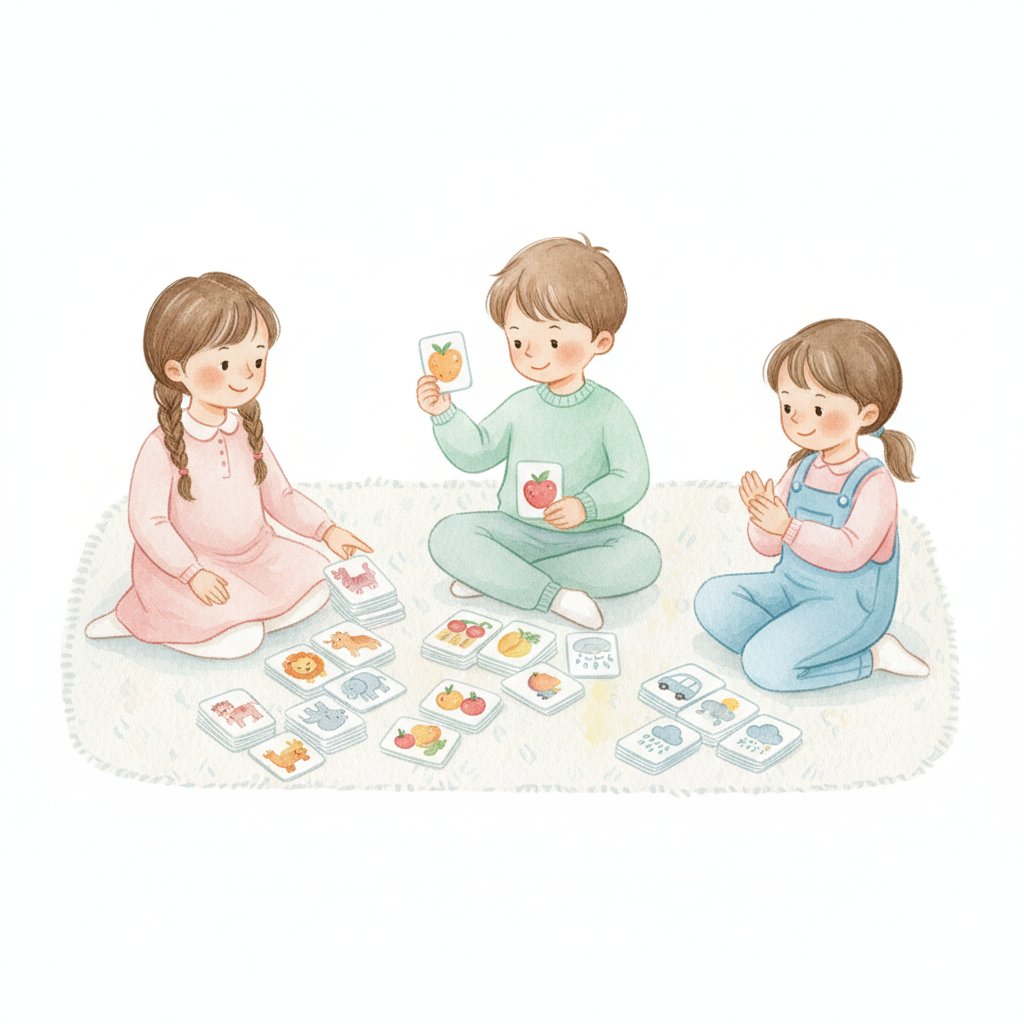
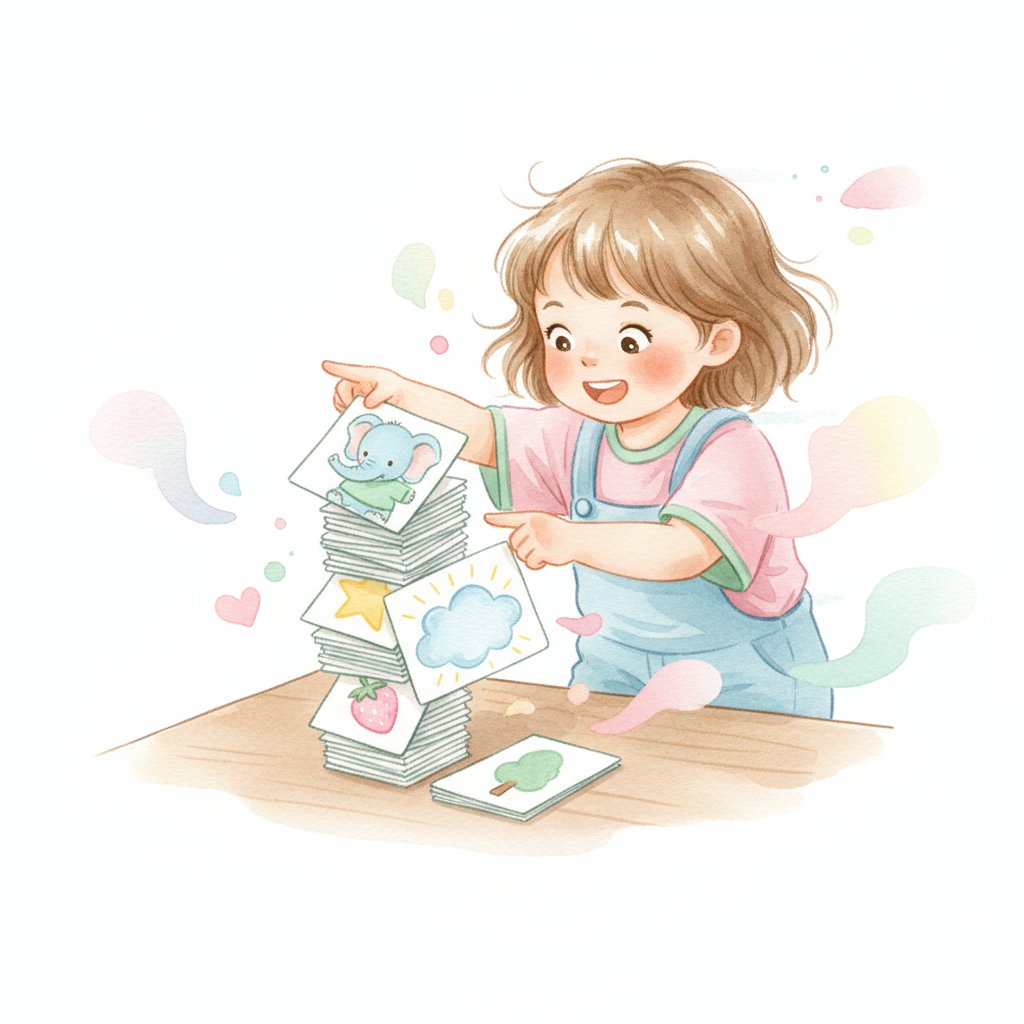
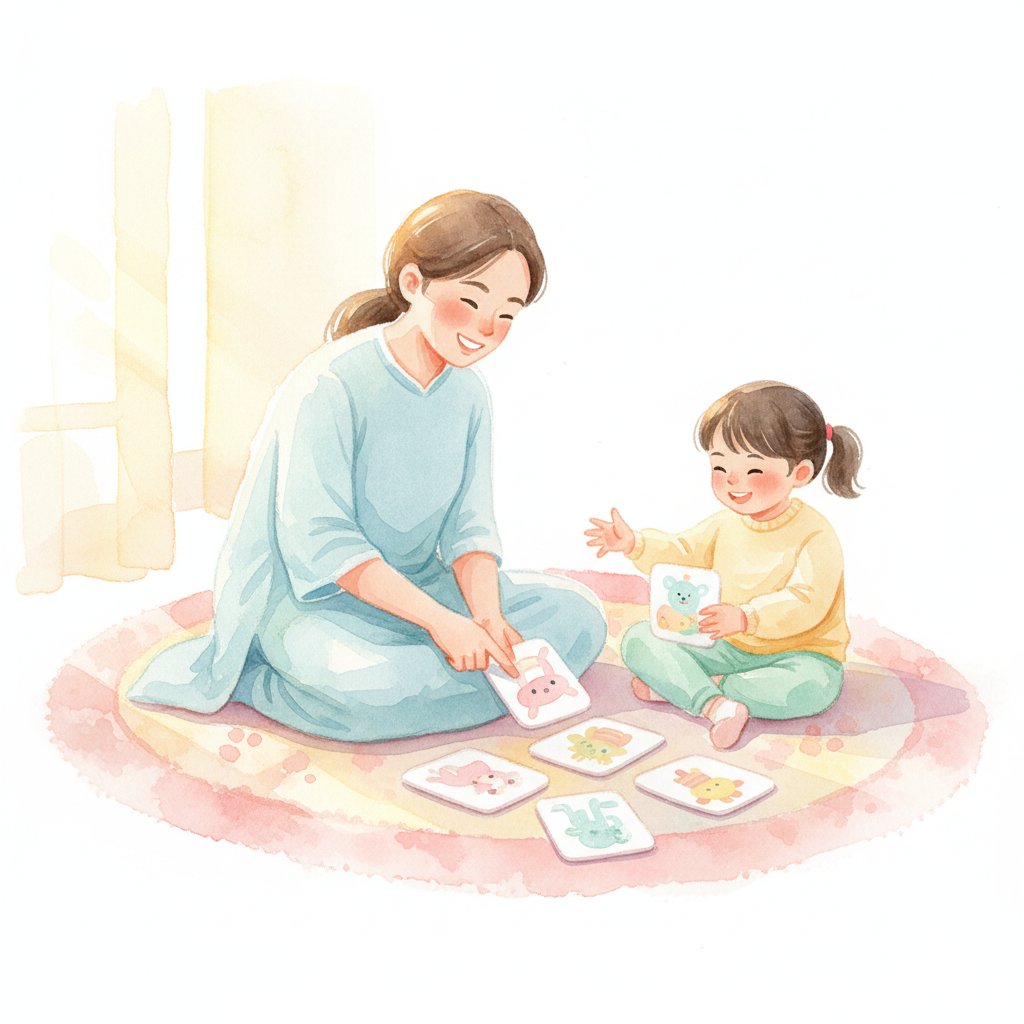
I had laid out a neat row of alphabet flashcards on the living room floor, fully intending a calm, structured matching activity. My three-year-old had other plans. He picked up a card, looked at it, announced "T is for TIGER!" and then threw it across the room like a frisbee. His older sister caught it, checked the card, and yelled "RIGHT!" They spent the next twenty minutes hurling flashcards at each other and shouting animal names. By the end, he could identify every letter.

That moment taught me what every experienced preschool teacher already knows: flashcards are only as boring as the adult holding them. In a child's hands, with the right game structure, flashcards become treasure maps, building blocks, and launchpads for imagination. The National Association for the Education of Young Children emphasizes that young children learn best through play — and flashcard games are one of the simplest ways to combine structured learning with the kind of fun that keeps children asking for more.

This guide covers 20+ flashcard games organized by type and age. For alphabet-specific flashcard activities, see our printable alphabet flashcards for toddlers guide. For phonics-focused flashcard work, see our guide to teaching phonics with flashcards. And for the fine motor skills that flashcard handling builds, check our fine motor skills activities for kids.
Why Flashcard Games Work (Not Just Drilling)

There's a common misconception that flashcards equal rote memorization. That's only true if you use them the wrong way — as a quiz tool where the adult holds all the cards and the child passively recites. When you build games around flashcards, something different happens:

  • Active engagement: Children physically manipulate cards, make choices, and see outcomes. Their brains are fully involved, not just watching.
  • Immediate feedback: Games provide natural correct/incorrect signals — a match or a mismatch — without an adult saying "wrong."
  • Repetition without boredom: The same 26 alphabet cards become 10 different games. Children get the repetition they need without feeling like they're repeating anything.
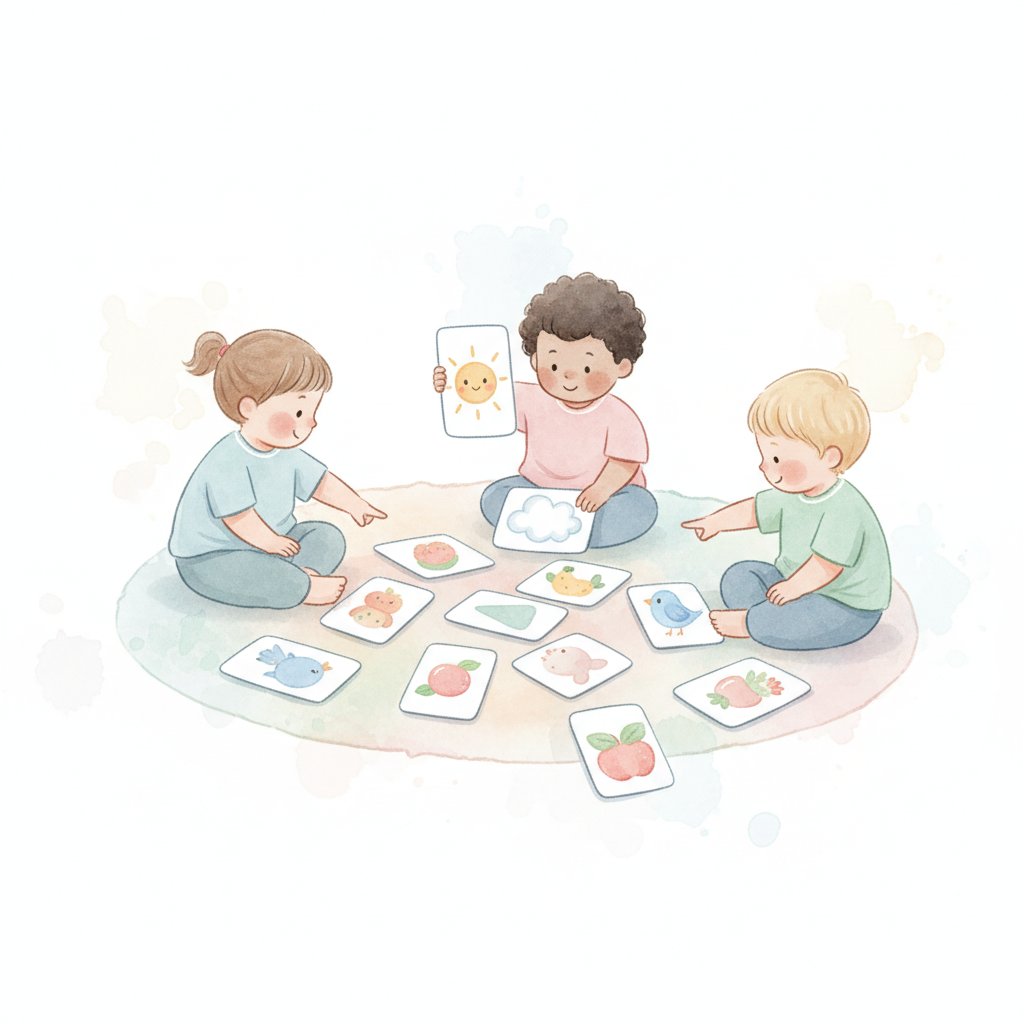
  • Social learning: Most flashcard games work with 2-4 children, building turn-taking, cheering, and collaborative problem-solving.
  • Portability: A deck of flashcards fits in a purse, a backpack, or a car seat pocket. Learning happens anywhere.

What flashcards teach beyond content:
Visual discrimination (telling cards apart), categorization (sorting by theme), memory (recalling card positions), turn-taking (waiting for your go), and confidence (the thrill of getting it right).

For more on how structured play supports kindergarten readiness, see our kindergarten readiness checklist for parents.

Matching and Memory Games

1. Classic Memory Match (Ages 3+)

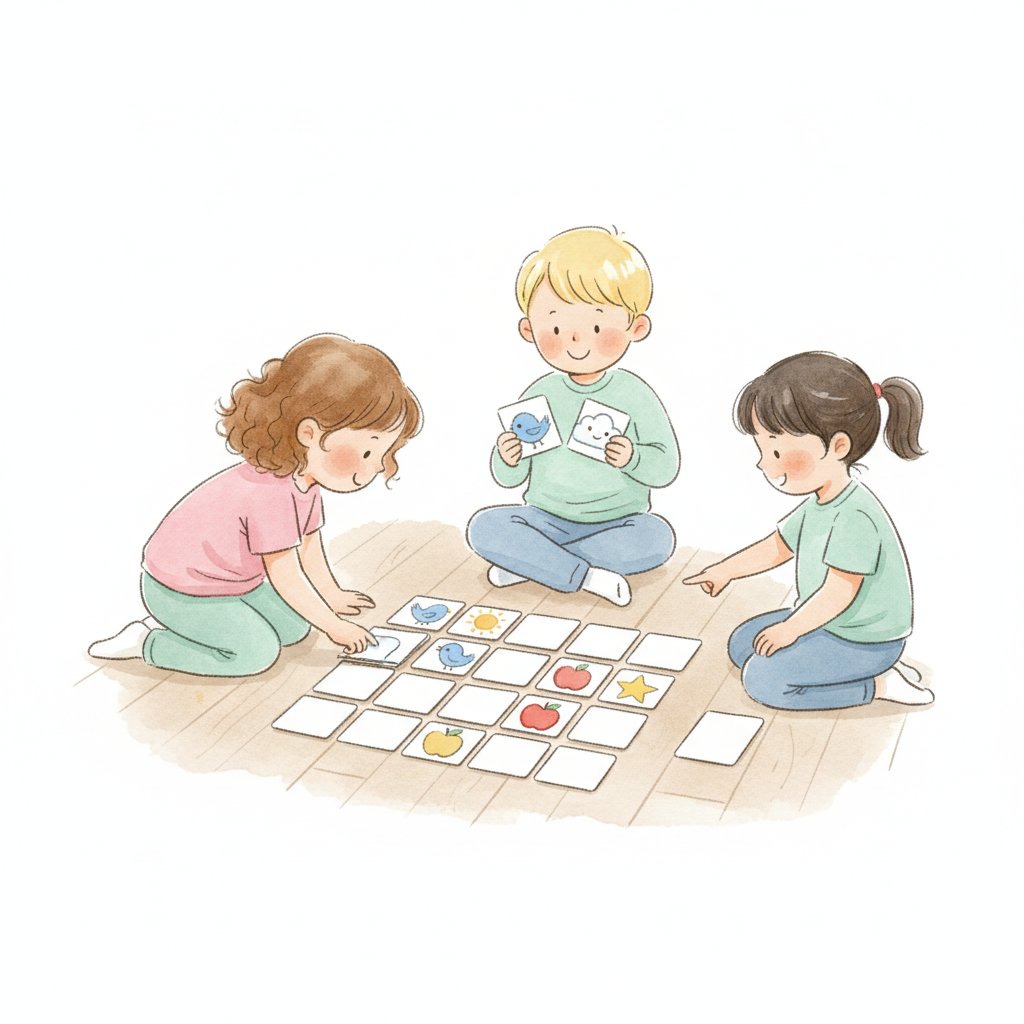
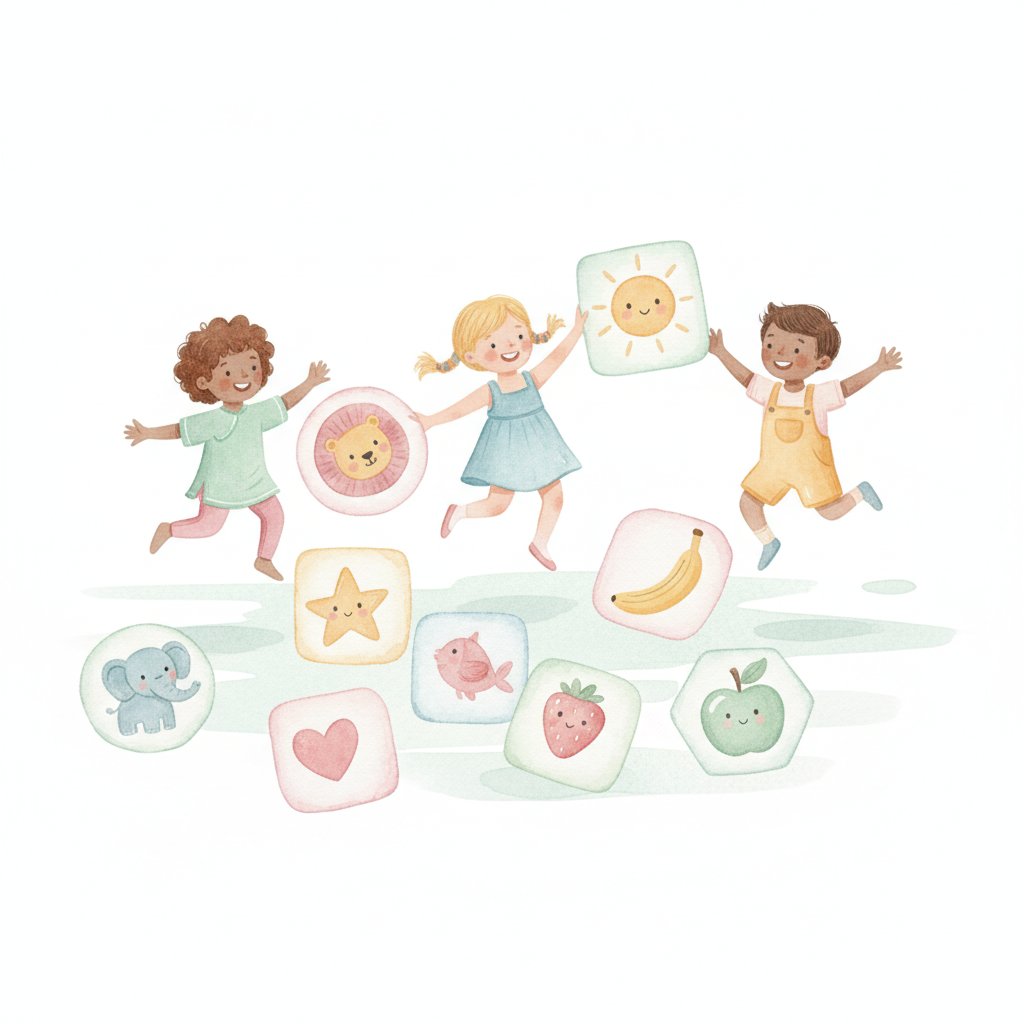
The gold standard. Place pairs of flashcards face down in a grid. Children flip two cards per turn. If they match, the child keeps the pair. If not, both flip back. Start with 6 pairs (12 cards), then add more as children improve.
Skills: Visual memory, concentration, turn-taking
Setup time: 1 minute

2. Snap Match (Ages 3+)

Divide a deck of flashcards with pairs evenly between 2 players. Players flip their top card simultaneously. If the two cards match, the first to yell "SNAP!" wins both cards. Most cards at the end wins.

Skills: Quick recognition, reflexes, matching
Setup time: 30 seconds

3. Find My Partner (Ages 2+)

Place half the pairs face up on the floor. Hold the matching half in a stack. Show one card at a time — "Can you find this card's partner?" Children search the spread to find the match.

Skills: Visual scanning, one-to-one correspondence
Setup time: 1 minute

4. Color Match Cross-Deck (Ages 3+)

Mix cards from two different flashcard sets (e.g., animal flashcards and emotions flashcards). Challenge children to find matches by color, category, or beginning letter. "Find two cards that are both red" or "Find two cards that start with B."

Skills: Flexible thinking, categorization, creative matching
Setup time: 2 minutes

{% product-block %}
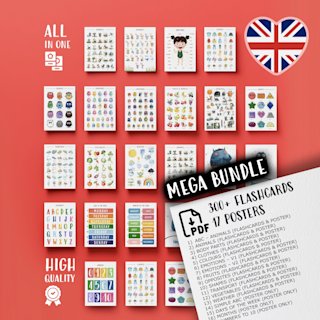
The best matching games use cards children love to look at. Our Animal Safari Flashcards feature vibrant, realistic animal illustrations that make memory match feel like a wildlife adventure — children beg to play again because the images are genuinely engaging.
{% end-product-block %}

Movement and Action Games

5. Flashcard Jump (Ages 2+)

Scatter flashcards face up across the floor. Call out a card ("Jump to the letter A!" or "Jump to the elephant!"). Children jump to the correct card. For older children, add challenges: "Jump to the card that rhymes with CAT" or "Jump to something you'd find on a farm."

Skills: Letter/word recognition, gross motor, listening
Setup time: 1 minute

6. Flashcard Relay Race (Ages 4+)

Divide into two teams. Place a stack of flashcards at the far end of the room. Children run to the stack, grab one card, run back, and name it before the next teammate goes. First team to collect and name all cards wins.

Skills: Speed recognition, teamwork, gross motor
Setup time: 2 minutes

7. Flashcard Freeze Dance (Ages 3+)

Play music. Children dance while you scatter flashcards on the floor. When the music stops, each child freezes on the nearest card and shouts what it shows. "I'm on the apple!" "I'm on letter M!"

Skills: Listening, impulse control, quick naming
Setup time: 2 minutes

8. Throw and Tell (Ages 2+)

This is the game my son invented. Place a basket or target area a few feet away. Children pick a card, identify what's on it ("This is a dog!"), then toss the card toward the target. Score a point for a correct ID, bonus point for landing in the basket.

Skills: Identification, throwing, hand-eye coordination
Setup time: 1 minute

9. Flashcard Scavenger Hunt (Ages 3+)

Hide flashcards around the room (or house). Children search for cards and bring each one to a central pile, naming it as they add it. "I found the sun card!" For older children, give them a checklist — find specific cards in order.

Skills: Search and find, naming, sustained attention
Setup time: 5 minutes

Sorting and Categorizing Games

10. Sort by Category (Ages 3+)

Mix cards from different sets (animals, emotions, colors, letters). Children sort into piles: "All the animals here, all the letters here, all the colors here." Start with 2 categories, then add more.

Skills: Categorization, logical thinking
Setup time: 2 minutes

11. Living vs. Non-Living Sort (Ages 4+)

Using animal and object flashcards, children sort into two piles: living things and non-living things. "Is a tree living? Is a car living?" Great for science discussions.

Skills: Scientific classification, reasoning
Setup time: 1 minute

12. Beginning Sound Sort (Ages 4+)

Place 3-4 letter cards on the floor. Children sort picture cards by their beginning sound. "Apple goes with A. Ball goes with B. Cat goes with C."

Skills: Phonemic awareness, letter-sound correspondence
Setup time: 2 minutes

13. Big and Small Sort (Ages 2+)

Using animal flashcards, children sort into "big animals" (elephant, giraffe, whale) and "small animals" (mouse, bee, ant). Expand to fast/slow, loud/quiet, or water/land.

Skills: Comparative concepts, vocabulary building
Setup time: 1 minute

For more sorting and classification activities, see our counting activities for preschoolers — sorting is the foundation of early math.

{% product-block %}
Emotions flashcards unlock a whole category of sorting games. Our Emotions Flashcards for Kids let children sort feelings into "comfortable" and "uncomfortable" categories, match facial expressions, and build emotional vocabulary alongside cognitive sorting skills.
{% end-product-block %}

Creative and Storytelling Games

14. Story Chain (Ages 4+)

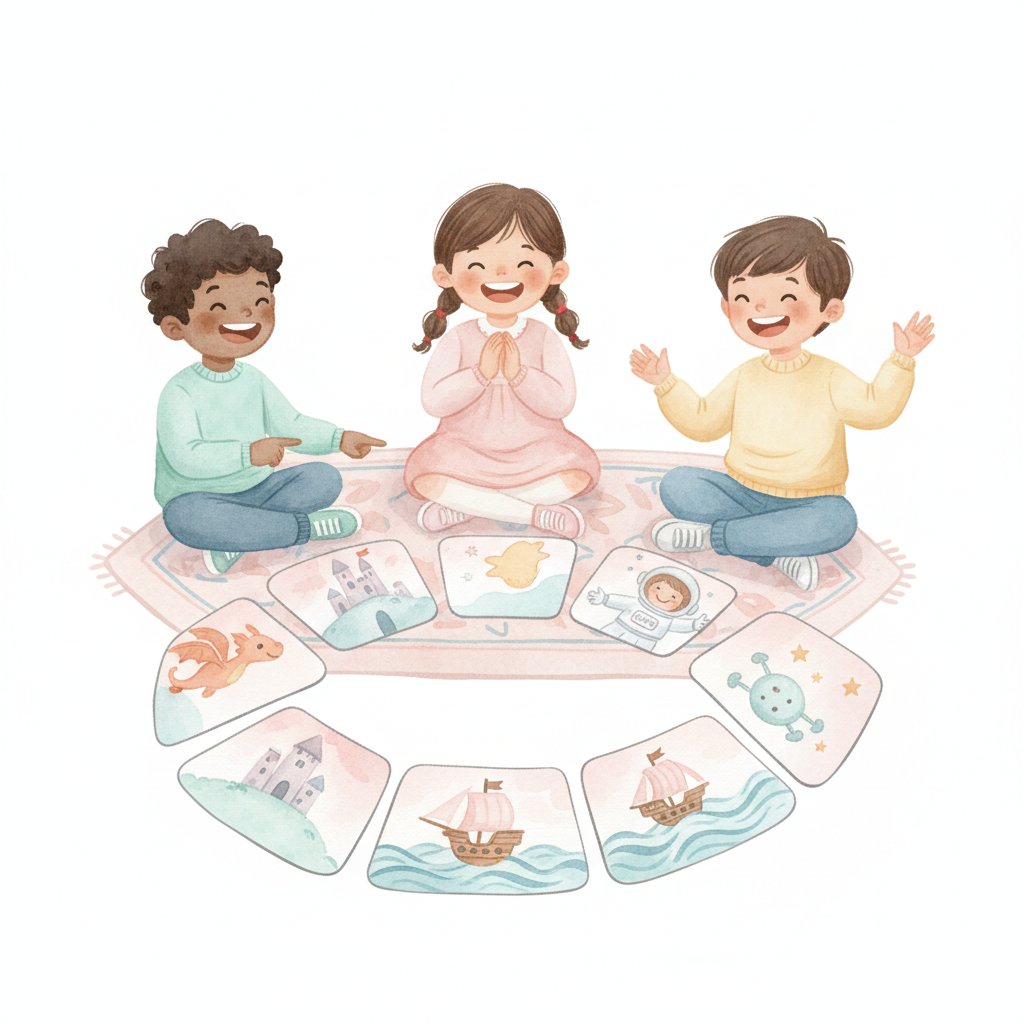
Each player draws 3 flashcards. The first player starts a story using one of their cards: "Once there was a tiger..." The next player continues using one of theirs: "...who met a sad monster..." Keep going until all cards are used. The stories get wonderfully absurd.

Skills: Narrative building, vocabulary, imagination
Setup time: 1 minute

15. Flashcard Charades (Ages 3+)

One player draws a card and acts out what's on it (without speaking or showing the card). Others guess. "Are you a frog? Are you jumping? Are you happy?" Perfect for pre-readers because they don't need to read the card — just act out the picture.

Skills: Nonverbal communication, guessing, body awareness
Setup time: 30 seconds

16. Flashcard Drawing (Ages 3+)

Children draw a card, then draw what's on it. For younger children, keep the card visible as a reference. For older children, hide the card after 10 seconds and draw from memory. Compare the flashcard art to the child's drawing.

Skills: Observation, fine motor, visual memory
Setup time: 1 minute

17. Build a Scene (Ages 4+)

Draw 5-7 flashcards. Arrange them on a table to create a scene or story. "The tiger is next to the tree. The bird is above the house." Children describe their scene using position words and narrative language.

Skills: Spatial reasoning, descriptive language, storytelling
Setup time: 2 minutes

Quick-Paced Quiz Games

18. Beat the Timer (Ages 4+)

Set a timer for 60 seconds. Children name as many flashcards as they can before time runs out. Track the score and try to beat it next time. The time pressure makes it exciting, not stressful — children love seeing their number go up.

Skills: Rapid recall, confidence building
Setup time: 30 seconds

19. Flashcard Tic-Tac-Toe (Ages 4+)

Draw a tic-tac-toe grid. Place a flashcard in each square, face down. To claim a square, a child must correctly identify the card. If wrong, the square stays open for the other player. First to three in a row wins.

Skills: Strategic thinking, recall under pressure
Setup time: 1 minute

20. Flashcard Hot Potato (Ages 3+)

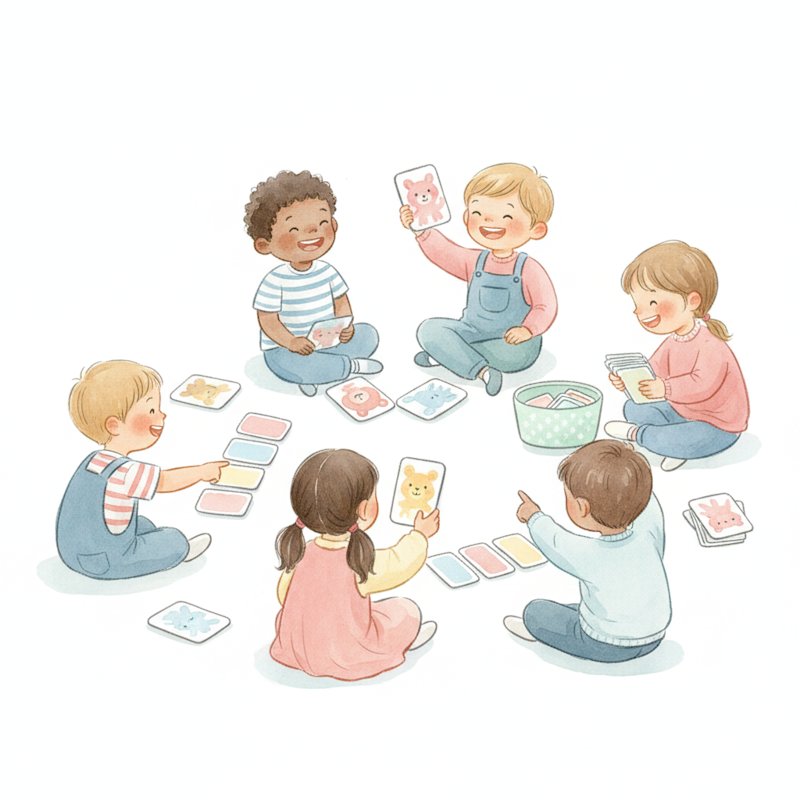
Children sit in a circle and pass a flashcard while music plays. When the music stops, whoever holds the card must name it. If they get it right, they stay in. If not (or if they need help), they join the next round. Play gets faster each round.

Skills: Quick thinking, social play, handling pressure
Setup time: 1 minute

21. Mystery Card (Ages 4+)

One child holds a flashcard against their forehead (facing out) so they can't see it but everyone else can. The group gives clues: "It's an animal! It lives on a farm! It says moo!" The child guesses their card.

Skills: Descriptive language, deduction, listening
Setup time: 30 seconds

Start with the flashcard set your child reaches for most
Our Alphabet Monster Flashcards combine letter recognition with playful monster illustrations — each card is a character children want to see again. Use them for memory match, story chains, scavenger hunts, or any game in this guide. One deck, 20+ ways to play.
One card deck, a whole afternoon of learning
Farm Animals Flashcards are our most versatile set for preschool games — sort by size, act out animal sounds, build a farm scene, or play memory match with 12 familiar animals. The realistic illustrations give children accurate visual references while keeping the fun front and center.
Weather cards that turn any day into a learning moment
Our Weather Flashcards cover sun, rain, snow, wind, and 8 more conditions — pair them with a daily weather check routine and children start noticing the sky on their own. Use them for sorting games ('which weather needs a coat?'), story building, or the flashcard scavenger hunt.

Tips for Getting the Most from Flashcard Games

For Parents

Start short: 5 minutes is enough for a two-year-old. Build up to 15 minutes by age 4-5. Quit while they're still having fun — children who beg for "one more game" learn more than children who are tired of flashcards.

Follow their lead: If your child wants to play Memory Match five times in a row, let them. Repetition is how young brains build strong neural pathways. Don't force variety if they're happily mastering one game.

Celebrate effort, not just correctness: "You looked so carefully at both cards!" is more motivating than "Good job getting it right." The process matters more than the answer.

Mix themes: Combine alphabet cards with animal cards, emotion cards with color cards. Cross-deck games build flexible thinking and make old flashcards feel new again.

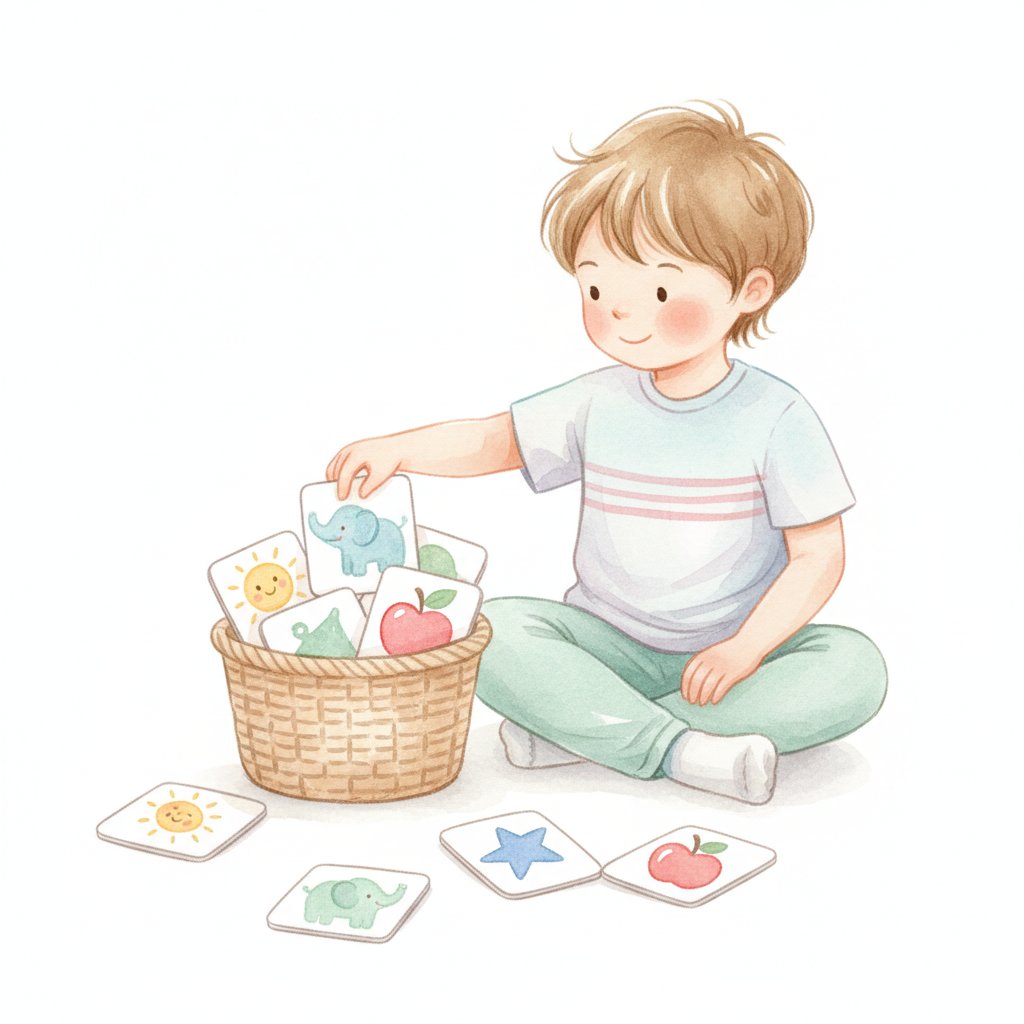
Keep cards accessible: Store flashcards in a basket your child can reach independently. You'll be surprised how often children initiate their own flashcard games when the materials are available.

For Teachers

Flashcard center rotation: Set up a permanent flashcard game center in your classroom. Rotate the game weekly: Memory Match → Sort by Category → Story Chain → Flashcard Charades. The materials stay the same; only the instruction changes.

Differentiation through card selection:

  • Struggling learners: Use fewer cards (6-8), cards with pictures only, familiar themes
  • On-level learners: Use 10-15 cards, picture + text, mixed themes
  • Advanced learners: Use 20+ cards, text-only cards, cross-deck challenges, timed games

Assessment through games: Flashcard games double as informal assessments. During Memory Match, note which cards a child consistently recognizes vs. confuses. During sorting games, observe whether the child sorts by one attribute or multiple. You're collecting data while children think they're playing.

For more classroom ideas, see our classroom organization printables and classroom decor ideas for preschool.

Frequently Asked Questions

At what age can children start using flashcards?

Around 18-24 months, children can start with picture-only flashcards for simple naming and matching. By age 3, they're ready for memory games and sorting. By age 4-5, flashcard games can include reading words, storytelling, and timed challenges.

Aren't flashcards just boring memorization?

Only if you use them that way. Holding up a card and saying "What's this?" 20 times in a row is boring. Playing Memory Match, Flashcard Charades, or Story Chain with those same 20 cards is engaging and developmentally appropriate. The cards are the materials — the game makes the learning.

How many flashcard sets do I need?

Two to three sets give you maximum game variety. One alphabet set, one theme set (animals, emotions, or colors), and one specialty set (phonics, numbers, or weather) covers every game in this guide. You don't need 20 different decks.

Should flashcards show pictures, words, or both?

For ages 2-3, picture-only cards are best. For ages 3-4, picture + word cards build sight word recognition naturally. For ages 5-6, word-only cards challenge reading skills. Many quality flashcard sets include both formats — use picture side for games, word side for assessment.

What if my child keeps getting the same cards wrong?

Two strategies: (1) Remove the tricky cards and come back to them in a week. Pressure doesn't help. (2) Make those specific cards the "star" of a favorite game. If a child always confuses B and D, play a game where only B and D cards are used — concentrated practice in a fun context.

Can flashcard games help with speech delays?

Yes, flashcard games are commonly used in speech therapy. The combination of visual support, repetition, and low-pressure play creates ideal conditions for language practice. If your child has a speech delay, consult your speech-language pathologist about which flashcard activities they recommend.

For more learning-through-play ideas, explore our sensory play ideas for toddlers and toddler activities guide.