Articles13 min read

Math Activities for Preschoolers Guide

Build every preschool math skill — number sense, shapes and spatial reasoning, patterns and sorting, and measurement and data — through a 12-month progression of 20+ hands-on math activities for ages 3-5.

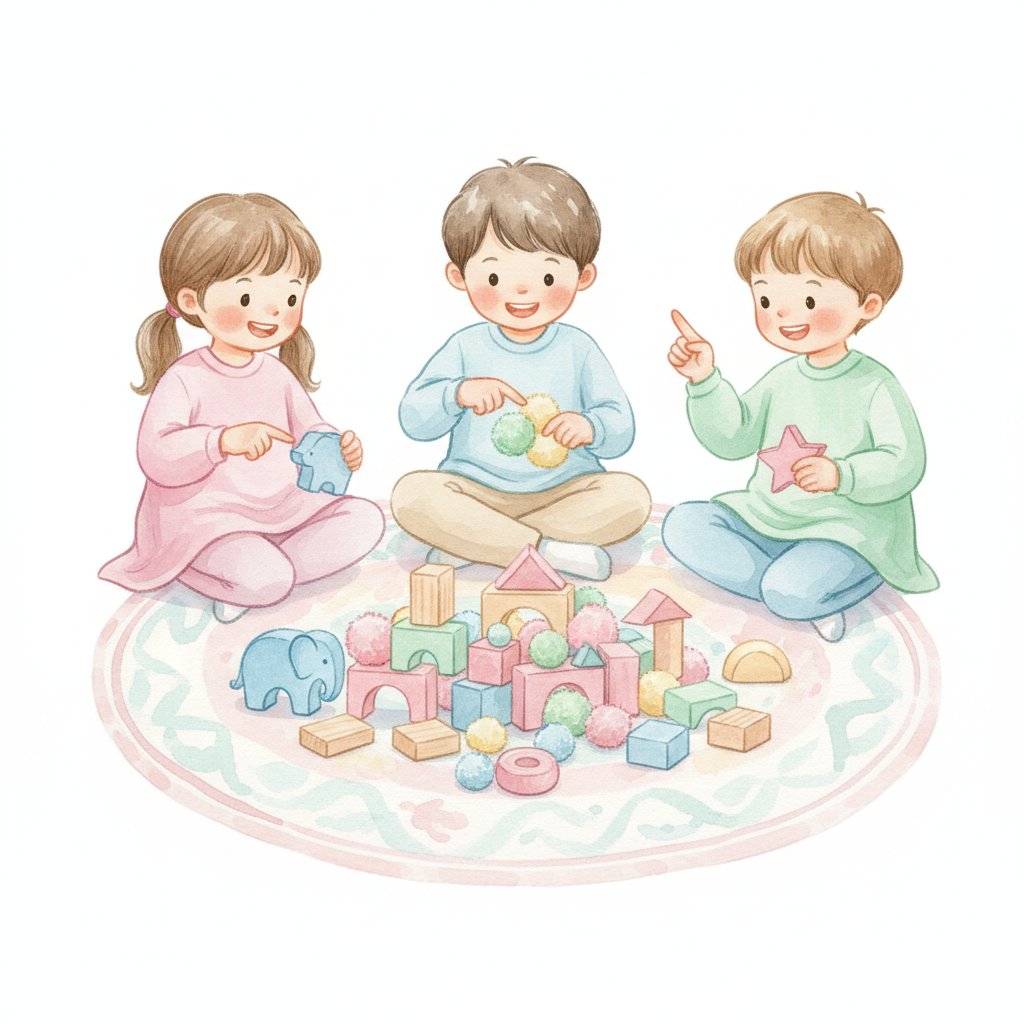
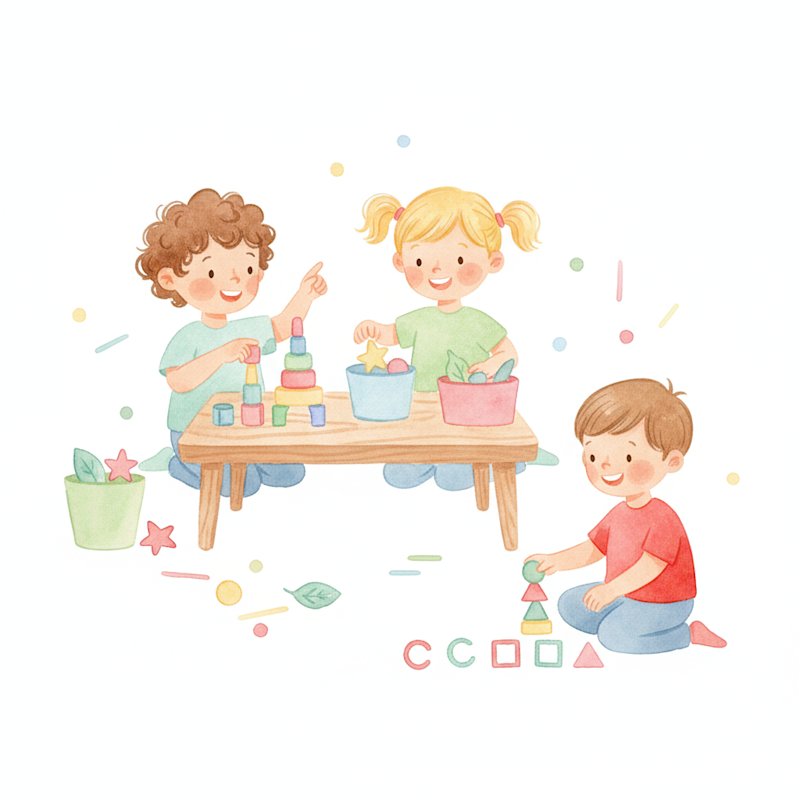
Cheerful preschoolers doing playful early math with blocks and sorting

The Preschooler Who Said Math Was "Boring"

Last fall I ran a month-by-month math plan with my mixed-age preschool group — five children, ages three to five, in a home-classroom setting. In week one, when I said the word math, my four-year-old friend Leo announced, very seriously, "Math is boring. Math is for big kids." So I stopped saying math. I put a basket of buttons on the table and said, "Can you give every bowl the right number?" Forty-five minutes later he had sorted, counted, and compared four bowls without once being told he was doing math.

That gap — between what preschoolers can do mathematically and what they think math is — is exactly what good math activities for preschoolers are designed to close. The National Association for the Education of Young Children and the National Council of Teachers of Mathematics both describe preschool math as four interlocking domains, not a single skill. When you plan around those four domains instead of a list of worksheets, math starts to feel like the rest of preschool: play, talk, and discovery.

This guide does three things:

  1. Breaks preschool math into the four learning domains the experts use, with hands-on activities for each.
  2. Stretches those domains across a 12-month progression, so you always know what to try next.
  3. Shows how to fold math into the day you already have — meals, play, outdoors, bedtime — so you never have to carve out a separate "math block."
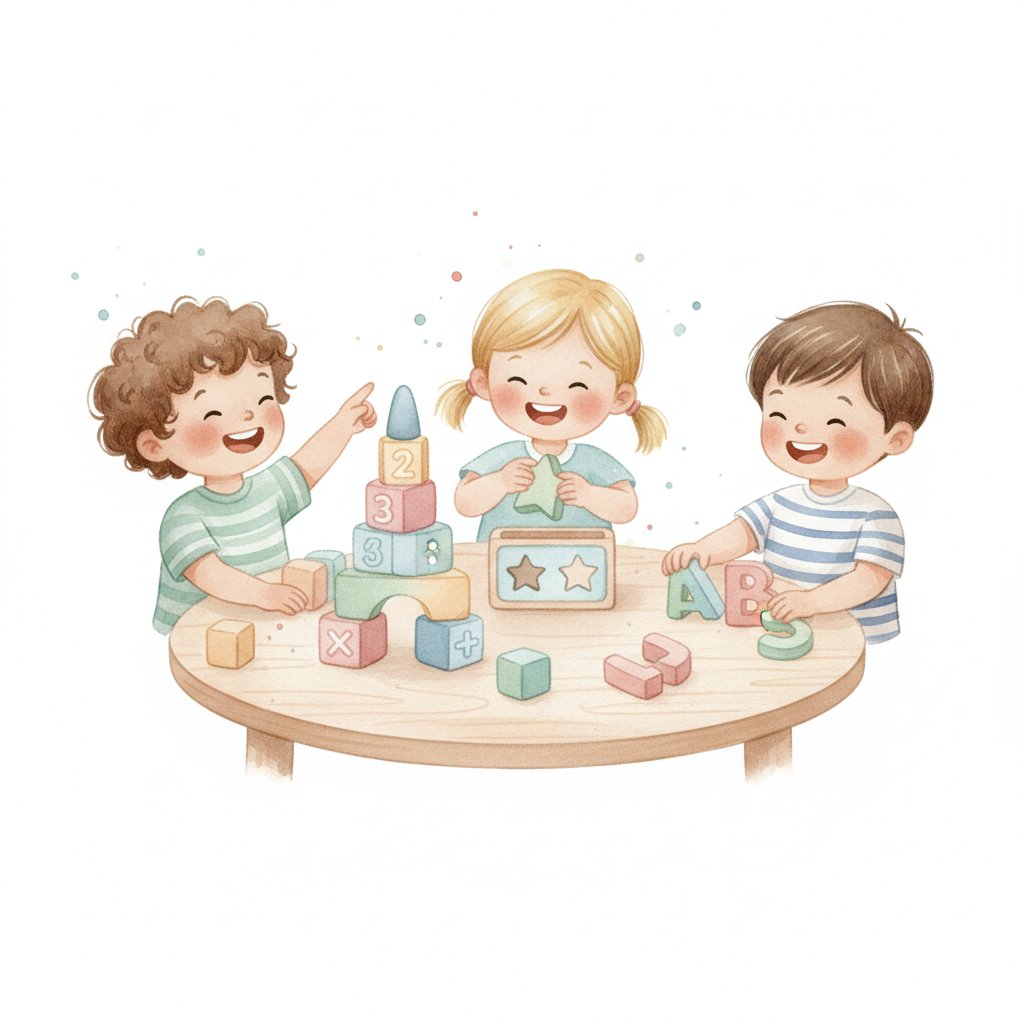
Young children playing with counting blocks and shape toys at a table

If you only need one slice, jump to our deep dives: the counting activities for preschoolers guide for one-to-one correspondence and number sense, and the math readiness for kindergarten activities for the kindergarten-prep checklist. This article is the umbrella that holds them together.
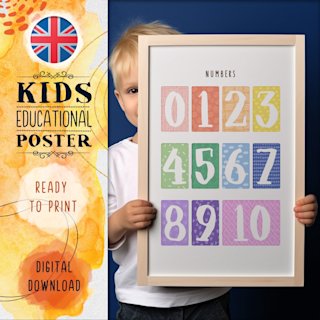
Number tools that make counting click
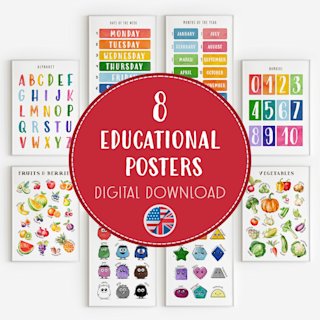
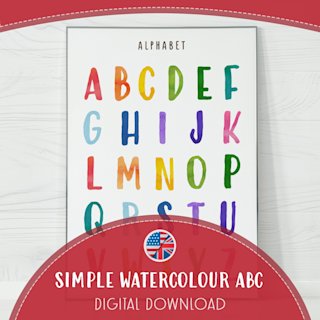
A visible number line and a counting poster give preschoolers something to point to every single day. That daily exposure is what turns "reciting numbers" into actually understanding quantity. Print once, use all year.

The Four Domains of Preschool Math

Before the month-by-month plan, it helps to know what you're actually building. Early-childhood researchers group preschool math into four domains. Every activity in this guide lives in one of them:

  • Number sense & counting — knowing "how many," recognizing numerals, and understanding that the last number counted is the total.
  • Shapes & spatial reasoning — naming and building shapes, and using position words like above, below, next to, between.
  • Patterns & sorting — grouping by a rule, and noticing, copying, and creating repeating sequences.
  • Measurement & data — comparing bigger/smaller, more/less, longer/shorter, and keeping simple records like a tally or a chart.

Most preschoolers don't develop these at the same speed. A child who counts beautifully may struggle with patterns, and vice versa. The 12-month roadmap at the end rotates through all four so nothing gets left behind.

Domain 1: Number Sense & Counting

Preschoolers counting a pile of colorful wooden toys and pom-poms together

Number sense is the domain parents recognize as "math," but it hides a trap: a child who can chant "one, two, three... ten!" does not necessarily understand quantity. Rote counting (saying the words in order) and rational counting (actually knowing that four means four things) are different skills, and they develop months apart.

Try these and watch for the difference:

1. Muffin-Tin Counting

Label a 12-cup muffin tin with numbers 1-12 (sticky notes work). Your child drops the matching number of dry beans, pom-poms, or cereal into each cup. The cup labeled "7" gets exactly seven.

What it builds: One-to-one correspondence — one number word per object.

2. "How Many Fingers?" Speed Round

Flash a number 1-10 on your fingers. Your child shouts the number as fast as possible. Time ten rounds and celebrate the best score. This is subitizing practice — recognizing a quantity without counting.

What it builds: Instant quantity recognition.

3. Tower & Compare

Build two block towers side by side. Count each. Ask, "Which has more? Which has fewer?" Start with a big difference (3 vs 8), then shrink it (6 vs 7) as the skill grows.

What it builds: Quantity comparison and the words more and fewer.

4. Missing Number

Lay number cards 1-10 in a row on the floor. Have your child close their eyes while you remove one. "Which number ran away?" Later, swap two cards so the sequence is wrong and let them play detective.

What it builds: Number sequence and number recognition together.

5. Counting Clean-Up

At tidy time, count each toy as it goes in the bin: "One car, two cars, three cars!" It costs you zero extra minutes and turns a chore into number practice.

What it builds: Daily counting habit — the single highest-leverage thing you can do. For 15 more structured ideas, see our counting activities for preschoolers guide.

6. Roll and Collect

Roll a die (or pull a number card 1-6). Collect that many blocks, then roll again and add to your pile. After five rolls, count the whole stash. This is the earliest, gentlest version of addition — without ever using the word.

Domain 2: Shapes & Spatial Reasoning

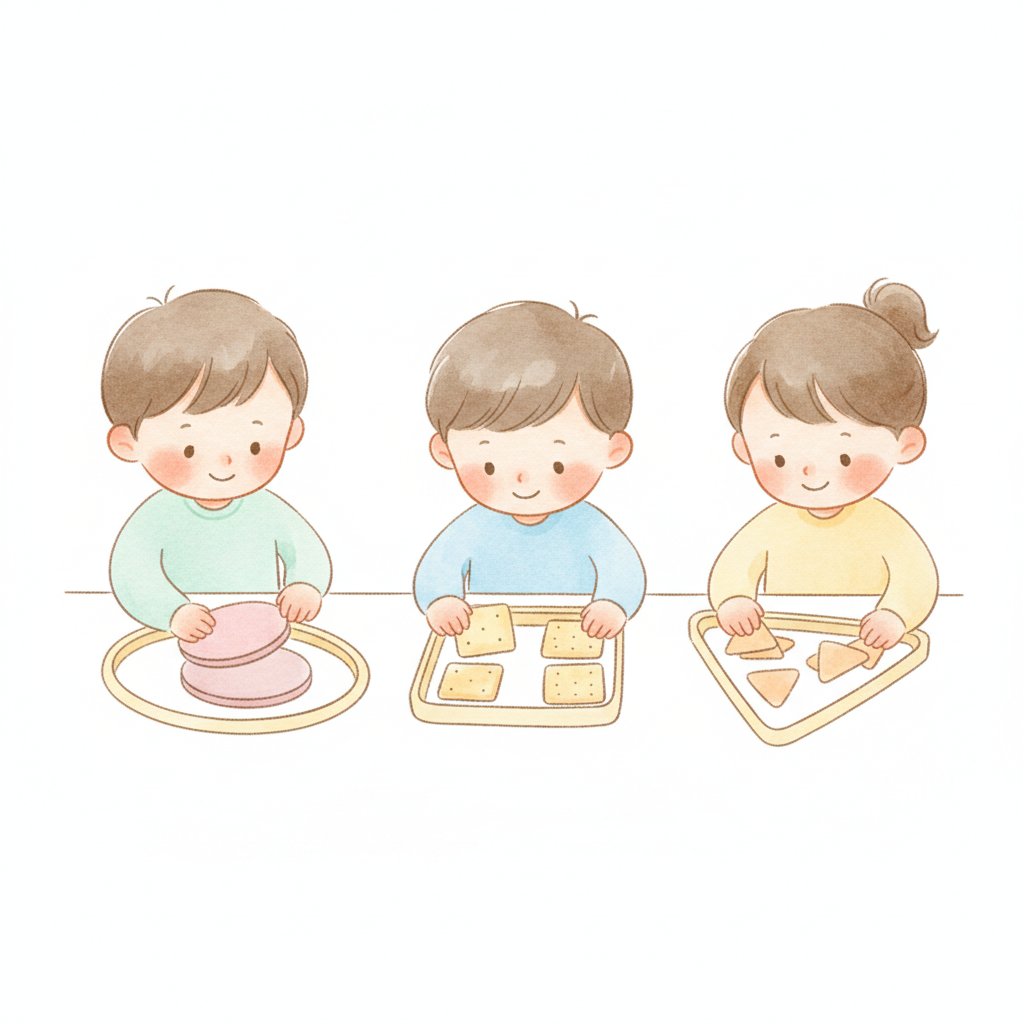
Children sorting objects by shape into trays

This domain is the quiet overachiever of early math. Spatial reasoning in preschool predicts later success in math and science better than early counting does — yet most adults never think of it as math at all. It covers two things: naming and building shapes, and using position language (on, under, behind, between, next to).

7. Shape Hunt Around the House

Walk from room to room finding shapes in real life: the clock is a circle, the door is a rectangle, the slice of toast is a square (until you bite the corner — then what is it?). Keep a running tally of circles vs rectangles vs triangles.

What it builds: Shape identification in context, not just on a flashcard.

8. Build-It-from-Blocks Challenge

Give spoken instructions and have your child build: "Put the red block on top of the blue block. Put the green block next to the blue block." Take turns being the builder and the caller.

What it builds: Following spatial directions and position words.

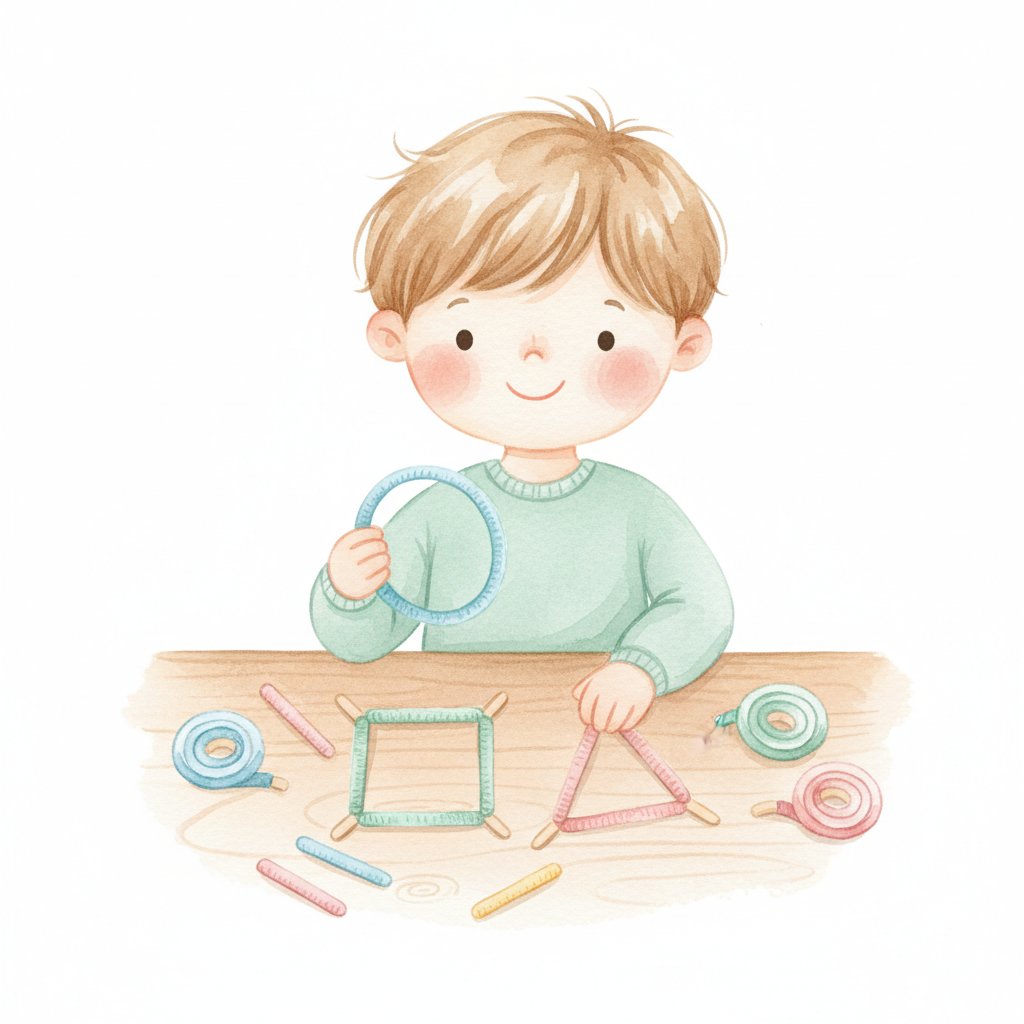
A child building shapes from craft sticks and pipe cleaners

9. Pattern-Block Pictures

Use pattern blocks (or cut paper shapes) to build a picture — a house, a rocket, a butterfly. Talk about the pieces as you go: "Two triangles make a square for the roof." This is geometry disguised as art.

What it builds: Composing shapes from other shapes — a core geometry skill. For more, pair it with our art activities for preschoolers.

10. Body Position Simon Says

"Simon says put your hand above your head. Simon says put your foot behind your knee. Simon says stand between two chairs." Pure movement, zero materials, and it directly teaches the position words that show up in every later math and reading task.

What it builds: Spatial vocabulary through the body.

11. Shape Mystery Bag

Put wooden or foam shapes in a bag. Your child reaches in, feels one without looking, and guesses the shape before pulling it out. "It has three pointy corners... it's a triangle!" Tactile learning locks the concept in.

What it builds: Shape properties (sides and corners) by touch.

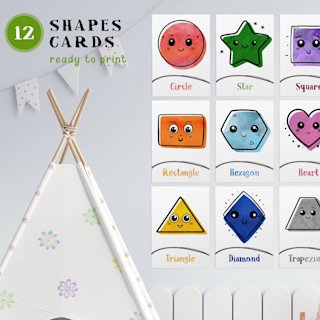
Shape visuals for the wall and the table
Preschoolers need to see shapes named and pictured daily for the vocabulary to stick. A shapes poster at eye level plus a set of shapes flashcards for hands-on sorting gives you both — wall reference and tabletop activity in one go.

Domain 3: Patterns & Sorting

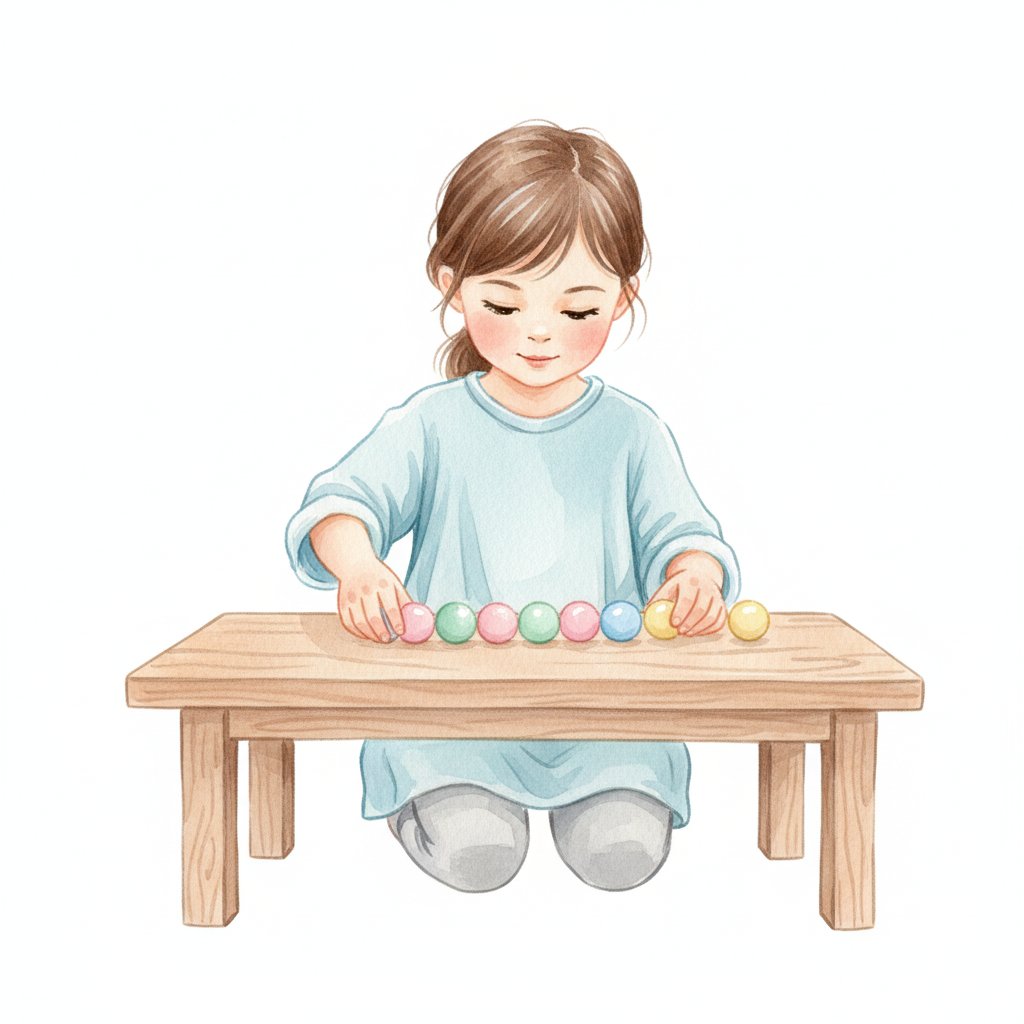
A child arranging beads in a repeating pattern

Patterns are how preschoolers first meet algebraic thinking — yes, really. When a child can see that red-blue-red-blue repeats and can tell you "blue comes next," they are noticing structure, which is the foundation of every higher math skill. Sorting is the partner skill: grouping objects by a rule (color, size, shape) is the start of logical classification.

12. Color Block Patterns

Build a row using a repeating color pattern: red-blue-red-blue. Ask, "What comes next?" Start with simple AB patterns, then grow to ABC (red-blue-green) and AAB (red-red-blue).

What it builds: Recognizing and extending patterns.

13. The "What's My Rule?" Sort

Put out a mixed pile (buttons, toy figures, lids). Sort them quietly into two groups by your own secret rule — big vs small, or smooth vs bumpy. Your child guesses the rule, then invents one for you.

What it builds: Classification and flexible thinking about attributes. This is the same logic that powers our color activities for preschoolers guide.

14. Sound & Movement Patterns

Make body-percussion patterns: "clap-clap-stomp, clap-clap-stomp." Your child copies and then invents their own for you to copy. Patterns don't have to be visual — auditory patterns build the same brain pathways.

What it builds: Auditory pattern recognition and sequencing.

15. Bead and Button Trains

Thread beads or button "trains" in a pattern: big-small-big-small, or red-yellow-red-yellow. The fine-motor bonus makes this double-duty — it strengthens the same hand muscles used for writing. (Our pre-writing and writing activities for preschoolers cover the why behind that.)

What it builds: Pattern creation with one-to-one placement.

16. "What Doesn't Belong?"

Lay out four objects where three share a rule and one breaks it (three circles and a square; three red and one blue). "Which one doesn't belong, and why?" There's often more than one right answer — celebrate every logical reason.

What it builds: Analytical thinking and explaining reasoning out loud.

Domain 4: Measurement & Data

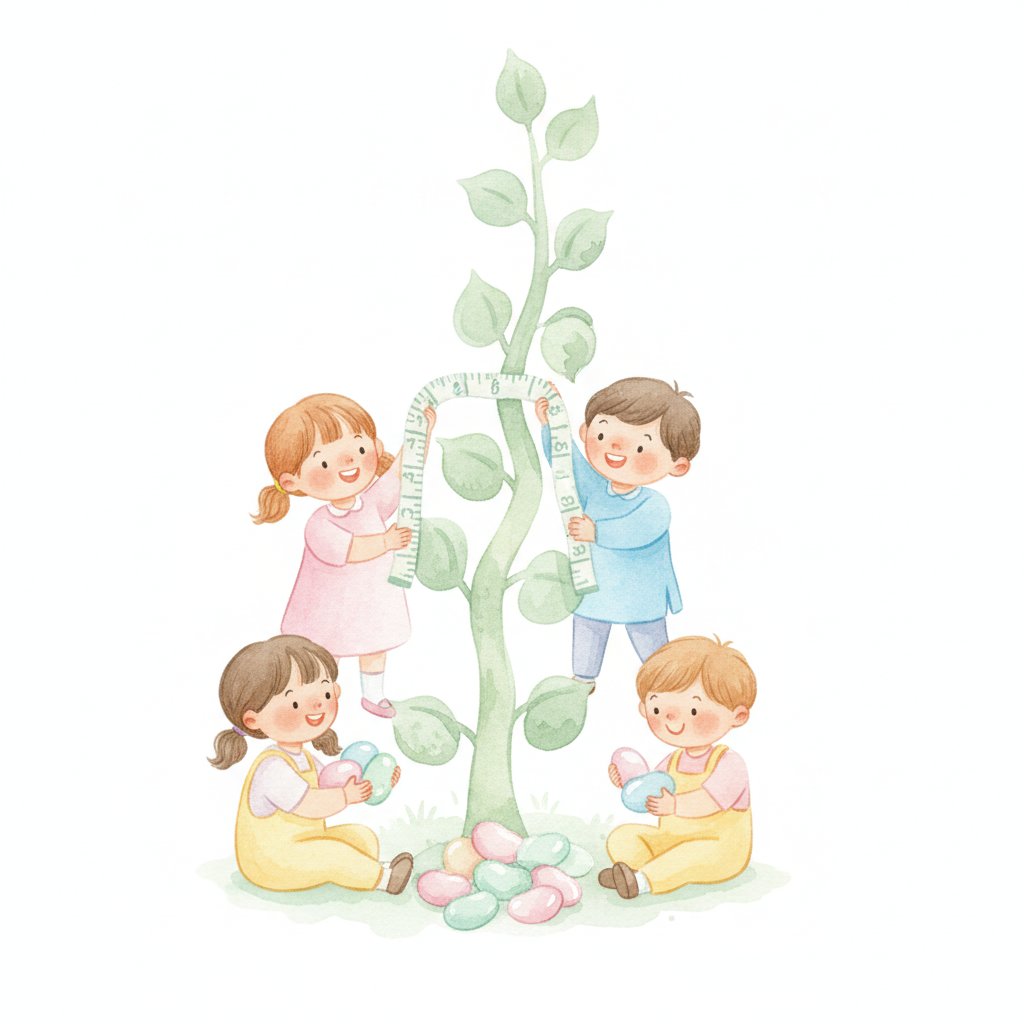
Children measuring a tall paper beanstalk and counting magic beans

This is the domain that lives in real life. Measurement for preschoolers means comparing — bigger/smaller, longer/shorter, heavier/lighter, more/less — using their bodies and everyday objects instead of rulers and scales. The "data" part is simply keeping a record: a tally, a chart, a line of "who has more."

17. Bigger or Smaller? Line Them Up

Gather five shoes from around the house. Line them up from smallest to biggest. Then try it with stuffed animals, blocks, or family members (by height, against the wall).

What it builds: Seriation — ordering by size — and comparison language.

18. The Balance Scale Snack

Use a simple balance (or two cups on a coat-hanger scale). Pile crackers on one side and grapes on the other. "Which side is heavier? Which has more?" Let your child predict before each test.

What it builds: Early measurement and prediction. Cooking is measurement too — our cooking activities for preschoolers is full of math-in-the-kitchen ideas.

19. More or Less Jar

Fill two clear jars with different amounts of the same object (dry pasta, cotton balls). Ask, "Which has more?" Then count to check. Make the difference smaller over time until it's a real challenge.

What it builds: Visual quantity comparison and checking by counting.

20. Our Day on a Chart

Make a simple picture chart of the day: a tally under "sunny" or "rainy," a sticker next to each book read, a mark for each kind of fruit eaten at snack. At week's end, read the data: "We read nine books! We ate the most bananas."

What it builds: Collecting, representing, and reading simple data — the heart of "data" in preschool.

The 12-Month Math Progression Roadmap

Here is the plan I ran with my own group — the one that turned Leo from "math is boring" into the child who asks for the counting jar. It rotates through the four domains so skills compound instead of going stale. Move at your child's pace: a "month" might take three weeks or six. What matters is touching all four domains, not hitting a calendar date.

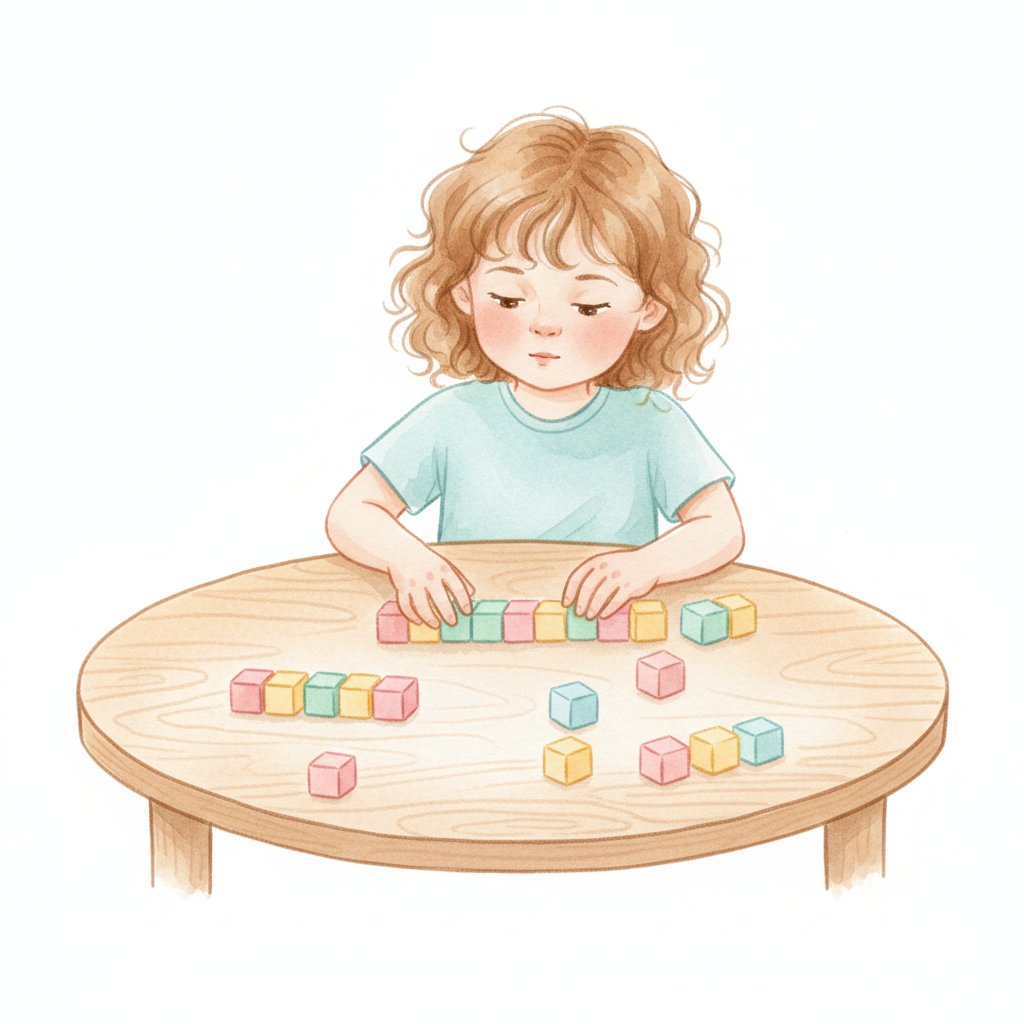
A child arranging colorful counting cubes into repeating pattern rows
MonthFocusDomainWhat to try
1Counting 1-5Number senseMuffin-Tin Counting; Counting Clean-Up
2Recognizing numerals 1-5Number senseMissing Number; number poster pointing
3Counting 1-10Number senseRoll and Collect; "How Many Fingers?"
4Shape namingShapes & spaceShape Hunt; shapes poster daily
5Position wordsShapes & spaceBody Position Simon Says; Build-It Challenge
6Sorting by one rulePatterns & sorting"What's My Rule?" Sort; attribute sorting
7Repeating patternsPatterns & sortingColor Block Patterns; Bead Trains
8Comparing quantityMeasurement & dataMore or Less Jar; Tower & Compare
9Ordering by sizeMeasurement & dataBigger or Smaller line-up; Balance Scale
10Keeping recordsMeasurement & dataOur Day on a Chart; weather tally
11Patterns in sound & movementPatterns & sortingSound & Movement Patterns; "What Doesn't Belong?"
12Mixing it all togetherAll fourYour child picks the day's domain; review favorites

A few notes from running this for real: the first three months will feel slow, and that's correct — number sense is the bedrock everything else stands on, and rushing it is the most common mistake I see. By month six, when sorting clicks, you'll notice children start patterning almost on their own. The "mixing it all together" final month isn't filler — it's where you find out which domains still feel shaky and circle back. If you're also tracking broader school readiness, map this against our kindergarten readiness checklist for parents.

A wall that teaches while you do the dishes
A set of educational posters — numbers, shapes, colors — at child eye level does half the work for you. Kids reference them on their own, all day, without a lesson. Download, print, and let the wall do the teaching.

Fitting Math Into the Day You Already Have

Children glancing at a number line and alphabet strip on the classroom wall

The single best predictor of whether a preschooler's math skills grow isn't a fancy curriculum — it's whether math shows up in ordinary moments. You don't need a thirty-minute math block. You need a hundred ten-second ones:

  • Getting dressed: "Two socks, two shoes — that's four!"
  • Snack time: "Give everyone three crackers. How many is that for four kids?"
  • Outdoors: Count steps to the park, cars in the driveway, birds on the wire.
  • Play: "Your tower has twelve blocks — can we make it fifteen?"
  • Bedtime: "Pick three books," then count them together.

This everyday approach pairs beautifully with STEM activities for preschoolers at home and block and building activities, where math shows up naturally. The principle is simple: name the math out loud whenever you see it, and your child will start to see it too.

Signs Your Preschooler Is Making Progress

You won't see a grade. Watch for these instead:

  • Counts objects accurately to 10 without skipping or double-counting.
  • Knows the last number said is the total ("1, 2, 3, 4, 5 — there are five!").
  • Names circle, square, triangle, rectangle in the real world, not just on a card.
  • Uses position words like on, under, next to, between correctly.
  • Sorts by a rule and can tell you what the rule is.
  • Extends a simple pattern and can tell you what comes next.
  • Compares usingmore, less, bigger, smaller, longer, shorter.

If most of these are showing up by age five, your child is well on track. If a few are missing, don't panic — go back to the matching domain in the roadmap above and linger there. The math-readiness checklist in our math readiness for kindergarten activities guide tells you exactly which skills matter most for the school transition.

When Math Feels Hard

Math anxiety can start startlingly early — sometimes before age four. If your child freezes, avoids number games, or gets teary:

  1. Make it shorter. Five happy minutes beat twenty tearful ones.
  2. Make it physical. Move, jump, touch. Sitting still at a table is the hardest setting for a young brain to do math.
  3. Make it social. Practice with a sibling or friend; competition motivates some children.
  4. Never test, always play. "Can you do this?" creates pressure. "I wonder what happens if..." creates curiosity.
  5. Check the basics. A surprising number of "math struggles" are really a counting gap. Shore up one-to-one counting first.

A regulated, calm child learns; a stressed child doesn't. The self-regulation strategies in our broader learning guides apply here too — start calm, then bring the math back.

A parent gently encouraging a child during a short relaxed math game
1.At what age should I start math activities with my preschooler?
Meaningful math play can start around age two with simple counting and shape naming, but most structured math activities for preschoolers fit ages three to five. The 12-month roadmap in this guide is written for that 3-5 range. Start wherever your child is — if they can't count to five yet, begin at Month 1 even if they're already four.
2.How is this different from just teaching my child to count?
Counting is only one of the four math domains. A child who counts to 100 but can't sort by color, recognize a triangle in a picture book, or tell you which pile has "more" has gaps. This guide deliberately rotates through number sense, shapes and spatial reasoning, patterns and sorting, and measurement and data so no domain is left behind. For counting alone, use our counting activities guide as a companion.
3.Do I need special materials or apps to teach preschool math?
No. The best preschool math activities use things you already own — buttons, blocks, dry beans, shoes, muffin tins, and your child's own body. A number poster and a shapes poster on the wall help, but screens and apps are optional and, for this age, generally less effective than hands-on play. Real objects and real talk teach far more than a worksheet ever will.
4.How often should we do math activities?
Aim for short and daily rather than long and rare. Five to ten minutes of a focused activity plus math woven through everyday moments (counting snacks, sorting laundry, finding shapes on a walk) beats a single long weekly "lesson." Consistency matters far more than duration at this age.
5.What if my preschooler is ahead — or behind — the month-by-month plan?
The months are a guide, not a deadline. A child who flies through counting may linger on patterns, and that's normal because the four domains develop at different rates. If a skill is solid, move ahead or go deeper within the same domain. If a month's skill isn't clicking, stay there longer. Adjust to the child in front of you, not the calendar.