Sorting and Classifying
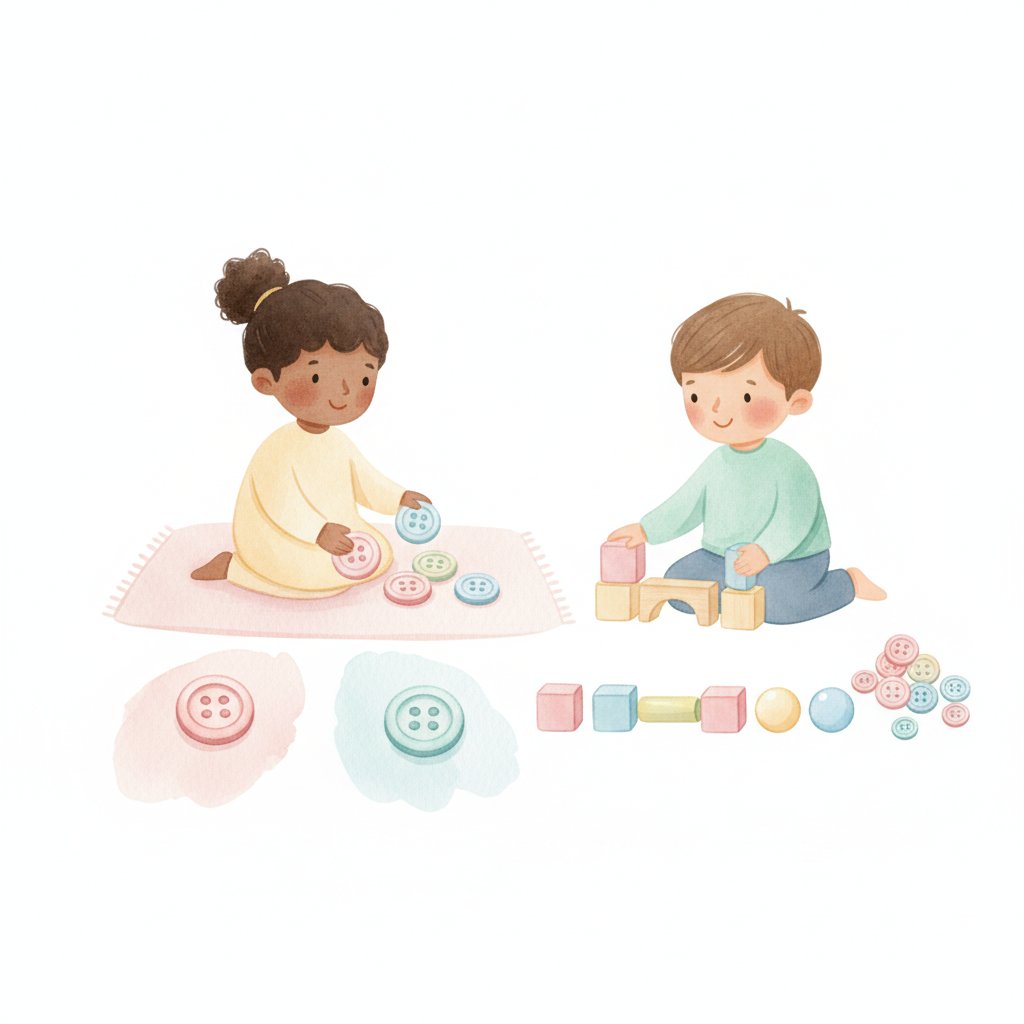
6. Button Sort
Give your child a handful of mixed buttons. Sort by color, then by size, then by number of holes. Each round uses a different "rule."
Skill: Classification by multiple attributes
7. Laundry Sort
Have your child help with laundry by sorting clothes into piles: socks, shirts, pants. Then sort by color: lights and darks.
Skill: Real-world classification
Patterns
8. Color Block Patterns
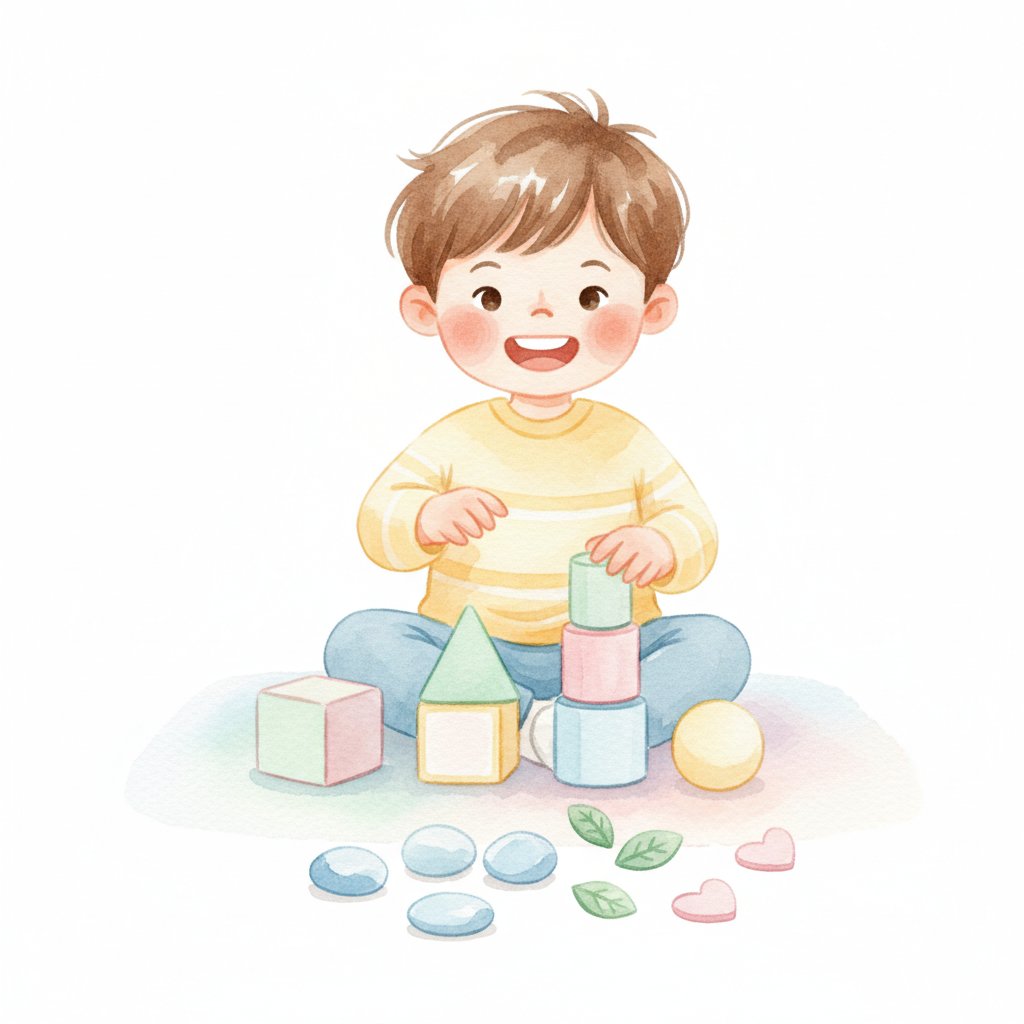
Build a tower using a repeating color pattern: red-blue-red-blue. Ask: "What color comes next?" Start with AB patterns and progress to ABC (red-blue-green).
Skill: Pattern recognition and extension
9. Clap and Stomp
Create body percussion patterns: "clap, clap, stomp, clap, clap, stomp..." Take turns making patterns for each other to copy.
Skill: Auditory pattern recognition
Spatial Reasoning
10. Puzzle Time
Jigsaw puzzles build spatial reasoning naturally. Start with 12-24 piece puzzles and work up. Talk about pieces: "This edge piece goes on the left side."
Skill: Spatial visualization + problem-solving
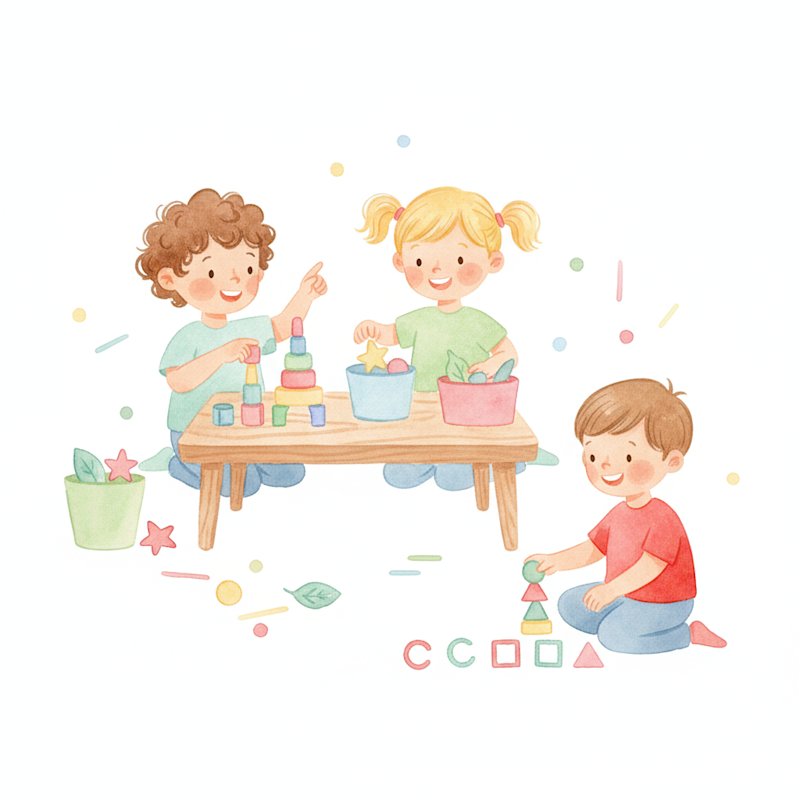
11. Block Building Challenge
Describe a structure and have your child build it: "Put the red block on top of the blue block. Put the green block next to the blue block."
Skill: Following spatial instructions
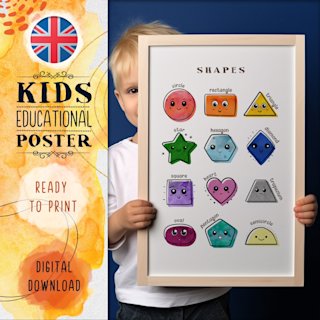
12. Shape Hunt
Walk through your home looking for shapes. "The clock is a circle! The door is a rectangle! The TV is a rectangle too!" Count how many of each shape you find.
Skill: Shape identification in context
Kindergarten Math Readiness Checklist
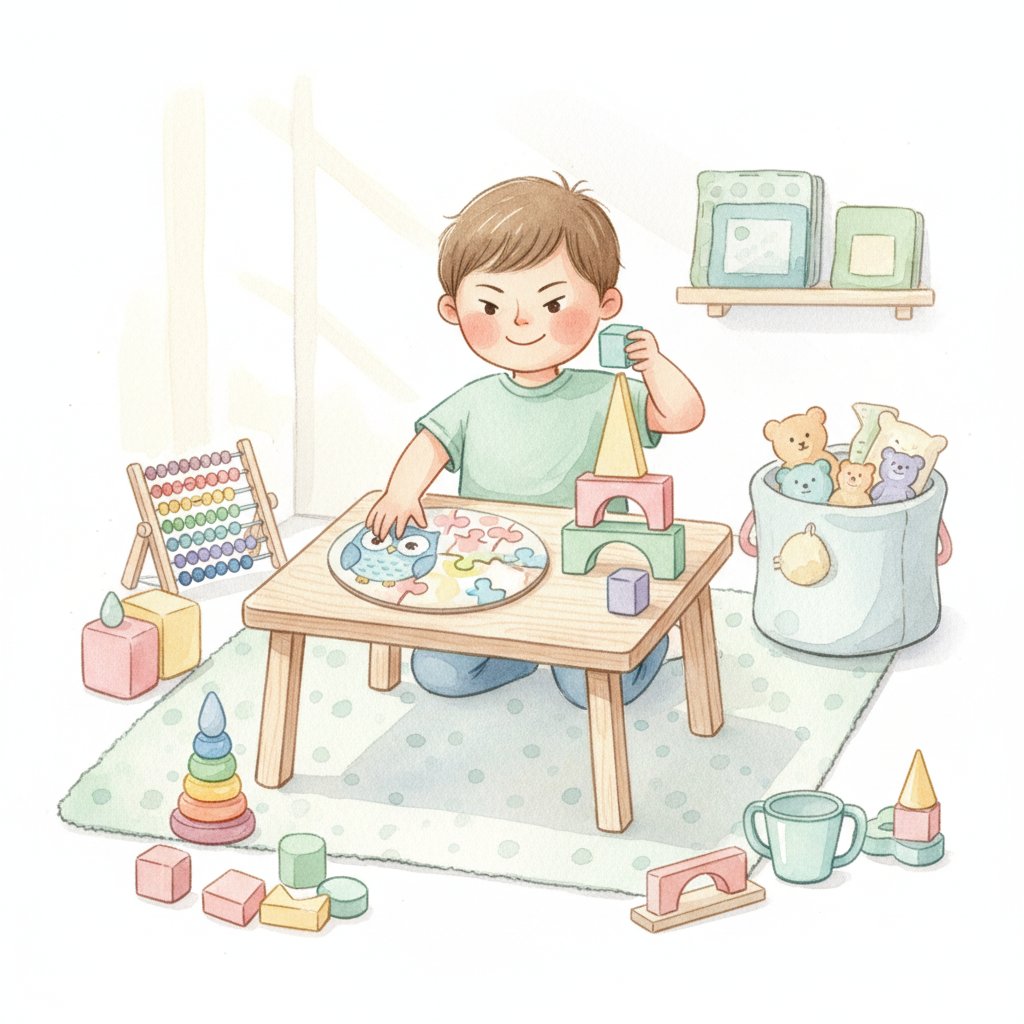
Before the first day of kindergarten, most children can:
If your child can do most of these, they're math-ready. If several items are unchecked, don't panic — focus on the counting and number recognition activities above. Those two areas have the biggest impact on kindergarten success.
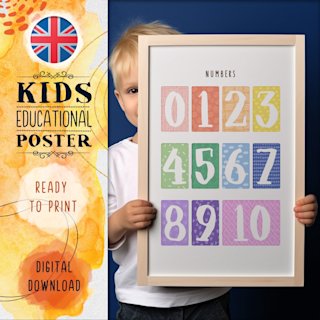
For a visual reference on the wall, our Number Posters for Classroom 1-20 provide a daily number line that reinforces numerals and their sequence.
What If My Child Is Struggling?
Math anxiety starts early. If your child avoids number activities or gets frustrated:
Make it shorter — 5-minute sessions are better than 20-minute ones that end in tears
Make it physical — Move, jump, and touch instead of sitting at a table
Make it social — Practice with a friend or sibling
Make it low-pressure — Never test; always play
Check the basics — Sometimes "math struggles" are actually counting gaps
The self-regulation strategies in our self-regulation for kids guide apply here too — frustrated kids can't learn. Start with a calm, regulated state, then introduce the math activity.
Preparing the Environment
Create a math-rich space at home with number posters, counting manipulatives, and shape puzzles visible and accessible. For classroom setup ideas, see our classroom decor ideas for preschool and STEM activities for preschoolers at home for science-math integration.
A math-friendly space doesn't need to be expensive:
Number line on the wall — Use number posters or make one with tape and marker
Counting materials bin — Buttons, bears, blocks, beans in a labeled container
Number flashcards — Versatile for a dozen activities
Shape stencils — For drawing and identifying shapes
Pattern blocks or Legos — For building patterns and structures
Measuring tools — Ruler, measuring tape, kitchen scale for real-world math
See our Classroom Posters for Teachers guide for more on setting up a learning-rich environment.
Looking for learning tools? Our Monster Feelings Flashcards help kids identify and express emotions — a critical self-regulation skill that supports all academic learning, including math.
More early learning guides:
Number Flashcards for Kids
Counting Activities for Preschoolers
Teaching Number Recognition
Skip Counting Activities
Number Posters for Classroom 1-20
Printable Flashcards for Kids
Educational Flashcards for Preschool
Alphabet Flashcards for Preschool
Classroom Decor Ideas for Preschool