Articles11 min read

Gratitude Activities for Kids: A Classroom and Home Guide with Printables

Research-based gratitude activities for kids — daily routines, fifteen printable activities, age-by-age guidance, and the scripts that turn "I'm thankful for" into a habit children actually keep.

Warm elementary classroom community sharing feelings near a feelings chart

Gratitude Activities for Kids: A Classroom and Home Guide with Printables

I ran the same gratitude activity for three years before it worked. The first version was a jar on the windowsill where students dropped slips of paper naming things they were thankful for. For two years, the jar sat mostly empty except for the slips I wrote myself. The children liked the idea; they just never remembered in the moment.

The version that worked was smaller and built into something we already did. At the end of our morning meeting, I added one sentence: "Before we start, tell your shoulder partner one good thing from yesterday." No jar, no slips, no special time. Within a week, children were mentioning the partner-share spontaneously. Within a month, a child who had been through a hard time at home said, quietly, "My partner said she was grateful for me." That is the whole reason to teach gratitude — not the cheerful posters, but the shift in how children look at each other.

This guide is the practical, year-round version of what I learned. You will find what the research actually says about gratitude in children, what gratitude looks like at each age, fifteen printable activities sorted by how long they take, daily routines that stick, and honest guidance for the children for whom "be thankful" lands badly. Gratitude is a skill built through practice, not a personality trait — and like any skill, it has a method.
The Science of Gratitude: Why It Matters for Children

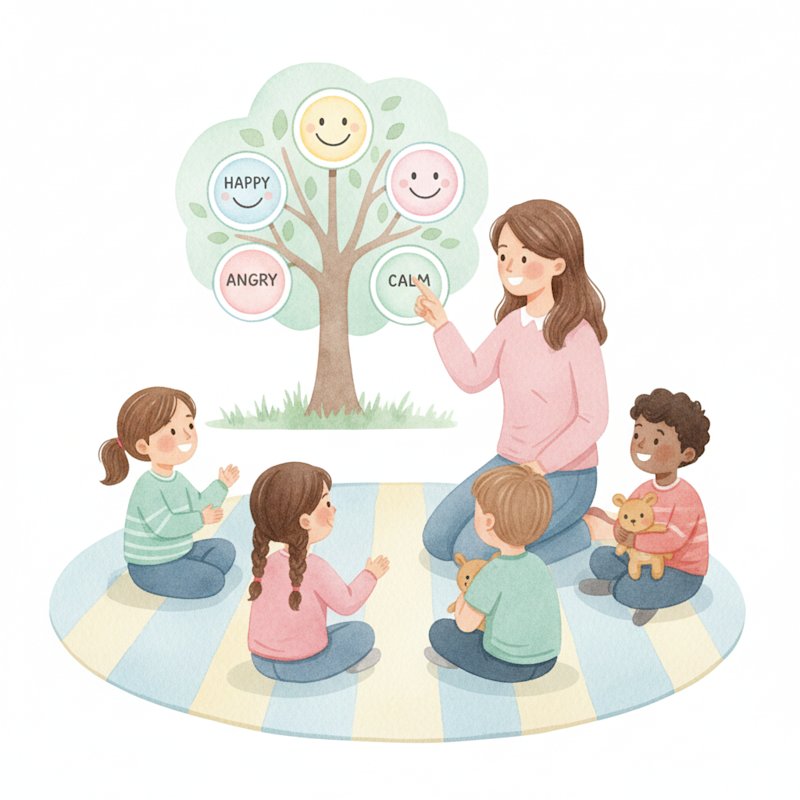
A watercolor illustration of a warm elementary classroom community sharing feelings near a feelings chart

Gratitude is one of the most studied positive-psychology practices, and the research in school settings points in a consistent direction. Children and adolescents who keep a regular gratitude practice, even a brief one, tend to report more positive emotion, better sleep, and stronger social connection than peers who do not. The effects are modest, not miraculous — but they are real, repeatable, and free.

For the classroom specifically, three findings matter more than the rest:

  • Gratitude is built, not born. Studies that track children over time find that grateful thinking can be taught and practiced, and that the children who practice it get better at noticing good things in their lives — including things other people do for them.
  • Frequency beats intensity. A two-minute daily practice outperforms a once-a-month deep exercise. The mechanism is repetition: gratitude is a habit of attention, and attention is built by what we do most days.
  • Gratitude and social connection reinforce each other. When children practice noticing what others do for them, prosocial behavior — sharing, helping, including — tends to rise as well. Gratitude is not separate from the social-emotional learning you already do; it is part of the same picture as the emotion flashcards work and the regulation tools in our calming strategies guide.

One honest caveat: the research also shows gratitude practice can feel hollow or even harmful to children living through real hardship. More on that in the resistance section — because forced gratitude is worse than none.

What Gratitude Looks Like by Age

Gratitude develops the same way language does — in stages. Expecting a kindergartener to feel abstract appreciation for "my family's support" is like expecting them to write an essay. Match the activity to the stage and it clicks.

Ages 5-6: Concrete thanks

Gratitude is for things children can point at: a toy, a snack, a turn on the swings. "Thank you for sharing the red crayon." Activities here are sensory and specific — drawing the thing, naming it out loud, handing a card to the person.

Ages 6-7: Noticing actions

Children start to be thankful for what people do, not just what they give. "Thank you for helping me zip my coat." This is the age gratitude starts to include helpers — the bus driver, the cafeteria worker, the crossing guard.

Ages 7-8: Other people's feelings

Gratitude becomes social. A child can recognize that someone went out of their way: "My friend listened when I was sad, and that was kind." Letters and partner-shares land well here.

Ages 8-9: Growth and challenge

Children can begin to find gratitude inside difficulty — "I learned something from that mistake." This is advanced and should always be optional, never assigned to a child going through something hard.

Ages 9-10: Abstract appreciation

Older elementary students can hold gratitude for abstract things — health, a safe home, a friendship. Journals, reflection sheets, and class discussions work at this stage in ways they cannot at age five.

The Three Types of Gratitude Every Child Should Practice

Most classroom gratitude stops at "things I'm thankful for" — material gratitude. That is a fine start, but it is only one third of the practice. Over time, aim to rotate through all three.

1. Gratitude for people

The most impactful type. Noticing the specific things other people do — and, crucially, telling them. "Thank you for holding the door" matters more than "I'm thankful for my mom" said to no one in particular. The gratitude that changes classroom culture is the kind that gets delivered.

2. Gratitude for experiences

Noticing moments rather than things: a funny moment at recess, a lesson that clicked, the way the sun came out at lunch. This trains the attention to find good things that are already happening — the core skill underneath all gratitude practice.

3. Gratitude for challenges (ages 8-10, optional)

The hardest and most advanced: finding something learned or gained inside something difficult. Use carefully, never with children in active hardship, and never as a way to minimize real problems. Done well, it builds resilience. Done badly, it teaches children to doubt their own struggles.

Daily Gratitude Routines That Actually Stick

A routine is a gratitude practice attached to something you already do. The reason my windowsill jar failed is that it asked children to stop and do something new. The reason the morning-meeting share worked is that it added one sentence to an existing moment.

Morning meeting gratitude share (3 minutes)

At the start of morning meeting: "Tell your shoulder partner one good thing from yesterday or this morning." Rotate partners weekly. Three minutes, no materials, builds the noticing habit.

End-of-day check-in (2 minutes)

Before dismissal: "Thumbs up if something good happened today; thumbs sideways if it was an okay day; thumbs down if it was hard. If you want, tell the person next to you one thing." Lets you spot the child who needs a check-in without putting anyone on the spot.

Gratitude jar done right (ongoing)

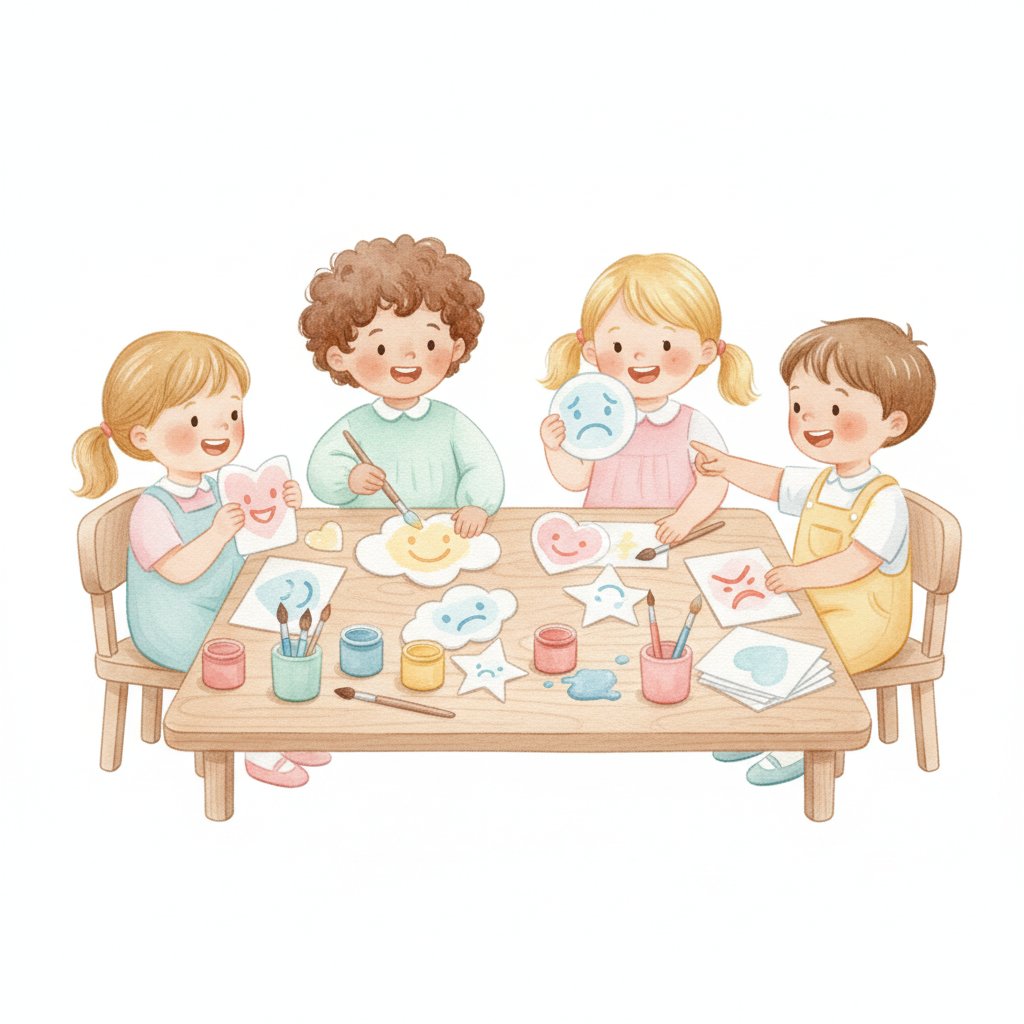
A watercolor illustration of children painting their own feelings chart at a craft table

The jar works when it is part of a routine, not an island. Pair it with a weekly reading: every Friday, pull three slips and read them aloud. Children write slips because they know they will be read. Without the reading, the jar is decoration.

Turn a thankful moment into a sentence a child can carry
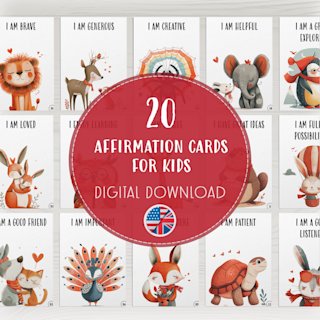
Gratitude becomes powerful when children can name it in their own words. Positive Affirmation cards pair naturally with a daily gratitude share — after a child names something good, hand them a card that matches ('I notice good things,' 'I am kind'). The sentence moves from a one-time share to a belief they rehearse all week.

Fifteen Gratitude Activities for Elementary Students

Sorted by time, so you can pick one that fits the slot you actually have.

Quick activities (5-10 minutes)

  1. Gratitude speed round. Go around the circle; each child says one thing fast, no explanation. Energizing and low-pressure.
  2. Gratitude high-five. Thank one specific person in the room for one specific thing and give them a high-five. Delivered gratitude, not just felt.
  3. Gratitude drawing. Draw the thing you are thankful for — no words required. Ideal for kindergarten and grade one.
  4. Partner thank-you. Turn to a partner and finish the sentence "Thank you for..." Builds the habit of telling people, not just thinking it.

Medium activities (15-20 minutes)

  1. Gratitude letters. Write a short thank-you letter to someone who helped you this week. The research on gratitude letters is some of the strongest in the field — and delivering the letter matters more than writing it.
  2. Gratitude collage. Cut out pictures from magazines (or draw) of things you are thankful for. A visual version that suits children who resist writing.
  3. Gratitude walk. Walk the classroom or playground noticing things you are glad are there. Two minutes of noticing, then share.
  4. Thank-the-helper. As a class, pick one person in the school who helps you (custodian, office manager, bus driver) and make a collective thank-you.

Extended activities (30+ minutes)

  1. Gratitude journal. A structured weekly reflection: three things, one person, one moment. Works best for grades 3-5 with a printable frame so it is not a blank page.
  2. Gratitude tree. A wall display where children add paper leaves naming things they are thankful for. Grows over the year and becomes a visual record of the class's good moments.
  3. Gratitude interviews. Children interview a family member about what that person is grateful for. Builds perspective-taking and brings families into the practice.
  4. Class gratitude book. Each child contributes one page; bind into a book that lives in the classroom library.

Special projects

  1. Gratitude month. A themed month (not November only — see the year-round section) with a different prompt each day.
  2. Gratitude video. Short recorded thank-yous to school helpers, shared with permission. Powerful for school connection.
  3. Family gratitude challenge. A take-home card with a week of prompts, so the practice extends beyond the classroom.
Send gratitude home in a lunchbox
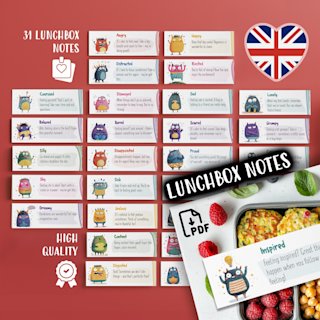
The gratitude that lands hardest is the surprise kind — delivered when a child is not expecting it. Lunchbox Notes let you (or a peer) tuck a one-line thank-you or affirmation into a child's day, turning the school-to-home transition into a moment of connection. Keep a stack by the door and write one note a day to a different child.

Handling Resistance: When Students Don't Want to Participate

Some children push back on gratitude, and they are often the ones the activity was designed to help. How you respond decides whether gratitude becomes a refuge or another thing that makes them feel broken.

Validate first. If a child says there is nothing to be thankful for, believe them — for that child, in that moment, there might not be. Forced gratitude teaches a child to perform feelings they do not have, which is the opposite of the skill.

Make it optional and private. A child who will not share aloud will often draw or write privately. Offer a no-share option every time. Gratitude coerced in front of peers breeds resentment, not thankfulness.

Model genuine gratitude yourself. Name real things, including small and ordinary ones, and include the occasional "I'm having a hard time finding one today, so I'm going with my coffee." Normalizing mixed feelings makes the practice honest.

Be especially careful with children in hardship. A child whose family is struggling with food insecurity, housing, or safety should never be asked to perform gratitude in a group. Offer the practice privately, frame it as "one tiny good thing" rather than "be thankful," and never use gratitude to paper over real suffering. When in doubt, prioritize the relationship over the activity.

Before a child can be thankful, they need a word for the feeling
Gratitude assumes a child can notice and name a positive feeling — but the children who push back on the practice are often the ones missing that vocabulary. An Emotions Chart Poster on the classroom wall gives them the words first (content, proud, relieved, calm, glad), so gratitude has somewhere to land. Hang it next to your morning-meeting spot and the partner-share gets more specific within the week.

Gratitude Beyond Thanksgiving: Year-Round Practices

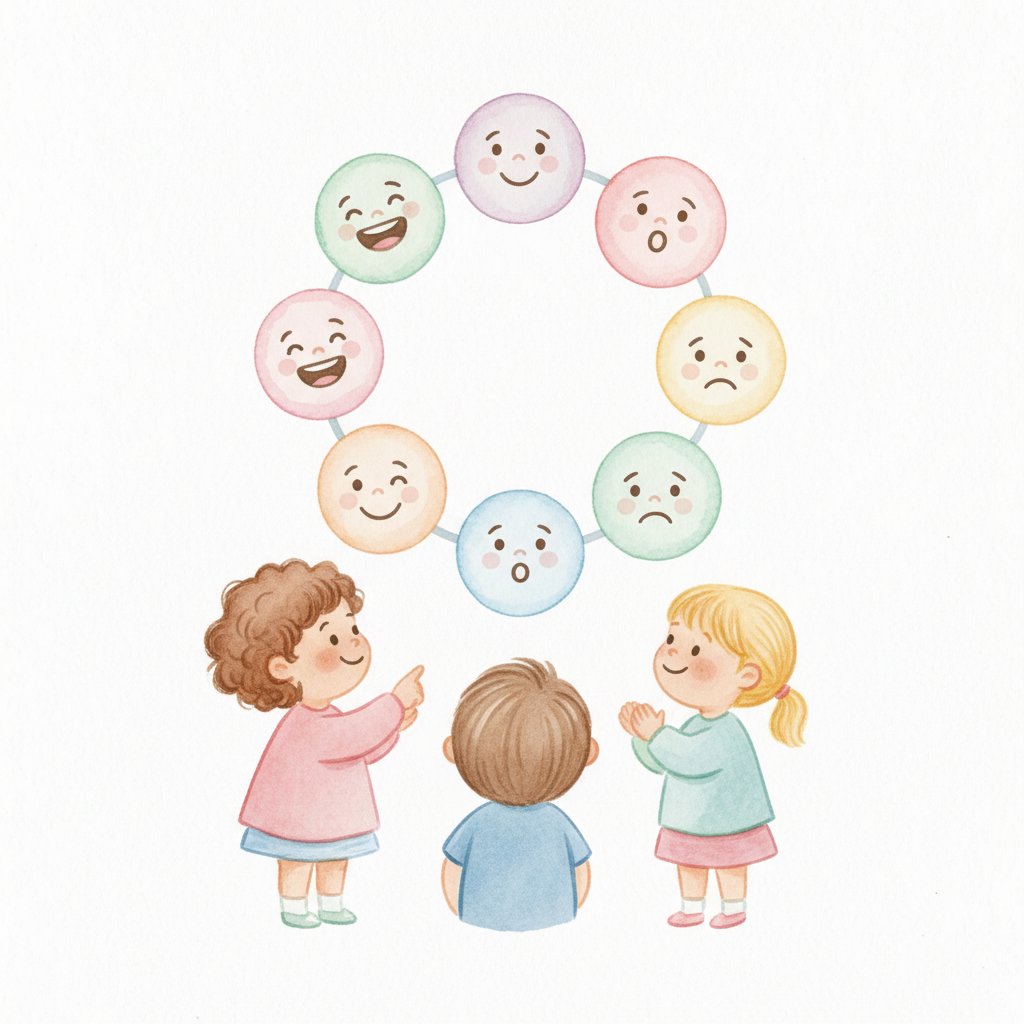
A watercolor illustration of a cheerful feelings chart with friendly emotion faces and children gathered around

The biggest problem with most gratitude content is that it is seasonal. November arrives, the turkeys and "I am thankful for" worksheets appear, and by December gratitude disappears until the following autumn. The research is clear that this schedule builds almost no habit.

If you want gratitude to stick, decouple it from the holiday and attach it to the calendar instead:

  • September: Gratitude for new beginnings — a new class, new friends, new supplies.
  • January: Gratitude for fresh starts and the people who helped us grow last year.
  • March/April: Gratitude for the natural world reappearing — light, warmth, growth.
  • May/June: Gratitude for the year — what we learned, who helped us, what we will miss.

Run one short activity a week, all year, and gratitude stops being a November costume and becomes a way the class looks at the world. Pair it with a permanent wall display (the gratitude tree works for this) so the practice has a visible home.

Frequently Asked Questions

How long should gratitude activities take?

Start with two to three minutes a day. A daily partner-share at morning meeting is enough to build the habit, and it is sustainable for the teacher. Longer activities (letters, journals, the tree) are valuable as weekly anchors, not daily requirements.

What if a student says they have nothing to be grateful for?

Believe them, do not argue. Offer a private, no-share alternative, or let them pass. A child in genuine hardship is not helped by being told to find the silver lining. Over time, as trust builds, many of these children begin to participate on their own terms.

Is gratitude just positive-thinking fluff?

No — when done honestly. Toxic positivity insists everything is fine; genuine gratitude acknowledges that hard things exist and also notices good things alongside them. The difference is honesty. If your gratitude practice requires children to deny difficult feelings, it has become the fluff version and should be redesigned.

How do I handle students in difficult home situations?

Never make gratitude public or compulsory for these students. Offer it privately, frame it as noticing rather than thanking, and prioritize your relationship with the child over the activity. If you suspect a child is in crisis, gratitude practice is not the intervention — follow your safeguarding procedures.

Can gratitude actually reduce behavior problems?

Indirectly, yes. Gratitude strengthens the social fabric of a classroom — children who notice what others do for them tend to treat those others better. It is not a behavior-management tool, and it works best alongside clear routines and strong relationships, not as a replacement for them.

Should I use a gratitude journal?

For grades 3-5, a structured journal with prompts works well. For younger children, drawing or talking is more developmentally appropriate than writing. The format matters less than the frequency — a weekly journal entry used consistently beats a daily one abandoned in week two.

Start With One Sentence Tomorrow

Gratitude does not need a jar, a month, or a unit plan. It needs one sentence, added to a moment that already exists. Try the morning-meeting partner-share for one week — "Tell your shoulder partner one good thing" — and watch what happens to the tone of the room.

From there, add one weekly anchor (a letter, a tree, a journal) and rotate through the three types of gratitude over the month. Keep it honest, keep it optional, and keep it going past November. For the wider social-emotional foundation, explore our emotion flashcards guide and the circle time activities where a gratitude share fits naturally. You can also browse the full set of articles for more classroom-ready practices.