Articles9 min read

The Day My Son Ran Across the Playground Without Falling

He was four, and until that day, every run ended the same way: a stumble, a fall, scraped knees. His pediatrician said it was normal — "He's just developing his coordination." But I worried. Then his preschool teacher told me to try "animal walks" — crab walking, bear crawling, bunny hopping. For two weeks, we did animal walks every evening. On the third week, he ran across the entire playground without falling once.

Gross motor skills — the large movements that use the arms, legs, and core — develop on a timeline, but they develop faster with practice. The CDC's developmental milestones show that children should be running, jumping, and climbing by age 3-4, but many children don't get enough movement practice to develop these skills on schedule. Screen time, smaller outdoor spaces, and structured activities that prioritize sitting over moving all contribute to a generation of children with weaker gross motor skills.

This guide covers 20+ gross motor activities for ages 2-6 that build coordination, balance, strength, and body awareness. All require minimal equipment and work in small spaces. Pair it with our fine motor activities for the complete motor development picture and our scissor skills guide for hand-specific skills.
Why Gross Motor Skills Matter

Gross motor development affects everything — not just physical ability:

Brain development: Movement builds neural connections. Research shows that physical activity in early childhood increases brain volume in areas responsible for attention, memory, and cognitive control. Children who move more learn more.

Self-regulation: Children who can control their bodies can better control their behavior. Gross motor competence predicts classroom self-regulation better than any other physical measure.

Social participation: A child who can't run, jump, or climb avoids playground games. This isolates them socially. Gross motor confidence is social confidence.

Writing readiness: Yes, writing starts in the core. Children need strong shoulders, arms, and wrists to hold a pencil with control. Sitting upright at a desk requires core strength developed through movement.

AgeGross Motor Milestone
2-3Runs, climbs stairs (both feet per step), kicks a ball, throws overhand
3-4Hops on one foot, catches a bounced ball, pedals a tricycle
4-5Skips, gallops, balances on one foot for 5+ seconds, jumps over objects
5-6Skips smoothly, rides a bike, does somersaults, climbs playground equipment confidently

Balance Activities (Ages 3+)

1. Tightrope Walking

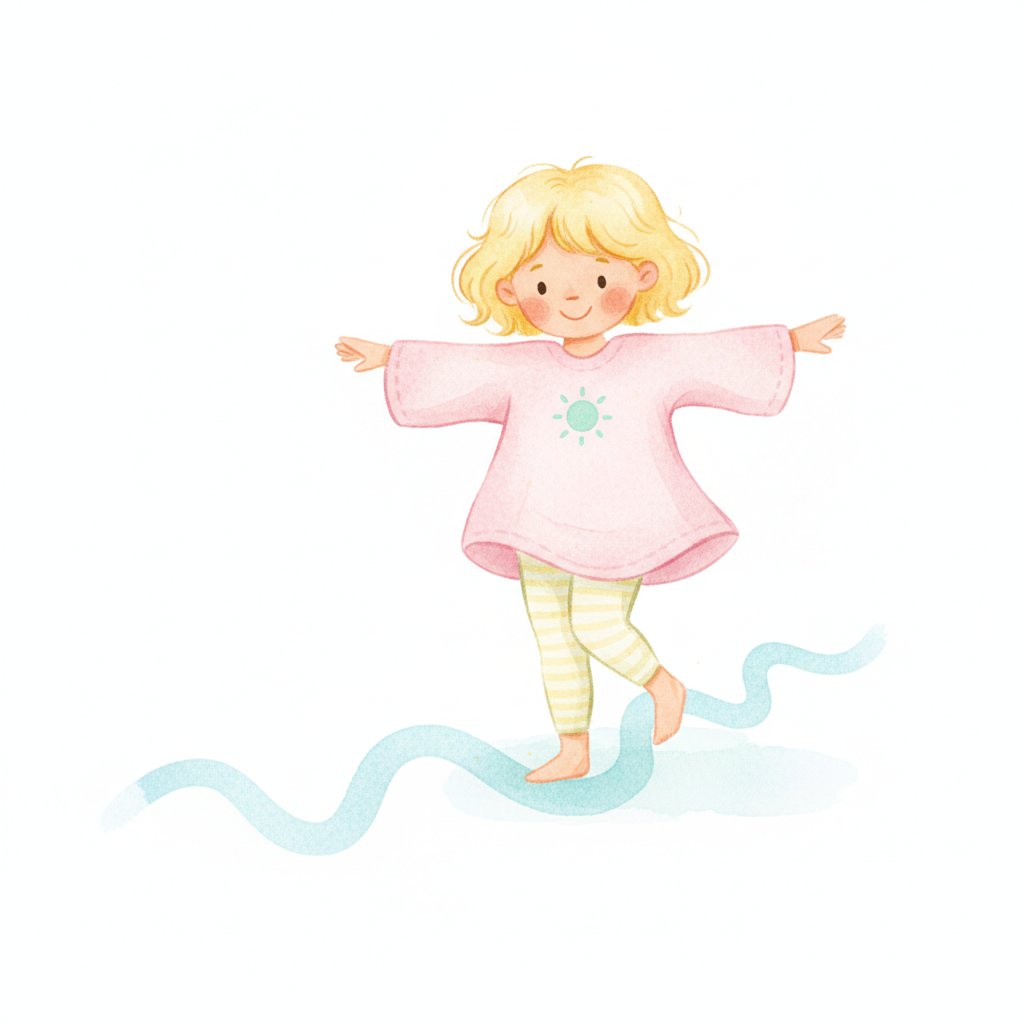
Place painter's tape on the floor in a straight line (6-10 feet). Children walk heel-to-toe along the line: "You're a tightrope walker! Don't fall into the lava!" Increase difficulty: walk backwards, walk sideways, carry a beanbag on your head while walking.

Materials: Painter's tape
Time: 5-10 minutes

2. Freeze Balance

Play music. Children dance freely. When the music stops, freeze on one foot. Count: "1, 2, 3, 4, 5 — you did it!" Increase the count over weeks. The freeze-and-balance combination trains both listening and equilibrium.

Materials: Music player
Time: 5 minutes

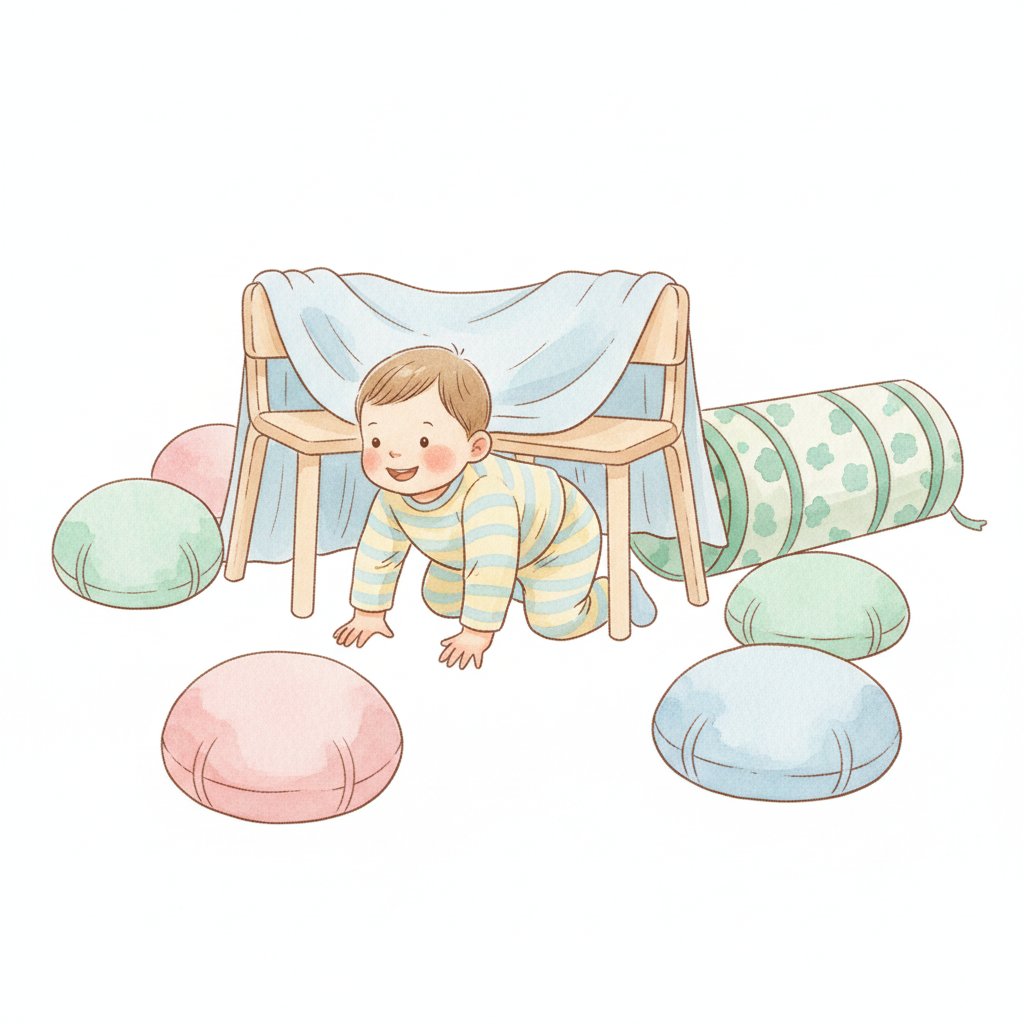
3. Pillow Mountain Balance

Stack couch cushions and pillows. Children climb over, balancing on each one. "Step on the red pillow... now the blue one... don't touch the floor!" Unstable surfaces build proprioception — the body's sense of where it is in space.

Materials: Couch cushions, pillows
Time: 10 minutes

4. Beanbag Balance Walk

Place a beanbag (or small stuffed animal) on the child's head. Walk across the room without letting it fall. Then try: walking backwards, walking sideways, walking while singing. Each variation adds a layer of challenge.

Materials: Beanbag or small stuffed animal
Time: 5 minutes

Jumping and Hopping Activities (Ages 3+)

5. Jump the River

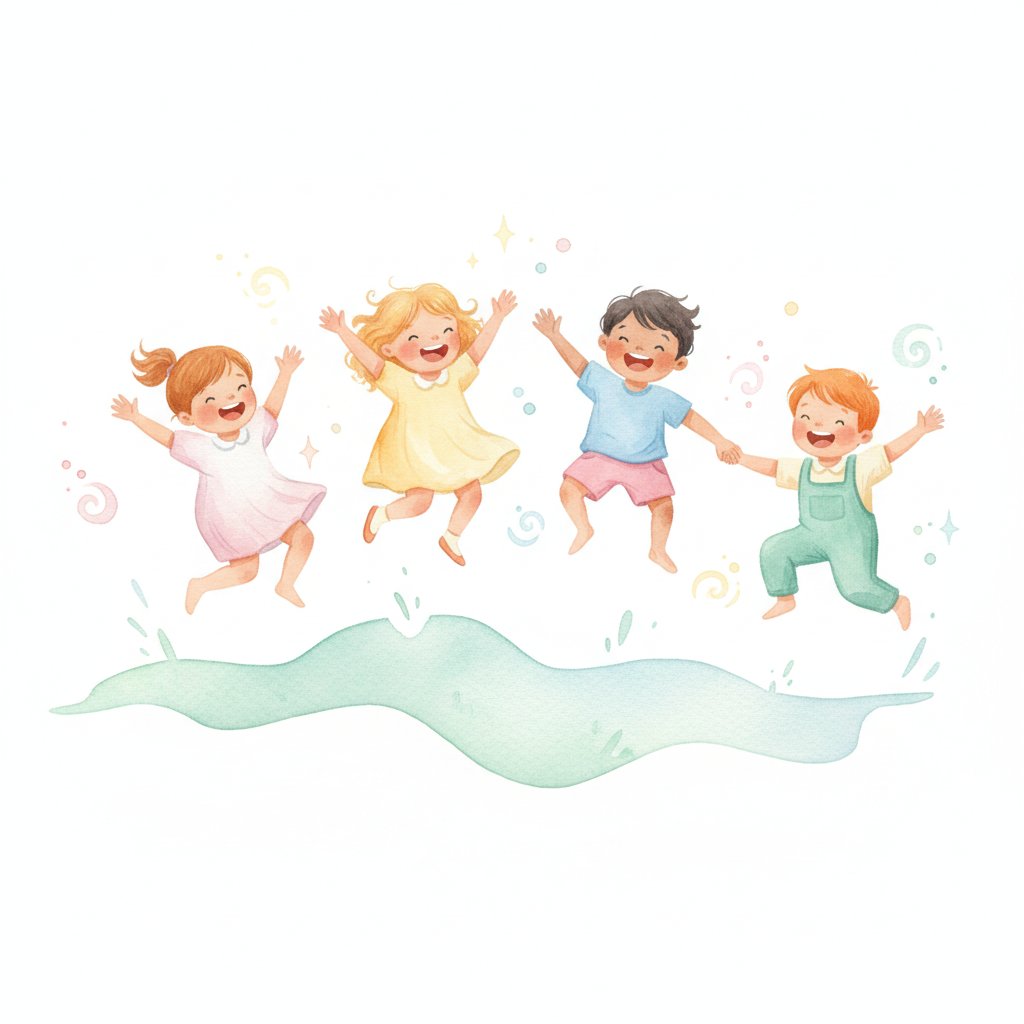
Place two pieces of tape on the floor 6 inches apart ("the river"). Children jump across. Each successful jump, widen the river by 2 inches. "Can you jump the Mississippi?" Measure each jump with excitement.

Materials: Painter's tape
Time: 5-10 minutes

6. Animal Hopscotch

Draw a hopscotch grid but replace numbers with animals. Children hop to each square and make the animal's sound: "Ribbit!" "Moo!" "Baa!" Combines hopping with animal vocabulary.

Materials: Chalk (outside) or tape (inside)
Time: 10 minutes

7. Sack Race (Pillowcase Style)

Children stand in pillowcases and hop to a finish line. The hopping requires both legs working together, core engagement, and balance. Falls are soft and funny — the stakes are low.

Materials: Pillowcases (one per child)
Time: 10 minutes

8. Long Jump Challenge

Place a starting line. Children jump as far as they can from a standing position. Mark the landing point with tape. "Can you beat your own record?" Self-competition removes the frustration of losing to others.

Materials: Tape, measuring tape
Time: 10 minutes

For more measurement activities, see our counting activities guide.

Animal Walks and Crawling (Ages 2+)

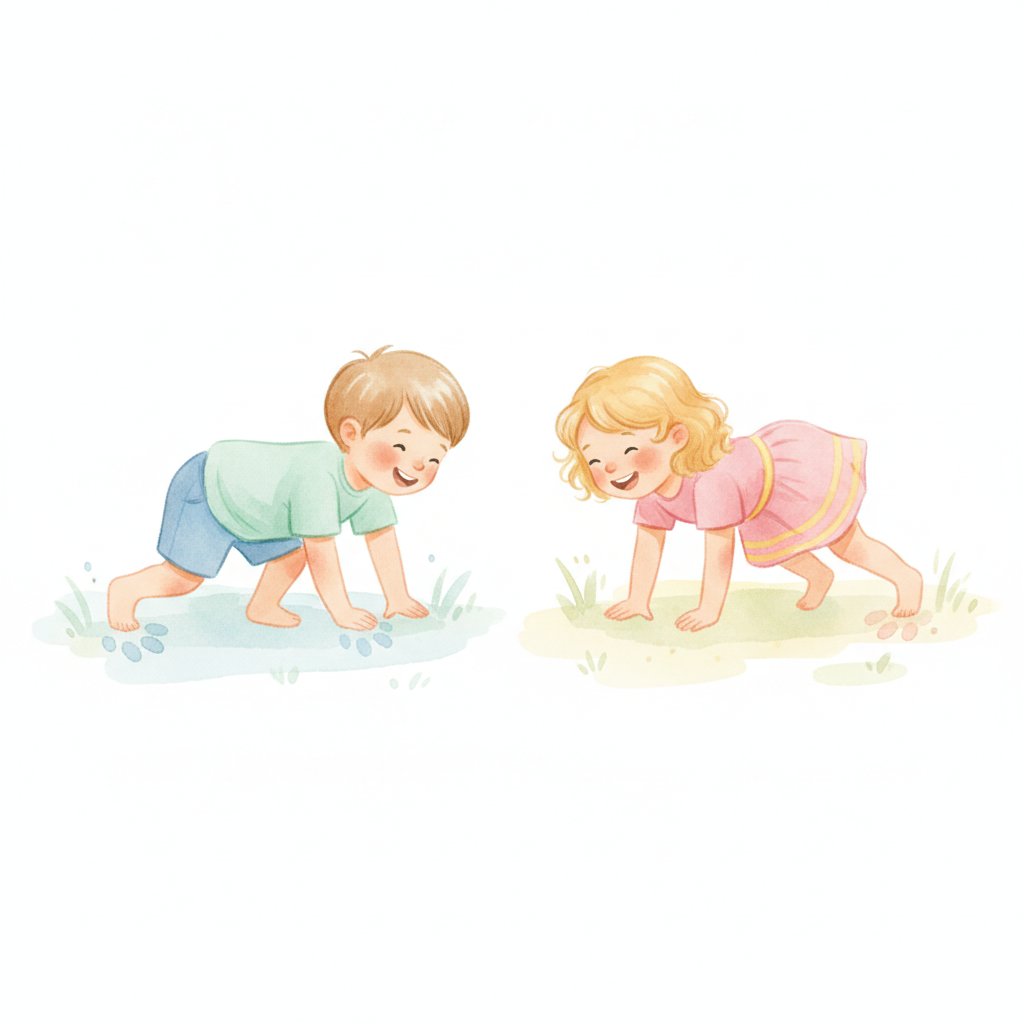
9. Bear Walk

Walk on hands and feet with hips high (bottom in the air). "Bears walk through the forest looking for honey!" Bear walking builds shoulder stability, core strength, and bilateral coordination — all prerequisites for fine motor control.

Time: 3-5 minutes

10. Crab Walk

Sit on the floor, hands behind you, lift hips, and walk on hands and feet. "Crabs scuttle sideways!" Crab walking is one of the best core-strengthening activities for children. It also opens the chest and shoulders, counteracting the hunched posture from sitting.

Time: 3-5 minutes

11. Snake Slither

Lie on the floor and slither like a snake, using only arms to pull forward. "Snakes don't have legs!" This builds upper body strength and is hilariously difficult for preschoolers.

Time: 3-5 minutes

12. Frog Jump

Squat low, hands on the floor between feet, jump as high and far as possible. "Ribbit!" Frog jumps are essentially squats and jumps combined — a full lower-body workout disguised as a game.

Time: 3-5 minutes

Animal Walk Circuit: Set up stations around the room or yard. At each station, a card shows an animal. Children do that animal's walk to the next station. Bear → Crab → Snake → Frog → Bunny Hop → Penguin Waddle. One circuit hits every major muscle group.

Animal walks meet animal vocabulary
Our Farm Animals Flashcards become gross motor game cards: 'Walk like a COW — slow and heavy!' 'Hop like a CHICKEN — fast and small!' 'Gallop like a HORSE!' Each card is both a vocabulary lesson and a movement challenge. 10 animals, 10 movements, one deck.
Weather movement game: move like the weather
Our Weather Flashcards double as movement cards: 'Sunny — stretch tall like the sun!' 'Rainy — pitter-patter with small fast steps!' 'Windy — sway side to side!' 'Snowy — do slow-motion movements!' Each weather word becomes a gross motor activity.
Feelings in motion: move how you feel
Our Feelings Poster Set inspires movement activities: 'Show me EXCITED with your body!' (jumping, spinning). 'Show me CALM with your body' (slow breathing, gentle swaying). 'Show me ANGRY with your body!' (stomping). Children learn that emotions have physical expressions — and that moving can change how you feel.

Obstacle Courses (Ages 3+)

13. Living Room Obstacle Course

Design a course using furniture and household items:

  1. Crawl under the dining table
  2. Walk along a tape line on the floor
  3. Jump over three cushions
  4. Balance a beanbag on your head to the couch
  5. Throw a ball into a laundry basket
  6. Crab walk back to the start

Time each run. "Can you beat your own time?" Self-competition keeps motivation high.

Materials: Furniture, tape, cushions, beanbag, ball, laundry basket
Time: 15-20 minutes

14. Outdoor Nature Obstacle Course

Use natural elements: step over sticks, balance on a fallen log, jump across a puddle (or imaginary puddle), run around a tree three times, crawl through a low branch. Nature provides infinite obstacles.

Materials: None (outdoor space)
Time: 15-20 minutes

For more outdoor ideas, see our outdoor learning activities.

Set up targets at different distances: a laundry basket (close), a hula hoop on the floor (medium), a drawn circle on a wall (far). Children throw soft balls or beanbags at each target. Start close and move back as accuracy improves.

Materials: Soft balls or beanbags, targets at varying distances
Time: 10-15 minutes

Movement Songs and Indoor Rainy-Day Activities

16. Action Song: Head Shoulders Knees and Toes

The classic. Speed up each round: slow, medium, fast, super fast. The acceleration challenges children's coordination. Then reverse: "Toes, knees, shoulders, head!" Reversing the order requires cognitive flexibility alongside physical coordination.

Time: 3-5 minutes

17. Action Song: The Hokey Pokey

"You put your right hand in, you put your right hand out..." The Hokey Pokey teaches left/right discrimination, body parts vocabulary, and spatial prepositions (in, out, around) through full-body movement.

Time: 5 minutes

For more body parts vocabulary, see our body parts activities guide.

18. Balloon Keep-Up

Blow up a balloon. Children keep it from touching the floor by hitting it with their hands, heads, shoulders, elbows, or knees. Call out which body part to use: "Only knees!" "Only your head!" Balloon keep-up is aerobic, requires rapid motor planning, and works in the smallest apartment.

Materials: One balloon
Time: 5-10 minutes

19. Mirror Dancing

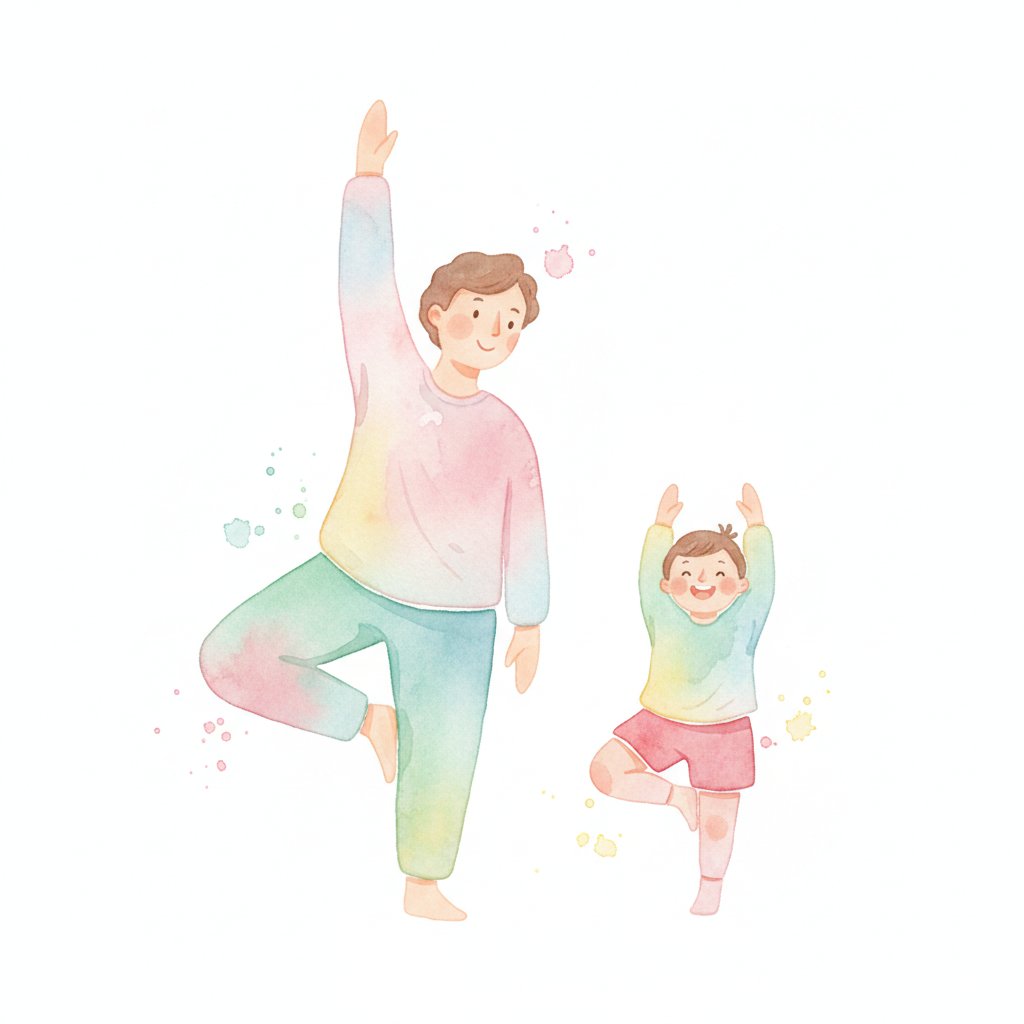
Face your child. You move slowly — raise an arm, tilt your head, bend a knee. They mirror your movements exactly. Then switch: they lead, you mirror. Mirror dancing teaches body awareness, visual attention, and motor planning.

Materials: None
Time: 5 minutes

20. Yoga Story Time

Tell a story using yoga poses: "Once there was a DOG (downward dog) who lived in a TREE (tree pose). Every morning he did a CAT STRETCH (cat-cow)..." Children hold each pose while the story continues. Yoga builds balance, flexibility, and self-regulation — the slow, controlled movements are the opposite of chaotic running, providing a movement balance.

Materials: None
Time: 10 minutes

For more indoor activities, see our screen-free activities for kids.

Tips for Gross Motor Activities

For Parents

The American Academy of Pediatrics recommends 60+ minutes of physical activity per day for preschoolers. This doesn't mean 60 minutes of organized exercise — it means 60 minutes of moving. Running in the yard counts. Playground time counts. Walking to the park counts. The activities in this guide are ways to make that movement more intentional, not a replacement for free play.

Safety basics:

  • Clear the area of hard/sharp objects before indoor activities
  • Bare feet or non-slip socks (not regular socks on hard floors)
  • Supervise climbing activities at all times
  • Stay on soft surfaces (grass, carpet, mats) for jumping

Don't compare your child to others. Gross motor development varies enormously. Some 3-year-olds can hop on one foot; others are still mastering running. Both are normal. If you're concerned, talk to your pediatrician — early physical therapy is highly effective for motor delays.

For Classroom Teachers

Movement throughout the day:

  • Morning meeting: 1-2 action songs (5 minutes)
  • Transition: animal walk to the next center (2 minutes)
  • Outdoor time: obstacle course or group game (20-30 minutes)
  • Afternoon: yoga or stretching (5 minutes)

Rainy-day indoor alternatives:

  • Hallway relay races (if space allows)
  • Classroom obstacle course (between tables)
  • Dance freeze
  • Balloon keep-up
  • Animal walk stations

For more classroom movement ideas, see our circle time activities.

Frequently Asked Questions

How much physical activity does a preschooler need?

The AAP recommends at least 60 minutes of structured physical activity (adult-led games and activities) and at least 60 minutes of unstructured free play per day. Total: 2+ hours of movement daily.

My child avoids physical activity. What should I do?

Make it playful, not exercise-y. Don't say "let's exercise" — say "let's play animal zoo!" or "let's do an obstacle course!" Children who resist structured movement often love it when it's framed as a game.

Is climbing furniture normal?

Yes — it's how children develop upper body strength and spatial awareness. Provide safe climbing opportunities (playground, cushion piles, climbing toys) and redirect unsafe climbing to appropriate surfaces.

Should my child be able to ride a bike?

Most children learn to ride a tricycle at age 3-4 and a two-wheeler with training wheels at age 4-5. Balance bikes (no pedals) teach balance earlier and often lead to two-wheelers without training wheels.

For more physical development support, explore our sensory play activities and STEM activities.