Articles9 min read

Grow-With-Child Kids Learning Wall Art by Age

A developmental approach to kids learning wall art — poster bundles sequenced for ages 3–4, 5–6, and 7–8 that grow with your child instead of decorating one birthday and fading by the next.

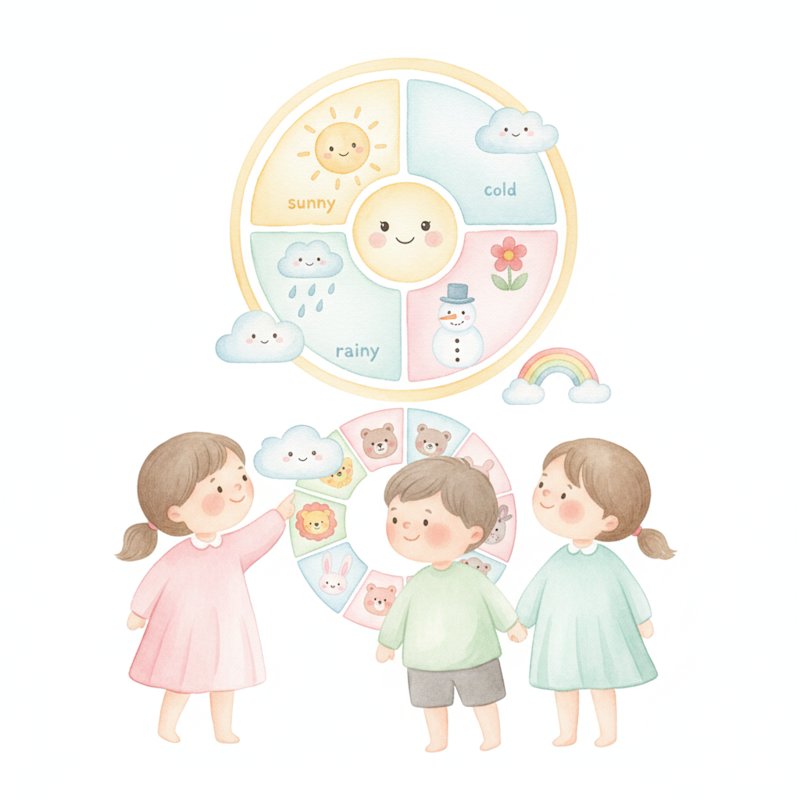
children looking at a friendly weather and calendar display together

Why Most Kids' Wall Art Stops Working by Year Two
A parent and child reading together on a cozy sofa at home

When my daughter turned three, I taped six glossy learning prints above her little table — an alphabet chart, a world map, two number posters, a color wheel, and a motivational unicorn. By her fifth birthday, four of the six had never earned a second glance, the world map was far too dense for her, and I had accidentally hung two alphabet charts that taught the letter sounds differently. I tore it all down and rebuilt the wall as a developmental sequence — a small set of posters matched to the exact skills she was practicing that year.

The shift was measurable. The new number line got counted out loud almost daily for about six weeks. The alphabet chart I placed at her eye level — 34 inches from the floor — became the thing she traced with her finger while she ate breakfast. That rebuild is the whole idea behind grow-with-child kids learning wall art: instead of buying one random collection that decorates a single age, you build a layered wall where each layer maps to a developmental stage, and you swap the layers as your child grows.

This is the difference between wall art for kids and wall art that grows with kids. This guide is the developmental playbook I wish I'd had at age three — what to put up at ages 3–4, 5–6, and 7–8, how to keep the wall cohesive as it changes, and how to bundle your prints so one purchase carries your child for years instead of months.
Stage 1 — Ages 3–4: The Foundation Wall

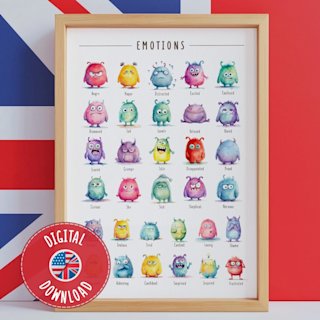
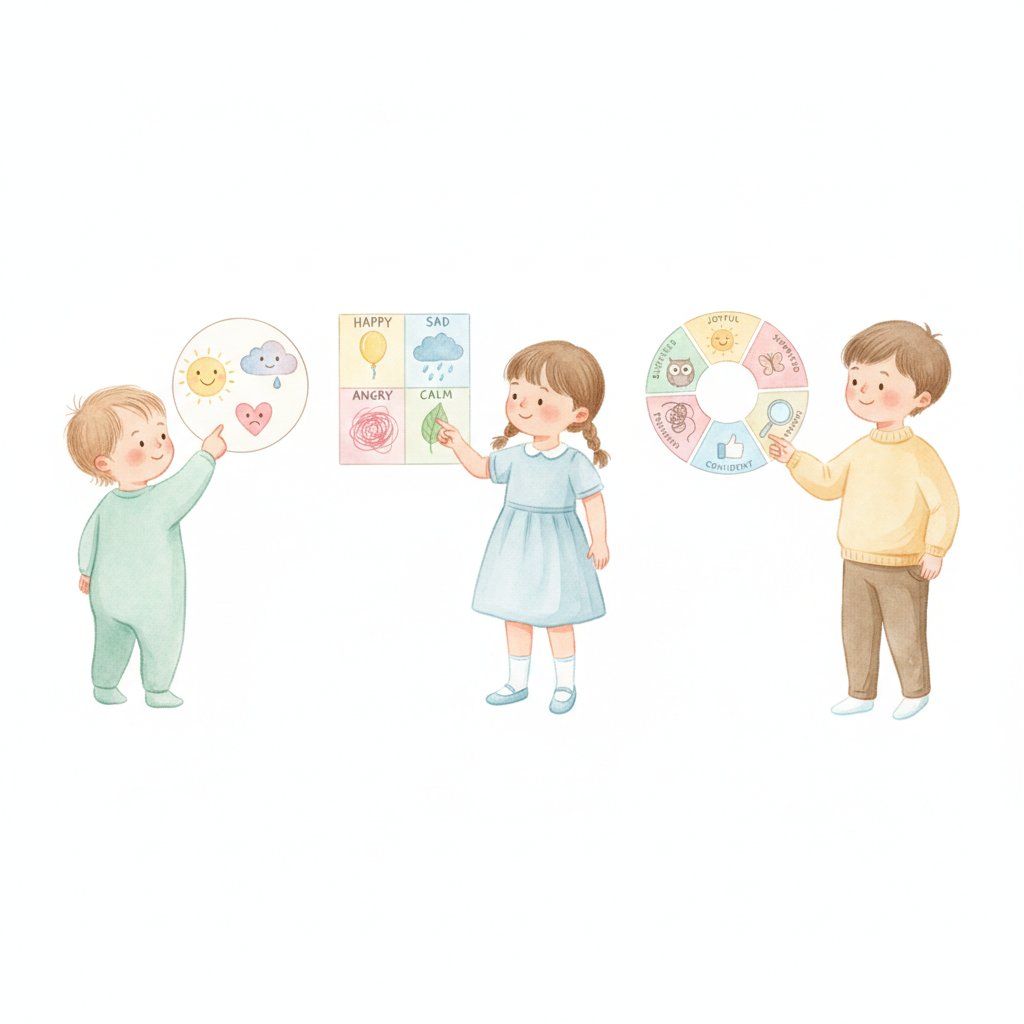
Children of different ages each using an age-appropriate feelings chart

At three and four, a child is building the raw material of all later learning: recognizing letters and numerals as symbols, naming colors and shapes, counting small sets, and — just as importantly — putting words to big feelings. Your wall's only job at this age is to give those emerging concepts a calm, visible home.

What belongs on a 3–4 year-old wall

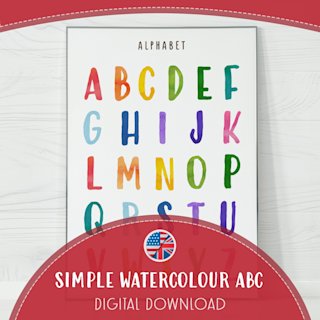
  • One alphabet poster (uppercase, clear simple font, one consistent letter-sound example per letter)
  • Numbers 1–10, large enough to point to from across the room
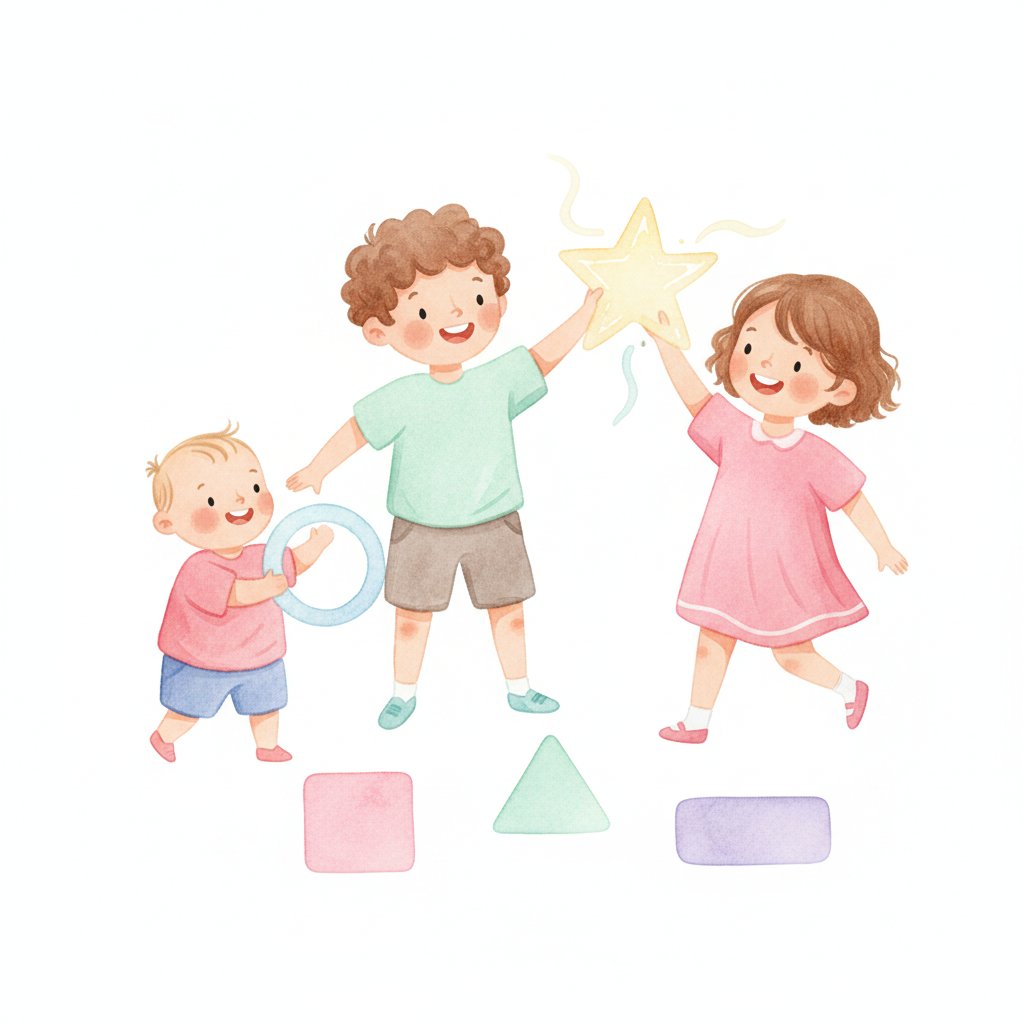
  • Colors and shapes as single-concept posters
  • An emotions chart with friendly faces — this is the age feelings vocabulary explodes
  • Your child's own art, rotated monthly, taking up at least a third of the wall

The one rule that makes it stick

Hang everything at the child's eye level — about 24 to 36 inches from the floor. The number of parents I've watched hang a beautiful alphabet line at adult eye level (five feet up) is staggering. A three-year-old cannot reference what they cannot reach with their eyes. At this age my rule of thumb is simple: if I have to bend down to see it the way they do, it's at the right height.

Common mistake to avoid

Don't crowd. Three to five single-concept posters beat a single "everything poster" every time. At three, a child can only hold one new symbol set in attention at a time. If you want a deeper dive into the letter side of this stage, our alphabet activities guide pairs perfectly with an alphabet wall.

The Ages 3–4 Foundation Bundle
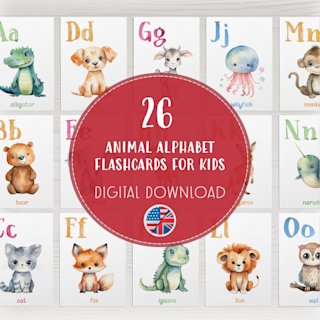
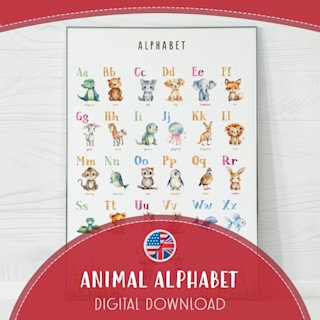
Start with one cohesive starter set and the two anchor posters a 3–4 year-old references most — the alphabet and animal vocabulary. These three are designed in the same watercolor style so the wall looks intentional, not collaged.

Stage 2 — Ages 5–6: The Skills-Building Wall

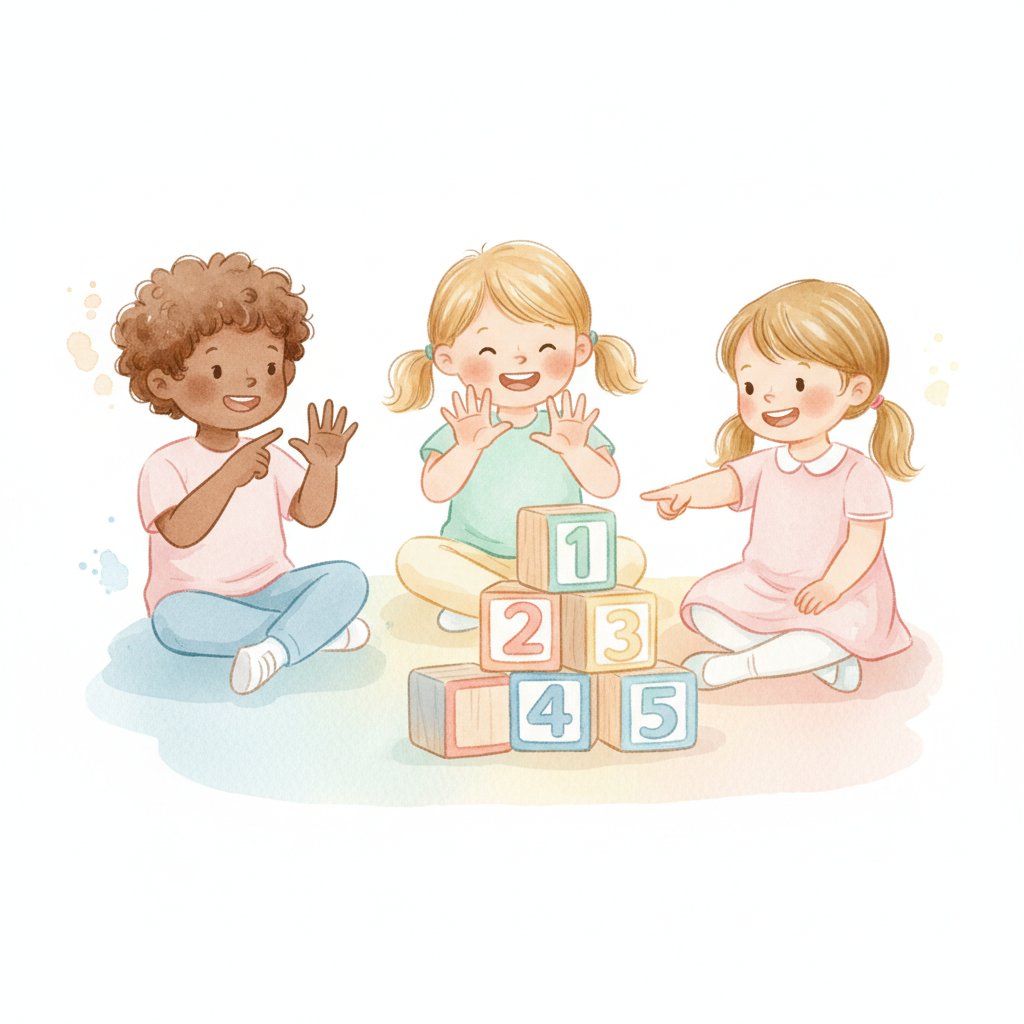
Children counting on fingers and with number blocks

Between five and six, something clicks. Letters become sounds, sounds become words, and counting becomes thinking in quantities. The wall now needs to do real work — it shifts from naming to using.

What to add at ages 5–6

  • A number line to 20 (replace the 1–10 poster — they've outgrown it)
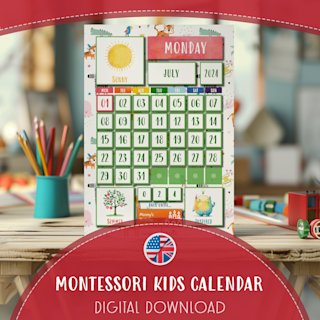
  • A calendar wall — days of the week, months, weather, and a daily routine marker. This is the single highest-utility piece on a 5–6 wall; kids this age are obsessed with "what day is it" and "how many sleeps until."
  • A richer emotions chart — move beyond happy/sad to frustrated, proud, anxious, excited
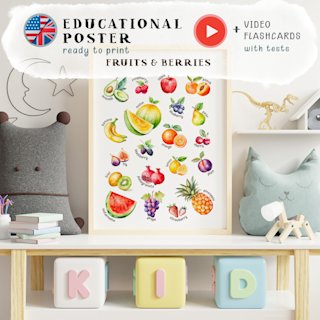
  • Themed collections that match their current obsession: animals, fruits, vehicles, body parts. Interest is the engine at this age.

What to take down

The colors and shapes posters can graduate to a quieter spot or leave entirely. Keeping them up signals "this is still hard," and a confident five-year-old reads that signal. Rotate them out the way you'd rotate out a too-small jacket.

The calendar changed our mornings

When I added a days-and-weather calendar to my daughter's wall at five, the daily "is it a school day?" meltdown essentially disappeared — she could see the week. For classroom setups that take this further, our classroom decor ideas for preschool walks through the same principle at scale.

The Ages 5–6 Skills-Building Bundle
The three pieces a 5–6 year-old wall actually needs: a daily-use calendar, a richer emotions chart, and a themed science poster (fruit and food groups) that matches their "why" phase. Same watercolor system, ready to grow into.

Stage 3 — Ages 7–8: The Independent-Learner Wall

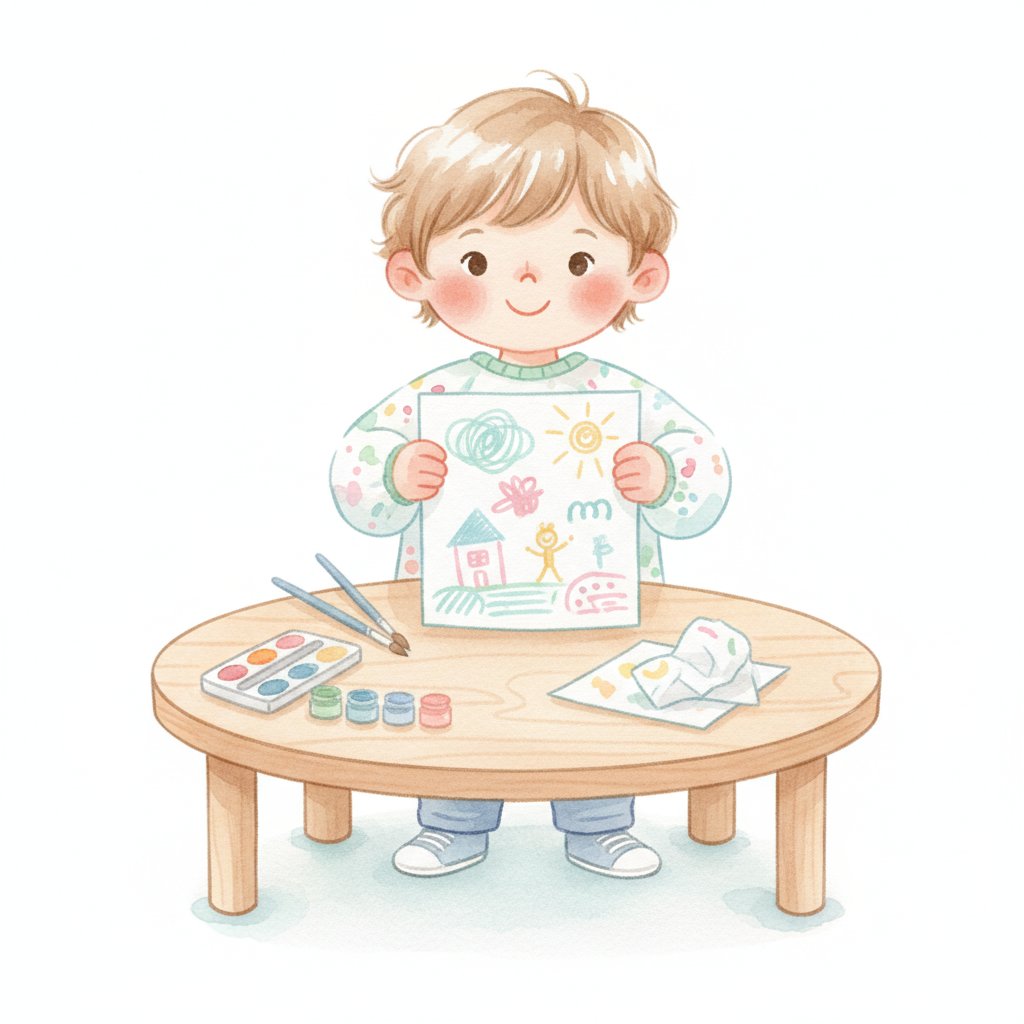
A child proudly holding up a finished page of writing and drawing

At seven and eight, the wall stops being yours and becomes theirs. This is the age of independent reading, math facts, real writing, and big curiosity questions about how the body works, how the world fits together, and what "opposite" really means. Your wall turns into a reference library they consult on their own.

What a 7–8 year-old wall looks like

  • Reference posters they can self-check: a human-body diagram, an opposites/antonyms chart, a more advanced number or math-facts reference
  • A world map or geography piece that finally makes sense at this age (the one I'd taken down at four goes back up, now useful)
  • A "wonder wall" — a spot for their own questions, written on sticky notes, that you research together
  • Their published work — final-draft writing and drawings framed like gallery pieces

Raise the wall

Eye level has moved up. By seven, hang key references around 42–48 inches — where their eyes land when they're sitting at a desk reading. The wall is now a tool they walk up to and use, not decoration they sit under.

Anchor it with growth mindset

At this age, effort framing matters more than ever. Pair the reference posters with one growth-mindset piece — a "yet" chart, a mistakes-are-how-we-learn line — so the wall teaches how to learn, not just facts. Our classroom posters for teachers guide covers the same reference-poster principle if you're bridging home and school.

Building a Cohesive Learning Wall (So It Doesn't Look Like a Collage)

Children of different ages exploring basic shapes together

The number-one reason parents give up on learning walls is that they start to look cluttered and chaotic by year two. That's not a wall problem — it's a system problem. A grow-with-child wall stays beautiful for one reason: every print follows the same three design rules.

Rule 1 — One illustration style

Mix photorealistic, cartoon, and watercolor on one wall and it reads as noise. Pick one visual language (ours is watercolor) and only add pieces in that family. This is exactly why all the bundles above share a single watercolor palette — the wall looks designed, not assembled.

Rule 2 — One color anchor

Choose two or three anchor colors that repeat across every poster (frame color, background tone, accent). When you swap a poster out at a new age, the anchor colors stay, so the wall still reads as one piece.

Rule 3 — The 60/40 split

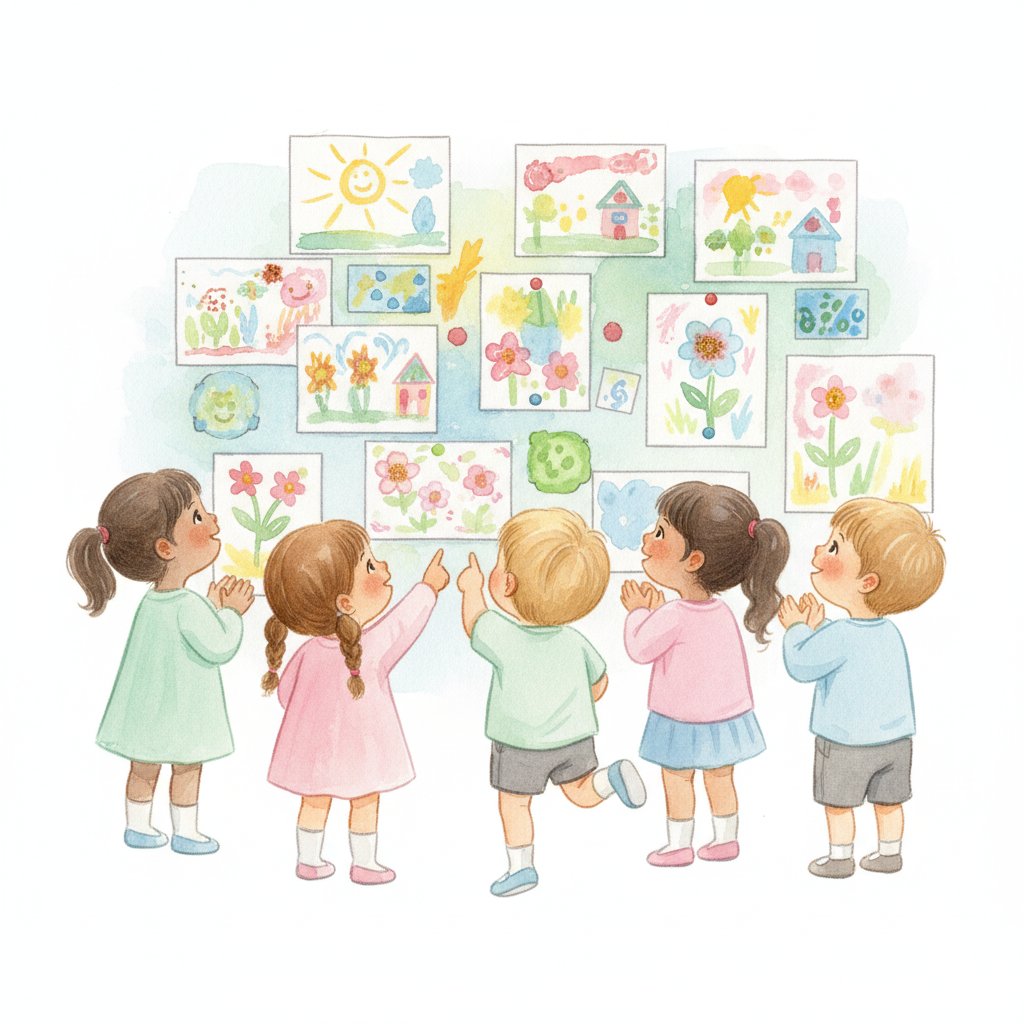
Keep roughly 60% of the wall as learning prints and 40% as your child's own work. The moment the ratio flips to all-adult-made, the wall stops feeling like theirs and they stop looking at it. Their own art is the single biggest engagement driver on any learning wall.

The anchor-and-rotate model

Designate one large "anchor" spot for a poster that stays up all year (the calendar at 5–6, the human-body reference at 7–8), plus two or three smaller "rotate" spots you swap every 6–8 weeks. You change 30% of the wall regularly; 70% stays stable. That balance of familiar and fresh is what keeps a child's eyes coming back.

The Complete Grow-With-Child Mega Bundle
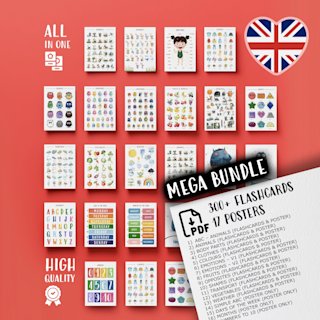
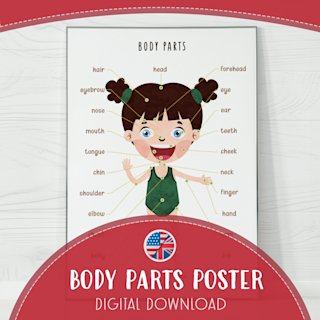
If you'd rather buy the whole arc at once and stage it over five years, this is it: the full 300-card learning pack that carries ages 3–8, a watercolor animal-alphabet anchor piece, and a human-body reference they'll grow into by age seven. Print what you need now, file the rest for the next birthday.

Integrating the Wall Into Daily Life (and Every Budget)

A family snuggled in a cozy blanket fort reading books

A learning wall only works if it becomes part of the rhythm of the day. The good news: the integration is almost free, and so is scaling the budget up or down.

Three daily touchpoints

  • Morning: a 60-second calendar and weather check (ages 4+). This becomes the anchor habit that makes the wall "ours."
  • Meals: one poster near the table gets referenced naturally — counting, letters, or the feelings chart for "how was your day."
  • Bedtime: the wonder wall. Capture one question they asked that day on a sticky note. Research one a week together.

The home–classroom bridge

If your child is in preschool or early elementary, mirror one piece of the classroom wall at home. The same emotions chart, the same calendar structure. Children transfer skills faster when the visual language is consistent across both spaces — this is why our sensory activities guide and classroom pieces use the same watercolor characters. Continuity is comprehension.

Budget tiers (from $30 to $275)

You can build a real grow-with-child wall at almost any budget:

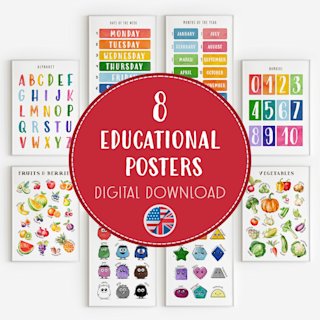
  • $30 Starter — One printable poster set (the 8-poster set prints for under $30 in ink and cardstock). Pick the three pieces for your child's current stage; file the rest.
  • $60–90 Stage Bundle — Three to four stage-matched posters, printed and framed simply. This is the sweet spot: a full, intentional wall for one developmental stage.
  • $200–275 Mega Bundle — The complete 300-card pack plus core anchor posters and rotating themed sets. Enough to stage the entire 3-to-8 arc, printed as you need it.

The bundle approach is the whole point: one considered purchase replaces five years of impulse poster buys. For teachers outfitting a classroom on the same model, our Posters & Wall Art collection is organized by the same developmental logic.

1.At what age should I start a learning wall?
Age three is the sweet spot — that's when children begin treating letters and numerals as symbols rather than pictures. But you can start earlier with a single emotions chart or colors poster at 18–24 months; just keep it to one or two pieces. The grow-with-child model is built so that whatever you put up first gets replaced, not wasted — early prints rotate out as skills develop.
2.How often should I rotate the posters?
Use the anchor-and-rotate model: one large anchor piece stays up for the whole year, and two or three smaller pieces rotate every 6–8 weeks. Swap sooner if your child has clearly mastered a piece (a 5-year-old who reads the 1–10 poster cold has outgrown it) and leave it longer if they're still actively referencing it.
3.Won't too many posters overwhelm my child?
Yes — and that's the core mistake this guide exists to prevent. Keep three to five single-concept posters on the wall at any time for ages 3–6, and never more than about 60% adult-made prints (the other 40% should be your child's own work). Clutter is a system problem, not a content problem; the cohesive-design rules above are what keep a multi-age wall calm.
4.Can a grow-with-child wall work in a small apartment or shared room?
Absolutely — small spaces make the developmental approach even more valuable, because you can't afford to waste wall real estate on prints that age out in a year. Use a single 24×36 inch anchor frame and swap its contents by stage, plus a small rotate spot. A tri-fold display board works as a portable learning wall for shared or temporary spaces.
5.How is a developmental bundle different from just buying a poster pack?
A random poster pack gives you volume; a developmental bundle gives you sequence. Every piece in a grow-with-child bundle maps to a specific skill window (letter recognition at 3–4, calendar and quantity at 5–6, self-checking reference at 7–8) and shares one illustration style and color anchor. The result is a wall that looks designed and actually gets used for five years instead of five months.

A Wall That Grows Up With Them

Children admiring a colorful wall display of their own artwork

The best kids learning wall art isn't the wall you put up on their third birthday — it's the one that's still working on their eighth. That only happens when every print earns its place against a specific developmental stage, when the wall follows one visual system, and when your child's own work holds 40% of the space.

Start with the stage your child is in right now. Get the anchor-and-rotate rhythm going. Then, each birthday, ask the same question I do: what skill is she practicing this year, and does every poster on this wall still serve it? Swap what doesn't. Keep what does. That's the whole system — and it's why one developmental bundle will outlast a dozen impulse prints.

More Resources