Articles12 min read

Mindfulness Activities for Elementary Students: A Classroom Guide with Printables

Practical mindfulness activities for elementary students — short breathing routines, body scans, and a calm-corner setup with printable tools and the exact teacher scripts that actually work in a real K-5 classroom.

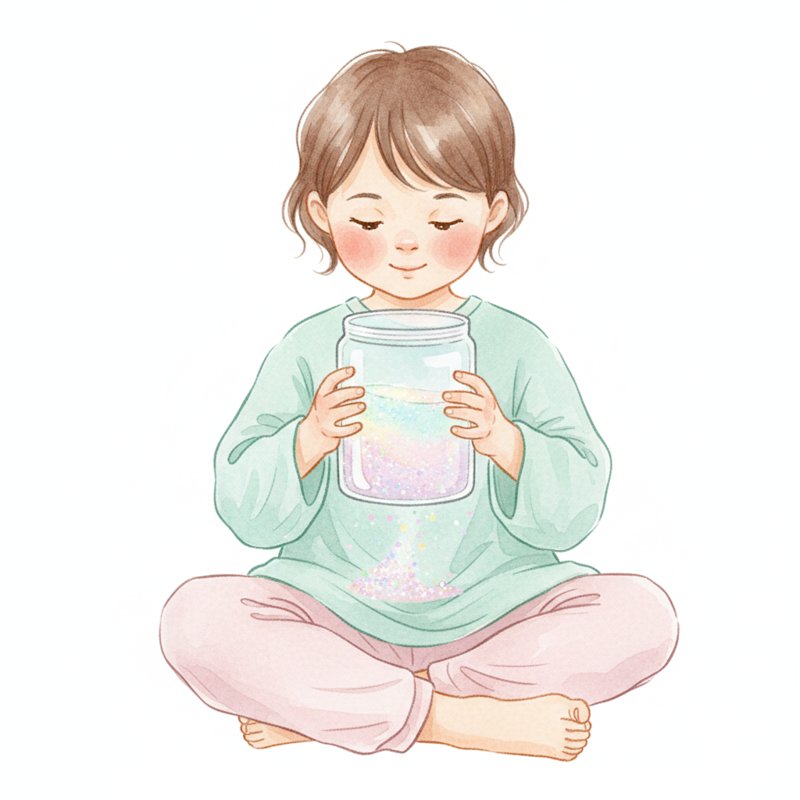
Watercolor illustration of a child holding a calm-down glitter jar and watching the sparkles settle

Mindfulness Activities for Elementary Students: A Classroom Guide with Printables

The first time I tried a mindfulness minute with a second-grade class, it did not go the way the training video promised. One child announced he was "bored of breathing." Another poked his neighbor. A third fell off his chair trying to sit cross-legged like the illustration on the poster. I almost abandoned the whole idea.

Then I tried something simpler: a 60-second "smell the flower, blow out the candle" breath right before a math lesson, with everyone sitting in their regular chairs. The room changed. Shoulders dropped. Pencils stopped tapping. When I passed out the problem set, three kids who usually rush made it through the directions before picking up their pencils. That one minute was not magic, but it was enough to convince me that mindfulness activities for elementary students work best when they are short, secular, built into the day, and stripped of anything that feels like a performance.

This guide is the practical version I wish I had on day one. You will find developmentally appropriate durations for ages 5-10, five printable-free routines you can start tomorrow, twelve breathing exercises with step-by-step scripts, body-awareness and listening activities, and a calm-corner setup that students actually use. Everything is designed for a teacher with no budget, no training, and about two minutes to spare.
Why Mindfulness Belongs in the Elementary Classroom

A watercolor illustration of a child holding a calm-down glitter jar and watching the sparkles settle

Elementary teachers spend a surprising amount of the day on regulation, not content. After recess disputes, mid-morning energy crashes, and the post-lunch slump, getting twenty-five children to a state where they can absorb new information is itself the lesson. Mindfulness is one of the few tools that addresses the underlying state — attention and emotional regulation — rather than just managing the symptoms.

Research on classroom mindfulness programs is encouraging but measured. Studies in school settings generally report small-to-moderate improvements in sustained attention and self-reported calm, with the strongest effects when practice is brief and daily rather than long and occasional. The practical takeaway is the one that matters here: you do not need a fifteen-minute meditation to see a shift. One to three minutes, most days, is where the benefit lives for children this age.

Mindfulness also pairs naturally with the social-emotional learning you are probably already doing. It sits underneath skills like identifying feelings and managing frustration — a child cannot name an emotion or choose a coping strategy if their nervous system is flooded. If you teach emotion vocabulary with emotion flashcards or run a morning meeting from our circle time activities guide, mindfulness is the regulation layer that makes those tools land.

What Mindfulness Looks Like for Ages 5-10

A common worry is that mindfulness means sitting in silence for long stretches, possibly in a lotus position. It does not. For elementary students, mindfulness is active, short, and concrete — noticing one thing at a time with the body you have, in the chair you are in.

Practice durations that actually work

  • Kindergarten-Grade 1 (ages 5-6): 1-2 minutes, two or three times a day. Use movement and imagination — "smell the pizza," "blow out the candle," "be a melting ice cream." Sitting still is the goal of exactly none of these.
  • Grades 2-3 (ages 7-8): 2-4 minutes. Children this age can follow a guided body sweep and count breaths, especially with their eyes closed if they choose.
  • Grades 4-5 (ages 9-10): 3-5 minutes. Older students can notice thoughts, practice a short gratitude pause, and even lead a routine for the class.

What mindfulness is NOT

It is not religious. The practices here are secular attention and awareness exercises. It is not "clearing your mind" — that is impossible and frustrating for children and adults alike. The instruction is always "notice, and come back." It is also not a behavior tool to make children compliant; used that way, it stops working fast.

Five Mindfulness Routines You Can Start Tomorrow (No Printables Needed)

These five routines need nothing but a timer and your voice. Try one for a week before adding another. Consistency beats variety every time.

1. Morning mindful breathing (2 minutes, whole class)

After the morning announcement, before any instruction: everyone sits with feet flat, one hand on the belly. Inhale through the nose for four counts ("smell the flower"), exhale through the mouth for six ("blow out the candle"). Six rounds. Script it the same way every day so it becomes automatic.

2. Transition sound break (30 seconds, between activities)

Ring a chime or play a single tone. Students close their eyes (optional) and raise a thumb quietly when they can no longer hear the sound. It resets attention between math and reading in less time than it takes to hand out papers.

3. Before-test calming sequence (1 minute, individual)

Three slow breaths, then "shoulders up to the ears... drop. Jaw tight... let it go. Hands squeezing... release." A ten-second body release lowers the physical tension that makes children rush and second-guess.

4. After-recess regulation reset (2 minutes, whole class)

A watercolor illustration of preschoolers calmly moving in a line to the next activity with their teacher

Recess disputes and overstimulation carry straight into the next lesson. Two minutes of "noticing" — five things you see, four you hear, one you feel in your body — gives the nervous system a landing strip before content begins.

5. End-of-day gratitude pause (1 minute, whole class)

Eyes open or closed. "Think of one thing that went well today, or one person who helped you. Hold it in your mind for three breaths." Pair it with our calming strategies guide for students who need more structure.

Give the calm corner a feelings anchor
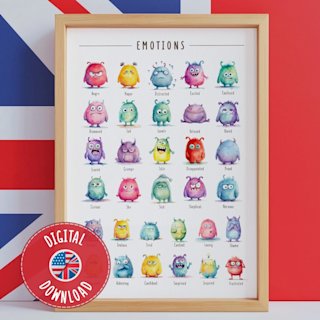
Mindfulness starts with noticing, and most children need a concrete way to name what they notice. An Emotions Chart Poster gives students a visual reference so 'I feel weird' can become 'I feel frustrated' — the first step before any breathing technique can help. Mount one at the entrance to your calm space and have students point before they sit down.

Twelve Breathing Exercises for Elementary Students (With Scripts)

Breathing is the most reliable entry point to mindfulness for children because it is always available and impossible to do wrong. The trick is giving each breath a story. Here are twelve, grouped by what they help with.

For settling down (high energy, after recess)

  • Balloon breath. "Put your hands on your belly. Breathe in slowly and blow up your belly like a balloon... one... two... three. Now let the air out with a soft hissss." Three rounds.
  • Bear breath. "Inhale through your nose. Pause. Exhale with a low growl that fades to silence." Builds control on the exhale.
  • Figure-eight breath. Trace a figure eight on the desk with one finger; inhale on the first loop, exhale on the second. Combines movement with breath.

For focusing (before a task)

  • Flower and candle. The classic. "Smell the flower through your nose... blow out the candle through your mouth." Six rounds. Reliable for ages 5-8.
  • Counting breath. Inhale four, hold two, exhale six. The longer exhale activates the calming part of the nervous system. Best for grades 3-5.
  • Starfish breath. Trace the five fingers of one hand with the other. Inhale up one side of a finger, exhale down the other. Five fingers=five breaths.

For big feelings (frustration, anxiety)

  • Snake breath. A long, slow exhale with a hiss. Great for releasing anger without discussion.
  • Wave breath. "Imagine a wave rolling in as you breathe in, and rolling back out as you breathe out." Pairs well with eyes closed.
  • Hot cocoa breath. "Smell the cocoa... blow to cool it down." Comforting for younger children who are upset.

For body awareness (calm corner)

  • Belly breath. Hand on belly, feel it rise and fall. The foundation of all the others.
  • Cloud breath. "Watch your breath like a cloud floating by. You don't have to change it. Just watch." Introduces the idea of observing without fixing — best for grades 4-5.
  • Rainbow breath. Arms sweep up overhead on the inhale, sweep down on the exhale, naming a color of the rainbow each round. Combines movement and breath for children who cannot sit still.

Keep a printed set of three or four of these in your calm corner so students can choose. You will find that the same child reaches for the same breath every time — that is the practice working.

Pair each breath with a quiet strength
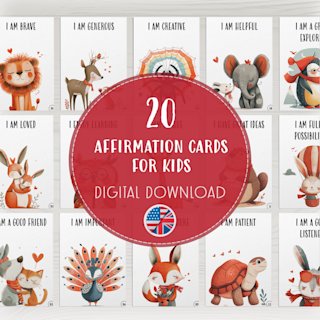
Breathing settles the body; a short affirmation settles the inner voice. Positive Affirmation cards give students one sentence to repeat with each breath — 'I can handle hard things,' 'I am calm and focused.' Hand a child one card along with a breathing exercise and the two reinforce each other instead of competing for attention.

Body Awareness Activities for the Classroom

Children often feel "bad" without knowing where the feeling lives in their body. Body awareness bridges that gap, turning a vague sense of upset into "my jaw is tight" or "my stomach is fluttery" — information a child can do something about.

A five-minute body scan script

Read this slowly, with pauses. Students can sit in chairs or lie down.

"Wiggle your toes, then let them be still. Notice your feet on the floor. Now move your attention up to your legs — are they tense or relaxed? Let them soften. Notice your belly rising and falling. Bring your attention to your hands — uncurl your fingers. Notice your shoulders — lift them up to your ears... and let them drop. Notice your jaw — is it tight? Let your tongue rest behind your teeth. Notice the top of your head. Now notice your whole body, breathing. Take one more breath, and when you are ready, open your eyes."

Run this once a week and students start to catch tension on their own — which is the entire point.

Sensory awareness in two minutes

  • Five-finger check-in. Hold up a hand. Name one thing you see, one you hear, one you feel, one you smell, and one good thing. Built-in grounding for anxious moments.
  • Texture pass. Hand around three objects (a smooth stone, a piece of fabric, a pinecone) and have students describe the texture in one word. Focuses scattered attention quickly.

Mindful Listening and Sensory Activities

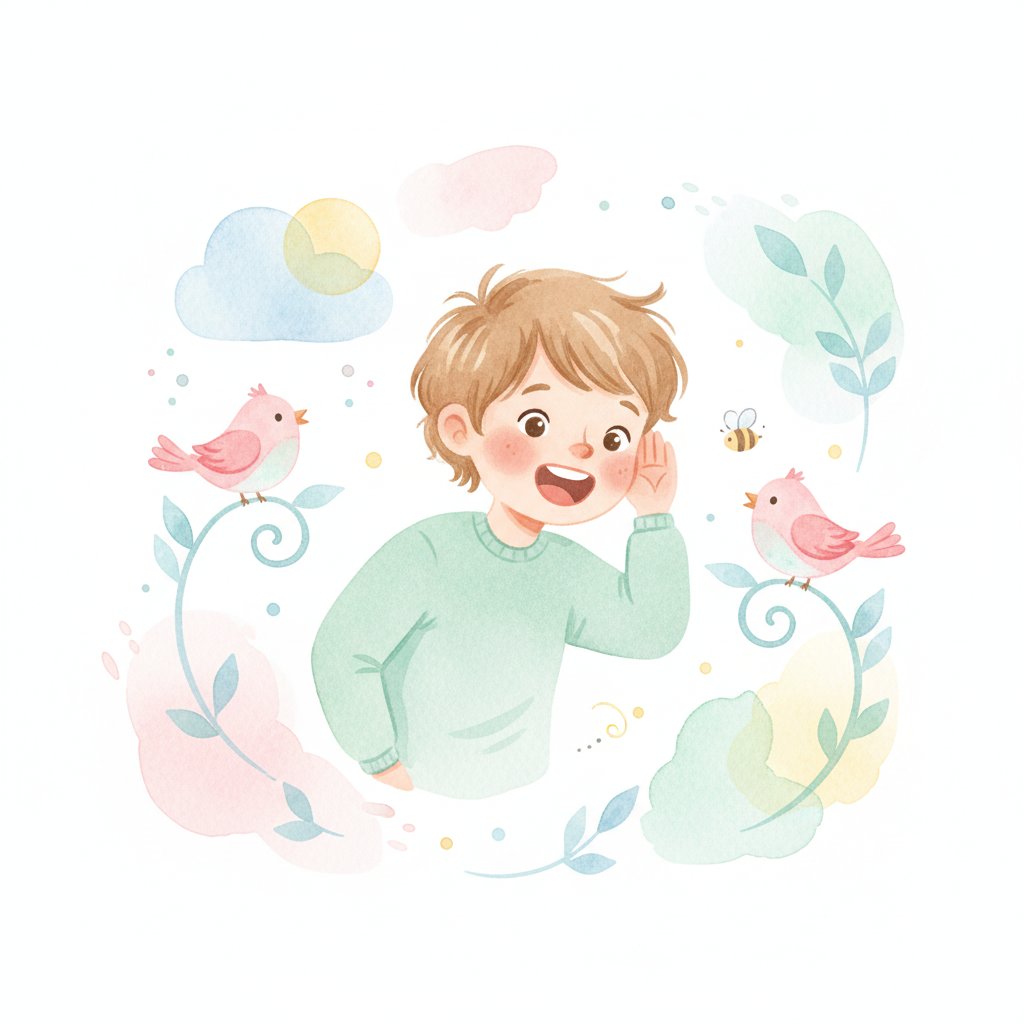
A watercolor illustration of a young child cupping a hand to their ear, listening to sounds around them

Listening is the most underused mindfulness sense in the classroom, mostly because classrooms are loud. Done deliberately, listening practice trains the exact sustained attention reading comprehension depends on.

Sound guessing game

Behind a screen (or with eyes closed), make a sound: crumpling paper, jingling keys, dropping a pencil, tapping a glass. Students raise a hand when they can name it. Two minutes, no materials, surprisingly absorbing.

"What do you notice?"

Step outside or open a window for sixty seconds. The only task: notice sounds, near and far. Share three afterward. Children discover they can hear the heating system, a distant plane, a bird — the everyday background they usually tune out. This is the core skill of mindfulness, made concrete.

Sensory exploration stations

If you have a center rotation, add a "noticing" station: a tray of objects with different textures, weights, and temperatures. The task is not to sort or label but simply to describe. It is calm, focused, and requires zero explanation once it is set up.

Help children name what they feel before they breathe
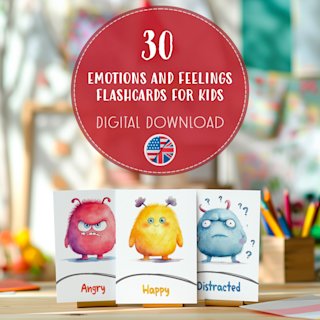
A child cannot breathe through a feeling they cannot name. Monster Emotions Flashcards give students a friendly, visual vocabulary for the states that send them to the calm corner — frustrated, worried, overstimulated. Keep a set next to the breathing cards so the routine becomes 'name it, then breathe it' instead of guessing.

Building Mindfulness Into the Day and Setting Up a Calm Corner

The biggest mistake is treating mindfulness as an add-on. The schools that see results build it into transitions that already exist.

A sample mindful schedule

  • 8:50 (morning): Two-minute breathing before instruction.
  • 10:15 (between blocks): 30-second chime reset.
  • 11:45 (before lunch): One-minute gratitude pause.
  • 1:15 (after recess): Two-minute noticing reset.
  • 3:00 (closing): One-minute body scan.

Total time added: about seven minutes. Total instructional time saved in redirected attention and fewer conflict interventions: considerably more.

The calm corner that students actually use

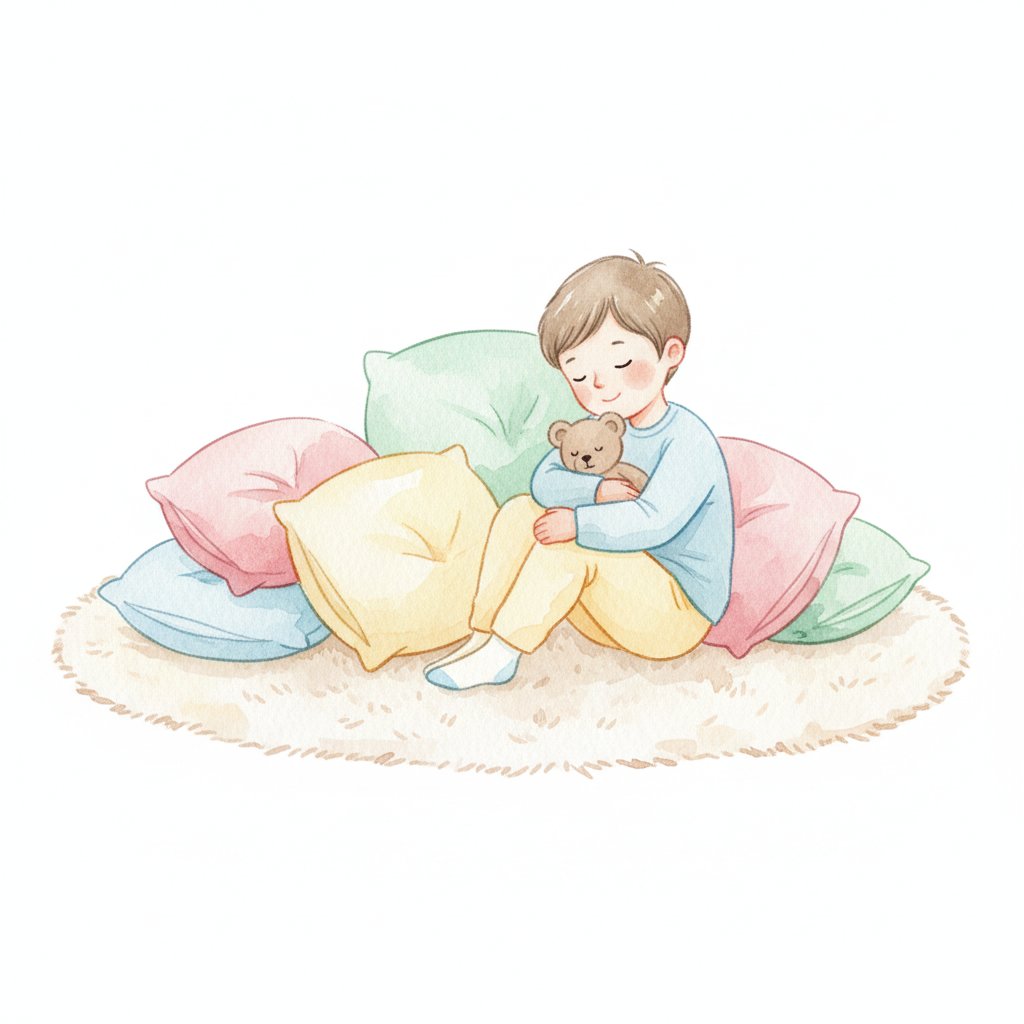
A watercolor illustration of a cozy calm-down corner with soft pillows where a child relaxes quietly

A calm corner only works if children can use it independently. The setup that holds up:

  • A defined spot — a rug, a chair, a cushion. Physical boundary, not a punishment seat.
  • Two or three choices — a printed breathing card, a glitter jar, an emotions chart to point at. More than three overwhelms; fewer than two frustrates.
  • A visual timer — three minutes, set by the student. Self-managed, not teacher-enforced.
  • A re-entry routine — "When the timer ends, take one breath and rejoin." No debrief required unless the child wants one.

Teach the calm corner during a calm moment, not mid-meltdown. Introduce it like any other classroom procedure, practice it as a class, and within a week students will use it without prompting. For a fuller picture of classroom setup, our classroom decor ideas guide covers the physical environment around it.

Mindfulness Across Subjects

Mindfulness does not have to live in a separate two-minute window. Folded into content, it deepens the lesson and sneaks in practice.

  • Math. "Mindful counting" — count slowly, noticing each number, before a fluency drill. "Pattern breath" — breathe along to a visual pattern on the board.
  • Literacy. One slow read-aloud sentence, read twice — once for the words, once for how they feel. Mindful listening during peer sharing.
  • Science. A "noticing walk" before a nature unit. Observation is the heart of both science and mindfulness.
  • Art. Two minutes of coloring with full attention on the crayon's path. The calm focus is the lesson.

None of these requires a special program. They are ordinary activities done with attention — which is all mindfulness ever is.

Frequently Asked Questions

Is mindfulness religious?

No. The practices in this guide are secular exercises in attention and awareness. They draw on the universal human capacity to notice breath, body, and surroundings. If a family is concerned, a clear explanation of the activities (breathing, noticing senses) resolves almost every objection.

How much time does mindfulness take?

Start with one to two minutes, once or twice a day. That is enough to see a shift, and it is sustainable. A common mistake is launching a fifteen-minute daily practice, burning out in two weeks, and quitting. Small and daily beats long and occasional.

What if my students can't sit still?

Use movement-based practices. Figure-eight breath, starfish breath, rainbow breath, and mindful walking all build the same skill without requiring stillness. Many children — especially those with ADHD or sensory needs — focus better with movement. Stillness is not the goal; attention is.

Can I do this with zero budget?

Yes. Every routine in the "five simple routines" and "twelve breathing exercises" sections needs only a timer and your voice. Printable tools are a convenience, not a requirement.

How do I handle students who refuse or giggle?

Make participation optional and model it yourself. The students who giggle on day one are often the ones quietly asking to lead on day ten. Never force eye closure, never single anyone out, and never use mindfulness as a consequence. Participation is an invitation.

Does mindfulness actually improve behavior?

Research shows small-to-moderate gains in attention and self-reported calm, with the strongest effects from brief daily practice. It is not a cure-all, and it works best alongside clear routines, strong relationships, and explicit emotion-vocabulary instruction — not as a replacement for them.

Start With One Minute Tomorrow

You do not need training, a curriculum, or a budget to begin. Pick one routine — the morning two-minute breathing is the easiest entry point — and run it the same way for one week. Watch what happens to the transition after it. Then add a second routine the following week.

The goal is never a perfectly silent room of children sitting in lotus. The goal is a class that can notice when it has lost focus, and has a tool to come back — one breath at a time. For the emotional-literacy foundation underneath these practices, explore our emotion flashcards guide, and for the wider self-regulation toolkit, our calming strategies guide. You can also browse the full collection of articles for more classroom-ready activities.