Articles13 min read

Friendship Skills and Conflict Resolution for Kids: A Guide for Teachers and Parents

A practical guide to friendship skills and conflict resolution for kids — the Peace Path framework, I-statements that work, role-play scenarios, and age-by-age guidance for the real conflicts that happen every day in classrooms and homes.

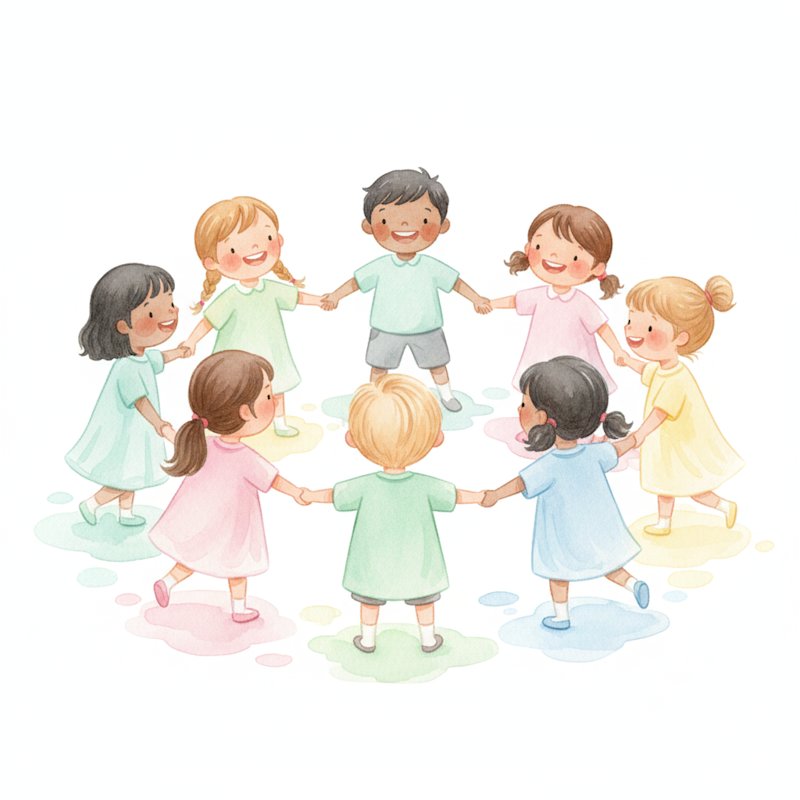
Watercolor illustration of a circle of children playing a cooperative game holding hands

Friendship Skills and Conflict Resolution for Kids: A Guide for Teachers and Parents

The fight started over a green marker. By the time I got across the room, two second-graders were in a full stand-off — one clutching the marker, the other near tears, and three onlookers already taking sides. I did what most teachers do: I asked what happened, got two completely different stories, told them to share or take turns, and moved on. The marker got handed over. The resentment did not.

What actually resolved that conflict — weeks later — was a routine we practiced when nothing was wrong. We had been role-playing a simple sequence: stop, say what you need, listen to the other side, pick a solution together. The children who could run that sequence when calm could eventually run it when upset. The ones who only ever heard "use your words" mid-meltdown never could. That is the central lesson of this guide: friendship skills and conflict resolution for kids are taught proactively, in calm moments, not invented on the fly during a crisis.

This guide gives you the framework, the language, and the practice activities. You will find a six-step Peace Path you can teach in a week, the I-statement formula that actually changes how children talk to each other, age-by-age expectations, and honest guidance on when a conflict is beyond peer resolution and needs an adult. Conflict between children is not a problem to eliminate — it is the practice field where social skills are built. The goal is to give children the tools to play on it.
Why Friendship Skills Matter More Than Ever

A watercolor illustration of a circle of children playing a cooperative game and holding hands

Friendship is not just the nice part of childhood — it is a developmental task with measurable stakes. Children with even one stable friendship show better academic engagement, higher school belonging, and lower anxiety than socially isolated peers, and the friendship and conflict-resolution skills learned in elementary school predict social competence years later. The playground is not a break from learning; it is where a large part of it happens.

Two things have made this harder recently. First, after the disruptions of recent years, many teachers report that children are arriving with less practiced social skill — more conflict over small things, less ability to recover, more difficulty joining play. Second, classrooms are busy, and teachers can spend a surprising share of the day mediating disputes that children could resolve themselves with the right tools.

The good news is that friendship and conflict-resolution skills are teachable in the same way reading strategies are. They need explicit instruction, modeling, and repeated practice in low-stakes moments. When children have a shared framework and vocabulary, the same conflicts that used to eat twenty minutes start resolving in two. These skills sit right alongside the emotion work in our emotion flashcards guide and the regulation tools in our calming strategies guide — a child cannot resolve a conflict if they cannot name what they feel or calm down enough to listen.

Friendship Development by Age: What to Expect

Children's capacity for friendship and conflict resolution unfolds in stages. Matching your expectations to the stage prevents both frustration (expecting too much) and missed teaching (expecting too little).

Ages 5-6: Playing alongside

Play is mostly parallel — children play near each other, not fully with each other. Conflicts are usually about objects and space ("my spot," "my turn"). Resolution at this age is concrete: take turns, use a timer, find another one. Do not expect a five-year-old to "talk it out" abstractly; they need a script and a grown-up nearby.

Ages 6-7: Rules and fairness

Friendships become rule-based, and "fairness" becomes a core value — often loudly. Conflicts are about rules of games, who went first, whether something was cheating. Children this age can begin using simple I-statements and a short problem-solving sequence with adult support.

Ages 7-8: Empathy and perspective

A genuine leap: children begin to see that others have different thoughts and feelings than they do. Conflicts get more complex (hurt feelings, feeling left out) but so does the capacity to resolve them. Role-play and perspective-taking activities land well here.

Ages 8-9: Groups and loyalty

Friendship groups form, and belonging becomes intense. Exclusion becomes a primary conflict type, and children need explicit teaching about including others. Peer mediation — with training — becomes possible at this age.

Ages 9-10: Negotiation and peer pressure

Children can hold another child's perspective while holding their own, negotiate solutions, and even mediate for younger children. They are also more aware of peer pressure and social risk, which means conflicts about reputation and loyalty appear. This is the age the full Peace Path and peer-mediation structures shine.

The Five Core Friendship Skills Every Child Needs

Underneath every conflict-resolution framework are five skills. Teach and name these directly, and every later strategy has something to attach to.

1. Active listening

Truly hearing what the other person says, not loading the next argument while they talk. Teach it as a physical skill: body facing the speaker, eyes available, then "say back what you heard" before responding. Most conflicts escalate because neither child felt heard.

2. Empathy

Understanding how the other person feels, even if you disagree. For children, this starts concretely: "Look at her face — how do you think she feels right now?" Empathy is built through emotion-vocabulary work and through stories and role-play that ask children to take another perspective.

3. Compromise

Finding a solution that is not exactly what either person wanted but that both can live with. This is genuinely hard for children (and adults). Teach it as a specific move: "What's a third option that's not yours and not mine?"

4. Respectful communication

Speaking in a way the other person can hear — kind tone, I-statements, no name-calling. The skill is partly formula (the I-statement, below) and partly habit built through modeling and practice.

5. Problem-solving

Working through a disagreement as a shared task rather than a contest to win. This is the skill the Peace Path below is designed to build, step by step.

The Peace Path: A Six-Step Conflict Resolution Framework

The Peace Path is a physical and verbal routine children can run themselves once it is taught. I have seen it painted on a playground, taped to a desk, and printed on a card clipped to a lanyard. The version that works has six steps, always in the same order.

Step 1: Stop and breathe

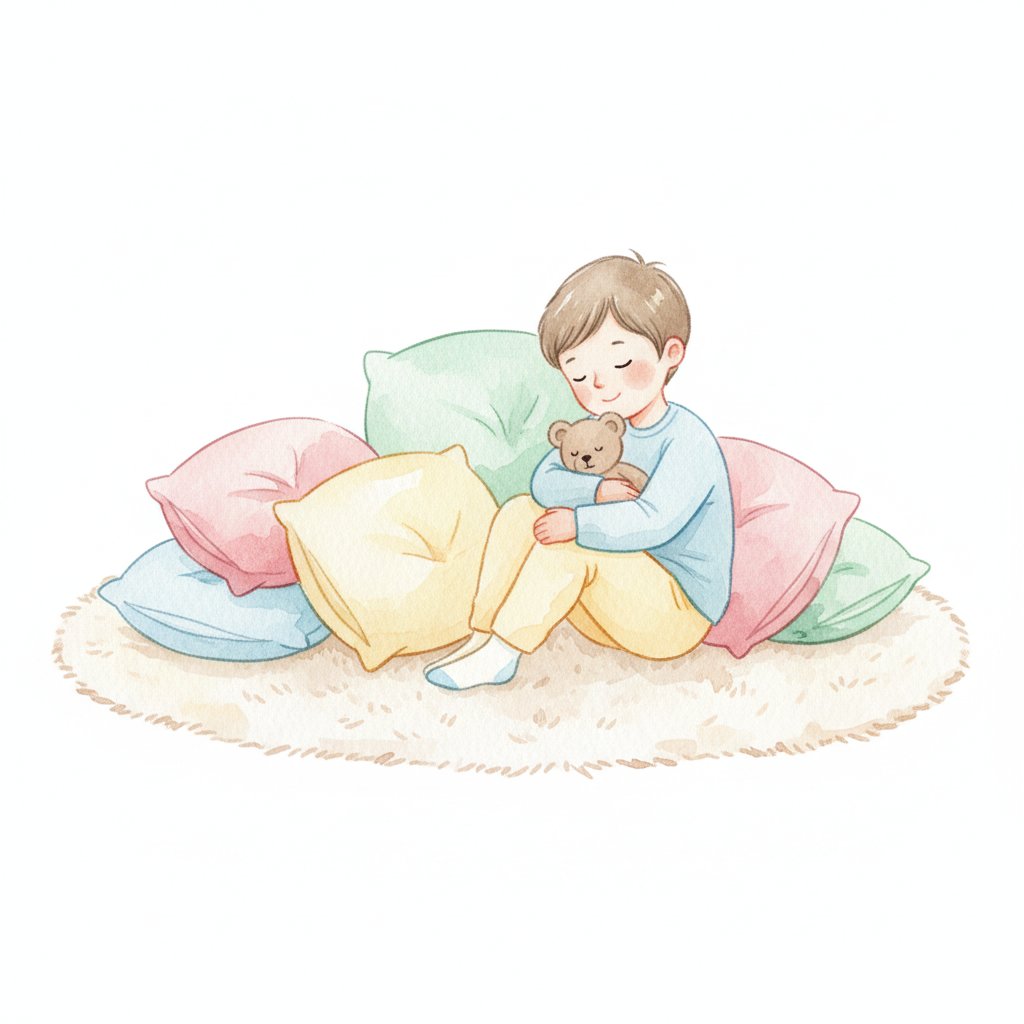
A watercolor illustration of a cozy calm-down corner with soft pillows where a child relaxes quietly

Regulation before resolution. Nothing good happens when two flooded children try to problem-solve. Take a breath, count to five, walk to the calm corner if needed. A child who cannot regulate cannot do the next five steps — pair this with the breathing tools in our mindfulness guide.

Step 2: Say what happened (each side, without interruption)

One child speaks while the other listens. "When you took the marker, I felt mad." Then swap. No cross-talk until both have spoken. This alone resolves a surprising number of conflicts — most children just want to be heard.

Step 3: Listen and repeat back

The listener says back what they heard: "You're saying you were mad because I grabbed the marker without asking." If the summary is wrong, the speaker corrects it. This forces genuine listening and catches the misunderstandings that fuel most fights.

Step 4: Brainstorm solutions together

Both children suggest options. No judging yet — just collect. "We could take turns. We could get another marker. We could both use it for our picture." Listing three or four options breaks the "my way or your way" deadlock.

Step 5: Choose one you both agree on

Pick a solution from the list that both children can accept. It does not have to be the favorite of either — compromise is the point. Shake on it, high-five, or just say "okay."

Step 6: Try it and check back

Try the solution. If it is not working, come back and pick a different one. This step teaches that conflict resolution is iterative, not a one-shot verdict.

Teach the whole path during calm time, role-play it with puppets or volunteers, and post it visibly. Within two weeks of consistent use, children will start running it on their own.

You can't resolve a feeling you can't name
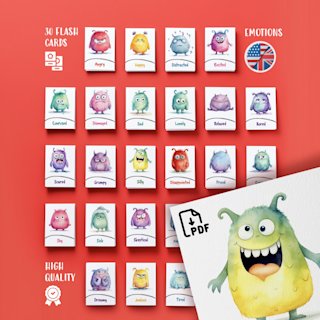
Step two of the Peace Path — saying what happened and how you felt — falls apart if a child only has 'mad' and 'sad' in their vocabulary. Monster Emotions Flashcards give children a fuller set of words for the states that drive conflicts: frustrated, left out, embarrassed, jealous. Keep a set at the peace corner so children can point to the face that matches before they try to speak.

I-Statements: The Communication Tool That Changes Everything

Most children's conflict talk is "you" talk: "You took it!" "You started it!" "You're mean!" "You" talk makes the other child defensive, and the argument spirals. The I-statement flips the grammar so a child talks about their own experience instead of accusing — and it works because it is harder to argue with someone's feelings than with their accusations.

The formula

"I feel ____ when you ____ because ____, and I need ____."

  • "I feel frustrated when you grab the marker out of my hand because I was still using it, and I need you to ask first."
  • "I feel left out when you play with Maya every recess because we used to play together, and I need a turn too."

It feels stilted at first. That is fine. Stilted and kind beats natural and cruel. With practice the formula loosens into the child's own voice.

Common mistakes (and fixes)

  • "I feel that you are a jerk." That is a You-statement in disguise. The fix: the feeling word must be an emotion (sad, mad, left out), not a judgment.
  • "I feel mad when you're annoying." "Annoying" is another accusation. Name the specific behavior instead: "when you tap my desk while I'm working."
  • Forgetting the need. The "I need" is what makes it solvable. Without it, the other child knows you are upset but not what to do. Even "I need you to know" or "I need a break" counts.

Practice I-statements when nothing is wrong — give children scenario cards and have them rehearse. The children who practice when calm can use them when upset; the ones who only hear about them mid-conflict cannot.

Role-Play Activities That Build Real Skills

Conflict resolution is a performance skill — it has to be rehearsed to be available under pressure. Role-play is how you build the muscle before you need it. Keep scenarios short (one to two minutes), debrief quickly, and never force a child to play the "bad guy" in a scenario that mirrors their real life.

"What would you do?" circles

Read a scenario aloud. "Two friends want to be first in line and both grab the door." Go around the circle — each child says one thing they could do or say. No wrong answers; collect options. This builds the solution-bank children draw from in real moments.

Puppet and stuffie practice (ages 5-7)

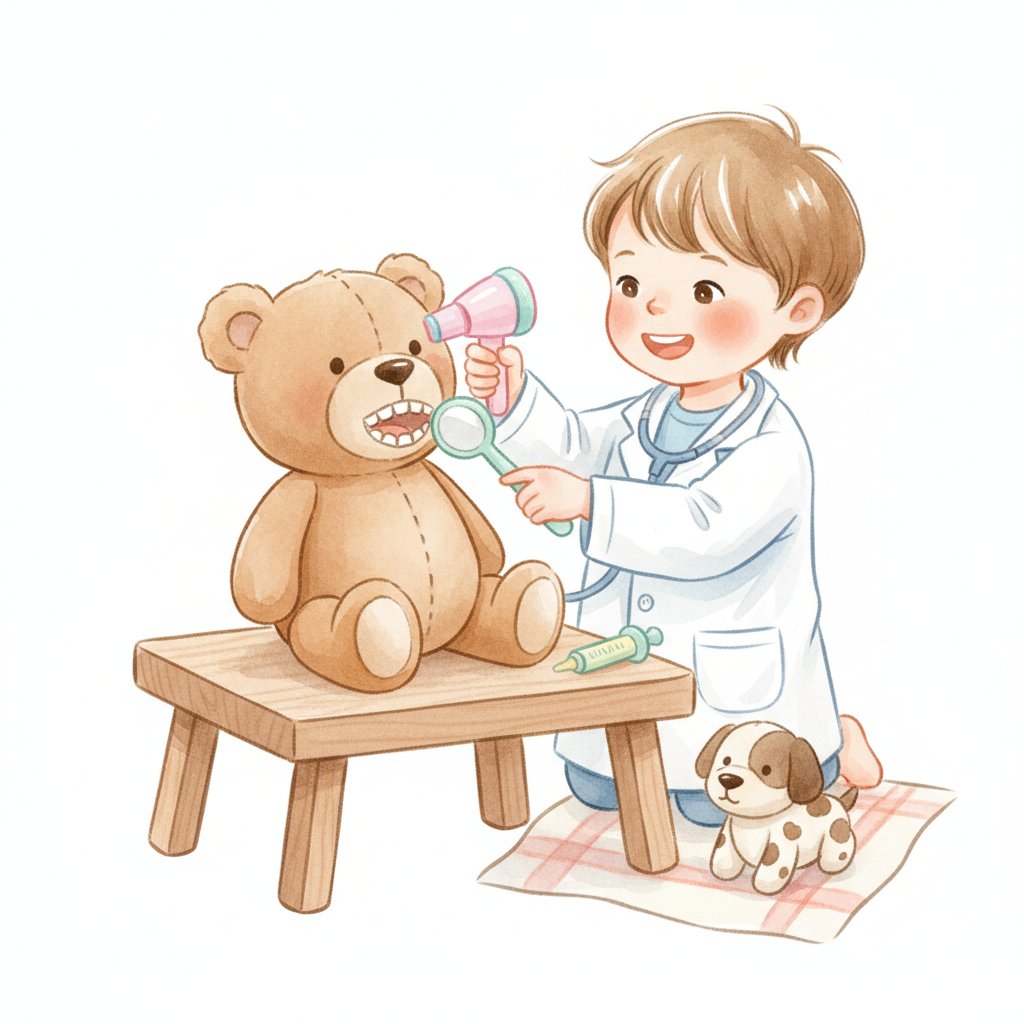
A watercolor illustration of a child vet giving a stuffed teddy bear a gentle health check-up with toy tools

Younger children open up through puppets. Have two puppets have a conflict, and ask the children to help them solve it. The distance of pretending lets children try out solutions they would be too self-conscious to attempt as themselves.

Skits and peer mediation (ages 8-10)

Pairs or small groups act out a conflict and its resolution, then the class discusses what worked. Older children can be trained as peer mediators who help younger children run the Peace Path at recess — one of the most powerful structures for building school-wide social skill.

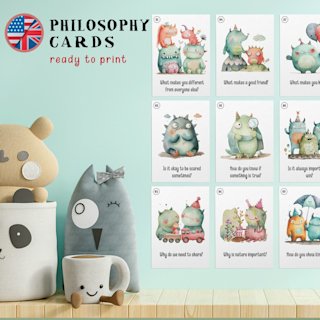
Scenario cards for the calm corner

Keep a set of conflict scenario cards in the peace corner. A child who has just had a conflict can pull one, walk through how they would handle it, and often solve their own real situation in the process.

Teach curiosity as a friendship skill
Half of friendship is asking good questions and actually listening to the answer. Curious Questions flashcards give children prompts that build exactly this skill — 'What's something you're good at?' 'What makes you laugh?' Use them in morning meeting or pair-share, and watch the I-can-listen muscles that make the Peace Path possible get stronger every week.

Preventing Conflict: Proactive Classroom Strategies

The best conflict resolution is the one that never has to happen. A few proactive structures dramatically reduce how often children end up in disputes.

  • Morning meeting. A daily circle that builds relationships is the single highest-leverage conflict-prevention move. Children who know each other fight less. Our circle time guide has the routines.
  • Emotion vocabulary. A child who can say "I'm frustrated" instead of acting it out prevents the conflict before it starts. Keep an emotions chart visible and use the words yourself.
  • Cooperative structures. Pair and group work where children share a goal (build something, solve a puzzle, create a presentation) builds the collaboration muscle that individual competition erodes.
  • Co-created agreements. Let the class write its own rules at the start of the year. Children enforce agreements they helped make far better than rules handed down.
  • Specific praise for kindness. "I noticed you included someone who was alone — that's exactly what we talked about." What you name and notice grows.
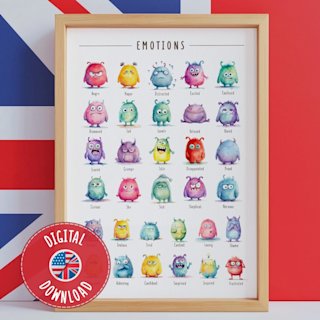
Keep the feeling words where children can see them
The prevention section makes one ask that costs nothing and changes everything: keep an emotions chart visible. The Emotions Chart Poster is a watercolor wall reference that stays up all year, so a child mid-conflict can point to the face that matches before they try to speak. Pair it with the monster flashcards in the peace corner (portable) and the poster on the wall (permanent) — two formats, one shared vocabulary that makes the Peace Path actually runnable.

When to Involve Adults: Red Flags and Triggers

The Peace Path is for the normal, daily conflicts of childhood. Some situations are not that, and children need to know the difference — including that getting help is a sign of strength, not tattling.

Get an adult right away when:

  • Someone is being hurt or could be. Physical safety always overrides self-resolution.
  • The same children clash repeatedly. A pattern needs a pattern-level response, not another Peace Path.
  • There is a pattern of exclusion or targeting. One disagreement is a conflict; ongoing exclusion of one child is bullying and needs adult intervention.
  • Words are meant to wound. Conflict is "I'm mad about the marker." Bullying is repeated, intentional hurt about something a child cannot change (appearance, family, identity).
  • A child seems consistently alone or distressed. Social isolation that persists is a safeguarding concern, not a friendship-skills lesson.

Teach the difference between tattling (trying to get someone in trouble) and reporting (trying to keep someone safe or get help). Children who know the difference will bring you the things that actually need you.

Frequently Asked Questions

How do I handle students who always blame others?

Children who always blame are often children who feel unsafe admitting fault. Lower the stakes: frame the Peace Path as "figuring out what happened together" rather than "who's in trouble." Praise any ownership ("It takes courage to say your part — thank you"). Over time, as the routine feels safe, defensiveness drops.

What if one student refuses to participate?

Do not force a flooded child through the steps. Let them take a break in the calm corner and return to it. If a child consistently refuses, that is information — there may be something bigger going on, and a private check-in beats a forced public resolution.

How do I balance conflict resolution with academic time?

You already spend the time — most teachers lose more minutes to in-the-moment mediation than a weekly ten-minute Peace Path lesson costs. Front-loading the instruction gives those minutes back. Conflict resolution is not time away from learning; it is what makes the rest of the learning time usable.

What about students with social skills deficits or autism?

Make the framework explicit, visual, and predictable — which is exactly what the Peace Path and I-statements are. Use the written steps, social stories, and extra role-play. Some children benefit from knowing the steps in advance and from practicing specific scenarios. Pair explicit instruction with patience; the skills come, often on a different timeline.

How do I involve parents?

Share the Peace Path and I-statement formula with families so the language is the same at home. Send home a one-page summary and a couple of scenario prompts. When parents and teachers use the same vocabulary, children internalize it twice as fast.

Isn't some conflict just kids being kids?

Yes — and that is the point. Conflict is normal and healthy; it is how children learn to navigate relationships. The goal is not to eliminate conflict but to give children the skills to move through it without harm and, often, with their friendships intact on the other side.

Teach It When Nothing Is Wrong

Friendship skills and conflict resolution are not emergency tools you pull out when a fight breaks out — they are a curriculum you teach in calm moments so that, when the green marker dispute arrives, the children already know what to do. Pick one piece to start: teach the I-statement this week, the Peace Path next week, and add a morning-meeting gratitude or question routine from there.

The conflicts will still happen. They should — it is how children learn. What changes is how long they last, how much they wound, and whether the friendship is still standing when they end. For the emotional foundation underneath these skills, see our emotion flashcards guide and our mindfulness activities for elementary students; for the wider social-emotional toolkit, browse the full collection of articles.