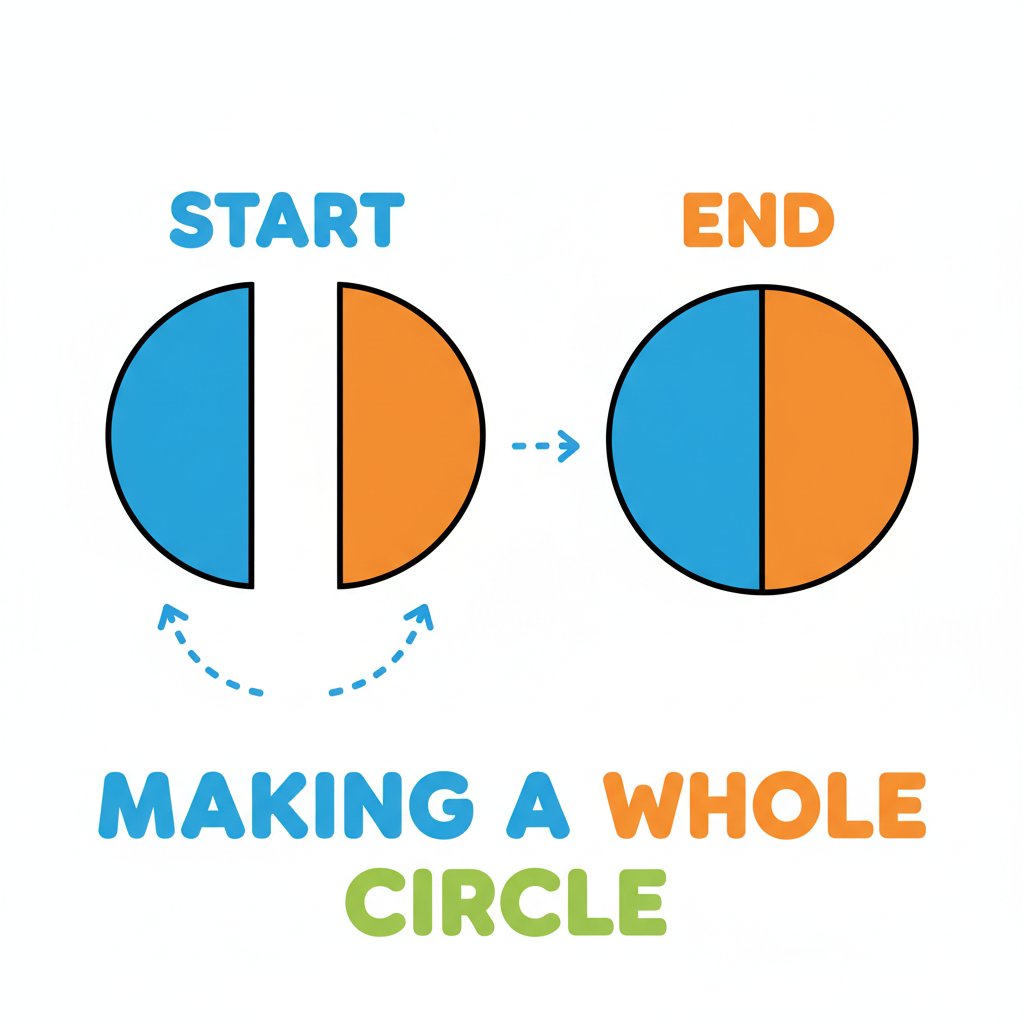
7 Activities: Assembling Circles from Two Shapes
These activities specifically target circle-building — the shape assembly challenge parents and teachers search for most.
Activity 1: Paper Plate Semicircle Puzzle (Ages 3-4)
Materials: 2 paper plates, scissors, marker
Cut one paper plate exactly in half to create two semicircles. Write "A" on one half and "B" on the other. Give your child the two halves and ask them to rebuild the circle.
Why it works: The straight edge (diameter) gives children a clear visual cue for alignment. The curved edge shows them the goal — a complete circle.
Level up: Use plates of different sizes. Mix the pieces from two different plates and challenge them to find which halves belong together.
Activity 2: Semicircle Matching Mats (Ages 3-5)
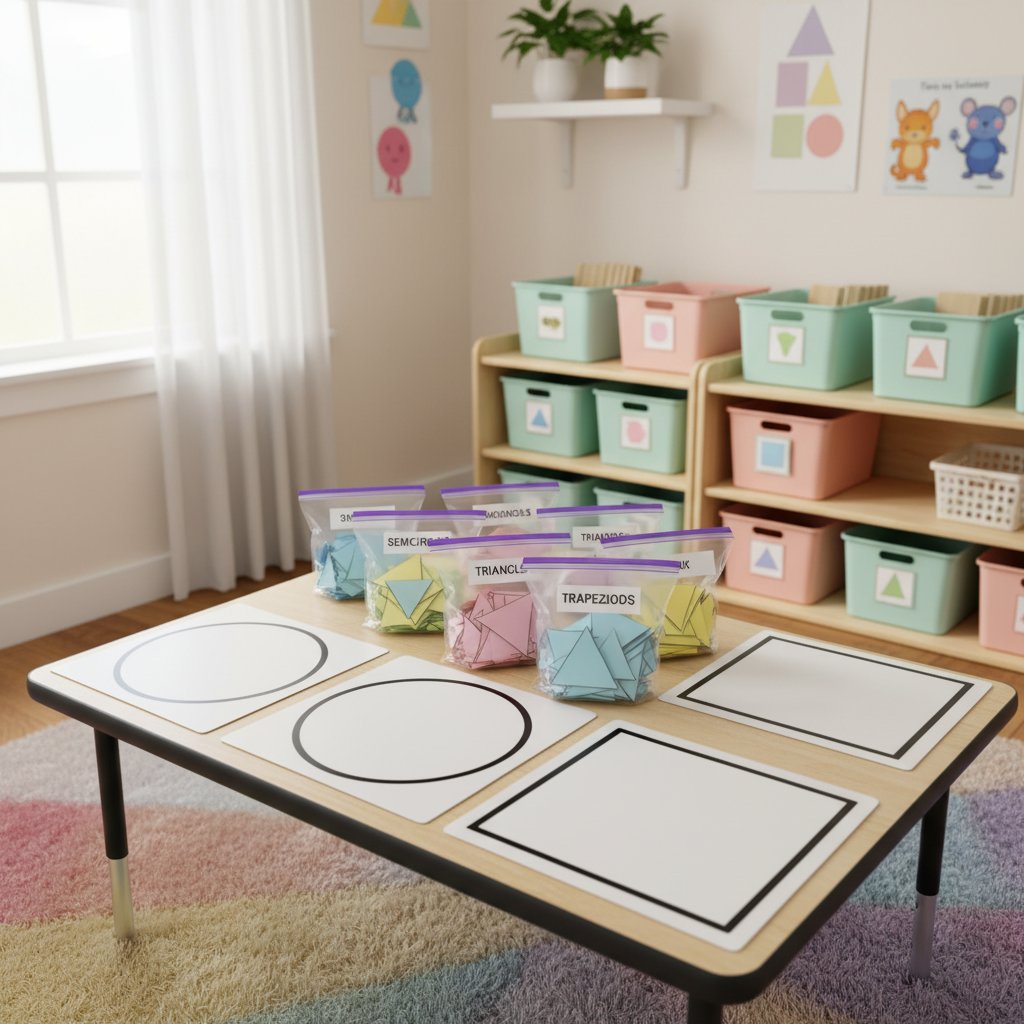
Materials: Printed semicircle mats (draw a large circle outline, then draw a diameter line across it), semicircle cutouts from colored cardstock
Place the mat flat. Children match their colored semicircles to the outlined halves on the mat. Start with matching colors, then switch to mismatched colors so they focus on shape, not color cues.
Why it works: Separating shape from color forces true geometric thinking rather than visual matching shortcuts.
Activity 3: "Feed the Circle" Game (Ages 4-5)
Materials: Large circle outline drawn on cardboard, set of semicircles and quarter-circles in various colors, a "score card"
Children must "feed" the circle only the pieces that complete it. Incorrect shapes (triangles, squares) go in a "try again" pile. Each correct assembly earns a sticker.
Why it works: This introduces the concept that only specific shapes can form a circle — building precision in geometric thinking.
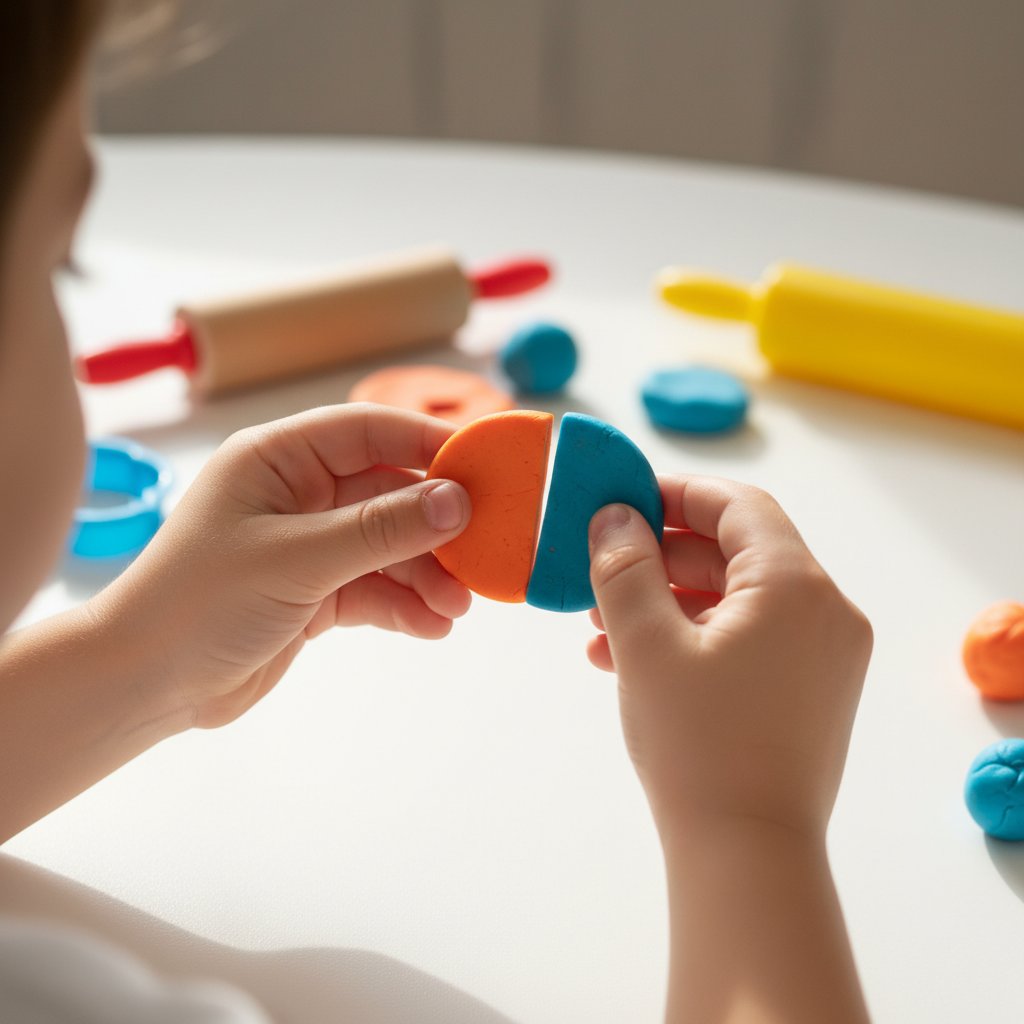
Activity 4: Circle Discovery with Playdough (Ages 3-5)
Materials: Playdough, a circular cookie cutter or lid, a plastic knife
Roll out playdough and cut a circle with the lid. Ask your child to cut it "right down the middle." They'll create two semicircles. Now ask: "Can you put them back together to make the circle again?"
Why it works: The tactile experience of cutting and reassembling creates a body-memory connection that paper activities alone can't match. This is where I first saw my own child truly grasp the semicircle-circle relationship.
Activity 5: Quarter-Circle Assembly Challenge (Ages 5-6)
Materials: Cardstock circles cut into quarters (4 equal sectors), glue, construction paper
Give children the four quarter-circles one at a time. First, can two quarters make a semicircle? Then, can all four make a full circle? Document with glue and paper.
Why it works: This introduces the idea that circle assembly isn't just about halves — quarters, sixths, and other fractions work too. It's early fraction vocabulary in action.
Activity 6: "Two Shapes, One Circle" Riddle Cards (Ages 5-7)
Materials: Index cards with riddles written on them, shape cutouts
Write riddles like: "I am made of two shapes. Both shapes have one straight edge and one curved edge. Together I am perfectly round. What am I?" Children solve the riddle using their shape pieces.
Why it works: Riddle cards develop deductive reasoning alongside geometry. Children must parse clues, eliminate options, and build the solution.
Activity 7: Tangram Circle Challenge (Ages 6-7)
Materials: Tangram set, circle outline template
Using a tangram set, challenge children to fill a circle outline. They'll discover that certain tangram pieces approximate curved shapes when combined — triangles arranged with points touching create near-circles.
Why it works: This bridges the gap between polygonal shapes and curved shapes, introducing the concept that curves can be approximated by many small straight edges.

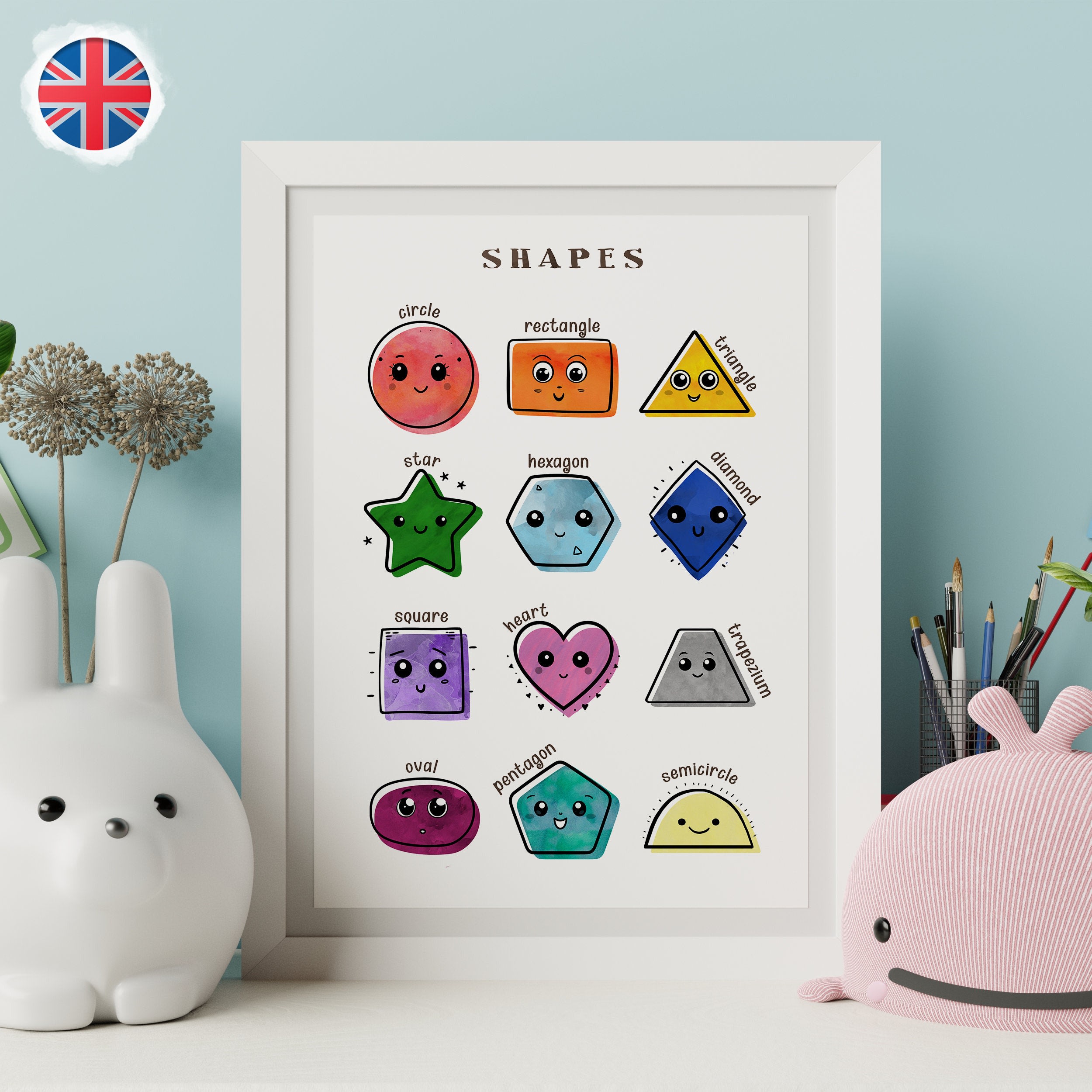 This article is your complete guide to shape assembly for kids ages 3-7. If you're also building a shapes curriculum, pair it with our [shape activities for preschoolers guide](/articles/shape-activities-preschoolers-free-printables-guide) for foundational recognition, our [pattern blocks activities](/articles/pattern-blocks-activities-preschool-guide) for hands-on geometry play, and our [math readiness for kindergarten activities](/articles/math-readiness-for-kindergarten-activities/) for the bigger numeracy picture.
  **When to start:** Children as young as 3 can explore simple shape assembly with physical pieces. By age 5-6, they can articulate which shapes combine and why.
  The **circle from two semicircles** combination is the one that comes up most often in early geometry curricula and in the search queries that bring parents and teachers to this page. Let's build from there.